
News
EU Unveils Major Investment Drive in Nigeria with €290m Global Gateway Package and €50m Health Manufacturing Facility

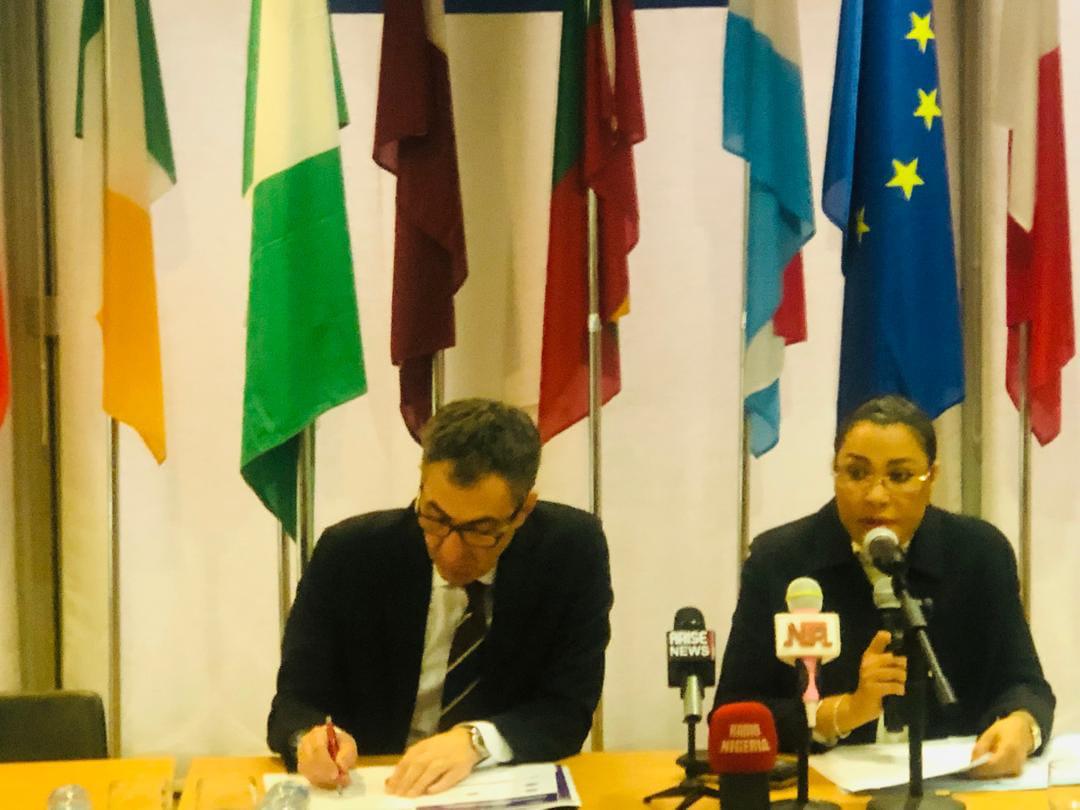
EU Unveils Major Investment Drive in Nigeria with €290m Global Gateway Package and €50m Health Manufacturing Facility
By: Michael Mike
The European Union has announced a significant expansion of its strategic partnership with Nigeria, unveiling a €290 million investment package under its Global Gateway Strategy to support digital infrastructure, healthcare manufacturing, agricultural value chains and migration management.
The announcement was made during the Eighth Nigeria–EU Ministerial Dialogue held in Abuja and co-chaired by Nigeria’s Minister of Foreign Affairs, Yusuf Tuggar and the EU High Representative for Foreign Affairs and Security Policy and Vice-President of the European Commission, Kaja Kallas.
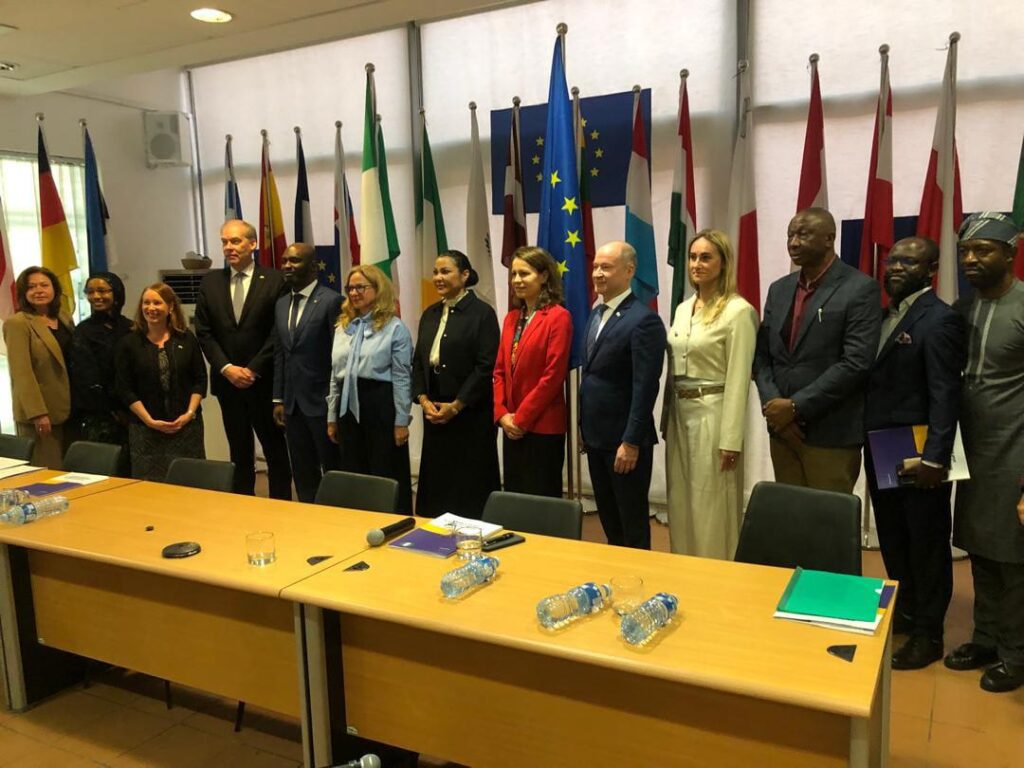
European officials said the seven new investment operations demonstrate a renewed political commitment to deepen cooperation between both partners while supporting Nigeria’s development priorities.
“In the current geopolitical context, the European Union is keen to enhance its partnership with Nigeria,” Kallas said. “Bringing more EU investment to Nigeria, aligning with the Renewed Hope agenda for the Nigerian Federal Government is a key priority for both sides.”
The EU Commissioner for International Partnerships, Jozef Síkela, said the investments are designed to support long-term economic growth while strengthening critical sectors.
“Together with Nigeria, we are investing in the modernisation of the digital sector, a stronger health system and in the development of agriculture,” Síkela said. “These Global Gateway investments create quality infrastructure, sustainable jobs and long-term economic opportunities that benefit the Nigerian people while also creating new opportunities for Europe.”
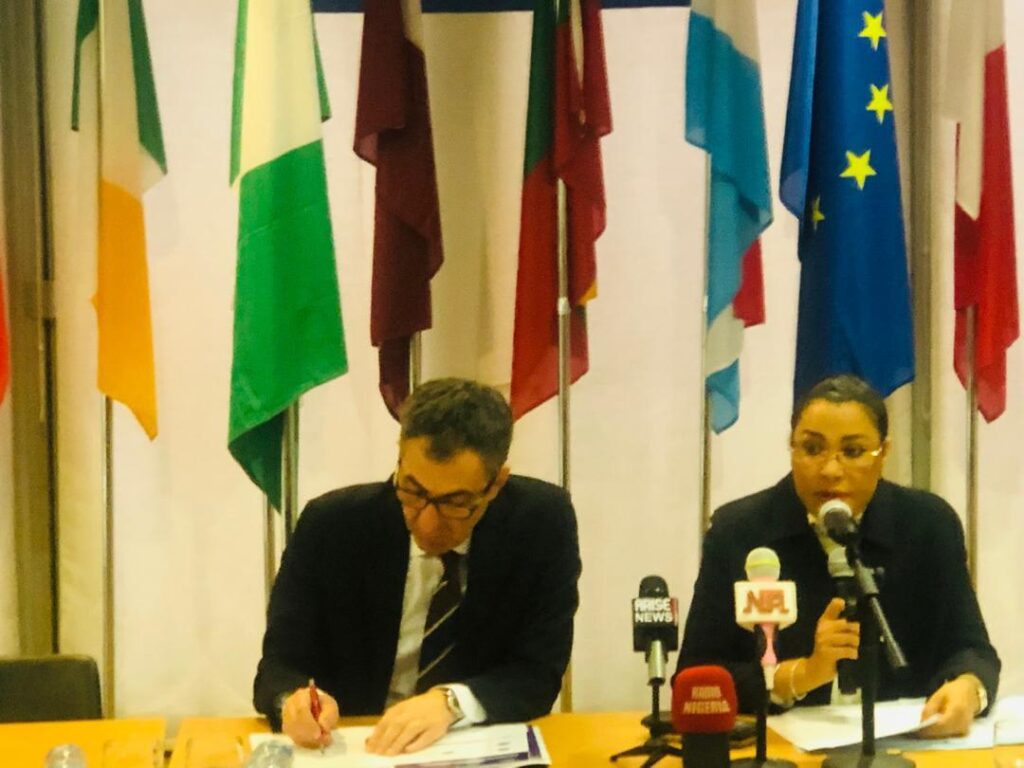
The digital sector received the largest share of the investment package, with €131 million earmarked for improving connectivity, expanding digital services and strengthening digital skills.
Under the programme, the EU will support the rollout of approximately 90,000 kilometres of fibre-optic cable across Nigeria in partnership with the European Bank for Reconstruction and Development.
The project aims to deliver secure and affordable internet access to an estimated 33 million Nigerians who currently lack reliable connectivity.
It will also support the development of secure and interoperable digital public infrastructure and contribute to Nigeria’s technical talent development initiative aimed at training millions of digital professionals.
Alongside the broader investment package, the development arm of the European Investment Bank, EIB Global, signed a €50 million financing agreement with the Bank of Industry to boost healthcare manufacturing in Nigeria.
The facility will support local companies producing pharmaceuticals, vaccines, diagnostic products and other medical devices through a dedicated credit line aimed at addressing financing gaps in the sector.
The agreement was announced in the presence of senior officials including the Bank of Industry’s Managing Director and Chief Executive Officer, Olasupo Olusi, Nigeria’s Minister of Budget and Economic Planning, Abubakar Atiku Bagudu, and the EU Ambassador to Nigeria and ECOWAS, Gautier Mignot.
Olusi said the initiative represents a major step toward building Nigeria’s domestic pharmaceutical and medical manufacturing capacity.
“This partnership marks a pivotal step in Nigeria’s journey from being a major importer of essential health commodities to becoming a competitive producer within regional and global value chains,” he said.
“By mobilising long-term patient capital into local pharmaceutical, vaccine and diagnostics manufacturing, we are not only strengthening health security but also catalysing industrial growth, skills development and high-quality job creation.”
The initiative is financed under the Human Development Accelerator programme backed by the European Commission and implemented by the European Investment Bank in partnership with the Bill & Melinda Gates Foundation.
Vice President of the European Investment Bank, Ambroise Fayolle, said the partnership demonstrates the EU’s commitment to strengthening health systems across Africa.
“By financing the development and local manufacture of essential medicinal and nutritional products, we enhance access to affordable, safe and high-quality treatments for diseases while improving the resilience of supply chains,” Fayolle said.
The EU investment package also includes €86 million to support agricultural development, particularly in Nigeria’s cocoa and dairy value chains.
The financing will provide easier access to credit for smallholder farmers and agribusiness companies through the Bank of Industry while supporting climate-smart agriculture policies and sustainable production.
Officials said the initiative aligns with Nigeria’s ambition to expand dairy production and strengthen cocoa exports to European markets.
Another €16 million will support migration management programmes, including reintegration support for returning migrants and efforts to combat human trafficking networks.
The funding will provide social, economic and psychological assistance for voluntary returnees while strengthening Nigeria’s capacity to tackle smuggling and trafficking networks.
The latest commitments build on earlier EU investments in Nigeria in sectors including urban transportation in Lagos, renewable energy, democratic governance and programmes to combat gender-based violence.
With the new package, total Team Europe commitments to Nigeria since 2025 have reached €962.5 million.
Officials said the growing portfolio highlights the EU’s intention to deepen economic cooperation with Nigeria while promoting sustainable development, industrialisation and private sector growth.
The European Investment Bank alone has invested more than €2.3 billion in Nigeria since beginning operations in the country in 1978, supporting projects in infrastructure, climate resilience, innovation, agribusiness and small business financing.
European officials said the new investments are expected to strengthen Nigeria’s capacity to build resilient industries, create jobs and expand opportunities for regional trade across West Africa.
EU Unveils Major Investment Drive in Nigeria with €290m Global Gateway Package and €50m Health Manufacturing Facility



NHRC Confronts Past Challenges, Pushes Digital Overhaul to Fix Broken Complaint System
By: Michael Mike
The National Human Rights Commission (NHRC) has acknowledged deep-rooted weaknesses in its complaint handling system and is now pushing an ambitious overhaul anchored on digital transformation and institutional reform.
At a high-level stakeholder validation meeting in Abuja, the Commission signaled a decisive shift from outdated, ineffective procedures toward a modern, technology-driven framework designed to restore public confidence and improve access to justice.
Executive Secretary of the Commission, Tony Ojukwu, described the ongoing review of the Complaint Handling Manual as more than a routine update, but a critical reset.
“We are gathered here to review, refine and ultimately validate the Complaint Handling Manual,” he said, stressing that the process must deliver real remedies for victims, particularly the most vulnerable.
But it was the candid admission from former NHRC Director of Civil and Political Rights, AbdulRahman Yakubu that underscored the urgency of reform.
“That manual was not used because of so many deficiencies and was abandoned,” Yakubu revealed, exposing a troubling gap between policy design and implementation that has long hindered the Commission’s effectiveness.
The NHRC, which has expanded from just eight staff to over 1,000 personnel and 38 offices nationwide, now faces mounting pressure to match its institutional growth with functional efficiency.
Yakubu noted that while the Commission’s structure has evolved—with four specialized departments now handling complaints—the absence of a practical, enforceable framework has limited impact.
Central to the reform push is the digitization of the entire complaints process, a move stakeholders say could significantly reduce delays, improve transparency, and strengthen accountability.
“We need automation and digitization of the complaints management process from beginning to end,” Yakubu said, describing the complaints registry as “the engine room” of operations.
The proposed system will also introduce standardized investigation templates and documentation tools, including a certificate of service, aimed at closing loopholes that have previously weakened case tracking and enforcement.
NHRC official Anthonia Nwabueze said the validation exercise is part of a broader effort to rebuild credibility through inclusiveness and expert input.
“The Commission cannot work alone; we decided to bring stakeholders together to join us in this critique,” she said, adding that the process is designed to identify gaps, eliminate inconsistencies, and produce a manual that is both practical and enforceable.
Beyond technical reforms, the Commission is also seeking to reorient its approach toward victims.
Ojukwu challenged participants to adopt a rights-based, people-centered lens. “Look at it through the lens of the most marginalised and vulnerable victims—ask the hard questions,” he urged.
The ongoing validation signals a rare moment of institutional self-reflection for the NHRC—one that acknowledges past shortcomings while attempting to build a more responsive, transparent, and technology-driven system.
If successfully implemented, the reforms could mark a turning point in how human rights complaints are handled in Nigeria, shifting the Commission from a largely reactive body to a more efficient and accountable protector of citizens’ rights.
NHRC Confronts Past Challenges, Pushes Digital Overhaul to Fix Broken Complaint System
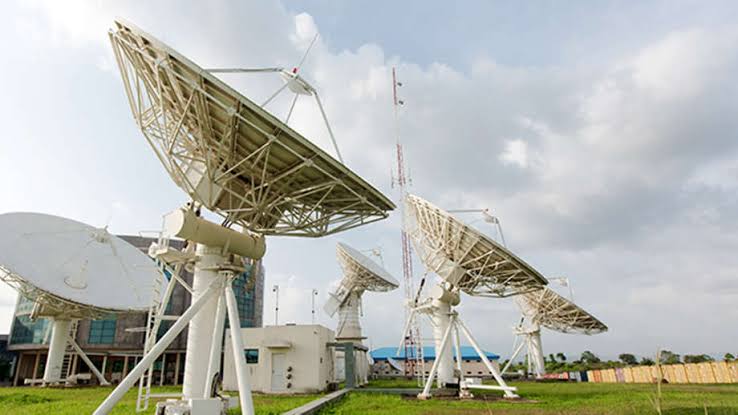
NIGCOMSAT Targets Industrial Leap with Startup Push, Skills Drive
By: Michael Mike
Nigeria’s state-owned satellite operator, Nigerian Communications Satellite Limited (NIGCOMSAT), is repositioning itself at the heart of the country’s industrialisation agenda, backing over 5,000 startups and expanding digital skills training as part of a broader push to turn connectivity into economic power.
The Managing Director/CEO, Jane Egerton-Idehen, disclosed the scale of intervention at the SOYUZNIK Alumni National Congress in Abuja, where she framed satellite infrastructure not just as a communications tool, but as a catalyst for production, innovation, and national competitiveness.
In a keynote delivered on her behalf by Acting Director of Technical Services, Engr. Ikechukwu Amalu, Egerton-Idehen said the agency’s Space Accelerator Programme—now in its third cohort—has quietly evolved into a pipeline for nurturing technology-driven enterprises, particularly in underserved segments of Nigeria’s digital economy.
The intervention comes amid growing concern that Nigeria’s innovation ecosystem, though vibrant, remains weakly linked to industrial output. NIGCOMSAT’s approach seeks to close that gap—pairing startup support with hands-on technical training and expanding connectivity to areas historically left out of the digital economy.
Across states including Adamawa, Jigawa, Cross River, and Enugu, the agency’s VSAT training programmes are equipping young Nigerians with practical, market-ready skills, targeting employability and enterprise creation rather than theoretical knowledge.
Egerton-Idehen argued that such interventions are critical if Nigeria is to transition from a consumption-driven economy to a production-led one.
“Connectivity is no longer a luxury—it is the foundation of modern economic systems,” she said, stressing that countries that fail to build strong digital infrastructure risk being locked out of the next phase of global industrial competition.
She pointed to ongoing projects such as the 774 Connectivity Initiative, which has so far extended digital access to dozens of local government secretariats, as part of efforts to deepen governance, improve service delivery, and stimulate economic activity at the grassroots.
Beyond infrastructure, she called for a structural reset in Nigeria’s education system, urging stronger alignment with emerging technologies including artificial intelligence, data science, and satellite communications.
According to her, the real challenge is not a lack of talent, but the absence of systems that convert knowledge into measurable economic output.
She also warned that innovation ecosystems cannot thrive without deliberate collaboration between academia, industry, and government, backed by sustained investment in research and clear regulatory frameworks that protect intellectual property.
The SOYUZNIK Alumni—comprising graduates of Russian and former Soviet Union institutions—were urged to leverage their international exposure to drive technology transfer and localisation of innovation within Nigeria.
In his welcome remarks, Abuja chapter chairman, Agu Collins Agu, described the congress as a convergence of technical expertise with the potential to influence national development outcomes.
As Nigeria grapples with sluggish industrial growth and rising youth unemployment, NIGCOMSAT’s expanding role signals a strategic shift—one that places digital infrastructure, innovation, and skills development at the centre of the country’s economic transformation agenda.
NIGCOMSAT Targets Industrial Leap with Startup Push, Skills Drive
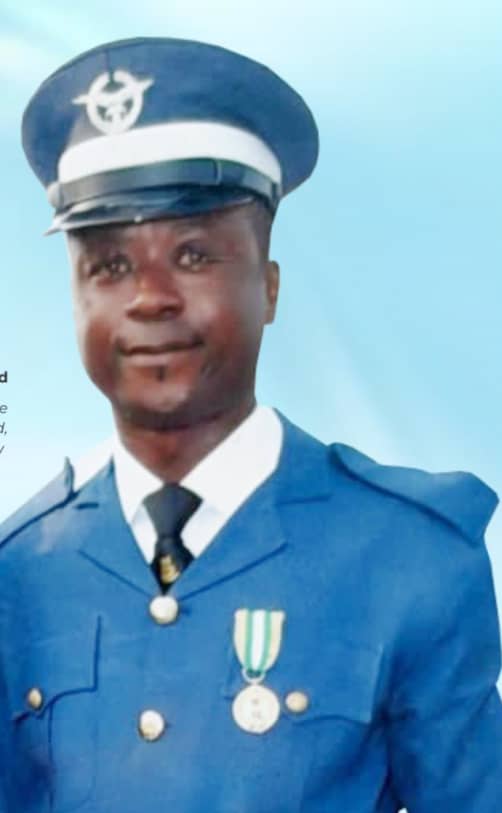
Tribute to the late flight Sergeant Temitope Beckley
By: Bodunrin Kayode
Dear Tope, I am still in shock that you had to leave so early at just 50. Seven years before your father our dear uncle Alaba left at 57. And my own father your uncle too same 57, all of the Akinlawon stock of the Beckleys in Lagos.
Sad you had to leave us so early. I am sad because of the bond we shared as special cousins or what people of your generation call besties. You were a jolly good fellow to me in particular whenever our paths crossed. Aburo (little brother), as I used to call you, family may share the same names sometimes and blood but very few are real friends within a particular family. If there are friends within our family, you are definitely one of them. A very jovial fellow who looks out for the others. A friend indeed among brothers and cousins. Your eyes always glittered when you were around me. And of recent you became more concerned about me when you heard that I was in the North East Nigerian war theatre of operation Hadin Kai. I assured you that because He lives i will always face tomorrow.
How we built our friendship
I remember my brief stay with you guys at the family house in folarin street, Mushin. Trying to rediscover myself as Uncle Alaba would call it anytime he asked me to escort him to EMPLAN consult were he was working then. Each time we returned, you were always close by asking the right questions the little ones always asked their older brothers. I enjoyed your restlessness at that young tender age, wanting to know a lot of things out there especially when we watched TV together and you did not understand what was going on. With the kinds of questions your probing mind used to ask, I always knew that you were going to become one of the shining lights of the family. I even dreamt of you joining me in serving God and country as a media practitioner one day. But you had other plans and ended up at the Nigerian Air Force as you did till your last breath due to a protracted illness.
When I later started my studies to train as a journalist and found myself staying at Akobi crescent with Uncle Akobi, you never forget to stop by and check on me. You kept the flame burning. Your appearances were always remarkable with that glitter in your eyes which used to lighten up my weekend whenever you showed up. Brother Akin was always at hand to host us. Whenever he wasn’t around, we would go out to hang out as young people to have fun. You were always with the older ones hardly having time for your generation. Distance would now separate us when I was posted to Taraba state by the then daily times as its maiden correspondent. But we always met along the way until you joined the air force.
Your worries about Nigeria
Tope, at your level in the service in the military, you already knew the difference between right and wrong and you were very methodical and meticulous in the way you conducted your affairs. You asked more questions as always but this time as a seasoned personnel of the Nigerian Air Force. You knew where you were coming from and were you wanted to be in the nearest future. I encouraged you that in all things we should give thanks to our Creator. The one who is and is to come. You were on course in your relationship with him.
I remember our last discussion, about the insurgency challenge the military is dealing with at our backyard in Borno. Your perception about the Nigerian Air Force which you served till your natural passing. And your projection for the future in terms of security for the country. I asked for your family and you updated me that they were fine. I was worried about the fact that I am yet to meet your loving family but you assured me that we would surely meet someday even though your spouse was in Canada pursuing her dream. The telephone chat zeroed down to why I called. I actually chatted you because I remembered your father the great Uncle Alaba who had gone to the great beyond. And I wanted to honour his memory with a tribute 29 years after his demise. You promised feeding me with the extra details I wanted to add to what I got from your big sis Tosin. But that never happened. I never got the pictures of Uncle or the details I wanted. That has been rested for his 30th anniversary now.
Rather what I got was a rude shock of your sudden collapse and departure from this world. Tope, you suddenly joined your father in the great beyond at the untimely age of 50. We can’t question God Almighty our Creator over this decision. We would rather give thanks to him for the life you lived because He said we must give thanks to Him in all things.
Aburo, all I can say now is permission granted because you never sort for anyone’s permission to bow out. This was the command of your creator, the All knowing I Am who decides when it is time to come or to leave this world. Tope, be rest assured that some of us will never forget coming across your path in this short life. Enjoy your sleep great soldier until we meet to part no more.
Broda Sam.
Tribute to the late flight Sergeant Temitope Beckley

Troops rescue kidnap victim in kogi

NDLEA Busts Nationwide Drug Ring, Arrests 93-Year-Old Suspect and Medical Doctor in Sweeping Crackdown

NHRC Confronts Past Challenges, Pushes Digital Overhaul to Fix Broken Complaint System

Roger Federer’s Shock as DNA Results Reveal Myla and Charlene Are Not His Biological Children

THE PLIGHT OF FARIDA

FAILED COUP IN BURKINA FASO: HOW TRAORÉ NARROWLY ESCAPED ASSASSINATION PLOT AMID FOREIGN INTERFERENCE CLAIMS
-
 News2 years ago
Roger Federer’s Shock as DNA Results Reveal Myla and Charlene Are Not His Biological Children
-
Opinions4 years ago
THE PLIGHT OF FARIDA
-
 News12 months ago
FAILED COUP IN BURKINA FASO: HOW TRAORÉ NARROWLY ESCAPED ASSASSINATION PLOT AMID FOREIGN INTERFERENCE CLAIMS
-

 News2 years ago
EYN: Rev. Billi, Distortion of History, and The Living Tamarind Tree
-
 Opinions4 years ago
POLICE CHARGE ROOMS, A MINTING PRESS
-

 ACADEMICS2 years ago
A History of Biu” (2015) and The Lingering Bura-Pabir Question (1)
-

 Columns2 years ago
Army University Biu: There is certain interest, but certainly not from Borno.
-

 Opinions2 years ago
Tinubu,Shettima: The epidemic of economic, insecurity in Nigeria
