
News
Europe-bound teenage student arrested with Meth consignment at Abuja airport

Europe-bound teenage student arrested with Meth consignment at Abuja airport
By: Michael Mike
Operatives of the National Drug Law Enforcement Agency, NDLEA, at the Nnamdi Azikiwe International Airport, Abuja have arrested a 19-year-old student, Benjamin Daberechi for attempting to export 7.2 kilogrammes of methamphetamine concealed in crayfish to Europe where he was going for undergraduate studies.
According to a statement on Sunday by the spokesman of the anti-narcotics agency, Femi Babafemi, the teenage suspect was intercepted last Wednesday during an outward clearance of passengers on Turkish Airlines flight TK 0624.
Daberechi during interrogation operatives claimed he was a student on his way to Cyprus for studies, but upon a thorough search of his luggage, he was found in possession of 7.2 kilogrammes of whitish substance neatly concealed inside a sack of crayfish, a field test of the substance however proved it to be methamphetamine.
Also during last week, operatives of the Tincan Port Command of NDLEA last Tuesday intercepted 116.5 kilogrammes consignment of Colorado, a strong strain of cannabis concealed in bags hidden in a heap of used vehicles parts on the floor of a container marked FCIU 8459700, bearing three units of used vehicles imported from Toronto, Canada.
Babafemi said based on intelligence, the agency had requested for a 100 percent examination of the container which arrived the TICT terminal of the port last Friday, adding that a joint examination with the Nigeria Customs, DSS and other stakeholders last Tuesday however led to the discovery of 233 parcels of the illicit substance stashed inside travelling bags on the floor of the container, covered with used vehicles spare parts.
He said attempts to export various quantities of illicit substances through courier companies were equally thwarted by NDLEA operatives of the Directorate of Operation and General Investigations (DOGI) in Lagos; while 336 grammesc of skunk stuffed inside computer hard drives going to Dubai, UAE, were seized at a courier firm.
A suspect, Ibrahim Analu, 28, was arrested at Iddo motor park, Lagos while attempting to send 151,700 pills of opioids to Kaduna. A total of 4.830 kilogrammes skunk was also discovered at another courier firm in a shipment from Douala, Cameroon passing through Nigeria to Oman. The drug was concealed in 10 of 12 cans of palm fruits paste, locally called Banga, packed in a carton.
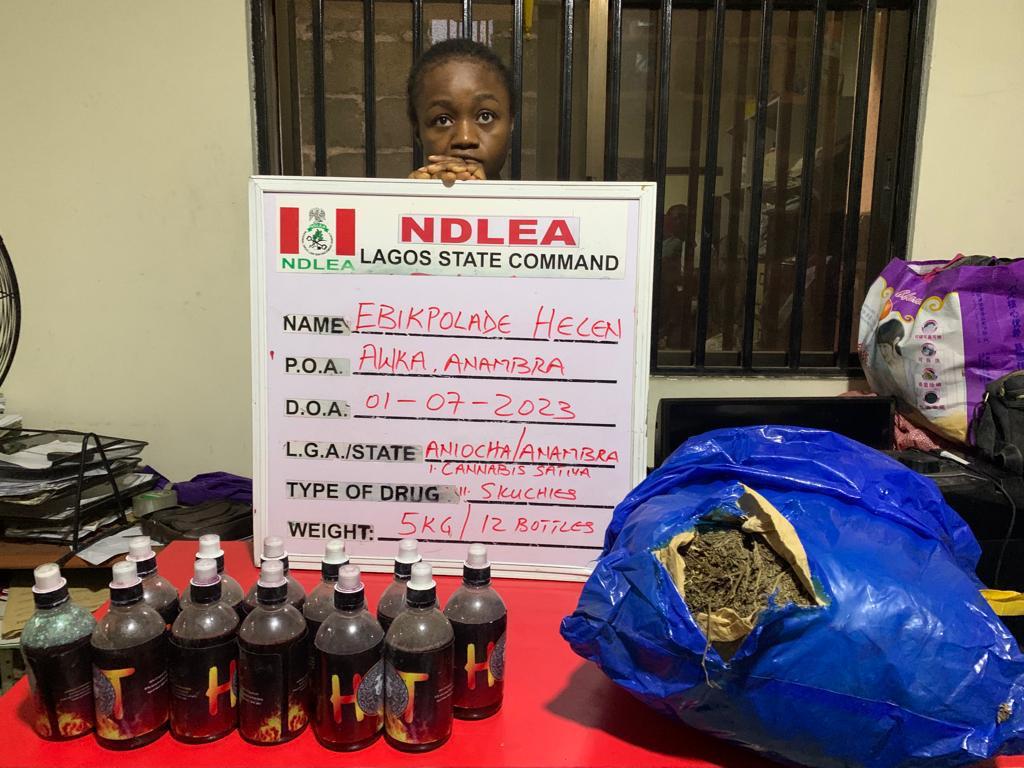
Meanwhile, a Lekki Lagos based female lawyer, Ebikpolade Helen, who specialises in production and distribution of skuchies, a mixture of cannabis, opioids and black currant has been arrested in a follow up operation in Awka, Anambra state following an earlier seizure of 5 kilogrammes cannabis and 12 bottles of prepared skuchies in her apartment at Lekki.
Abubakar Shuaibu was arrested last Thursday at Cappa, Mushin/Oshodi road with 86 bottles of codeine-based cough syrup weighing 8.6 litres in his Toyota bus marked FFA 241YB, two other suspects: Razak Ogunbo and Adeola Idowu were nabbed last Tuesday at Ikorodu with 51 litres of skuchies. This is even as 372kg cannabis sativa and 48 bottles of skuchies measuring 48 litres were recovered from the home of a fleeing drug dealer at Akala, Mushin Lagos last Wednesday.
In Ondo state, operatives stormed a building at Ehin-Ala, Akure South local government area where they arrested one Abubakar Gyambar, 28, with 162 jumbo bags of skunk weighing 1,944 kilogrammes, while another suspect, Henry Wilson, 50, was nabbed at Ogume town, Ndokwa West LGA, Delta State with same substance weighing 216.5 kilogrammes.
A total of 45.41 kilogrammes cannabis was recovered from Adam Hassan, 27, along Inga wa-Mani – Mashi road, Katsina enroute Niger Republic, while 70 kilogrammes of same substance was seized from Mamman Nur Shettima last Saturday along Kano – Nguru road, Yobe state.
In Kano, a suspect, Abdulhamid Bayaro, 48, was last Friday nabbed at Dan Agundi area, Kano with 114 blocks of cannabis, weighing 71.7 kilogrammes, just as operatives recovered 50,000 pills of Tamol, a brand of Tramadol at Kofar Waika area of the state.
While a total of 912,600 pills of pharmaceutical opioids including tramadol were recovered from two commercial vehicles; one coming from Lagos to Kano, the other was intercepted along Abuja-Jere-Kaduna expressway, with a suspect, Sahabi Lawal, 25, arrested. In Borno state, 32-year-old Umar Tijjani Mustapha was arrested at Gangamari, Maiduguri Metropolitan Council (MMC), with 55.25 kilogrammes skunk last Thursday
Chairman/Chief Executive, Brig. Gen. Buba Marwa (Retd) while commending the tenacity of the officers and men of NAIA, Tincan, Lagos, Ondo, Katsina, Yobe, Delta, Kano, Kaduna and Borno Commands as well as those of DOGI,charged them and their compatriots across the country to remain vigilant.
Europe-bound teenage student arrested with Meth consignment at Abuja airport


Troops Arrest Suspected Military Impostor in Katsina
By Zagazola Makama
Troops of 17 Brigade have arrested a suspected military impostor during a fighting patrol in Malumfashi Local Government Area.
Security sources told Zagazola Makama that the suspect was apprehended at about 1:30 p.m. on July 4 by troops deployed at the Forward Operating Base (FOB) Malumfashi while conducting routine patrols within Malumfashi town.
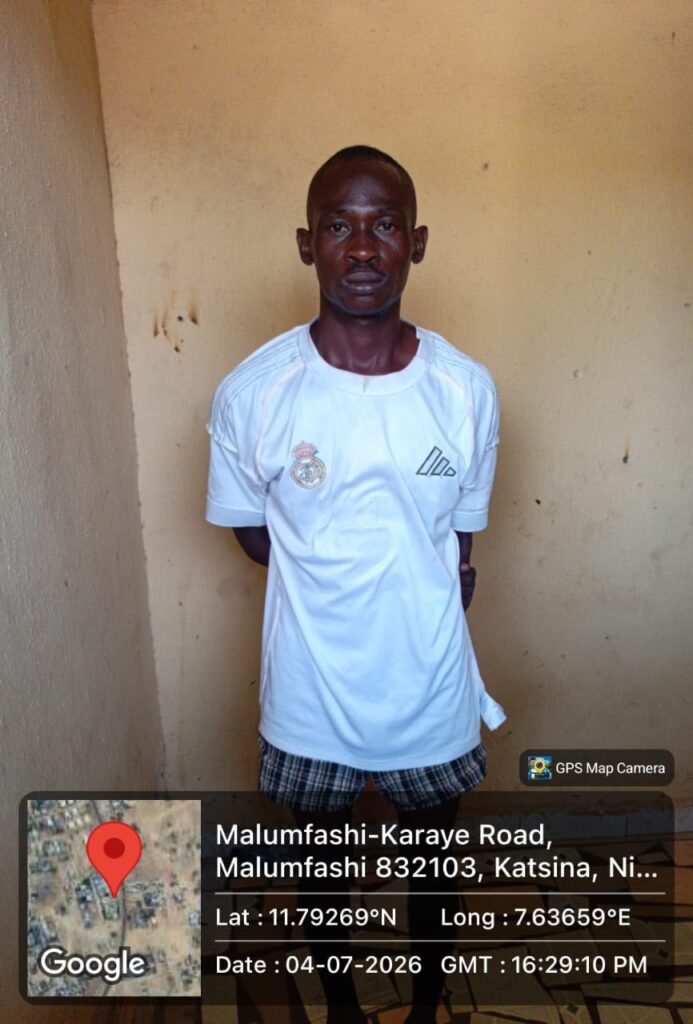
According to the sources, the suspect was intercepted while wearing a woodland camouflage three-quarter short, raising suspicion among the troops.
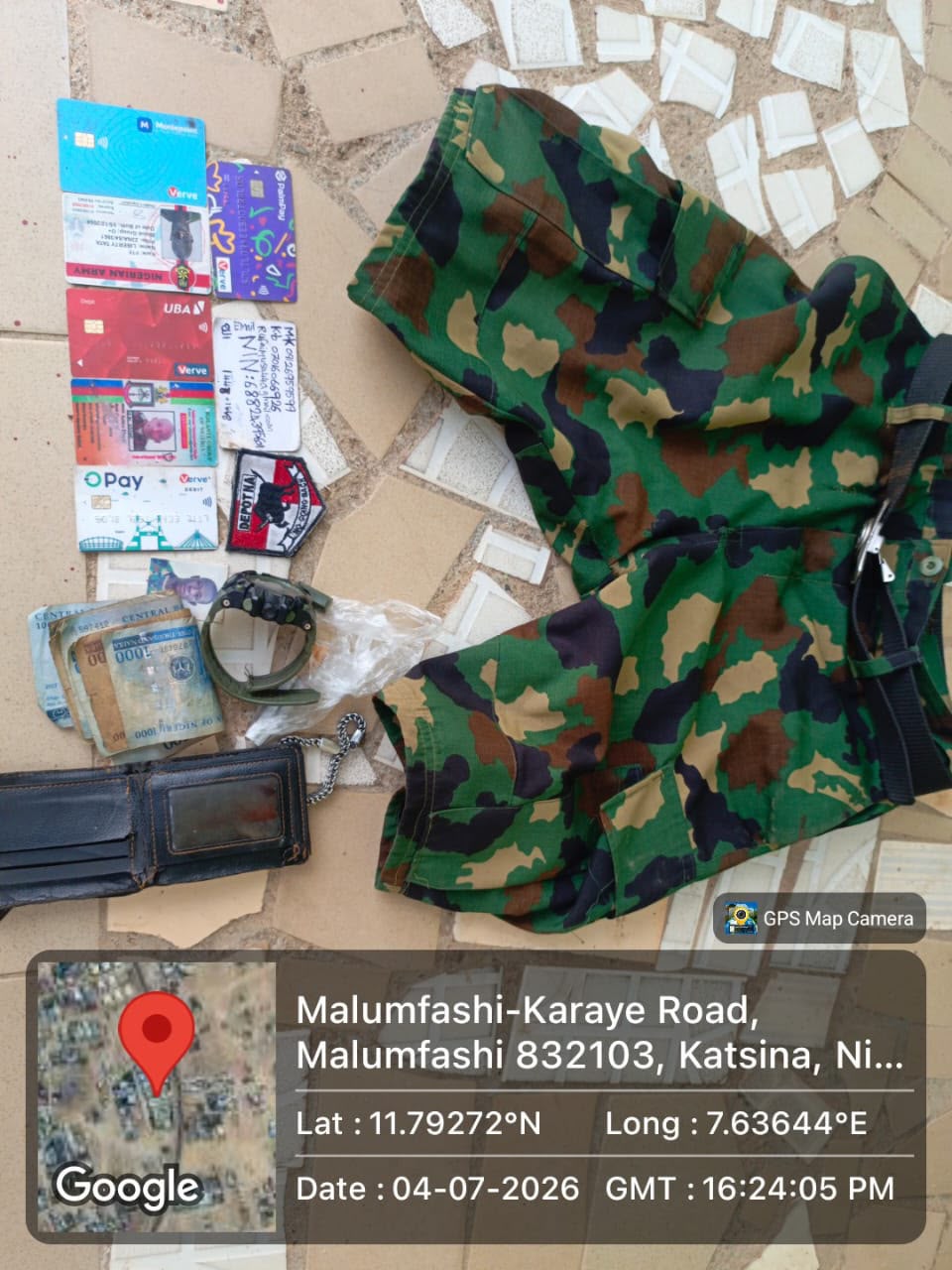
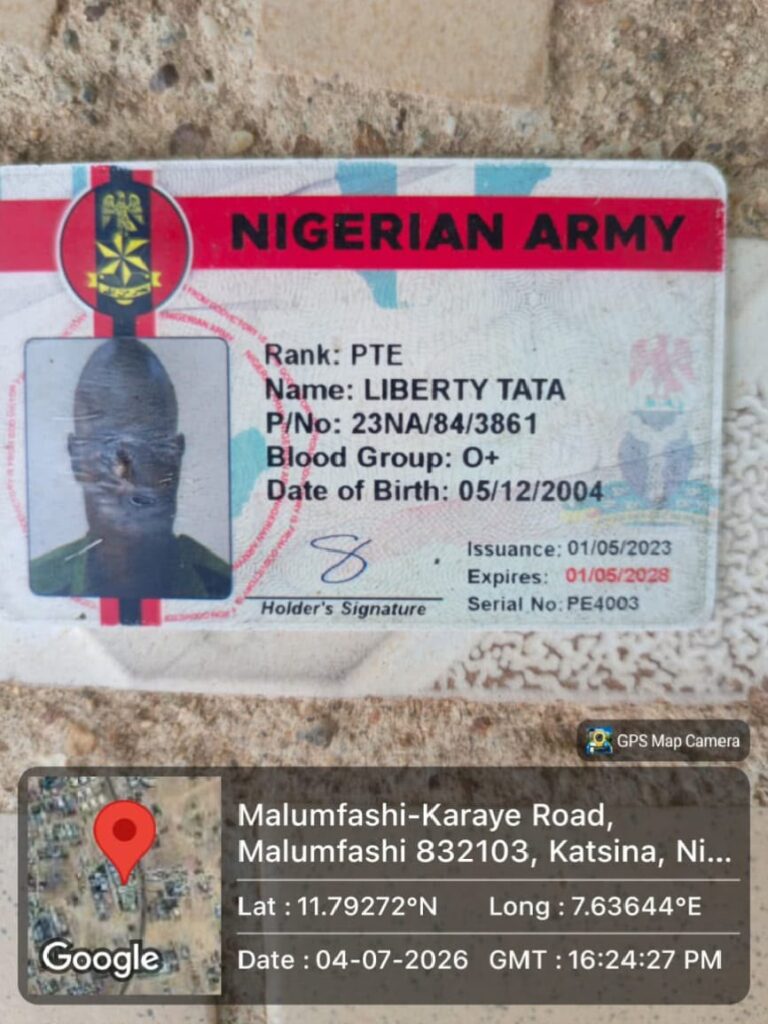
A search conducted on the suspect led to the recovery of a fake Nigerian Army identity card, four Automated Teller Machine (ATM) cards, one woodland camouflage three-quarter short, a wristwatch and the sum of ₦17,000.
The suspect and the recovered exhibits are currently in military custody pending further investigation.
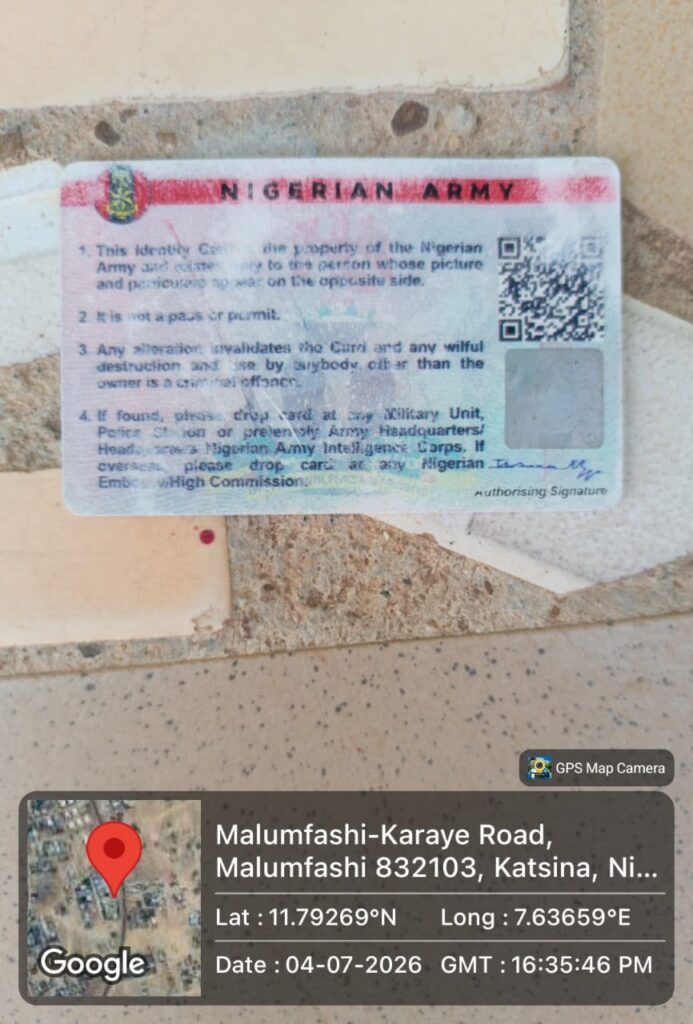
Military sources said the arrest forms part of ongoing efforts to curb impersonation of security personnel and other criminal activities within the area.
Troops Arrest Suspected Military Impostor in Katsina
Troops Recover 50 Rustled Cattle, Repel Suspected Rustlers in Kaduna
By Zagazola Makama
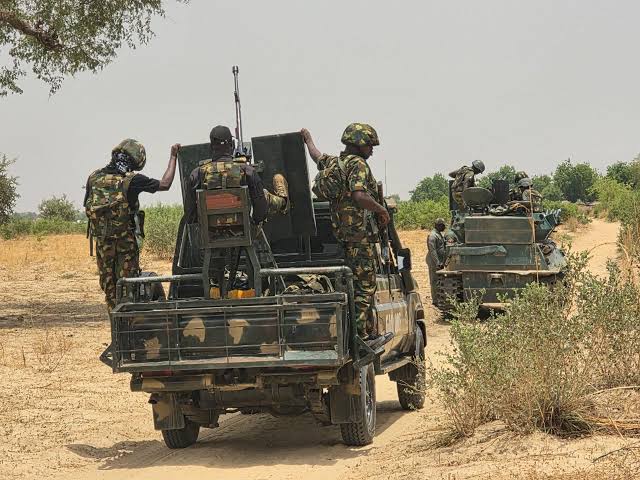
Troops deployed at the Forward Operating Base (FOB) Kankomi have recovered 50 rustled cattle after repelling suspected cattle rustlers during an ambush operation in Chikun Local Government Area.
Security sources told Zagazola Makama that the troops responded to a distress call at about 9:55 a.m. on July 4 over the activities of suspected rustlers at Ungwan Gontu community.
According to the sources, the troops swiftly laid an ambush and made contact with the fleeing suspects, forcing them to abandon the stolen livestock and escape into the surrounding area.
During the operation, the troops recovered 50 rustled cattle, which were subsequently identified and handed over to their rightful owner.
Military sources said efforts are ongoing to track down the fleeing suspects as security operations continue to combat cattle rustling and other criminal activities across Kaduna State.
Troops Recover 50 Rustled Cattle, Repel Suspected Rustlers in Kaduna
Troops Arrest Suspected Terrorist in Kogi, Suspect Confesses to Group Membership
By Zagazola Makama
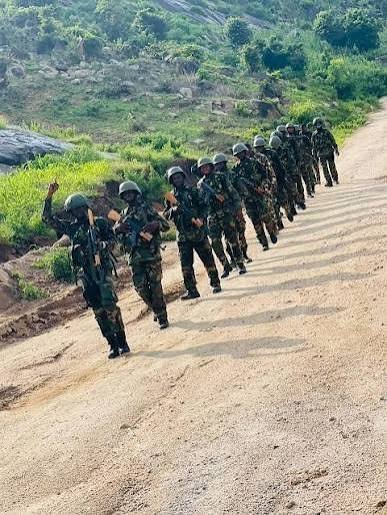
Troops of 12 Brigade, in collaboration with Office of the National Security Adviser (ONSA) Hybrid Forces, have arrested a suspected terrorist during an operation in Lokoja Local Government Area.
Security sources told Zagazola Makama that the troops responded at about 1:00 p.m. on July 4 to reports of a confrontation between local residents and a suspected terrorist at a Ruga settlement behind Obajana community.
According to the sources, the troops swiftly intervened and arrested one suspect at the scene.
During preliminary interrogation, the suspect reportedly confessed to being a member of a terrorist group led by an individual identified as Haruna, which allegedly operates within the Okene general area.
The suspect is currently in military custody and is undergoing further investigation to establish the extent of his involvement and identify other members of the group.
Military sources said the arrest forms part of ongoing security operations aimed at dismantling terrorist and criminal networks across Kogi State.
Troops Arrest Suspected Terrorist in Kogi, Suspect Confesses to Group Membership

Troops Arrest Suspected Military Impostor in Katsina

Troops Recover 50 Rustled Cattle, Repel Suspected Rustlers in Kaduna

Troops Arrest Suspected Terrorist in Kogi, Suspect Confesses to Group Membership

Roger Federer’s Shock as DNA Results Reveal Myla and Charlene Are Not His Biological Children

THE PLIGHT OF FARIDA

FAILED COUP IN BURKINA FASO: HOW TRAORÉ NARROWLY ESCAPED ASSASSINATION PLOT AMID FOREIGN INTERFERENCE CLAIMS
-
 News2 years ago
Roger Federer’s Shock as DNA Results Reveal Myla and Charlene Are Not His Biological Children
-
Opinions4 years ago
THE PLIGHT OF FARIDA
-
 News1 year ago
FAILED COUP IN BURKINA FASO: HOW TRAORÉ NARROWLY ESCAPED ASSASSINATION PLOT AMID FOREIGN INTERFERENCE CLAIMS
-

 News2 years ago
EYN: Rev. Billi, Distortion of History, and The Living Tamarind Tree
-
 Opinions5 years ago
POLICE CHARGE ROOMS, A MINTING PRESS
-

 ACADEMICS2 years ago
A History of Biu” (2015) and The Lingering Bura-Pabir Question (1)
-

 Columns2 years ago
Army University Biu: There is certain interest, but certainly not from Borno.
-

 Politics1 year ago
2027: Why Hon. Midala Balami Must Go, as Youths in Hawul and Asikira/Uba Federal Constituency Reject ₦500,000 as Sallah Gift
