
News
EXCLUSIVE: Fulanis decry injustice in North West, seek end to violence in Zamfara as top bandits weigh surrender

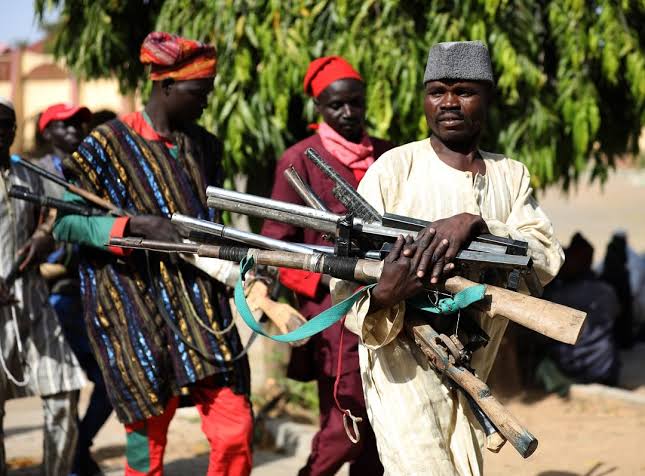
EXCLUSIVE: Fulanis decry injustice in North West, seek end to violence in Zamfara as top bandits weigh surrender
By Zagazola Makama
In the heart of Zamfara’s conflict-weary forests, a growing chorus of Fulani herders and leaders is calling for an end to violence not with weapons, but through dialogue and justice. They say they are ready to embrace peace, if government addresses long-standing grievances that have festered into bloody confrontations.
For over a decade, northwestern Nigeria has been plagued by banditry, livestock rustling, mass abductions and retaliatory attacks that have left hundreds dead and thousands displaced. But in a rare show of willingness, Fulani stakeholders at a recent meeting in Gusau expressed readiness to renounce violence if treated with fairness.
The sensitisation forum, hosted on May 4 by the Commander of 1 Brigade, Nigerian Army, brought together Fulani leaders under the aegis of Miyetti Allah Cattle Breeders Association of Nigeria (MACBAN), alongside top security officials, including representatives of the State Director of Security and the Commissioner of Police.
Fulani leaders from all 14 local government areas of Zamfara attended the meeting, where they poured out their grievances — some dating back years — and appealed for genuine government intervention.
“We are not all bandits,” Fulani leaders insist
“I have lost over 150 cows to Yansakai, yet I have never carried a weapon or joined any group,” said Mallam Salisu Umar, a herder from Maru LGA. “But every time they see a Fulani man, they see a bandit. Is that fair? Is that justice?”
Another herder, Muhammadu Sale, alleged that just last Friday, vigilantes stole about 300 livestock belonging to a law-abiding Fulani man. “They never took the animals to the committee on recovery of livestock — they sold them in the market in connivance with some local security actors,” he said. “In Rijiya, Gusau LGA, another 370 livestock were stolen and diverted.”
The Yansakai vigilante groups, originally formed to protect communities, were accused of indiscriminate violence against Fulani settlements, burning homes, killing unarmed civilians, and rustling cattle under the guise of fighting banditry.
According to Mallam Haruna Dogo from Anka LGA, the situation has become so dire that Fulani children cannot attend schools in Hausa-dominated communities. “The hatred has grown so deep that our children are denied access to education and basic amenities. We are being cut off from society,” he lamented.
Several speakers at the forum said Fulani herders were being profiled, attacked, and even executed without trial. “In some cases, a Fulani youth is captured, beaten until he confesses to being a bandit, and then killed. If anyone dares retrieve his corpse, they are accused of being an accomplice,” said one leader.
Another Fulani elder said he had not travelled in a vehicle for four years out of fear, noting that the meeting in Gusau marked his first time stepping out in days. “Thousands of Fulani families are hiding in the bush, living in fear. Their only crime is being Fulani — and because of a few criminals among us, the whole society sees us as enemies.”
“Our cows are stolen, and security agencies look the other way”
One of the most serious allegations raised at the forum was the alleged collaboration between rogue security personnel and vigilante groups.
“They recover our cows and sell them,” alleged Alhaji Musa Bature from Tsafe. “We sometimes find the stolen animals in open markets. When we report to police, nothing is done. Security agents are benefitting from these crimes.”
He said this cycle of dispossession and injustice was pushing many Fulani youths into banditry.
“Even when we warn them, they say they have no choice. Food is scarce. A mudu of rice is nearly N10,000. Slippers cost N5,000 because of the risks traders face. This desperation leads them into evil acts like kidnapping.”
Umar Jega from Bakura LGA said his entire village was razed by Yansakai last year. “We lost everything. No one was held accountable. We are treated like people without rights.”
Many Fulani leaders at the forum blamed systemic injustice for driving youth into militancy.
Hope from within: top bandits open to surrender
In a potentially game-changing development, several notorious bandit leaders, including Saidu Naeka, Jimmi Smally and Kabiru Yankusa, have indicated willingness to surrender arms on the condition of safety and reintegration. Even Notorious bandits leaders like Bello Truji and Alhaji Nashama have were also part of those who agrees to key into the ongoing non-kinetic efforts.
There are some Fulanis who see the approach as a ploy to arrest them while others think it was politically motivated to manipulation manipulate them. Also, bandits kingpins like Ado Alero and Madele showed interest initially, by sending their representatives to attend the meeting.
“These men are tired,” said a source familiar with the dialogue. “They want peace, but they need assurance they won’t be killed or humiliated. Some of them have also lost loved ones in the cycle of violence.”
Sources said the bandit leaders had already begun patrolling parts of Sokoto Road to deter attacks. “Just last week, they eliminated two bandits who attempted to block the road.”
Following the meeting, more than 100 kidnap victims were released in separate operations in Moriki and Kango Forest. Some victims were handed over directly to the military, while others were rescued by vigilantes and handed over to troops. “We were told we were being released because their leaders now want peace,” said Rabiatu Halliru, one of the freed captives.
Another victim, who spent five months in captivity, said: “It was a miracle. We didn’t pay any ransom. They told us they had made a promise to release us and they kept it.”
The non-kinetic approach initially brought relative calm in the Anka general area, until when some hybrid forces brought in from the North East attacked and beheaded an innocent Fulani boy and cut off some part of his body, roasted it and eat it, that’s when tensions grew again. Another Fulani woman was killed by the Yansakai when she went to the Market, with the accusation that she was linked with bandits.
Fulani leaders propose roadmap to peace
To consolidate peace, Fulani leaders proposed a number of initiatives, including: disbanding or properly regulating the Yansakai vigilantes who were neither employed or recognized by the government. They also want government to reconsider reopening of their cattle markets and herders’ movement corridors.
The Fulani elder also demanded that they want schools, boreholes, and health centres to be constructed in Fulani communities, while insisting on equal treatment of offenders, regardless of ethnicity because they said there are two types of banditry, the one perpetrated by the criminal bandits amongst them and the one perpetrated by Yansakai along with some rogue security personnel.
They proposed direct engagement between MACBAN and bandit leaders to facilitate further releases and end attacks on farmers, nothing that If such opportunity is wasted, more lives will be lost,” warned Mallam Abubakar Sani from Zurmi.
“We are tired. Our children are tired. Let this be the beginning of the end.”he said.
Alhaji Bello Maiturare, MACBAN Chairman in Zamfara, pledged to lead the dialogue with bandits. “We’ve spoken to some of them. They are listening because of this meeting. If the government keeps its word, we will bring more people out of the bush.”
“Most bandits are not sincere” – Theatre Commander
However, the Theatre Commander of the Joint Task Force, Operation FANSAN YANMA, Maj.-Gen. Oluyinka Soyele, expressed caution.
“Most of the bandits are not sincere. Even after promising to stop attacks, they continue killing and kidnapping people,” he said.
Soyele reiterated that Governor Dauda Lawal and the Government, through the Operation Safe Corridor initiative, had consistently said that only genuinely repentant bandits who renounce violence would be accepted.
“If they are serious and send emissaries to declare their readiness to stop, why not? We are not happy fighting our own people whether Hausa or Fulani , they are Nigerians.”
“But let me tell you what usually happens: when they feel the heat from military operations, they offer to surrender. Once the pressure eases, they regroup, rearm and return to terrorism.”
On the issue of Yansakai, Soyele said: “No one owns up to forming it, but everyone agrees it was created by the Hausa community to protect themselves from cattle rustling. If attacks stop from one side, we can contain the other. But the key is sincerity.”
“Even today, they attacked Maru. We still hear of pockets of attacks here and there by Dan Sadiya. So where is the sincerity?” the Theatre Commander Insist.
Special Appeal to the Defence Headquarters, National Security Adviser, National Counter Terrorism Centre, and DSS: A Call for a Unified, Sustainable Approach to Ending Banditry and Restoring Peace in the North West
However, Zagazola Makama, noted that as Nigeria marks over 15 years of protracted violence and insecurity in the North West, it is time to acknowledge a hard but essential truth: the military alone cannot end banditry.
“What we face is no longer a purely kinetic conflict; it is a complex socio-security crisis that demands a whole-of-society approach, one that combines force with dialogue, justice with reconciliation, and tactical operations with strategic engagement.
“We commend the Defence Headquarters and the intelligence community for the consistent pressure mounted on bandits across Zamfara, Katsina, Kaduna, Sokoto, and Niger States. We also acknowledge the courageous efforts of security forces on the frontline.
However, it is time to complement those military operations with non-kinetic solutions that address the root causes of the violence, as recently demonstrated in Katsina, Kaduna, and Benue States, where targeted engagement with bandit leaders and conflict stakeholders has begun to yield positive results.
“Let us be candid: the pattern of violence across the North West, North Central, and even parts of the North East suggests that the same networks of armed bandits are interlinked from Zamfara and Katsina to Benue, Plateau, and Taraba.
Their grievances of the Fulani people are strikingly similar ranging from extrajudicial killings by vigilantes (Yan Sakai), loss of livelihoods, lack of inclusion in governance, to ethnic profiling. While these do not justify actions of some criminals amongst them, they point to the urgent need for political, social, and security reintegration mechanisms.
A tragic illustration of this is the recent escalation in Birnin Magaji LGA, Zamfara State, where 25 communities have been banned from accessing their farmlands by a notorious kingpin, Alhaji Nashama. According to local sources, Nashama had earlier promised to protect these communities from rival bandit groups. However, following the alleged killing of two of his relatives, Babuga and Usman whom he claimed were innocent by Yan Sakai operatives, he imposed a violent embargo on farming activities in the area, vowing to kill anyone seen in the fields.
This is not an isolated case. It reflects the fragile trust deficit between rural communities, vigilantes, and armed groups, and point to why pure military responses cannot sustainably resolve this crisis. If we are to prevent further reprisals and displacements, we must take bold steps to re-establish dialogue channels, backed by the intelligence and verification strength of the DSS, the National Counter Terrorism Centre, and community leaders.
We therefore urge the Federal Government to seize this opportunity to chart a new strategy for lasting peace in the Country. The success of community dialogue efforts in places like Katsina and Kaduna, proves that where there is political will and strategic coordination, peace is possible. The time has come to act not just with force, but with foresight.
Nigeria deserves peace. The people of Zamfara, Katsina, Kaduna, Sokoto, Benue, and Plateau deserve to farm, trade, and live without fear. Let us give peace a chance decisively and deliberately.
Zagazola Makama is a Counter Insurgency Expert and Security Analyst in the Lake Chad Region
EXCLUSIVE: Fulanis decry injustice in North West, seek end to violence in Zamfara as top bandits weigh surrender


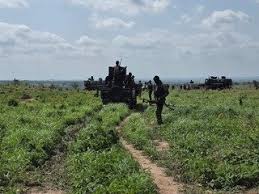
Troops Kill Six ISWAP Fighters, Wound Seven in Failed Attack on Borno Military Base
By: Zagazola Makama
Six fighters of the Islamic State West Africa Province (ISWAP) were reportedly killed and seven others seriously wounded during a failed attack on a Forward Operating Base (FOB) at Logomani in Borno State, credible intelligence sources have disclosed.
The sources told Zagazola Makama that the terrorists launched the attack on the military position in the early hours of July 7 but suffered significant casualties after troops mounted a fierce resistance.
According to the intelligence assessment, the attackers had assembled at Garal before advancing on the military base.
Following the failed assault, surviving insurgents were reportedly seen regrouping at Chukun Gudu, where they buried six of their fighters killed during the encounter.
Among those reportedly buried was a senior fighter identified as Munzir, also known as Ba Alayi, who was said to be an indigene of Wulgo.
The development comes as troops of Operation HADIN KAI continue sustained clearance operations aimed at dismantling terrorist enclaves and disrupting insurgents’ logistics and mobility across the Lake Chad region.
Troops Kill Six ISWAP Fighters, Wound Seven in Failed Attack on Borno Military Base
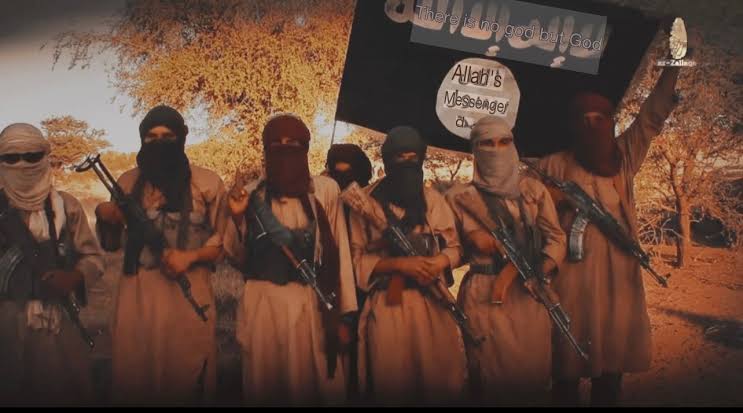
Cholera Outbreak Kills Nine ISWAP Terrorists in Timbuktu Triangle
By: Zagazola Makama
A cholera outbreak has reportedly claimed the lives of nine fighters of the Islamic State West Africa Province (ISWAP) in the Timbuktu Triangle, a known terrorist stronghold in Borno State, intelligence sources have disclosed.
The sources told the News Agency of Nigeria (NAN) that the outbreak had spread through the group’s enclaves, highlighting deteriorating sanitary conditions and limited access to medical care within the insurgents’ camps.
According to the intelligence, two additional ISWAP fighters infected with the disease were allegedly executed by fellow terrorists after attempts to manage their condition at Kimba village proved unsuccessful.
The sources said the development pointed to the worsening health conditions within the terrorist hideouts, where sustained military pressure has disrupted logistics, including access to medicines and treatment facilities.
The sources added that commanders had also been urged to intensify efforts to intercept medical supplies and pharmaceuticals intended for terrorist camps in order to further degrade ISWAP’s treatment capability and operational resilience.
The reported outbreak comes amid sustained offensives by troops of Operation HADIN KAI, who continue to target terrorist enclaves and logistics networks across the Lake Chad region in a bid to degrade the insurgents’ fighting capacity.
Cholera Outbreak Kills Nine ISWAP Terrorists in Timbuktu Triangle
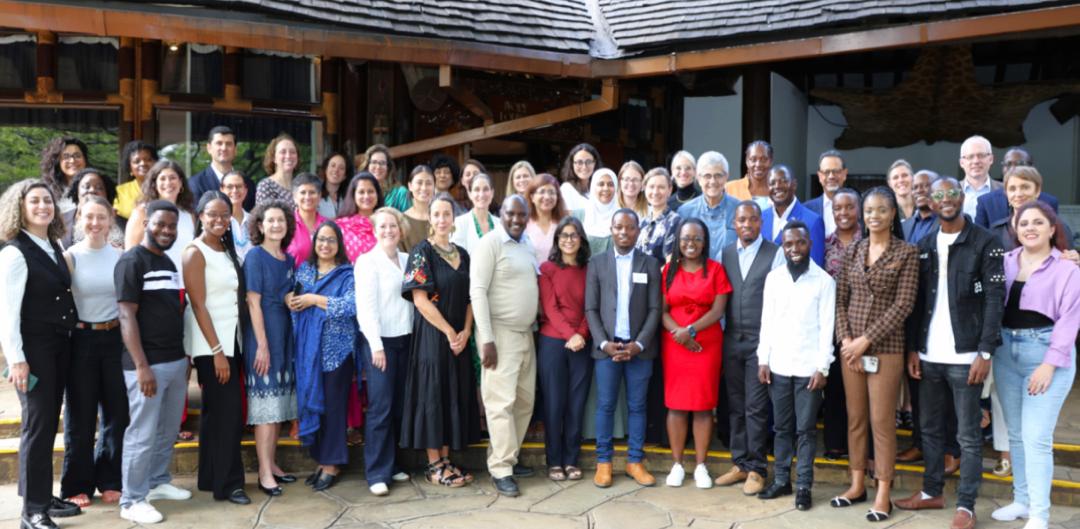
Nigerian Children in Crisis ‘Fiscally Invisible’ as New Report Exposes Funding Failure
…Study warns millions of children caught in conflict, displacement and hunger are being overlooked in government budgets; journalists launch accountability network to push for reforms
By: Michael Mike
Nigeria’s youngest and most vulnerable children are being failed by a financing system that does not even recognise them in public budgets, a new report has warned, raising fresh concerns over the country’s worsening humanitarian and human capital crisis.
The report, Financing Early Childhood Development in Crisis (ECDiC) in Nigeria: From Fiscal Invisibility to Child-Level Results, released in Abuja on Wednesday by the Moving Minds Alliance (MMA) in partnership with Whole Child Advisors, paints a grim picture of how children aged between zero and eight years living in conflict, displacement, climate emergencies and poverty are largely excluded from government financing despite overwhelming evidence that the early years determine a child’s lifelong prospects.
According to the report, Nigeria’s Human Capital Index stands at just 0.36, meaning a child born today is expected to achieve only 36 per cent of his or her productive potential because of poor health, inadequate nutrition and weak learning outcomes.
The findings come at a time when Nigeria continues to grapple with one of Africa’s largest humanitarian emergencies. Insurgency in the North-East, widespread banditry and communal violence across the North-West and North-Central, alongside climate-induced disasters and economic hardship, have displaced millions of people and disrupted access to healthcare, nutrition and education for children.
The report estimates that 4.9 million children require life-saving humanitarian assistance, while 3.6 million people were forcibly displaced in 2025. It also notes that about 31 million Nigerian children are under the age of five, with between 33.8 and 40 per cent suffering from stunting, an indication of chronic malnutrition that permanently affects brain development and future productivity.
It further revealed that severe acute malnutrition cases surged to about 1.8 million children in 2025, representing a 69 per cent increase over previous estimates, while Nigeria’s under-five mortality remains among the highest globally at 105 deaths per 1,000 live births.
Despite these alarming indicators, the report found that Early Childhood Development in Crisis (ECDiC) has no dedicated budget line in either federal or state budgets, effectively rendering vulnerable children “fiscally invisible.”
The analysis identified five major weaknesses responsible for the financing gap: the absence of dedicated budget lines, poor implementation of approved budgets, fragmented funding channels, recurrent expenditure that crowds out essential child services, and an uneven distribution of humanitarian resources heavily concentrated in Borno, Adamawa and Yobe, leaving crisis-hit communities in the North-West and North-Central with inadequate support.
The report noted that less than five per cent of education spending benefits early childhood or emergency learning programmes.
It concluded that the existing financing framework prioritises institutions rather than children’s actual needs.
“The system is built to fund structures, not children,” the report stated, warning that Nigeria cannot realise its human capital ambitions without creating a financing architecture capable of delivering predictable resources directly to frontline services supporting young children in emergencies.
To reverse the trend, the report recommended seven urgent reforms, including establishing a federal policy framework for Early Childhood Development in Crisis, introducing dedicated budget tags across federal and state budgets, protecting releases of funds, simplifying financing channels, expanding results-based financing tied to measurable child outcomes, redistributing resources according to vulnerability rather than geography, and creating a blended investment mechanism involving government, humanitarian agencies and philanthropic organisations.
Speaking at the launch, the Nigeria Early Childhood Development in Crisis Coalition Coordinator, Arome Agenyi, stressed that the future of millions of Nigerian children depends on decisions taken today.
He said: “Behind every successful adult is an early childhood story. The question is not whether children are developing; they are. The question is whether they are developing to their full potential. In this regard, the stories journalists choose to tell today can shape the policies, investments, and public actions that determine the future of millions of Nigerian children, especially those in crisis contexts across Nigeria.”
As part of efforts to sustain public attention on the issue, the Moving Minds Alliance also inaugurated the Nigerian chapter of the Reporters for Early Childhood in Humanitarian Crisis (REACH) Network, bringing together journalists committed to evidence-based reporting on children affected by humanitarian emergencies.
Global Co-Chair of the REACH Network, Mojeed Alabi, said children who are invisible in government budgets often become invisible in politics and public discourse.
“When children living through conflict, displacement, climate shocks and economic hardship become fiscally invisible, they also risk becoming politically invisible,” Alabi said.
“The launch of the REACH Network in Nigeria is a commitment by journalists to change that narrative. Through sustained, evidence-based reporting, we will amplify the voices of the youngest and most vulnerable children, hold leaders accountable for their commitments, and ensure that early childhood development remains at the heart of public policy and national development.”
Also speaking, Interim Director and Co-Chair of the Moving Minds Alliance, Dr. Katie Murphy, described the report as the clearest roadmap yet for reforming child financing in Nigeria.
“This new report gives us something we haven’t had before: a clear picture of where Nigeria’s investment in its youngest children in crisis is falling short, and exactly what it will take to close that gap,” she said.
Murphy added that the planned Act for Early Years Financing Summit in 2027 would seek commitments from governments, donors and development partners to move from fragmented financing to a system that delivers resources directly to children.
The coalition hopes that by 2028, both federal and state governments will have introduced dedicated ECDiC budget tags, released at least 70 per cent of allocated funds annually, and achieved measurable improvements in child development outcomes across local government areas.
For child development advocates, the report is more than a financial audit; it is a warning that unless Nigeria changes how it invests in children during their earliest years, particularly those growing up amid conflict and displacement, the country risks entrenching poverty, inequality and lost human potential for generations.
Nigerian Children in Crisis ‘Fiscally Invisible’ as New Report Exposes Funding Failure

Troops Kill Six ISWAP Fighters, Wound Seven in Failed Attack on Borno Military Base

Cholera Outbreak Kills Nine ISWAP Terrorists in Timbuktu Triangle

Sokoto donates 62 armoured vehicles, 320 motorcycles to security agencies

Roger Federer’s Shock as DNA Results Reveal Myla and Charlene Are Not His Biological Children

THE PLIGHT OF FARIDA

FAILED COUP IN BURKINA FASO: HOW TRAORÉ NARROWLY ESCAPED ASSASSINATION PLOT AMID FOREIGN INTERFERENCE CLAIMS
-
 News2 years ago
Roger Federer’s Shock as DNA Results Reveal Myla and Charlene Are Not His Biological Children
-
Opinions4 years ago
THE PLIGHT OF FARIDA
-
 News1 year ago
FAILED COUP IN BURKINA FASO: HOW TRAORÉ NARROWLY ESCAPED ASSASSINATION PLOT AMID FOREIGN INTERFERENCE CLAIMS
-

 News2 years ago
EYN: Rev. Billi, Distortion of History, and The Living Tamarind Tree
-
 Opinions5 years ago
POLICE CHARGE ROOMS, A MINTING PRESS
-

 ACADEMICS2 years ago
A History of Biu” (2015) and The Lingering Bura-Pabir Question (1)
-

 Columns2 years ago
Army University Biu: There is certain interest, but certainly not from Borno.
-

 Politics1 year ago
2027: Why Hon. Midala Balami Must Go, as Youths in Hawul and Asikira/Uba Federal Constituency Reject ₦500,000 as Sallah Gift
