
News
Experts Demand Stronger Research, Free Screening, Community Mobilisation to Tackle HPV in Nigeria

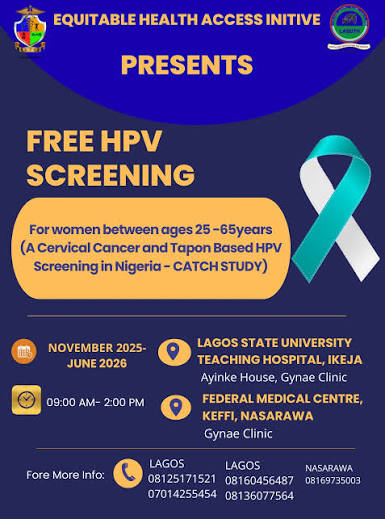
Experts Demand Stronger Research, Free Screening, Community Mobilisation to Tackle HPV in Nigeria
By: Michael Mike
Nigeria’s battle against Human Papillomavirus (HPV) must move beyond routine vaccination campaigns to embrace deeper research, free nationwide screening and aggressive grassroots engagement if the country is to defeat cervical cancer and other HPV-related diseases, medical experts declared on Wednesday in Abuja.
The call came during activities marking the 2026 International Human Papillomavirus Awareness Day, a global initiative championed by the International Papillomavirus Society to spotlight the dangers of HPV and promote prevention strategies.
Speaking at the event, Professor Imran Oludare Morhason-Bello of the University College Hospital Ibadan and the University of Ibadan warned that limiting HPV conversations to cervical cancer alone is both misleading and dangerous.
According to him, the virus is responsible not only for cervical cancer but also for cancers of the throat, mouth, anus and penis, affecting men and women alike.
“Human Papillomavirus is not a women-only issue,” he said. “It affects both genders and people of different backgrounds. We must broaden our understanding and our response.”
He urged policymakers to adopt a transdisciplinary approach that integrates medical science, social research, education, religious institutions and community leadership. He noted that vaccine hesitancy differs across regions and communities, making localised research and engagement essential for effective intervention.
Morhason-Bello stressed that policies designed without grassroots input often fail, adding that communities must be partners — not passive recipients — in the fight against HPV.
The experts acknowledged Nigeria’s progress in rolling out HPV vaccines through the National Primary Health Care Development Agency, with over 16 million girls vaccinated so far. However, they noted that with tens of millions more eligible, the country must intensify both funding and awareness to close the gap.
The LOC Chairman, IHAD IPVS-Nigeria and Nigeria Country Ambassador, IPVS, Dr. Maureen Umeakuewulu called for a nationwide advocacy movement that includes religious leaders, traditional rulers, women’s organisations, youth groups and survivors of cervical cancer.
She said misinformation — particularly claims that the vaccine causes infertility — continues to undermine progress.
“The vaccine has been in use globally for over 20 years. There is no evidence linking it to infertility,” she said. “But while we are educating communities, those spreading falsehoods are also active. We must be louder with facts.”
She further argued that cervical cancer screening should be made free in all hospitals — public and private — to eliminate financial barriers that discourage women from testing.
“If women gather the courage to seek screening and are turned back by costs they cannot afford, then our advocacy is weakened,” she said. “Screening must be accessible to every woman, regardless of her income or location.”
Also speaking, President of the Nigerian chapter of the International Papillomavirus Society, Professor Mohammed Manga,, described HPV as one of the few cancer-causing infections that is preventable through vaccination and early detection.
He said the global slogan “One Less Worry” reflects the reality that cervical cancer could become a thing of the past if countries commit fully to vaccination, screening and sustained awareness.
“This is not a battle for doctors alone,” Manga said. “It requires the media, policymakers, community leaders, caregivers and citizens. No single profession can eliminate HPV. It is a collective responsibility.”
Participants agreed that while funding remains critical, education and system efficiency are equally important. They pointed to gaps in training, misinformation among some health workers and infrastructural weaknesses within the health system.
The experts concluded that Nigeria stands at a critical moment: with vaccines available and awareness growing, the country has the tools to dramatically reduce HPV-related deaths. What remains, they said, is the political will, sustained funding and community-driven action to turn that potential into reality.
Experts Demand Stronger Research, Free Screening, Community Mobilisation to Tackle HPV in Nigeria


Troops rescue two female kidnap victims in Kogi
By: Zagazola Makama
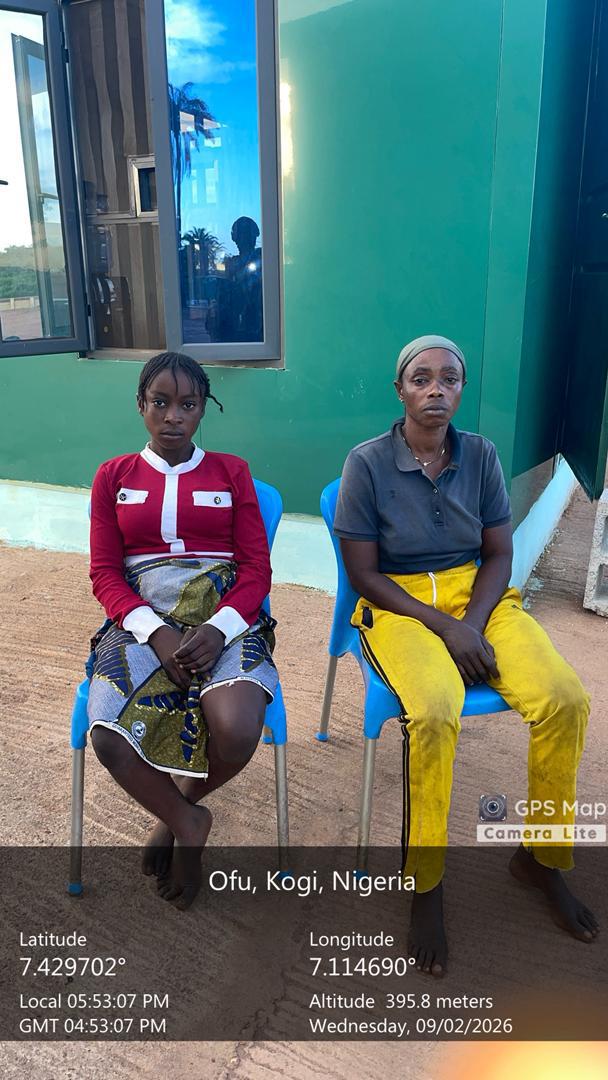
Troops of the Nigerian Army have rescued two female kidnap victims after suspected bandits invaded a farmland in Ajodomodo Village, Dekina Local Government Area of Kogi State.
The incident occurred at about 10:30 a.m. on Wednesday, Sept. 2, when the suspected bandits reportedly invaded the farmland and abducted the two victims before fleeing the area.
Troops of the 21 Battalion Quick Reaction Force swiftly responded to the incident and pursued the fleeing criminals along their withdrawal route towards Agbodakodo Forest.
According to sources the pressure from the troops forced the abductors to abandon the victims in the forest.
The victims, identified as 15-year-old Miss Mohammed Rahinat and Mrs Hassanatu Mohammed, 30, were subsequently rescued unharmed.
The two women were evacuated to the 21 Battalion Medical Reception Station for medical attention and further assessment.
The military said troops have continued operations in the area to track the fleeing suspects and prevent further attacks on farming communities.
The rescue illustrates the importance of rapid military response and timely information sharing in countering kidnapping and other criminal activities in rural communities.
Troops rescue two female kidnap victims in Kogi
Operation Whirl Stroke troops raid suspected terrorist hideout, arrest five in Taraba
By: Zagazola Makama
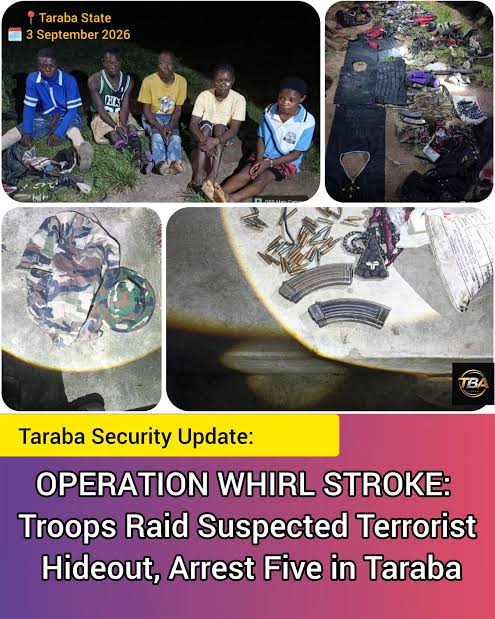
Troops of Joint Task Force, Operation Whirl Stroke, have raided a suspected terrorist hideout in Peva, Takum Local Government Area of Taraba State, arresting five persons believed to be associates of a notorious bandit operating in the area.
The operation was conducted in the early hours of Thursday, Sept. 3, following credible intelligence received by the troops at about 12:30 a.m. regarding the location of the suspected criminal hideout.
Acting on the information, troops of Sector 1, in conjunction with personnel of Sector 3, both under Operation Whirl Stroke, swiftly mobilised and launched a raid on the identified location.
However, the suspected terrorists reportedly received information about the advancing troops and fled the hideout before the arrival of the security forces.
Undeterred, the troops conducted a thorough search of the area, leading to the arrest of five persons suspected to be associates of the fleeing criminal.
Items recovered during the operation included two AK-47 rifle magazines, 46 rounds of 7.62mm special ammunition, one woodland camouflage jacket, one jungle hat, four charm vests and assorted charms.
The military said the arrests and recovery of the items had provided useful leads that could support ongoing efforts to identify and apprehend other members of the criminal network.
The arrested suspects are expected to undergo further profiling and interrogation as troops intensify efforts to establish their roles and track the fleeing members of the group.
Operation Whirl Stroke assured residents across Taraba and other parts of its Joint Operations Area of continued intelligence-driven operations aimed at sustaining pressure on terrorists, bandits and other criminal elements.
The task force also urged residents to remain vigilant and provide timely and credible information to security agencies to support ongoing operations and enhance the protection of communities.
Operation Whirl Stroke troops raid suspected terrorist hideout, arrest five in Taraba
Nigeria Rejects Alleged Support for Niger Coup, Reaffirms Commitment to Democracy
By: Michael Mike
The Federal Government has rejected claims that Nigeria or the Economic Community of West African States (ECOWAS) backed the recent failed coup attempt in Niger Republic, describing the reports circulating on social media as false, mischievous and intended to damage Nigeria’s image.
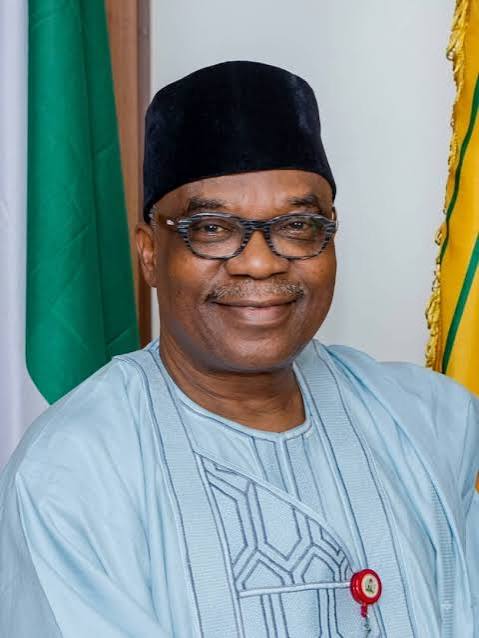
Minister of State for Foreign Affairs, Ambassador Sola Enikanolaiye, said Nigeria had never supported, and would not support, any military coup or unconstitutional change of government in any country.
In a statement issued on Thursday, Enikanolaiye said Nigeria remained a defender of constitutional order, democracy and regional stability, stressing that the country would not endorse illegality “no matter who is involved or which country is concerned.”
He recalled the ministry’s August 30 statement on the situation in Niger, in which Nigeria expressed concern over developments in the neighbouring country and called for a peaceful, inclusive and participatory return to stability and constitutional order.
According to him, Nigeria’s position on unconstitutional changes of government remains unequivocal, adding that the use of force to resolve political differences was contrary to the country’s longstanding foreign policy.
“While Nigeria is a proud and committed member of ECOWAS, it is unfair, mischievous and entirely false to suggest that Nigeria endorses or condones the military coup,” the minister said.
He urged Nigerians at home and abroad to disregard videos and narratives circulating online which, he said, were aimed at sowing discord and misleading the public.
Enikanolaiye reaffirmed Nigeria’s commitment to the ECOWAS Protocol on Democracy and Good Governance as well as the African Union’s zero-tolerance policy on unconstitutional changes of government.
He said Nigeria would continue to work with ECOWAS, the AU and the international community to defend democracy, uphold the rule of law and promote peace and stability across West Africa, the Sahel and the wider African continent.
Nigeria Rejects Alleged Support for Niger Coup, Reaffirms Commitment to Democracy

Troops rescue two female kidnap victims in Kogi

Operation Whirl Stroke troops raid suspected terrorist hideout, arrest five in Taraba

Nigeria Rejects Alleged Support for Niger Coup, Reaffirms Commitment to Democracy

Roger Federer’s Shock as DNA Results Reveal Myla and Charlene Are Not His Biological Children

THE PLIGHT OF FARIDA

FAILED COUP IN BURKINA FASO: HOW TRAORÉ NARROWLY ESCAPED ASSASSINATION PLOT AMID FOREIGN INTERFERENCE CLAIMS
-
 News2 years ago
Roger Federer’s Shock as DNA Results Reveal Myla and Charlene Are Not His Biological Children
-
Opinions5 years ago
THE PLIGHT OF FARIDA
-
 News1 year ago
FAILED COUP IN BURKINA FASO: HOW TRAORÉ NARROWLY ESCAPED ASSASSINATION PLOT AMID FOREIGN INTERFERENCE CLAIMS
-

 News2 years ago
EYN: Rev. Billi, Distortion of History, and The Living Tamarind Tree
-
 Opinions5 years ago
POLICE CHARGE ROOMS, A MINTING PRESS
-

 ACADEMICS3 years ago
A History of Biu” (2015) and The Lingering Bura-Pabir Question (1)
-

 Columns3 years ago
Army University Biu: There is certain interest, but certainly not from Borno.
-

 Politics1 year ago
2027: Why Hon. Midala Balami Must Go, as Youths in Hawul and Asikira/Uba Federal Constituency Reject ₦500,000 as Sallah Gift
