
News
FG, GEF Launch Project to Tackle Plastic Pollution

FG, GEF Launch Project to Tackle Plastic Pollution
By: Michael Mike
Nigeria has taken another step toward addressing plastic pollution with the inauguration of the Global Environment Facility (GEF) Child Project 11193, titled “Circular Solutions to Plastic Pollution in Abuja, Nigeria.”
The project was formally unveiled in Abuja, and is being implemented by the National Environmental Standards and Regulations Enforcement Agency (NESREA) in collaboration with the United Nations Environment Programme (UNEP) and other partners.
It is aimed at reducing plastic waste associated with single-use water sachets through circular economy approaches.
Speaking at the event, the Director-General and Chief Executive Officer of NESREA, Prof. Innocent Barikor described the project as a critical intervention in Nigeria’s environmental sustainability efforts. He noted that while sachet water has improved access to drinking water for millions of Nigerians, its widespread use has contributed significantly to plastic pollution, clogged drainage systems, flooding, ecosystem degradation, and public health concerns.
According to NESREA, Nigeria consumes more than 2.5 billion litres of sachet water annually, produced by over 32,000 manufacturers nationwide. The scale of consumption, the agency said, underscores the urgency of adopting innovative and sustainable solutions to manage plastic waste without compromising access to potable water.
The GEF-supported project is designed around a circular model that goes beyond conventional waste management. Its key focus areas include strengthening policies and regulations on sustainable water packaging, promoting public-private partnerships, piloting reuse and refill systems for community water supply, increasing public awareness, and enhancing coordination and knowledge sharing at national and global levels.
Meanwhile, the Global Environment Facility (GEF) has reaffirmed its support for Nigeria’s efforts to curb plastic pollution with the launch of the Nigeria Plastics Child Project, also known as “Circular Solutions to Plastic Pollution in Nigeria,” under the Plastic Reboot Nigeria initiative.
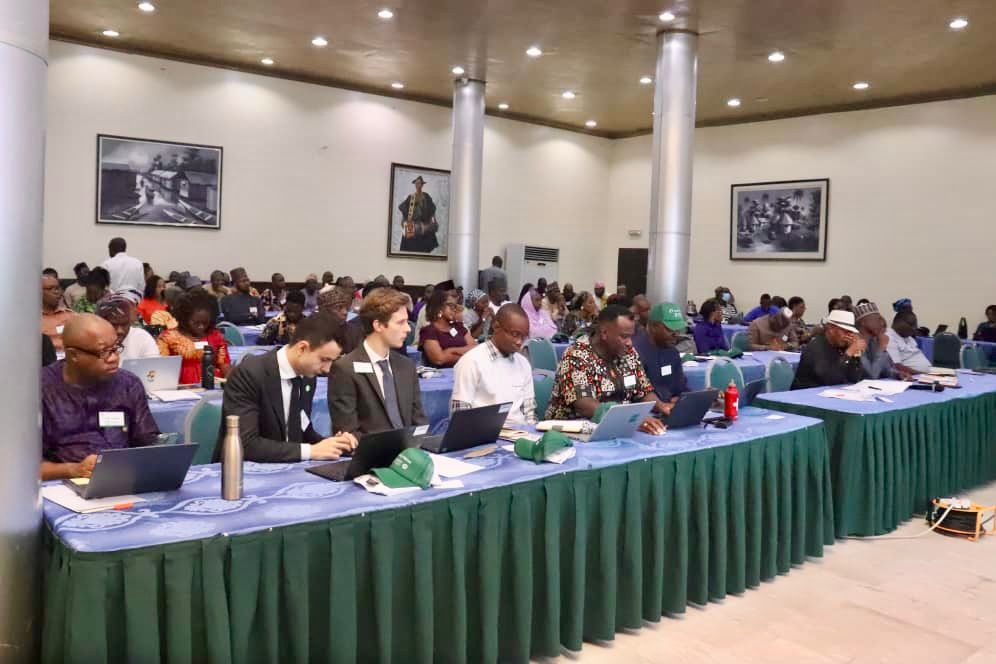
Speaking at the project launch, Senior Environmental Specialist at the GEF and Lead of the GEF-8 Plastics Integrated Programme, Evelyn Swain,, praised the National Environmental Standards and Regulations Enforcement Agency (NESREA) for convening the event and for its role as the national executing agency.
She also acknowledged the United Nations Environment Programme (UNEP) for its partnership in supporting Nigeria’s transition to sustainable and circular plastic solutions.
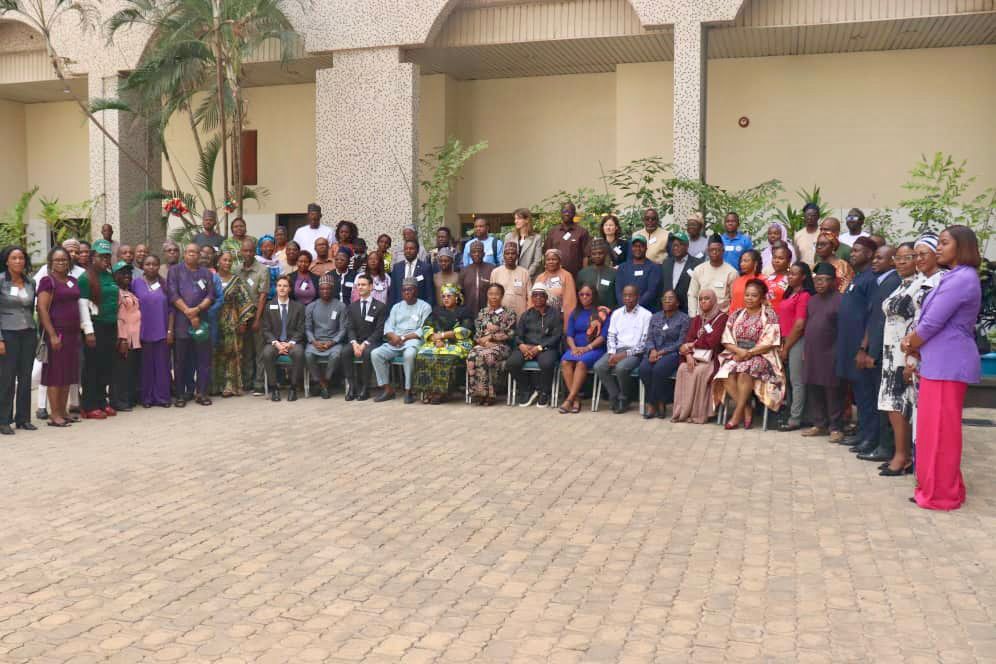
Swain noted that the wide representation of government institutions, civil society organisations, the private sector, academia and development partners at the event reflected a shared determination to tackle plastic pollution through inclusive and coordinated action.
She explained that the Nigeria Plastics Child Project is part of a broader GEF-8 investment under the Circular Solutions for Plastic Pollution Integrated Programme, one of eleven integrated programmes approved by the GEF in 2022.
According to her, the integrated programme approach is designed to address the root causes of environmental degradation through systems-based interventions that generate multiple global environmental benefits across climate change, biodiversity, chemicals and ocean protection.
The programme, led by UNEP in collaboration with partners including the World Wide Fund for Nature (WWF), focuses on transforming single-use plastics in the food and beverage sector. Swain stressed that unlike traditional approaches centred mainly on waste management, the initiative prioritises upstream and midstream solutions such as product design, innovative business models, supportive policies and market incentives.
She disclosed that Nigeria emerged from a competitive selection process in early 2023, citing the country’s strong political commitment to plastic pollution reduction, ongoing efforts to track plastic flows, and active engagement through the National Plastic Action Partnership. These factors, she said, demonstrated Nigeria’s readiness to work collaboratively across sectors to achieve large-scale impact.
Following its selection, Nigeria worked with UNEP to develop au project concept aligned with GEF priorities, including policy coherence, financial leverage, innovation and stakeholder engagement. Swain added that while the global integrated programme was officially launched in Washington, DC in 2025 and strengthened through its first annual conference in Brazil, its true success would be measured by results delivered at the country level.
She described Nigeria’s project as a strong example of how national “child projects” serve as the driving force of the integrated programme’s ambitions.
As implementation begins, Swain called for effective coordination and communication within the global programme, deeper private sector involvement—particularly in transforming the sachet water industry—and a strong focus on scaling lessons learned. She emphasised that Nigeria’s experience could inform policy reforms and future investments both within and beyond the GEF partnership.
She noted that the GEF, views Nigeria not only as a beneficiary of the Plastic Reboot initiative but as a potential leader whose actions can help shape global responses to plastic pollution, while ensuring continued access to safe drinking water.
The Nigeria Plastics Child Project is expected to play a key role in reducing reliance on single-use plastic water sachets and advancing circular economy solutions nationwide.
FG, GEF Launch Project to Tackle Plastic Pollution


Military
COAS commissions 6 Division RSM House, reaffirms frontline leadership role of regimental sergeant majors
COAS commissions 6 Division RSM House, reaffirms frontline leadership role of regimental sergeant majors
By Zagazola Makama
The Chief of Army Staff (COAS), Lieutenant General Waidi Shaibu, has reaffirmed the critical role of Regimental Sergeant Majors (RSMs) in strengthening discipline, leadership and operational effectiveness across the Nigerian Army.
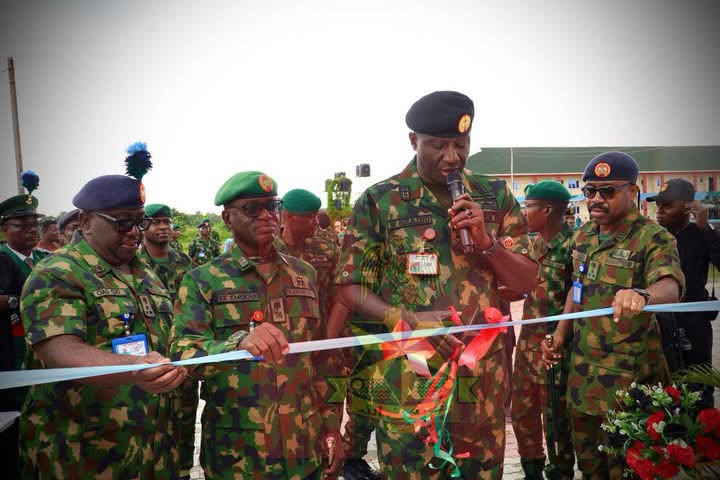
The COAS made the remarks on Friday during the commissioning of the newly constructed 6 Division Regimental Sergeant Major’s House in Port Harcourt as part of activities marking the 163rd Nigerian Army Day Celebration (NADCEL 2026).
Speaking at the event, Lt.-Gen. Shaibu described RSMs as the backbone of regimental administration and custodians of discipline, standards and morale within the Army.

He said the provision of dedicated accommodation for RSMs was not merely a welfare initiative but a strategic investment aimed at enhancing leadership at the unit level and improving operational efficiency.
According to the Army Chief, RSMs play a vital role in translating command directives into action, maintaining troop cohesion and ensuring effective implementation of operational orders across various theatres of operation.
He added that the senior non-commissioned officers also serve as the crucial link between officers and soldiers, fostering professionalism, mutual trust and esprit de corps within formations and units.

Shaibu noted that the influence of RSMs in mentoring soldiers, enforcing discipline and sustaining troop morale remains indispensable to the success of military operations.
He stressed that providing conducive accommodation for key regimental leaders would enhance their ability to discharge their responsibilities effectively and contribute to improved operational readiness.
The COAS reiterated that under his “Soldier First” philosophy, the welfare of personnel, particularly those occupying critical leadership positions, remains a top priority.
He maintained that sustained investment in welfare infrastructure and leadership development would continue to strengthen the Nigerian Army’s capacity to remain a resilient, professional and combat-ready force capable of addressing the country’s evolving security challenges.
COAS commissions 6 Division RSM House, reaffirms frontline leadership role of regimental sergeant majors
Troops intercept cattle grazing in restricted area in Plateau, herders flee
By: Zagazola Makama
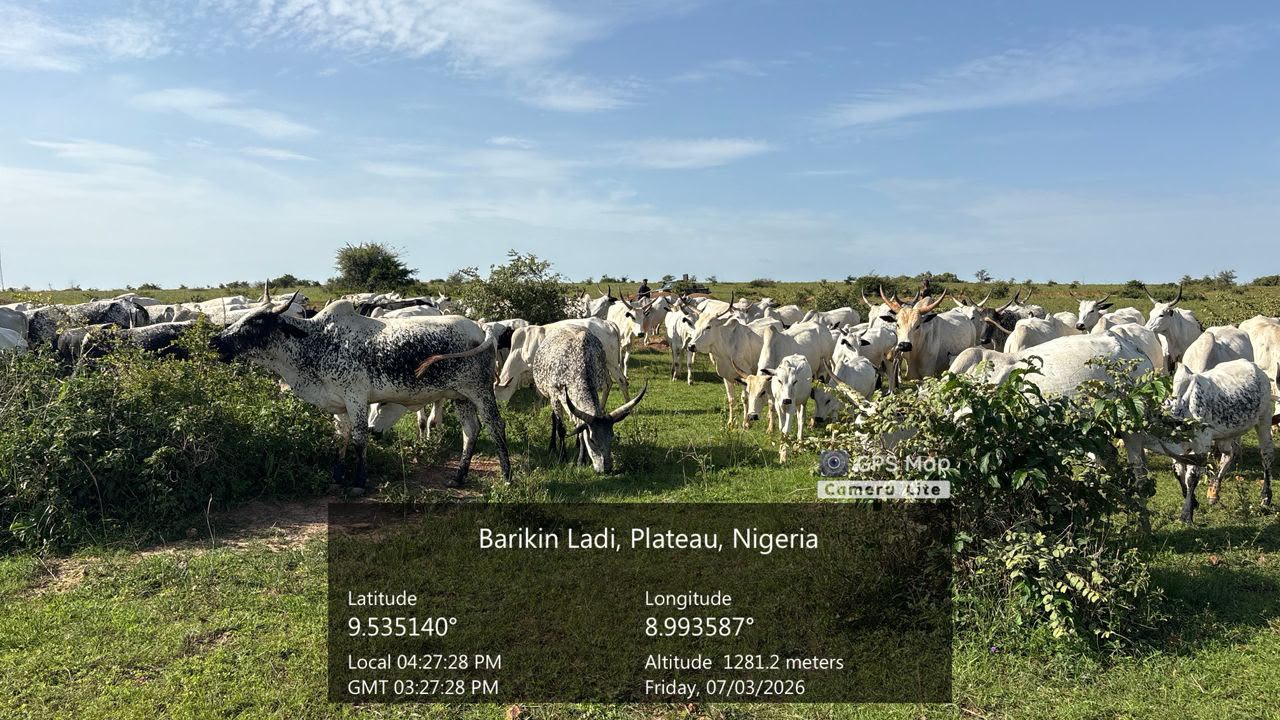
Troops of Operation Enduring Peace (OPEP) have intercepted a herd of cattle found grazing in a restricted area in Barkin Ladi Local Government Area of Plateau State.
Intelligence sources told Zagazola Makama that the troops of Sector 4 OPEP responded to a report of illegal grazing at about 3:30 p.m. on Friday in Nyerwie village.
The sources said that upon arrival at the location, the troops found a herd of cattle grazing in the restricted area.
The herders reportedly fled into nearby bushes on sighting the troops, abandoning the livestock.
The intercepted cattle were subsequently moved to a secure location for necessary administrative action, while efforts are ongoing to identify and apprehend the fleeing herders, the sources said.
Troops intercept cattle grazing in restricted area in Plateau, herders flee
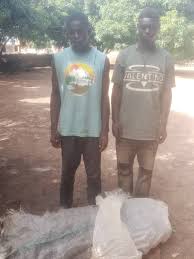
Troops Arrest Two Suspected Vandals, Recover Stolen Construction Materials in Jos
By: Zagazola Makama
Troops of Operation Enduring Peace (OPEP) have arrested two suspected vandals in Jos North Local Government Area of Plateau State for allegedly stealing construction materials from an ongoing road construction site.
Security sources said the suspects, identified as Arin Itse, 21, and Agwom Christopher, 19, were arrested at about 9:30 a.m. on Friday during a routine patrol by troops of Sector 1, Sub-Sector 12, along the Kwanga road in Jos North.
The sources said the suspects were intercepted while in possession of iron rods suspected to have been stolen from a road construction company handling an ongoing project in the area.
According to the sources, the suspects were taken into custody for further investigation, while the recovered iron rods were handed over to the construction company.
The sources added that investigations were ongoing to determine the circumstances surrounding the alleged theft and whether other persons were involved.
Troops Arrest Two Suspected Vandals, Recover Stolen Construction Materials in Jos

COAS commissions 6 Division RSM House, reaffirms frontline leadership role of regimental sergeant majors

Troops intercept cattle grazing in restricted area in Plateau, herders flee

Troops Arrest Two Suspected Vandals, Recover Stolen Construction Materials in Jos

Roger Federer’s Shock as DNA Results Reveal Myla and Charlene Are Not His Biological Children

THE PLIGHT OF FARIDA

FAILED COUP IN BURKINA FASO: HOW TRAORÉ NARROWLY ESCAPED ASSASSINATION PLOT AMID FOREIGN INTERFERENCE CLAIMS
-
 News2 years ago
Roger Federer’s Shock as DNA Results Reveal Myla and Charlene Are Not His Biological Children
-
Opinions4 years ago
THE PLIGHT OF FARIDA
-
 News1 year ago
FAILED COUP IN BURKINA FASO: HOW TRAORÉ NARROWLY ESCAPED ASSASSINATION PLOT AMID FOREIGN INTERFERENCE CLAIMS
-

 News2 years ago
EYN: Rev. Billi, Distortion of History, and The Living Tamarind Tree
-
 Opinions5 years ago
POLICE CHARGE ROOMS, A MINTING PRESS
-

 ACADEMICS2 years ago
A History of Biu” (2015) and The Lingering Bura-Pabir Question (1)
-

 Columns2 years ago
Army University Biu: There is certain interest, but certainly not from Borno.
-

 Politics1 year ago
2027: Why Hon. Midala Balami Must Go, as Youths in Hawul and Asikira/Uba Federal Constituency Reject ₦500,000 as Sallah Gift
