
News
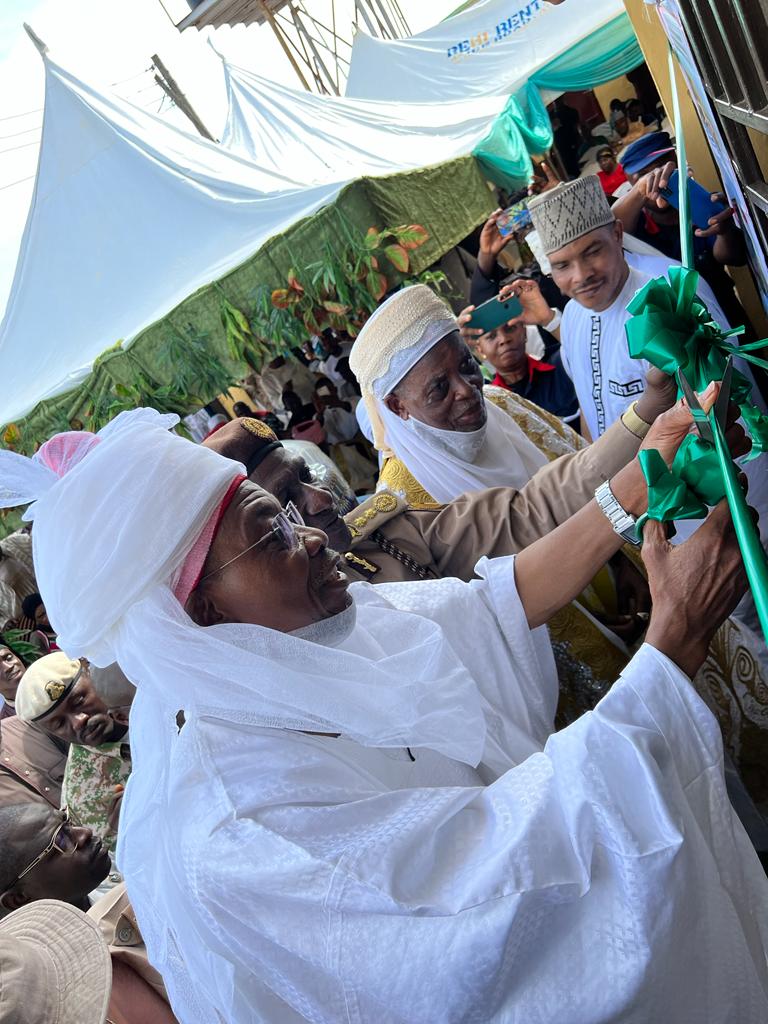
FG Launches Passport Front Office in Auchi, Promises Home Delivery of Passport

FG Launches Passport Front Office in Auchi, Promises Home Delivery of Passport
By: Michael Mike
The Federal Government has launched an additional Passport Front Office in Auchi, Edo State, as part of it’s effort towards effective service delivery to Nigerians. This is just as it promised to launch a home delivery service of passport.
The Minister of Interior, Ogbeni Rauf Aregbesola, who spoke at the opening of the Nigeria Immigration Service Passport Front Desk Office in Auchi, Edo State on Saturday, said that it is the intention of the government to provide the passport for anyone desirous of it within reasonable time at affordable price and without any stress.
He said the launch of another Passport Front Desk Office is significant as the Nigerian Passport is a proof of existence especially for those outside the country, warning that inability to produce it on demand may bring untoward consequences.
The Minister said: “What we are doing here is significant for two main reasons. The first is the right (and even the necessity) of Nigerians, especially those in the diaspora to hold the Nigerian passport. Except for those travelling outside the country or intend to, most of those who hold the passport do so for identification purposes. For some, it is also a thing of pride to be able to brandish the green back of the passport. But for those outside the country, the passport is the proof of their existence. Inability to produce it on demand may bring untoward consequences. The government therefore wants to provide the passport for anyone desirous of it within reasonable time, at affordable price and without any stress whatsoever.
“The second is the need, flowing from the first, to break out of the regular.”
Aregbesola promised to conclude negotiations with NIPOST on the usage of its speedy mail service to start delivering passport to Nigerians who opt for such service.
He revealed that: “We are in the final stage of concluding negotiations with NIPOST to begin using its speed mail service to deliver passports to Nigerians wherever they are in the world after production.”
Aregbesola, while stating that Edo State has one of the highest passport applications in Nigeria, also revealed that the waiting period between application and collection would likely increase due to the recent increase in demand.
He said: “Our current working schedule is that fresh application would take six weeks after biometric data registration and three weeks for renewal. This is reasonable, competitive and in line with the global best practices.
“The challenge however is the waiting period at the point of application and data registration. All applicants will be put on a queue, depending on the centre of their choice, to determine the registration date. Regrettably, it might take two months in some highly competitive centres where application is very high. We have no control over this.”
He however said that the Federal Government is intentional about opening more front desk offices, in order to increase the registration centres and reduce the waiting period before biometric data capture.
He said: “It is our projection that by the time we open more front offices like this, the waiting period will not be more than three days. Indeed, the more front offices we have, the less the waiting period. Our long term plan will be to involve private operators who will provide the lounge for a fee, but the equipment and personnel will be provided by the Nigeria Immigration Service (NIS).”
Commending the Nigeria Immigration Service (NIS) for improving on their services, which includes issuance of top quality passport booklet, Aregbesola affirmed that Nigeria is among the first five countries in the world and the first in Africa to have the enhanced e-passport.
Adding that: “The reform introduced to the NIS led to the Automated Passport issuance process which has eliminated touts and racketeers in Passport administration, introduction of E-border Management, MIDAS and the commencement of E-Passport across Passport Control Offices and Diplomatic Missions.”
He therefore advised applicants not to go through third parties but apply on any internet enabled device through the Nigeria Immigration Service portal. This is as he lamented the prevalence of a few unscrupulous officials subverting the system, cornering applications, inflating prices, extorting from applicants and hiding already produced passports.
The Minister said: “I will therefore plead with applicants not to go through them and other touts hanging around passport offices, soliciting from applicants. The application can be done in your bedroom on your android phone through the Nigeria Immigration Service portal. You do not need a third party. Those who patronise them are the ones encouraging their nefarious activities and frustrating our efforts at transparency and providing seamless service.”
He also urged applicants to plan ahead for their travelling, as travelling requires long term planning, whether for education, work, leisure or migration, except for urgent national assignment or medical emergency.
This year alone, the Minister of Interior have been in Daura in Katsina State, Alimosho in Lagos, Ilesa in Osun, Zaria in Kaduna and Oyo in Oyo State to commission Passport Front Desk Offices.
Speaking earlier, the Comptroller General of the Nigerian Immigration Service, Isah Idris, said that the choice of Auchi is apt, as Edo State ranks fifth amongst states with the highest volume of passport applications locally.
According to him, “In the past 365 days,
Edo state has processed 56,291 applications out of the 1.5 million
passports produced in Nigeria. The commissioning of this front office will no doubt go a long way in reducing the traffic in Edo State and other neighbouring States.
The NIS CG restated the necessity for prospective applicants to synchronize the data in their passport application with the information in
their National Identification Number.
He said: “May I quickly add that for the enhanced e-passport, it is essential to ensure that prospective passport applicants synchronize the data in their passport application with the information in their NIN (National Identification Number).”
While maintaining that the unveiling of front office and others like it, are crucial to achieving the NIS mandate of ensuring that the e-passport issuance process is brought closer to the people, Jere seized the opportunity to affirm the commitment of the Nigeria Immigration Service to meeting the rising demands for Passport services globally, thereby repositioning the Service towards attaining a truly world-class status to compete with its counterparts worldwide.
Meanwhile, during a visit to the Otaru of Auchi’s Palace, the Otaru, HRH, Alhaji Aliru H. Momoh, Ikelebe III, turbaned Minister of Interior, Ogbeni Rauf Aregbesola, and then installed him as the Rafeeq of Auchi Sacred Kingdom. The traditional ruler revealed that the title means Ogbeni Aregbesola a bossom friend of the Auchi Kingdom.
In response, the minister declared that, “everything happening here today is a surprise to me. I am excited, happy and joyous because it is coming at the right time. The depth of my joy has no word to describe it. When I retire, I plan to always wear my turban as a true and proper Muslim,” the minister declared.
FG Launches Passport Front Office in Auchi, Promises Home Delivery of Passport


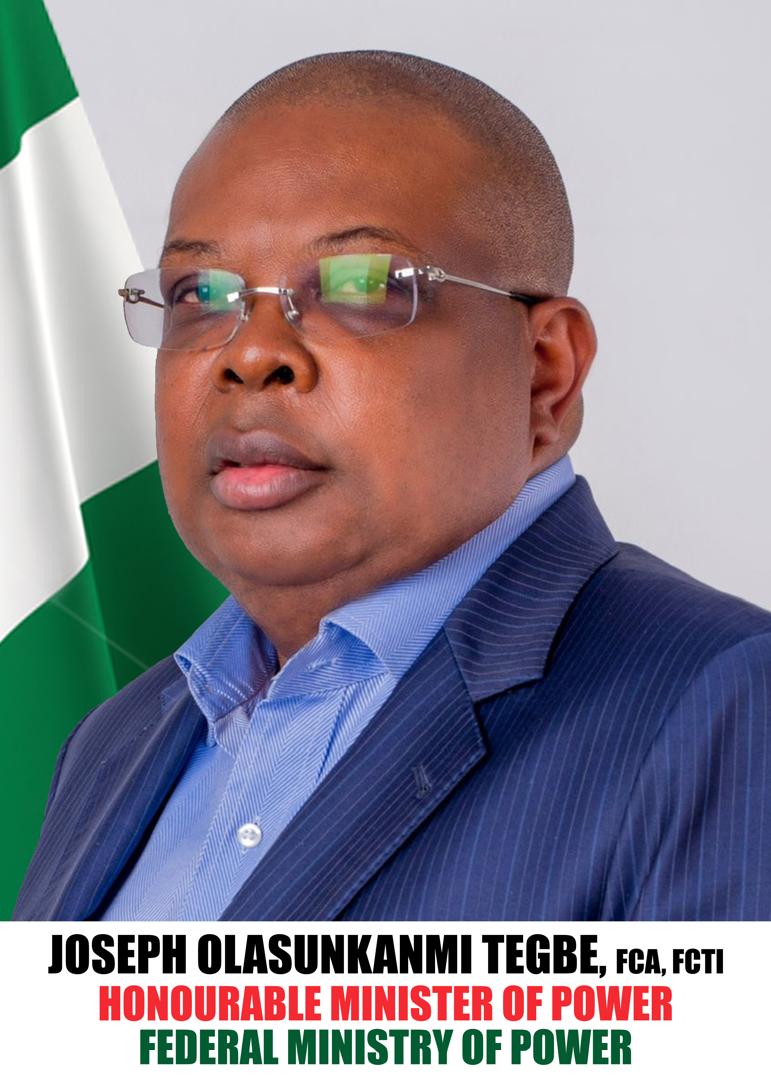
Tegbe Unveils Reform Blueprint, Demands Shared Responsibility to Fix Nigeria’s Power Sector
By: Michael Mike
The Minister of Power, Joseph Tegbe, has unveiled a comprehensive action plan aimed at stabilising and transforming Nigeria’s electricity sector, insisting that meaningful reform will only succeed if every stakeholder in the Nigerian Electricity Supply Industry (NESI) accepts collective responsibility for addressing the country’s longstanding power challenges.
Speaking at the second quarterly Nigerian Electricity Supply Industry (NESI) Stakeholders’ Meeting convened by the Nigerian Electricity Regulatory Commission (NERC) in Abuja, Tegbe outlined a reform agenda centred on transparency, accountability, infrastructure protection and improved market governance.
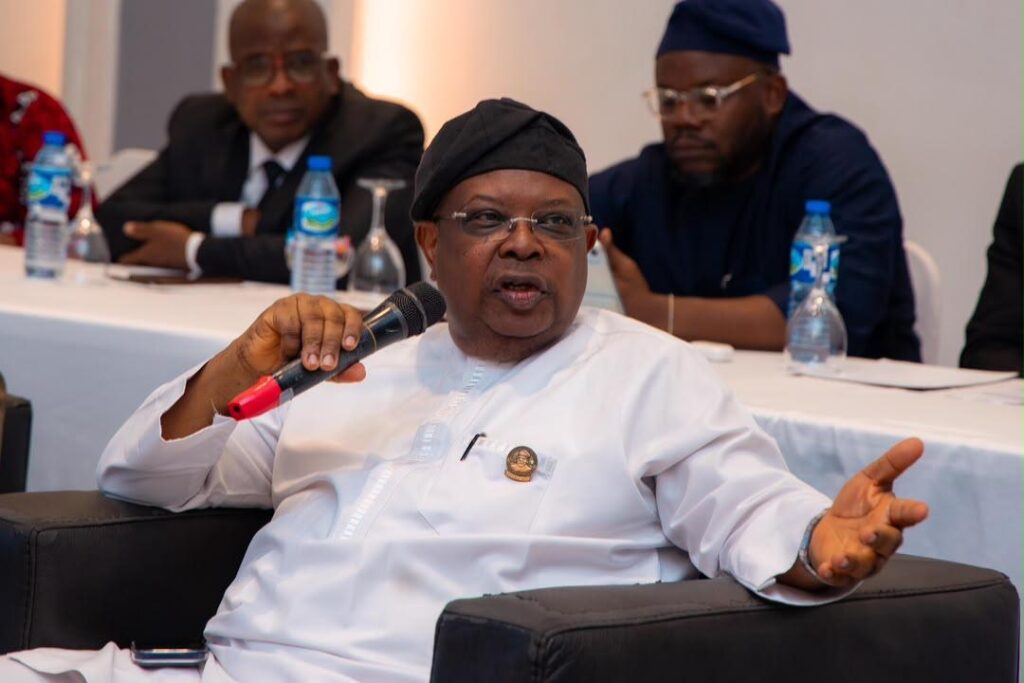
The meeting, chaired by Dr. Musiliu Oseni, Chairman of NERC, brought together key industry players, including electricity generation companies (GenCos), distribution companies (DisCos), the Transmission Company of Nigeria (TCN), the Nigerian Independent System Operator (NISO), regulators and policymakers. Also in attendance were the Special Adviser to the President on Power, Rilwan Lanre Babalola, and the Permanent Secretary of the Federal Ministry of Power, Mahmuda Mamman.
Delivering the keynote address, the minister stressed that Nigeria’s electricity crisis was a shared challenge requiring collective ownership across the entire power value chain.
“Nigeria’s power crisis was not built by one hand, and it will not be fixed by one hand,” Tegbe declared, urging operators, regulators and government institutions to work collaboratively in delivering sustainable reforms.
A major plank of the minister’s agenda is the protection of electricity infrastructure. He called for power installations across the country to be formally designated as Critical National Assets, warning that vandalism, grid sabotage and electricity theft amount to economic sabotage with direct consequences for millions of Nigerians.
According to him, safeguarding existing infrastructure must go hand in hand with improving operational efficiency. He disclosed that the ministry is already addressing transmission bottlenecks, strengthening spinning reserves and upgrading priority substation protection systems to improve grid stability and reliability.
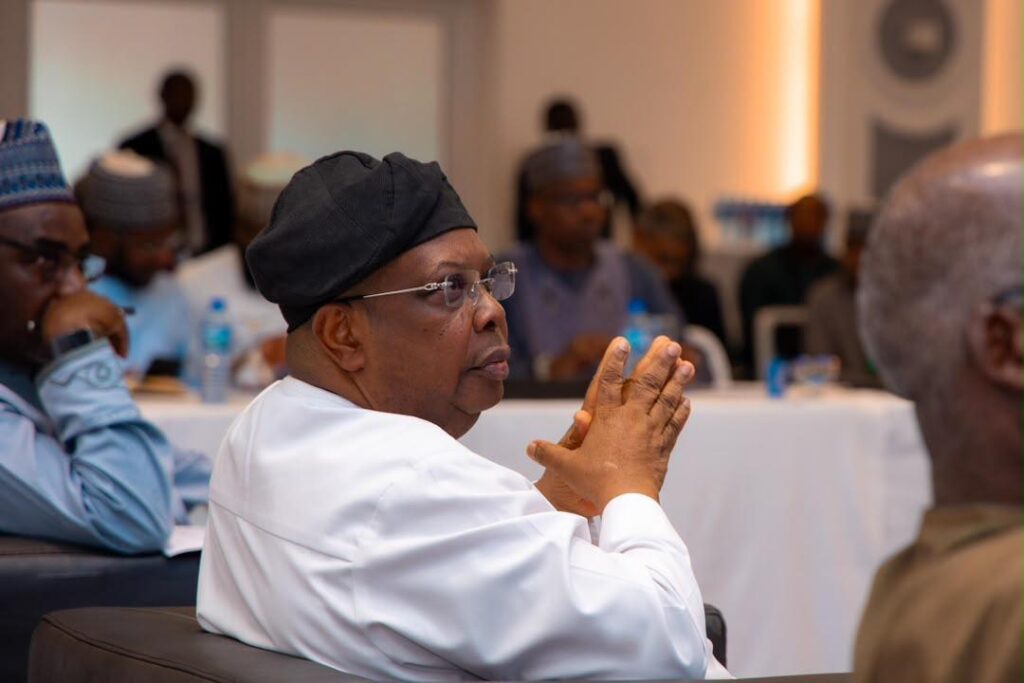
On electricity metering and tariff reforms, Tegbe said estimated billing had unfairly burdened consumers for years while concealing inefficiencies within the sector. He explained that the ministry is accelerating nationwide metering deployment to eliminate estimated billing and reduce Aggregate Technical, Commercial and Collection (ATC&C) losses.
The minister added that government is also developing a sustainable tariff transition framework that would shield vulnerable consumers from excessive cost increases while providing investors with the confidence and certainty required to commit long-term capital to the sector.
Addressing market governance, Tegbe maintained that tariff reforms could only achieve their objectives if all market participants complied with payment obligations. He called for greater transparency in the calculation of Derived Remittance Obligations (DRO), insisting that confidence in the electricity market depends on openness and credible financial reporting.
“Trust in the market begins with trust in the numbers,” he said.
As part of efforts to deepen accountability, the minister announced plans to publish key performance indicators (KPIs) and performance scorecards for electricity generation and distribution companies, enabling Nigerians to assess the performance of operators across the sector.
He reaffirmed his commitment to three guiding principles—transparency, speed and accountability.
According to him, the Ministry of Power will operate without hidden agendas, remove bureaucratic bottlenecks that delay reforms and ensure that individuals or organisations whose actions undermine the sector are held accountable.
“Reform is not a promise deferred,” Tegbe said. “It is a discipline being executed, every day.”
Tegbe Unveils Reform Blueprint, Demands Shared Responsibility to Fix Nigeria’s Power Sector
News
NDLEA Takes Custody of 6.8 Tonnes of Canadian Loud Seized at Lagos Port, Vows Crackdown on Drug Syndicates
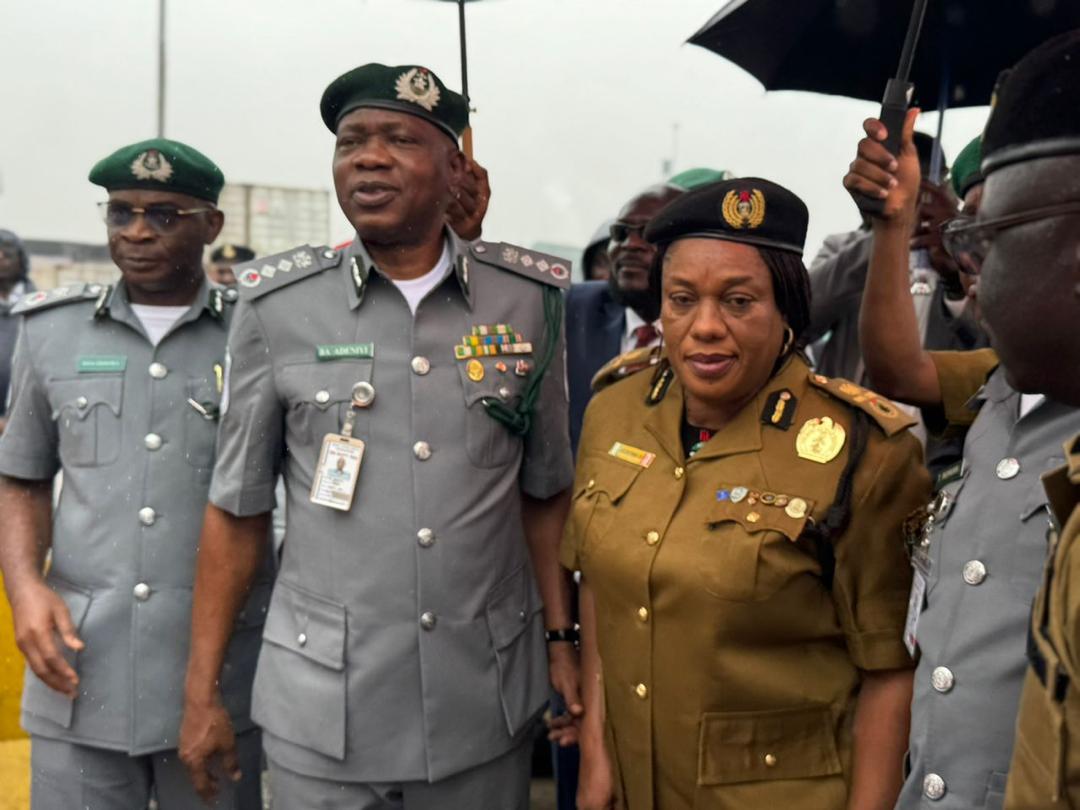
NDLEA Takes Custody of 6.8 Tonnes of Canadian Loud Seized at Lagos Port, Vows Crackdown on Drug Syndicates
By:Michael Mike
The National Drug Law Enforcement Agency (NDLEA) has formally taken custody of 6,778.5 kilogrammes (about 6.8 tonnes) of Canadian Loud, a potent strain of cannabis, intercepted at the Apapa Port in Lagos in what authorities describe as one of Nigeria’s biggest anti-narcotics seizures in recent years.
The seizure, made during joint examinations of two shipping containers by operatives of the NDLEA, the Nigeria Customs Service (NCS) and other security agencies, is being hailed as a major breakthrough in the fight against transnational drug trafficking and a testament to growing inter-agency and international intelligence cooperation.
Speaking during the formal handover ceremony at Apapa Port on Wednesday, the Chairman and Chief Executive Officer of the NDLEA, Brig. Gen. Buba Marwa (Rtd), represented by the Director of Seaport Operations, ACGN Ibinabo Archie-Abia, said the operation sends a strong warning to international drug cartels that Nigeria is closing its borders to illicit narcotics.
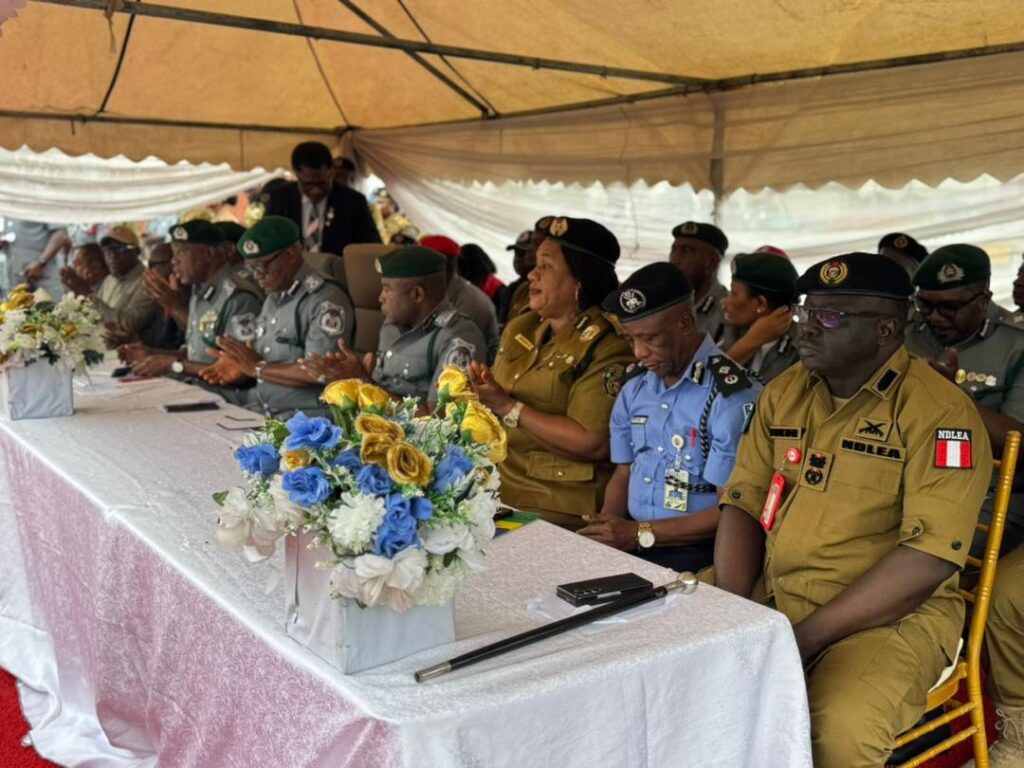
“Through two major seizures recorded on June 15 and June 24, 2026, we send a clear and unequivocal message that we are more determined than ever to dismantle organised criminal syndicates and drug trafficking networks operating within and beyond our borders,” Marwa declared.
The seizure followed months of intelligence-driven investigations led by the NDLEA’s Special Investigation Unit and Marine Intelligence Unit, working closely with the Royal Canadian Mounted Police (RCMP) and the Nigeria Customs Service.
According to Marwa, the traffickers employed sophisticated maritime routes spanning multiple continents in an attempt to evade law enforcement, but NDLEA operatives successfully tracked the consignments from Canada to Nigeria.
He explained that the first container, CAAU 7569127, departed Toronto on April 16, 2026, travelled by rail to Montreal before being loaded onto the vessel Ghallow Express. It was later trans-shipped at Tangier Med, Morocco, onto Spartel Trader, arriving at Tin Can Island Port before being moved through the Global Bonded Terminal and eventually to Apapa Port, where it was intercepted on June 10 during a joint examination.
The second container, HAMU 3246311, departed Montreal on May 1 aboard Africa Express, was later trans-shipped onto Algeciras Express, arrived at Tin Can Island Port on June 4 and was transferred to Apapa Port on June 22, where NDLEA officers were waiting.
Marwa stressed that the agency’s strategy goes beyond intercepting illicit consignments, warning that investigators would pursue the financiers and beneficiaries behind the trafficking networks.
“We recognise that the staggering profits generated by illicit drug trafficking continue to fuel crimes against humanity and against our nation despite the devastating toll they take on individuals, families and communities.
“Our work does not end with seizure. We are committed to identifying, arresting and prosecuting those responsible, confiscating their criminal assets, and ensuring they derive no benefit whatsoever from their illegal enterprise,” he said.
The NDLEA boss also commended the Nigeria Customs Service and other security agencies for what he described as exemplary professionalism and collaboration.
“I commend, in the strongest terms, the dedication, professionalism and courage of the officers and men of the NDLEA, the Nigeria Customs Service and all sister security agencies who refused to look away and allow these dangerous substances to flood our communities.
“This success was made possible by intelligence-sharing and operational synergy among all participating agencies. It is a powerful demonstration of what inter-agency collaboration, international cooperation and intelligence-driven operations can achieve in the fight against transnational organised crime and illicit drug trafficking,” he added.
The latest seizure represents another significant milestone in the NDLEA’s intensified campaign against drug trafficking under Marwa’s leadership, as the agency continues to strengthen partnerships with international law enforcement organisations and deploy intelligence-led operations to intercept illicit drugs before they enter Nigerian communities.
NDLEA Takes Custody of 6.8 Tonnes of Canadian Loud Seized at Lagos Port, Vows Crackdown on Drug Syndicates
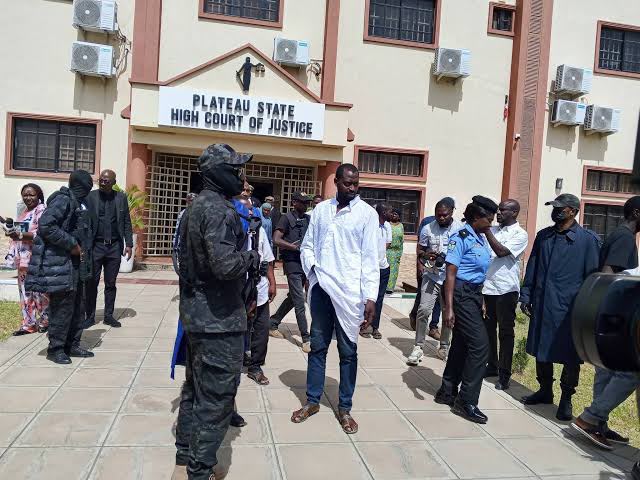
Angwa Rukuba Killings: Court To Rule On Jurisdiction, As Suspects Remain In DSS Custody
By: Zagazola Makama
The Plateau State High Court sitting in Jos, on Wednesday, reserved ruling on a preliminary objection on jurisdiction filed by counsel to some suspects arrested by the Department of State Services (DSS), and standing trial for their roles in the Angwa Rukuba massacre of late March and early April of 2026.
At the resumed trial on Wednesday, the Plateau State Director of Civil Litigation, Sabo Longji, told the court that two of the defendants filed a notice of preliminary objection challenging the the court’s jurisdiction, praying the court to strike out the case against them.
The prosecution, however, told the court presided over by Justice Gedeliah Fwomyon, that it filed a counter-affidavit dated June 29, 2026, which had been served on the defendants.
When the defence counsel, led by M. I. Shaba (SAN), M. I. Salihu and S.M Danlami, drew the court’s attention to the fact that the counter affidavit was filed out of time, the prosecution made a fresh application for extension of time, which the court granted.
The judge adjourned the matter to 2nd July 2026 to hear the motion, while the substantive matter was adjourned to 15th July, 2026.
The defendants are to remain in the custody of the DSS.
On Palm Sunday of 2026, a number of gunmen attacked Angwa Rukuba in Jos North LGA of the state, killing about 30 persons. Days later, the DSS arrested Adamu Isa Alhassan, Isa Umar Ibrahim, Auwalu Abubakar aka Auwalu Dogo, and Musa Abubakar Ibrahim aka Yaroro.
The Plateau State government charged the four suspects alongside one Ado Ibrahim, said to be at large, with criminal conspiracy, culpable homicide, illegal possession of firearms, and illegally dealing in arms and ammunition.
Angwa Rukuba Killings: Court To Rule On Jurisdiction, As Suspects Remain In DSS Custody

Tegbe Unveils Reform Blueprint, Demands Shared Responsibility to Fix Nigeria’s Power Sector

NDLEA Takes Custody of 6.8 Tonnes of Canadian Loud Seized at Lagos Port, Vows Crackdown on Drug Syndicates

Three Killed, Two Injured in Attack by Fulani Bandits Near Illegal Mining Site in Plateau

Roger Federer’s Shock as DNA Results Reveal Myla and Charlene Are Not His Biological Children

THE PLIGHT OF FARIDA

FAILED COUP IN BURKINA FASO: HOW TRAORÉ NARROWLY ESCAPED ASSASSINATION PLOT AMID FOREIGN INTERFERENCE CLAIMS
-
 News2 years ago
Roger Federer’s Shock as DNA Results Reveal Myla and Charlene Are Not His Biological Children
-
Opinions4 years ago
THE PLIGHT OF FARIDA
-
 News1 year ago
FAILED COUP IN BURKINA FASO: HOW TRAORÉ NARROWLY ESCAPED ASSASSINATION PLOT AMID FOREIGN INTERFERENCE CLAIMS
-

 News2 years ago
EYN: Rev. Billi, Distortion of History, and The Living Tamarind Tree
-
 Opinions5 years ago
POLICE CHARGE ROOMS, A MINTING PRESS
-

 ACADEMICS2 years ago
A History of Biu” (2015) and The Lingering Bura-Pabir Question (1)
-

 Columns2 years ago
Army University Biu: There is certain interest, but certainly not from Borno.
-

 Politics1 year ago
2027: Why Hon. Midala Balami Must Go, as Youths in Hawul and Asikira/Uba Federal Constituency Reject ₦500,000 as Sallah Gift
