
News
Flooding: Maiduguri is Safe and Not Under Threat- Borno Government


Flooding: Maiduguri is Safe and Not Under Threat- Borno Government
By: Michael Mike
Borno State Government has assured the residents of Maiduguri and environs that the area cannot be submerged by water as efforts are ongoing to check the seasonal flooding resulting from overflow of Alau Dam.
Alau Dam with a reservoir capacity of 112 million cubic meters was designed to support irrigation activities on the Alau river bank and to supply tap water in Maiduguri Metropolitan and Jere local government areas.
Parts of Maiduguri and Jere is presently flooded as the Alau Dam overflown into residential areas.
Th me Secretary to Borno State Government, Alhaji Bukar Tijani who went around on Thursday to assess the Alau Dam and damages present overflow has caused, assured residents that the Dam is not broken.
The SSG added that the state government is working with the Chad Basin Development Authority to take steps to protect Maiduguriri from flooding.

He said, “There have been a lot of worries as well as speculations that the whole Dam has broken down, but the dam has not broken down.”
“We have been to Alau Dam on behalf of His Excellency, Professor Babagana Umara Zulum, Executive Governor of Borno State.
“Borno State Government is partnering very strongly with the managers of Alau Dam. We have discussed and seen what to do, but the rumour of Maiduguri being flooded is not there”, he assured.
Governor, Babagana Umara Zulum, has sent a high-powered delegation to assess the impact of water overflow at Alau Dam which is threatening Maiduguri Metropolis and its environs.
Alhaji Bukar Tijani, the Secretary to Borno State Government, led the delegation. They were received by Engr Mohammed Zannah, the acting Managing Director of Chad Basin Development Authority (CBDA) at Alau Dam on Thursday.
The delegation comprises Engr Baba Bukar Gujibawu, SA to the Governor on Monitoring and Evaluation, Engr Adam Bababe, Executive Secretary, Borno Geographic Information Service, Engr Sadu Auno, Executive Secretary, Borno State Road Maintenance Agency and the Director General of the State Emergency Management Agency, Dr Mohammed Saidu Barkindo.
While briefing the SSG, Zannah disclosed that despite the high water level in the river which led to overflow, the present conditions do not pose a severe threat to the city, noting that all necessary measures were put in place to control the situation.
Flooding: Maiduguri is Safe and Not Under Threat- Borno Government


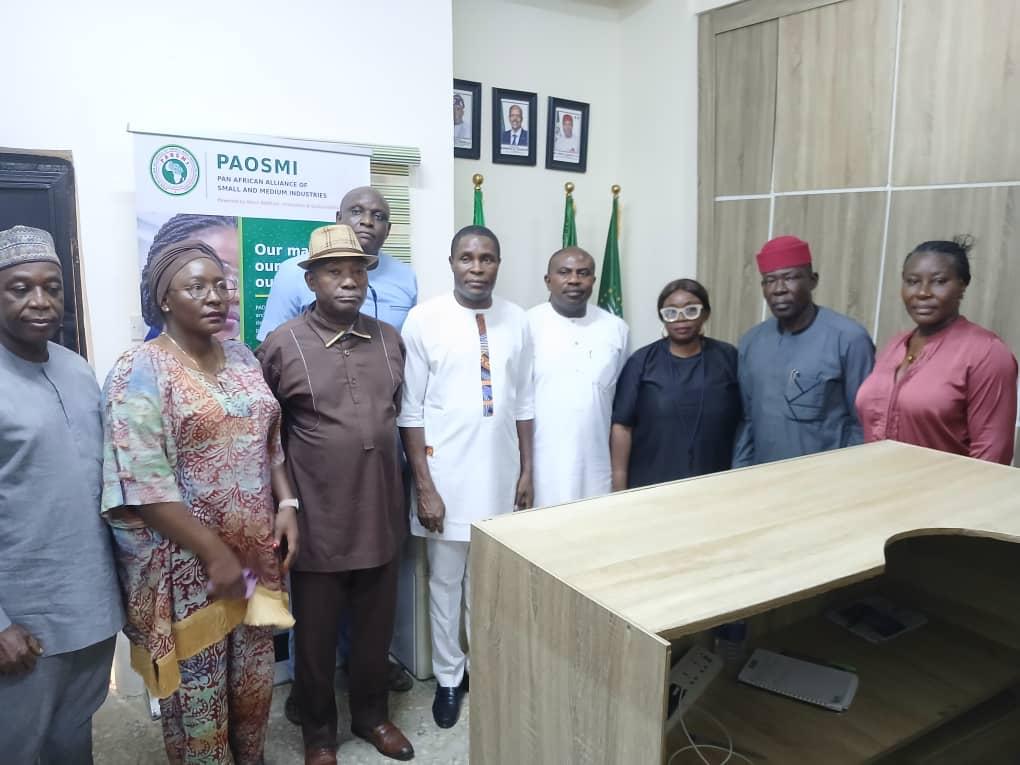
PAOSMI: High Interest Rates, Power Costs, Skills Gap Stifle African Industrialisation
By: Michael Mike
High lending rates, prohibitive electricity costs, shortage of skilled manpower and fragmented industrial standards across African countries are undermining industrialisation and the competitiveness of local businesses, the Pan African Alliance of Small and Medium Industries (PAOSMI) has warned.
The alliance has called for coordinated action by governments, industries, academia and the media to tackle the structural challenges confronting manufacturers and small businesses, warning that Africa’s industrial ambitions would remain elusive without policies that promote local production and strengthen productive capacity.
Director-General of PAOSMI, Dr Henry Emejuo, gave the warning on Thursday in Abuja when the executive members of the Association of West African Legislative Correspondents (AWALCO), led by its President, Comrade Innocent Odoh, paid him a courtesy visit.
Emejuo said PAOSMI was a continental organisation committed to supporting small and medium industries, emerging manufacturers and start-ups as critical drivers of economic transformation and industrial development across Africa.
He said the alliance operated both as a development institution and a membership-based organisation, designing and implementing programmes to strengthen businesses and expand industrial capacity, with affiliate networks in 40 countries and about 84 affiliate networks, including ASURI in Nigeria.
He explained that PAOSMI’s industrial development strategy was anchored on collaboration among industry, academia and government, with the media serving as an important partner in communicating policies, opportunities and challenges confronting the sector.
Under the framework, he said, universities and research institutions were expected to drive research and innovation, industries to translate research findings into commercially viable products, while governments provide policies and an enabling environment for businesses to grow.
Emejuo stressed the need for African countries to align their industrial policies with regional and continental frameworks, particularly the African Continental Free Trade Area (AfCFTA), to facilitate cross-border trade, expand markets and enable businesses to scale up production.
He said inconsistent policies and regulatory frameworks across countries continued to frustrate businesses seeking to operate beyond their domestic markets, making policy harmonisation imperative for the continent’s industrial advancement.
High borrowing costs, electricity burden
The PAOSMI director-general identified high interest rates and the short-term nature of loans available to businesses as major impediments to industrial investment, noting that manufacturers required long-term financing to acquire equipment, establish factories and expand production.
According to him, the cost of borrowing across Africa remained significantly higher than in more industrialised economies, while the limited duration of available credit made it difficult for businesses to undertake capital-intensive projects.
He argued that the lending practices of banks across the continent were not sufficiently geared towards supporting productive investments, calling for advocacy and reforms to make financing more affordable and accessible to manufacturers.
Emejuo also identified expensive and unreliable electricity as a major threat to the competitiveness of African industries, particularly Nigerian manufacturers, who often contend with high energy costs and inadequate supply.
He said electricity costs in Nigeria, estimated at about 16 cents per kilowatt-hour, placed local manufacturers at a disadvantage when competing with producers in countries where energy was cheaper and more reliable.
Beyond the cost, he said the unreliable supply of electricity further compounded the burden on businesses, forcing them to contend with additional operational expenses and making sustained production difficult.
He described the combination of expensive electricity and inadequate supply as a double jeopardy for businesses, stressing that industrial growth depended on access to affordable and dependable energy.
Skills deficit, fragmented standards
Emejuo also expressed concern over the shortage of skilled technical manpower needed to sustain industrial expansion, questioning the capacity of Nigeria’s educational and vocational training systems to adequately prepare graduates for the demands of industry.
He cited the deployment of foreign technical personnel in major industrial projects, including refinery operations, as a reflection of the need to reassess the country’s skills development and technical education framework.
He called for stronger partnerships between educational institutions and industries to identify skills requirements, redesign training programmes and equip graduates with competencies needed to operate modern industrial facilities.
The PAOSMI chief also advocated harmonisation of product standards and certification requirements across African countries to ease the movement of locally manufactured goods and reduce the cost of doing business within the continent.
He said businesses should not be compelled to undergo multiple registrations and certification processes when seeking to sell products in other African markets, adding that harmonised standards would facilitate trade and strengthen the AfCFTA.
While acknowledging efforts by the African Organisation for Standardisation and national standards agencies towards harmonisation, he urged stakeholders to accelerate the process to remove regulatory bottlenecks confronting manufacturers.
He further identified weak financial connectivity, difficulties in transferring funds across African countries, mobility constraints and transportation challenges as additional obstacles to intra-African trade.
AWALCO seeks stronger partnership
Earlier, AWALCO President, Comrade Innocent Odoh, said the association was seeking to deepen its partnership with PAOSMI to strengthen coverage of industrial development, trade, investment and manufacturing issues.
Odoh said an earlier engagement with PAOSMI had exposed members to the organisation’s activities and generated discussions on how both bodies could build a sustained relationship beyond occasional meetings.
He said the association was interested in expanding reportage of PAOSMI’s programmes and creating opportunities for its members to participate in interviews, conferences, seminars and workshops that would deepen their understanding of industrial and economic development.
Odoh said AWALCO, whose members cover legislative activities and related policy issues, was committed to enriching the partnership through sustained media engagement and wider dissemination of information on initiatives affecting businesses and the economy.
He assured PAOSMI of the association’s readiness to support its activities through reportage, adding that closer engagement would enable journalists to better understand issues affecting manufacturers and provide more informed coverage of policies and programmes aimed at strengthening the industrial sector.
Emejuo welcomed the proposed partnership, saying stronger engagement with the media would help bring the challenges confronting African industries to the attention of policymakers, governments and regional institutions while promoting advocacy and solutions capable of advancing industrial development.
PAOSMI: High Interest Rates, Power Costs, Skills Gap Stifle African Industrialisation
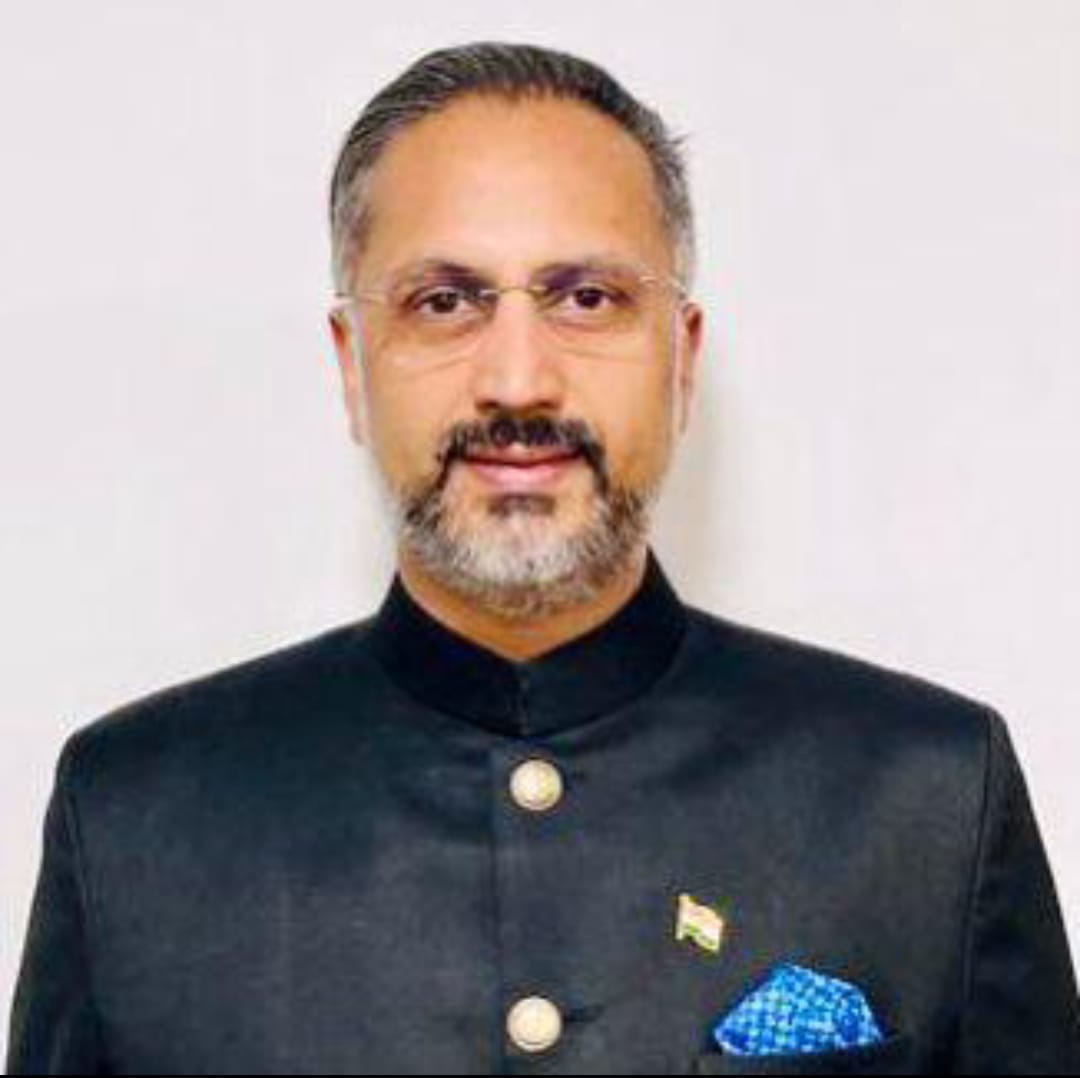
From Access to Opportunity : India’s decade long journey of transformation
[Abhishek Singh, High Commissioner of India to Nigeria, Benin and the ECOWAS]
By: Michael Mike
The truest test of economic growth is what changes inside a home: whether there is water in the tap, food on the table, a bank account in a mother’s name and a fair chance for her children. By that test, India’s journey over the past decade emerges as an unprecedented one.
Over the past decade, Hon’ble Prime Minister Narendra Modi’s clarion call of Sabka Saath, Sabka Vikas, Sabka Vishwas, Sabka Prayas—Together with All, Development for All, Trust of All, and Efforts of All has served as the guiding philosophy behind India’s socio-economic transformation. Welfare was looked at from a lens of empowerment, empowering and enabling every citizen to become an active partner in the nation’s progress.
The World Bank’s October 2026 Poverty & Equity Brief highlights one of the fastest sustained declines in poverty anywhere in the world. Between 2011 and 2023, extreme poverty in India—measured at US$3 a day—fell from 27.1 per cent to 2.6 per cent, while at the higher lower-middle-income line of US$4.20 a day, the poverty rate dropped from 57.7 per cent to 16.1 per cent, lifting roughly 496 million people above the threshold. These income gains are mirrored by sweeping improvements in human development: multidimensional poverty—which captures overlapping deprivations in health, education, and basic living standards—declined from 29.17 per cent in 2013–14 to 11.28 per cent in 2022–23, moving about 248 million people out of deprivation.
Essentials that restore dignity:
Poverty is not merely having a low income. It is the hours spent fetching water, the smoke in the kitchen and the illness that wipes out a family’s savings. India has chosen to tackle these deprivations together, with the aim of reaching every eligible household.
Rural homes with tap water rose from 32.3 million in August 2019 to 158.4 million, about 82 per cent, by May 2026. Under the Swachh Bharat (Clean India) Mission, more than 121 million household toilets have been built. Over 105 million free cooking-gas connections have gone to women from poor households. More than 30 million rural and 9.8 million urban homes have been completed under the Pradhan Mantri Awas Yojana housing programme. Average rural power supply rose from 12.5 hours a day in 2014 to 22.6 hours in 2025.
Security matters as much as access. Free foodgrain reaches to over 810 million people. Ayushman Bharat offers eligible families hospital cover of up to ₹500,000 a year. Maternal mortality fell from 130 per 100,000 live births in 2014–16 to 88 in 2021–23, while child stunting declined from 38.4 per cent in 2015–16 to 29.3 per cent in 2023–24. Social protection coverage has expanded from 19 per cent of the population in 2015 to 68.4 per cent in 2026 reaching nearly a billion people.
Delivery that reaches the last citizen:
A programme is only as good as its delivery. Effective delivery through the JAM Trinity (Jan Dhan bank accounts, Aadhaar digital identity and Mobile penetration) has powered what the World Bank’s October 2026 Poverty & Equity Brief highlights as a historic decline in poverty.
Between 2011 and 2023, 496 million Indians moved out of poverty as rates at the $4.20/day threshold fell from 57.7% to 16.1%, while extreme poverty ($3.00/day) dropped from 27.1% to 2.6%. Growth has been further anchored by expanded social transfers, rising household consumption, and rural women’s employment, supported by scale infrastructure including over 580 million Jan Dhan accounts, ₹6.83 trillion in direct benefit transfers for FY 2024–25, and high-volume UPI and ration portability systems.
From collective action to opportunity:
Governments can build toilets and lay pipes, but communities make the change last. Sanitation became a people’s movement. Village assemblies certify when their villages achieve full tap-water coverage, and local women have been trained to test water quality.
Women’s self-help groups show this collective strength most vividly. Around 100 million rural women belong to more than nine million groups through which they save, borrow and build enterprises. By May 2026, over 30 million had become Lakhpati Didis, (Millionaire Sisters) women whose annual household income exceeds ₹100,000. Collateral-free loans have also opened formal credit to small entrepreneurs, with about two-thirds of loans going to women.
These grassroots gains form the bedrock of broader economic growth. Healthier families, connected villages, and financially included women are better equipped to work, learn, and invest, while rural roads link farmers to markets and children to schools. According to the World Bank’s October 2026 brief, India added 134 million jobs between 2017 and 2023 nearly double the growth of the working-age population, propelled largely by rural women entering paid work alongside strong consumption growth and expanded social transfers.
It must be acknowledged though that our work is far from finished. Poverty that remains is increasingly concentrated in particular regions, and many workers need more productive and better-paid jobs. Meeting these challenges is central to our goal of a developed India, i.e. Viksit Bharat, by 2047.
A partnership for shared progress:
India and Nigeria are large, young and diverse democracies with longstanding bilateral ties. India opened its liaison office in Lagos in 1958, two years before Nigeria’s independence, and our ties became a Strategic Partnership in 2007. Today, bilateral trade stands at around US$ 08 billion (April – September 2026), more than 200 Indian companies operate in Nigeria, being the second largest employers of the Nigerian workforce after the Federal Government.
Every nation must chart its own path, and India offers its experience in that spirit. Our journey shows that basic services are investments in human potential, that digital public infrastructure can narrow the distance between citizen and state, and that development moves faster when women and communities lead it.
India is partnering closely with Nigeria to deepen cooperation in digital public infrastructure, affordable medicines, agriculture, food security, defence, trade and capacity building. True South–South cooperation demands more than economic statistics; it requires shared growth that reaches every doorstep and transforms the lives of every family.
From Access to Opportunity : India’s decade long journey of transformation
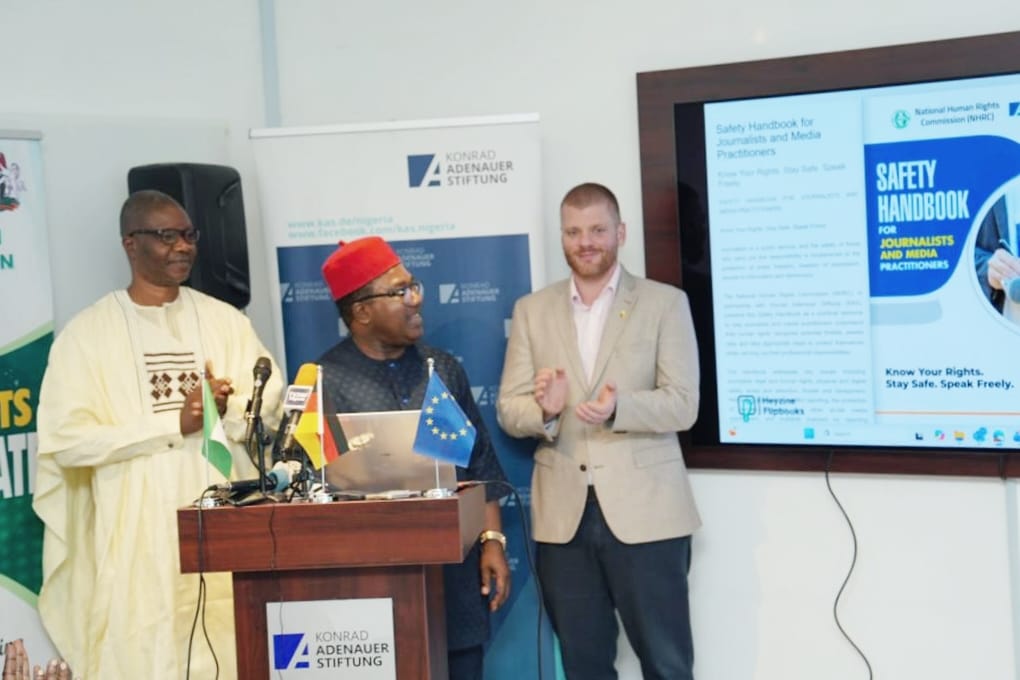
2027 Elections: NHRC, KAS Unveil Safety Handbook for Journalists
By: Michael Mike
The National Human Rights Commission (NHRC) and the Konrad-Adenauer-Stiftung (KAS) have unveiled a safety handbook for journalists and media practitioners to strengthen protection of media professionals and promote responsible reporting ahead of Nigeria’s 2027 general elections.
The handbook was launched at a joint breakfast meeting for journalists in Abuja, which examined the duties, rights and responsibilities of media practitioners reporting elections in conflict-prone areas.
The engagement, themed “Reporting Elections and the Protection of Democratic Participation in Conflict-Prone Areas: The Duties, Rights and Responsibilities of Journalists,” underscored the importance of safe, accurate, ethical and responsible journalism in protecting democratic participation, particularly in the build-up to the 2027 elections.
Speaking at the event, the Country Representative of KAS, Moritz Sprenker, described the safety of journalists as a fundamental pillar of democracy, stressing that the protection of media professionals should not be treated as a concern exclusive to the journalism profession.
He said professional journalism remained critical to separating verified information from rumours, misinformation and manipulation, particularly during periods of political tension, violence and conflict.
“The rights, protection, and safety of journalists are therefore not concerns of the media profession alone. They are questions concerning democracy itself,” Sprenker stated.
He, however, emphasised that press freedom must be exercised alongside professional responsibility, noting that journalists covering conflict-prone environments must carefully consider the implications of their reports, images and information on the safety of individuals and communities.
According to him, the handbook brings together two fundamental principles of journalism — the freedom to report and the right of journalists to carry out their professional duties safely and responsibly.
The Executive Secretary of the NHRC, Tony Ojukwu, OFR, SAN, reaffirmed that journalists’ safety was indispensable to democracy, credible elections and the protection of fundamental human rights.
Ojukwu said journalists’ rights to life, dignity, personal liberty, freedom of expression and press freedom were guaranteed under Sections 33, 34, 35, 39 and 22 of the 1999 Constitution of Nigeria, as amended.
He described the handbook as a practical guide intended to equip media practitioners with knowledge of their rights, preventive safety measures and appropriate responses to threats, intimidation and attacks encountered in the course of their professional responsibilities.
The NHRC boss urged journalists, media proprietors and security agencies to adopt and utilise the handbook, stressing the need for collective efforts to create a safer environment for journalism and strengthen respect for human rights.
Delivering the keynote address, Jide Ojo urged journalists to uphold the highest standards of accuracy, fairness, professionalism and ethical conduct, noting that press freedom must be accompanied by accountability and responsible public communication.
He commended the NHRC for producing the handbook, describing it as a timely and valuable resource, particularly for journalists covering sensitive assignments and beats where they are exposed to heightened security risks.
Participants at the meeting welcomed the initiative and pledged to uphold professional and responsible reporting, while commending the NHRC and KAS for providing practical guidance to help media practitioners navigate the risks associated with their work.
The NHRC and KAS reaffirmed their commitment to sustained collaboration towards credible elections, peaceful democratic participation, accountability and the protection of journalists, insisting that no media practitioner should face attacks, intimidation or threats for performing legitimate professional duties.
2027 Elections: NHRC, KAS Unveil Safety Handbook for Journalists

Beyond Politics: The Imperative of Stakeholder Support for Engr. Mustapha Gubio’s Vision for a United and Educated Borno

Emir of Fika appeals to APC gubernatorial candidate to define boundaries between Fika and Potiskum if elected

Beyond the Noise: Why Bulama Bukarti Chose the Arena Over the Sidelines

Roger Federer’s Shock as DNA Results Reveal Myla and Charlene Are Not His Biological Children

THE PLIGHT OF FARIDA

FAILED COUP IN BURKINA FASO: HOW TRAORÉ NARROWLY ESCAPED ASSASSINATION PLOT AMID FOREIGN INTERFERENCE CLAIMS
-
 News3 years ago
Roger Federer’s Shock as DNA Results Reveal Myla and Charlene Are Not His Biological Children
-
Opinions5 years ago
THE PLIGHT OF FARIDA
-
 News2 years ago
FAILED COUP IN BURKINA FASO: HOW TRAORÉ NARROWLY ESCAPED ASSASSINATION PLOT AMID FOREIGN INTERFERENCE CLAIMS
-
 Opinions5 years ago
POLICE CHARGE ROOMS, A MINTING PRESS
-

 News3 years ago
EYN: Rev. Billi, Distortion of History, and The Living Tamarind Tree
-

 ACADEMICS3 years ago
A History of Biu” (2015) and The Lingering Bura-Pabir Question (1)
-

 Columns3 years ago
Army University Biu: There is certain interest, but certainly not from Borno.
-

 Politics1 year ago
2027: Why Hon. Midala Balami Must Go, as Youths in Hawul and Asikira/Uba Federal Constituency Reject ₦500,000 as Sallah Gift
