
News
From Kogi to the Global Stage: Why One Nigerian Innovator’s Second-Place Finish Signals a New Blue Economy for Africa

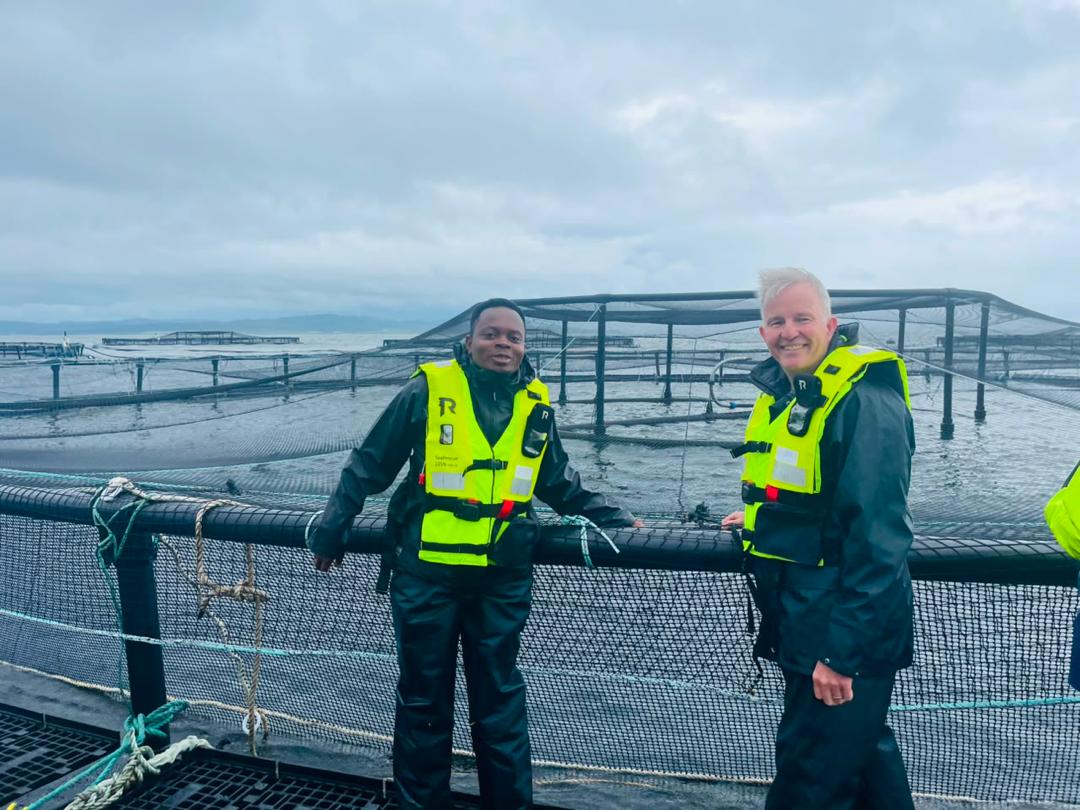
From Kogi to the Global Stage: Why One Nigerian Innovator’s Second-Place Finish Signals a New Blue Economy for Africa
By Danjuma Amodu
“My village gave me resilience. The farm taught me patience. The world is simply the next field I have been called to cultivate.” — Salifu Eyiojotule Daniel
Long before he stood on a global stage in London, Salifu Eyiojotule Daniel was a young boy growing up in Alagalani, one of the most remote settlements in Okpo District of Olamaboro Local Government Area, Kogi State.
Alagalani is the kind of place many Nigerians may never have heard of. It is the kind of place where dawn breaks to the sound of hoes striking the earth, the low hum of daily chores, and the steady rhythm of birds humming before taking flight to escape the catapults of young boys. This is a purposeful quiet: human labour and nature in unhurried sync, not the buzz of cars and horns. A place where opportunities often seem distant, where ambition frequently travels farther than infrastructure, and where success stories are usually told about people who left. Yet it was there, surrounded by farming communities and the realities of rural life, that Daniel first learned the values that would later define his journey: resilience, patience, hard work, and the courage to dream beyond circumstances.
His journey would later take him to Imane, another proud community in Olamaboro that became an important part of his upbringing and personal development. Between Alagalani and Imane, he learned to dream beyond geography while remaining deeply connected to the people and communities that shaped him.
Those early experiences carried him through St. Anthony Nursery and Primary School, Okpo; Gilgal High School, Ankpa; and eventually to the University of Agriculture, Makurdi, where he studied Aquaculture and Fisheries Management.
Years later, those same lessons would carry him beyond Kogi State and Nigeria to the Blue Food Innovation Summit in London, where he represented Nigeria as the only African founder selected among seven global startups invited to pitch on the summit’s main stage.
He would finish second. Not second in Nigeria. Not second in Africa. Second in a global competition decided by some of the world’s leading aquaculture investors, researchers, policymakers, and innovators.
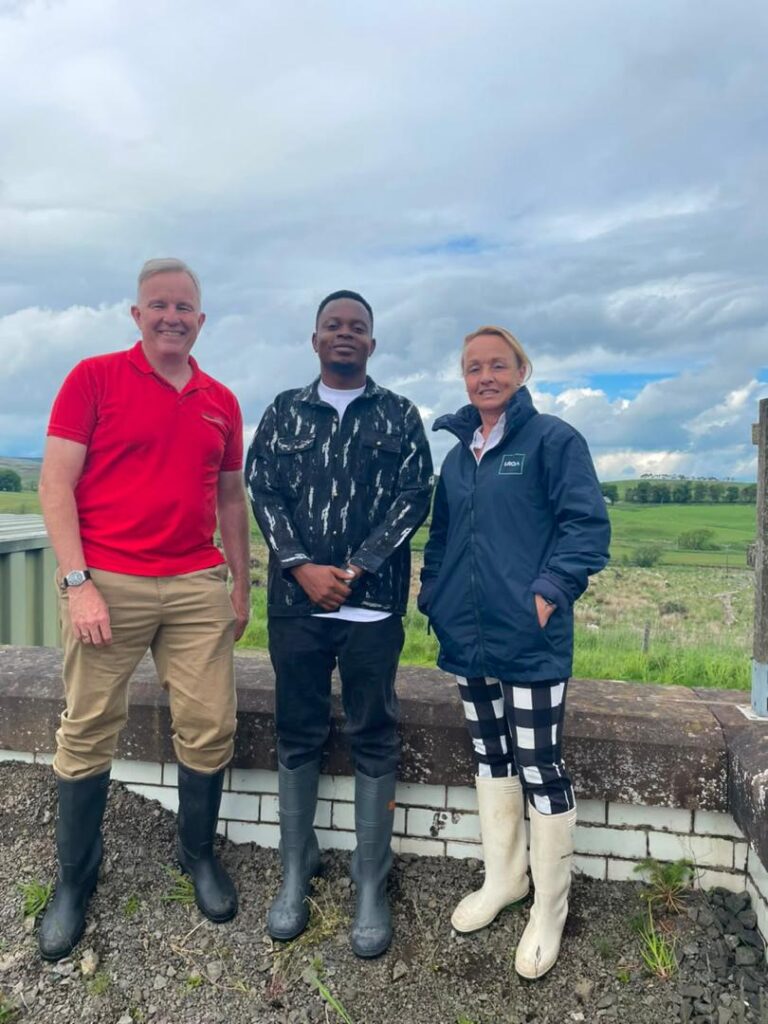
FROM RURAL KOGI TO THE BLUE ECONOMY
Daniel is the Founder and CEO of AquaProX Africa, a youth-led organisation working to advance sustainable aquaculture, food security, youth empowerment, and blue economy development across Africa.
At the Blue Food Innovation Summit, AquaProX Africa’s innovation was presented before a global audience of investors, researchers, industry leaders, and policymakers.
The achievement was remarkable not simply because of the result, but because of what it represented.
A young Nigerian from Olamaboro Local Government Area in Kogi East stood shoulder to shoulder with innovators from across the world and proved that Africa has solutions worth listening to.
For Daniel, the experience reinforced a belief he has long held.
“Africa does not lack talent. We do not lack ideas. What we often lack is access to the systems, networks, knowledge, and opportunities that allow those ideas to scale.”
LEARNING HOW THE WORLD’S BEST SYSTEMS THINK
The competition became the beginning of something even bigger.
Following the summit, Daniel embarked on a two-week aquaculture learning tour across England and Scotland, visiting some of the most advanced aquaculture facilities, universities, hatcheries, technology centres, and feed manufacturing companies in the world.
At ChalkStream Foods in Hampshire, he observed integrated trout farming systems built around sustainability, animal welfare, and environmental stewardship.
At the Institute of Aquaculture, University of Stirling, one of the world’s most respected aquaculture institutions, he delivered a seminar on Nigerian aquaculture, discussing challenges facing African fish farmers and opportunities for collaboration between Africa and the United Kingdom.
At Forth Marine Hatchery in North Berwick, he witnessed how aquaculture can contribute to marine conservation through lobster restoration and ecosystem recovery projects.
Then came visits to Bakkafrost Scotland’s salmon operations, where real-time monitoring systems, predictive fish health technologies, environmental data platforms, and advanced management systems are used to anticipate challenges before they become crises.
He toured BioMar’s feed manufacturing facilities and explored how nutrition, technology, and sustainability are integrated into modern aquaculture production. The learning experience extended beyond fish farming.
At Heriot-Watt University’s National Robotarium in Edinburgh, Daniel engaged with researchers working on robotics and artificial intelligence applications for agriculture, environmental monitoring, healthcare, and offshore industries.
Standing face to face with humanoid robots and autonomous systems, he saw possibilities for applying similar technologies to challenges facing African fish farmers.
The lesson became increasingly clear at every stop.
“The challenge in Africa is not simply a lack of products or technologies,” Daniel explains. “The challenge is often access to integrated systems, data, knowledge, monitoring tools, and decision-support mechanisms that help farmers achieve better outcomes.”
BUILDING THE FUTURE THROUGH AQUAPROX AFRICA
Those lessons are now shaping the future of AquaProX Africa. The organisation is currently developing AquaProX AI, an intelligent aquaculture platform designed to help fish farmers transition from reactive farming practices to predictive management.
The platform is being developed in partnership with ObliquePath, a Nigerian artificial intelligence and automation company led by young Nigerian technology professionals.
Through data-driven insights, early warning systems, and intelligent decision-support tools, AquaProX AI aims to help farmers improve productivity, reduce losses, and strengthen food security.
But the vision extends beyond software.
Daniel and his team are also working toward establishing the AquaProX Hub, a multi-purpose centre that will combine practical aquaculture training, hatchery development, enterprise incubation, technology integration, innovation support, and youth empowerment.
The goal is not simply to introduce technology. The goal is to build an ecosystem. One capable of producing skilled entrepreneurs, innovative fish farmers, and sustainable aquaculture businesses across Africa.
WHY THIS MATTERS
The UK learning tour was made possible through the support of international aquaculture leaders, industry stakeholders, and a crowdfunding campaign backed by individuals who believed in the vision.
Among those who played key roles were Melanie Siggs, Global Head of Seafood at LRQA and Honorary Professor at the University of Stirling; Anton Immink and ThinkAqua; alongside researchers, entrepreneurs, and organisations across the United Kingdom.
Today, those relationships continue to open doors for knowledge exchange, collaboration, and partnerships between African stakeholders and global institutions.
For Daniel, however, the greatest lesson was not about technology.
It was about possibility.
His journey demonstrates that innovation can emerge from places often overlooked on the map.
That a young boy who once watched birds flee catapults in Alagalani can one day stand before global leaders in London.
That rural communities can produce world-class innovators.
And that Africa’s future in the blue economy will be shaped not only by investment and infrastructure, but by the young people willing to imagine what is possible and work relentlessly to build it.
The story is still being written. But one thing is already clear: From the remote communities of Olamaboro to the global stage, Salifu Eyiojotule Daniel is proving that innovation has no geographical boundaries.
And if his vision succeeds, the next generation of African aquaculture will be smarter, more productive, more sustainable, and led by young Africans who understand both the challenges and the opportunities of the continent they call home.
AquaProX Africa is a youth-led organisation advancing sustainable aquaculture, food security, youth empowerment, and blue economy development across Africa through technology, training, innovation, and enterprise incubation.
Danjuma Amodu is a journalist and public affairs analyst based in Abuja. He writes on governance, politics, digital infrastructure, climate change, youth development, and public policy.
From Kogi to the Global Stage: Why One Nigerian Innovator’s Second-Place Finish Signals a New Blue Economy for Africa


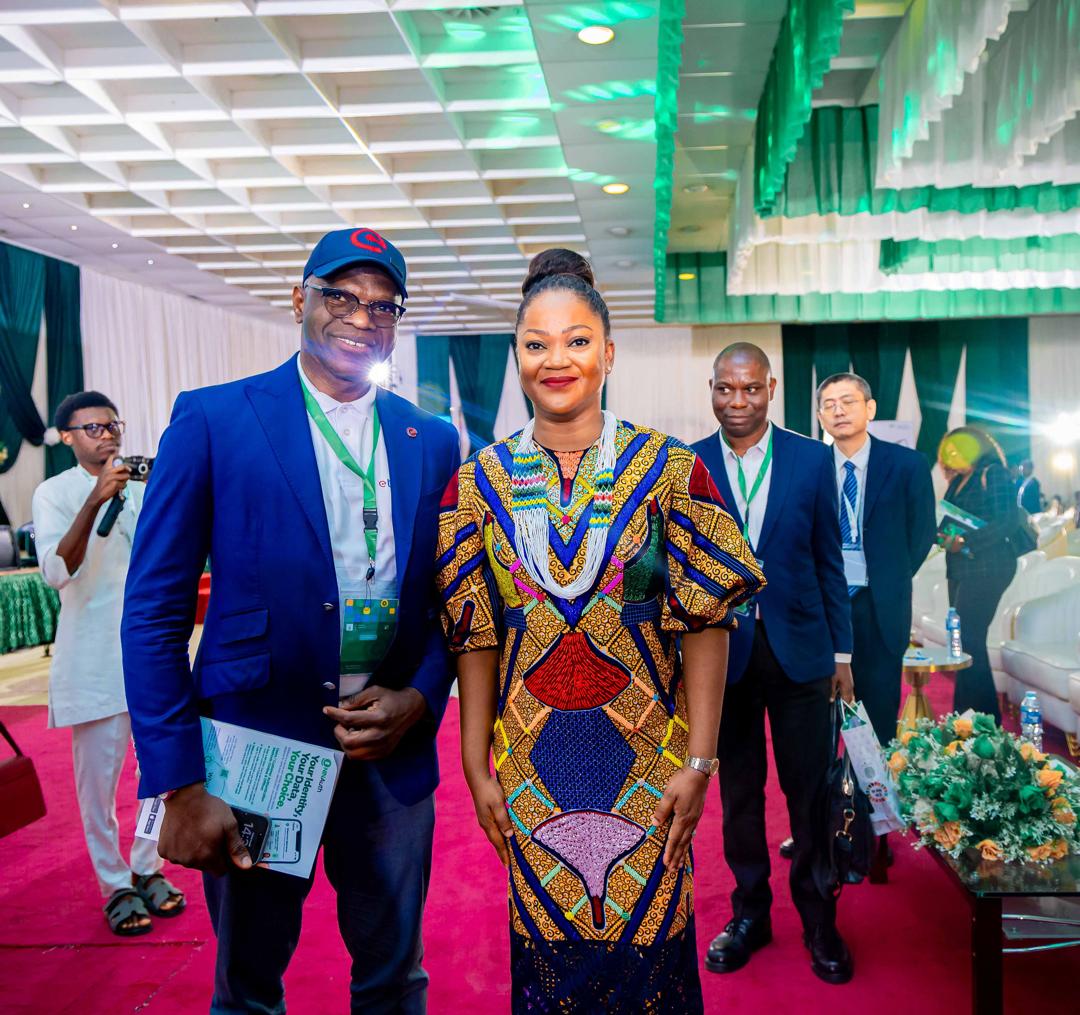
Digital Identity Becomes New Battleground for Nigeria’s Economic Transformation — eTranzact
By: Michael Mike
Nigeria’s push to build a truly digital economy is increasingly being anchored on a less visible but critical infrastructure: the ability to securely identify every participant in the digital space.
This emerged in Abuja as eTranzact International Plc reaffirmed its commitment to strengthening Nigeria’s digital identity ecosystem, warning in effect that the country’s ambitions for digital finance, secure public services and wider economic inclusion depend on trusted identity infrastructure.
The financial technology company made the commitment at the 2026 International Identity Day celebration held at the State House Banquet Hall, Abuja, where government officials, technology companies, identity solution providers and private-sector stakeholders examined the role of digital public infrastructure in Nigeria’s economic transformation.
The event, themed “Nigeria’s Digital Public Ecosystem Powering Africa’s Digital Economy,” underscored the growing importance of digital identity beyond the traditional question of identification.
At a time when banking, payments, government interventions, credit, telecommunications and other essential services are increasingly moving online, the ability to establish that an individual is who they claim to be has become fundamental to participation in the digital economy.
A stronger identity ecosystem could make it easier for citizens to access financial services, government programmes and other technology-enabled services, while providing institutions with more reliable tools for verification, compliance and protection against identity-related fraud.
It could also help bridge gaps in financial inclusion by enabling more Nigerians to establish verifiable identities needed to access bank accounts, digital payment platforms, credit and other formal financial services.
It was against this backdrop that eTranzact, which works with the National Identity Management Commission (NIMC), renewed its commitment to supporting the country’s digital public infrastructure.
The Managing Director/Chief Executive Officer of eTranzact, Niyi Toluwalope, represented by the company’s Executive Director, Government Relations and Strategic Initiatives, Abubakar Achimugu, said the company’s participation demonstrated its commitment to public-sector partnerships and technology solutions capable of advancing Nigeria’s digital transformation.
The company’s position places digital identity within the broader conversation about the infrastructure required to make Nigeria’s digital economy work at scale.
Without dependable identity verification, digital services can face challenges involving fraud, duplication, exclusion and difficulties establishing the eligibility of users and beneficiaries.
Conversely, an identity system that is secure, interoperable and accessible can provide a common foundation upon which financial institutions, government agencies and technology companies can build services.
The issue is therefore no longer simply about issuing identity credentials. It increasingly concerns how those credentials can securely connect citizens to the wider digital ecosystem.
Stakeholders at the Abuja event consequently stressed the importance of collaboration between government and private-sector technology providers in developing an ecosystem capable of supporting Nigeria’s rapidly changing digital economy.
For financial technology companies such as eTranzact, the development has direct implications for the future of digital payments and financial services, where secure customer identification is central to transactions and regulatory compliance.
For government, a stronger digital identity architecture can support more efficient delivery of public services and interventions.
For citizens, it could determine how easily they participate in an economy in which an increasing number of everyday transactions and services are being delivered digitally.
The challenge, however, is ensuring that the expansion of digital identity does not create new barriers for people who are already underserved.
Stakeholders will therefore have to balance security and verification requirements with accessibility, interoperability and inclusion if Nigeria’s digital public infrastructure is to serve the entire population.
The discussions in Abuja thus highlighted a broader reality: Nigeria’s digital transformation will not be driven by applications and payment platforms alone.
Behind the visible digital economy must be an identity infrastructure capable of establishing trust between citizens, businesses and government.
As Nigeria seeks to deepen its digital transformation and strengthen its position in Africa’s technology economy, eTranzact said sustained public-private collaboration would remain critical to building the secure and inclusive digital ecosystem required to support that ambition.
Digital Identity Becomes New Battleground for Nigeria’s Economic Transformation — eTranzact
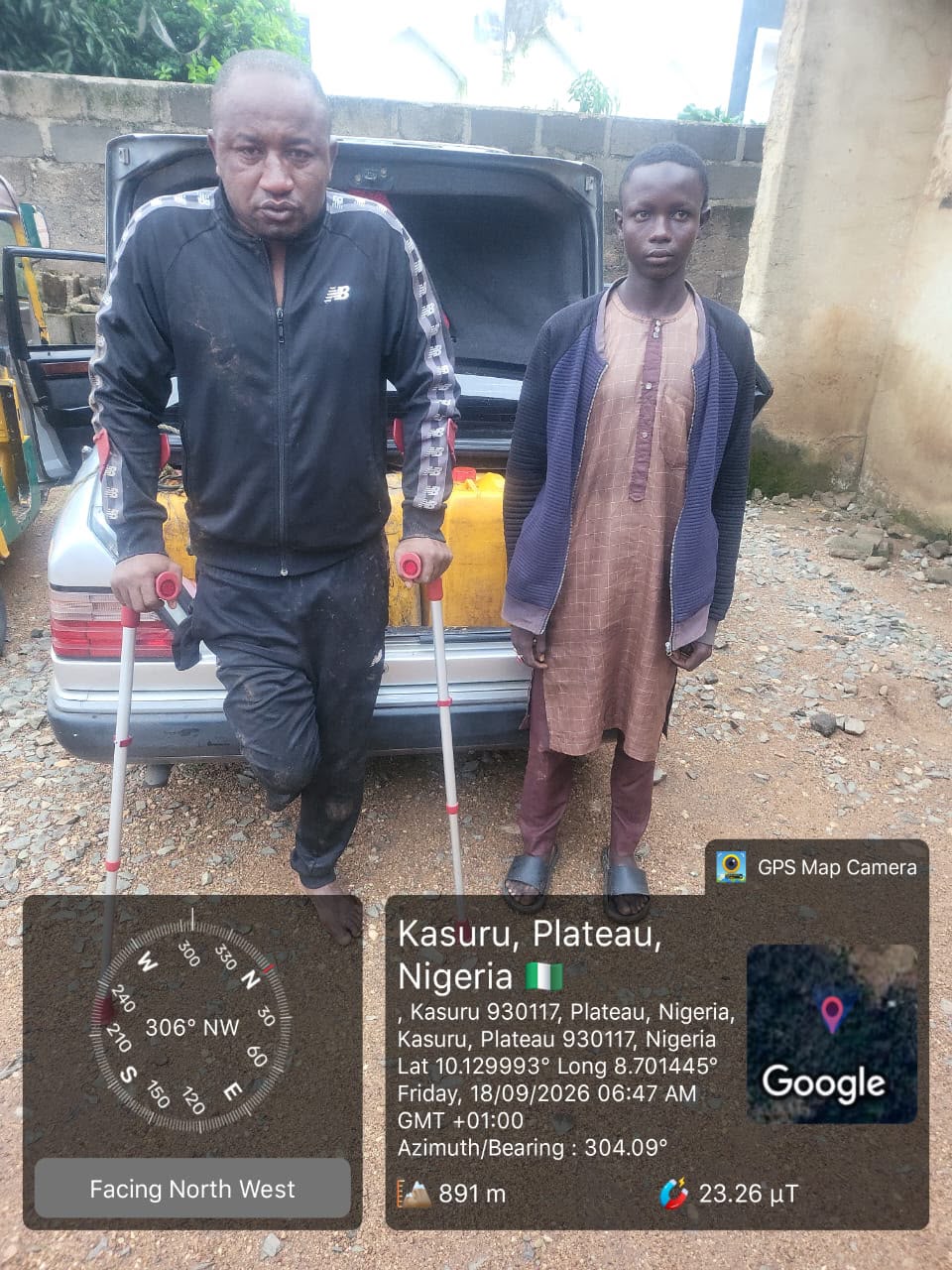
Troops arrest two suspects, recover suspected stolen goods in Plateau
By: Zagazola Makama
Troops of Sector 1, Operation Enduring Peace, have arrested two suspected criminals and recovered a vehicle loaded with suspected stolen items at Berger Junction, Mista-Ali, in Bassa Local Government Area of Plateau State.
The suspects were arrested at about 4:00 a.m. on September 18, 2026, following information about suspected criminals allegedly offloading stolen goods at the location.
The troops, acting on the report, swiftly mobilised to the area and arrested two suspects identified as Ibrahim Sulaiman, 33, and Ibrahim Husaini, 23.
The troops also recovered a Mercedes-Benz E220 vehicle allegedly loaded with suspected stolen items.
The recovered items included eight 25-litre containers of palm oil, four 4-litre containers of palm oil, two 50kg bags of rice, one 50kg bag of sugar, one carton of Maggi seasoning and an empty 25-litre jerrycan.
The suspects and recovered items were subsequently handed over to the Keystone Mista-Ali Outpost for further investigation and appropriate legal action.
Security sources said the arrest followed sustained intelligence gathering and patrol operations aimed at disrupting criminal activities and recovering stolen property in the area.
Troops arrest two suspects, recover suspected stolen goods in Plateau
GOC 3 Division engages Bokkos stakeholders over farmer-herder conflicts
By: Zagazola Makama
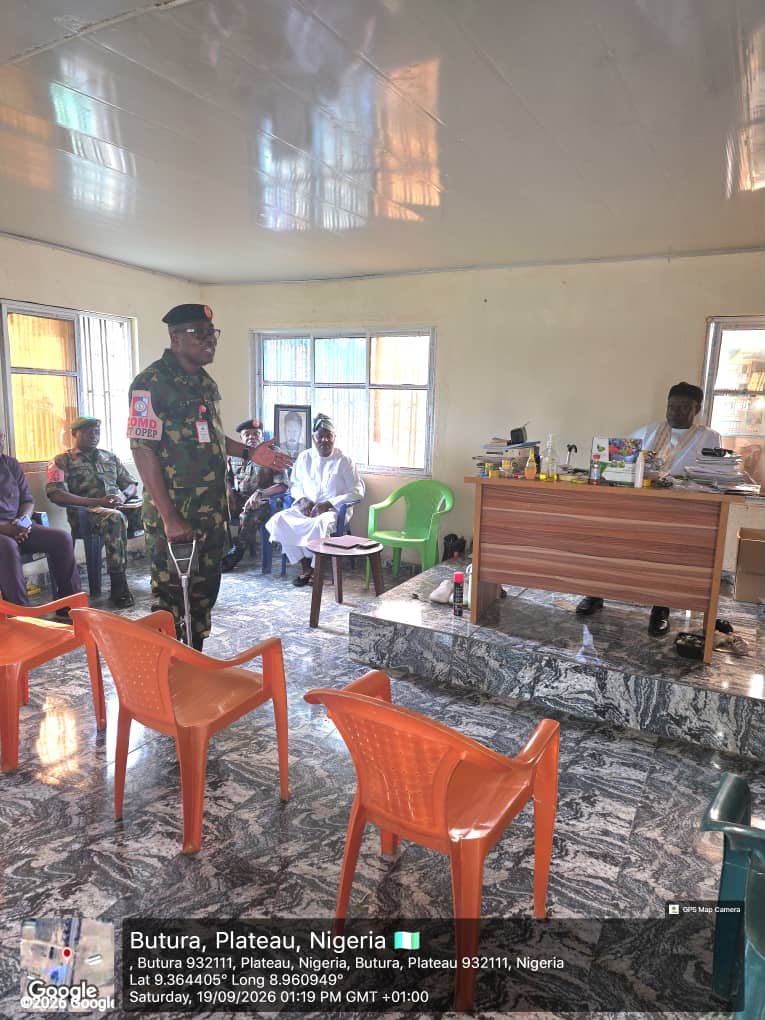
The General Officer Commanding 3 Division and Commander, Operation Enduring Peace, Maj. Gen. W.M. Dangana, has engaged district heads and other stakeholders in Bokkos Local Government Area of Plateau State as part of efforts to address recurring farmer-herder conflicts in the area.
Maj. Gen. Dangana arrived at the headquarters of Sector 5, Operation Enduring Peace, in Bokkos at about 1:00 p.m. on September 19, 2026, where he was received by the Sector Commander.
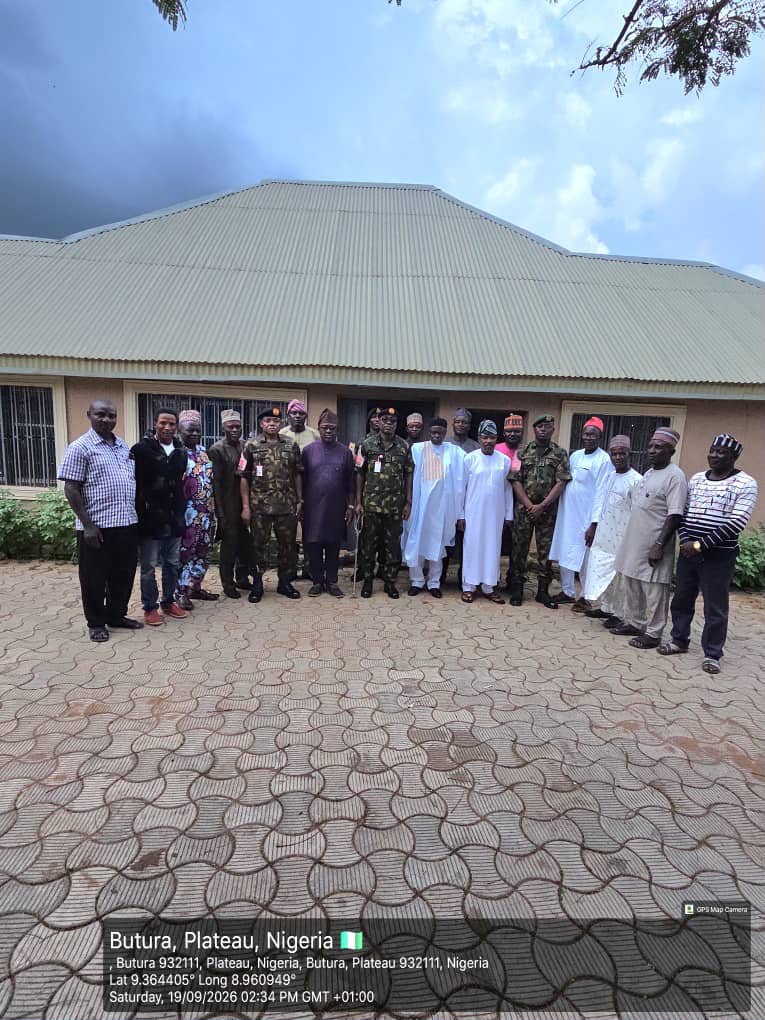
The GOC thereafter proceeded to the Palace of the Saf Bokkos, where he held an engagement meeting with district heads and other stakeholders from across the local government area.
The engagement formed part of ongoing non-kinetic efforts by the military and other stakeholders to address the underlying tensions between farming and herding communities and promote peaceful coexistence.
Discussions with traditional leaders and community stakeholders are expected to support the identification of local grievances, strengthen communication with security agencies and help prevent disputes from escalating into violence.
The engagement was conducted peacefully and without any incident.
GOC 3 Division engages Bokkos stakeholders over farmer-herder conflicts

Digital Identity Becomes New Battleground for Nigeria’s Economic Transformation — eTranzact

2027: Tinubu’s trip to America puts an end to the chatter about his supposed inability to enter the United States.

Troops arrest two suspects, recover suspected stolen goods in Plateau

Roger Federer’s Shock as DNA Results Reveal Myla and Charlene Are Not His Biological Children

THE PLIGHT OF FARIDA

FAILED COUP IN BURKINA FASO: HOW TRAORÉ NARROWLY ESCAPED ASSASSINATION PLOT AMID FOREIGN INTERFERENCE CLAIMS
-
 News3 years ago
Roger Federer’s Shock as DNA Results Reveal Myla and Charlene Are Not His Biological Children
-
Opinions5 years ago
THE PLIGHT OF FARIDA
-
 News1 year ago
FAILED COUP IN BURKINA FASO: HOW TRAORÉ NARROWLY ESCAPED ASSASSINATION PLOT AMID FOREIGN INTERFERENCE CLAIMS
-

 News3 years ago
EYN: Rev. Billi, Distortion of History, and The Living Tamarind Tree
-
 Opinions5 years ago
POLICE CHARGE ROOMS, A MINTING PRESS
-

 ACADEMICS3 years ago
A History of Biu” (2015) and The Lingering Bura-Pabir Question (1)
-

 Columns3 years ago
Army University Biu: There is certain interest, but certainly not from Borno.
-

 Politics1 year ago
2027: Why Hon. Midala Balami Must Go, as Youths in Hawul and Asikira/Uba Federal Constituency Reject ₦500,000 as Sallah Gift
