
National News
FRSC redeploys 46 senior officers

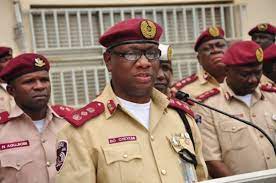
FRSC redeploys 46 senior officers
The Federal Road Safety Corps (FRSC) has redeployed 46 senior officers to different formations nationwide for effective performance in the agency.
This is contained in a statement by the Corps Public Education Officer (CPEO) Assistant Corps Marshal (ACM) Bisi Kazeem on Friday in Abuja.
Kazeem said that this was pursuant to the recent approval of the promotion of senior officers by the FRSC and the need to strategically reposition them for optimal performance.
He said that the redeployed officers were Assistant Corps Marshals and Corps Commanders, and were all expected to report to their new Commands on or before Monday, May 2.
READ ALSO: Zulum Commissions 300 Traffic Marshals In Borno
According to him, the redeployed senior officers include Assistant Corps Marshal (ACM) Chidi Nkwonta, former Zonal commanding officer RS6HQ Portharcourt.
“He is to take over as the Commandant, Federal Road Safety Command and Staff College (FCSC), Udi, Enugu State.
“ACM Chukwuma Njoku, formerly Corps Commander Personnel under Admin and Human Resource Department at the national headquarters, to now head Manpower Development unit under Training Department, National Headquarters.
“Ocheja Ameh, former Sector Commander Ekiti, now posted to become the Zonal Commanding Officer Enugu.
“ACM UI Ojeamiren, former Deputy Commandant FRSC Academy Udi, now Zonal Commanding Officer Osogbo, while ACM Jonathan Aderole Owoade, the erstwhile Sector Commander Kwara, now heads Port Harcourt Zonal Command, ” he said.
In the same vein, Kazeem said that 10 States would now have new Sector Commanders as follows; Corps Commander (CC) Kaugama Kabo, former Sector Commander Sokoto now Sector Commander Yobe.
He said that CC DY Dio was to proceed from Yobe to take over as Adamawa State Sector Commander.
Kazeem said that CC YK Nadabo was to hand over the helm of affairs as CC LGA Station Office at the Operations department of the National headquarters and assume duty as the Sector Commander Sokoto state.
Kazeem said that Borno state got CC IU Boyi as the new Sector Commander.
“Erstwhile Delta State Sector Commander, CC I Abubakar is now Benue state Sector Commander while CC Ubi Ushiet is to replace him as Delta State Sector Commander.
“Meanwhile, CC OE Joseph is to assume duty as the Sector Commander Ekiti State as CC FA Ogidan becomes Kwara State Sector Commander and CC SE Dawulung takes over the helm of affairs as Plateau State Sector Commander.
“Theman mnarc now becomes the Sector Commander Gombe State, ” he added.
The Spokesperson said that Uchechukwu Wihioka, former Corps Commander Admin in the FRSC Command and Staff College, was now Deputy Commandant, Federal Road Safety Command Staff College.
Kazeem said that Corps Commander, Joel Dagwa, the outgoing Registrar FRSC Academy, has now been appointed as the Deputy Camp Commandant FRSC Academy.
He said that Corps Commander Shamsudeen Sale , former Sector Commander Nasarawa State, was now Corps Commander Motor Vehicle Administration in the Headquarters.
He also said that DA Barde, former Corps Commander Logistics under the Technical Service Department in the Headquarters was now the Corps Commander Armament under the Operations Department at the Headquarters, Sector Commander Gombe,
He added that Ishaku Ibrahim, had become Corps Commander, National Road Safety Partnership FRSC Headquarters.
According to him, Solomon Agure, former Sector Commander Kogi, now heads Local Government Station Office under the department of Operations, FRSC Headquarters.
“More Corps Commanders were also redeployed including Ebenezer Guar, former Head of Policy unit of Policy Research and Statistics Department to now head Corps Provost in the National Headquarters,
“Olusola Ibirongbe, former Corps Commander Cash Management Office under the Finance and Account Office, now Corps Commander Finance and Account Unit under the Finance and Account Department.”
Kazeem said that the Corps Marshal implored the officers to remain steadfast in their commitment, upright in their dedication to duties, and to share in the FRSC vision of making Nigerian roads safer for all motorists.
He quoted Oyeyemi as enjoining them to play pivotal roles to ensure that they contribute their quota in enhancing the safety of lives and property of all road users.


National News
Nigeria Turns to Its Global Medical Army as Tinubu, NiDCOM Launch New Drive to Rescue Healthcare Sector

Nigeria Turns to Its Global Medical Army as Tinubu, NiDCOM Launch New Drive to Rescue Healthcare Sector
…Diaspora doctors to power national health renewal as FG creates framework for investment, telemedicine, knowledge transfer
By: Michael Mike
Nigeria has begun a major push to transform its healthcare system by tapping into the expertise of millions of its citizens abroad, with President Bola Ahmed Tinubu declaring that the country’s diaspora community holds the key to unlocking a new era of medical development.
At the centre of the new strategy is the Diaspora Healthcare Impact Initiative (DHII), a programme designed to mobilise Nigerian doctors, nurses, researchers and healthcare professionals across the world to support hospitals, train local practitioners, deliver specialist services and invest in Nigeria’s health infrastructure.
The announcement was made on Friday at the 2026 National Diaspora Day celebration held at the Presidential Villa, Abuja, where the President described Nigerians abroad as “one of Nigeria’s greatest assets” and declared that their expertise must become a critical component of national development.
The celebration, themed “Harnessing Global Diaspora Medical Expertise to Strengthen Local Health Systems for National Development,” attracted Nigerian professionals and diaspora leaders from across continents, including doctors, academics, entrepreneurs, investors, diplomats and representatives of medical associations in Europe, North America, Australia and Africa.
Tinubu, who was represented by the Secretary to the Government of the Federation, Senator George Akume, said Nigeria’s diaspora population represented a reservoir of knowledge, innovation and professional excellence that must be strategically connected to national priorities.
“Our diaspora is one of Nigeria’s greatest assets. Across continents, Nigerian professionals have excelled in medicine, science, technology and innovation. They have built reputations as some of the finest doctors, researchers and healthcare leaders in the world,” the President said.
He added that beyond personal achievements abroad, Nigerians in the diaspora remained deeply connected to their homeland through expertise, networks, investments and commitment to national progress.
From Brain Drain to Brain Gain
For decades, Nigeria has faced the challenge of losing skilled professionals, particularly medical workers, to opportunities abroad. However, the Federal Government is now seeking to transform that narrative by creating pathways for Nigerians overseas to contribute their skills without abandoning their global careers.
Tinubu announced that the government would establish a permanent framework to institutionalise the Diaspora Healthcare Impact Initiative, coordinate contributions, provide incentives for professionals willing to return or invest, and ensure that interventions produce measurable national impact.
The President said the initiative would focus on expanding diaspora medical missions across Nigeria, establishing knowledge-transfer partnerships between diaspora experts and Nigerian universities and teaching hospitals, deploying telemedicine platforms to connect specialists abroad with patients and practitioners at home, encouraging diaspora investment in hospitals, pharmaceutical industries and research centres, and strengthening the capacity of the Nigerians in Diaspora Commission (NiDCOM) to coordinate engagements.
“Whether you are a surgeon in London, a researcher in Boston, a laboratory scientist in China or a nurse in Johannesburg, your skills are vital to building a resilient, inclusive and world-class healthcare system in Nigeria,” Tinubu told Nigerians abroad.
20 States Benefit From Diaspora Medical Missions
Chairman/CEO of NiDCOM, Hon. Abike Dabiri-Erewa, said the DHII had already moved beyond policy discussions into practical interventions, with diaspora medical professionals supporting healthcare delivery in more than 20 states.
She disclosed that Nigerian doctors abroad have conducted specialist medical missions, provided telemedicine services, trained local healthcare personnel and donated medical equipment worth billions of naira.
The programme adopted a zonal approach, with diaspora medical organisations leading interventions based on regional health needs.
In the North Central, the Canadian Association of Nigerian Physicians and Dentists (CANPAD) and Nigerian Medical Association Germany are supporting health systems strengthening and primary healthcare development in the Federal Capital Territory and Nasarawa State.
In the North-West, the Medical Association of Nigerians Across Great Britain (MANSAG-UK) is focusing on maternal, newborn and child health, obstetrics and neonatal care in Kano, Kaduna and Sokoto.
The Concerned Medics Foundation is supporting sickle cell screening and management in Borno State, while the Association of Nigerian Physicians in the Americas (ANPA) is delivering emergency life support, dental and eye surgeries, paediatrics and chronic disease management in the South-East.
Other interventions include gynaecological services in the South-South through the Nigerian-Australian Medical and Dental Association and advanced procedures including neurosurgery, interventional radiology and gastro-endoscopy in Lagos through the Nigerian Doctors Forum, South Africa.
Diaspora Economy Hits $21.8bn
Beyond healthcare, the Federal Government highlighted the growing economic importance of Nigerians abroad, with diaspora remittances estimated at about $21.8 billion annually.
The Minister of State for Foreign Affairs, Amb. Sola Enikanolaiye, who addressed the gathering, said the figure demonstrated that Nigerians abroad were not a burden but a strategic asset for national development.
He said Nigeria’s foreign policy under the current administration places citizens at the centre through the 4D framework of Democracy, Development, Demography and Diaspora, stressing that diaspora engagement remained a major pillar.
According to him, Nigerians abroad contribute far beyond remittances through knowledge transfer, innovation, philanthropy, technology exchange, professional networks and global partnerships.
“The Ministry of Foreign Affairs does not consider our diaspora population as a burden or a basket case of consular responsibility always in need of assistance. Government recognises the diaspora as one of the nation’s most strategic assets,” he said.
He noted that remittances from Nigerians abroad were higher than official development assistance received by Nigeria from donor countries combined, but stressed the need for stronger mechanisms to channel more diaspora resources into productive sectors.
Migration Should Be Seen as Talent Circulation
The Minister also challenged negative perceptions around migration, arguing that Nigerians living abroad represent a form of global talent circulation rather than national loss.
“Migration should not be criminalised, it should not be weaponised or demonised,” he said.
“It is a win-win situation. It is talent circulation—brain gain rather than brain loss.”
He said Nigerians overseas contribute significantly to their host countries while also creating value for Nigeria through investments, skills transfer and international connections.
He urged Nigerians abroad to continue projecting the positive image of the country, noting that the actions of a tiny minority should not define millions of responsible citizens.
“The less than one per cent of Nigerians that sometimes misbehave—the whole world now uses a broad brush to paint every Nigerian. We must engender that narrative,” he said.
Seven Years of Diaspora Transformation
Dabiri-Erewa said NiDCOM had moved from policy formulation to measurable impact since its establishment in 2019.
She highlighted the approval of the National Diaspora Policy in 2021, creation of State Diaspora Focal Point Officers, development of a national diaspora database and partnerships with government agencies and international organisations as major milestones.
She disclosed that NiDCOM, in collaboration with the National Identity Management Commission, is building a database of Nigerian professionals abroad, including doctors, engineers, academics, scientists and creatives.
The Commission has also strengthened education and technology partnerships, including collaborations with institutions in Silicon Valley to train young Nigerians in emerging technologies.
New Investment Frontiers
NiDCOM announced new efforts to deepen diaspora investment, including the Nigeria-Saudi Investment and Tourism Summit scheduled for Abuja in August and the Nigeria Diaspora Economic Conference holding in Toronto, Canada.
The Commission is also partnering with the Federal Mortgage Bank of Nigeria to launch a diaspora mortgage scheme in the United Kingdom.
Looking ahead, Dabiri-Erewa announced plans for a Diaspora Investment Fund, a National Diaspora Health Corps capable of engaging 1,000 diaspora health professionals annually, and continued advocacy for diaspora voting rights.
Unity Message to Nigerians Abroad
The Minister urged Nigerians in the diaspora to remain united and place national interest above ethnic and regional differences.
“Your focus and priority should be Nigeria and the Nigerian people, regardless of your tribe or state,” he said.
“Unity is key. Unity is key.”
As the Federal Government moves to reposition diaspora engagement, the message from Abuja was clear: Nigerians abroad are no longer viewed merely as sources of remittances but as critical partners in healthcare renewal, economic transformation, innovation and global diplomacy.
For President Tinubu and NiDCOM, the future of national development will depend not only on the talents within Nigeria’s borders, but also on the millions of Nigerians building expertise, influence and networks across the world.
Nigeria Turns to Its Global Medical Army as Tinubu, NiDCOM Launch New Drive to Rescue Healthcare Sector
National News
Mandela Day: NHRC, Partners Secure Release of 11 Inmates, Push Humane Reforms at Suleja Correctional Centre
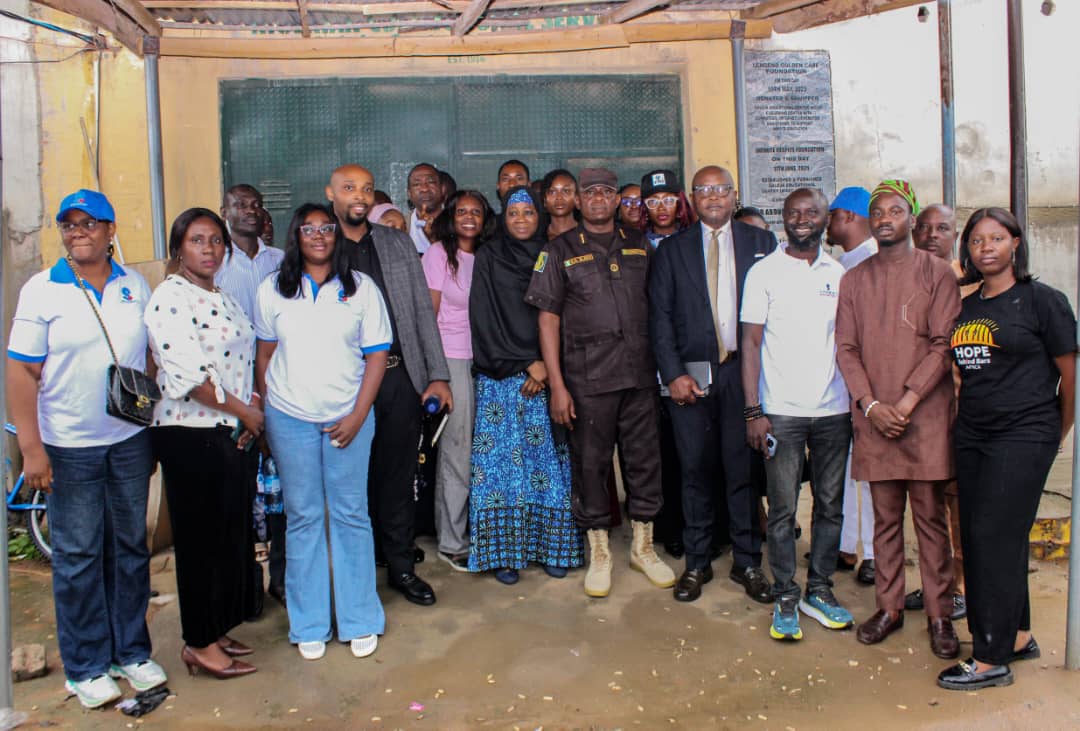
Mandela Day: NHRC, Partners Secure Release of 11 Inmates, Push Humane Reforms at Suleja Correctional Centre
By: Michael Mike
The National Human Rights Commission (NHRC), in partnership with Hope Behind Bars Africa and other stakeholders, has facilitated the release of 11 indigent inmates from the Suleja Medium Security Custodial Centre in Niger State as part of activities commemorating the 2026 Nelson Mandela Day.
The intervention, which involved the payment of fines ranging between N800,000 and N900,000, also included the donation of essential hygiene materials to inmates and sensitisation of correctional officers on international standards guiding the treatment of persons deprived of liberty.
The initiative, according to the organisers, was aimed at promoting the ideals of the late South African leader, Nelson Mandela, whose life remains a global symbol of the fight for justice, equality, dignity and human rights.
Speaking at the event, the Executive Secretary of the NHRC, Dr Tony Ojukwu, SAN, said Mandela Day was an opportunity to remind society that justice, dignity and compassion must extend to everyone, including persons in custodial facilities.
Represented by his Special Assistant and Head of the Commission’s Monitoring Department, Dr Benedict Agu, Ojukwu said the United Nations General Assembly’s decision in 2015 to expand the focus of Mandela Day was to draw attention to humane conditions of imprisonment, recognition of prisoners as continuing members of society and the crucial role of correctional officers as providers of an important social service.
He said the adoption of the United Nations Standard Minimum Rules for the Treatment of Prisoners as the Nelson Mandela Rules remained a fitting tribute to a man who spent 27 years behind bars in pursuit of freedom and justice.
“Today’s commemoration is not about the calendar but about the principles Mandela stood for. For us, it is not just a memorial but a reaffirmation of a life lived for the human person, for the values of human dignity and for the principles of freedom,” Ojukwu stated.
He noted that the theme of Mandela Day 2026, “It’s Still in Our Hands to Combat Poverty and Inequity,” strongly aligns with the realities encountered by the Commission in its human rights work.
According to him, poverty remains one of the underlying factors contributing to crime and prolonged detention, particularly among inmates unable to pay court-imposed fines.
“Most crimes that bring people into custody are often rooted in poverty, and when you look at the fines that continue to keep low-risk inmates behind bars, you can see how poverty and inequity sustain overcrowding in our correctional facilities,” he said.
Ojukwu stressed that the theme must challenge governments, institutions and citizens to address inequality through reforms in policies, laws and practical interventions.
He explained that the Commission had moved beyond monitoring detention facilities and making recommendations by actively supporting vulnerable inmates through payment of fines, welfare assistance and programmes designed to encourage rehabilitation and reintegration.
“For people of means, it is an invitation to join hands in supporting these efforts, so that custodial centres are not overwhelmed and society can benefit from the values and contributions of rehabilitated inmates because they still have something to offer,” he said.
Recalling the Commission’s Mandela Day intervention in 2025, Ojukwu said the NHRC facilitated the release of four indigent inmates at the Suleja facility, donated essential welfare materials and sensitised correctional officers on the Mandela Rules and Bangkok Rules.
He added that the Commission was continuing in that direction by supporting the release of more low-risk inmates, stressing that those in custody remained members of society deserving opportunities to rebuild their lives.
“By these actions we are simply saying that those in custody remain part of our society and deserve opportunities to rebuild their lives. Custody must be a turning point, leading to correction and ultimately reintegration,” he said.
Also speaking, the Executive Director of Hope Behind Bars Africa, Pauline Oloreomi, said justice should not be perceived only as punishment but as a pathway towards reform, rehabilitation and restoration.
Oloreomi highlighted the need to pay greater attention to the specific challenges faced by women in custodial centres, including access to healthcare, protection of dignity during searches and increased adoption of non-custodial measures for pregnant women and nursing mothers.
While acknowledging that legal frameworks exist to protect female inmates, she noted that implementation remained a major challenge and called for stronger collaboration among stakeholders to improve conditions in correctional facilities.
The Programme Supervisor of Hope Behind Bars Africa, Hassan Nurudeen, said the organisation’s work focuses on access to justice, human rights protection, education and rehabilitation as part of efforts to reduce repeat offending.
He explained that the organisation collaborates with correctional centres nationwide to provide vocational training and educational opportunities, including the establishment of a National Open University of Nigeria study centre at the Keffi custodial facility.
Nurudeen disclosed that Hope Behind Bars Africa paid fines for four inmates at Suleja amounting to N400,000, while the NHRC facilitated the release of seven others.
In a goodwill message, the Executive Director of Shamies Unusual Heart Foundation, Dr Sera Abdul, said Mandela’s life demonstrated that no individual should be defined by their lowest moment.
Represented by the foundation’s Programme Officer, Shedrack Okah, Abdul said correctional facilities should not be viewed as the end of a person’s journey but as places where hope could be restored, dignity protected and lives transformed through compassion, education, skills acquisition and second chances.
She stressed that government alone could not address the complex challenges facing Nigeria’s correctional system, including overcrowding, limited resources, rehabilitation gaps and reintegration difficulties.
“Private and civil society partners bring innovation, community trust, specialised expertise and additional resources,” she said, urging continued collaboration between government institutions and non-state actors.
She encouraged inmates at the Suleja facility to take advantage of available opportunities, including education, vocational training, agriculture and counselling, to prepare themselves for productive reintegration into society.
The Officer in Charge of Suleja Correctional Centre, Sunday Ejeh, urged inmates to draw inspiration from Mandela’s journey, noting that the former prisoner rose to become President of South Africa after decades of struggle.
He said Mandela’s story should remind inmates that their current circumstances do not determine their future and that they can still become responsible and productive members of society after serving their sentences.
The NHRC and its partners said the Mandela Day intervention represents a broader commitment to transforming Nigeria’s correctional system from one focused primarily on punishment to a model centred on rehabilitation, dignity, justice and successful reintegration.
Mandela Day: NHRC, Partners Secure Release of 11 Inmates, Push Humane Reforms at Suleja Correctional Centre
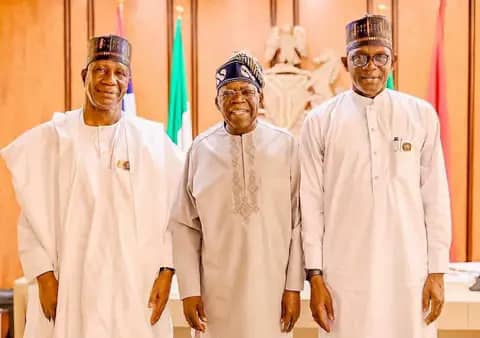
Tinubu commends Buni over successful primaries in Yobe
By: Yahaya Wakili
The President of the Federal Republic of Nigeria, President Ahmed Bola Tinubu GCFR, has commended Governor Mai Mala Buni CON of Yobe State and other stakeholders of the party for the successful primary election that produced Alhaji Baba Mallam Wali MNI as the party’s governorship candidate.
The President gave the commendation when he received Governor Buni and the APC gubernatorial candidate, Alhaji Baba Mallam Wali, MNI, at Aso Villa, Abuja.
President Tinubu expressed appreciation for the healthy political developments in Yobe State ahead of the forthcoming general elections.
The President described Governor Mai Mala Buni, CON, as a political strategist with invaluable strategies that have consistently contributed to the success of the All Progressives Congress (APC) and remain a worthy treasure for the party.
According to the president, “With Governor Buni at the helm of affairs, I have no doubt that Yobe State will always be delivered to the party.
“Yobe State is blessed to have a seasoned bureaucrat with a huge wealth of experience who has consistently been part of the system as the governorship candidate of the party,” President Tinubu said.
He said, “I am sure you will bring your wealth of experience to continue with the legacies of the Buni administration to add to the achievements in education, healthcare, road infrastructure, agriculture empowerment, and the rest,” President Tinubu told Baba Mallam Wali.
Governor Mai Mala Buni further described the candidate as fully prepared for the job and noted that he has been part of the system for a long time, and it will be continuity without wasting time.
He expressed the appreciation of the government and people of Yobe State for the support extended by the Tinubu-led federal government to the state to improve the lives of the people.
Tinubu commends Buni over successful primaries in Yobe

Zulum Announces Closure of Konduga IDP Camp as Borno Accelerates Resettlement Drive

Troops Arrest Two Suspected Terrorist Informants, Cattle Rustlers in Yobe Market

Six Terrorists’ Family Members Surrender to Troops in Gwoza

Roger Federer’s Shock as DNA Results Reveal Myla and Charlene Are Not His Biological Children

THE PLIGHT OF FARIDA

FAILED COUP IN BURKINA FASO: HOW TRAORÉ NARROWLY ESCAPED ASSASSINATION PLOT AMID FOREIGN INTERFERENCE CLAIMS
-
 News2 years ago
Roger Federer’s Shock as DNA Results Reveal Myla and Charlene Are Not His Biological Children
-
Opinions4 years ago
THE PLIGHT OF FARIDA
-
 News1 year ago
FAILED COUP IN BURKINA FASO: HOW TRAORÉ NARROWLY ESCAPED ASSASSINATION PLOT AMID FOREIGN INTERFERENCE CLAIMS
-

 News2 years ago
EYN: Rev. Billi, Distortion of History, and The Living Tamarind Tree
-
 Opinions5 years ago
POLICE CHARGE ROOMS, A MINTING PRESS
-

 ACADEMICS2 years ago
A History of Biu” (2015) and The Lingering Bura-Pabir Question (1)
-

 Columns2 years ago
Army University Biu: There is certain interest, but certainly not from Borno.
-

 Politics1 year ago
2027: Why Hon. Midala Balami Must Go, as Youths in Hawul and Asikira/Uba Federal Constituency Reject ₦500,000 as Sallah Gift
