
News
Global Governance Initiative: China’s Bold Step Against Hegemony, Injustice


Global Governance Initiative: China’s Bold Step Against Hegemony, Injustice
By: Dr. Bridget Chiedu Onochie
At a time when the world is grappling with complex challenges – social unrest, economic hegemony and unhealthy politics, a robust global governance system appears the only panacea. The prevailing unwholesome scenarios playing around the world not completely occasioned by natural tendencies but majorly orchestrated by leadership idiosyncrasies at the global level, no doubt, threatens human peace, and if left untamed, may further destabilize sequence of events by creating disharmony among peoples of the world.
By global governance, we refer to the systems, rules and standards that guide international relations and cooperation among countries, international organizations and other stakeholders in global development and peace. It envisages collaboration among nations towards addressing world’s challenges with international institutions such as the United Nations, World Bank and International Monetary Fund formulating inclusive, equitable and people-oriented policies.
The primary goals of global governance, include promotion of peace and security in such a manner that conflicts are prevented; fostering economic development, protection of human rights by upholding dignity and well-being of people as well as decisively combating global natural challenges such as the climate change, pandemics and any other issue of urgent global interest.
Unfortunately, the inability of the international institutions to balance national interests with global needs, guarantee fair representation and participation, and effectively address complex global challenges through cooperation, diplomacy and other relevant tools, has witnessed escalation of natural occurrences and hostilities across the globe.
The Chinese President, Xi Jinping and his country therefore deserve commendation and accolade for amplifying the call for efficient and enduring global governance.
By proposing the GGI, Xi bold stepped forward to expose existing discrepancy in global governance, especially the forcelessness of the Global South in the essential mechanisms for global governance irrespective of their contributions to world’s economy and overall development.
The gap in international relations and its governance process have over the years, denied the essential contributions and cumulative insight of the majority of the world stakeholders.
The initiative, which was proposed by President Xi on September 1, 2025, during the Shanghai Cooperation Organization (SCO Plus) meeting held at the Tianjin Meijiang Convention and Exhibition Center, among other necessities, targets necessary reforms at the global institutions’ level.
That GGI was tied to the commemoration of the 80th anniversary of the victory of the World Anti-Fascist War and the founding of the United Nations, having been established on October 24, 1945, speaks volume of Chinese attention to history and how its hands in shaping the future.
Unfortunately, 80 years down the lane, the global institutions entrusted with the responsibilities of safeguarding member countries, especially the less powerful nations from socio-economic hegemony, appeared overwhelmed while blatant disregard for territorial sovereignty permeates the world.
One of the greatest benefits of the proposed
GGI as canvassed by several well-meaning citizens of the world therefore is the expected drastic reforms of the institutions to enshrine inclusivity and mutual respect.
As aptly proposed by China, there should be a commitment to peaceful coexistence and strengthening of confidence in a manner that guarantees a win-win situation. Beyond the proposal, China has also volunteered to work with all countries to ensure that a more just and equitable global governance system is enshrined. This perhaps, may be one of the fastest lane to its long time clamour for a community with a shared future for humanity.
The Global Governance as an initiative stands on five solid pillars of sovereign equality, international rule of law, practical multilateralism, people-centered approach and taking real actions.
Through these pillars, China canvasses a global governance structure that promotes to sovereign equality by ensuring that all countries, irrespective of size, strength and wealth, are equal participants in decision-making, beneficiaries in global governance. It also seeks greater effort towards entrenching a democratic culture in international relations to the extent of amplifying the voice of developing countries by increasing their representations in international institutions.
The second pillar, which dwells on the need to abide by international rule of law, clearly defines the purposes and principles of the U.N. Charter and other universally recognized basic norms of international relations. It holds that international law and rules should be applied equally and uniformly without double standards or few countries imposed upon others.
The GGI expressed the need to uphold the vision of global governance that features extensive consultation and joint contributions for shared benefit, that which strengthens solidarity and coordination, opposed to unilateralism, and that, which firmly safeguards the status and authority of the U.N to enable it play the expected key role in global governance.
Another reason for seeking a reform of the global governance system is to make governance more people-oriented, the one that recognizes people of every nation as equal players and by so doing, gradually bridges the gulf between the Global North and the South.
There is also need to transcend rhetoric in addressing world challenges. The new GGI supports a systematic and holistic coordination of global actions and the ability to fully mobilize resources, struggle for more visible outcomes and enhance practical cooperation to prevent the governance system from disintegration.
Since no individual or country gives what it doesn’t have, it is not surprising therefore that the in past 24 years, the SCO has adhered faithfully to the Shanghai Spirit of mutual trust, mutual benefit, equality, consultation, respect for diversity of civilizations and pursuit of common development, thereby setting the pace for practical and exemplary global governance.
The fact that China’s regional affairs are inclusively discussed and provides platforms and mechanisms for actions built together and cooperation that benefits buttressed the possibility of a new global governance if players are determined and resolute.
The SCO has drawn inspiration from the lessons of the past and their contemporary implications. According to experts, foundation of the initiative was laid by issues emanating from rigorous interrogations of the prevailing existential reality and international conditions, a circumstance that promotes survival of the fittest and emphases for living before essence.
The GGI is therefore a clarion call for objective representation of every country, for collective consensus of the global family that defies factional coalitions and bloc loyalty, having been conspicuously made evident that no matter how powerful some countries may be, they may not possess adequate mechanism to deal with emerging challenges of international system exclusively.
As the wave of development blows across the globe, even the once relegated, developing, nations are experiencing subtle but accelerated progress in science and technology. That is the reality of the Global South, especially China, which has astronomically leapt into the mainstream of the contemporary global power.
Yet, the beauty of China’s development is the positive impacts that country has made on other continents and respective countries of the world, including Africa. By so doing, it has assumed, without self-gratification, international responsibilities as the emerging big brother of the Global South, not only with the deployment of its resources to translate visions to visible, actionable development but equally, building a reputation for seeking inclusive world that is peaceful, equitable and conducive for all.
Therefore, the five GIG concepts, which are already set in motion in China, should be considered imperative for the new global order. The fact that SCO has increasingly become a catalyst for the development and reform of the global governance system is something that should excite the world rather than build walls of sentiments.
President Xi in his powerful address reiterated that China was ready to work with all parties in order to uphold courageously, the great principle and the common good of the world, to promote a correct historical perspective on World War II, to resolutely safeguard the fruits of their victory in the War, to deliver more benefits to the entire humanity through the reform of the global governance system and to build of a community with a shared future for humanity.
For Nigerians across different sectors, a new Global Governance Initiative (CGI) is the long awaited game-changer. Although it is the fourth development idea proposed by China under the leadership of Xi, it is highly expected that other ideas will seamlessly fall in line if global governance is gotten right.
The Federal government of Nigeria has also described the initiative as a well thought out contribution towards strengthening the international system. As one of the Africa’s largest economies and an active participant in multilateral diplomacy, Nigeria sees GGI as a valuable platform for advancing shared priorities, including reform of the UN, inclusive governance in emerging domains and promotion of equitable development.
By this, it has joined the rest of the peace-loving countries of the world to reaffirm sustained commitment to a just, inclusive and effective international order, which reflects the aspirations of all peoples, and upholds the principles of shared responsibility and mutual respect.
For China, the Global South appreciates your contributions and constant reminder in words and actions, that no nation should be left behind. The newly proposed GGI is just one of those valuable contributions.
Global Governance Initiative: China’s Bold Step Against Hegemony, Injustice


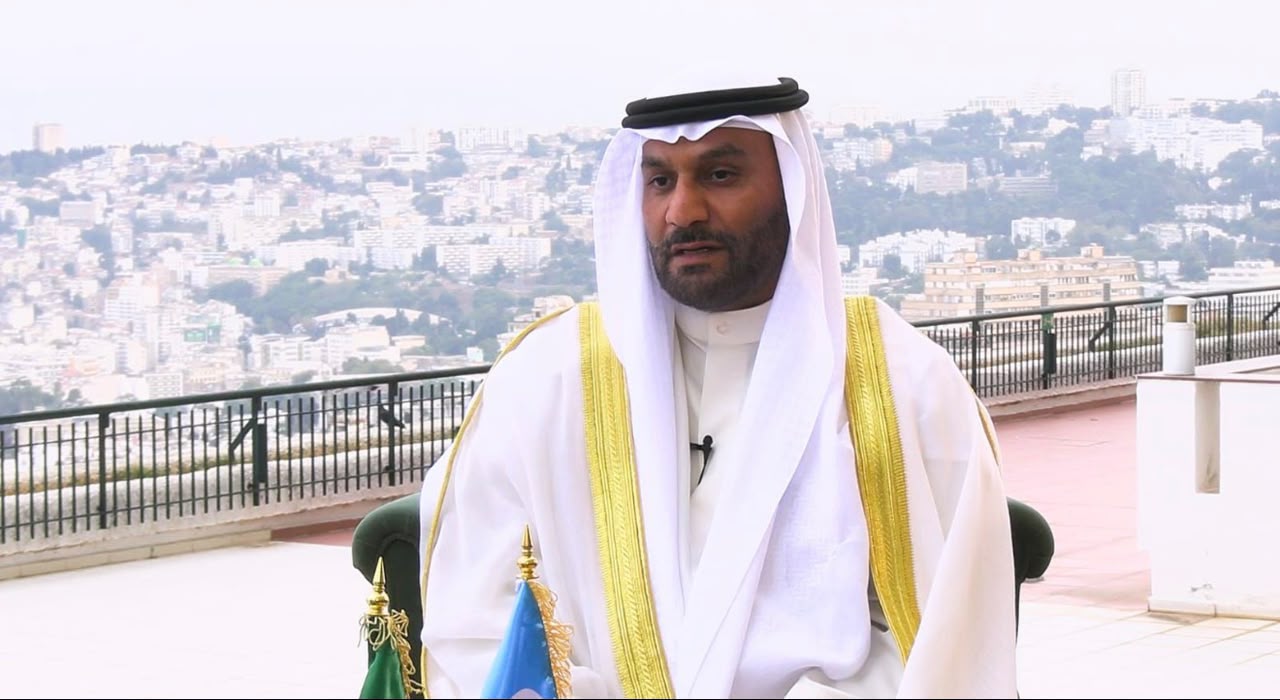
OPEC chief backs Trans-Saharan Gas Pipeline,linking Nigeria, Niger and Algeria
…Says project will boost energy security..
By: Zagazola Makama
The Secretary General of the Organisation of the Petroleum Exporting Countries (OPEC), Mr Haitham Al-Ghais, has described the Trans-Saharan Gas Pipeline (TSGP), linking Nigeria, Niger and Algeria, as an “excellent project” capable of strengthening energy security in Europe and beyond.
Al-Ghais made the remarks in an interview with Algerian television channel, Ennahar, where he highlighted the strategic importance of the long-planned gas infrastructure project to the energy sector and the wider economies of the three participating countries.
The OPEC Secretary General said the pipeline was consistent with efforts to strengthen the security and reliability of global energy supplies, particularly at a time when energy security remains a major concern for consuming countries.
He said the project would not only facilitate the movement of Nigerian natural gas towards Algeria and onward to European markets but could also generate significant economic opportunities along its route.
According to him, the development of the pipeline could create employment opportunities for young people in Nigeria, Niger and Algeria while supporting economic activity in communities and regions connected to the project.
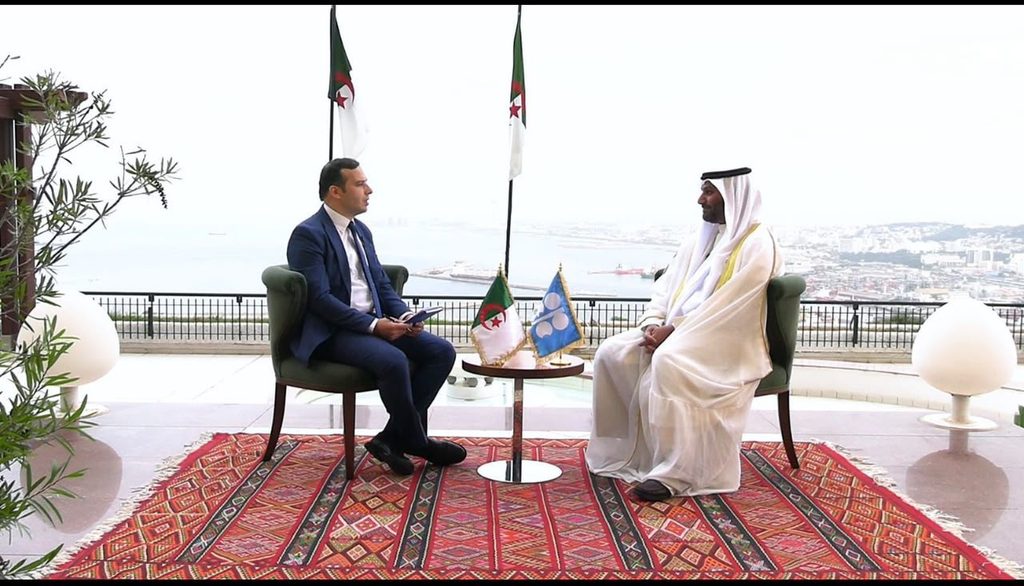
Al-Ghais further commended Algeria’s role in advancing the initiative, describing the country’s efforts as part of a broader drive to promote regional and continental integration through strategic energy infrastructure.
He said the cooperation among Nigeria, Niger and Algeria demonstrated how economic diplomacy could be deployed to advance shared interests in Africa, particularly through projects capable of connecting energy-producing countries with international markets.
The Trans-Saharan Gas Pipeline is envisaged as a major regional gas infrastructure project designed to transport natural gas from Nigeria through Niger to Algeria, from where it could access existing pipeline networks linking North Africa with European markets.
Beyond its potential contribution to gas supply, the project has been associated with wider economic objectives, including infrastructure development, job creation, increased investment and stronger economic cooperation among the participating countries.
Al-Ghais expressed optimism that the project would progress to successful completion, saying its timely delivery would enable Nigeria, Niger and Algeria to begin benefiting from its expected economic and social opportunities.
He also expressed his best wishes for the swift success of the initiative, stressing the importance of translating the long-standing plans into tangible benefits for the countries and their populations.
The OPEC chief’s comments come as African energy-producing countries continue to explore ways of expanding gas infrastructure and securing new markets, while positioning natural gas as an important component of the continent’s energy and economic development strategy.
For Nigeria, the project could provide an additional avenue for monetising the country’s substantial natural gas resources, while deepening its energy partnership with Algeria and strengthening regional economic cooperation.
The project also highlights the growing importance of cross-border energy infrastructure in Africa, where inadequate transportation networks and limited investment have historically constrained the ability of resource-rich countries to fully exploit their energy potential.
OPEC chief backs Trans-Saharan Gas Pipeline,linking Nigeria, Niger and Algeria
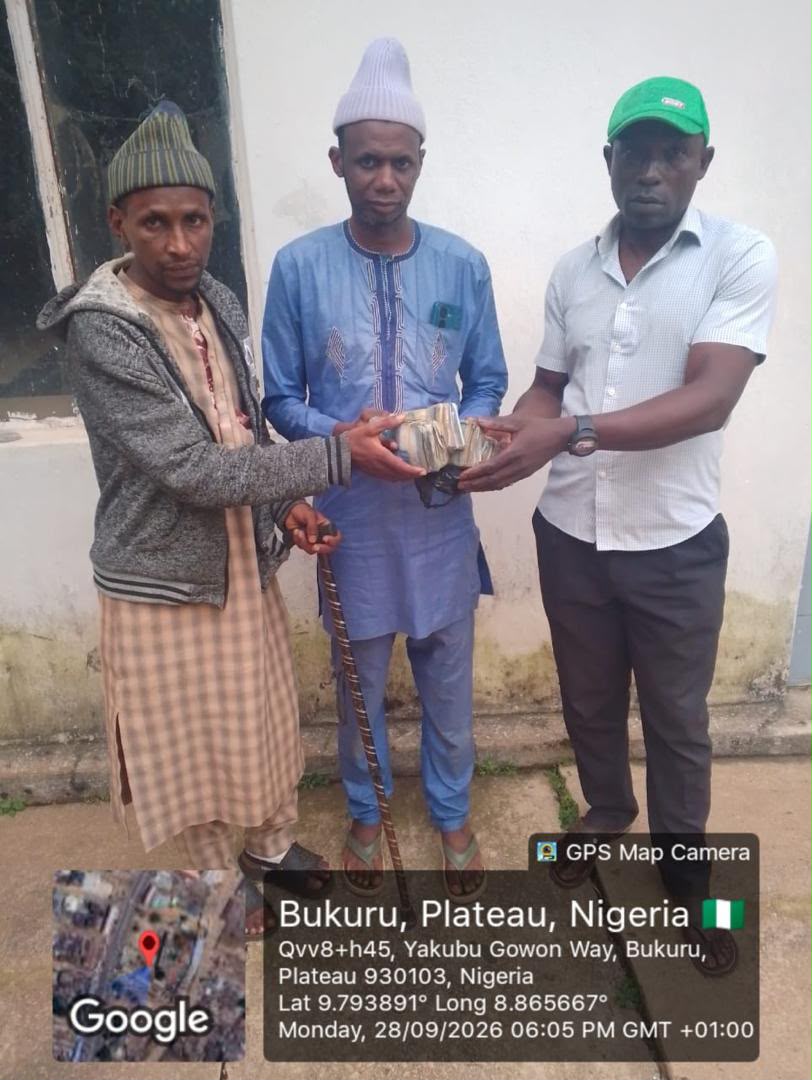
OPEP brokers N1m settlement over farm destruction in Jos South
By: Zagazola Makama
Jos — Troops of Operation Enduring Peace (OPEP) have brokered an amicable settlement between farmers and cattle owners following a reported case of farmland destruction at Gero Gyel District in Jos South Local Government Area of Plateau State.
The incident, which was reported on Sept. 28, involved six cattle intercepted while grazing on the affected farmland.
According to a situation report obtained by Zagazola, troops of Sector 6, OPEP, invited the parties for dialogue at about 3:30 p.m. on Sept. 29 in an effort to resolve the dispute peacefully.
The engagement resulted in an agreement that the cattle be released to their owner, Mr Yusuf Abubakar, through the Wakilin Ardo, Abdullahi Shuaibu.
The release followed an agreement on compensation for the reported farm damage, which was assessed at N1 million.
The report said N750,000 was paid to the representative of the farmers, Mr Ilya Solomon, while the remaining N250,000 was agreed to be paid on or before Oct. 12, 2026.
The intervention is part of ongoing efforts by security agencies and community stakeholders in Plateau State to prevent disputes involving farmers and herders from escalating into wider communal violence.
Zagazola understands that such mediation remains critical to maintaining peace and strengthening community confidence in security operations across the OPEP area of responsibility.
OPEP brokers N1m settlement over farm destruction in Jos South

Ogwashi-Uku Youths Begin New Chapter As Ugbah Pledges Unity, Jobs And Development
A new chapter has opened for the youth of Ogwashi-Uku Kingdom in Aniocha South Local Government Area of Delta State following the successful conclusion of a peaceful youth election and the subsequent recognition of the newly elected leadership by the Delta State Government.
The election, held at the Royal Palace of the Obi of Ogwashi-Uku, produced Comrade Chiedu Bobby Ugbah as President-General after he polled 64 votes against 36 votes recorded by his opponent.
The exercise was witnessed by the Delta State Commissioner for Youth Development, Hon. Barr. Oyinkuro Brave Enodeh, alongside officials of the Ministry of Youth Development and other stakeholders.
Following the conclusion of the process, the relevant Certificate of Recognition has now been issued to the new leadership, bringing the electoral process to a successful conclusion and clearing the way for the executives to begin the work of uniting and advancing the interests of Ogwashi-Uku youth.
Speaking following the recognition, Ugbah expressed appreciation to the Delta State Government and pledged that his administration would focus on reconciliation, youth empowerment, development and peace.
«“This recognition is not a victory for Bobby Ugbah or for any particular group. It is a victory for the entire youth of Ogwashi-Uku Kingdom. The elections are over, and the responsibility before us now is to bring everybody together and get to work.”»
He thanked the Governor of Delta State, Rt. Hon. Sheriff Oborevwori, and the Commissioner for Youth Development, Hon. Barr. Oyinkuro Brave Enodeh, for the State Government’s commitment to an orderly youth leadership process.
Ugbah also expressed appreciation to HRM Obi (Dr.) Ifechukwude Aninshi Okonjo II, the Obi of Ogwashi-Uku Kingdom, describing the traditional ruler as a father to the entire Ogwashi-Uku community and thanking the Palace for providing an environment in which the youth could peacefully choose their leadership.
The new President-General pledged to align the aspirations of Ogwashi-Uku youth with the development opportunities of the State Government and ensure that young people in the Kingdom benefit from the administration’s M.O.R.E. Agenda — Meaningful Development, Opportunities for All, Realistic Reforms and Enhanced Peace and Security.
«“We intend to move very quickly. Our young people need opportunities, skills, jobs and a voice in the development of their community. We will engage the State Government, the Local Government, the private sector and our sons and daughters across Nigeria and in the diaspora to attract opportunities and development to Ogwashi-Uku.”»
He said peace and security would remain central to the new administration’s programme, noting that sustainable investment and employment could only flourish in a stable community.
Ugbah Extends Hand of Fellowship to Opponents
In a significant reconciliation gesture, the President-General assured those who contested against him and those who supported other candidates that there would be room for them to contribute to the new administration.
«“I have already said that nobody should consider himself a loser. Those who contested and those who supported them are our brothers and sisters. They have ideas, experience and something to contribute. We will find ways of accommodating people and drawing on their strengths because the success of this administration must be the success of everyone.”»
He added that the new leadership would not allow differences arising from the election to become permanent divisions among Ogwashi-Uku youth.
«“We cannot develop Ogwashi-Uku by fighting one another. The election was one day; our responsibility to our community continues every day. My message to everybody is simple: come, let us work together.”»
Community Leaders Welcome Fresh Start
Community stakeholders have also welcomed the peaceful conclusion of the electoral process, describing the emergence of the new leadership as an opportunity for reconciliation and renewed youth participation in the development of Ogwashi-Uku.
They expressed particular satisfaction that the election was conducted peacefully in the presence of the Commissioner for Youth Development and officials of the Ministry, with no major security incident disrupting the exercise.
The Commissioner had commended the peaceful conduct of the election and urged the new leadership to embrace unity, inclusiveness and responsible leadership while working for the collective interests of Ogwashi-Uku youth.
For community stakeholders, the immediate priority is now to move beyond the electoral contest and allow the new executives to concentrate on programmes capable of improving opportunities for young people.
Focus Shifts to Development
Ugbah said his administration would shortly begin consultations with different sections of the youth, community leaders, professionals, business people and other stakeholders to develop a practical programme for its tenure.
Employment and entrepreneurship opportunities, skills acquisition, education, sports, community development, security, youth inclusion and constructive engagement with government are expected to feature prominently.
He also pledged to build a respectful working relationship with the Obi of Ogwashi-Uku, the Obi-in-Council, Delta State Government and other constituted authorities while maintaining an administration open to ideas from young people across the Kingdom.
«“Our generation must be remembered for what we built, not for disagreements. We have an opportunity for a fresh beginning, and I intend to use it to unite our youth and make Ogwashi-Uku a stronger, safer and more prosperous community.”»
With the election concluded and the new executives moving into office, attention is now expected to shift from electoral competition to reconciliation and the task of delivering tangible opportunities for the youth.
The new President-General said that would be the defining objective of his administration.
Ogwashi-Uku Youths Begin New Chapter As Ugbah Pledges Unity, Jobs And Development

FG Declares October 1 Public Holiday as Nigeria Mark’s 66th Independence Anniversary

OPEC chief backs Trans-Saharan Gas Pipeline,linking Nigeria, Niger and Algeria

OPEP brokers N1m settlement over farm destruction in Jos South

Roger Federer’s Shock as DNA Results Reveal Myla and Charlene Are Not His Biological Children

THE PLIGHT OF FARIDA

FAILED COUP IN BURKINA FASO: HOW TRAORÉ NARROWLY ESCAPED ASSASSINATION PLOT AMID FOREIGN INTERFERENCE CLAIMS
-
 News3 years ago
Roger Federer’s Shock as DNA Results Reveal Myla and Charlene Are Not His Biological Children
-
Opinions5 years ago
THE PLIGHT OF FARIDA
-
 News1 year ago
FAILED COUP IN BURKINA FASO: HOW TRAORÉ NARROWLY ESCAPED ASSASSINATION PLOT AMID FOREIGN INTERFERENCE CLAIMS
-

 News3 years ago
EYN: Rev. Billi, Distortion of History, and The Living Tamarind Tree
-
 Opinions5 years ago
POLICE CHARGE ROOMS, A MINTING PRESS
-

 ACADEMICS3 years ago
A History of Biu” (2015) and The Lingering Bura-Pabir Question (1)
-

 Columns3 years ago
Army University Biu: There is certain interest, but certainly not from Borno.
-

 Politics1 year ago
2027: Why Hon. Midala Balami Must Go, as Youths in Hawul and Asikira/Uba Federal Constituency Reject ₦500,000 as Sallah Gift
