Education
Global Partnerships, Local Impact: Nile University of Nigeria Transforming Medical Education

Global Partnerships, Local Impact: Nile University of Nigeria Transforming Medical Education
By: Dr. James Bwala
The quality of a nation’s healthcare system depends largely on the quality of its medical education. Well-trained doctors are better prepared to diagnose illnesses accurately, provide effective treatment, respond to emergencies, and protect the dignity of their profession. For this reason, universities that train medical professionals carry a serious responsibility. They must provide not only theoretical knowledge but also practical skills, modern equipment, ethical instruction, and opportunities for international collaboration. In this regard, Nile University of Nigeria is emerging as an important institution in the development of medical education in Nigeria and across Africa.
This progress was highlighted on Wednesday, 21 October 2026, when the Vice Chancellor, Professor Dilli Dogo, announced that 126 universities across the world are in partnership with Nile University of Nigeria. He made the disclosure during the fifth attestation ceremony of the MBBS class of 2025/2026. The ceremony, which featured the attestation of 75 medical graduates, provided an opportunity to celebrate the achievements of the institution and to examine its contribution to the future of healthcare. The university’s growing network of international partnerships, investment in modern facilities, and emphasis on professional ethics demonstrate that Nile University is well positioned to become a leading center for medical training.


The partnership between Nile University and 126 universities around the world is particularly significant. In the modern academic environment, universities cannot operate successfully in isolation. Medicine is constantly changing as new diseases emerge, new technologies are developed, and new methods of diagnosis and treatment become available. International partnerships enable institutions to exchange knowledge, share research findings, improve teaching methods, and expose students and staff to global best practices.
READ ALSO: https://newsng.ng/professor-ahmed-ahidjo-a-new-medical-elder-rises-at-nile-university/
Such partnerships can also create opportunities for student exchanges, joint research projects, academic conferences, clinical training, and professional development. Medical students who interact with international institutions are more likely to understand healthcare beyond the Nigerian context. They can learn how other countries organize hospitals, respond to public health emergencies, use digital technology, and address medical challenges. This wider exposure can help them become more adaptable and innovative professionals.
For Nigeria, these global connections are especially valuable. The country faces several healthcare challenges, including shortages of medical personnel, inadequate facilities in some areas, unequal access to healthcare, infectious diseases, maternal and child mortality, and the increasing burden of non-communicable diseases. Training doctors through a globally connected institution can help produce professionals who are prepared to confront these issues with modern knowledge and practical confidence.


Professor Dilli Dogo attributed the university’s progress to modern equipment and the quality of its academic and professional staff. These two elements are central to effective medical education. A medical student cannot become fully competent by studying textbooks alone. Medicine is a practical discipline that requires direct experience with diagnostic equipment, laboratory procedures, surgical instruments, simulation technologies, and real clinical situations.
READ ALSO: https://newsng.ng/professor-ahmed-ahidjo-a-new-medical-elder-rises-at-nile-university/
Modern equipment allows students to learn under conditions that resemble the environments in which they will eventually work. It helps them understand how to conduct tests, interpret results, identify diseases, and choose appropriate treatments. It also reduces the gap between classroom instruction and hospital practice. When graduates are familiar with current technology, they can begin professional service with greater confidence and efficiency.
However, equipment by itself does not guarantee quality education. It must be used under the guidance of competent and committed teachers. Experienced lecturers, clinicians, laboratory scientists, and other healthcare professionals play a vital role in shaping students’ knowledge and character. They do more than explain medical concepts. They teach students how to think critically, communicate with patients, work in teams, make responsible decisions, and remain calm under pressure.


The combination of modern facilities and quality staff therefore gives Nile University an important advantage. It enables students to acquire both academic knowledge and practical competence. It also supports the university’s claim that it is producing doctors who are ready to meet the challenges of contemporary healthcare. In a profession where mistakes can affect human lives, graduates must be trained to apply their knowledge carefully, accurately, and compassionately.
READ ALSO: https://newsng.ng/professor-ahmed-ahidjo-a-new-medical-elder-rises-at-nile-university/
Professor Dogo’s account of the university’s development also shows the value of leadership and institutional commitment. He recalled that when he assumed leadership, he had fifty million naira to begin the process of transforming the institution. He compared the task to raising a toddler, suggesting that the university was at an early and demanding stage of development. According to him, the effort has now produced significant results, as Nile University has become a major institution for medical training.
This transformation is important because strong institutions are not built overnight. They require vision, financial investment, careful planning, qualified personnel, consistent evaluation, and a willingness to improve. The progress described by the vice chancellor indicates that institutional growth can occur when leaders remain focused on long-term goals. It also demonstrates that investment in education, particularly medical education, can produce benefits that extend far beyond the university itself.


A university that trains competent doctors contributes directly to national development. Healthy citizens are more productive, children are more likely to attend school, families face fewer financial burdens caused by medical emergencies, and communities become more resilient. By producing doctors with strong clinical skills, Nile University is not merely serving its students. It is contributing to the strengthening of Nigeria’s healthcare system.
READ ALSO: https://newsng.ng/professor-ahmed-ahidjo-a-new-medical-elder-rises-at-nile-university/
The vice chancellor further stated that the university now ranks among the best institutions for medical training, not only in Nigeria but across Africa. This assertion should be understood in the context of the standards required for medical education. Excellence in medicine involves much more than graduating students. It includes the ability of graduates to diagnose accurately, treat safely, communicate effectively, observe professional ethics, conduct research, and respond to the health needs of diverse populations.
The reported 98 percent employment prospects of the university’s graduates are also significant. Employment opportunities are an important measure of the relevance of an academic program. When graduates are able to secure professional positions, it suggests that employers recognize the quality of their training and that the program responds to the needs of the healthcare sector. It also gives students and parents confidence that the years and resources invested in medical education can lead to meaningful careers.

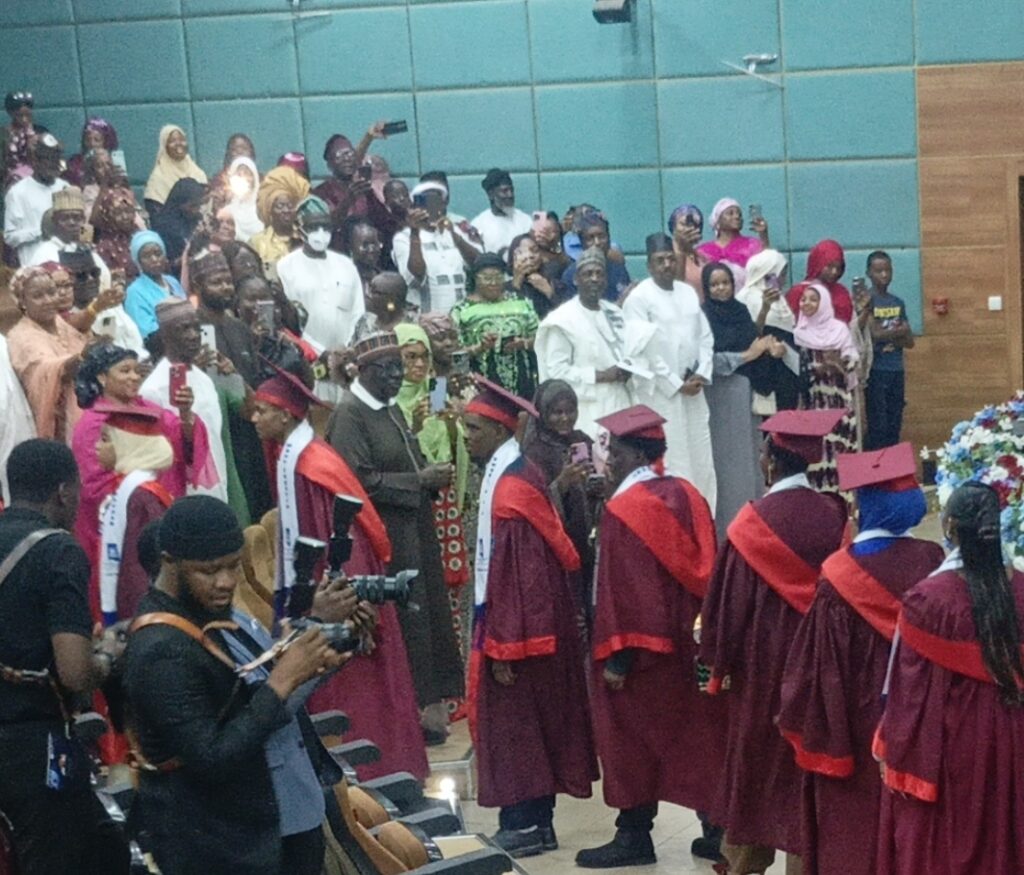
Nevertheless, employment statistics should be connected to professional responsibility. A doctor’s success cannot be measured only by obtaining a job. The true test lies in the ability to serve patients competently, protect human life, continue learning, and act with integrity. Medical knowledge changes rapidly, so doctors must remain committed to lifelong learning. They must update their skills, follow evidence-based practices, and be willing to improve whenever new information becomes available. This professor, Dilli Dogo, stressed.
READ ALSO: https://newsng.ng/professor-ahmed-ahidjo-a-new-medical-elder-rises-at-nile-university/
The presentation of startup tools to the 75 graduates was another important aspect of the attestation ceremony. By providing these tools, the university demonstrated that it wants its graduates to begin their professional journeys with practical resources. Medical instruments are essential for diagnosis, examination, and patient care. Although tools alone cannot replace knowledge and experience, they can improve readiness and support the transition from university training to professional service.
Professor Dogo’s statement that parents can begin to confirm the ability of their children to diagnose and treat patients from the first day was a strong expression of confidence in the graduates. It reflected the belief that the students had received sufficient preparation to begin contributing to healthcare. At the same time, such confidence must be accompanied by humility and professional caution. Newly qualified doctors must recognize the limits of their knowledge and seek guidance whenever a case exceeds their experience.
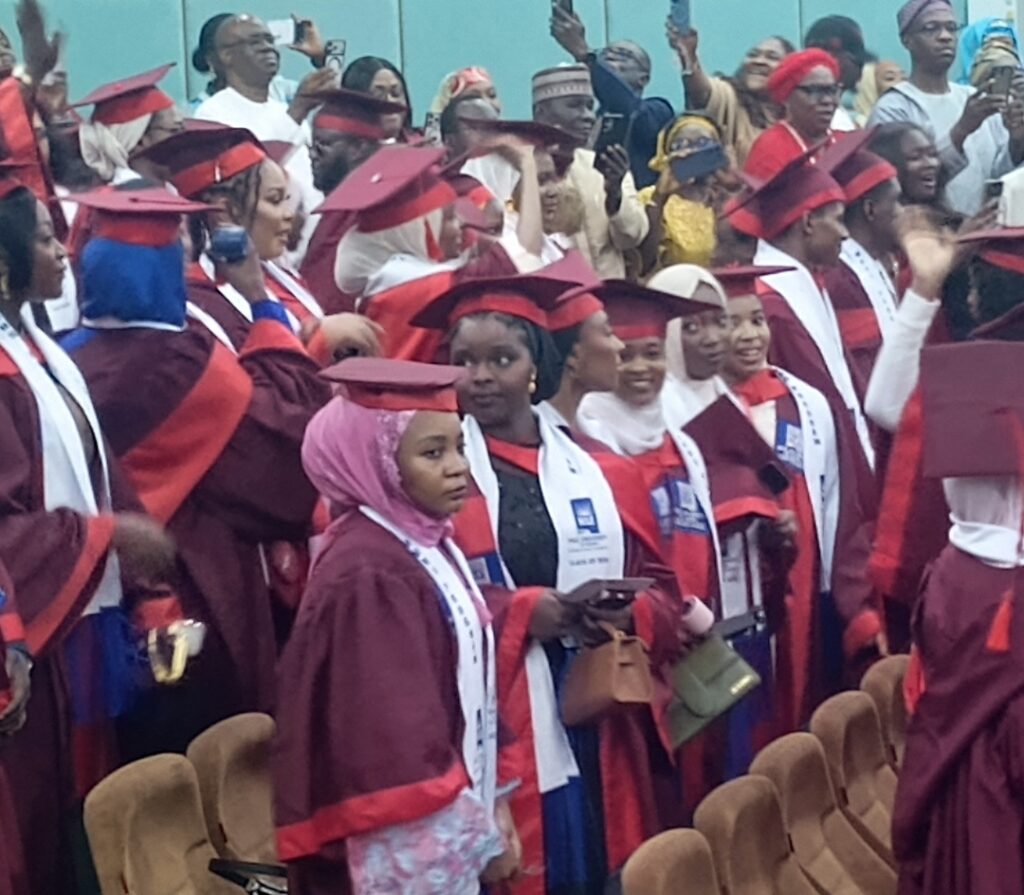
Diagnosis and treatment are serious responsibilities. They require careful history-taking, physical examination, appropriate investigations, sound clinical judgment, and clear communication. Doctors must avoid careless assumptions and must not allow pressure, fatigue, or personal interests to compromise patient safety. They must also respect confidentiality and treat every patient fairly, regardless of social status, religion, gender, ethnicity, or financial capacity. This is the vice chancellor’s warning.
READ ALSO: https://newsng.ng/professor-ahmed-ahidjo-a-new-medical-elder-rises-at-nile-university/
The vice chancellor’s final admonition to the inductees was therefore especially important. He urged them to live by their training and uphold the ethics of serving lives. Medical ethics is the foundation of trustworthy healthcare. It requires doctors to place the welfare of patients at the center of their professional conduct. It includes respect for autonomy, informed consent, confidentiality, honesty, fairness, compassion, and the commitment to do no harm.
A doctor may possess advanced technical skills, but without ethics, those skills can be misused. Patients often meet doctors during moments of fear, pain, and uncertainty. They depend on medical professionals not only for treatment but also for reassurance, guidance, and respect. A doctor who listens carefully, explains options honestly, and treats patients with dignity can make a significant difference, even when a cure is not possible.

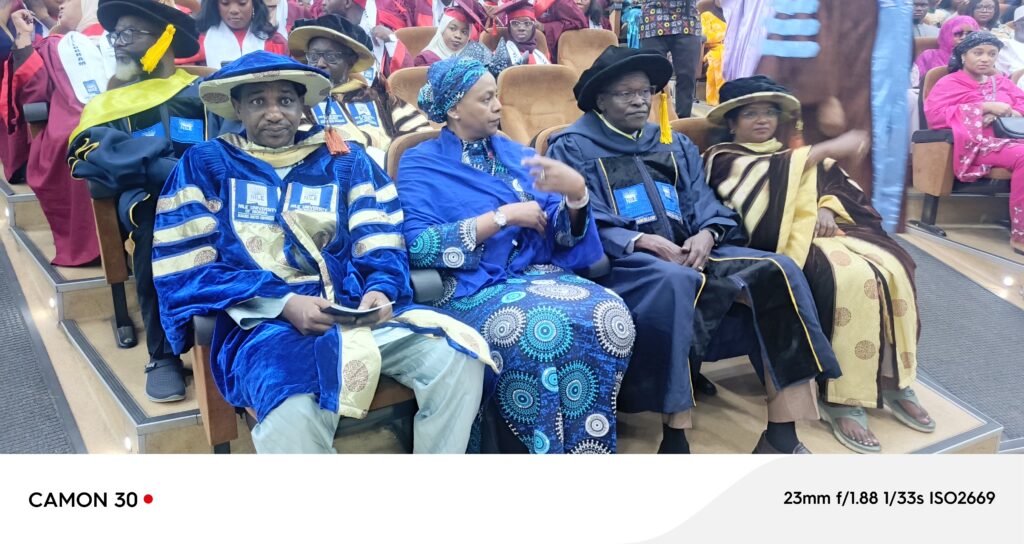
The graduates of Nile University must therefore understand that their attestation ceremony is not the end of their education. It is the beginning of a lifelong obligation. They are entering a profession in which every decision can affect an individual, a family, or an entire community. Their conduct will reflect not only on themselves but also on their university and on the Nigerian medical profession.
READ ALSO: https://newsng.ng/professor-ahmed-ahidjo-a-new-medical-elder-rises-at-nile-university/
Nile University’s achievements also place a responsibility on the institution to maintain and improve its standards. Partnerships with international universities must lead to measurable benefits, including stronger research, improved clinical training, better faculty development, and greater opportunities for students. Claims of excellence must be supported by continuous assessment, transparent standards, accreditation, and evidence of positive outcomes. The university should also ensure that its graduates are prepared to serve both urban and rural communities, where medical needs are often greatest.
* James Bwala, PhD, writes from Abuja.
Global Partnerships, Local Impact: Nile University of Nigeria Transforming Medical Education