
News
Global Peace Development Launches Five-Year Strategic Plan, Targets Peacebuilding, Governance, and Social Justice

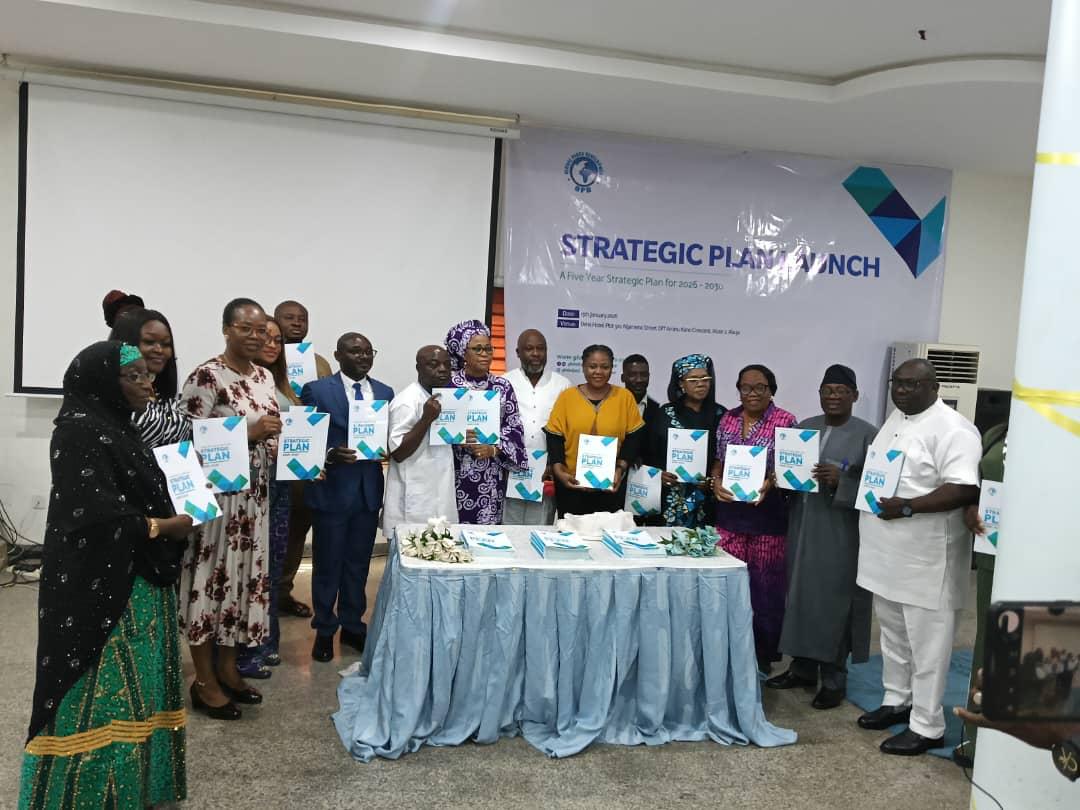
Global Peace Development Launches Five-Year Strategic Plan, Targets Peacebuilding, Governance, and Social Justice
By: Michael Mike
Global Peace Development (GPD) has unveiled its Five-Year Strategic Plan (2026–2030), outlining an expanded vision to strengthen peacebuilding, inclusive governance, and sustainable development across Nigeria and beyond.
The plan was officially launched in Abuja on Tuesday at a well-attended event that brought together civil society leaders, development partners, and government representatives, including the Institute for Peace and Conflict Resolution (IPCR).
Delivering a goodwill message on behalf of the Director-General of IPCR, Dr. Joseph Ochogwu, the institute commended GPD for its long-standing contributions to peacebuilding, gender equality, child protection, and inclusive governance.
Ochogwu, who was represented by Dr. Mang Chaimang, a director in the Institute, described the strategic plan as a timely and well-articulated roadmap that reflects over two decades of practical experience in addressing peace and development challenges in Nigeria.
Ochogwu noted that civil society organisations such as GPD play a critical role in complementing government efforts, particularly in fragile and conflict-affected regions. He added that the new strategic plan provides a strong framework for collaboration among government institutions, development partners, and civil society actors working towards sustainable peace.
Speaking in an interview after the launch, the Board Chairman of GPD, Chief Ejiro Oghenebrume, said the five-year plan represents more than a policy document, describing it as a renewed commitment to justice, good governance, and sustainable peace.
According to him, the organisation is repositioning itself to expand its scope from local interventions to a broader global outlook. He emphasized that peacebuilding is a continuous process and urged stakeholders not to relent in their efforts, warning that unresolved ethnic, religious, and political tensions could undermine national stability if not properly addressed.
Oghenebrume also advised that ethnicity and religion should not be allowed to define access to opportunities, calling for policy reforms that promote inclusion based on residency rather than origin. He stressed that peace cannot be sustained without constant engagement, education, and vigilance.
On the organisation’s priorities, the GPD chairman disclosed that women and young people remain central to the strategic plan, noting that peace at the community level begins with stable families and empowered children. He revealed that the organisation anticipates a budget of about ₦1.8 billion for 2026 to support phased implementation of the plan.
Also speaking, the Executive Director of GPD, Mr. Ebruke Esike, explained that the new strategic plan expands the organisation’s focus from five to eight thematic pillars. These include peace and conflict resolution, gender justice, democracy and governance, environment and climate change, water, sanitation and hygiene, livelihood development, education, and the protection of women and children from gender-based violence.
Esike said the plan is designed to improve security and social cohesion through non-kinetic approaches such as community dialogue, education, economic empowerment, and legal advocacy. He disclosed that the organisation projects a ₦1.2 billion operational budget for 2026, which will be sourced largely through competitive grants and partnerships.
According to him, GPD currently operates across several states in the South-South, South-East, North-Central, and North-West regions, with plans to expand to the North-East and South-West. He noted that the organisation has been involved in conflict mediation between farmers and herders, women-led peace platforms, environmental sustainability initiatives, and civic education programmes.
Esike acknowledged challenges such as insecurity, poverty, and low literacy levels but said GPD continues to work closely with government authorities, security agencies, and local peace institutions to ensure effective and safe programme delivery.
The launch ended with renewed commitments from stakeholders to strengthen partnerships aimed at promoting peace, social justice, and sustainable development in Nigeria.
Global Peace Development Launches Five-Year Strategic Plan, Targets Peacebuilding, Governance, and Social Justice





S. Targets Nigeria’s Livestock Sector in Fresh Trade Push
By: Michael Mike
The United States has launched a fresh drive to deepen agricultural trade and investment with Nigeria, deploying American expertise, technology and private-sector partnerships to unlock opportunities in the country’s livestock industry.
The initiative, unveiled under the Freedom 250 programme of the U.S. Mission to Nigeria, signals a renewed push by Washington to expand two-way commercial relations with Africa’s largest economy, with livestock development emerging as a major area for cooperation.
The programme brought American livestock development expert, Dr. Gregg BeVier, to Nigeria from August 10 to 13 for a series of engagements with Nigerian policymakers, agribusiness leaders, young entrepreneurs and livestock-sector stakeholders.
BeVier’s mission centred on one of the critical challenges confronting Nigeria’s agricultural economy: how to raise livestock productivity through improved technology, animal husbandry, private investment and stronger links between producers and markets.
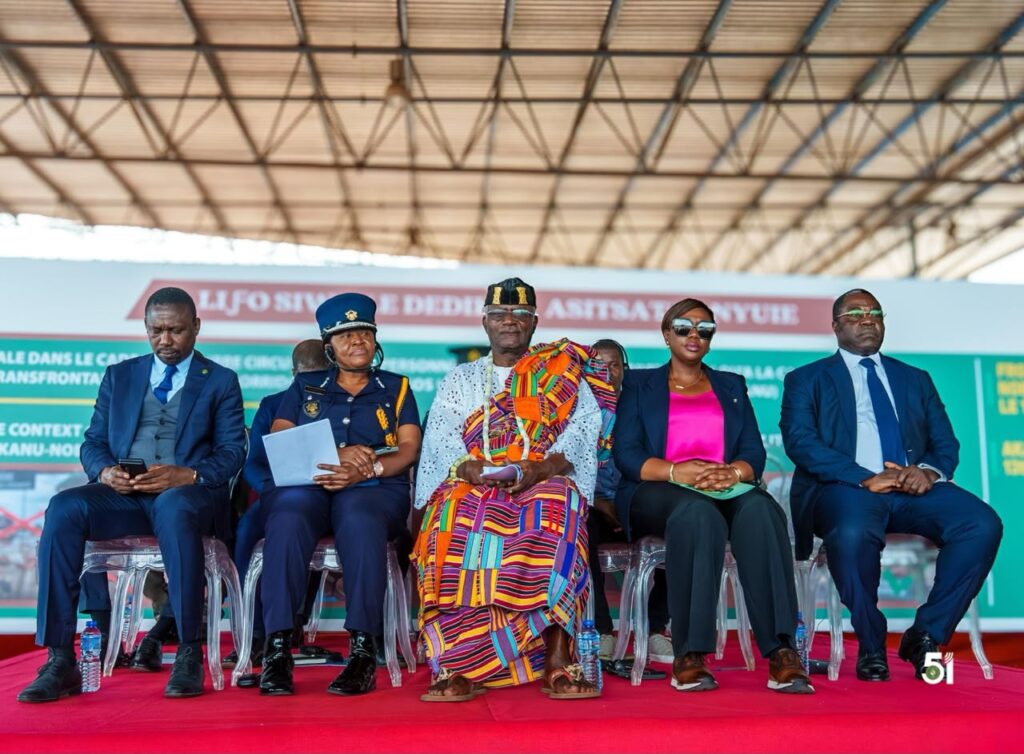
At the All-Africa Conference on Animal Agriculture in Abuja, the U.S. expert engaged officials of the Federal Ministry of Livestock Development and the Livestock Reforms and Implementation Committee on the potential of American private-sector partnerships to accelerate the transformation of Nigeria’s livestock industry.
The discussions were supported by the U.S. Department of Agriculture’s Foreign Agricultural Service, underscoring the commercial dimension of the new agricultural partnership.
BeVier joined American animal-husbandry companies at the U.S.-Nigeria Livestock and Feed Connect, a business-to-business platform designed to bring American and Nigerian companies together to explore partnerships, technology transfer and investment opportunities.
The initiative also took the conversation to young Nigerians, with BeVier engaging audiences through the network of American Spaces across Nigeria on opportunities for young people to participate in improving livestock productivity.
The U.S. Mission said the programme was designed to advance American prosperity by helping create a more favourable business environment in Nigeria, particularly in agriculture, while strengthening commercial ties between both countries.

The initiative forms part of the broader Commercial and Investment Partnership between Nigeria and the United States and reflects Washington’s growing emphasis on private-sector-led economic engagement.
For Nigeria, the renewed U.S. focus comes at a time when the livestock sector is increasingly viewed as central to food security, employment, rural development and the diversification of the economy away from dependence on oil.
Beyond livestock production itself, the partnership potentially opens opportunities across the wider agricultural value chain, including animal genetics, feed production, veterinary services, animal health, farm management, processing and agribusiness finance.
The U.S. Mission said the programme would also build on existing people-to-people initiatives, including the International Visitor Leadership Program (IVLP) and the Young African Leaders Initiative (YALI), while creating new networks that could lead to future Fulbright and IVLP opportunities focused on agricultural finance and trade.
The choice of livestock as a major area of engagement is significant given the scale and complexity of Nigeria’s agricultural market, where productivity gaps, limited access to modern technology and finance, animal health challenges and weak value-chain linkages have constrained the sector’s ability to meet rising domestic demand.
The American intervention is therefore positioned not merely as an exchange of expertise but as an attempt to connect Nigerian demand with American technology, investment and business capacity.
BeVier brings more than three decades of experience in livestock and agribusiness to the initiative. He is the Chief Operating Officer of ST Genetics and Chief Executive Officer of Fast Genetics and previously managed the livestock portfolio at the Bill & Melinda Gates Foundation as a Senior Program Officer.
He has also served in senior positions in major livestock and animal-health organisations, including as president of PIC and in leadership roles at Premium Standard Farms and Merial.
With academic qualifications spanning agricultural science, animal science, veterinary medicine and business administration from the University of Illinois, Urbana-Champaign, BeVier’s participation gives the initiative a strong commercial and technical dimension.
The U.S. Mission’s latest move comes against the backdrop of efforts by both Nigeria and the United States to expand economic relations beyond traditional areas of cooperation.
Rather than focusing solely on aid or development assistance, the Freedom 250 initiative places trade, investment, private enterprise and technical expertise at the centre of the relationship.
For Nigeria’s livestock industry, the immediate challenge will be converting the new diplomatic and business engagement into actual investments, technology partnerships and measurable productivity gains.
But with American companies now being directly connected to Nigerian businesses and policymakers, the initiative could mark the beginning of a new phase in bilateral agricultural relations — one in which livestock becomes a significant bridge between U.S. commercial interests and Nigeria’s drive for food security, economic diversification and agricultural modernisation.
The U.S. Mission said the programme is intended to create lasting networks for future engagement, suggesting that the four-day programme could serve as an entry point for broader American participation in Nigeria’s agricultural economy.
For Washington, the opportunity is commercial. For Nigeria, the stakes are considerably bigger: transforming livestock from a largely underperforming agricultural subsector into a more productive, technology-driven industry capable of generating jobs, attracting investment and strengthening food security.
S. Targets Nigeria’s Livestock Sector in Fresh Trade Push
Nigeria Risks Missing China’s $18bn Export Window, Experts Warn
By: Michael Mike
Nigeria risks squandering a potentially transformative opening in the Chinese market unless it urgently fixes its production, processing and export capacity, stakeholders warned on Friday as China’s new zero-tariff regime opened a fresh $18 billion trade window between both countries.
The warning came against the backdrop of China’s decision to remove tariffs on imports from African countries with diplomatic relations with Beijing, a move that Nigerian officials and trade experts said could dramatically expand the country’s access to one of the world’s largest consumer markets.
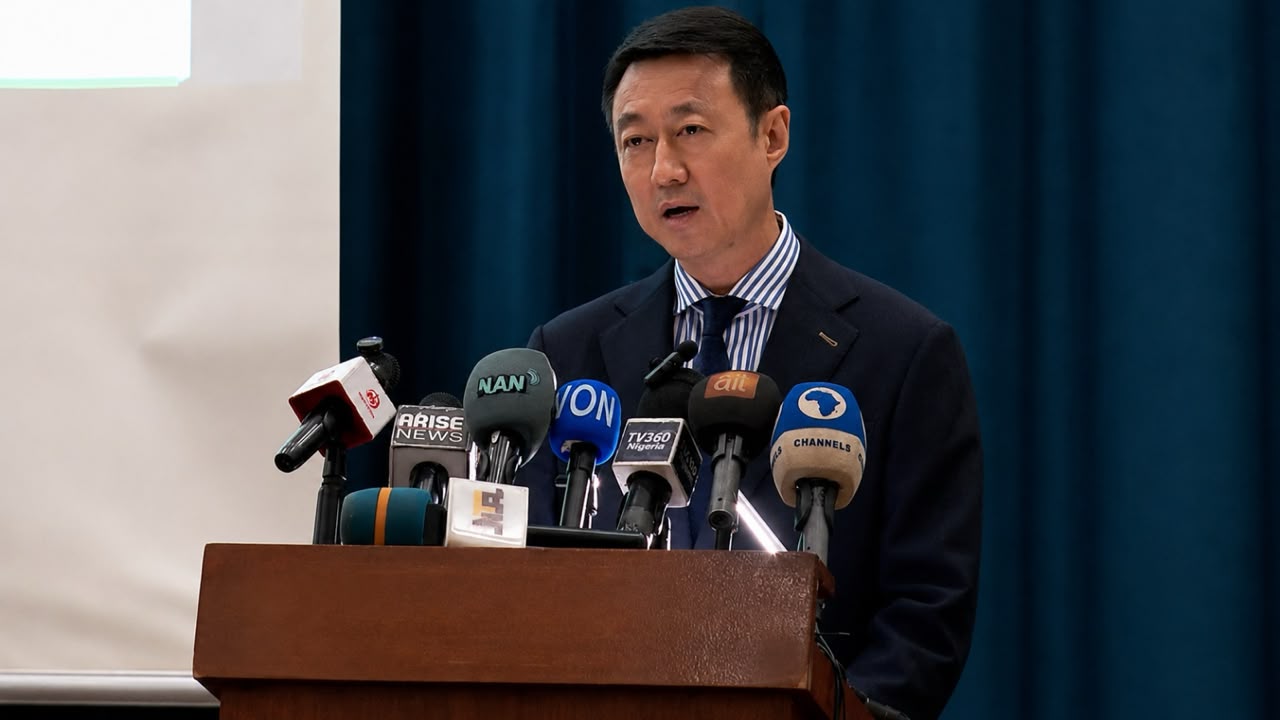
Chinese Ambassador to Nigeria, Yu Dunhai, disclosed in Abuja that bilateral trade between Nigeria and China reached $18 billion in the first half of 2026, while Chinese imports from Nigeria jumped by 80 per cent to $2.3 billion following the implementation of the zero-tariff policy on May 1.
But rather than celebrate the figures, speakers at an international seminar on the policy challenged Nigeria to confront the structural weaknesses that could prevent the country from turning preferential access into sustained export earnings, industrial growth and jobs.
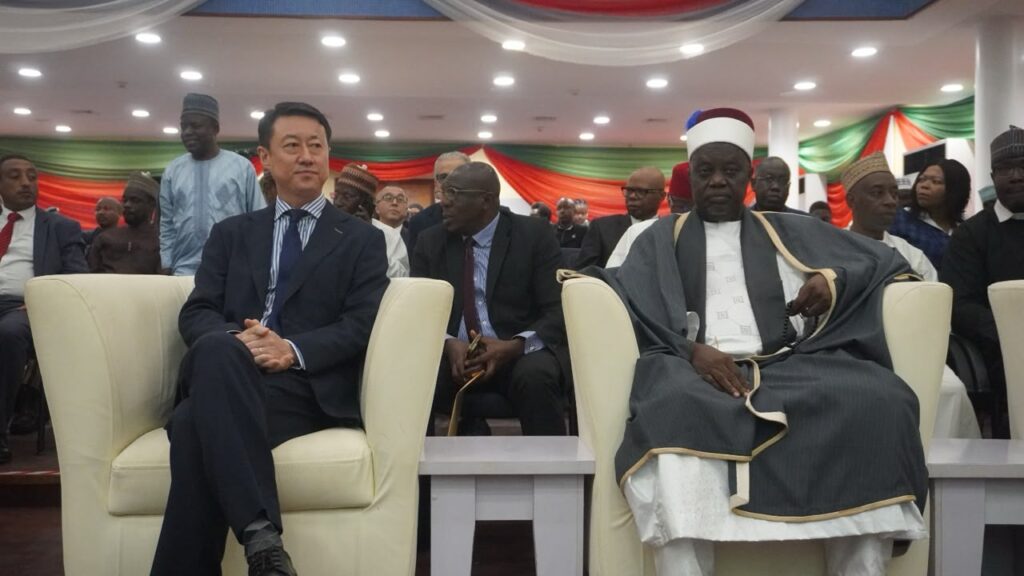
The seminar, organised by the Centre for China Studies, brought together senior government officials, lawmakers, diplomats, manufacturers, farmers, exporters and academics to examine the implications of the Chinese initiative for Nigeria and Africa.
The emerging consensus was stark: China has opened the door, but Nigeria must first produce what the Chinese market wants, in the required quantity and quality.
Yu said the policy had already produced tangible benefits, with Nigeria recording significant savings on export tariffs.
He cited Nigerian sesame exports, saying every 100 tonnes now saves about $11,000 in tariff costs, while the country’s annual export of 7,000 tonnes of cattle bone granules could save nearly $450,000.
A single 23,000-tonne shipment of Nigerian liquefied propane, he added, saved approximately $300,000 in tax on the first day of the new regime.

Yet, the ambassador made clear that tariff elimination alone would not guarantee Nigerian success in the Chinese market.
“Meeting Chinese market standards and ensuring reliable supply volumes are essential for long-term success,” he said.
He urged Nigerian producers to improve quality, strengthen supply chains and move beyond the export of unprocessed commodities.
China, he said, was prepared to support Nigeria with technology, equipment and technical expertise, including partnerships for industrial parks and local processing.
The Director of the Centre for China Studies, Charles Onunaiju, delivered perhaps the strongest warning of the day, saying the preferential access could become another missed opportunity if Nigeria failed to reform its production and trade systems.
“Zero-tariff treatment for products coming from Africa is only the starting point, it’s not the finish line,” he said.
For Nigeria, the challenge is particularly significant because the country has repeatedly struggled to translate preferential access to foreign markets into large-scale export growth.
Onunaiju said African countries must address structural constraints, harmonise standards, improve customs procedures and strengthen regional integration under the African Continental Free Trade Area.
He argued that the Chinese initiative could provide Africa with the opportunity to become a major global manufacturing base, but only if countries build productive capacity rather than remain suppliers of raw materials.
“The opportunity of becoming the next workshop of the world is in Africa,” he said.
The Federal Government also used the forum to push its industrialisation agenda, insisting that Nigeria must stop treating the export of raw materials as the end point of economic activity.
The Permanent Secretary, Ministry of Foreign Affairs, Ambassador Dunoma Ahmed, said Nigeria’s central question should not simply be how much it could sell to China but how much value it could retain domestically.
“Our natural resources must become the starting point, not the end point, of economic activity,” he said.
He called for crude oil to feed petrochemical and downstream industries, agricultural commodities to support agro-processing and manufacturing, and solid minerals to drive mineral processing and industrial production.
“In other words, we must transition from exporting resources to exporting value,” he said.
Ahmed said Nigeria was seeking Chinese and other international investments that would produce factories, processing plants, technology centres, logistics networks and skilled employment.
For Nigeria, agriculture could become the biggest test of whether the Chinese policy delivers a structural change in exports.
The Minister of State for Agriculture and Food Security, Senator Aliyu Abdullahi, said the country had enormous opportunities in processed cassava, rice, spices, shea products, hibiscus, cashew, soybean products, fruits and vegetables.
But he warned that Nigeria could not expect to dominate the Chinese market by simply shipping more raw commodities.
“The question before us, therefore, is not ‘Can Nigeria export more?’ The question should be ‘Can Nigeria export better?’” he said.
He listed productivity, processing capacity, logistics, quality assurance, traceability, financing, storage and compliance with international standards as critical areas requiring urgent attention.
The minister said the government was expanding agro-processing through the Special Agro-Processing Zones programme, with projects launched or under development in Kaduna, Cross River, Ogun and Gombe states.
He also disclosed that a mechanisation programme involving 2,000 Belarusian tractors and equipment was being rolled out to boost agricultural production.
Chairman of the occasion and former Director-General of the National Institute for Policy and Strategic Studies, Jonathan Juma, urged Nigeria to learn from its experience under the African Growth and Opportunity Act, warning against allowing another preferential trade arrangement to pass without building the capacity to exploit it.
He challenged policymakers to look beyond Nigeria’s natural endowments and determine how they could be converted into competitive exports.
“Nigeria is a place where you can drop a seed, and without much care, harvest at the end of the day. What can we do with this? What can we offer the world? What can we offer to China?” he asked.
The warning was echoed by the Director overseeing the Office of the Permanent Secretary, Ministry of Budget and Economic Planning, Dr Samson Ebimaro, who said Nigeria must strengthen infrastructure, logistics, financing, technology transfer and compliance with international standards.
He identified agriculture, agro-processing, solid minerals, manufacturing, leather and the creative industries as sectors capable of benefiting from the Chinese market.
The Chairman, House Committee on Nigeria-China Relations, Hon. Ja’afaru Yakubu, meanwhile, called for the removal of visa bottlenecks affecting Nigerian traders travelling to China.
He said easier movement of Nigerian businesspeople would enable more traders to establish direct relationships with Chinese buyers and expand the country’s participation in the market.
Yakubu said the National Assembly would continue engaging the Chinese Embassy on the issue, describing business mobility as an important component of deeper trade relations.
With China-Africa trade reaching a record $207 billion in the first half of 2026, the scale of the opportunity is significant.
But the Abuja seminar exposed the central dilemma confronting Nigeria: tariff barriers may have been removed, but production barriers remain.
For Nigeria, therefore, the real race is no longer simply to secure access to China.
It is to build the factories, farms, processing plants, standards, logistics systems and export capacity needed to ensure that when Chinese buyers open their doors, Nigeria has something competitive to sell.
Nigeria Risks Missing China’s $18bn Export Window, Experts Warn

Nestlé, FG Launch Nationwide Campaign Against Unsafe Water Michael Olugbode in Abuja
By: Michael Mike
The Federal Government and Nestlé Nigeria Plc have launched a nationwide water quality advocacy campaign aimed at tackling unsafe drinking water and taking water safety education directly to communities across the country.
The initiative, being implemented in collaboration with the Organised Private Sector in Water, Sanitation and Hygiene (OPS-WASH), seeks to shift Nigeria’s water conversation from mere access and availability to the quality, safety and sustainability of water consumed by citizens.
The campaign was unveiled at a National Training of Trainers (ToT) workshop on the Water Quality Handbook, bringing together government officials, technical experts and other stakeholders to build a network of personnel capable of cascading water safety knowledge to states, local government areas and communities.
Representing the Minister of Water Resources and Sanitation, Engr. Prof. Joseph Utsev, at the event, Director Habu Jamilu said Nigeria could no longer afford fragmented interventions in water quality management, stressing the need for a unified national approach.
He described the Water Quality Handbook as a definitive technical guide designed to establish standard procedures across the water quality value chain.
According to him, the handbook covers source protection, household water handling, water testing, household water treatment, climate-related water quality challenges and channels for reporting water quality concerns to relevant authorities.
Utsev said the training represented a critical step towards converting the technical provisions of the handbook into practical knowledge that could be replicated across the country.
He urged participants to maximise the technical sessions and practical exercises, noting that the success of the national campaign would ultimately depend on effective transfer of knowledge from trained personnel to communities.
Speaking on the initiative, the National Coordinator and Global Head of OPS-WASH Nigeria, Dr. Nicholas Igwe, who represented Nestlé Nigeria at the event, said the company was deliberately broadening its approach to water stewardship beyond access to include quality, governance and sustainability.
Igwe disclosed that under Nestlé Nigeria’s Water Regeneration Project, the company had committed to providing about 270,000 cubic metres of water annually to 16 communities in one catchment area, while another catchment area covering eight communities was expected to receive about 130,000 cubic metres.
The combined intervention amounts to about 400,000 cubic metres of water annually, underscoring the scale of the company’s stated commitment to water regeneration and community development.
He said the project rests on four key pillars — water access, water quality, governance and sustainability — with the objective of ensuring that communities do not merely have water but have access to water that meets acceptable quality standards.
“People should not only have access to water; they should also understand and benefit from water that meets acceptable quality standards,” Igwe said.
He explained that community participation was central to the project, with communities involved at different stages, from design through implementation, in order to promote ownership and ensure that the benefits could be sustained beyond the intervention period.
The project also incorporates water harvesting initiatives aimed at supporting agricultural activities and contributing to food security.
Igwe said the Water Quality Handbook, launched in April 2026 with the support of the Federal Ministry of Water Resources and Sanitation, was designed to be more than a policy document.
He said its real value would be measured by its ability to reach ordinary Nigerians and equip them with practical knowledge about the water they consume.
“The objective is for people to know exactly what they drink and understand how water quality affects their health and even the economy,” he said.
According to him, the trainers being developed through the workshop would take the knowledge contained in the handbook to different states, local government areas and communities.
They would educate residents on the health and economic consequences of poor water quality, appropriate household practices and the importance of consuming safe water.
Igwe also challenged private-sector organisations to move beyond interventions at the federal level and ensure that their investments translate into measurable benefits for communities.
He called on state governors and state-level water and sanitation institutions to take ownership of the campaign and support its implementation when it reaches their respective states.
The training featured technical sessions designed to equip participants with practical knowledge of water quality management.
A goodwill message was delivered by the President of the Association of Professional Women Engineers in Nigeria (APWEN), Engr. Chinreye Igwegbe, who joined other stakeholders in advocating stronger professional and institutional collaboration in water management.
The partnership between the Federal Ministry of Water Resources and Sanitation, OPS-WASH and Nestlé Nigeria signals an increasing recognition that Nigeria’s water challenge extends beyond providing sources of supply.
The emerging priority is ensuring that the water reaching Nigerian households is safe, tested, properly handled and sustainable.
For millions of Nigerians who depend on vulnerable water sources, the success of the campaign could therefore determine whether access to water translates into genuine protection of public health — or merely access to water that may still pose risks.
Nestlé, FG Launch Nationwide Campaign Against Unsafe Water Michael Olugbode in Abuja

S. Targets Nigeria’s Livestock Sector in Fresh Trade Push

Nigeria Risks Missing China’s $18bn Export Window, Experts Warn

Nestlé, FG Launch Nationwide Campaign Against Unsafe Water Michael Olugbode in Abuja

Roger Federer’s Shock as DNA Results Reveal Myla and Charlene Are Not His Biological Children

THE PLIGHT OF FARIDA

FAILED COUP IN BURKINA FASO: HOW TRAORÉ NARROWLY ESCAPED ASSASSINATION PLOT AMID FOREIGN INTERFERENCE CLAIMS
-
 News2 years ago
Roger Federer’s Shock as DNA Results Reveal Myla and Charlene Are Not His Biological Children
-
Opinions4 years ago
THE PLIGHT OF FARIDA
-
 News1 year ago
FAILED COUP IN BURKINA FASO: HOW TRAORÉ NARROWLY ESCAPED ASSASSINATION PLOT AMID FOREIGN INTERFERENCE CLAIMS
-

 News2 years ago
EYN: Rev. Billi, Distortion of History, and The Living Tamarind Tree
-
 Opinions5 years ago
POLICE CHARGE ROOMS, A MINTING PRESS
-

 ACADEMICS2 years ago
A History of Biu” (2015) and The Lingering Bura-Pabir Question (1)
-

 Columns2 years ago
Army University Biu: There is certain interest, but certainly not from Borno.
-

 Politics1 year ago
2027: Why Hon. Midala Balami Must Go, as Youths in Hawul and Asikira/Uba Federal Constituency Reject ₦500,000 as Sallah Gift
