
News
Governor Buni, Senate President, Lawan commissions Gashua Ultramodern Market in Yobe


Governor Buni, Senate President, Lawan commissions Gashua Ultramodern Market in Yobe
By Yahaya Wakili
The Yobe State Governor, Hon. Mai Mala Buni and the Senate President of the Federal Republic of Nigeria, Senator Ahmed Ibrahim Lawan has commissioned the Gashua Ultra modern market yesterday.
Speaking at the occasion, Governor Buni said the Gashua Ultra modern market is a 505 shops of different sizes, administratives blocks, mosques, drainages, water facilities, provision for banks, fire station and police out Post.
“The market is expected to stimulate increased economic activities that will enhance job opportunities and income generation for our people and promote internally generated revenues.” Buni said.
According to him, the market was registered as a limited liability company with a full fledged board of directors to be supported by management staff.
He urged the board and management of the market to work to ensure good utilization of all facilities towards the realisation of collective goals.
Governor Mai Mala Buni named the market after Senate President, Senator Ahmed Ibrahim Lawan being the first ever president of the Senate from Yobe state and the entire North East geo political zone.
Speaking at the commisioning of the project, Senate President, Ahmed Ibrahim Lawan announced on behalf of his SAIL Foundation donated the sum of #200million to traders in Bade local Government Council.
He said a total of 400 traders are to be benefit the sum of #500,000 each as start up capital, adding that, the foundation under his leadership will over see the disbursement of the funds to local traders.
“In particular, the ultra modern markets in the four local governments are signs of efforts by your administration to create employment opportunities, generate wealth and ensure sustainable economic development for our state.” Ahmed said.
He commend Governor Mai Mala Buni for what you have been able to do in the line of developing our state in the last three and half years and assure him that those of us representing Yobe state in the National Assembly will continue to give our maximum support to you.
In his address, the state Commissioner ministry of Commerce, Tourism and Industries, Alhaji Barma Shattima revealed that the new market project as standard and the quality of the product is in conformity with the global standard that will provide a conducive environment for business activities.
In his welcome address, the Executive Chairman of Bade local government council, Alhaji Sanda Kara Bade thanked Governor Mai Mala Buni for the execution of various people oriented project in the area. Noted that, the people of the area are highly appreciative of the project.










News
Fire Service flags off Harmattan campaign, records 491 incidents, saves 1,725 lives in six months
Fire Service flags off Harmattan campaign, records 491 incidents, saves 1,725 lives in six months
By: Michael Mike
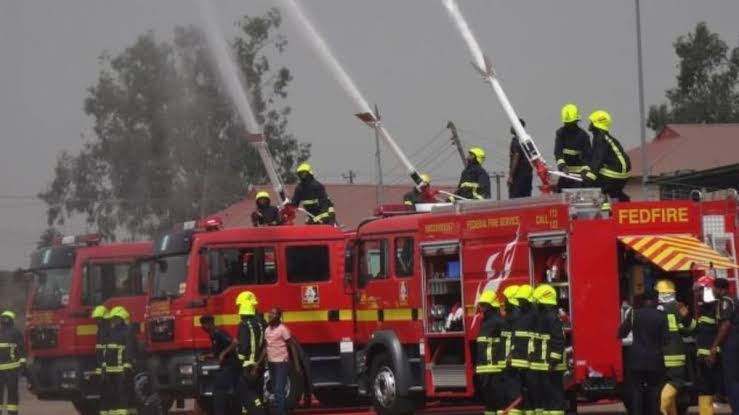
The Federal Fire Service (FFS) has flagged off its 2026 Harmattan Fire Safety Campaign, calling on Nigerians, community leaders, businesses, institutions and government agencies to make fire prevention a collective responsibility amid heightened seasonal risks.
The Controller-General of the Federal Fire Service, Samuel Olumode, made the call on Thursday during a virtual Fire Chat on the roles and responsibilities of stakeholders in building a fire safety-resilient community, which also marked the official launch of the campaign.
Olumode disclosed that the Service responded to 491 fire incidents between January and June 2026, rescued 1,725 lives and protected property valued at more than N305 billion, underscoring the critical importance of fire prevention, preparedness and prompt emergency response.
He said building a fire-resilient Nigeria required more than fire trucks and firefighters, stressing that communities, institutions, businesses and individuals must actively participate in preventing fires and supporting emergency response efforts.
According to him, fire safety cannot be left to the Federal Fire Service alone, despite its statutory responsibility for fire prevention, protection and emergency response, as effective fire management depends on collective preparedness, cooperation and commitment.
The Controller-General said the Service was pursuing partnerships and reforms aimed at expanding its operational reach, strengthening infrastructure and bringing emergency services closer to communities across the country.
He cited the collaboration with the Tertiary Education Trust Fund (TETFund) to establish fire stations in tertiary institutions as part of efforts to strengthen fire safety infrastructure and improve emergency preparedness in schools.
Olumode also disclosed that the Service was working with the Association of Local Governments of Nigeria (ALGON) to expand fire service presence across the 774 local government areas, noting that local governments were strategically positioned to identify community risks, mobilise residents and support emergency infrastructure.
He said partnerships with the Tony Elumelu Foundation on firefighting preparedness training and Philko Limited on the establishment of mini fire outposts were also part of efforts to expand fire safety awareness and response capacity.
The Controller-General further pointed to community-driven fire station initiatives in Offa, Oyo Town, Idanre in Ondo State and Bonny Island as examples of how community participation and private support could strengthen local fire protection.
He urged traditional rulers, community associations, business owners and residents to take ownership of fire safety by identifying local needs, supporting emergency infrastructure and promoting preventive practices.
Olumode said the Service was also strengthening its institutional capacity through personnel development, rehabilitation of firefighting appliances, introduction of a Performance Management System and a paperless administrative policy aimed at improving accountability, professionalism and operational efficiency.
He said the Service was targeting a 15-minute emergency response time but noted that achieving the benchmark depended on the availability of strategically located fire stations, accessible roads, prompt incident reporting and public cooperation.
The Controller-General also said Nigeria’s participation in the 2026 World Fire Congress in London, where the country signed the Congress’s Founding Principles, provided opportunities for international collaboration, professional exchange and the adoption of improved fire safety practices.
He said the 2026 National Fire Safety Week, held on November 2 at the Exhibition Pavilion, Area 11, Garki, Abuja, under the theme, “Building a Fire-Resilient Nigeria: One Community at a Time,” had helped deepen public awareness through community outreach, school engagements, market sensitisation and public education.
Olumode said the Harmattan campaign, which would run through February 2027, was designed to sustain the momentum of the National Fire Safety Week and extend practical fire prevention messages to homes, markets, schools, workplaces and other public spaces.
He warned that dry weather, low humidity and vegetation associated with the Harmattan season could accelerate the spread of fires, urging Nigerians to exercise greater caution in the use of cooking appliances, generators, electrical installations, gas cylinders and fuel.
He advised residents against overloading electrical sockets, leaving cooking unattended, indiscriminate burning of refuse and careless storage of petrol and other flammable substances, while urging households to regularly inspect gas cylinders, hoses and connections.
The Controller-General also urged business owners, market operators, school administrators, event organisers and managers of public facilities to ensure that their premises had accessible exits, appropriate firefighting equipment and adequate fire safety arrangements.
He called on traditional rulers, religious leaders, market associations, transport operators, the media, influencers and other stakeholders to actively support the campaign, while directing the Service’s zonal and state commands to take ownership of its implementation and sustain sensitisation throughout the period.
Olumode, however, expressed concern over attacks on firefighters, recounting an incident involving personnel of the Federal Fire Service, FCT Command, at 7th Avenue, Gwarinpa, Abuja, on November 13.
He said firefighters from the Kubwa Metropolitan Fire Station, who responded to a distress call at about 10 a.m., were attacked by suspected hoodlums who pelted them with stones, leaving one personnel with a head injury requiring medical attention.
He disclosed that the suspected perpetrators had been apprehended, assuring that those found culpable would face the full weight of the law.
Describing attacks on emergency responders as an assault on essential public services, Olumode urged Nigerians to protect firefighters, cooperate with them at emergency scenes and refrain from obstructing their operations.
He also urged Nigerians to exercise caution during the end-of-year festivities, warning that increased travel, social gatherings, cooking activities and the use of electrical appliances could expose households and businesses to avoidable fire risks.
The Controller-General said the success of the campaign would ultimately depend on translating partnerships into practical results, adding that a fire-resilient community was one where residents understood risks, institutions adopted preventive measures, businesses complied with safety standards and emergency responders received the support needed to perform their duties.
He formally flagged off the 2026 Harmattan Fire Safety Campaign, urging Nigerians to embrace fire safety as a shared commitment and preparedness as a way of life.
Fire Service flags off Harmattan campaign, records 491 incidents, saves 1,725 lives in six months
30 HIGH-PROFILE CORRUPTION CASES EXPOSE JUSTICE SYSTEM FAILURES, STALLING ACCOUNTABILITY
…NBA, CCB, Law Reform Commission demand reforms as publication identifies delays, weak prosecution, opaque plea bargaining
By: Michael Mike
A review of 30 high-profile corruption cases pending before Nigerian courts has exposed deep-rooted institutional and procedural weaknesses undermining the country’s anti-corruption campaign, prompting the Nigerian Bar Association (NBA), Code of Conduct Bureau (CCB) and Nigerian Law Reform Commission to demand urgent reforms of the justice system.
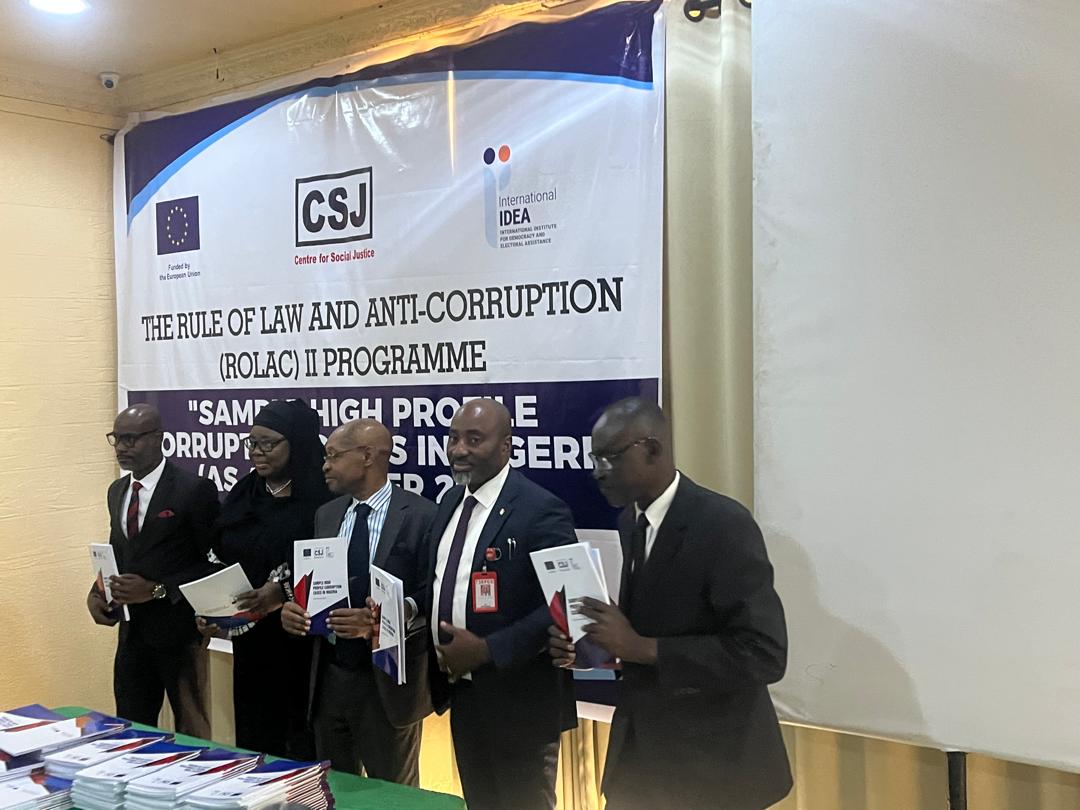
The review, contained in a publication titled “Sample High Profile Corruption Cases in Nigeria (As at October 2026),” produced by the Centre for Social Justice (CSJ), examines the progress of high-profile corruption trials across Nigerian courts and cases pending before the Code of Conduct Tribunal.
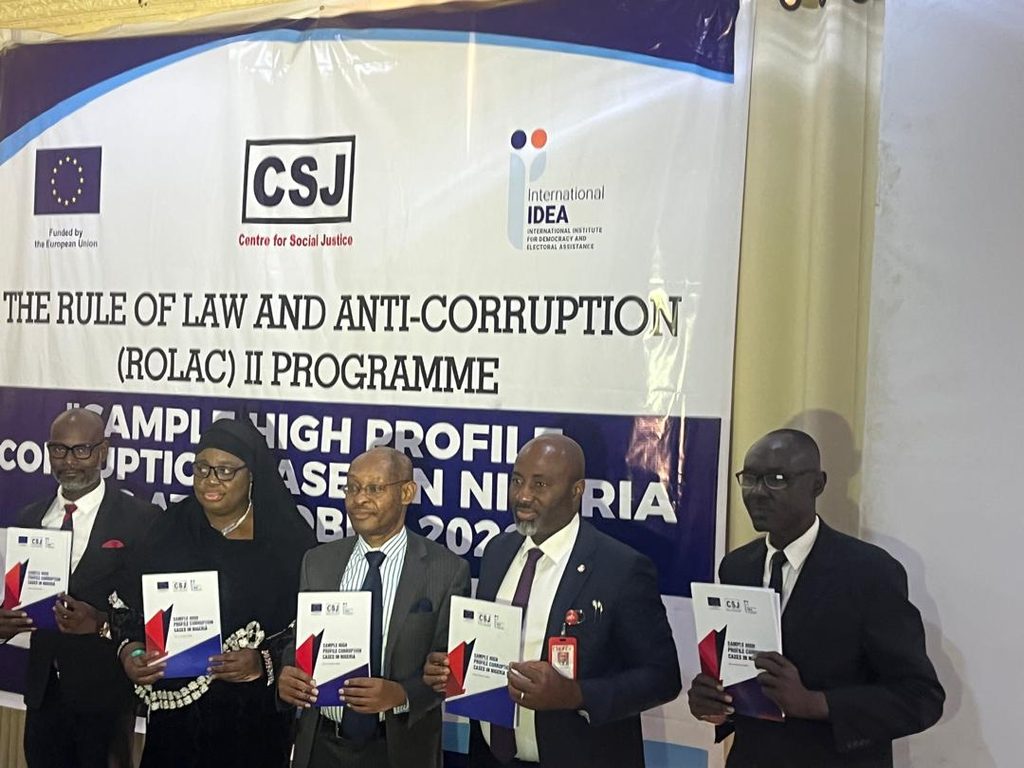
The publication identifies delays, interlocutory appeals, plea bargaining without transparency, asset recovery without accountability and cases collapsing because of poor investigation or prosecution as recurring problems requiring systemic intervention.
The findings have triggered calls for a shift in Nigeria’s anti-corruption strategy, with the three institutions insisting that the success of the campaign must be measured not merely by investigations, arrests and charges but by the ability of the justice system to deliver credible, timely and fair outcomes.
At the public presentation of the publication in Abuja on Thursday, the Chairman of the Nigerian Law Reform Commission, Prof. Dakas C.J. Dakas, SAN, described the exercise as an important instrument for exposing institutional weaknesses and providing an empirical basis for reviewing the country’s anti-corruption laws.
Dakas said the documentation of the cases was particularly important because corruption trials could be filed, adjourned, forgotten and eventually abandoned without the public having a clear record of their progress. ,
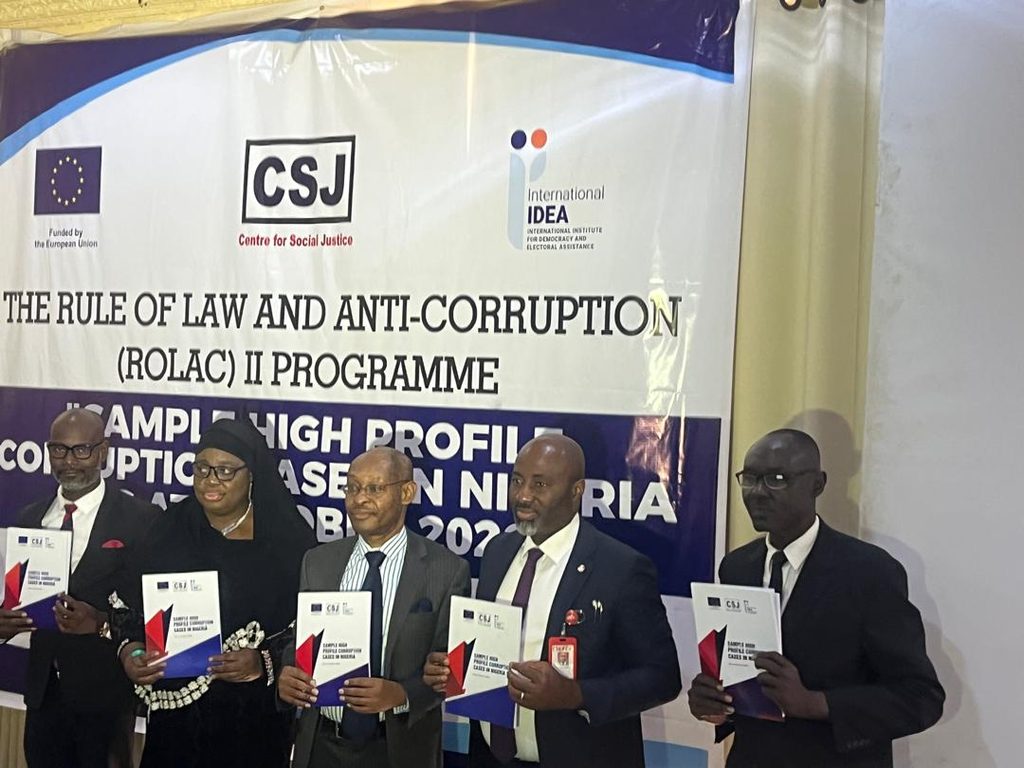
He identified documentation, public education, exposure of systemic gaps and accountability as four major contributions of the publication to Nigeria’s anti-corruption efforts.
According to him, documenting who was charged, the allegations involved, the courts handling the cases, what happened during proceedings and the status of each case would create a permanent public record from which institutions could learn.
He said the collective examination of the cases revealed that the challenges confronting corruption prosecutions were not isolated failures but systemic weaknesses requiring comprehensive reforms.
“These are not isolated failures. They are systemic failures, and systemic failures require systemic reform,” he said.
The Commission chairman also questioned the effectiveness of Nigeria’s extensive anti-corruption legislation, arguing that having several laws did not necessarily translate into effective enforcement.
“Having many laws is not the same as having an effective legal framework. Our challenge is not the absence of law. It is fragmentation, overlap, delay, weak enforcement, and a gap between the law on paper and the law in practice,” he said.
He listed the ICPC Act 2000, EFCC Act 2004, Criminal Code, Penal Code, Money Laundering (Prevention and Prohibition) Act 2022, Public Procurement Act 2007 and constitutional provisions on the Code of Conduct for Public Officers among the existing legal instruments addressing corruption.
Dakas, however, said the Commission would study the publication and incorporate lessons from its findings into its law reform programme, particularly in investigation, prosecution, asset recovery, sentencing, whistleblower protection and corruption prevention.
He pledged that identified gaps in substantive laws would be considered for legislative intervention, while procedural shortcomings would inform efforts to simplify and expedite legal processes.
The Nigerian Bar Association, through its Second Vice-President, Nuhu J. Egya, who represented its President, Mrs Oyinkansola Badejo-Okusanya, SAN, said prolonged corruption trials were weakening public confidence in the justice system and diminishing the deterrent effect of anti-corruption laws.
The association said the effectiveness of anti-corruption efforts should be assessed by the fairness, credibility and ultimate outcomes of judicial proceedings rather than the number of investigations commenced, arrests made or charges filed.
Citing Section 36(1) of the 1999 Constitution, as amended, the NBA insisted that the right to fair hearing within a reasonable time must remain central to the administration of justice.
It called for improved judicial and prosecutorial case management, adequate funding of justice-sector institutions, technology-driven case tracking and documentation, and stronger coordination among agencies responsible for investigating, prosecuting and adjudicating corruption cases.
The association also identified the Administration of Criminal Justice Act 2015 as an important framework for improving criminal justice delivery, but stressed that its effectiveness depended on proper implementation, institutional cooperation and adequate resources.
In a related intervention, the CCB identified delays in determining corruption-related cases as a major challenge, supporting reforms to strengthen the Code of Conduct Tribunal and improve the efficiency of corruption proceedings.
Mrs Sambo Sa’adat Omotayo, Director, Legal Service Department of the Bureau, who delivered a goodwill message on behalf of the CCB Chairman, said the publication provided useful material for institutional reflection and constructive engagement.
She said the Bureau was responsible for receiving and examining asset declarations by public officers, investigating breaches of the Code of Conduct and referring appropriate cases to the Tribunal.
Omotayo welcomed the proposed legislative memorandum for strengthening the Tribunal, expressing the Bureau’s readiness to examine its recommendations and engage stakeholders on measures to improve its effectiveness, independence and operational capacity.
She also called for stronger case management systems, improved investigative and legal capacities and greater deployment of technology in the administration of justice.
However, she cautioned that public monitoring of corruption cases must respect the presumption of innocence, the rights of parties and the sub judice rule.
“The pursuit of accountability and the protection of fundamental rights are not competing objectives. Rather, they are complementary pillars of the rule of law,” she said.
Beyond the immediate challenges of prosecution, Dakas said corruption was also a moral, cultural, institutional and leadership problem requiring a broader national response.
He advocated the introduction of anti-corruption education in primary and secondary schools, universities, professional training institutions and the public service.
“If we do not teach integrity early, we will spend a lifetime punishing its absence,” he said.
The three institutions called on government agencies, the judiciary, legislature, civil society, the legal profession, development partners and the media to take ownership of the reform process.
They urged the Centre for Social Justice to ensure that the publication’s findings and recommendations reached relevant government institutions and policymakers for consideration and implementation.
For the institutions, the significance of the review lies not simply in documenting pending corruption cases but in exposing the weaknesses that allow accountability to be delayed and sometimes undermined.
They maintained that the publication should serve as a catalyst for institutional reforms and a more transparent justice system in which corruption allegations are investigated properly, prosecuted effectively and determined without unnecessary delay.
Why this is a distinct angle: Unlike the previous story, which centred on the institutions’ demand for a justice-system overhaul, this version makes the 30-case review the principal news event. It also gives prominence to the specific failures identified in the publication, especially opaque plea bargaining, unaccountable asset recovery and prosecutions collapsing over investigative shortcomings.
30 HIGH-PROFILE CORRUPTION CASES EXPOSE JUSTICE SYSTEM FAILURES, STALLING ACCOUNTABILITY
Troops Rescue Five Kidnap Victims, Arrest Two Suspects in Kaduna
By: Zagazola Makama
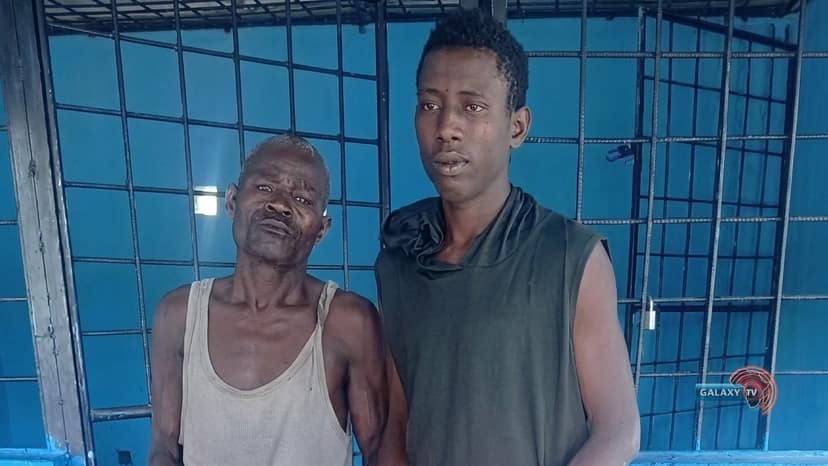
Troops of the Joint Task Force North West, Operation FANSAN YAMMA, have rescued five kidnapped victims and arrested two suspected terrorists during separate operations in Chikun Local Government Area of Kaduna State.
Security sources told Zagazola Makama that the operations were conducted on Wednesday, November 25, following attacks and abductions in Dan Bushiya and Kakura communities.
In Dan Bushiya, troops of Sector 1 responded to a distress call after suspected terrorists attacked the community and abducted some residents.
The troops reportedly encountered an ambush but sustained their rescue efforts without casualties, forcing the attackers to flee and abandon a woman and her baby, who were subsequently rescued.
In a separate incident at Kakura village, troops responded to another distress call following the abduction of five residents. Their swift intervention forced the terrorists to abandon three of the victims, who were rescued.
Efforts are ongoing in collaboration with other security agencies to track down the fleeing attackers and secure the release of the remaining victims.
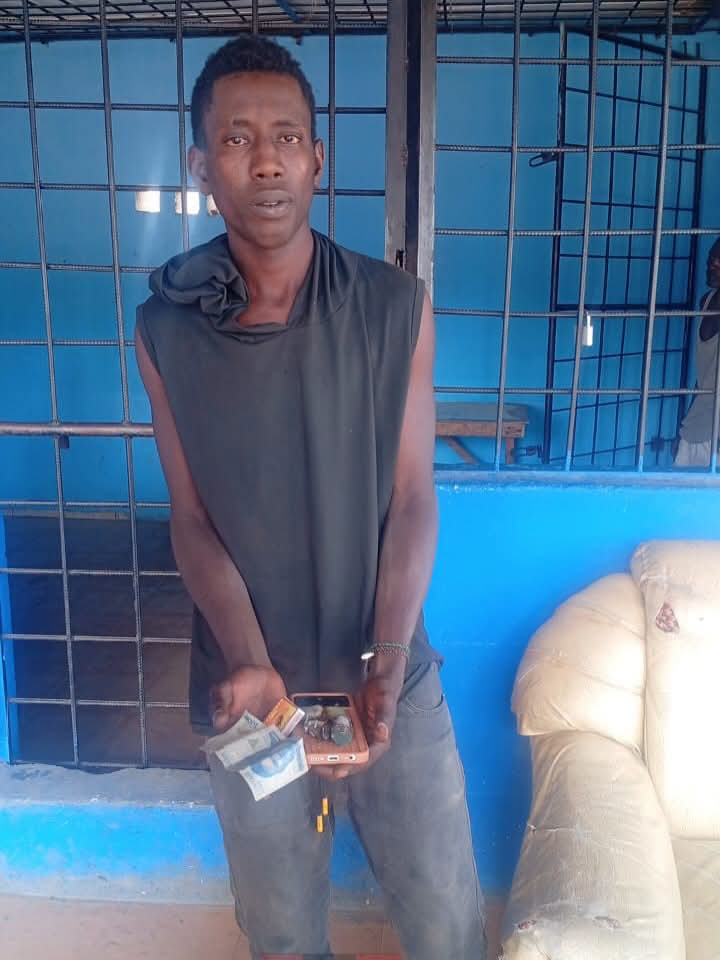
In a related development, a joint patrol team conducting search-and-rescue operations along the terrorists’ withdrawal route discovered a National Identity Card.
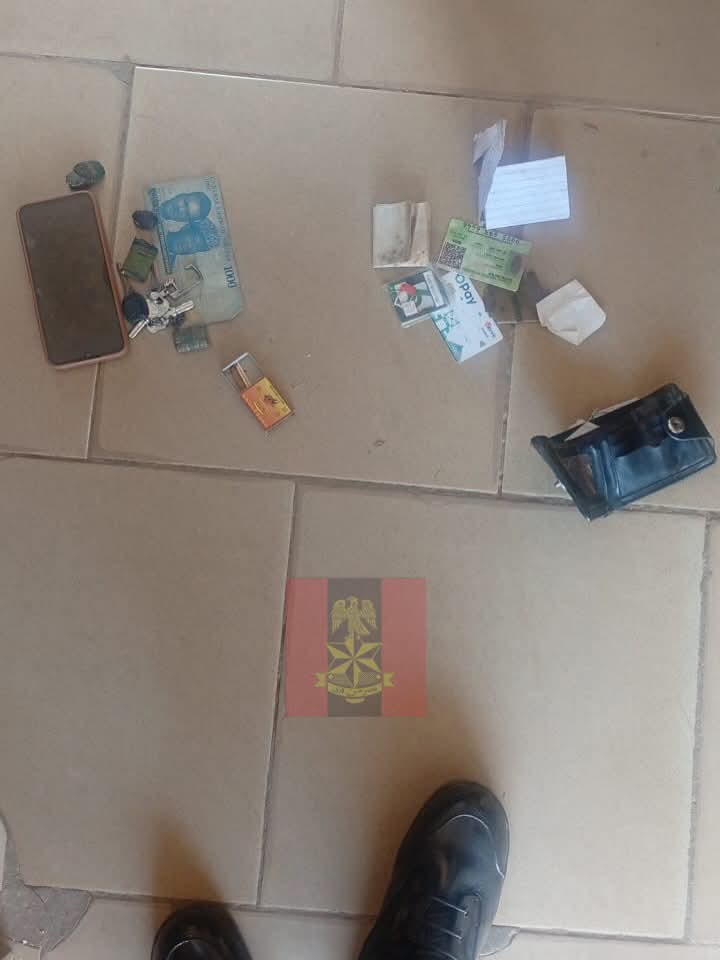
The discovery reportedly led to the arrest of the cardholder, identified as Shauibu Musa, and another suspect, Aliyu Ahmed, who are being held by troops for further investigation.
The Acting Media Information Officer of the Joint Task Force North West, Operation FANSAN YAMMA, Capt. Tamuno Sinivie, confirmed the operations in a statement issued on November 25.
The task force urged residents to continue providing credible and timely information to security agencies to support ongoing operations against terrorism and other criminal activities.
Troops Rescue Five Kidnap Victims, Arrest Two Suspects in Kaduna

Fire Service flags off Harmattan campaign, records 491 incidents, saves 1,725 lives in six months

30 HIGH-PROFILE CORRUPTION CASES EXPOSE JUSTICE SYSTEM FAILURES, STALLING ACCOUNTABILITY

Bura Day on the Plateau: When Cultural Heritage Draws the Line

Roger Federer’s Shock as DNA Results Reveal Myla and Charlene Are Not His Biological Children

THE PLIGHT OF FARIDA

FAILED COUP IN BURKINA FASO: HOW TRAORÉ NARROWLY ESCAPED ASSASSINATION PLOT AMID FOREIGN INTERFERENCE CLAIMS
-
 News3 years ago
Roger Federer’s Shock as DNA Results Reveal Myla and Charlene Are Not His Biological Children
-
Opinions5 years ago
THE PLIGHT OF FARIDA
-
 News2 years ago
FAILED COUP IN BURKINA FASO: HOW TRAORÉ NARROWLY ESCAPED ASSASSINATION PLOT AMID FOREIGN INTERFERENCE CLAIMS
-
 Opinions5 years ago
POLICE CHARGE ROOMS, A MINTING PRESS
-

 News3 years ago
EYN: Rev. Billi, Distortion of History, and The Living Tamarind Tree
-

 ACADEMICS3 years ago
A History of Biu” (2015) and The Lingering Bura-Pabir Question (1)
-

 Columns3 years ago
Army University Biu: There is certain interest, but certainly not from Borno.
-

 Politics1 year ago
2027: Why Hon. Midala Balami Must Go, as Youths in Hawul and Asikira/Uba Federal Constituency Reject ₦500,000 as Sallah Gift
