
News
Governors To Declare Nutrition Emergency, Unleash Radical Funding Mechanism

Governors To Declare Nutrition Emergency, Unleash Radical Funding Mechanism
** Commit to grassroots accountability, unified nutrition budget
** FG to begin targeted intervention in two high-stunting states
By: Our Reporter
In a historic move, governors of the 36 states of the federation have declared war on hunger by committing to launch a nationwide nutrition emergency.
This massive mobilisation will establish a powerful National Nutrition Intervention Fund to instantly advance Nigeria’s ambitious Nutrition 774 Initiative across every single local government area in the country.
Zamfara State Governor, Dauda Lawal, announced this on Friday in Addis Ababa, Ethiopia, while reading the Nigeria Governors’ Forum (NGF) Addis Ababa Commitment on Nutrition at the Nigeria Country Session.
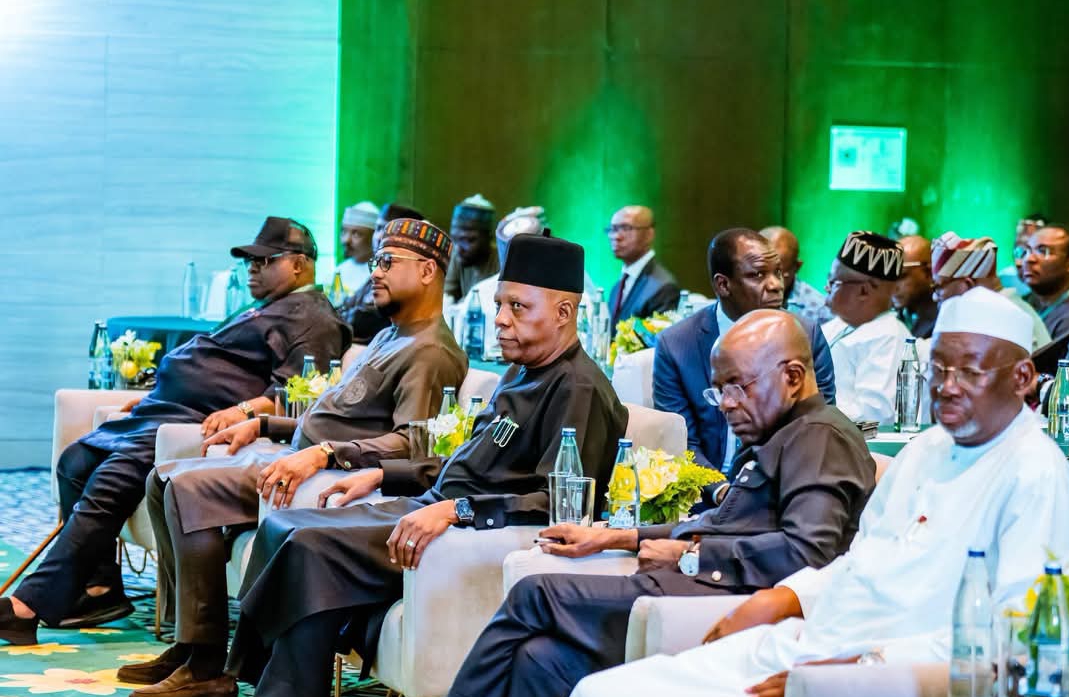
The commitment followed a three-day Nigeria-Ethiopia Nutrition Leadership Exchange, where the Nigerian delegation led by the Vice President, Senator Kashim Shettima studied Ethiopia’s experience in nutrition delivery, particularly through its Seqota Declaration.
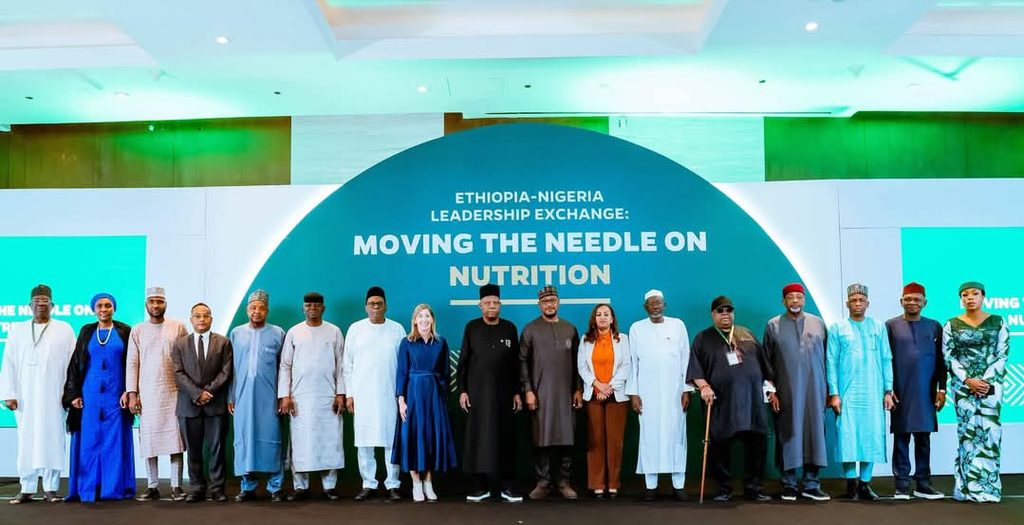
While reading the NGF commitment at the session themed “From Lessons to Commitment: Accelerating Implementation of the Nutrition 774 Initiative,” the governors also pledged to strengthen domestic financing, deepen accountability at the grassroots, and institutionalize a unified framework for nutrition planning and budgeting, drawing lessons from Ethiopia’s experience in tackling malnutrition.
Speaking on behalf of the NGF, Governor Lawal said the exchange had reinforced the importance of sustained political leadership, effective multisectoral coordination, ownership at all levels of government, predictable financing, and the systematic use of data to drive decisions and accountability.
He noted that Nigeria’s Nutrition 774 Initiative already embodied many of Ethiopia’s principles, adding that the exchange provided practical lessons to strengthen the programme and deliver measurable results.
According to him, the key lessons included the need for a unified approach to planning and budgeting, stronger coordination across sectors, bottom-up planning, predictable financing, and the use of data and scorecards to measure performance.
“We are encouraged that Nigeria’s N774 Initiative already embodies many of the principles we have seen here in Ethiopia. “mThis leadership exchange has, however, provided important practical lessons on how these principles can be further strengthened and translated into results,” he stated.
The NGF also identified matching financing between the Federal Government and states as an important mechanism for aligning priorities, encouraging subnational investment and reinforcing shared accountability for nutrition outcomes.
Lawal recalled that, in the presence of Vice President Shettima, the three tiers of government signed the Nutrition Compact on February 20, 2025, to establish a common commitment to tackling malnutrition.
He said the compact was signed by the Chairman of the NGF on behalf of the 36 states, the President of the Association of Local Governments of Nigeria (ALGON) on behalf of the 774 local governments, and the Minister of Budget and Economic Planning on behalf of the Federal Government.
He explained that the latest commitment would reinforce the existing compact by adapting lessons from Ethiopia to Nigeria’s circumstances and translating them into concrete actions across the three tiers of government.
Under the commitments, the governors resolved to declare nutrition a national emergency, establish a National Nutrition Intervention Fund to catalyse implementation of the compact, and institutionalise “One Goal, One Plan and One Budget” for nutrition.
The proposed fund is expected to incentivise state-level leadership, encourage increased domestic investment, reward effective implementation and support measurable improvements in nutrition outcomes.
The governors also pledged to strengthen bottom-up planning by ensuring that nutrition priorities reflect needs at community and ward levels before being incorporated into local government, state and national plans.
They further committed to extending the National Nutrition Scorecard beyond the state level to include local government and ward-level performance indicators, strengthening accountability throughout the delivery chain.
The NGF also resolved to institutionalise the use of data for decision-making and performance management, including state-specific surveys and assessments to provide timely evidence for planning, resource allocation and corrective action.
Meanwhile, the Executive Director and Chief Executive Officer of the National Primary Health Care Development Agency (NPHCDA), Dr Muyi Aina, has disclosed that the Federal Government will begin targeted nutrition interventions in two states with a high burden of stunting before expanding the programme to other states.
Aina, who spoke on behalf of federal agencies, said the Nigerian delegation had learnt important lessons from Ethiopia’s agricultural transformation, early childhood development programmes and data-driven initiatives.
He identified clear vision and leadership, alignment across the three tiers of government, evidence-based prioritisation, rigorous measurement and disciplined execution as critical elements for achieving sustainable results.
According to him, the federal team would adopt a focused approach by selecting two states based on their stunting burden, defining clear objectives and developing multisectoral interventions tailored to their needs.
He said relevant ministers and federal agencies would work with the governors and their teams to identify sectoral priorities, determine the responsibilities of each tier of government and involve communities and development partners in the implementation process.
Aina explained that the plan would be costed, with the participating governments working towards a joint financing arrangement and establishing measurable indicators to track progress.
“We will track very rigorously progress in the execution of the plan,” he said.
The NPHCDA chief also proposed three- six- and nine-month review meetings with the Vice President, who is also Chairman of the National Council on Nutrition, to assess progress, address implementation gaps and guide the expansion of the interventions to other states.
He said the approach would enable the government to learn from implementation, make necessary adjustments and ensure that resources were directed towards interventions capable of producing measurable improvements.
On his part, the Coordinating Minister of Health and Social Welfare, Professor Muhammad Ali Pate, said the exchange had provided valuable lessons on translating political commitments into practical action and measurable nutrition outcomes.
Pate identified focused sectoral action, a clear implementation roadmap, performance matrices and accountability as critical to accelerating Nigeria’s response to malnutrition.
He said the Federal Government would work with states to turn the commitments made during the exchange into practical interventions, with progress reported to the Vice President through the National Council on Nutrition.
According to him, the combined efforts of federal and state governments, communities and development partners would be essential to achieving sustainable results.
Pate expressed confidence that Nigeria could adapt Ethiopia’s experience to its own circumstances, noting that the progress recorded by the East African country demonstrated the value of sustained political leadership and coordinated action.
He also expressed appreciation to the Ethiopian government and its officials for hosting the Nigerian delegation, describing the exchange as an opportunity for both countries to learn from each other.
The minister invited Ethiopian officials to visit Nigeria to study its ongoing initiatives and explore further areas of cooperation.
For her part, Ethiopia’s Minister of Health, Dr Mekdes Daba, commended Nigeria for its commitment to strengthening nutrition delivery and described the leadership exchange as a practical demonstration of African countries learning from one another.
Daba expressed appreciation to Vice President Shettima for leading the high-level delegation to Ethiopia, saying the visit reflected Nigeria’s determination to translate its nutrition ambitions into action.
She said the Nutrition 774 Initiative represented a significant national commitment, stressing the importance of starting with focused interventions, measuring results and expanding successful approaches.
The minister emphasised that commitments must ultimately translate into tangible improvements in the lives of citizens, adding that implementation, feedback and continuous assessment were essential to achieving lasting results.
According to her, Ethiopia is ready to provide technical support and work with Nigeria as it implements and expands the initiative.
She described the exchange as the beginning of a long-term partnership, expressing optimism that both countries would continue to share experiences and strengthen their efforts to tackle malnutrition.
Daba said the Nigerian and Ethiopian governments have a shared responsibility to demonstrate that African countries could draw on their own experiences to deliver development outcomes for their people.
Governors To Declare Nutrition Emergency, Unleash Radical Funding Mechanism


“I Can Throw Stones At Atiku, But Obi, Kwankwaso, Makinde Are My Friends” — Shettima
By: Our Reporter
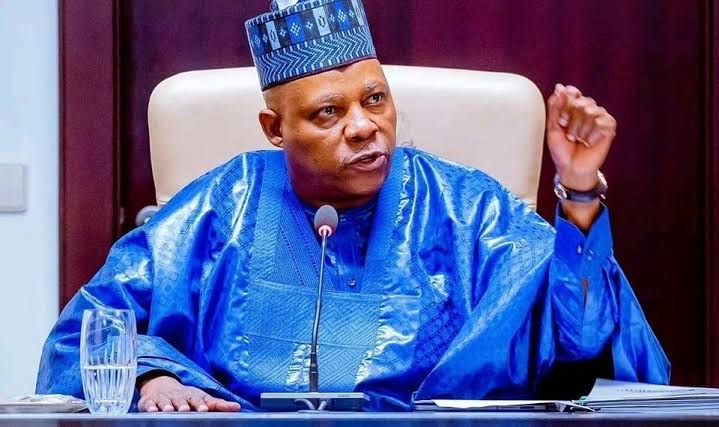
Vice President Kashim Shettima drew a clear line on Tuesday, November 24, 2026, between friends he will not insult, and one man he says he has every right to attack.
Speaking at a stakeholders’ meeting in Maiduguri, Borno State held alongside the launch of multi-sectoral development interventions by the North-East Development Commission, Shettima’s comments went viral.
His message was simple: Politics does not have to be bitter. But if you attack his boss, expect a response.
He named them one by one: “Peter Obi, Governor Seyi Makinde, Rabiu Kwankwaso, and Rotimi Amaechi are my friends. Have you ever heard me insult them?”
Shettima said he and Obi were governors at the same time, Obi in Anambra, himself in Borno. Makinde is a personal friend. Kwankwaso is a friend too.
He even recalled how his support for Amaechi in the Nigerian Governors’ Forum chairmanship contest once caused friction with former President Goodluck Jonathan, a sign, he suggested, of how far his loyalty to friends goes.
Then he turned to Atiku Abubakar, the ADC presidential candidate.
For Atiku, the rules are different. “Atiku Abubakar is an elder statesman, but as a Fulani man, I have the right to throw stones at him, and he has to endure stoically whatever stones I throw at him,” Shettima said.
He dismissed those criticizing the banter as people who lack a sense of history. In his framing, this is Fulani-to-Fulani sparring and Atiku, having repeatedly attacked President Bola Tinubu, should take it.
That, Shettima said, is the condition for his restraint:
“So long as they do not attack my boss, we will practice politics of maturity, politics without bitterness, and politics of tolerance because what binds us together surpasses whatever divides us.”
The timing matters. Nigeria is heading into the 2027 general elections. Tinubu and Shettima are seeking re-election on the APC ticket. Obi is running on the Nigeria Democratic Congress (NDC) ticket, with Kwankwaso as his running mate. Atiku is leading the ADC. Makinde has been part of broader opposition discussions.
Shettima and Obi have clashed on policy before. In October 2026, Shettima called Obi a “master of bogus statistics and incoherent economic prescriptions” over his economic arguments and Kwankwaso publicly defended Obi’s data.
But Shettima insists there is a difference between policy criticism and personal insult.
For his friends, he says, he will keep it mature. For Atiku who he accuses of attacking Tinubu, the stones will keep flying.
“I Can Throw Stones At Atiku, But Obi, Kwankwaso, Makinde Are My Friends” — Shettima
News
Shettima Unveils 10,000 Electric Vehicles in North-East, NEDC Plans 100,000 Fleet, Airline, Pharmaceutical Firm
Shettima Unveils 10,000 Electric Vehicles in North-East, NEDC Plans 100,000 Fleet, Airline, Pharmaceutical Firm
…As FG steps up post-insurgen your phone reconstruction, targets 50MW solar power, infrastructure renewal
By: Michael Mike
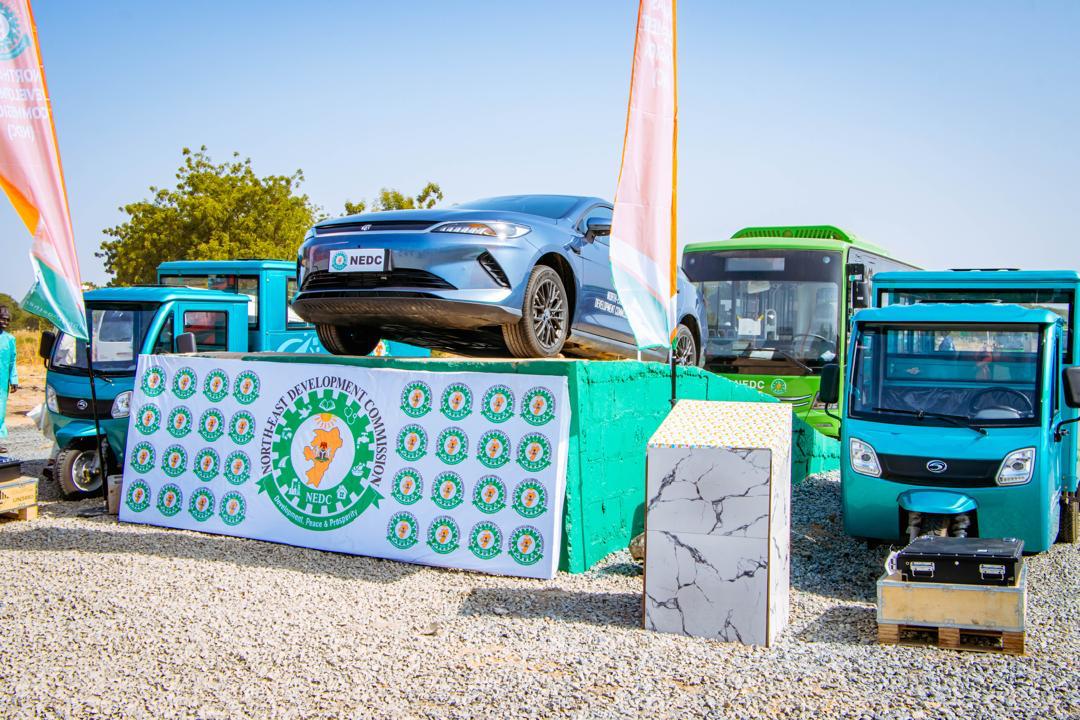
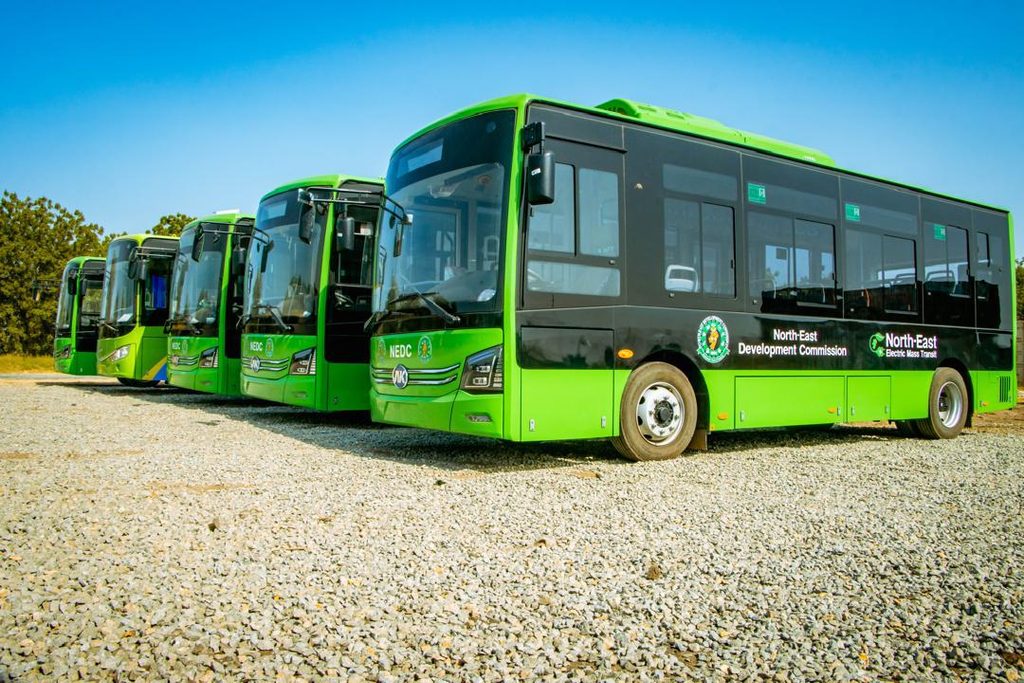
Vice-President Kashim Shettima on Tuesday unveiled 10,000 electric vehicles in Maiduguri, Borno State, as the Federal Government intensified efforts to rebuild the North-East, with the North-East Development Commission (NEDC) announcing plans to expand the fleet to more than 100,000 vehicles across the region.
The ambitious electric mobility programme, alongside plans to establish a regional airline and pharmaceutical company, signals a fresh push to transform the North-East from a region devastated by years of insurgency into an emerging centre of economic activity, industrial development and renewable energy investment.
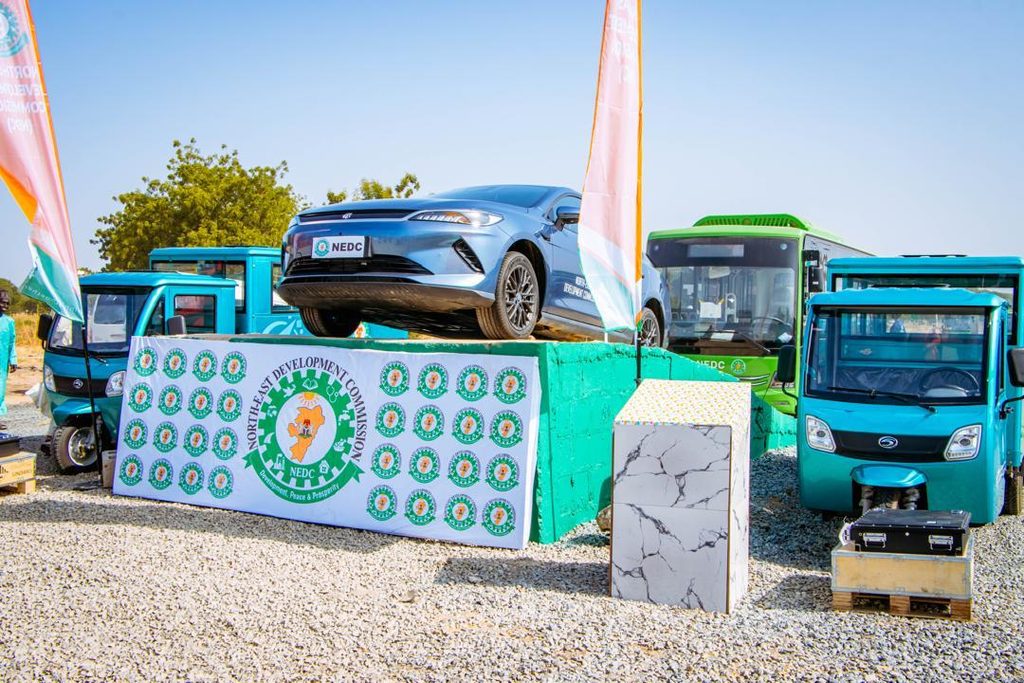
The initiatives formed part of a series of development projects commissioned by Shettima in Maiduguri, covering transportation, roads, education, healthcare, agriculture, energy and humanitarian support, in what officials described as a significant milestone in the region’s reconstruction efforts.
The proposed expansion of the electric vehicle scheme, coupled with a planned 50-megawatt solar mini-grid project, also places renewable energy at the centre of the NEDC’s development strategy, particularly as the region seeks alternatives to expensive petrol-powered transportation and unreliable electricity supply.
Speaking at the commissioning ceremony, Shettima challenged governments and communities in the North-East to take advantage of the region’s abundant sunshine to develop solar energy and other alternative power sources.
He described electric mobility as essential to the region’s development, noting that the initiative would reduce dependence on petrol, ease transportation difficulties and support the transition to cleaner energy.
The Vice-President commended the NEDC and governors of the six North-East states for their contributions to the region’s recovery but stressed that the battle against Boko Haram insurgency, banditry and other security threats required sustained cooperation.
He called for greater unity among political leaders and stakeholders, insisting that the region’s development aspirations could only be achieved in an atmosphere of peace and stability.
The Minister of Regional Development, Abubakar Momoh, said the electric vehicle initiative was consistent with President Bola Tinubu’s Renewed Hope Agenda and would provide affordable transportation for women, youths, traders and farmers.
He said the intervention was designed not merely to improve mobility but also to stimulate commercial activities, support livelihoods and create opportunities for economic growth.
Momoh also highlighted the Jere Bowl road project, which is expected to improve access to agrarian communities and facilitate the transportation of agricultural produce, alongside the proposed 50-megawatt solar mini-grid initiative.
In a further indication of the commission’s long-term economic ambitions, the Minister of State for Regional Development, Uba Maigari Ahmadu, disclosed plans to establish an airline and a pharmaceutical company for the North-East.
The proposed investments are expected to broaden the region’s economic base, strengthen connectivity and create opportunities in the aviation and pharmaceutical sectors.
Borno State Governor and Chairman of the North-East Governors Forum, Babagana Zulum, said the region was gradually recovering from years of insecurity through rehabilitation, resettlement, innovation and infrastructure development.
Zulum, who commended the NEDC for its interventions, said the commission had made remarkable contributions to rebuilding communities and restoring hope among residents affected by the insurgency.
“No other government agency did what you have done,” the governor declared.
He expressed appreciation to Tinubu and Shettima for their support for the region, urging the Federal Government to sustain its commitment to security, reconstruction and economic recovery.
Gombe State Governor, Inuwa Yahaya, also praised the Federal Government for establishing regional development commissions, describing them as important institutions for addressing the peculiar development challenges confronting different parts of the country.
He commended the NEDC’s electric mobility programme and reaffirmed the commitment of governors in the region to collective action in advancing development.
Earlier, NEDC Managing Director, Mohammed Ali Alkali, said Shettima’s visit was not merely to console the people over the devastation caused by insurgency but also to witness the achievements and resilience of a region determined to rebuild itself.
Alkali said the 10,000 electric vehicles would help reduce dependence on petrol and ease transportation difficulties, while the commission was also investing in human capital development through skills acquisition programmes and scholarships.
He listed the commission’s interventions to include the construction and rehabilitation of roads and bridges, schools, hospitals, provision of medical equipment, boreholes, agricultural support, humanitarian assistance and livelihood programmes for vulnerable communities.
The managing director commended Tinubu for providing the funding and institutional support required to execute the commission’s development programmes.
The North-East, comprising Borno, Adamawa, Yobe, Bauchi, Gombe and Taraba states, has endured more than a decade of insurgency, particularly from Boko Haram and its splinter factions, resulting in widespread destruction of infrastructure, displacement of millions of people, disruption of agriculture and the collapse of economic activities in several communities.
The crisis has made reconstruction, rehabilitation and resettlement major priorities for governments and development partners, with Borno bearing a particularly heavy burden of the conflict.
Established to coordinate and accelerate the recovery of the region, the NEDC has been implementing interventions aimed at rebuilding critical infrastructure, restoring livelihoods, improving access to education and healthcare and addressing the development deficits that have compounded insecurity.
The latest projects underscore the growing emphasis on moving beyond emergency humanitarian interventions towards long-term economic recovery.
However, the success of the ambitious electric mobility programme and proposed investments in aviation, pharmaceuticals and solar energy will ultimately depend on effective implementation, sustainable financing, adequate infrastructure and the restoration of lasting security across the region.
Shettima Unveils 10,000 Electric Vehicles in North-East, NEDC Plans 100,000 Fleet, Airline, Pharmaceutical Firm
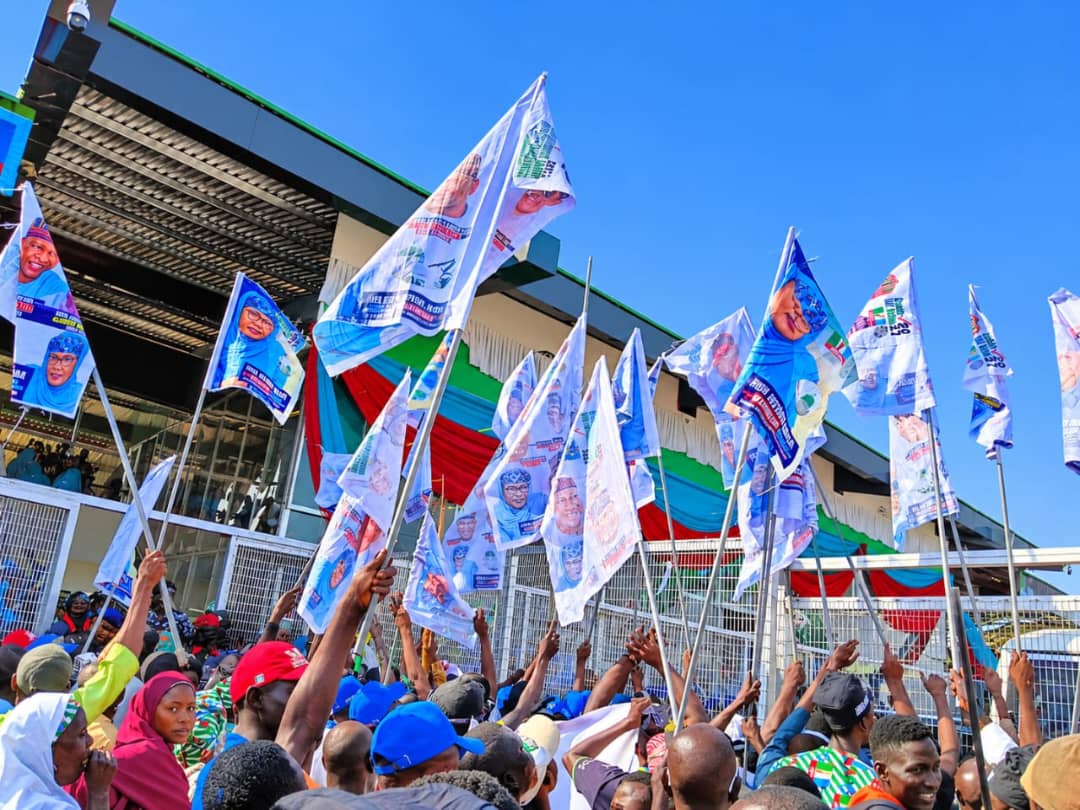
Yobe APC flag-off 2027 campaign in Damaturu
By: Yahaya Wakili
The All Progressives Congress (APC) Yobe state chapter has today officially flagged off its statewide campaign ahead of the 2027 general elections at the August 27 stadium in Damaturu, the state capital.
Addressing a massive crowd of APC supporters, the Minister of Police Affairs and Chairman of critical stakeholders in Yobe state, Senator Ibrahim Geidam, has cautioned members of the party against anti-party activities in the forthcoming general elections in the state and the country as a whole.
According to Senator Geidam, the party leadership has concrete evidence regarding those who worked tirelessly against the interest of the APC during the previous general elections in the state.
‘I have the record at my hand of those who participated in the non-success of the party in the past general elections, and I will disclose them now if possible,’ the Minister of Police Affairs added.
The highlight of the ceremony was the receiving of the large number of decampees from the PDP to APC. The defectors led by the former minister of science and technology, Dr. Abdu Bulama, and the former national chairman of the People’s Democratic Party (PDP), Ambassador Umaru Iliya Damagum.
In his remarks, Governor Mai Mala Buni CON, COMN of Yobe State, welcomed the defectors and presented them the party flags and commended them for what he described as a welcome development and solidarity to the party.
Governor Buni assured the defectors that the leadership of the All Progressives Congress (APC) in the state promised equal opportunities for the new members and called on all party supporters in the state to come out and en masse to vote for President Bola Ahmed Tinubu GCFR and all APC candidates from top to bottom.
Also speaking of the detector-general of the campaign council, Hon. Kaigama Umar Yunusari said the 2027 election is a competition between zone C and two other zones because this time around the governorship candidate is from zone C; the zone has never produced the governor or the deputy since the restoration of democracy in 1999.
Yobe APC flag-off 2027 campaign in Damaturu

“I Can Throw Stones At Atiku, But Obi, Kwankwaso, Makinde Are My Friends” — Shettima

Shettima Unveils 10,000 Electric Vehicles in North-East, NEDC Plans 100,000 Fleet, Airline, Pharmaceutical Firm

Yobe APC flag-off 2027 campaign in Damaturu

Roger Federer’s Shock as DNA Results Reveal Myla and Charlene Are Not His Biological Children

THE PLIGHT OF FARIDA

FAILED COUP IN BURKINA FASO: HOW TRAORÉ NARROWLY ESCAPED ASSASSINATION PLOT AMID FOREIGN INTERFERENCE CLAIMS
-
 News3 years ago
Roger Federer’s Shock as DNA Results Reveal Myla and Charlene Are Not His Biological Children
-
Opinions5 years ago
THE PLIGHT OF FARIDA
-
 News2 years ago
FAILED COUP IN BURKINA FASO: HOW TRAORÉ NARROWLY ESCAPED ASSASSINATION PLOT AMID FOREIGN INTERFERENCE CLAIMS
-
 Opinions5 years ago
POLICE CHARGE ROOMS, A MINTING PRESS
-

 News3 years ago
EYN: Rev. Billi, Distortion of History, and The Living Tamarind Tree
-

 ACADEMICS3 years ago
A History of Biu” (2015) and The Lingering Bura-Pabir Question (1)
-

 Columns3 years ago
Army University Biu: There is certain interest, but certainly not from Borno.
-

 Politics1 year ago
2027: Why Hon. Midala Balami Must Go, as Youths in Hawul and Asikira/Uba Federal Constituency Reject ₦500,000 as Sallah Gift
