
News
Governors Wives: Success of Tinubu’s Administration Reliant on Successful Drug War

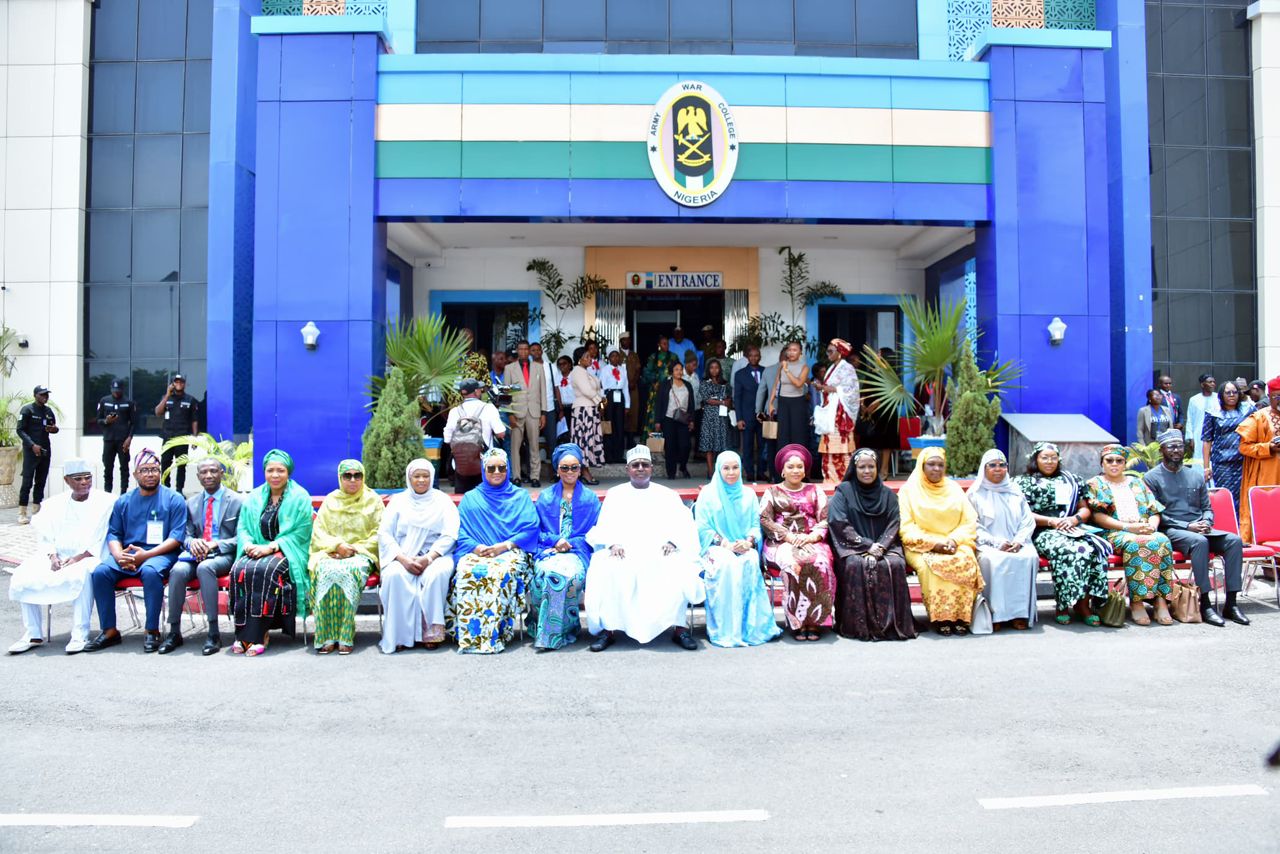
Governors Wives: Success of Tinubu’s Administration Reliant on Successful Drug War
By: Michael Mike
The Nigeria Governors Spouses’ Forum (NGSF) has posited that the success of the present administration of President Bola Tinubu administration is independent on the success of ongoing war against illicit drug trafficking.
They declared that the success of the ongoing efforts by the National Drug Law Enforcement Agency (NDLEA) against the menace of substance abuse and illicit drug trafficking will lead to the actualization of the renewed hope agenda of the President Bola Tinubu administration.
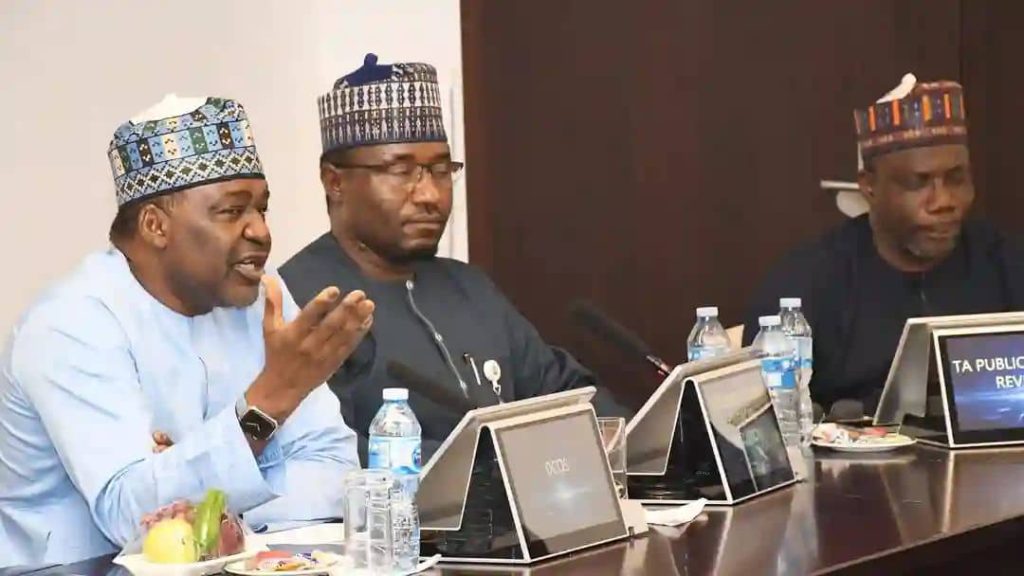
Recalling the importance that successfully tackling the drug scourge will remarkably ensure that the Renewed Hope Agenda of the President is achievable for holistic national development required to birth a Nigeria of our collective dreams, wives of state governors declared as part of their resolutions in a communique read by the first lady of Ogun state, Mrs. Bamidele Dapo Abiodun on behalf of the Chairperson of the Forum and first lady of Kwara state, Prof Olufolake Abdulrasaq, at the end of a training workshop organized by the NDLEA in collaboration with the NGSF in Abuja
The Forum expressed concern “that Nigeria presently faces an alarming drug use situation, which has heavily pervaded every sphere and strata of communities and consequently endangering the wellbeing and security of individuals, families and communities within the country.”
It reiterated that states play critical roles as stakeholders in addressing national drug challenges by implementing localized strategies, fostering cross sector collaboration and aligning with internal frameworks, towards responding to community needs and contributing to coordinated national responses.
The Forum endorsed the “outstanding efforts of NDLEA under the leadership of Brig Gen Mohamed Buba Marwa against drug use and trafficking with phenomenal national and global success records in the areas of arrests and seizures, prosecutions and convictions, prevention, treatment, and rehabilitation among others.”
As parts of its resolutions, the Forum acknowledged “with urgency the need for the First Ladies to use their good offices to liaise with the State Governors in facilitating the establishment, of State Drug Control Committees (SDCCs) in the thirty-six states of the country, beyond the nine functional committees currently in existence.”
It said the laudable partnership between NDLEA and the NGSF has yielded significant dividends and achieved notable milestones over time, adding that “urgent concerted and pragmatic efforts are required considering the complex public health issues and security challenges, the country is witnessing, which is fuelled largely by the use of drugs.”
The Forum called on the Federal Government and Governors to declare state of emergency on drug use and the illicit trafficking pandemic with a view to accepting national ownership of the drug problem and mobilising resources to dismantle the menace.
It also resolved to ensure that “Local Government Drug Abuse Committees are established in line with the ‘bottom to top’ approach, a core principle of the NDCMP, in ensuring that tailored Drug Demand Reduction activities are further cascaded to the wards and rural communities, areas highly vulnerable to the drug problem”
According to First Ladies, “the Drug Abuse Prevention Treatment and Care (DPTC) programmes in States continue to serve as Forum project, and to be chaired by the first ladies of the State, as additional tools for addressing community-based drug prevention, use and treatment modalities to promote community health, development and overall wellbeing.”
They highlighted the importance of the SDCCs in expanding its scope by seeking result-oriented partnerships with the private sector, civil society organisations and other key stakeholders in the development and implementation of community-based projects, through the enhancement of resources, facilities and infrastructure for holistic outcomes across the States of the Federation.
They also reaffirmed “the need for active collaboration with, and providing vital supports to NDLEA Commands in States with a view to achieving more effective, integrated and enduring responses to drug challenges in diverse community settings by combining enforcement, prevention, treatment and recovery efforts.The Forum harped on “the need to create and promote sustainable development initiatives by encouraging health and people centered prevention, treatment, social support, stigma reduction, and inclusive policies that tackle root causes and ensure long term community and health and resilience.”
Governors Wives: Success of Tinubu’s Administration Reliant on Successful Drug War


Troops Arrest Suspected Military Impostor in Katsina
By Zagazola Makama
Troops of 17 Brigade have arrested a suspected military impostor during a fighting patrol in Malumfashi Local Government Area.
Security sources told Zagazola Makama that the suspect was apprehended at about 1:30 p.m. on July 4 by troops deployed at the Forward Operating Base (FOB) Malumfashi while conducting routine patrols within Malumfashi town.

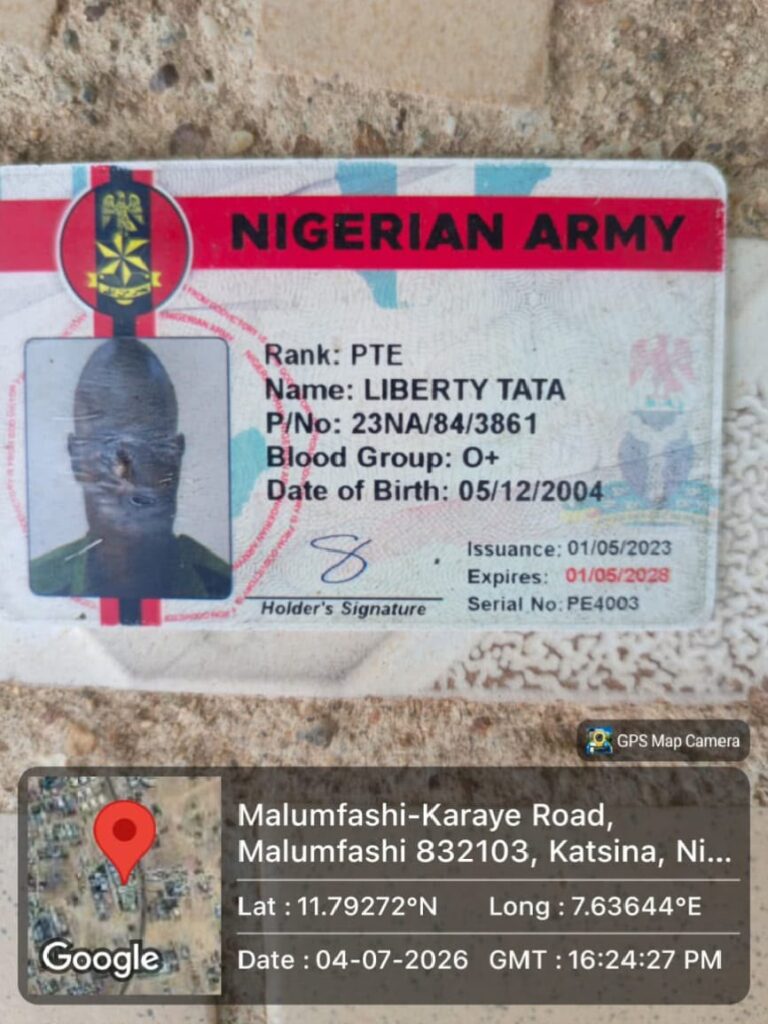
According to the sources, the suspect was intercepted while wearing a woodland camouflage three-quarter short, raising suspicion among the troops.
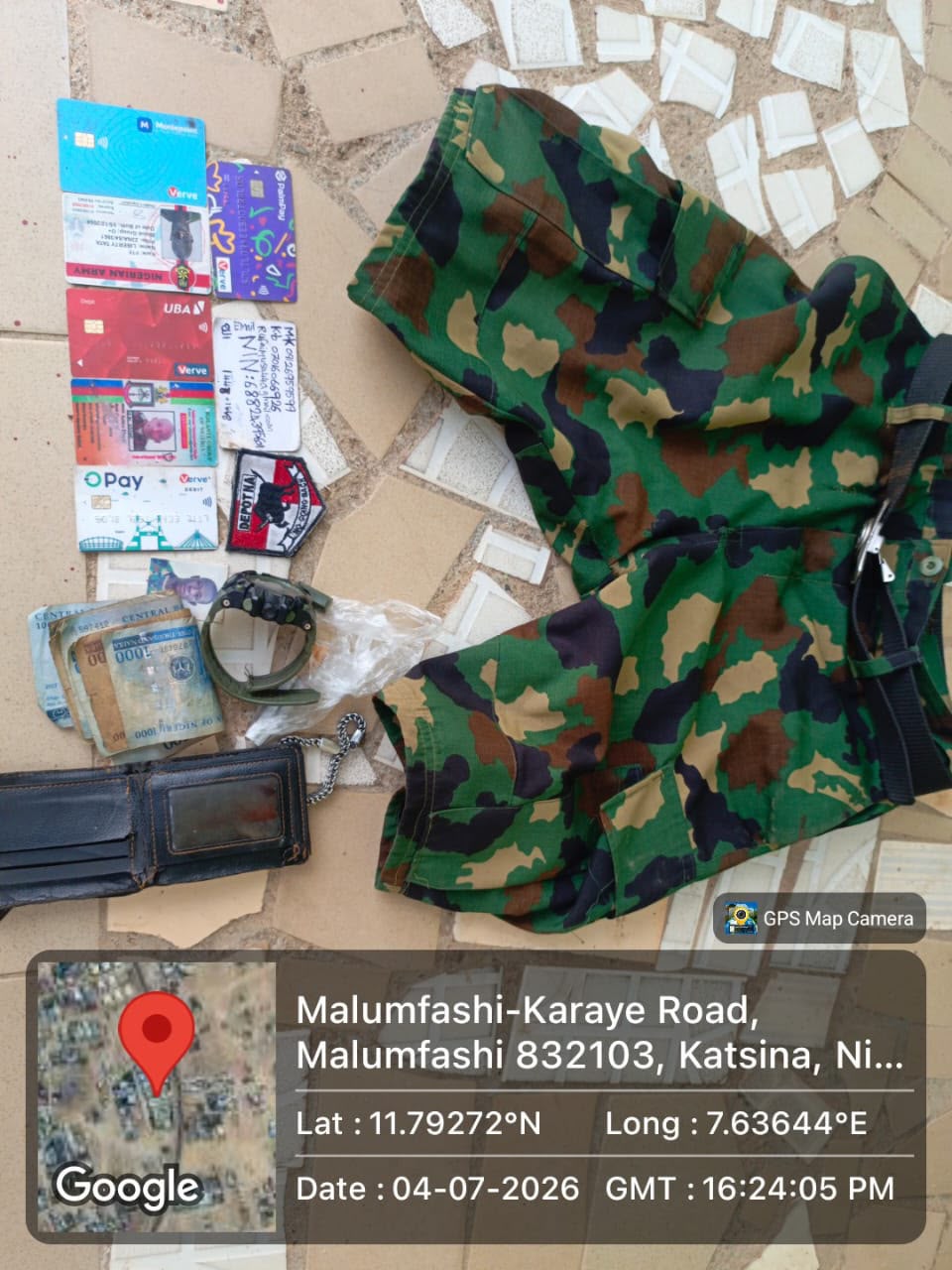
A search conducted on the suspect led to the recovery of a fake Nigerian Army identity card, four Automated Teller Machine (ATM) cards, one woodland camouflage three-quarter short, a wristwatch and the sum of ₦17,000.
The suspect and the recovered exhibits are currently in military custody pending further investigation.
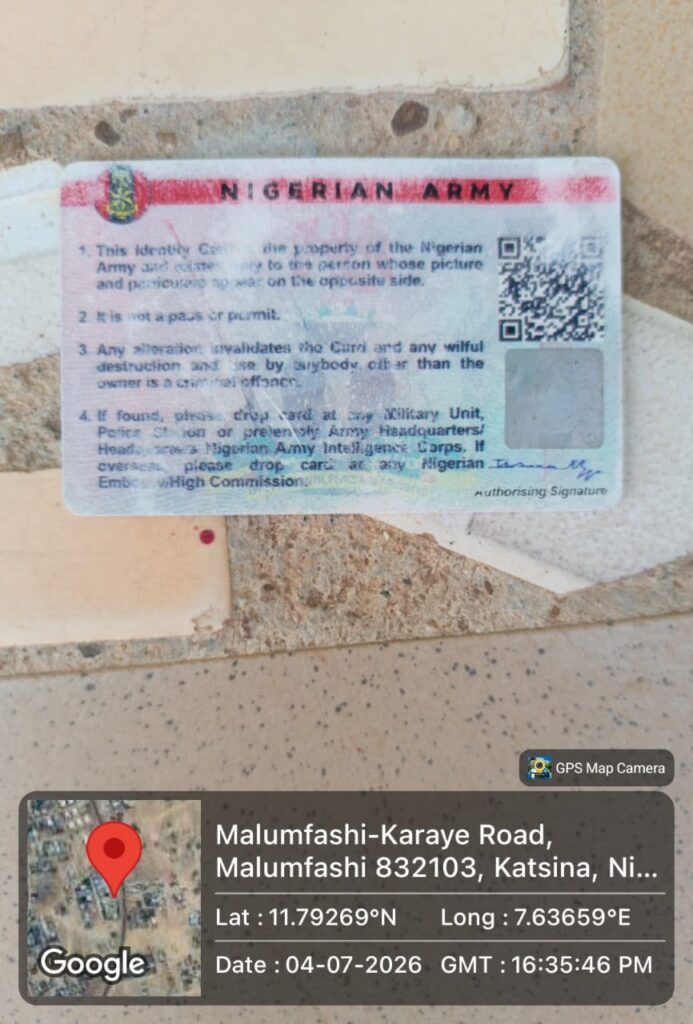
Military sources said the arrest forms part of ongoing efforts to curb impersonation of security personnel and other criminal activities within the area.
Troops Arrest Suspected Military Impostor in Katsina
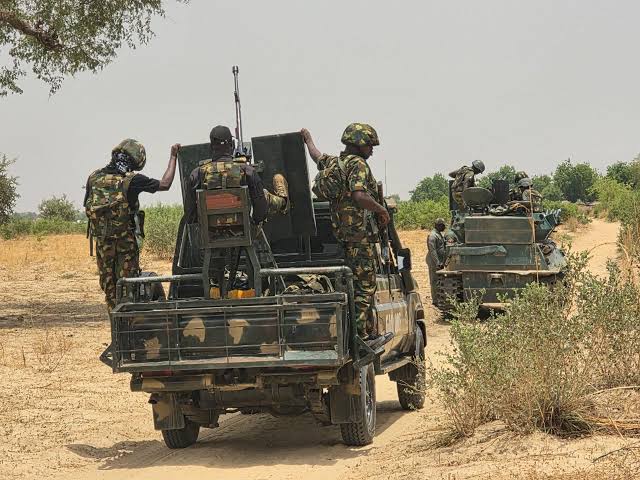
Troops Recover 50 Rustled Cattle, Repel Suspected Rustlers in Kaduna
By Zagazola Makama
Troops deployed at the Forward Operating Base (FOB) Kankomi have recovered 50 rustled cattle after repelling suspected cattle rustlers during an ambush operation in Chikun Local Government Area.
Security sources told Zagazola Makama that the troops responded to a distress call at about 9:55 a.m. on July 4 over the activities of suspected rustlers at Ungwan Gontu community.
According to the sources, the troops swiftly laid an ambush and made contact with the fleeing suspects, forcing them to abandon the stolen livestock and escape into the surrounding area.
During the operation, the troops recovered 50 rustled cattle, which were subsequently identified and handed over to their rightful owner.
Military sources said efforts are ongoing to track down the fleeing suspects as security operations continue to combat cattle rustling and other criminal activities across Kaduna State.
Troops Recover 50 Rustled Cattle, Repel Suspected Rustlers in Kaduna
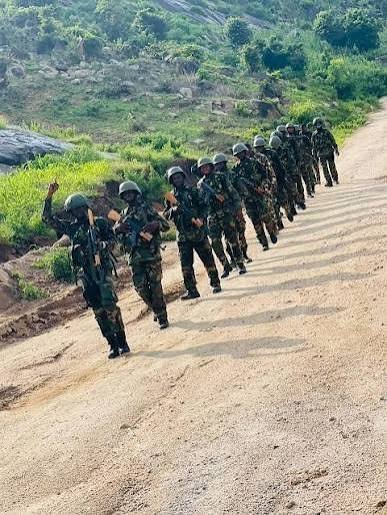
Troops Arrest Suspected Terrorist in Kogi, Suspect Confesses to Group Membership
By Zagazola Makama
Troops of 12 Brigade, in collaboration with Office of the National Security Adviser (ONSA) Hybrid Forces, have arrested a suspected terrorist during an operation in Lokoja Local Government Area.
Security sources told Zagazola Makama that the troops responded at about 1:00 p.m. on July 4 to reports of a confrontation between local residents and a suspected terrorist at a Ruga settlement behind Obajana community.
According to the sources, the troops swiftly intervened and arrested one suspect at the scene.
During preliminary interrogation, the suspect reportedly confessed to being a member of a terrorist group led by an individual identified as Haruna, which allegedly operates within the Okene general area.
The suspect is currently in military custody and is undergoing further investigation to establish the extent of his involvement and identify other members of the group.
Military sources said the arrest forms part of ongoing security operations aimed at dismantling terrorist and criminal networks across Kogi State.
Troops Arrest Suspected Terrorist in Kogi, Suspect Confesses to Group Membership

DSS Frees Cardiac Surgeon Martin Aghaji on Bail Over Alleged Economic Crime

Troops Arrest Suspected Military Impostor in Katsina

Troops Recover 50 Rustled Cattle, Repel Suspected Rustlers in Kaduna

Roger Federer’s Shock as DNA Results Reveal Myla and Charlene Are Not His Biological Children

THE PLIGHT OF FARIDA

FAILED COUP IN BURKINA FASO: HOW TRAORÉ NARROWLY ESCAPED ASSASSINATION PLOT AMID FOREIGN INTERFERENCE CLAIMS
-
 News2 years ago
Roger Federer’s Shock as DNA Results Reveal Myla and Charlene Are Not His Biological Children
-
Opinions4 years ago
THE PLIGHT OF FARIDA
-
 News1 year ago
FAILED COUP IN BURKINA FASO: HOW TRAORÉ NARROWLY ESCAPED ASSASSINATION PLOT AMID FOREIGN INTERFERENCE CLAIMS
-

 News2 years ago
EYN: Rev. Billi, Distortion of History, and The Living Tamarind Tree
-
 Opinions5 years ago
POLICE CHARGE ROOMS, A MINTING PRESS
-

 ACADEMICS2 years ago
A History of Biu” (2015) and The Lingering Bura-Pabir Question (1)
-

 Columns2 years ago
Army University Biu: There is certain interest, but certainly not from Borno.
-

 Politics1 year ago
2027: Why Hon. Midala Balami Must Go, as Youths in Hawul and Asikira/Uba Federal Constituency Reject ₦500,000 as Sallah Gift
