
News
Goya District, Desertification, and the Reality of Tree Planting

Goya District, Desertification, and the Reality of Tree Planting
By: Balami Lazarus
My pen and I have been longing to write about Goya District, one of the homes of the Kare-Kare people, whose traces are also found in Jigawa and Bauchi states. The kare-kare are known to be a peaceful group of people who have made their marks in the fields of education and business.
Let me lightly inform you that Goya District was created in 1990. The district is part of the Fika Emirate Council in the Fika local government of Yobe State. Pharmacist Alhaji Garba Abdullahi Daya (1932–2022) was the first district head.
It was interesting living with the Dayas as young men in the 1980s and 1990s, where we related well as family friends and neighbors. As neighbors, we were privileged to have near-free drugs and treatments for our minor ailments because Bappa, as he was fondly called, was a respected pharmacist and CEO of Daya Pharmacuetical Chemist Limited Maiduguri. And was always there for us in our needs for our medical attention. The creation of Goya District was a new dawn for the Dayas, where the head and some members of the family relocated to Daya, the headquarter of Goya District.
The human environment has been the most comfortable place to live, where plants and animals formed part of the eco-system as a driving force for human existence. Similarly, the World Environment Day of June of every year has been set aside by the United Nations to raise awareness among the citizens of the world about the importance of the environment and its positive impact on mankind through its eco-system as a change driver.
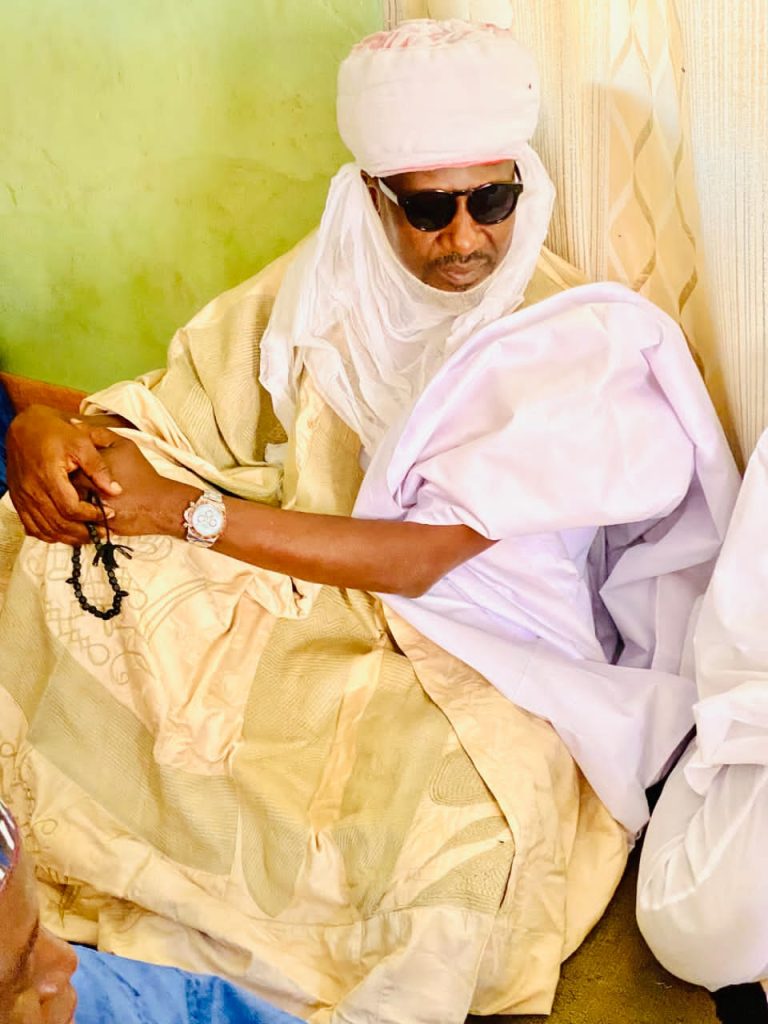
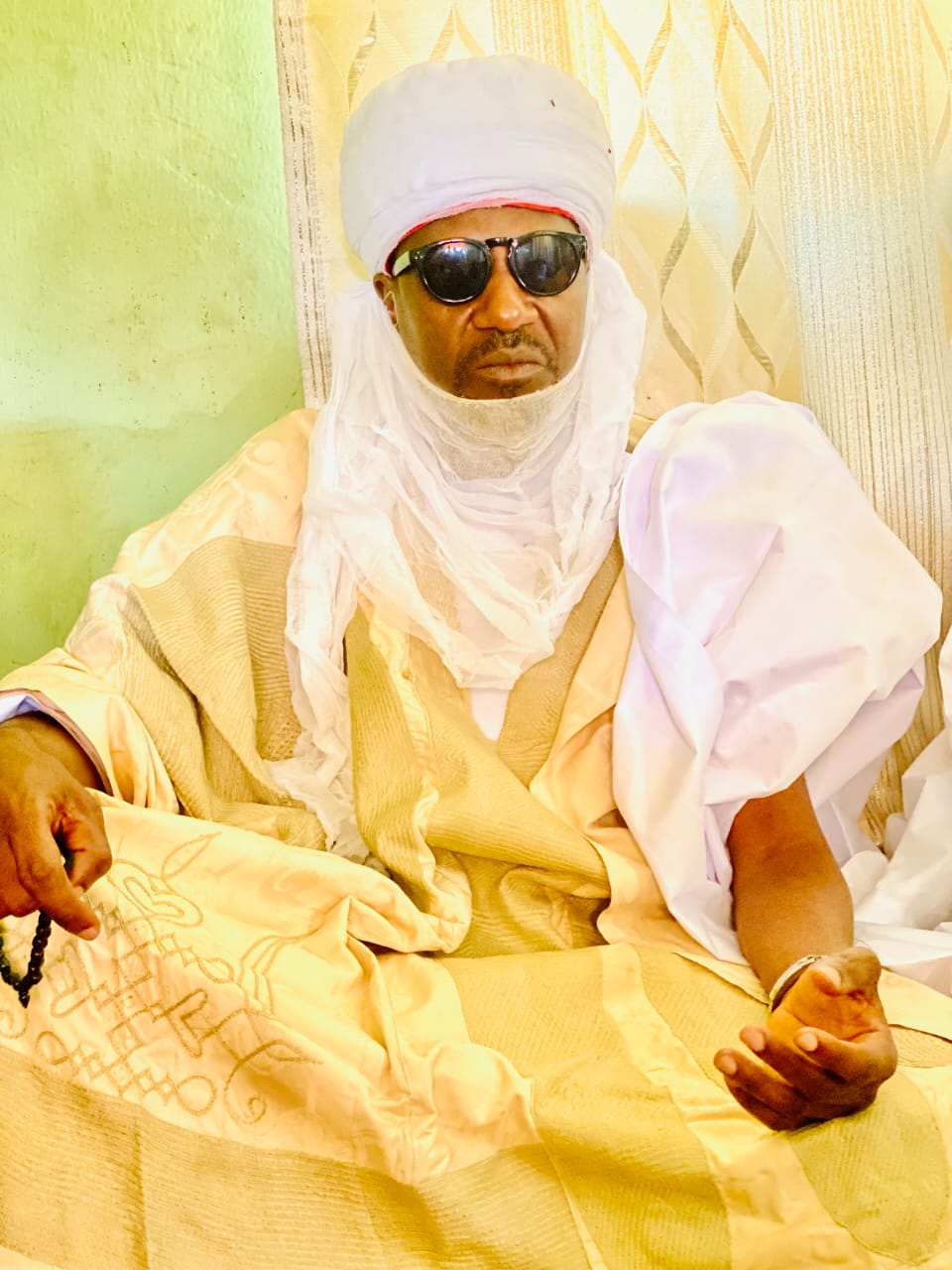
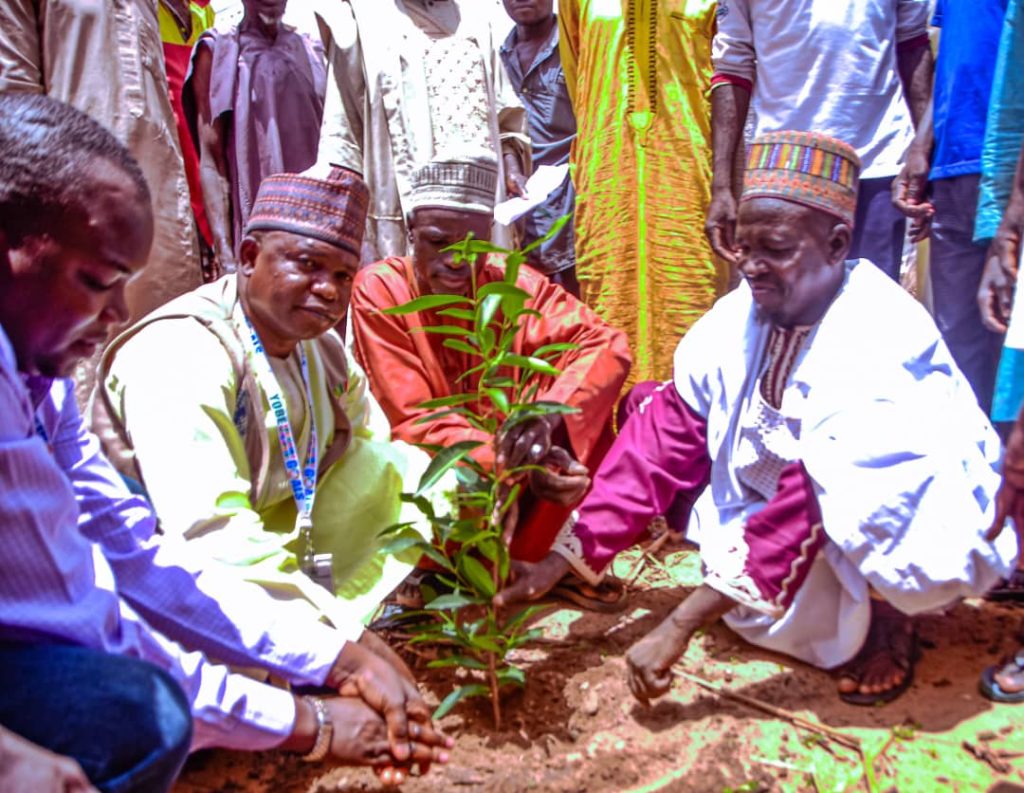
This year’s theme, “Land Restoration, Desertification, and Drought Resilience,” was taken seriously with passion by the Goya District for the protection of their environment. The district organized a tree planting campaign recently for land restoration and the control of desertification. This effort was supported by the newly installed district head, Alhaji Musa Garba Daya. “My domain is vast and open, prone to desertification, and we are at the threat of desert encroachment; therefore, tree planting is one of the solutions for checking and controlling desert encroachment.”
Desert encroachment, land degradation, and drought are some of the environmental factors affecting some parts of Yobe and Borno states that are lying on the fringes of the simi-arid Sahara desert. One of the above is a natural phenomenon affecting these areas with its yearly advancement. However, human initiatives and efforts towards desertification control in Goya District go beyond yearly activity. “For us in Goya, it will be a continuous activity. Tree planting and care of our environment are paramount.”.
World Environment Day has always been a ceremonial activity, but my findings on Goya, the Council, and the people show that trees like Neem, Malmo, and Hybrid Mango trees are desperately needed. “Our common goal of making Goya greener and more sustainable for Goya and its people with your help, whether in the form of monetary donations, seedlings, or your active involvement in our Goya District Landscape Restoration Initiative, is welcomed.”.
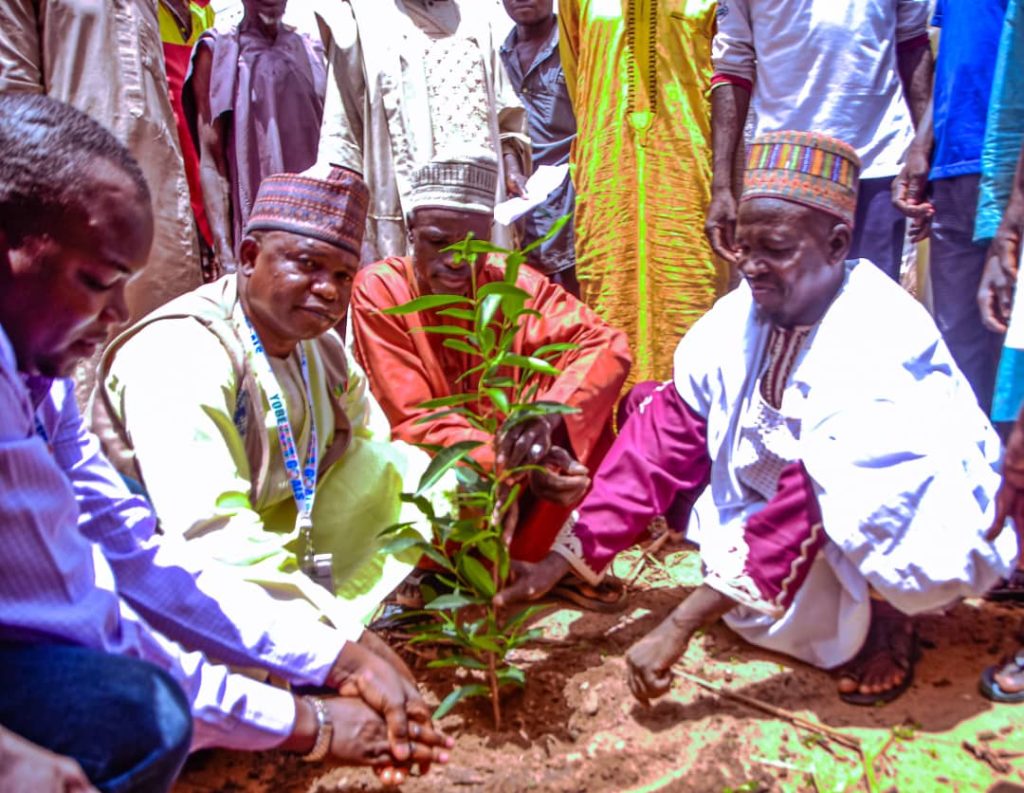
It is true that our environment needs our collective care and attention if we, as people, take cues from the Goya District Initiative. The beauty of our environment is that humans and animals will benefit from the natural engineering of the eco-system.
Balami, a publisher/columnist (8036779290).
Goya District, Desertification, and the Reality of Tree Planting


Troops Arrest Suspected Military Impostor in Katsina
By Zagazola Makama
Troops of 17 Brigade have arrested a suspected military impostor during a fighting patrol in Malumfashi Local Government Area.
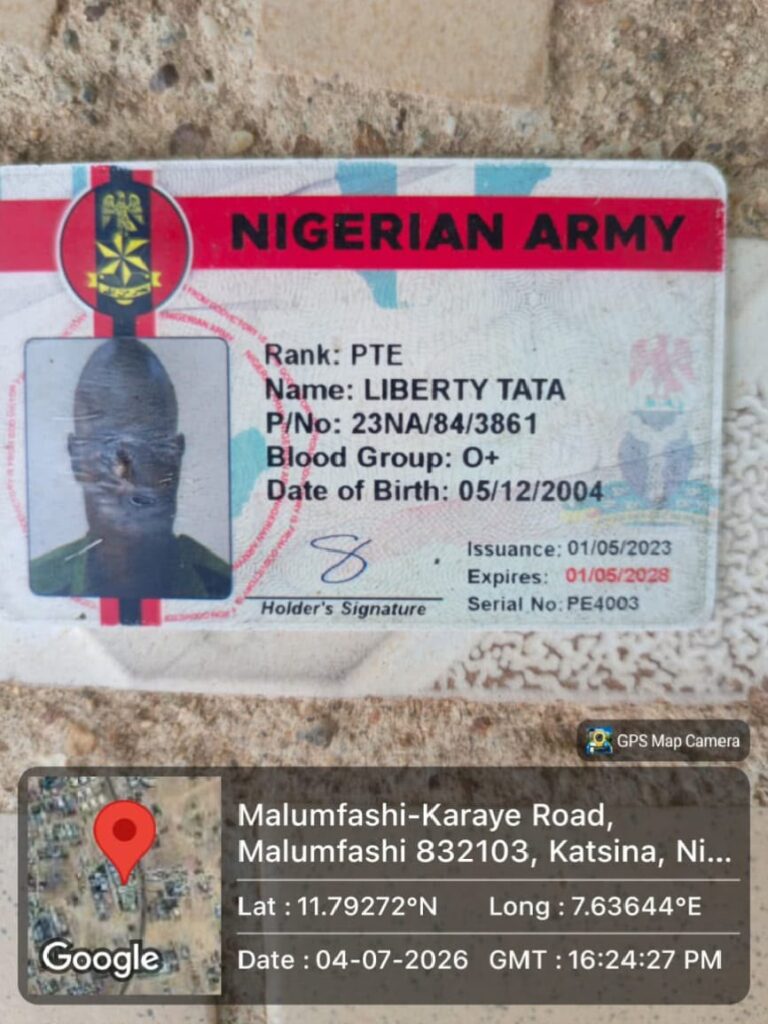
Security sources told Zagazola Makama that the suspect was apprehended at about 1:30 p.m. on July 4 by troops deployed at the Forward Operating Base (FOB) Malumfashi while conducting routine patrols within Malumfashi town.

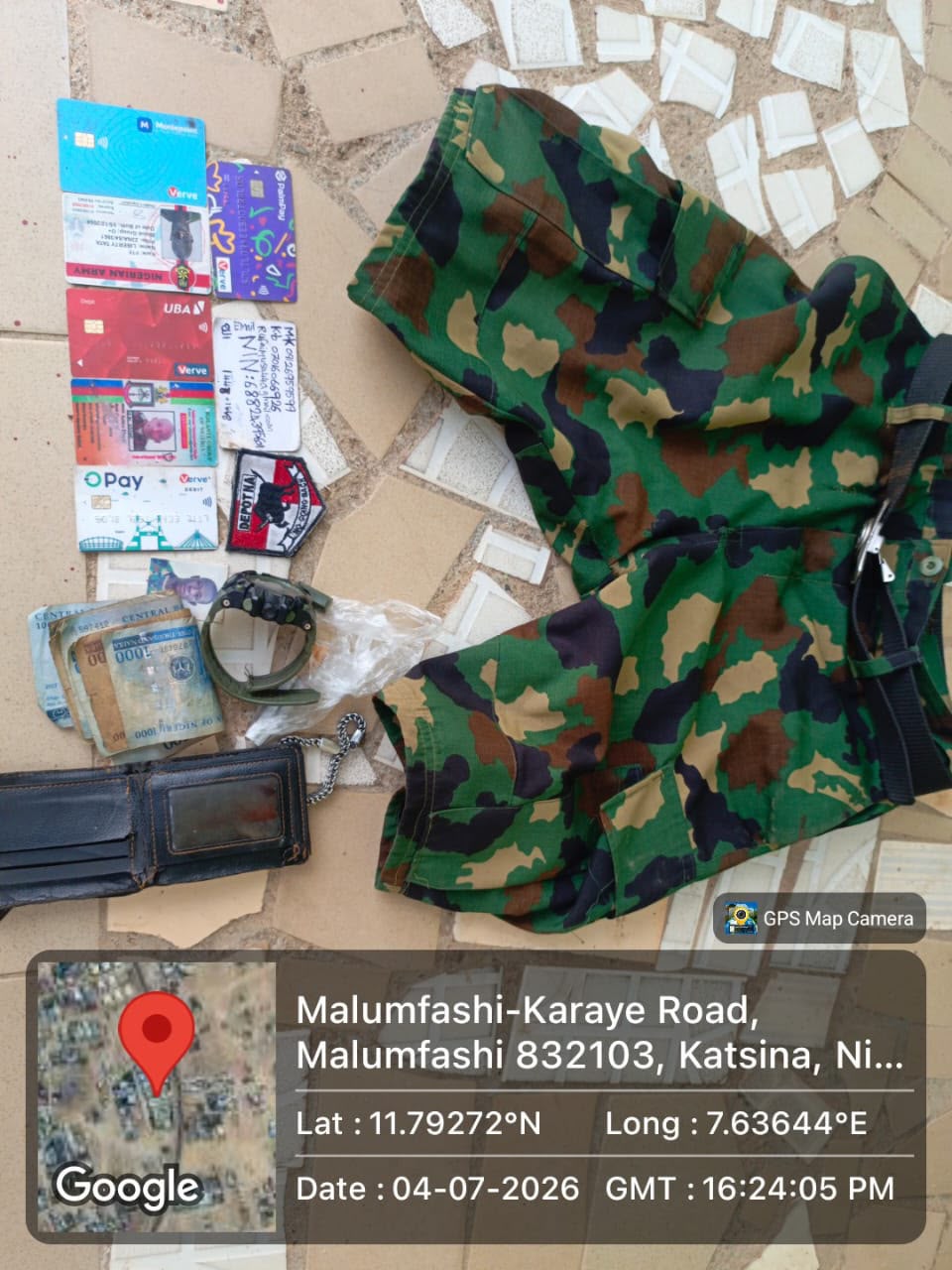
According to the sources, the suspect was intercepted while wearing a woodland camouflage three-quarter short, raising suspicion among the troops.
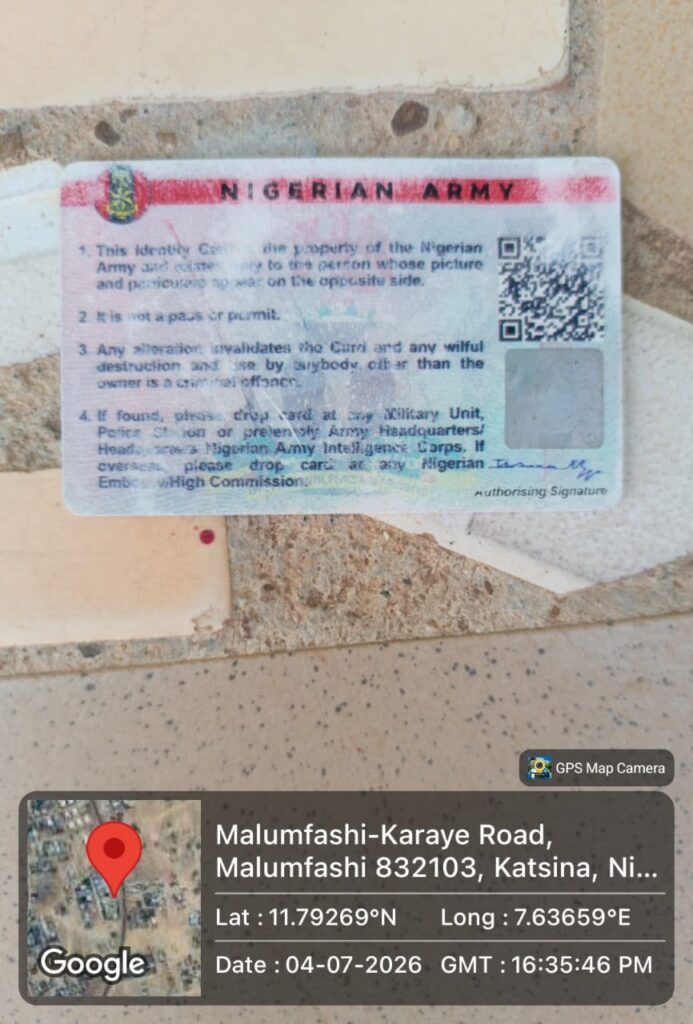
A search conducted on the suspect led to the recovery of a fake Nigerian Army identity card, four Automated Teller Machine (ATM) cards, one woodland camouflage three-quarter short, a wristwatch and the sum of ₦17,000.
The suspect and the recovered exhibits are currently in military custody pending further investigation.
Military sources said the arrest forms part of ongoing efforts to curb impersonation of security personnel and other criminal activities within the area.
Troops Arrest Suspected Military Impostor in Katsina
Troops Recover 50 Rustled Cattle, Repel Suspected Rustlers in Kaduna
By Zagazola Makama
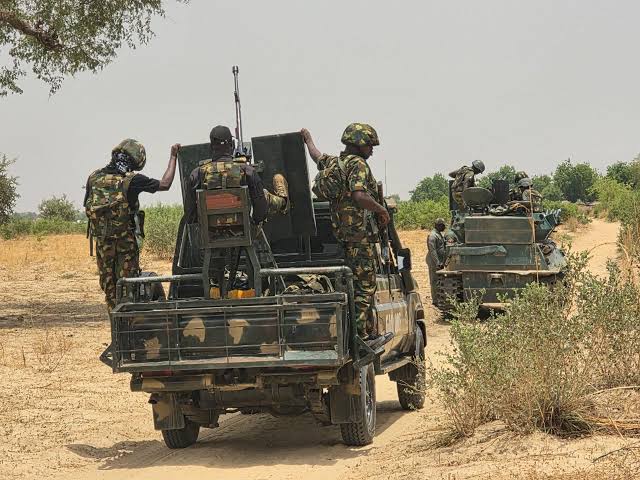
Troops deployed at the Forward Operating Base (FOB) Kankomi have recovered 50 rustled cattle after repelling suspected cattle rustlers during an ambush operation in Chikun Local Government Area.
Security sources told Zagazola Makama that the troops responded to a distress call at about 9:55 a.m. on July 4 over the activities of suspected rustlers at Ungwan Gontu community.
According to the sources, the troops swiftly laid an ambush and made contact with the fleeing suspects, forcing them to abandon the stolen livestock and escape into the surrounding area.
During the operation, the troops recovered 50 rustled cattle, which were subsequently identified and handed over to their rightful owner.
Military sources said efforts are ongoing to track down the fleeing suspects as security operations continue to combat cattle rustling and other criminal activities across Kaduna State.
Troops Recover 50 Rustled Cattle, Repel Suspected Rustlers in Kaduna
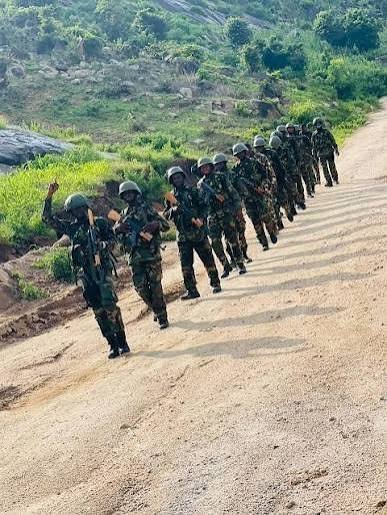
Troops Arrest Suspected Terrorist in Kogi, Suspect Confesses to Group Membership
By Zagazola Makama
Troops of 12 Brigade, in collaboration with Office of the National Security Adviser (ONSA) Hybrid Forces, have arrested a suspected terrorist during an operation in Lokoja Local Government Area.
Security sources told Zagazola Makama that the troops responded at about 1:00 p.m. on July 4 to reports of a confrontation between local residents and a suspected terrorist at a Ruga settlement behind Obajana community.
According to the sources, the troops swiftly intervened and arrested one suspect at the scene.
During preliminary interrogation, the suspect reportedly confessed to being a member of a terrorist group led by an individual identified as Haruna, which allegedly operates within the Okene general area.
The suspect is currently in military custody and is undergoing further investigation to establish the extent of his involvement and identify other members of the group.
Military sources said the arrest forms part of ongoing security operations aimed at dismantling terrorist and criminal networks across Kogi State.
Troops Arrest Suspected Terrorist in Kogi, Suspect Confesses to Group Membership

Troops Arrest Suspected Military Impostor in Katsina

Troops Recover 50 Rustled Cattle, Repel Suspected Rustlers in Kaduna

Troops Arrest Suspected Terrorist in Kogi, Suspect Confesses to Group Membership

Roger Federer’s Shock as DNA Results Reveal Myla and Charlene Are Not His Biological Children

THE PLIGHT OF FARIDA

FAILED COUP IN BURKINA FASO: HOW TRAORÉ NARROWLY ESCAPED ASSASSINATION PLOT AMID FOREIGN INTERFERENCE CLAIMS
-
 News2 years ago
Roger Federer’s Shock as DNA Results Reveal Myla and Charlene Are Not His Biological Children
-
Opinions4 years ago
THE PLIGHT OF FARIDA
-
 News1 year ago
FAILED COUP IN BURKINA FASO: HOW TRAORÉ NARROWLY ESCAPED ASSASSINATION PLOT AMID FOREIGN INTERFERENCE CLAIMS
-

 News2 years ago
EYN: Rev. Billi, Distortion of History, and The Living Tamarind Tree
-
 Opinions5 years ago
POLICE CHARGE ROOMS, A MINTING PRESS
-

 ACADEMICS2 years ago
A History of Biu” (2015) and The Lingering Bura-Pabir Question (1)
-

 Columns2 years ago
Army University Biu: There is certain interest, but certainly not from Borno.
-

 Politics1 year ago
2027: Why Hon. Midala Balami Must Go, as Youths in Hawul and Asikira/Uba Federal Constituency Reject ₦500,000 as Sallah Gift
