
News
Group Accuses Police of Shifting Focus From Alleged Assault, Demands Independent Probe


Group Accuses Police of Shifting Focus From Alleged Assault, Demands Independent Probe
By: Michael Mike
The Coalition for Whistleblowers Protection and Press Freedom (CWPPF) has accused the FCT Police Command of shifting attention from the alleged assault of Pinnacle Daily Editor, Sunday Ogwu, to his conduct following the incident, describing the development as an attempt to divert attention from the substantive allegations.
The Coalition, in a follow-up statement issued on Saturday, renewed its call for an independent investigation into the alleged assault of Ogwu by police and Vigilante Group of Nigeria (VGN) personnel during an operation in Lugbe, Abuja, on August 19.
The demand followed a statement issued by the FCT Police Command on Friday through its spokesperson, SP Josephine Adeh, which criticised Ogwu for allegedly declining invitations to appear before the Command and for seemingly attempting to mobilise public sentiment and create undue pressure.
But CWPPF said the police statement failed to address the central issues raised by the journalist, including the alleged physical assault, use of an electric cable and destruction of his mobile phone.
“The Command’s 21 August statement does not address the substance of Mr Ogwu’s allegation. It does not confirm or deny that he was assaulted, does not identify the officers involved, and does not address the use of an electric cable or the destruction of his phone,” the Coalition said.
Instead, it said, the Command had focused “almost entirely” on Ogwu’s non-attendance at its headquarters.
CWPPF said Ogwu reported the incident personally to the FCT Police spokesperson at about 8:30 p.m. on August 19, approximately three hours after the alleged assault, before seeking legal advice and support from press-freedom organisations.
The Coalition argued that consulting lawyers and media-rights organisations before making a formal statement to the same police command allegedly involved in the incident was a reasonable precaution rather than an attempt to obstruct an investigation.
It further raised questions over conflicting accounts concerning the identity of the security personnel involved in the operation.
According to the Coalition, the FCT Police spokesperson had shortly after the incident told the International Centre for Investigative Reporting (ICIR), a member of CWPPF, that the officers involved were likely not under the FCT Command.
It said the Command’s subsequent statement had neither repeated nor clarified the claim.
CWPPF also cited an account attributed to the Lugbe Divisional Police Officer, CSP Ukorobo Uchenna C., who, when contacted by the Foundation for Investigative Journalism (FIJ), allegedly did not deny that an assault occurred but asked whether Ogwu had personally seen or spoken to him.
The Coalition said the response raised questions about the identity of the officers rather than addressing whether an assault occurred.
It also pointed to a separate publication by the Lugbe Community Security Committee which reportedly praised the Commissioner of Police and identified CSP Uchenna as having led an operation in the area on the same date.
According to CWPPF, the publication described the operation as an anti-drug exercise, while Ogwu and the Coalition had described it as a demolition operation.
The Coalition said the conflicting accounts made an independent investigation necessary.
“Taken together, CWPPF is concerned that the substantive allegation of assault risks being displaced by a competing narrative about the complainant’s conduct,” it said.
The Coalition further disclosed that Ogwu had sought medical attention for injuries allegedly sustained during the incident and was therefore unable to honour the police invitation.
It said the journalist had, however, committed to appearing before the Command on Monday, August 24, accompanied by his lawyers.
CWPPF said an investigation conducted entirely within the police command implicated in the allegation would create an “inherent perception problem”, irrespective of the intentions of individual officers.
It therefore called on the Inspector-General of Police, Tunji Disu, and the FCT Police Command to move the investigation to an independent mechanism outside the direct command structure implicated in the allegation.
The Coalition also demanded the public identification of the officers and unit deployed to the Lugbe Federal Housing Estate operation on August 19 and a reconciliation of that information with the earlier statement that the personnel involved might not have been under FCT Command.
It further called for the preservation and production of deployment records, operational orders, patrol vehicle logs and any available CCTV or body-camera footage relating to the operation.
CWPPF demanded an apology and full compensation for Ogwu’s allegedly destroyed mobile device, as well as payment of medical expenses arising from the incident.
It also urged the police to refrain from publicly characterising Ogwu’s conduct until the allegations against the officers involved had been transparently investigated.
The Coalition called for clear directives to all police divisions in the FCT affirming journalists’ right to document public operations without obstruction, seizure of equipment or physical harm.
“Journalism is not a crime, and documenting the public conduct of state agents is a constitutionally protected right, which has been judicially affirmed,” CWPPF said.
The Coalition comprises media, civil society and legal organisations, including Premium Times, Daily Trust, ICIR, the Centre for Journalism Innovation and Development (CJID), Wole Soyinka Centre for Investigative Journalism, Media Rights Agenda, Nigeria Union of Journalists, International Press Institute Nigeria, SERAP and other organisations.
It said it would continue monitoring the matter and support what it described as a credible, transparent and independent process capable of producing a satisfactory resolution.
Group Accuses Police of Shifting Focus From Alleged Assault, Demands Independent Probe


News
Let Plateau breathe again: Governor Mutfwang confronts the painful truth about cattle rustling and violence
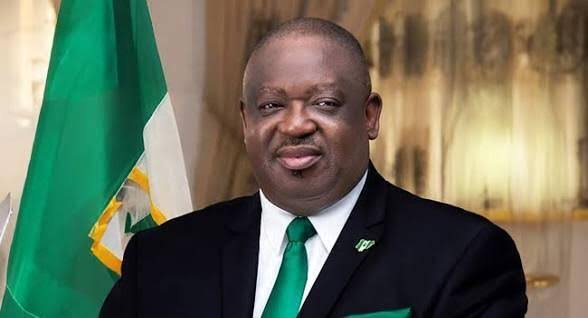
Let Plateau breathe again: Governor Mutfwang confronts the painful truth about cattle rustling and violence
By: Zagazola Makama
There are moments in the life of a troubled society when the most important thing a leader can do is speak a truth that many people would rather avoid. Not because the truth is convenient, popular or politically safe, but because refusing to confront it only allows more innocent people to die.
Governor Caleb Mutfwang’s recent warning against cattle rustling in Plateau State is one of those moments. His words were direct, uncomfortable and deserving of serious reflection: “You cannot rustle cows and bring death upon us. We will not accept it.”
That statement deserves to be heard beyond the political arena. It deserves to be discussed in villages, churches, mosques, community meetings, security formations and homes where parents are increasingly afraid of what the next day may bring.
For years, Plateau has been trapped in a cycle of violence, suspicion, reprisals and competing narratives. Communities have buried their loved ones, farmers have lost their livelihoods, pastoralists have watched their cattle disappear or die, and families on all sides have been forced to live with grief that no government statement can adequately heal.
Yet one painful reality has often been pushed to the margins of public discussion, the destruction of livelihoods, particularly through cattle rustling and attacks on livestock, has always become a trigger for deadly retaliation and a wider cycle of violence.
This does not excuse the killing of farmers in his farmland, the murder of civilians, attacks on villages or any other atrocity. It does not justify collective punishment or the targeting of an ethnic or religious community. It simply means that cattle rustling, where it occurs, must be recognised and confronted as a serious security and criminal justice problem, rather than dismissed as an incidental issue in a conflict that has already taken too many lives.
The cattle economy and the human cost of criminality
Zagazola Media Network has, over time, reported incidents and patterns involving the theft, killing and disappearance of livestock in parts of Plateau State. Our reports have drawn on incident accounts, photographs, videos and other material supplied to us.
Our records indicate that the scale of livestock losses reported by affected communities is substantial.
The issue cannot be reduced to an ethnic contest. A cow is not merely an animal to the person who owns it. For many pastoral families, livestock represents years of labour, accumulated savings, food, school fees, marriage arrangements and the security of an entire household. Losing dozens of cattle can mean losing the economic foundation of a family overnight.
Imagine a family that has spent generations building a herd, only to wake up one morning and discover that its animals have been stolen, maliciously poisoned or killed. Imagine the anger, helplessness and desperation that follow.
Now imagine that the loss is followed by threats, attacks and killings.
Also imagine investing in a farmland, spending millions of Naira then one Fulani herder will just come enter your farm and destroy everything. Leaving you with little or nothing.
That is how criminality can feed a wider conflict. A stolen animal can become the beginning of a reprisal. A destruction of farmland can become another trigger for revenge attack and the reprisal will then become an attack on a settlement. What you will continue to see an hear is another funeral, another displacement and another generation raised on bitterness.
This is the dangerous chain that Plateau must break. No community should be made to pay for the crimes of individuals. No farmer should be killed because of his identity. No pastoralist should be dispossessed because of his ethnicity. No family should be forced to flee its ancestral home because armed men have decided that violence is a legitimate means of settling disputes. The law must protect everyone, and the law must punish everyone who violates it.
A conflict that has been dangerously misdiagnosed
One of the greatest obstacles to peace in Plateau has been the tendency to explain the crisis through a single narrative while ignoring evidence that complicates that narrative. For too long, sections of public discourse have framed the violence almost exclusively through religious identity, often presenting every incident as proof of a systematic religious war against Christians. Claims have circulated that at-least 10 churches were being attacked on a daily basis and that Christians were routinely being killed inside their places of worship. Infact they will tell you that in Nigeria Christians were killed for killed for wearing the Cross. These are bunch of lies being told to the international communities. And that is why the complex conflict cannot be understood by turning every incident into evidence for a predetermined religious conclusion.
Plateau’s crisis involves multiple layers: criminality, cattle rustling, land and resource disputes, historical grievances, communal distrust, armed groups, revenge attacks, weak accountability and political manipulation. These factors interact, sometimes in ways that are difficult to separate. To insist that only one community suffers, or that only one side commits crimes, is to deny the pain of other innocent people. It also creates a climate in which perpetrators can hide behind the identity of their victims.
The question should not be whether a victim is Berom, Mwaghavul, Fulani, Christian or Muslim. The question should be: who committed the crime, what evidence exists, and what must be done to prevent another killing? That is the foundation of justice which the government have ignored for a long timeZ
There is a dangerous belief in some quarters that attacking the economic livelihood of a rival community is a legitimate strategy for forcing that community out of an area. That belief is not a strategy for peace. It is a recipe for permanent conflict.
If cattle are stolen to impoverish pastoralists, the result is not justice for farmers. If farms are destroyed to punish pastoralists, the result is not security for farming communities. If villages are attacked to avenge the death of a relative, the result is not protection for the bereaved family.
It is the multiplication of suffering. The Fulani are not a single armed organisation. The Berom are not a single militia. The Mwaghavul are not collectively responsible for every criminal act committed in their areas. Every community contains innocent people whose greatest desire is to live, work, raise their children and enjoy the ordinary dignity of a peaceful society.
Criminals must not be allowed to speak in the name of entire communities. Those who steal cattle, those who kill farmers, those who organise attacks, those who provide weapons and those who finance violence must be treated as individuals answerable for their actions.
And this is why Governor Mutfwang’s warning matters. He has publicly acknowledged that cattle rustling is not a harmless or isolated activity. It can bring death and insecurity to the wider population.
His appeal must now be translated into action: investigate livestock theft, trace stolen animals, dismantle criminal markets, recover weapons and prosecute offenders without ethnic or political protection. In many cases the Fulani’s who destroyed farmlands were forced to pay compensations but hardly will any fulani be compensated for any attacks or stolen livestock by either the community or the Plateau state government. Though some were done secretly for political reasons.
Perhaps even more disturbing is the growing language of confrontation attributed to some actors on both sides of the conflict.
Reports of speeches at funerals and religious gatherings that encourage people to defend themselves through armed mobilisation, or appeals for money to acquire weapons, should alarm every responsible citizen.
A funeral should be a place to mourn the dead, comfort the bereaved and pray for peace. It should not become a recruitment ground for another round of violence.
A church, mosque or community gathering should be a place where people are reminded of the value of human life. Religious leaders who use their influence to glorify revenge, promote hatred or encourage armed confrontation are betraying the very moral responsibility entrusted to them.
There is a difference between calling for protection and encouraging vengeance.
Communities have a right to demand security. They have a right to report attacks, insist on investigations and ask the government to protect them. But no community has the right to organise unlawful armed groups, target civilians or punish innocent people for crimes they did not commit.
When young people are taught that revenge is honour, that another ethnic group is an enemy, or that the acquisition of weapons is the answer to insecurity, the future is being sacrificed to the anger of the present.
The young men being drawn into these cycles are not the only ones who will pay. Their mothers will cry. Their children will grow up without fathers. Their communities will lose productive hands. Their neighbours will become enemies.
And those who encouraged them from a safe distance will often be nowhere to be found when the bullets begin to fly.
Operation Rainbow must protect, not deepen the crisis
The Plateau State Government’s deployment of additional Operation Rainbow personnel is intended to strengthen community protection and restore confidence. That objective is important, particularly in communities that have endured repeated attacks. But every security arrangement must be governed by clear rules, professional discipline, effective supervision and accountability.
Operation Rainbow must not become a partisan instrument or an extension of the grievances of any community. Its personnel must protect civilians without discrimination, respond to threats impartially and hand suspects over for lawful investigation and prosecution.
Any allegation of abuse, complicity, unlawful detention, extortion, ethnic profiling or participation in violence must be investigated promptly.
A community-based security outfit can help build confidence if it is trusted by all communities. But if it is perceived as serving one side, it risks deepening the very divisions it was established to address. The same standard must apply to every security agency operating in Plateau. No uniform, political connection, religious identity or community affiliation should provide immunity for criminal conduct.
The governor’s warning that even security personnel or community members involved in cattle rustling would be pursued is particularly important. Security cannot be restored when those entrusted with protecting the people are suspected of participating in the criminal economy.
Zagazola and the uncomfortable duty of reporting
At Zagazola Media Network, we have tried to report these developments as they emerge, including incidents involving livestock theft, attacks on communities and the consequences of reprisal violence. We have published reports supported by photographs, videos and accounts from affected people. We understand that some of these reports have made certain individuals uncomfortable. We have been accused of speaking for the Fulani, labelled in different ways and criticised for drawing attention to incidents that some would prefer to remain outside public discussion. But journalism cannot be reduced to the obligation to protect one narrative.
Reporting the suffering of innocent Fulani pastoralists does not mean endorsing violence against farmers. Reporting the killing of Berom civilians does not mean supporting attacks on Fulani settlements. Reporting cattle rustling does not mean excusing murder or collective punishment.
Our position is simple: no innocent person should be killed, displaced, dispossessed or dehumanised because of who they are.
The responsibility of journalism is to document, question, verify and expose. It is not to manufacture enemies or provide propaganda for those who profit from division. We also recognise that allegations, however disturbing, must be tested against evidence. The seriousness of the Plateau crisis demands responsible reporting, not exaggeration, selective outrage or unverified claims.
The dangerous temptation to wait for foreign intervention
There are also those who have increasingly looked towards foreign governments, particularly the United States and Israel, as though an external power can resolve the deep-seated grievances and criminal networks operating within Plateau. International attention can be useful. It can encourage accountability, humanitarian support and diplomatic pressure where necessary. But no foreign government can build lasting peace in Plateau on behalf of its people.
No American politician can reconcile neighbours who refuse to speak to one another. No foreign military can permanently resolve a local cattle theft dispute. No international statement can replace the work of investigating a murder, recovering stolen livestock, prosecuting an armed criminal or rebuilding trust between communities.
Foreign governments will pursue their own interests. Their statements may change with domestic politics, elections and strategic calculations. The people who will remain in Plateau after the international headlines disappear are the people who live there today.
They will still have to share roads, markets, schools, farms, water sources and neighbourhoods.
That is why the solution must begin at home.
Plateau must reject the politics of victimhood when it is used to excuse violence. It must reject propaganda that turns every disagreement into a religious war. It must reject leaders and influencers who inflame tensions while ordinary people bear the consequences. The people must also demand accountability from their own political, traditional, religious and community leaders. Nobody should be above criticism simply because they speak the language of a particular group.
There is no moral authority in condemning violence committed by another community while justifying violence committed by one’s own.
A leader cannot demand justice for victims from one side and remain silent when innocent people from another side are killed. A religious figure cannot preach compassion in public while encouraging hatred behind closed doors. A politician cannot call for peace during the day and mobilise ethnic resentment at night.
The same moral standard must apply to everyone.
If a Fulani pastoralist destroys farmlands, he must face the law. If a Berom or Mwaghavul individual steals cattle, he must face the law. If a herder kills a farmer, he must be prosecuted. If a farmer or militia member kills a pastoralist, he must also be prosecuted.
If a security operative facilitates cattle rustling, that operative must be investigated and punished. If a community leader finances armed violence, that leader must not be shielded by influence or identity. Justice that is selective is not justice. It is another form of provocation.
The state must not allow any individual or organisation to turn the suffering of Plateau people into a business, a political advantage or a platform for personal recognition.
The people who profit from the conflict are not necessarily the people who bury the dead.
Plateau is approaching a dangerous crossroad
The warning signs should not be ignored.
When communities begin to see one another as permanent enemies, when young people are mobilised around ethnic and religious hostility, when funerals become platforms for threats, when weapons are celebrated as symbols of courage and when every attack is answered with another attack, a state begins to lose the social foundations that hold it together. Plateau must not be allowed to become another prolonged theatre of war.
The North-East has shown Nigeria the terrible cost of allowing armed extremism, revenge, criminal economies and communal distrust to take root. Generations have been affected. Families have been displaced. Towns and villages have been destroyed. Enormous public resources have been spent trying to restore what violence took away.
Plateau still has an opportunity to prevent such a future. But that opportunity will disappear if those who preach hatred are allowed to dominate the public conversation. The state needs security operations, but it also needs justice. It needs arrests, but it also needs credible prosecutions. It needs community protection, but it also needs reconciliation. It needs political leadership, but it equally needs citizens who refuse to be manipulated. Above all, it needs an end to the criminal activities that keep supplying fresh reasons for retaliation.
Let Plateau breathe again
Governor Mutfwang’s words should become a standard against which every political leader, community leader, security operative, religious figure and citizen is judged.
When he says, “You cannot rustle cows and bring death upon us,” he is speaking to a reality that can no longer be ignored. But the message must go further.
You cannot kill a farmer and expect peace. You cannot steal a pastoralist’s cattle and expect him to feel secure. You cannot burn a home and expect its occupants to forget. You cannot murder innocent people and hide behind religion. You cannot encourage young men to take up arms and then pretend to be shocked when they return in body bags. You cannot demand justice for your own people while denying it to your neighbours.
Plateau does not belong to one ethnic group, one religion or one political interest. It belongs to all its people. Its future cannot be built by pushing one community out, impoverishing another or silencing those who have lost loved ones.
The farmer must be able to return to his farm without fear. The pastoralist must be able to move and protect his lawful livelihood without fear. Children must attend school without hearing gunshots. Traders must travel without being kidnapped. Families must sleep without wondering whose home will be attacked before dawn.
That is not too much to ask. It is the minimum obligation of a functioning society.
The people of Plateau must now make a choice: allow the merchants of hatred to determine their future, or reject them and reclaim their state.
Let the stolen cattle be recovered. Let the killers be arrested. Let the weapons be taken out of circulation. Let those who finance violence be exposed. Let every victim receive justice, regardless of identity. Let religious and traditional leaders become voices of restraint. Let security agencies protect all communities without fear or favour. And let the people stop rewarding those who turn their pain into propaganda.
The dead cannot return. But the living can still be saved.
Plateau has buried enough people. Its villages have endured enough fear. Its children have inherited enough bitterness. The next generation deserves something better than a conflict whose causes are repeatedly denied, manipulated or exploited. Let Plateau breathe again. Let its people choose life over revenge, justice over impunity, truth over propaganda and peace over the politics of endless bloodshed.
Zagazola is a Counter Insurgency Expert and Security Analysts in the Lake Chad Region
Let Plateau breathe again: Governor Mutfwang confronts the painful truth about cattle rustling and violence
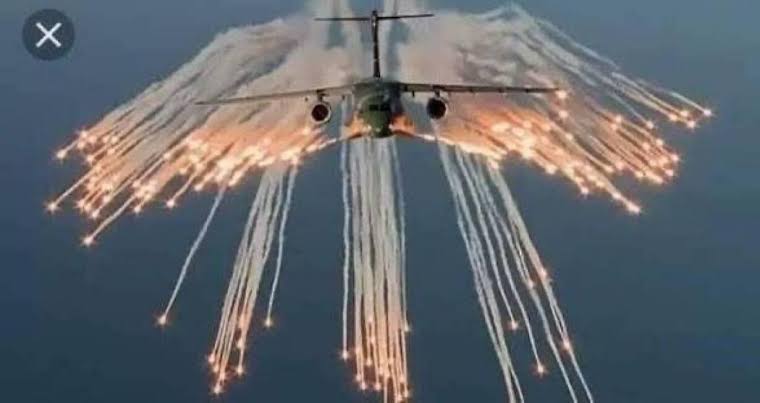
Nigerian military precision strikes neutralise 19 terrorists in Ngala, Borno
By: Zagazola Makama
The Nigerian military has neutralised at least 15 suspected terrorists in a series of precision airstrikes targeting insurgent positions around Bulabulutube in Ngala Local Government Area of Borno State.
Security sources said the strikes were conducted at about 7:56 p.m. on Nov. 8, following aerial surveillance that identified approximately 30 terrorist fighters gathered under a tree in the area.
The military aircraft subsequently carried out a precision strike on the identified target.
Battle Damage Assessment (BDA) indicated that about 15 terrorists were neutralised, while parts of a nearby building were destroyed.
The aircraft subsequently tracked another group of five fleeing terrorists who had taken cover under a tree and conducted a second precision strike.
The assessment revealed that about four additional terrorists were neutralised, while a secondary explosion was observed, suggesting the possible destruction of explosive materials or other military supplies.
In a related operation, the aircraft proceeded towards the Lake Chad area following intelligence on a suspected terrorist logistics structure located at a crossing point.
A further precision strike was conducted on the structure, which was assessed to have been completely destroyed, with no subsequent movement observed around the location.
The successive strikes represent another significant blow to terrorist formations and logistics networks operating within the Lake Chad axis.
The military continues to sustain intelligence-led aerial surveillance and precision operations aimed at degrading terrorist capabilities, disrupting their supply networks and denying insurgents safe havens across the North-East.
Nigerian military precision strikes neutralise 19 terrorists in Ngala, Borno
News
Nigeria, India Sign Landmark Human Rights Pact, Fagbemi Backs Stronger Institutional Independence
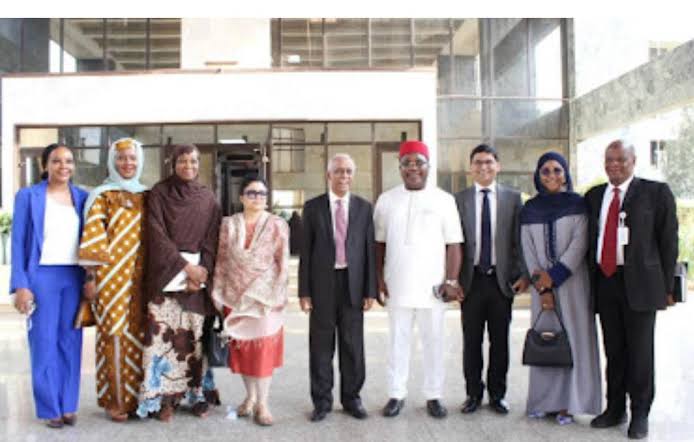
Nigeria, India Sign Landmark Human Rights Pact, Fagbemi Backs Stronger Institutional Independence
…AGF pledges justice ministry’s support for implementation, demands practical safeguards for citizens in AI era
By: Michael Mike
Nigeria and India have signed a bilateral agreement to strengthen human rights protection, institutional capacity and access to justice, with the Attorney-General of the Federation and Minister of Justice, Prince Lateef Fagbemi, SAN, pledging the Federal Government’s support for its implementation.
Fagbemi, who described the agreement as a strategic partnership between the two countries, said its success would ultimately be measured by its impact on ordinary citizens, particularly vulnerable and marginalised groups seeking justice.
The agreement, executed between the National Human Rights Commission (NHRC) of Nigeria and its Indian counterpart, is designed to deepen institutional cooperation, facilitate knowledge transfer, promote technical exchanges and strengthen operational capacity in addressing human rights violations.
The Attorney-General gave the government’s position on Tuesday in Abuja when he received a joint delegation of the two commissions at the Federal Ministry of Justice, describing the partnership as timely, particularly in an increasingly interconnected world where effective human rights protection requires stronger legal frameworks, institutional collaboration and respect for the rule of law.
The development followed a high-level engagement between the two commissions and the Chief Justice of Nigeria (CJN), at the Supreme Court Complex, Abuja, on Monday, as part of a two-day working visit by the Indian delegation.
The Nigerian delegation was led by the Executive Secretary of NHRC, Chief Tony Ojukwu, SAN, OFR, while the Indian delegation was headed by the Chairperson of India’s NHRC, Justice V. Ramasubramanian, accompanied by the Commission’s Joint Secretary, Mr. Samir Kumar.
Fagbemi said the partnership brought together two major democracies with shared common-law traditions, diverse populations and dynamic constitutional frameworks, expressing satisfaction with the thematic areas identified for cooperation under the agreement.
He specifically highlighted access to justice and the protection of digital rights as critical areas requiring urgent attention, particularly as emerging technologies, including Artificial Intelligence, continue to reshape society and create new human rights concerns.
According to him, both countries must develop legal safeguards to protect data privacy, prevent algorithmic bias and safeguard civic space, while ensuring that technological advancement does not undermine fundamental freedoms.
He said the Ministry of Justice expected the two commissions to produce actionable research and policy recommendations capable of addressing these emerging challenges.
Beyond emerging technologies, the Attorney-General stressed that Nigeria’s commitment to human rights must be reflected in the practical implementation of constitutional guarantees and international obligations, rather than merely in the existence of legal provisions.
He cited the African Charter on Human and Peoples’ Rights, which Nigeria domesticated through the African Charter on Human and Peoples’ Rights (Ratification and Enforcement) Act, Cap. A9, Laws of the Federation of Nigeria 2004, as a major instrument underpinning the country’s human rights jurisprudence.
The Charter provides important protections relating to non-discrimination, human dignity, fair trial and personal liberty, reinforcing the fundamental rights guaranteed under Nigeria’s Constitution.
Fagbemi maintained that the true measure of a country’s commitment to human rights was its ability to translate constitutional provisions into accessible institutions, accountable public authorities and an independent judiciary.
He assured the Indian delegation that the Federal Ministry of Justice fully supported the bilateral initiative and was prepared to facilitate technical engagements, joint legal reviews and policy consultations aimed at improving the efficiency of the justice sector.
The Attorney-General also used the engagement to reaffirm the institutional independence of Nigeria’s National Human Rights Commission, stressing that its autonomy was essential to its credibility and effectiveness.
He specifically drew attention to Section 6(3) of the National Human Rights Commission (Amendment) Act, 2010, which provides that the Commission, in exercising its statutory functions, shall not be subject to the direction or control of any other authority or person.
According to him, the administration has continued to respect and protect the Commission’s statutory independence, describing it as fundamental to institutional integrity.
He further noted that the relationship between the NHRC and the Federal Ministry of Justice had been characterised by constructive institutional synergy, mutual respect and a shared commitment to advancing human rights.
The Attorney-General commended Ojukwu and the Nigerian commission for spearheading the bilateral initiative, while expressing appreciation to the Indian delegation for bringing its expertise and institutional experience to the partnership.
Earlier, during Monday’s engagement with the Chief Justice of Nigeria, the Executive Secretary of NHRC Nigeria had emphasised the complementary responsibilities of the judiciary and national human rights institutions in protecting fundamental freedoms, upholding the rule of law and ensuring access to justice.
Ojukwu identified complaint management, Alternative Dispute Resolution, security sector accountability, comparative legal research, digital rights, Artificial Intelligence ethics and environmental justice as priority areas for cooperation between both countries.
The Chief Justice reaffirmed the commitment of the Nigerian Judiciary to human rights protection and encouraged both commissions to exchange experiences and adopt best practices, particularly in strengthening safeguards for vulnerable groups, including women, children and persons with disabilities.
The Indian delegation described the engagement as significant to relations between the two countries, noting that the MoU represented a first-of-its-kind institutional partnership for India’s National Human Rights Commission.
The agreement is expected to promote sustained institutional exchanges, strengthen complaint-handling mechanisms, improve professional capacity and encourage comparative research into legal and policy approaches to human rights protection.
The partnership also comes at a time when national human rights institutions face increasing demands to address abuses linked to security operations, discrimination, environmental degradation, digital surveillance and the misuse of emerging technologies.
For Nigeria, the collaboration offers an opportunity to strengthen its human rights enforcement architecture through international knowledge-sharing while reinforcing the independence and operational effectiveness of its national commission.
Fagbemi, however, cautioned that the ultimate benchmark of the agreement must go beyond official engagements and institutional exchanges to deliver tangible improvements in the lives of citizens, especially those most vulnerable to violations and denied access to justice.
He wished the Indian delegation a productive stay in Nigeria and expressed confidence that the partnership would advance the shared commitment of both countries to human dignity, justice and the protection of fundamental rights.
Nigeria, India Sign Landmark Human Rights Pact, Fagbemi Backs Stronger Institutional Independence

Let Plateau breathe again: Governor Mutfwang confronts the painful truth about cattle rustling and violence

Nigerian military precision strikes neutralise 19 terrorists in Ngala, Borno

Troops, hunters neutralise ISWAP terrorist in ambush operation in Yobe

Roger Federer’s Shock as DNA Results Reveal Myla and Charlene Are Not His Biological Children

THE PLIGHT OF FARIDA

FAILED COUP IN BURKINA FASO: HOW TRAORÉ NARROWLY ESCAPED ASSASSINATION PLOT AMID FOREIGN INTERFERENCE CLAIMS
-
 News3 years ago
Roger Federer’s Shock as DNA Results Reveal Myla and Charlene Are Not His Biological Children
-
Opinions5 years ago
THE PLIGHT OF FARIDA
-
 News2 years ago
FAILED COUP IN BURKINA FASO: HOW TRAORÉ NARROWLY ESCAPED ASSASSINATION PLOT AMID FOREIGN INTERFERENCE CLAIMS
-
 Opinions5 years ago
POLICE CHARGE ROOMS, A MINTING PRESS
-

 News3 years ago
EYN: Rev. Billi, Distortion of History, and The Living Tamarind Tree
-

 ACADEMICS3 years ago
A History of Biu” (2015) and The Lingering Bura-Pabir Question (1)
-

 Columns3 years ago
Army University Biu: There is certain interest, but certainly not from Borno.
-

 Politics1 year ago
2027: Why Hon. Midala Balami Must Go, as Youths in Hawul and Asikira/Uba Federal Constituency Reject ₦500,000 as Sallah Gift
