
News
GUINEA-BISSAU DEEPENS NATIONAL COMMITMENT TO THE WOMEN,PEACE, AND SECURITY AGENDA THROUGH ECOWAS-LED IN-COUNTRY CRFCAPACITY BUILDING WORKSHOP

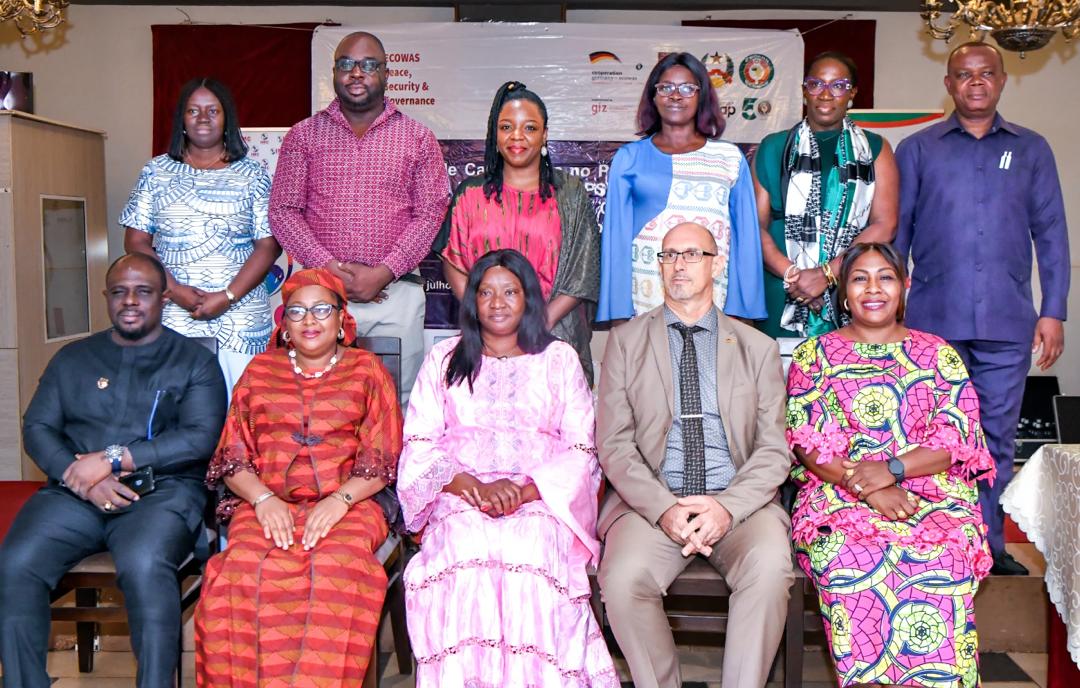
GUINEA-BISSAU DEEPENS NATIONAL COMMITMENT TO THE WOMEN,
PEACE, AND SECURITY AGENDA THROUGH ECOWAS-LED IN-COUNTRY CRF
CAPACITY BUILDING WORKSHOP
By: Michael Mike
From the 22nd to 24th of July, 2025, the ECOWAS Commission, through its Directorate of Humanitarian and Social Affairs (DAHS), in close collaboration with other relevant directorates and agencies, the Ministry of Women, Family and Social Solidarity of the Republic of Guinea-Bissau, as well as the ECOWAS Women, Peace and Security Regional Steering Group (WPS-RSG), successfully organized a national capacity-building workshop in Bissau.
The three-day workshop, aimed at stakeholders and focal points of the Women, Peace and Security (WPS) Agenda, focused on the application of the African Union’s Continental Results Framework (CRC-UA), simplified and adapted to the West African context by the ECOWAS Commission for monitoring and reporting on the implementation of the WPS Agenda.
This initiative is part of ECOWAS’s ongoing efforts to strengthen national accountability
mechanisms and data systems, in support of United Nations Security Council Resolution 1325 and related resolutions. It is implemented with the technical and financial support of the ECOWAS Peace, Security and Governance Project (EPSG), co-financed by the European Union and the German Federal Ministry for Economic Cooperation and Development
(BMZ) and carried out with the support of GIZ.
In her opening speech, Her Excellency Maria Inácia Có Mendes Sanhá, Minister of Women, Family and Social Solidarity, underlined Guinea-Bissau’s ongoing commitment to gender equality and women’s empowerment in peace-building processes. She reaffirmed the government’s support for the WPS Agenda, citing several national policies and legal frameworks, including the National Policy for Gender Equality and Equity (PNIEG), the Parity Law, as well as laws on gender-based violence and human trafficking.
Mrs. Cristina da Silva Pedreira, Director General of Regional Integration and Head of the ECOWAS National Unit at the Ministry of Economy, Planning and Regional Integration, welcomed the participants, stressing that the workshop offered a platform for adapting continental frameworks to the local level and strengthening the role of women in sustain-
able development and peacebuilding in Guinea-Bissau.
She reaffirmed her ministry’s commitment to supporting ECOWAS processes in national institutions.
Directorate of Communication
Representing the ECOWAS Resident Representative, Her Excellency Ambassador Ngozi Ukaeje, Dr. Aishatu Morido Yanet praised the collaborative spirit that had animated the workshop and encouraged participants to take full advantage of the training to fill the data and coordination gaps, as highlighted in the first ECOWAS regional WPS report (2024).
She stressed that the CRC is not just a technical tool, but an essential accountabil-
ity mechanism ensuring the visibility and impact of women’s contributions to peacebuilding.
On behalf of the ECOWAS Director of Humanitarian and Social Affairs, Dr. Sintiki Tarfa Ugbe, Mr. Olatunde Olayemi, Program Manager for the Social Dimensions of Human Trafficking, stressed the importance of the CRC in institutionalizing monitoring and reporting on the WPS.
He pointed out that the Guinea-Bissau workshop is the ninth of its kind organized by ECOWAS, following similar initiatives in Côte d’Ivoire, Benin, Nigeria, Liberia, Gambia, Togo, Senegal and Ghana.
“Women and girls must be visible actors in peace and governance,” he said, adding that the CRC’s simplified tool is a crucial step in ensuring evidence-based implementation and monitoring of national WPS commitments.
Speaking on behalf of the German government, Mr. Carsten Wille, Head of the Liaison Office of the German Embassy in Dakar and Guinea-Bissau, reaffirmed Germany’s strong commitment to feminist development cooperation and inclusive peacebuilding. “We areproud to support national actors through the EPSG project. Guinea-Bissau’s adherence to this CRC training demonstrates its willingness to strengthen its institutional response to
the gender dimensions of peace and security,” he asserted.
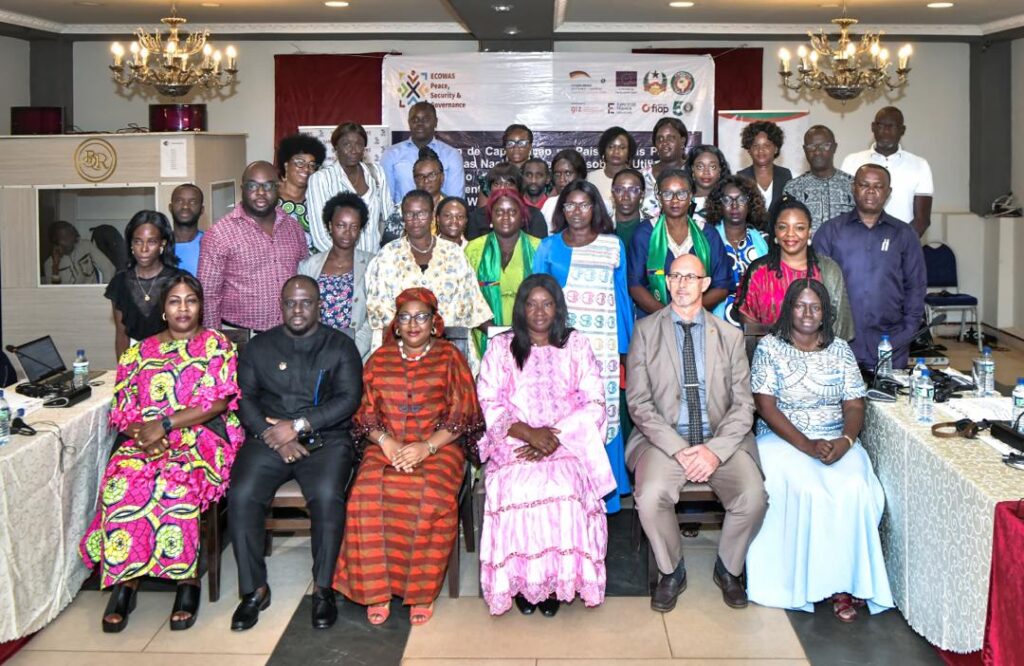
The workshop, led by Ms Tamwakat Elizabeth Golit, Integrated Expert on Women, Peace and Security for the EPSG Project at the ECOWAS Commission, and Ms Edineusa Lopes José da Cruz Figueiredo, President of the Institute for Women and Children, brought to-
gether over 35 participants from ministries, security institutions, civil society organiza-
tions, academia and the media. Through participatory exercises, group work and technical presentations, the workshop strengthened participants’ ability to use the CRC tool and its complementary questionnaire, enabling better monitoring of WPS indicators in line with national and regional frameworks.
At the close of the workshop, five gender assessment reports were officially handed over to the Office of the ECOWAS Resident Representative in Guinea-Bissau and to the ECOWAS National Office. During the presentation of the reports, Ms. Tamwakat Elizabeth Golit, the EPSG Project’s Integrated Gender Expert at the ECOWAS Commission, provided a summary of the main findings and practical recommendations for strengthening national coordination and policy responses.
She stressed the importance of transparency and collective ownership, pointing out that the reports are now publicly available via the ECOWAS website, to serve as a resource for advocacy, research and evidence-based decision-
making. Participants hailed the workshop as a timely initiative and called for further training, institutionalization of the CRC in national monitoring systems, and enhanced collaboration between stakeholders. They also expressed their willingness to contribute to the next national WPS reporting cycle using the simplified CRC tool.
The workshop concluded with a strong call to action: to take the Women, Peace and Security Agenda beyond political declarations, towards concrete and measurable impacts for women and girls in Guinea-Bissau and West Africa.
GUINEA-BISSAU DEEPENS NATIONAL COMMITMENT TO THE WOMEN,
PEACE, AND SECURITY AGENDA THROUGH ECOWAS-LED IN-COUNTRY CRF
CAPACITY BUILDING WORKSHOP


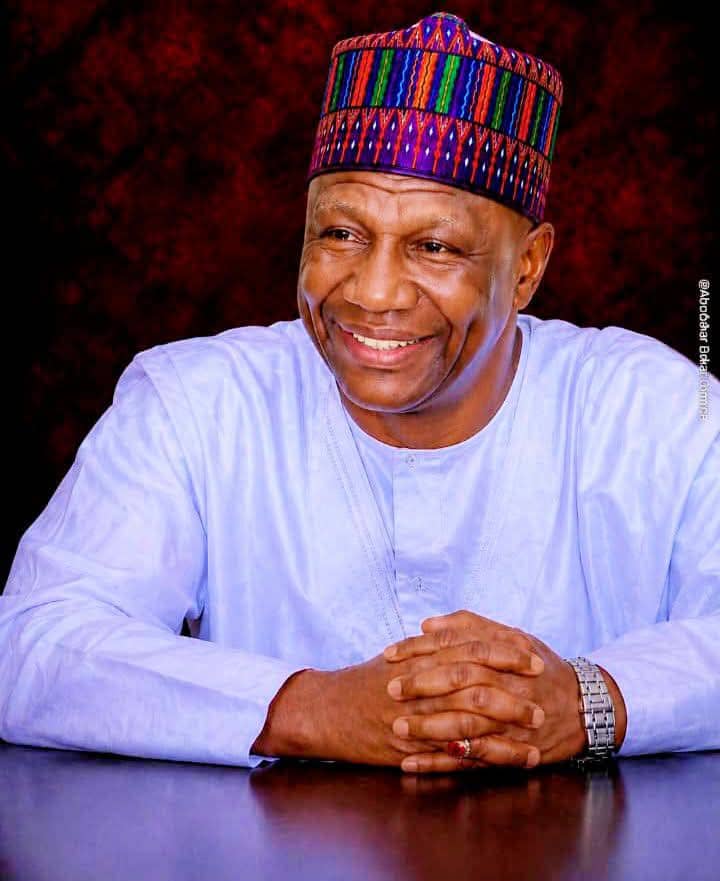
Yobe: Wali visits Emir of Damaturu
By: Yahaya Wakili
Yobe State All Progressives Congress (APC), 2027 gubernatorial candidate Alhaji Baba Malam Wali MNI, FCAN, has paid a courtesy visit to His Royal Highness, the Emir of Damaturu, Alhaji Shehu Hashimi II Ibn Umar Al-Amin El-Kanemi, at his palace in Damaturu.
During the visit, the APC governorship candidate, Alhaji Baba Malam Wali MNI, said they were at the emir’s palace to solicit the prayers and blessings of the emir.
According to Baba Wali, “We are in the race; therefore, the visit was very significant. We need the prayers of the royal fathers and leaders because they were very vital and important at this crucial time.
Responding, His Royal Highness, the emir of Damaturu, Alhaji Shehu Hashimi II Ibn Al-Amin El-Kanemi, thanked the governorship candidate for the visit and prayed Almighty Allah (SWT) would guide and protect him throughout his struggle in his life.
Those accompanying the incoming governor, Inshallah, in 2027 during the visit are his deputy, Barrister Saleh Samanja; APC State chairman, Alhaji Mohammed Gadaka; and Madakin Gudi.
Others are Alhaji Aji Yarima Bularafa, Hon. Commissioner of the Ministry of Wealth Creation, Empowerment, and Employment Generation; Hon. Nasiru Hassan Yusuf, candidate for the Federal House of Representatives, representing Damaturu, Gujba, Gulani, and Tarmuwa local government areas; and others.
The emir conferred the traditional title of Mukaddam of the Damaturu emirate council on Alhaji Baba Malam Wali, mni, and fcan, respectively.
Yobe: Wali visits Emir of Damaturu
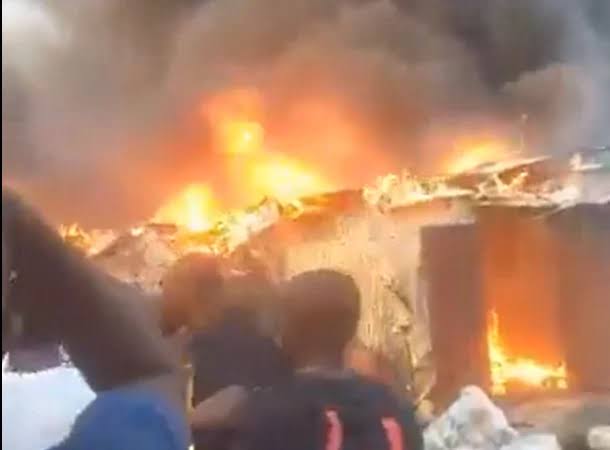
Fire Razes Building Material Shops in Satellite Town, Lagos
By Zagazola Makama
LAGOS — A fire outbreak has destroyed several building material shops along Fin-Niger, Satellite Town, Lagos State.
The incident occurred at about 6:10 a.m. on Aug. 18, when a distress call was received reporting a fire outbreak in the area.
Following the alert, a team of policemen and firefighters was swiftly mobilised to the scene.
The fire affected building material shops located at 58/196 Old Ojo Road, along Fin-Niger, Satellite Town.
The emergency responders successfully contained and extinguished the fire, preventing it from spreading further.
No casualty or loss of life was recorded in the incident.
The cause of the fire and the estimated value of property destroyed have not yet been established.
The police said investigation into the incident is ongoing to determine the circumstances surrounding the outbreak.
Fire Razes Building Material Shops in Satellite Town, Lagos
News
24 Bandits Killed As Army, DSS, Vigilantes Foil Mass Kidnap in Katsina Community, Rescue Victims
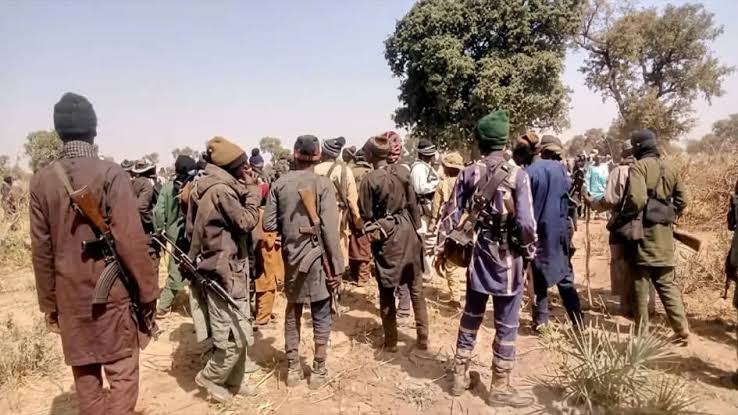
24 Bandits Killed As Army, DSS, Vigilantes Foil Mass Kidnap in Katsina Community, Rescue Victims
By: Zagazola Makama
At least 24 bandits were killed on Tuesday after soldiers of the Nigerian Army, operatives of the Department of State Services (DSS), Katsina Community Watch Corps foiled an attempt to mass-kidnap persons in Gidan Bawa village, Kandarawa Ward, Bakori Local Government Area of the state.
According to a security source, the operation followed sustained intelligence which uncovered plans by about 40 gunmen loyal to notorious bandit kingpin, Isiya Kwashen Garwa, to invade the village and abduct many residents, especially women and children.
The plot, sources said, was intended to replicate the mass abduction of residents of Woro community in Kwara State, ostensibly to embarrass the government.
Acting swiftly on the intelligence, DSS operatives mobilised the Community Watch Corps, and the Civilian Joint Task Force (CJTF) from Guga camp, and ambushed the bandits.
The source disclosed that the joint security operatives neutralised 24 bandits and rescued the abducted villagers.
Security operatives also recovered 19 stolen cattle from the community during the raid.
The source added that there were ongoing efforts to track down the fleeing bandits.
24 Bandits Killed As Army, DSS, Vigilantes Foil Mass Kidnap in Katsina Community, Rescue Victims

Yobe: Wali visits Emir of Damaturu

Police Arrest Two Suspected One-Chance Robbery Syndicate Members in Lagos

Fire Razes Building Material Shops in Satellite Town, Lagos

Roger Federer’s Shock as DNA Results Reveal Myla and Charlene Are Not His Biological Children

THE PLIGHT OF FARIDA

FAILED COUP IN BURKINA FASO: HOW TRAORÉ NARROWLY ESCAPED ASSASSINATION PLOT AMID FOREIGN INTERFERENCE CLAIMS
-
 News2 years ago
Roger Federer’s Shock as DNA Results Reveal Myla and Charlene Are Not His Biological Children
-
Opinions5 years ago
THE PLIGHT OF FARIDA
-
 News1 year ago
FAILED COUP IN BURKINA FASO: HOW TRAORÉ NARROWLY ESCAPED ASSASSINATION PLOT AMID FOREIGN INTERFERENCE CLAIMS
-

 News2 years ago
EYN: Rev. Billi, Distortion of History, and The Living Tamarind Tree
-
 Opinions5 years ago
POLICE CHARGE ROOMS, A MINTING PRESS
-

 ACADEMICS2 years ago
A History of Biu” (2015) and The Lingering Bura-Pabir Question (1)
-

 Columns2 years ago
Army University Biu: There is certain interest, but certainly not from Borno.
-

 Politics1 year ago
2027: Why Hon. Midala Balami Must Go, as Youths in Hawul and Asikira/Uba Federal Constituency Reject ₦500,000 as Sallah Gift
