
News
How misdiagnosis, narratives are fuelling Nigeria’s banditry escalation

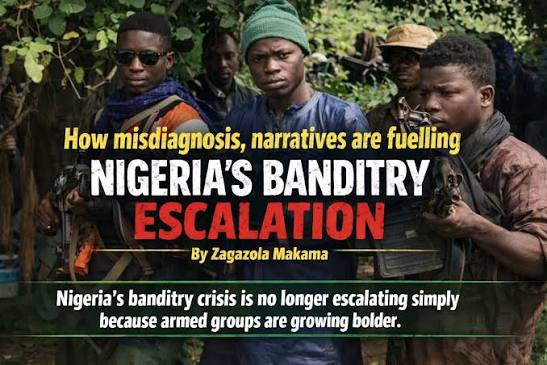
How misdiagnosis, narratives are fuelling Nigeria’s banditry escalation
By: Zagazola Makama
Nigeria’s banditry crisis is no longer escalating simply because armed groups are growing bolder. It is escalating because the country continues to misdiagnose the threat, apply blunt policy tools to differentiated actors, and unintentionally feed a violent criminal economy through ransom payments, politicised narratives and delayed state consolidation.
Across the North-West and parts of the North-Central, banditry has evolved beyond rural violence into a structured, profit-driven security threat. Yet public debate remains trapped between emotional appeals for dialogue and absolutist calls for force, leaving little room for the strategic clarity required to halt the violence.
At the heart of the escalation is money. Banditry today survives on a diversified revenue architecture that includes ransom payments, cattle rustling, illegal mining, arms trafficking, extortion levies on farming and mining communities, and collaboration with transnational criminal networks. Each successful kidnapping or “peace levy” reinforces the viability of violence as a business model.
Data released by the National Bureau of Statistics (NBS) in December 2024 underlined the scale of this economy with the North-West accounting for the highest number of kidnap incidents and victims.
Zagazola argue that as long as communities remain unprotected and ransom payments continue as a survival strategy, banditry will regenerate faster than military operations can suppress it. This is not ideology-driven violence at its core; it is cash-flow-driven criminality as every payment funds the next attack.
Another accelerant is Nigeria’s persistent failure to differentiate categories of armed actors. Security assessments increasingly point to at least two distinct groups operating within the banditry ecosystem.
The first consists of low-level, defensive armed actors, often rural residents who acquired weapons after suffering attacks and whose violence is reactive rather than predatory. The second group comprises entrenched, profit-driven bandit networks responsible for mass kidnappings, village destruction, sexual violence, arms trafficking and territorial control.
Yet public discourse and policy responses frequently collapse these actors into a single category of “bandits,” resulting in indiscriminate dialogue offers, blanket amnesty rhetoric or, conversely, broad-brush security operations that alienate communities. This conceptual error, allows high-value criminal leaders to masquerade as aggrieved actors while exploiting negotiations to buy time, regroup and rearm.
Dialogue has repeatedly been applied in contexts where the state lacks coercive leverage. Experiences in Zamfara, Katsina, Sokoto and Kaduna states and parts of the North-West show a consistent pattern: temporary reductions in violence following peace deals, followed by rapid relapse and escalation. Officials who participated in the dialogue have openly acknowledged that many agreements collapsed within months.
The negotiations conducted without sustained military pressure, intelligence dominance and post-agreement enforcement mechanisms merely incentivise armed groups to pause tactically. When criminals negotiate from a position of strength, dialogue becomes appeasement.
Perhaps the most dangerous accelerant is the ethnicisation of banditry. Although criminal gangs include actors of identifiable ethnic backgrounds, the violence itself is not driven by ethnic grievance. Nonetheless, selective media framing and political rhetoric like what had been witnessed in Plateau have increasingly cast banditry through identity lenses, particularly in farmer–herder contexts.
This framing obscures the criminal logic of the violence and deepens mistrust between communities that are themselves victims. In Nigeria today, the fulani herdsmen and pastoralists communities are being weaponized and stereotyped as bandits. This dangerous persecution has strengthens bandit recruitment narratives, allowing criminal leaders to cloak profit-driven violence in claims of ethnic persecution or genocide.
Historical records and sociological studies show that Fulani, Hausa, Tiv, Berom and other communities coexisted for decades through complementary economic systems. The breakdown of this coexistence has been exploited by armed groups seeking cover, recruits and informants. Security agencies possess significantly more intelligence on bandit networks than is visible in public debate. Lawful interceptions, human intelligence and post-operation assessments routinely reveal financial motives, supply routes and internal hierarchies within armed groups.
However, public advocacy for dialogue often relies on forest-level engagements that security officials describe as “theatrical performances” by bandits choreographed grievances designed to elicit sympathy and concessions. The disconnect between classified intelligence and public narratives has allowed emotionally compelling but strategically flawed arguments to dominate national discourse.
Another escalation factor is the emerging convergence between bandit networks and ideological terrorist groups as Nigeria’s internal security landscape firmly indicates that what has long been treated as banditry especially in the North-West and parts of North-Central Nigeria has evolved into a hybrid jihadist campaign, driven by Boko Haram (JAS faction) and reinforced by JNIM elements operating from Sahelian-linked forest sanctuaries. Shared arms supply chains, training exchanges and joint operations could transform banditry from criminal violence into full-spectrum insurgency if unchecked. Nigeria’s past experience with Boko Haram demonstrates the cost of dismissing such convergence as isolated or exaggerated.
Military operations have succeeded in degrading bandit camps in several corridors, but the absence of immediate governance has allowed violence to recycle. Clearing operations not followed by permanent security presence, functional courts, reopened schools, healthcare and markets leave vacuums that criminal actors quickly refill. Bandits and other criminals thrive where state authority is episodic rather than continuous. Security victories without governance consolidation merely displace violence spatially and temporally.
Therefore, Nigeria must urgently reset its approach by formally adopting threat differentiation, choking financial lifelines, regulating community defence structures, and ensuring intelligence-led, precise enforcement against high-risk criminal networks. Dialogue, they say, must be selective, conditional and embedded within formal disarmament and reintegration frameworks not deployed as a moral reflex.
Above all, the state must reclaim narrative control by defining banditry clearly as organised criminal violence, not a sociological misunderstanding. As one senior official put it, “Banditry escalates where sentiment overrides strategy. The cure begins with honesty.”
Without that honesty, Nigeria risks allowing a violent criminal economy to entrench itself deeper into the country’s security architecture at a cost measured not just in money, but in lives, legitimacy and national cohesion.
How misdiagnosis, narratives are fuelling Nigeria’s banditry escalation



2027: Constituents declare support for Tinubu, Goje’s re-election
Yamaltu/Deba constituents have declared support for President Bola Tinubu and Senator Danjuma Goje’s re-election ahead of the 2027 General Elections.
Dr Newton Moses, declared the support in a statement read on behalf of the people of Yamaltu/Deba Local Government Area of Gombe State on Friday in Gombe.
Moses said voting for experienced leaders in 2027 remained key to addressing Nigeria’s challenges and delivering dividends of democracy to Nigerians.
He said the group’s decision to support Tinubu and Goje was guided by patriotism, and a sincere desire to see competent, and result-driven leadership that would benefit their constituents and the country.
He said that Goje’s leadership in the past 16 years at the Senate has benefitted the constituents and given effective representation to the people of Akko and Yamaltu/Deba LGAs that make up the district.
He dismissed allegations that the people of Yamaltu/Deba have been marginalised and were demanding the seat to be zoned to Yamaltu/Deba and not Akko where Goje is from.
He said that the constitution did not impose any zoning limitation or tenure restriction on membership in the National Assembly, hence urged those seeking the seat to test their popularity through election.
“We are not part of that group saying Goje should not return to the senate in 2027; that is not the voice of the grassroots from Yamaltu Deba.
“ Goje has, over the years, built invaluable networks and acquired the experience necessary to effectively advocate for the interests of his constituency and contribute meaningfully to national development.
“ By returning Goje to the Senate, Gombe Central stands to gain even more.
“ His established influence will ensure greater access to federal opportunities, increased developmental projects, and stronger representation in critical national decisions,” he said.
The group further advised President Tinubu to stay away from those working to tarnish the good name of Goje, stating that Goje’s influence in Gombe was important for the success of the All Progressives Congress in 2027.
Moses said at a time when Nigeria is focused on economic recovery, institutional strengthening, and inclusive growth under Tinubu, it was imperative that proven leaders like Goje to continue contributing his expertise toward national progress.
2027: Constituents declare support for Tinubu, Goje’s re-election

Hope in the Hard Times: Ashlee Momoh Foundation Spreads Easter Joy to Military Widows
By Comrade Philip O. Ikodor
The Ashlee Momoh Foundation (AMF), a non-profit organization dedicated to supporting the families of fallen officers, marked the Easter season with a heartwarming outreach to military widows at different locations in Abuja and Nasarawa state, respectively on April 2nd, 2026. This thoughtful initiative was designed to bring joy, hope, and support to the widows of our fallen Military Officers, who have made immense sacrifices for their country.
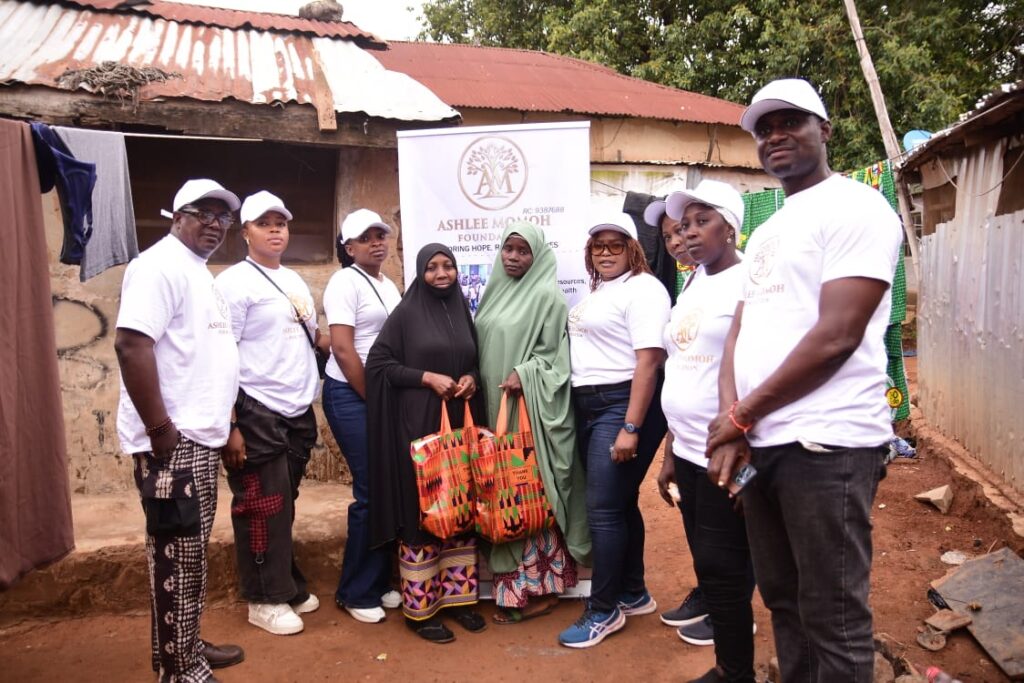
“Easter is the season of renewal, hope, and the triumph of light over darkness,” Princess Ashlee said. “It reminds us that even after the longest winter, spring arrives and even after the deepest sorrow, there is the possibility of a new dawn.” The outreach was designed to show support and encouragement to the military widows, and to felicitate with them on the occasion of Easter.
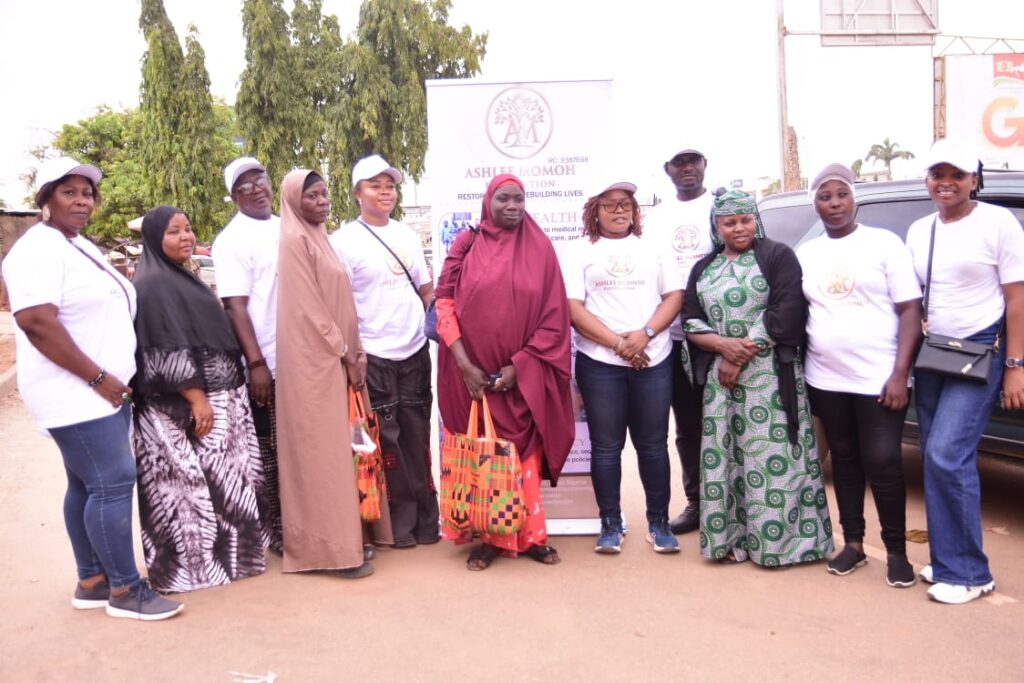
Princess Ashlee Momoh reassured the widows that while their loved ones are no longer physically present, their legacy lives on, and AMF is committed to standing with them, supporting them, and celebrating their strength. “Today, we celebrate you, our heroes’ widows, and the sacrifices you’ve made,” she said.
The event was filled with moments of joy and fulfilment, as beneficiaries received gift items, cash gifts, and scholarship opportunities. The Foundation also announced enlistment for skill acquisition and empowerment programs, aimed at equipping the widows with the tools they need to rebuild their lives.
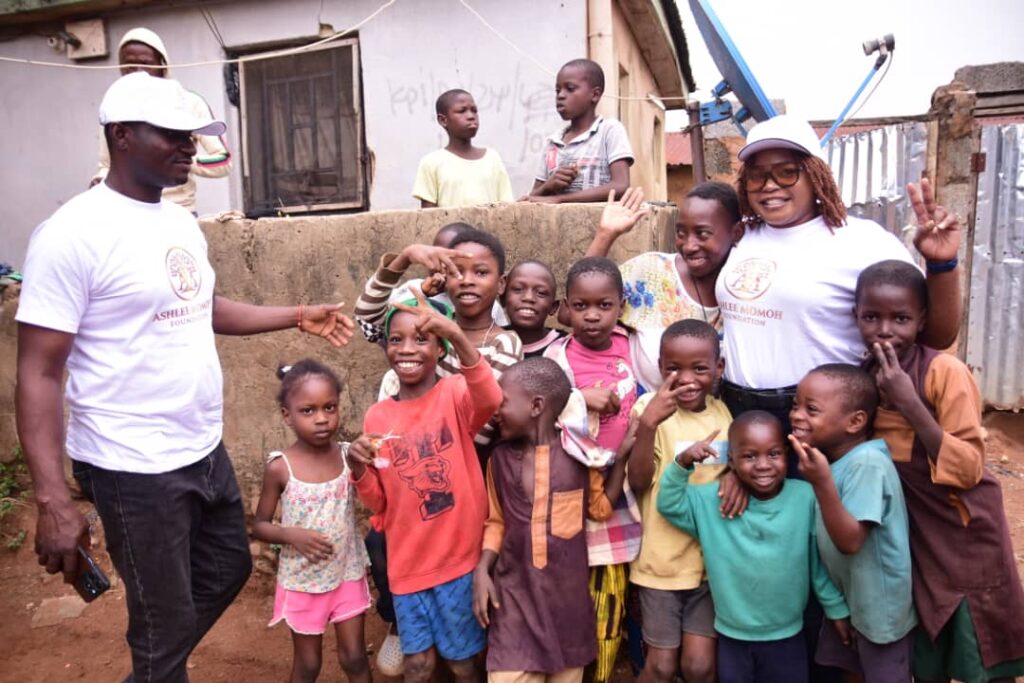
The outreach was a testament to AMF’s unwavering commitment to supporting the families of fallen officers, and its dedication to making a positive impact in the lives of those who have made immense sacrifices for their country. As one beneficiary put it, “This Easter, we’ve received more than just gifts – we’ve received hope, love, and a sense of belonging.”

The Ashlee Momoh Foundation’s Easter outreach was a powerful reminder that even in the darkest moments, there is always hope, and that together, we can overcome any challenge.
Hope in the Hard Times: Ashlee Momoh Foundation Spreads Easter Joy to Military Widows
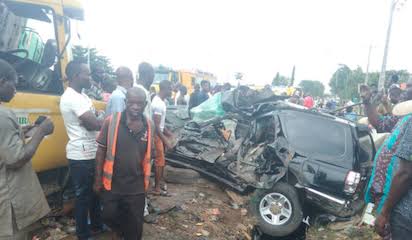
Six die, 12 injured in Kwara road crash
By: Zagazola Makama
Six persons have been confirmed dead and 12 others injured in a fatal road traffic accident along the Okolowo–Jebba expressway in Kwara State.
Police sources said the accident occurred at about 6:00 a.m. on April 2 near Danjuma Bakery area, involving a Toyota Hummer bus and a stationary truck.
According to the sources, the bus with registration number BTR-161-XA was conveying 18 passengers from Lagos State to Katsina State when it rammed into a parked truck with registration number BUU-495-ZD.
The truck was reportedly driven by Kamarudeen Abdullahi, said to be from Jos North Local Government Area of Plateau State.
The impact of the collision resulted in the death of six passengers on the spot, while 12 others sustained varying degrees of injuries.
The injured victims were rushed to the University of Ilorin Teaching Hospital, Oke-Oyi, for medical attention, while the remains of the deceased were deposited in the hospital morgue for autopsy.
Police said investigation had commenced to determine the circumstances surrounding the crash.
Six die, 12 injured in Kwara road crash

2027: Constituents declare support for Tinubu, Goje’s re-election

Hope in the Hard Times: Ashlee Momoh Foundation Spreads Easter Joy to Military Widows

Police arrest newly recruited suspected ISWAP member in Kwara

Roger Federer’s Shock as DNA Results Reveal Myla and Charlene Are Not His Biological Children

THE PLIGHT OF FARIDA

FAILED COUP IN BURKINA FASO: HOW TRAORÉ NARROWLY ESCAPED ASSASSINATION PLOT AMID FOREIGN INTERFERENCE CLAIMS
-
 News2 years ago
Roger Federer’s Shock as DNA Results Reveal Myla and Charlene Are Not His Biological Children
-
Opinions4 years ago
THE PLIGHT OF FARIDA
-
 News12 months ago
FAILED COUP IN BURKINA FASO: HOW TRAORÉ NARROWLY ESCAPED ASSASSINATION PLOT AMID FOREIGN INTERFERENCE CLAIMS
-

 News2 years ago
EYN: Rev. Billi, Distortion of History, and The Living Tamarind Tree
-
 Opinions4 years ago
POLICE CHARGE ROOMS, A MINTING PRESS
-

 ACADEMICS2 years ago
A History of Biu” (2015) and The Lingering Bura-Pabir Question (1)
-

 Columns2 years ago
Army University Biu: There is certain interest, but certainly not from Borno.
-

 Opinions2 years ago
Tinubu,Shettima: The epidemic of economic, insecurity in Nigeria
