
Politics
“I Have Never Been Wrong About Vice President Kashim Shettima in Over 1,000 Articles” – Dr James Bwala.

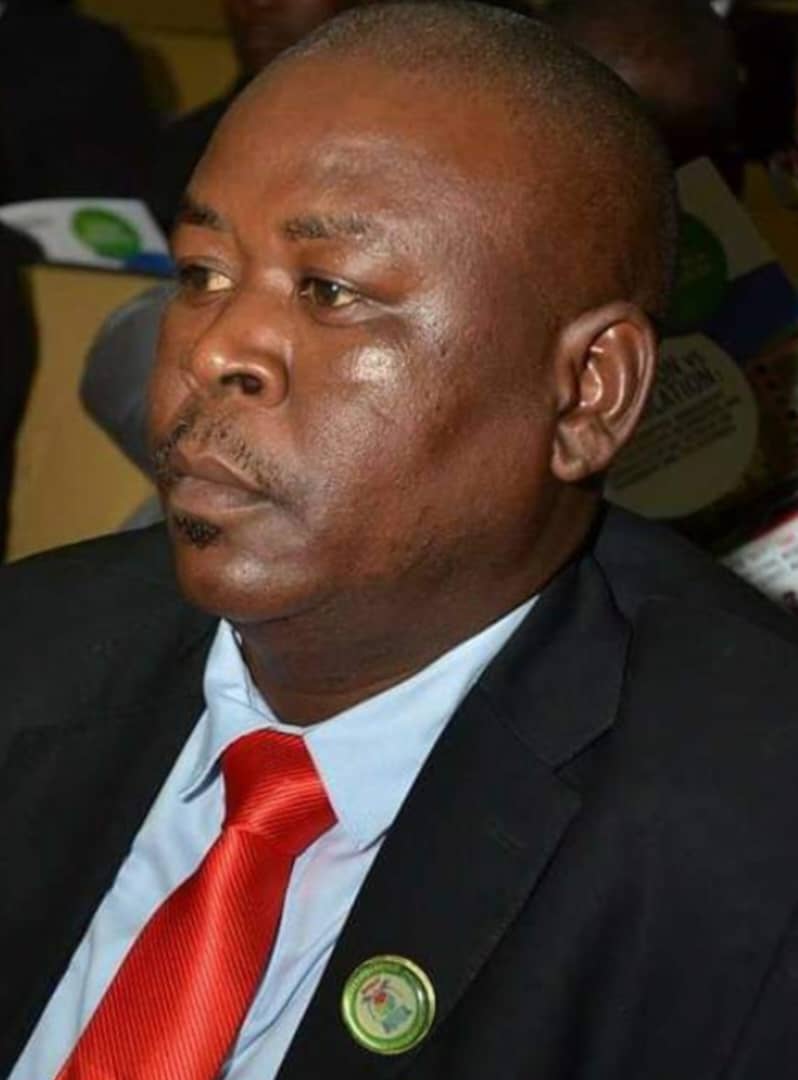
“I Have Never Been Wrong About Vice President Kashim Shettima in Over 1,000 Articles” – Dr James Bwala.
By: Lazarus Balami
Writing about politicians is one of the most difficult tasks in the field of journalism. This is because politicians themselves do not understand who they are in words and actions, and such breeds different pictures of what they are now and the next moment, especially highly experienced and intelligent ones like Nigeria’s vice president, Kashim Shettima. In the realm of political analysis and reportage, consistency and accuracy often separate mere commentators from credible and influential voices. Dr James Bwala, a distinguished analyst, recently asserted that he has never been wrong about Vice President Kashim Shettima throughout his extensive career, spanning over 1,000 articles following one personality. This bold claim is not merely an expression of personal pride but a testament to meticulous research, grounded insights, and steadfast commitment to factual integrity.
Those who read his writings, those who knew him and those that rode the field with him, and yours sincerely, as a professional examining this assertion, I can authoritatively say that it is very important to explore why Dr James Bwala’s insights into Vice President Kashim Shettima’s political journey—from his tenure as governor of Borno State to his current role as Nigeria’s vice president—have been consistently accurate and impactful. I chose to interview Dr Bwala and to write this piece to appreciate the importance of his stand and rigors political analysis that helps millions understand how Vice President Shettima’s character and leadership have validated such assessments.
Many journalists attested to Dr Bwala’s track record and testified that it owes much to his profound understanding of the socio-political context of Borno State and Nigeria at large. During Shettima’s tenure as governor from 2011 to 2019, Borno State was engulfed by the insurgency of Boko Haram—a crisis marked by widespread violence, displacement, and humanitarian catastrophe. Many analysts struggled to accurately assess the complexity of the conflict and the government’s response. However, Dr Bwala’s reports stood out for their nuanced comprehension of both the security challenges and the socio-economic undercurrents influencing them. Rather than succumbing to sensationalism or reductive narratives, despite his turning relationship with his friend and colleague, who was Governor Shettima’s spokesperson at the time – speaking of the late Malam Isa Gusau – Dr Bwala offered comprehensive analyses that factored in the local dynamics, Shettima’s policies, and the evolving nature of the insurgency.
Vice President Kashim Shettima’s leadership during these trying years demonstrated resilience, pragmatism, and strategic vision, qualities Dr Bwala meticulously documented. Shettima’s approach combined military cooperation with concerted efforts to rehabilitate displaced persons, rebuild critical infrastructure, and stimulate economic recovery. A drive late, Isa Gasau praised and spoke of Dr James Bwala as a core professional in his field. I also recalled Ahmed Salkida’s description of Dr Bwala as a brave journalist during an interview owing to his approach to reports during the height of the crises in the north-east. Dr Bwala’s evaluations recognised that, while Shettima faced enormous obstacles, his administration made noteworthy progress in stabilising the region and restoring hope to its people. These assessments were borne out by subsequent developments: improved security conditions, returnees resuming livelihoods, and gradual resumption of education in previously inaccessible areas.
I have read and followed hundreds of Dr Bwala’s precision in reporting, which has been bolstered by his reliance on credible sources and firsthand accounts. He engaged extensively with local communities, government officials, security agencies, and international partners operating in the region even while working as a humanitarian and journalist. This immersion ensured that his writings were not only timely but also reflected ground realities often missed by external observers. The authenticity of his information enabled him to avoid the pitfalls of misinformation, which frequently plagued coverage of personalities, the state and the broader North-east Nigeria conflict zone.
Transitioning from Shettima’s governorship to his elevation as vice president, Dr Bwala’s consistent accuracy persisted due to his vigilant observation of the politician’s evolving role on the national stage. Vice President Shettima now occupies a position demanding not just regional expertise but also statesmanship, diplomacy, and a capacity to influence broad governance agendas. Dr Bwala’s commentary has highlighted Shettima’s deft navigation of Nigeria’s complex political landscape—his ability to build alliances, address national security concerns, and advocate for developmental initiatives attuned to the needs of marginalised communities. These analyses have increasingly portrayed Shettima as a unifying figure capable of bridging ethno-religious divides, fostering inclusive governance, and championing reforms.
Sceptics might question the infallibility implied by Dr Bwala’s statement regarding never being wrong. Yet it is crucial to acknowledge that political analysis, unlike empirical sciences, involves interpretation and prediction amidst fluid circumstances. Dr Bwala’s claim is better understood as an affirmation of his rigors standards and the enduring validity of his core assessments concerning Vice President Shettima’s leadership qualities and impact. Instances where tactical details might have shifted do not diminish the overarching truths he has reliably conveyed about Shettima’s integrity, commitment, and effectiveness. He never shakes on his stance with the vice president, Kashim Shettima. Even when pointers to the rumour of dropping Shettima as President Tinubu’s running mate were high and voices supporting Shettima ebbed, his piece reassuring was constant almost on a daily basis.
The consistency of Dr Bwala’s analyses has contributed positively to public discourse. Coming in an era where misinformation and partisan distortions abound, his balanced and verified reports offer a dependable compass for policymakers, scholars, and citizens seeking to understand one of Nigeria’s most influential leaders. He sets a high bar for accuracy and context and exemplifies the important role that responsible journalism plays in democratic societies.
Dr James Bwala’s declaration of never having been wrong about Vice President Kashim Shettima over more than one thousand articles is a reflection of his continued dedication to truth-telling and insightful political analysis. Through his detailed examination of Shettima’s governance of Borno State amidst insurgency challenges and his ongoing contributions as vice president, Dr Bwala has demonstrated unparalleled accuracy, contextual sensitivity, and analytical depth. His work has not only affirmed the significance of Vice President Shettima’s leadership but also underscored the indispensable value of rigors, fact-based reportage in shaping informed public opinion and guiding effective governance. Such committed analysis faithfully charts the contours of Nigeria’s political landscape and appropriately assesses its leaders.
- Balami, Publisher/Columnist 08036779290
“I Have Never Been Wrong About Vice President Kashim Shettima in Over 1,000 Articles” – Dr James Bwala.


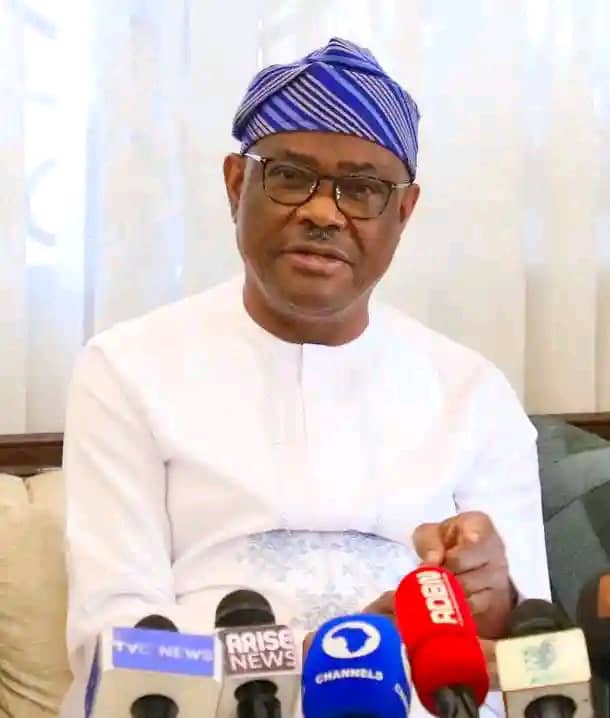
2027: WIKE PDP faction receives large number of defections in Yobe
By: Yahaya Wakili
The Yobe state faction of the Peoples Democratic Party (PDP) aligned with the minister of the Federal Capital Territory, Nyeson Wike, has received a large number of defectors from various political parties in Nangere and Fune local government areas ahead of the 2027 general election.
The Peoples Democratic Party receives defectors from the APC, ADC, and NDC, as well as large numbers of PDP supporters of the former national chairman of the PDP, Ambassador Umaru Illiya Damagum, in the Nangere and Fune local government areas of Yobe State.
Former APC and PDP members and supporters of Ambassador Umaru Damagum, pioneers in Damagum B and Tikau wards, Alhaji Muhammadu Abubakar and Malam Abdu Umar, respectively, cite hardship, unemployment, and bad leadership as reasons for defecting.
The Peoples Democratic Party (PDP) leaders in areas promise equal opportunities for new members.

Governorship candidate in Yobe State, Alhaji Abdullahi Usman Maigida, pledges jobs, infrastructure, and inclusive governance.
Alhaji Maigida says the PDP influx strengthens its grassroots structure ahead of the 2027 elections.
The event witnessed the defections of several prominent political figures, including Dr. Ibrahim Aliyu, widely recognized as the first person to introduce the All Progressives Congress (APC) in Tikau Ward in the Nangere local government area.
2027: WIKE PDP faction receives large number of defections in Yobe
Politics
The Psychology of Nigerian Politicians and Voters Power, Survival, Emotion, and the Nigerian Democratic Mind

The Psychology of Nigerian Politicians and Voters Power, Survival, Emotion, and the Nigerian Democratic Mind
By Ameen Amshi PhD
Politics in Nigeria is often discussed through the lenses of corruption, elections, ethnicity, governance, and insecurity. Yet beneath all these issues lies something deeper and less examined: psychology.
Nigerian politics is not only a struggle for power; it is a struggle for survival, relevance, identity, emotional influence, and public validation. To truly understand the Nigerian political system, one must understand both the psychology of Nigerian politicians and the psychology of Nigerian voters, because both continuously shape each other.
The Nigerian politician does not operate in isolation. Neither does the Nigerian voter. They exist in a complicated relationship built on fear, hope, poverty, loyalty, identity, emotion, and expectation.
For many Nigerian politicians, political office is far more than public service. It represents security, influence, social status, economic access, and protection. In a society where institutions are still evolving and political relevance often determines personal influence, power becomes psychologically addictive.
This explains why many politicians struggle to leave the political space even after decades in office. Losing power in Nigeria can mean losing visibility, weakening alliances, reduced access, and fading public relevance. To many political actors, staying connected to power becomes a form of survival.
This survival mentality shapes political behavior:
- constant alliance building,
- aggressive control of party structures,
- loyalty calculations,
- and the endless pursuit of appointments and influence.
At the same time, Nigerian voters also operate from a survival mindset.
Many citizens do not vote based purely on ideology or policy sophistication. Instead, they often vote based on emotional connection, identity, accessibility, and immediate need. In communities where poverty, unemployment, insecurity, and weak public institutions exist, politics becomes personal.
The average voter frequently asks: - Who can help us?
- Who remembers our community?
- Who can provide opportunities?
- Who can we call in times of hardship?
This creates a system where politicians are expected not just to govern, but to function as providers, sponsors, protectors, and emergency responders.
As a result, patronage becomes psychologically normalized.
A politician who pays hospital bills, sponsors school fees, supports funerals, distributes food, or empowers youth groups is often perceived as compassionate and trustworthy, even when governance performance remains poor. The emotional visibility of generosity tends to outweigh the invisible value of long-term policy reforms.
This is one of the reasons Nigerian politics remains heavily personality driven rather than institution driven.
Another unique feature of politics in Nigeria is the near absence of rigid ideological divisions that traditionally define politics in many parts of the world.
In many democracies, political parties are clearly identified as: - leftwing,
- rightwing,
- conservative,
- liberal,
- progressive,
- labor oriented,
- socialist,
- nationalist,
- or populist.
In Nigeria, however, these ideological boundaries are largely blurred.
Most Nigerian political parties operate within similar political and economic frameworks, and politicians frequently move from one party to another without major ideological conflict. A politician may criticize a party today and join the same party tomorrow without fundamentally changing political beliefs or policy direction.
This is because Nigerian politics is driven less by ideology and more by: - access to power,
- coalition building,
- regional balancing,
- elite negotiations,
- influence,
- and political survival.
In reality, many Nigerian politicians regardless of party affiliation align around one central concept: the acquisition, retention, and management of power.
Perhaps the most important psychological reality in Nigerian politics is this:
“Every Nigerian politician was once a Nigerian voter.”
Most politicians did not begin as part of the elite political establishment. At some point, they were ordinary citizens criticizing government, complaining about corruption, questioning leadership failures, and believing they could do better if given the opportunity.
However, the Nigerian political system often transforms individuals faster than individuals transform the system.
The same person who once condemned government inefficiency from outside power may eventually find himself struggling with the same institutional pressures, political compromises, bureaucratic limitations, elite negotiations, and survival calculations once criticized.
That is what makes Nigerian politics psychologically complex:
the voter eventually becomes the politician,
and the politician eventually becomes part of the system the voter complains about.
Another reality many Nigerians rarely consider is that Nigerian politics is entirely different from what it appears to be from the outside.
Before elections, politicians often criticize everything: - government policies,
- insecurity,
- economic hardship,
- corruption,
- infrastructure failures,
- and administrative inefficiency.
From the outside, many genuinely believe:
“If I get there, I will do things differently.”
“I will solve these problems quickly.”
“I will fulfill all these promises.”
However, governance in Nigeria is far more complicated internally than it appears externally.
The moment many politicians enter office, they discover: - institutional limitations,
- bureaucratic bottlenecks,
- entrenched interests,
- political compromises,
- financial constraints,
- security complexities,
- legal restrictions,
- and layers of power negotiations that were previously invisible to them.
They suddenly realize that governance is not as simple as opposition rhetoric or campaign promises made during rallies.
What seemed easy from outside government becomes far more difficult within the system itself.
Timelines change.
Expectations change.
Outcomes change.
Political realities change.
Social media has also transformed Nigerian political psychology, especially among younger citizens. A new generation of voters increasingly demands accountability, competence, transparency, and issue based governance.
Recent years have shown signs of political awakening and generational shifts, particularly among younger Nigerians. Movements such as the #EndSARS protests and the momentum surrounding the 2023 Obi/Datti movement demonstrated growing dissatisfaction with traditional political structures and an increasing demand for accountability, transparency, and issue based governance.
Still, one major challenge remains: in many cases, Nigerian elites rotate access to power rather than fundamentally transform the system itself.
Political transitions often change personalities more than structures. As a result, the deeper psychological contract between politicians and voters remains largely intact.
Importantly, these political dynamics are not uniquely Nigerian. Similar patterns exist across much of Africa and many developing democracies: - patronage politics,
- ethnic voting,
- personality driven leadership,
- weak ideological structures,
- and elite centered political systems.
Yet, despite decades of instability, economic pressure, insecurity, and political tension, Nigeria has continued to endure.
Nigerian society remains: - adaptive under pressure,
- highly relational,
- emotionally resilient,
- resourceful,
- and socially interconnected.
Ultimately, Nigerian politics reflects Nigerian society: - resilient yet emotional,
- complex yet adaptive,
- divided yet interconnected,
- survival driven yet deeply hopeful.
And perhaps that enduring hope, more than anything else, remains the strongest psychological force sustaining Nigerian democracy today.
The Psychology of Nigerian Politicians and Voters Power, Survival, Emotion, and the Nigerian Democratic Mind
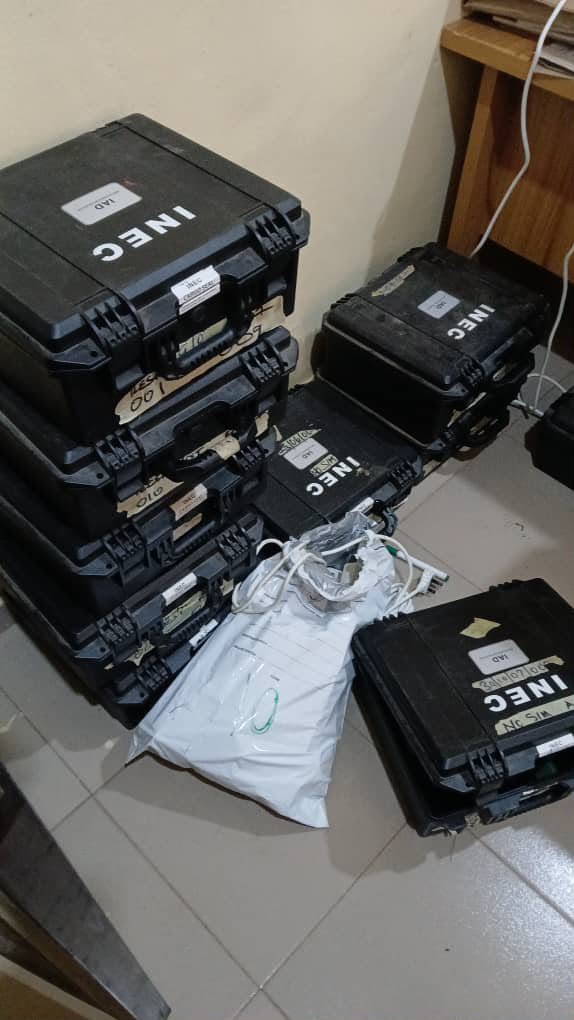
IPCR Warns: Let Ballot, Not Violence, Decide Osun Election
By: Michael Mike
The Institute for Peace and Conflict Resolution (IPCR) has warned political actors in Osun State against allowing violence, intimidation and inflammatory rhetoric to overshadow Saturday’s governorship election, urging all stakeholders to ensure that the ballot, rather than coercion, determines the choice of the people.
The warning came on Friday, less than 24 hours before voters in the state are scheduled to elect their governor, amid heightened concerns over election-related violence and security threats in parts of the state. Recent security assessments have identified several Osun local government areas as vulnerable to electoral violence.
In an immediate press statement signed by its Director-General, Dr. Joseph Ochogwu, the IPCR charged governorship candidates, political parties, their supporters, security agencies, election officials and voters to place the interest of Osun above partisan considerations.
The Institute cautioned that political competition must not degenerate into violence, intimidation, threats, hate speech or destruction of property, stressing that political contests are temporary while the consequences of electoral violence could scar individuals, families and communities for years.
“Elections should not be treated as a do-or-die affair,” the Institute said, urging political leaders and candidates to demonstrate leadership by cautioning their supporters against inflammatory statements, misinformation and actions capable of escalating tensions.
The IPCR also delivered a clear message to candidates who may be dissatisfied with the outcome: accept the result peacefully or seek redress through the courts, rather than resorting to self-help.
It urged the candidates and political parties to respect the rules of democratic competition and demonstrate maturity before, during and after the election.
The Institute equally called on voters to resist attempts by politicians or other actors to recruit them as agents of violence, urging them to exercise their civic responsibilities peacefully and respect the rights of citizens supporting rival political parties.
It advised voters to maintain order at polling units, respect election officials and security personnel, and avoid confrontations with political opponents.
The IPCR further warned citizens against becoming conduits for election-related misinformation, particularly on social media, urging them to verify information before sharing rumours or unconfirmed reports capable of triggering unrest.
The appeal comes against a backdrop of heightened political tension in Osun, where reports of shootings, killings, clashes and other politically linked disturbances have fuelled concerns over the security of the August 15 poll. A recent assessment by The Kukah Centre identified 15 local government areas as critical, high or moderate violence-risk zones, with Osogbo and Irewole classified as critical-risk areas.
The IPCR consequently charged security agencies to remain professional, impartial and respectful of citizens’ rights while ensuring adequate protection for voters, election officials and electoral materials.
It also called on the Independent National Electoral Commission (INEC) and its officials to discharge their responsibilities transparently and impartially, ensuring that eligible voters can cast their ballots without fear or intimidation.
Beyond the polling booths, the Institute urged traditional rulers, religious leaders, community leaders, civil society organisations and the media to play their part in preventing violence and discouraging inflammatory rhetoric.
It stressed that the responsibility for a peaceful election does not rest solely with security agencies or INEC, but with every stakeholder participating in the electoral process.
The Institute placed particular emphasis on the period after the announcement of results, urging winners to be magnanimous in victory and losers to accept defeat peacefully or pursue legitimate grievances through the judicial process.
The warning is particularly significant as Osun heads into Saturday’s contest after political parties had earlier signed a peace accord committing themselves to peaceful, free and credible elections.
The IPCR therefore called on the people of Osun State to protect the peace of their communities and demonstrate democratic maturity by ensuring that political differences do not become a trigger for bloodshed.
It said the ultimate test of the election would be whether the people are allowed to freely choose their governor without violence, intimidation or coercion.
“Let the ballot, rather than violence, intimidation or coercion, determine the choice of the people,” the Institute urged.
IPCR Warns: Let Ballot, Not Violence, Decide Osun Election

Zulum @57: Tribute to a Trailblazing Teacher

Opportunity or Entrapment? What Nigeria’s Youth Must Ask Before Flying to Russia

Guinea-Bissau picks Gabú, Oio for ECOWAS community health pilot

Roger Federer’s Shock as DNA Results Reveal Myla and Charlene Are Not His Biological Children

THE PLIGHT OF FARIDA

FAILED COUP IN BURKINA FASO: HOW TRAORÉ NARROWLY ESCAPED ASSASSINATION PLOT AMID FOREIGN INTERFERENCE CLAIMS
-
 News2 years ago
Roger Federer’s Shock as DNA Results Reveal Myla and Charlene Are Not His Biological Children
-
Opinions5 years ago
THE PLIGHT OF FARIDA
-
 News1 year ago
FAILED COUP IN BURKINA FASO: HOW TRAORÉ NARROWLY ESCAPED ASSASSINATION PLOT AMID FOREIGN INTERFERENCE CLAIMS
-

 News2 years ago
EYN: Rev. Billi, Distortion of History, and The Living Tamarind Tree
-
 Opinions5 years ago
POLICE CHARGE ROOMS, A MINTING PRESS
-

 ACADEMICS2 years ago
A History of Biu” (2015) and The Lingering Bura-Pabir Question (1)
-

 Columns2 years ago
Army University Biu: There is certain interest, but certainly not from Borno.
-

 Politics1 year ago
2027: Why Hon. Midala Balami Must Go, as Youths in Hawul and Asikira/Uba Federal Constituency Reject ₦500,000 as Sallah Gift
