
News
Inaugural MOFI Award to Promote Excellence in Corporate Governance- Takang


Inaugural MOFI Award to Promote Excellence in Corporate Governance- Takang
By: Michael Mike
The maiden edition of the MOFI Excellence Awards to promote excellence in corporate governance and performance across Federal Government-owned and Linked Enterprises is scheduled for 2026.
The Managing Director of the Ministry of Finance Incorporated (MOFI), Dr Amstrong Takang, who announced this at the formal unveiling in Abuja on Wednesday, said the awards would deepen the culture of good corporate governance, transparency, and accountability in the public sector of the nation’s economy.
Takang said the awards initiative, which follows the MOFI Corporate Governance Scorecard launched early this year as a part of its ongoing reform agenda, would recognise outstanding performance as well as redefine governance as a strategic asset driving transparency, accountability, and long-term value creation in government-owned entities.
He noted that MOFI Corporate Governance Scorecard revolves around key pillars that reflect global best practices adapted to Nigeria’s context, including effectiveness and independence of boards; robust control and risk management environment; strategic alignment and performance management; quality and timeliness of financial reporting and disclosure; and emerging issues of environmental, social and governance (ESG) as well as innovation, stakeholder engagement and sustainability.
He stated that MOFI believes that no strong economy would emerge without strong institutions, adding that strengthening the backbone of public institutions, by incentivising them to adopt best practices, would strengthen the entire nation’s economic outlook.
He disclosed that in the run-up to the awards next year, the process would involve the submission of documentation and data by portfolio companies required for their performance scorecard assessments and review of established criteria by an independent consultant and other experts.
He said once the technical review is completed, the consolidated findings through an evidence-based process would be presented to an Awards Panel tasked with the responsibility of providing independent oversight, by reviewing score distributions, and confirming entities that meet the threshold for recognition in each category.
Takang said: “What the Excellence Awards is building is the combination of a national Corporate Governance Scorecard for SOEs (state-owned enterprises) and an independently adjudicated excellence awards programme to serve as a model for other jurisdictions and as a reference point for investors and partners looking for credible signals of reform.”
To select the entities qualified for the awards, an independent panel, made up of individual experts and representatives of institutions renowned for promoting good governance, was inaugurated on Wednesday.
Members include representatives of the Financial Reporting Council, the Society for Corporate Governance Nigeria, the Chartered Institute of Directors, Nigeria Exchange Group and the Chartered Risk Management Institute.
Inaugurating the panel, the Minister of Finance and the Coordinating Minister of the Economy, Wale Edun, charged its members to make the awards a model of transparency and impact, to help deepen the culture of good corporate governance, transparency and accountability.
The integrity of the awards, the Minister pointed out, was dependent on the integrity of members of the panel responsible for judging and selecting prospective honourees.
He said MOFI Awards, which is open to all government-owned portfolios companies under MOFI management, would ultimately become the standard for corporate governance, transparency, accountability and integrity in the country over time.
“Your roles are pivotal in overseeing a transparent and rigorous process by ensuring the highest standard of institutional performance. We want to see that companies are not only run efficiently, but run according to the rule of law, sanctity of contracts, and regulations, and that they are timely with their financial reporting. There must be an open and independent process that must be merit-based,” he said.
He said the MOFI Excellence Awards was conceived to promote corporate governance excellence, high institutional performance, and strategic alignment across MOFI’s portfolio of public enterprises to spotlight on those boards and management teams that exemplify transparency, accountability, and strong performance.
He revealed the intention of the government would be to recognise agencies and their leaders who demonstrate high standards of transparency, accountability, and performance in managing public assets.
Edun said: “By doing so, we send a clear message that good governance and results will be rewarded, and that every entity under MOFI should strive towards the highest ideals of service and stewardship.”
He described the initiative as part of MOFI’s core mandate as the asset manager for the Federal Government charged with the responsibility of ensuring that government investments and state-owned enterprises were managed prudently and professionally.
In his response after the inauguration, the Chairman of the panel, who is also the Chairman/CEO of the J. K. Randle Group, a chartered audit, finance, tax, and accounting advisory firm, Bashorun J. K. Randle, expressed appreciation to the government for the confidence reposed in its members to serve.
Randle, who is also the former Chief Executive and Chairman of KPMG Nigeria and former Chairman of KPMG Africa, said the panel would do a good job to justify the confidence.
He said the composition of the panel with persons and entities with diverse perspectives and reputations for integrity would ensure that its evaluations would be independent, credible, and beyond reproach.
The MOFI Excellence Awards, the Chairman explained, would recognise and celebrate state-owned enterprises that demonstrate outstanding corporate governance, prudent risk management, sound ESG practices, and overall operational excellence.
He added that entities that have shown significant improvement over time, by incentivising everyone to attain those standards, while highlighting gaps and providing support to strengthen them, would also be recognised and rewarded.
“We want to send a clear message across the public sector that transparency, accountability and performance will be noticed and rewarded. We also want to foster a healthy sense of competition and peer learning among our portfolio companies,” he said.
In another development, the Managing Director and CEO of the Ministry of Finance Incorporated (MOFI), Dr. Armstrong Takang, has dismissed the notion that the government should not be involved in the business of driving economic growth in the country.
He described this view as a fallacy, asserting that governments at all levels play a critical role in the development of any nation.
Takang highlighted that countries like China have proven that government intervention in the economy, alongside private sector participation, can lead to success. He emphasized that this is the kind of capitalism Nigeria should aim for.
He cited Singapore Airlines, which has been owned by a government agency similar to MOFI, as an example of a successful state-owned enterprise. The airline has remained a leader in global aviation for decades, showcasing the potential of government involvement in business.
“The government has a pivotal role to play because of its sovereign status and its ability to access resources that the private sector can’t,” Takang explained. “There are certain amounts of capital the government can mobilize where private companies simply don’t have access.”
He added that: “It’s a fallacy to suggest that only the private sector can grow businesses. At MOFI, we believe the government can leverage its sovereign status to drive business and create opportunities for the private sector, especially where they lack the necessary capital. The private sector still needs the government. And we believe state-owned enterprises have a significant role to play in the economy.”
Takang also discussed the MOFI Excellence Awards, which aim to foster a culture of governance, excellence, and performance in state-owned enterprises. The awards will serve as a tool to evaluate corporate governance, track contributions to GDP, job creation, and other economic sectors, and encourage these enterprises to prioritize impact and accountability.
“We want state-owned enterprises to perform at their best, and that’s why we introduced the MOFI Excellence Awards,” Takang said, adding. “The goal is to provide a framework for assessing these organizations and ensuring they contribute positively to the economy.”
He noted that some of MOFI’s portfolio businesses have already begun prioritizing dividend payments, signaling a shift toward better performance and accountability.
“By institutionalizing these awards, we are creating a culture of excellence in corporate governance,” he added.
Inaugural MOFI Award to Promote Excellence in Corporate Governance- Takang


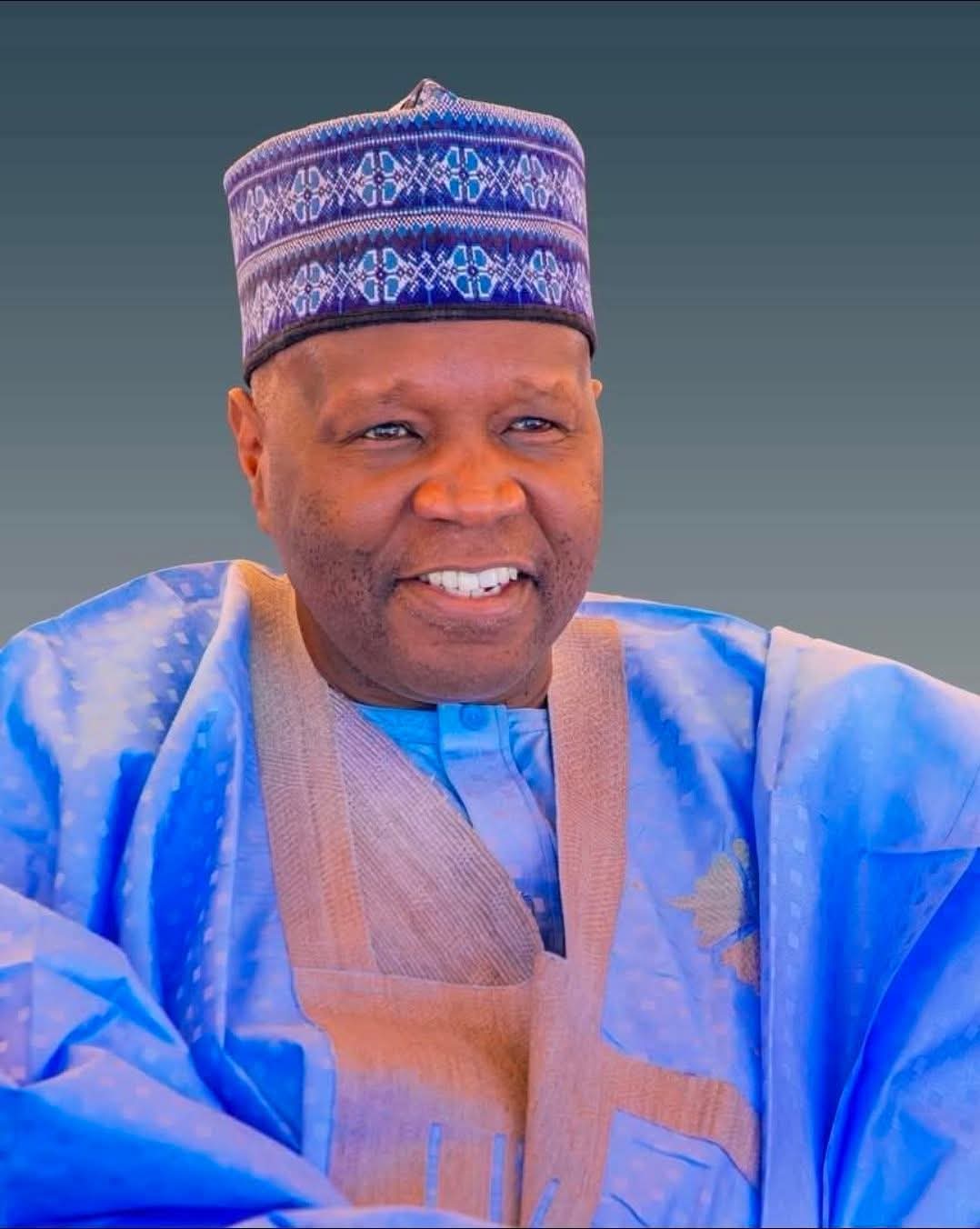
Agriculture partnership: Gov Yahaya to get Sasakawa’s Special Award
Governor Muhammadu Inuwa Yahaya of Gombe State will be honoured with a Special Recognition Award by the Sasakawa Africa Association (SAA) Nigeria, in acknowledgement of the state’s sustained partnership and strategic commitment to agricultural development.
The award will be presented at the 2026 SAA Nigeria Annual Stakeholders Workshop on Thursday, April 9, 2026, in Abuja, where top federal officials, development partners, diplomats, and state governments are expected to gather to discuss pathways for strengthening Nigeria’s food systems.
The workshop, holding at Rockview Royale Hotel, Wuse II, is themed “SAA @ 40: Deepening Impact and Expanding Reach at Scale.”
The recognition of Governor Inuwa Yahaya reflects the depth of Gombe State’s collaboration with SAA over the years, which has supported agricultural extension, smallholder productivity, and rural livelihoods.
Since its creation in 1996, Gombe State has maintained a working relationship with SAA, funded by The Nippon Foundation, to implement initiatives that improve food security, nutrition, climate resilience, and inclusive agricultural services, with particular attention to women, youth, and resource-poor farmers.
Speaking ahead of the workshop, Dr. Godwin Atser, Country Director of SAA Nigeria, said:
“This recognition celebrates a partnership backed by action. Governor Inuwa Yahaya’s leadership reflects the kind of subnational commitment essential for transforming agriculture in Nigeria.
Gombe State’s sustained support for farmer-focused interventions demonstrates what can be achieved when political will, institutional alignment, and practical investment converge.”
SAA Nigeria’s collaboration with Gombe State encompasses a wide range of interventions, including Farmer Learning Platforms (FLP), Community Savings and Investment in Agriculture (CSIA), Private Extension Service Provision (PESP), and Community-Based Seed Multiplication (CBSM), among others. Together, these initiatives strengthen the agricultural ecosystem from production to post harvest, improve access to technology, knowledge, and markets, and enhance the capacities of farmers and rural actors.
The partnership also encourages pluralistic extension systems, involving the private sector, farmer organizations, research institutions, and civil society in scaling agricultural services across the state. This multi-dimensional cooperation underscores why Gombe State’s collaboration is deserving of recognition.
As SAA marks 40 years of operations in Africa and 33 years in Nigeria, the organization notes that sustainable agricultural transformation requires long-term commitment, collaboration, and strategic investment, qualities exemplified by Gombe State and Governor Inuwa Yahaya.
The recognition will be part of a broader conversation at the 2026 Annual Stakeholders Workshop, which will review SAA’s 2021–2025 achievements, share lessons, and explore future partnerships to strengthen agriculture in Nigeria and across Africa.
About Sasakawa Africa Association (SAA)
Sasakawa Africa Association (SAA) was established in 1986 by Japanese philanthropist Ryoichi Sasakawa, Nobel Laureate Dr. Norman Borlaug, and former U.S. President Jimmy Carter.
Dedicated to improving the productivity, profitability, and resilience of smallholder farmers in sub-Saharan Africa, SAA operates through agricultural extension, capacity building, and systems strengthening. Active in Nigeria since 1993, SAA collaborates with governments, research institutions, universities, private sector actors, and development partners to advance farmer-centered agricultural transformation.
Agriculture partnership: Gov Yahaya to get Sasakawa’s Special Award

JNIM terrorists clashes with rival factions in rare encounter in Nigeria’s Kebbi state
By: Zagazola Makama
A suspected clash between rival terrorists factions has been reported in Kebbi State, raising fresh security concerns in the North-West region.
Sources said the incident occurred on April 4, when a group identified as Jama’at Nusrat al-Islam wal-Muslimin (JNIM) claimed it engaged a rival faction described as “Khawarij”.
The group alleged that one fighter was killed and another captured during the encounter, while three motorcycles and about N10 million were recovered.
However, the identity of the opposing group has yet to be independently verified.
Preliminary indications suggest the rival faction may be linked to Boko Haram or one of its splinter groups, though this remains subject to confirmation.
Security sources said the development could represent one of the first reported inter-jihadist clashes in the region.
JNIM terrorists clashes with rival factions in rare encounter in Nigeria’s Kebbi state
Troops foil mob attack, rescue suspected terrorist in Danmusa in Katsina
By: Zagazola Makama
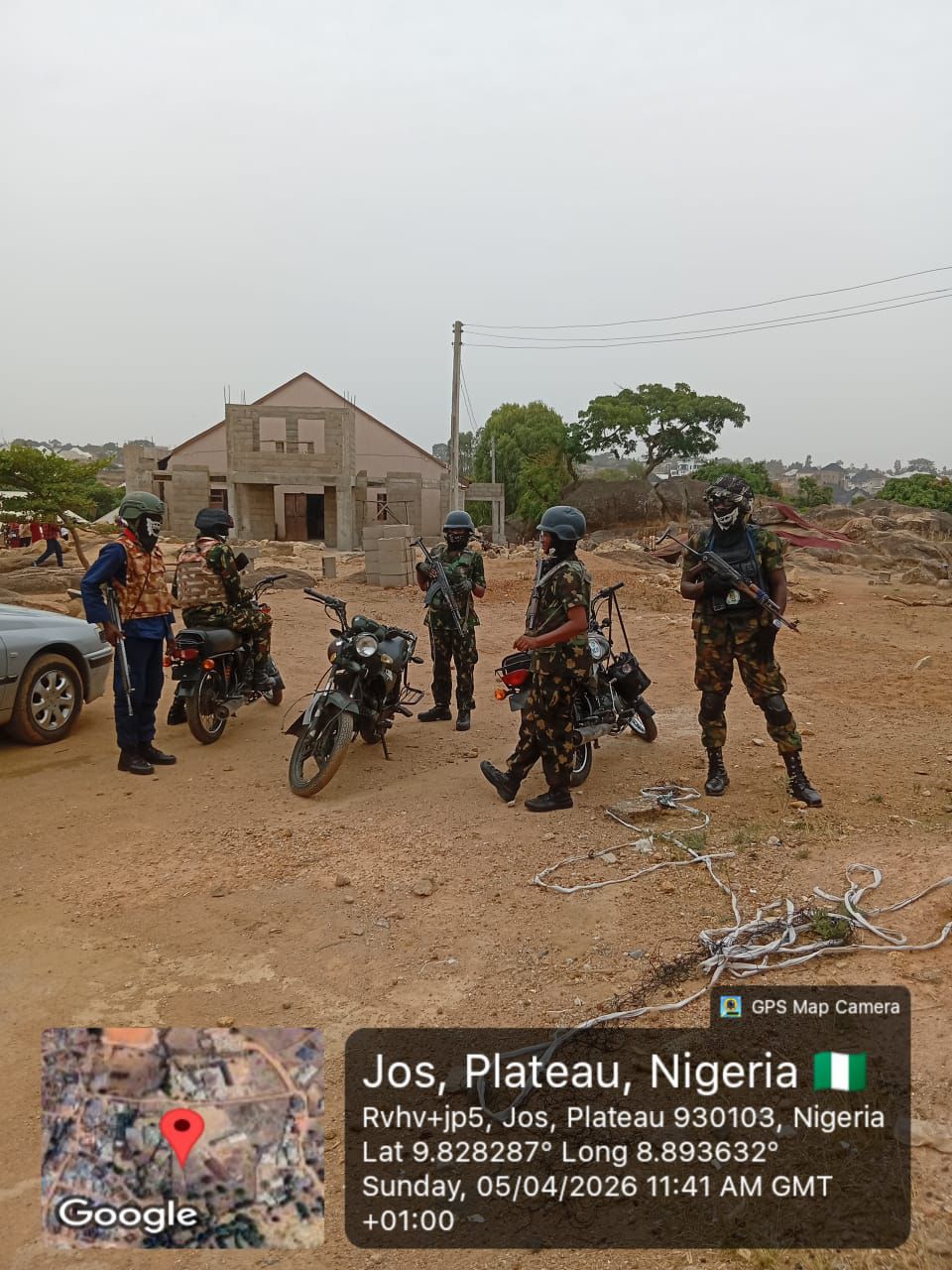
Troops of 17 Brigade have foiled an attempt by a mob to lynch a suspected terrorist and burn down a police station in Danmusa Local Government Area of Katsina State.
Security sources said the incident occurred at about 4:30 p.m. on April 5, 2026, when troops deployed at Combat Team 1 in Danali village responded to a distress call from a Nigerian Police outpost in the area.
The police had reported that a large crowd attempted to set the station ablaze and attack personnel after a suspected terrorist was brought into custody.
Troops were immediately mobilised to the scene and successfully prevented further escalation of the situation, restoring order in the area.
During the intervention, police personnel reportedly fired tear gas to disperse the irate crowd, which led to injuries sustained by one civilian.
The injured victim was evacuated to a medical facility for treatment.
Security sources said calm had since returned to the area, while troops continued to maintain presence to prevent a resurgence of violence and ensure stability.
Troops foil mob attack, rescue suspected terrorist in Danmusa in Katsina

Agriculture partnership: Gov Yahaya to get Sasakawa’s Special Award

JNIM terrorists clashes with rival factions in rare encounter in Nigeria’s Kebbi state

Troops foil mob attack, rescue suspected terrorist in Danmusa in Katsina

Roger Federer’s Shock as DNA Results Reveal Myla and Charlene Are Not His Biological Children

THE PLIGHT OF FARIDA

FAILED COUP IN BURKINA FASO: HOW TRAORÉ NARROWLY ESCAPED ASSASSINATION PLOT AMID FOREIGN INTERFERENCE CLAIMS
-
 News2 years ago
Roger Federer’s Shock as DNA Results Reveal Myla and Charlene Are Not His Biological Children
-
Opinions4 years ago
THE PLIGHT OF FARIDA
-
 News12 months ago
FAILED COUP IN BURKINA FASO: HOW TRAORÉ NARROWLY ESCAPED ASSASSINATION PLOT AMID FOREIGN INTERFERENCE CLAIMS
-

 News2 years ago
EYN: Rev. Billi, Distortion of History, and The Living Tamarind Tree
-
 Opinions4 years ago
POLICE CHARGE ROOMS, A MINTING PRESS
-

 ACADEMICS2 years ago
A History of Biu” (2015) and The Lingering Bura-Pabir Question (1)
-

 Columns2 years ago
Army University Biu: There is certain interest, but certainly not from Borno.
-

 Opinions2 years ago
Tinubu,Shettima: The epidemic of economic, insecurity in Nigeria
