
News
International Alliance Group Call on Government to Ensure Schools are Safe for Students

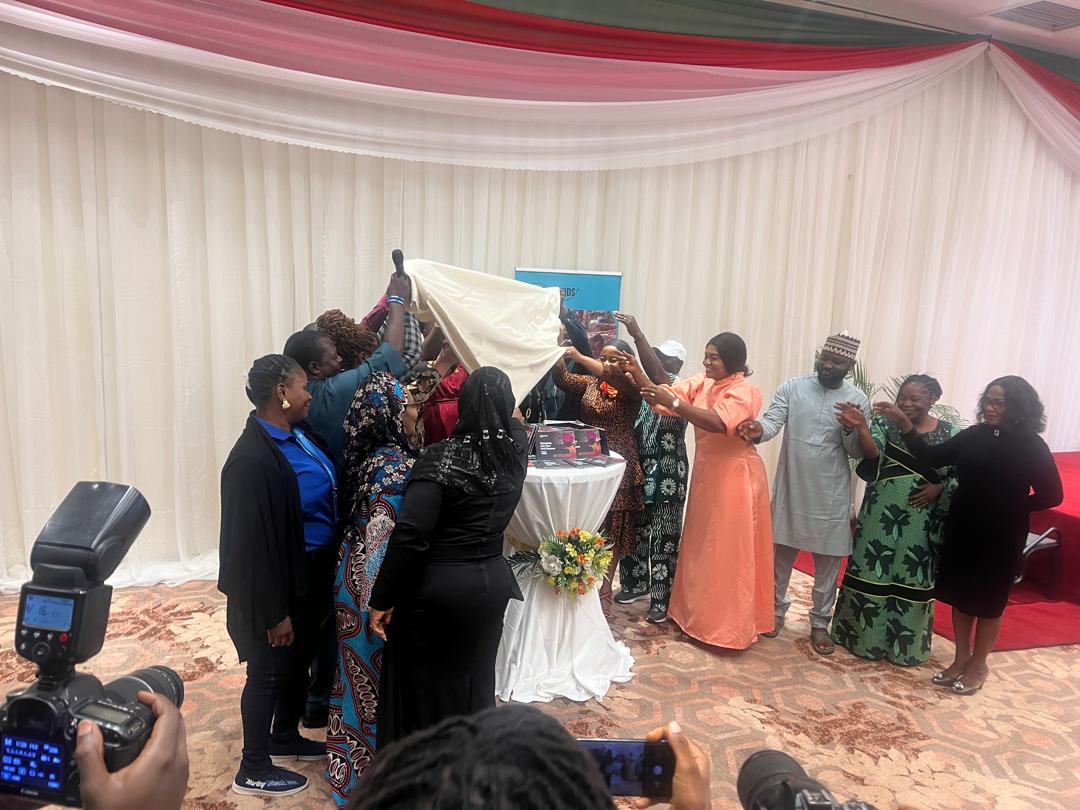
International Alliance Group Call on Government to Ensure Schools are Safe for Students
By: Michael Mike
Moving Minds Alliance (MMA) has called on the federal government to tackle insecurity in schools headlong and ensure that schools are safe for Nigerian students.
Speaking on the background of Monday’s abduction of at least 25 children and a teacher at a boarding school in north-western Nigeria’s Kebbi state, the Interim Director of the Moving Minds Alliance (MMA), Katie Murphy on Wednesday in Abuja at the First National Consultative Meeting on Early Childhood Development (ECD) in Crisis, a two-day dialogue aimed at strengthening support systems for young children affected by conflict, displacement, and other emergencies, said the abduction was a sad narrative that should not be allowed to happen again.
The Moving Minds Alliance (MMA) is a funders collaborative and network focused on scaling up support for young children and families affected by crisis and displacement. They aim to improve coverage, quality, and financing of early childhood development services in emergency contexts.
Speaking at the event, Katie Murphy, stressed the urgency of securing innovative and sustainable domestic financing to safeguard the holistic development of Nigeria’s youngest children.
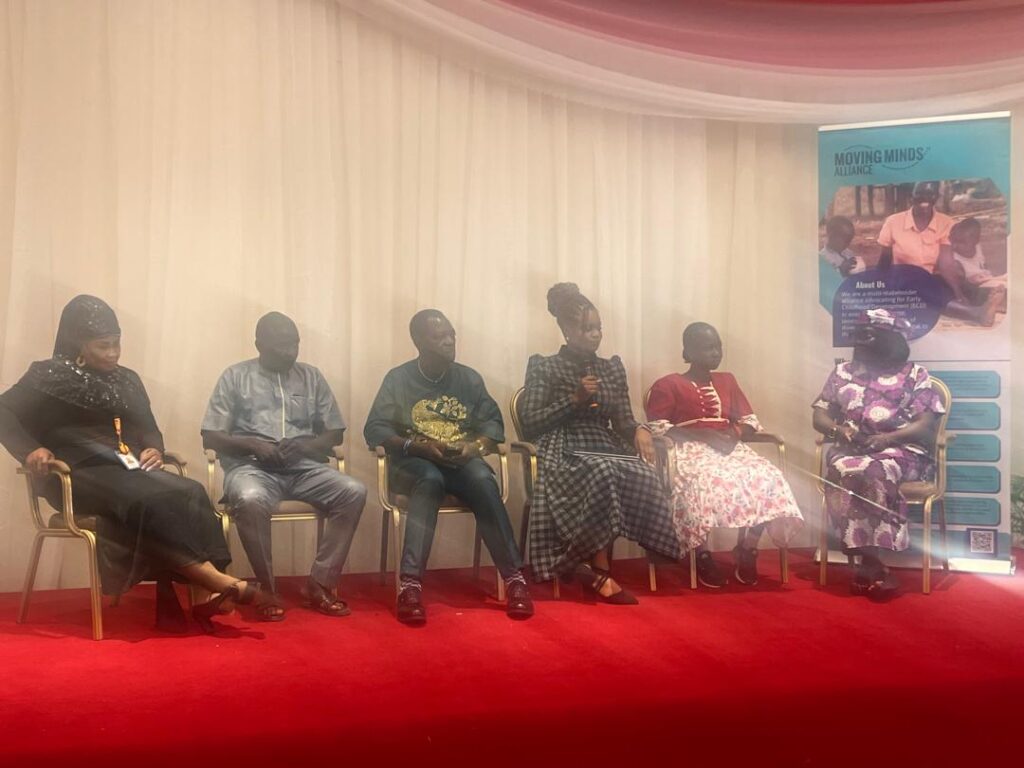
Murphy noted that while Nigeria receives substantial global support for ECD in crisis settings, most of the funding is channelled into health and nutrition, leaving critical areas such as early learning, responsive caregiving, and psychosocial support largely underfunded.
“This gap presents both a warning and an opportunity,” she said. “If we fail to invest now, the long-term wellbeing of children living through conflict and displacement will be at risk. But with coordinated action, Nigeria can champion a strong national commitment that inspires global momentum.”
She added that the meeting aims to review ongoing interventions, identify policy and financing solutions, and build a unified advocacy roadmap “led by Nigeria, for Nigeria’s children.”
She noted this at the national consultative meeting on children in crisis and development in Nigeria, a 2-day dialogue with Government and Early Childhood Development (ECD) stakeholders and also launch of it strategy and unveiling, “Reimagining early years crisis response strategy 2025-2030” in Abuja.
She said Nigeria can play a vital role in shaping a bold national commitment that inspires global action and includes a specific focus on children affected by crisis and displacement.
“Over the next two days, we are here to reflect on existing efforts to strengthen ECD for children affected by crisis and displacement, identify the policy and financing pathways that can accelerate progress, and begin to work together to shape a coordinated advocacy agenda led by Nigeria, for Nigeria’s children,” she said.
Also, the Early Childhood Care Development and Education (ECCDE) desk officer at the Ministry of Education, Confidence Okonkwo represented by the Director Basic Education, FME, Dr Folake Olatunji-David assured that the Federal Government of Nigeria is committed in ensuring that every Nigerian child is given adequate care in terms of nutrition, in terms of health, in terms of education.
” Nigerian Government has extended collaboration to private sector development for support because government do not have all the resources to cater for challenging issues in the education sector in the country, ” she said.
Representing the Federal Ministry of Education, Director of Basic Education, Dr. Folake Olatunji-David,, reaffirmed government commitment to ensuring that every child receives adequate nutrition, healthcare, and learning opportunities. She explained that the government is deepening partnerships with the private sector, acknowledging that public resources alone are insufficient to tackle the growing challenges in the education system.
Current national data paints a stark picture, showing that 3.6 million people in Nigeria are displaced as of October 2025, including over 3.57 million internally displaced persons (IDPs) and 142,557 refugees and asylum-seekers, with more than half of the displaced population are children.
It also showed that 1.8 million children face the threat of severe acute malnutrition, and over 18 million Nigerian children are currently out of school—many due to insecurity and displacement.
Children in these environments often miss out on nurturing care, early learning, mental health support, and other foundations essential for lifelong wellbeing. Without strategic action, experts warn that Nigeria risks falling short of national development targets and the 2030 Sustainable Development Goals.
Although Nigeria ranked among the top global recipients of ECD funding in crisis contexts in 2023—$27 million in humanitarian aid and $270 million in development assistance—funding patterns remain uneven. With the OECD forecasting a 30% drop in global aid, Nigeria could lose up to $89 million in ECD-related support by 2027, heightening the importance of domestic investment.
At the consultative meeting organised by the Moving Minds Alliance, the Federal and state ministries, including Education and Women Affairs; UN agencies such as UNHCR; Philanthropic organisations; International and local NGOs; Refugee- and community-led groups from Borno, Cross River, and Benue and media, researchers, and advocates These states were selected for their large populations of refugees and IDPs.
The event also marked the official launch of MMA’s 2025–2030 strategy: Reimagining Early Years Crisis Response.
According to the organisers, after the meeting, a national ECD coalition will be activated to coordinate efforts through 2029, leading up to global advocacy milestones such as the ECD Financing Summit in 2027.
International Alliance Group Call on Government to Ensure Schools are Safe for Students


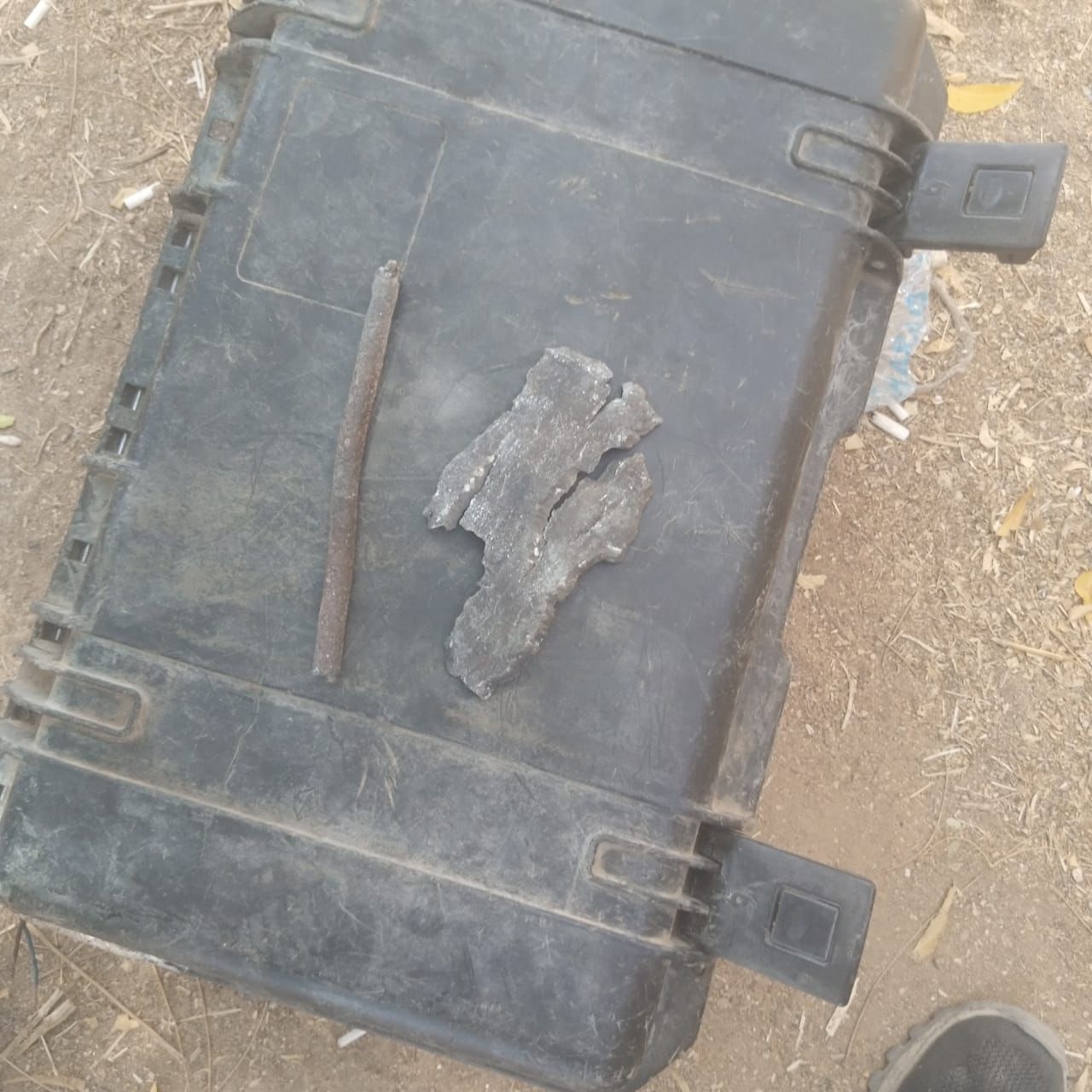
Troops detect, detonate IED along Ngoshe–Pulka road in Borno
By: Zagazola Makama
Troops of the Explosive Ordnance Disposal (EOD) team of 82 Division Task Force Battalion have successfully detected and detonated an improvised explosive device (IED) along a major supply route in Gwoza LGA of Borno State.
Security sources said the device was discovered at about 9:42 a.m. on March 22 during a routine scan of the Main Supply Route (MSR) between PAPA 4 and PAPA 5 along the Ngoshe–Pulka road.

The IED, suspected to have been planted by terrorists to target troops and commuters, was safely recovered and detonated in situ by the EOD team without causing any casualties.
Military sources said the operation was part of ongoing counter-IED measures aimed at ensuring the safety of movement along critical routes in the North-East.
Residents and road users have been urged to remain vigilant and report any suspicious objects or activities to security agencies for prompt action.
Troops detect, detonate IED along Ngoshe–Pulka road in Borno
News
ISWAP cleric threatens attack on Malam Fatori, after humiliating defeat, troops urged to remain alert
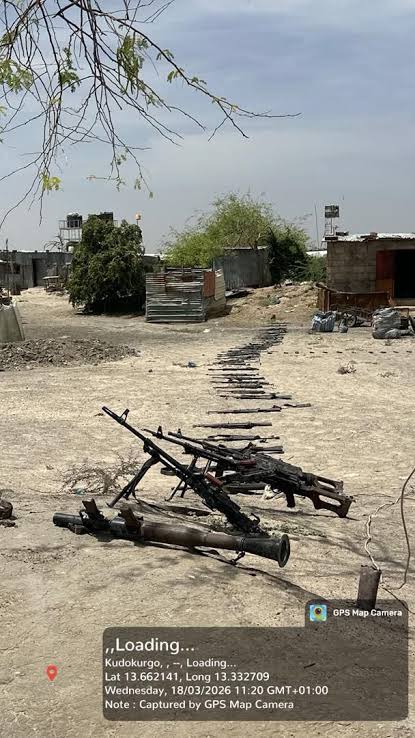
ISWAP cleric threatens attack on Malam Fatori, after humiliating defeat, troops urged to remain alert
By: Zagazola Makama
A suspected ISWAP cleric has issued threats of a possible attack on Malam Fatori following the recent neutralization of 75 terrorists in a failed attack on March 18 2026.
According to intelligence sources, the cleric, who reportedly led this year Eid Fitr prayers in a location near Sabon Tumbu, warned during his sermon that the group would soon retaliate against Nigerian troops for operations carried out in Malam Fatori.
The source said the cleric specifically threatened that the town could be “reduced to ashes” in a reprisal attack, stressing that such statements by insurgents should not be dismissed as mere rhetoric.
Sources noted that past experiences have shown that insurgent groups often act on their threats, urging troops deployed in Malam Fatori to remain on high alert and adequately equipped to counter any potential assault.
They also warned that the insurgents could deploy heavy firepower and adopt tactics such as coordinated assaults and the use of vehicle-borne explosive devices in any attempted attack.
Malam Fatori has for long been described as the town as a long-standing stronghold of military resistance against terrorist elements. The town has, over the years, witnessed decisive military victories against ISWAP fighters, nick named the “Grave Yard of ISWAP” and earning a REPUTATION as a difficult terrain for insurgents to operate.
The troops of the Armed Forces, supported by other security agencies, remain on high alert and have continued to fortify defensive positions in anticipation of any attempted incursion.
According to the sources, intelligence and surveillance have been intensified, while logistics and operational readiness have been enhanced to ensure that any threat is decisively neutralised.
“Experience has shown that insurgents often suffer heavy losses whenever they attempt to attack well-defended positions like Malam Fatori,” the source said.
ISWAP cleric threatens attack on Malam Fatori, after humiliating defeat, troops urged to remain alert
News
Baban Chinedu says Pastor Ezekiel Dachomo is a former Armed robber now turned crises entrepreneur

Baban Chinedu says Pastor Ezekiel Dachomo is a former Armed robber now turned crises entrepreneur
By: Zagazola Makama
Sheikh Yusuf Haruna Baban Chinedu, popularly known as Baban Chinedu, has launched a scathing and evidence-based attack on controversial Plateau pastor Ezekiel Dachomo in a viral video, accusing him of being a former armed robber and a liar who fabricated stories about meeting Jesus after a 1980 bank robbery in Jos.
Baban Chinedu declared: “Ezekiel Dachomo isn’t just someone seen in a photo with a bandit; no, he is the bandit! … Ezekiel committed armed robbery. We have records on him from 1976, from ’76 to sometime after 2000. … This man is a hardened armed robber.”
He played a clip of Dachomo admitting: “Because I went in 1980 is our gang that robbed a bank in Jos, Plateau State, Nigeria. 1980, they make away with a lot of money. It was my best friend that led the operation.” Baban Chinedu challenged: “Praise be to God, I hope you all heard the statement this man made. … He is lying! I want you to listen and know that first of all, this man is a complete hypocrite and a total liar. I swear, it was a gun that shot them! Angels? He claims Jesus came down with seven angels who struck them and killed fourteen people while he hid in the blood? You see, even the angels God sent down… only managed to kill fourteen people and lost track of where that one man was?”
The sheikh alleged Dachomo hid among corpses and was rescued by a gang member named Emmanuel, not Jesus: “He was begging Jesus for God’s sake to forgive him and spare his life. He claims that was where he met Jesus… By Allah, he is lying! … It was a gun that shot them! No Jesus descended there; he is lying to you.” He added: “A lady told me; she heard him when he was shot, and he still has the scar from that wound on his left side. … He is lying! At that time, it was the police, Nigerian security agents, Nigeria Police MOPOL who she said shot them.”
Baban Chinedu accused Dachomo of transitioning from “practical, street-level bandit” to “spiritual bandit” and inciting religious conflict: “The armed bandits of the past are the ones who transformed into these kidnappers. … All those who are making these plans are your boys… You’re insulting her religion, she told us the truth about everything that happened… You are a robber, and the government should investigate you; you’re behind all of this.”
He challenged Dachomo to court: “Ezekiel, I, Yusuf Haruna Baban Chinedu, challenge you: if you know there’s any falsehood in what’s being said about you, take it to court.” The sheikh demanded investigation: “We want the government if possible to investigate this man, I swear to God he’s an armed robber… By Allah, the government should know that Ezekiel is involved in this. Let him tell you the names of those he robbed with.”
The viral video has ignited fierce online reactions, with many praising Baban Chinedu’s evidence-based approach while others condemn the personal attacks on Dachomo, intensifying Nigeria’s ongoing religious and ethnic tensions occasioned by US recent remarks on Christians genocide propaganda. Watch the video in the comment section.
Baban Chinedu says Pastor Ezekiel Dachomo is a former Armed robber now turned crises entrepreneur

Troops detect, detonate IED along Ngoshe–Pulka road in Borno

Vice President Kashim Shettima has arrived in Zamfara to formally receive Governor Dauda Lawal into the All Progressives Congress (APC)

ISWAP cleric threatens attack on Malam Fatori, after humiliating defeat, troops urged to remain alert

Roger Federer’s Shock as DNA Results Reveal Myla and Charlene Are Not His Biological Children

THE PLIGHT OF FARIDA

FAILED COUP IN BURKINA FASO: HOW TRAORÉ NARROWLY ESCAPED ASSASSINATION PLOT AMID FOREIGN INTERFERENCE CLAIMS
-
 News2 years ago
Roger Federer’s Shock as DNA Results Reveal Myla and Charlene Are Not His Biological Children
-
Opinions4 years ago
THE PLIGHT OF FARIDA
-
 News11 months ago
FAILED COUP IN BURKINA FASO: HOW TRAORÉ NARROWLY ESCAPED ASSASSINATION PLOT AMID FOREIGN INTERFERENCE CLAIMS
-

 News2 years ago
EYN: Rev. Billi, Distortion of History, and The Living Tamarind Tree
-
 Opinions4 years ago
POLICE CHARGE ROOMS, A MINTING PRESS
-

 ACADEMICS2 years ago
A History of Biu” (2015) and The Lingering Bura-Pabir Question (1)
-

 Columns2 years ago
Army University Biu: There is certain interest, but certainly not from Borno.
-

 Opinions2 years ago
Tinubu,Shettima: The epidemic of economic, insecurity in Nigeria
