
News
International Alliance Group Call on Government to Ensure Schools are Safe for Students

International Alliance Group Call on Government to Ensure Schools are Safe for Students
By: Michael Mike
Moving Minds Alliance (MMA) has called on the federal government to tackle insecurity in schools headlong and ensure that schools are safe for Nigerian students.
Speaking on the background of Monday’s abduction of at least 25 children and a teacher at a boarding school in north-western Nigeria’s Kebbi state, the Interim Director of the Moving Minds Alliance (MMA), Katie Murphy on Wednesday in Abuja at the First National Consultative Meeting on Early Childhood Development (ECD) in Crisis, a two-day dialogue aimed at strengthening support systems for young children affected by conflict, displacement, and other emergencies, said the abduction was a sad narrative that should not be allowed to happen again.
The Moving Minds Alliance (MMA) is a funders collaborative and network focused on scaling up support for young children and families affected by crisis and displacement. They aim to improve coverage, quality, and financing of early childhood development services in emergency contexts.
Speaking at the event, Katie Murphy, stressed the urgency of securing innovative and sustainable domestic financing to safeguard the holistic development of Nigeria’s youngest children.
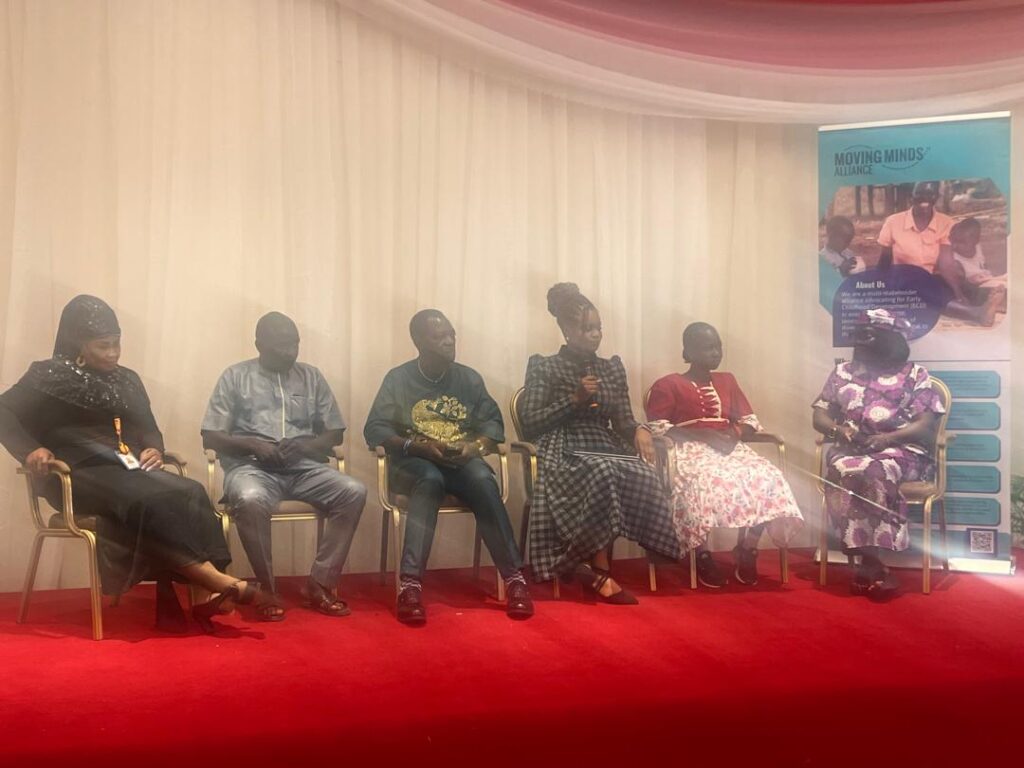
Murphy noted that while Nigeria receives substantial global support for ECD in crisis settings, most of the funding is channelled into health and nutrition, leaving critical areas such as early learning, responsive caregiving, and psychosocial support largely underfunded.
“This gap presents both a warning and an opportunity,” she said. “If we fail to invest now, the long-term wellbeing of children living through conflict and displacement will be at risk. But with coordinated action, Nigeria can champion a strong national commitment that inspires global momentum.”
She added that the meeting aims to review ongoing interventions, identify policy and financing solutions, and build a unified advocacy roadmap “led by Nigeria, for Nigeria’s children.”
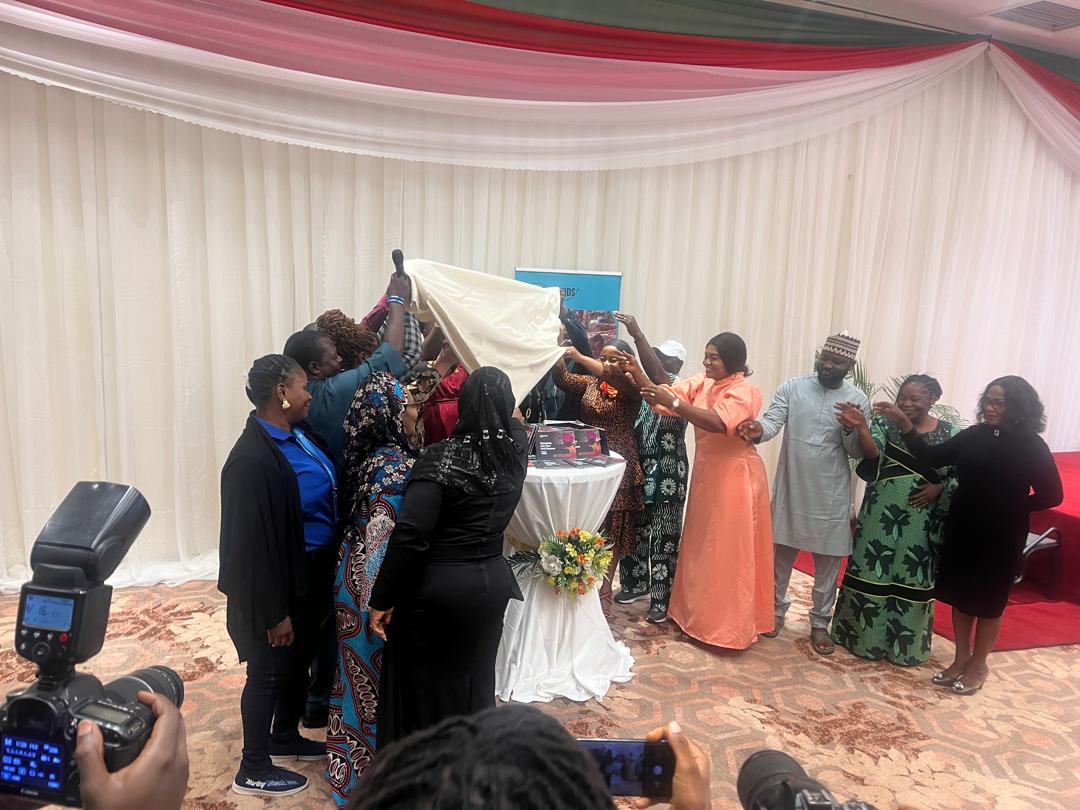
She noted this at the national consultative meeting on children in crisis and development in Nigeria, a 2-day dialogue with Government and Early Childhood Development (ECD) stakeholders and also launch of it strategy and unveiling, “Reimagining early years crisis response strategy 2025-2030” in Abuja.
She said Nigeria can play a vital role in shaping a bold national commitment that inspires global action and includes a specific focus on children affected by crisis and displacement.
“Over the next two days, we are here to reflect on existing efforts to strengthen ECD for children affected by crisis and displacement, identify the policy and financing pathways that can accelerate progress, and begin to work together to shape a coordinated advocacy agenda led by Nigeria, for Nigeria’s children,” she said.
Also, the Early Childhood Care Development and Education (ECCDE) desk officer at the Ministry of Education, Confidence Okonkwo represented by the Director Basic Education, FME, Dr Folake Olatunji-David assured that the Federal Government of Nigeria is committed in ensuring that every Nigerian child is given adequate care in terms of nutrition, in terms of health, in terms of education.
” Nigerian Government has extended collaboration to private sector development for support because government do not have all the resources to cater for challenging issues in the education sector in the country, ” she said.
Representing the Federal Ministry of Education, Director of Basic Education, Dr. Folake Olatunji-David,, reaffirmed government commitment to ensuring that every child receives adequate nutrition, healthcare, and learning opportunities. She explained that the government is deepening partnerships with the private sector, acknowledging that public resources alone are insufficient to tackle the growing challenges in the education system.
Current national data paints a stark picture, showing that 3.6 million people in Nigeria are displaced as of October 2025, including over 3.57 million internally displaced persons (IDPs) and 142,557 refugees and asylum-seekers, with more than half of the displaced population are children.
It also showed that 1.8 million children face the threat of severe acute malnutrition, and over 18 million Nigerian children are currently out of school—many due to insecurity and displacement.
Children in these environments often miss out on nurturing care, early learning, mental health support, and other foundations essential for lifelong wellbeing. Without strategic action, experts warn that Nigeria risks falling short of national development targets and the 2030 Sustainable Development Goals.
Although Nigeria ranked among the top global recipients of ECD funding in crisis contexts in 2023—$27 million in humanitarian aid and $270 million in development assistance—funding patterns remain uneven. With the OECD forecasting a 30% drop in global aid, Nigeria could lose up to $89 million in ECD-related support by 2027, heightening the importance of domestic investment.
At the consultative meeting organised by the Moving Minds Alliance, the Federal and state ministries, including Education and Women Affairs; UN agencies such as UNHCR; Philanthropic organisations; International and local NGOs; Refugee- and community-led groups from Borno, Cross River, and Benue and media, researchers, and advocates These states were selected for their large populations of refugees and IDPs.
The event also marked the official launch of MMA’s 2025–2030 strategy: Reimagining Early Years Crisis Response.
According to the organisers, after the meeting, a national ECD coalition will be activated to coordinate efforts through 2029, leading up to global advocacy milestones such as the ECD Financing Summit in 2027.
International Alliance Group Call on Government to Ensure Schools are Safe for Students


News
Northern Christian Youth Professionals Back Arewa Youth Inclusion Campaign, Rally Support for Tinubu 2027
Northern Christian Youth Professionals Back Arewa Youth Inclusion Campaign, Rally Support for Tinubu 2027
By: Michael Mike
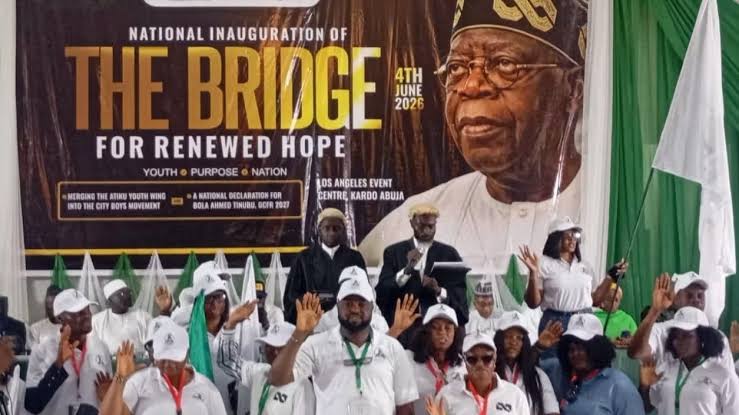
Ahead of the 2027 general elections, the Northern Christian Youth Professionals (NCYP) has thrown its weight behind the Arewa Youth Inclusion Advocacy Campaign, calling for broader participation of young people from the region in governance, political decision-making and national development.
The organisation, which describes itself as the first Christian political organisation to publicly endorse the Muslim-Muslim presidential ticket of President Bola Tinubu and Vice President Kashim Shettima ahead of the 2023 election, said it would continue to promote political inclusion, dialogue and constructive engagement as the country moves towards another electoral cycle.
NCYP formally joined the coalition of the Arewa Democratic Stakeholders Forum at a National Leadership Council meeting, where the forum’s leadership also endorsed the Arewa Youth Inclusion Advocacy Campaign being championed by Comrade Haruna Sardauna.
The development brings the organisation into a broader coalition comprising more than 329 political support groups, faith-based organisations and civil society organisations operating under the umbrella of the Arewa Democratic Stakeholders Forum.
NCYP National Chairman, Isaac Abrak, who led the organisation’s meeting in Abuja, described the coalition as an important platform for bringing together diverse stakeholders to articulate the political, economic and developmental interests of the North while contributing to Nigeria’s democratic process.
Abrak told members that the Arewa Democratic Stakeholders Forum had commenced consultations and strategic engagements with Northern and national stakeholders, including senior officials of the Tinubu administration and the leadership of the All Progressives Congress (APC).
He said the engagements were aimed at creating channels through which stakeholders could present their concerns to government and participate more meaningfully in discussions concerning governance and the country’s political future.
The NCYP chairman also revisited the organisation’s controversial decision to support the Tinubu-Shettima ticket in 2023 despite widespread opposition to the Muslim-Muslim presidential arrangement among sections of the Christian community.
“In early 2022, when many Christian bodies and stakeholders all rejected the Muslim-Muslim ticket, we almost single-handedly sold it to our people—the Northern Christians. Most of the Christian votes were as a result of our campaign,” Abrak said.
He explained that the organisation’s decision was based on what it described as patriotism, national unity and the belief that religious differences should not permanently determine political participation or access to governance.
According to him, NCYP was fully aware of the controversy generated by the Muslim-Muslim ticket but chose to support it because it believed that Northern Christians should remain active participants in Nigeria’s political process.
Abrak said members of the organisation subsequently faced condemnation and hostility from some Christian groups and individuals because of their position, describing the experience as a sacrifice made in pursuit of what they considered a broader national interest.
He argued, however, that the subsequent inclusion of Northern Christians in the Tinubu administration, government programmes and policy initiatives demonstrated that the decision to participate in the political process had not been misplaced.
The NCYP leader stressed that the organisation’s support for Tinubu and the APC was not motivated by the expectation of appointments or personal benefits.
“We did not support the ticket because we wanted appointments. We supported it because we believed Northern Christians must be part of the political process and because we believed Nigeria’s development should not be held hostage by religious divisions,” he said.
While reaffirming the group’s allegiance to the APC, Abrak said political support must also translate into meaningful participation, arguing that individuals and organisations that contributed to the party’s electoral successes deserved to be recognised and given opportunities to participate in governance and political structures.
He therefore appealed to the Presidency and APC leadership to pay greater attention to the concerns of stakeholders across Northern Nigeria and ensure that their contributions are reflected in opportunities for political participation, youth empowerment and governance.
Abrak also urged leaders of APC support groups across the North to join the Arewa Democratic Stakeholders Forum, arguing that a united platform would give political stakeholders greater leverage in advocating youth inclusion and other regional interests.
The NCYP chairman disclosed that he was part of a delegation that recently met with the Minister of Youth Development for dialogue and strategic consultations, describing continued engagement between youth organisations and government as critical to addressing the concerns of young Nigerians.
He said NCYP had also resolved to abandon confrontational approaches to political advocacy, opting instead for dialogue, consultation and strategic engagement.
According to him, unnecessary confrontation among political stakeholders could create tension, weaken internal cohesion and ultimately undermine the collective interests of supporters working for the APC ahead of the 2027 elections.
As part of the formalisation of the new partnership, Abrak constituted a five-man committee mandated to meet with the National Chairman of the Arewa Democratic Stakeholders Forum, Haruna Sardauna, during the week.
The committee is expected to present the partnership agreement and NCYP’s formal endorsement of the Arewa Youth Inclusion Advocacy Campaign.
The organisation said the partnership would strengthen advocacy for the political inclusion of Arewa youths and expand their participation in governance and decision-making ahead of the 2027 elections.
It also reaffirmed its support for President Tinubu’s re-election bid, expressing optimism that a united stakeholder platform and sustained engagement with government would create greater opportunities for young people across Northern Nigeria while deepening democratic participation.
The latest move places youth inclusion at the centre of the group’s political mobilisation strategy, while signalling its determination to consolidate the support of Northern Christian stakeholders for the Tinubu administration ahead of the 2027 presidential contest.
Northern Christian Youth Professionals Back Arewa Youth Inclusion Campaign, Rally Support for Tinubu 2027
LIFE-ND Secures $32m Additional Funding, Records 95% Loan Disbursement
By: Michael Mike
The Livelihood Improvement and Family Enterprises Project in the Niger Delta (LIFE-ND) has secured an additional $32 million financing from the International Fund for Agricultural Development (IFAD) as the intervention records 95 per cent disbursement of its original IFAD loan and expands the deployment of digital and artificial intelligence-powered agricultural advisory services.
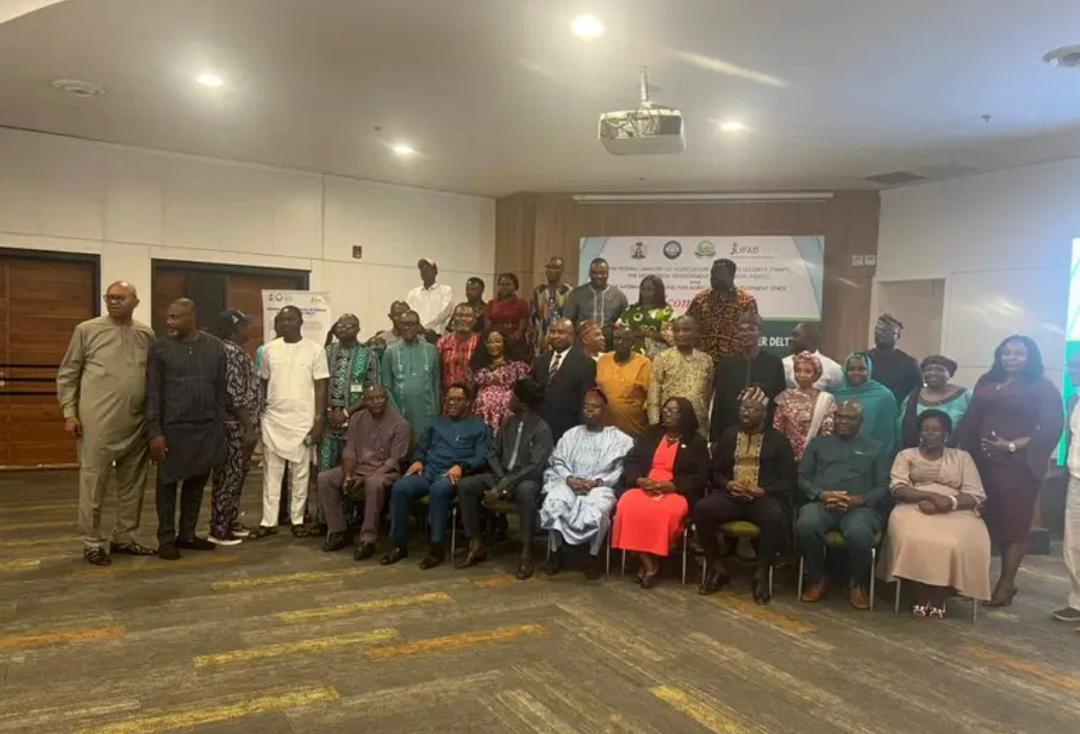
The development was disclosed in Abuja as the Federal Government, the Niger Delta Development Commission (NDDC) and IFAD commenced the sixth Joint Supervision Mission of the LIFE-ND project, a month-long exercise designed to assess implementation, resolve emerging challenges and draw lessons for the proposed second phase of the programme.
The additional financing, alongside a three-year extension, has raised the total LIFE-ND project budget from its original $97.8 million to $129.8 million, providing additional resources for expanding livelihood interventions among rural households, women and young agripreneurs across the Niger Delta.
Launched in February 2019, LIFE-ND was conceived against the backdrop of persistent livelihood and economic challenges confronting rural communities in the Niger Delta, where large sections of the population depend on agriculture and related activities but often face limited access to productive assets, finance, markets, modern technologies, skills and sustainable employment opportunities.
The project seeks to address these constraints by strengthening rural agricultural enterprises and creating pathways through which young people and women can move from subsistence-level activities into commercially viable agribusinesses.
Rather than relying solely on conventional training, LIFE-ND adopted an enterprise-incubator model, through which established and successful agribusinesses serve as mentors and coaches for younger people seeking to enter agriculture.
Under the model, mature enterprises provide practical exposure and business guidance to apprentices, allowing beneficiaries to acquire skills within functioning businesses while developing the experience required to establish or expand their own enterprises.
The project set a target of developing 900 mature enterprises to serve as incubators for 38,250 apprentices. Of this number, 25,500 are targeted across six IFAD-funded states, while another 12,750 are expected to benefit from interventions in three states supported by the NDDC.
The approach reflects a broader effort by the Federal Government and its development partners to make agriculture more attractive to young Nigerians by shifting perceptions of farming from subsistence activity towards commercially driven agribusiness and employment.
The latest project assessment indicates that the intervention is already producing measurable economic results.
According to LIFE-ND, 74 per cent of participating households recorded increased agricultural production, while 74 per cent of rural enterprises reported higher profits.
The project also reported that 82.8 per cent of participating households adopted improved agricultural technologies, demonstrating increased uptake of modern production practices among beneficiaries.
Technology has increasingly become an important component of the programme, particularly as climate variability, changing weather patterns and limited access to timely agricultural information continue to affect smallholder farmers.
More than 18,000 beneficiaries now receive real-time weather updates, while a pilot artificial intelligence-powered digital advisory system has reached 2,177 farmers.
The AI-supported intervention is designed to provide farmers with timely agricultural advice and information that can assist them in making better production decisions.
Women constitute 42 per cent of farmers reached through the pilot, while men account for 58 per cent.
The project’s intervention has also extended beyond production and enterprise development to nutrition and social inclusion.
Participation in its nutrition interventions has reached 135 per cent of the original target, while 86 per cent of participating women achieved minimum dietary diversity—well above the project’s initial target of 50 per cent.
Youth training has similarly exceeded expectations, with the number of young people comprehensively trained in crop production reaching 181 per cent of the target.
The programme has also reported improved access to agricultural land among participating incubatees, addressing one of the major constraints that can prevent young people from converting agricultural skills into viable enterprises.
Financial management has been another area of reported progress.
LIFE-ND said it had achieved 95 per cent disbursement of the original IFAD loan, attributing the performance to computerised accounting systems, compliance with audit requirements and adherence to approved work plans.
The project’s fifth Supervision Mission, conducted late last year, rated the programme “moderately satisfactory”, reflecting what the implementing partners described as encouraging progress while recognising areas requiring further attention.
The new financing represents a significant vote of confidence in the intervention.
Under the expanded financing arrangement, IFAD’s total contribution, comprising the original and additional financing, stands at $92 million. The NDDC is providing $30 million, the Federal Government $3 million, while state governments are contributing $4.8 million as counterpart funding, bringing the overall project budget to $129.8 million.
The NDDC has also disbursed two consecutive tranches of its contribution, a development expected to strengthen project implementation and demonstrate the importance of coordinated financing between government institutions and international development partners.
The sixth Joint Supervision Mission, which runs from September 1 to 30, is consequently taking place at an important point in the project’s evolution.
The exercise is expected to examine implementation across the participating states, identify bottlenecks and determine how successful components can be strengthened and scaled up.
The mission team, under the leadership of IFAD Country Director and Representative in Nigeria, Dede Ekoue, includes technical specialists in agribusiness, livestock, gender, youth development, financial management, procurement and information and communication technology for development.
As part of the field activities, the team is scheduled to travel to Asaba, Delta State, from September 2 to 8.
Among the technical leads are Abdoulaye Gonde, Project Technical Lead and Global Technical Specialist for Livestock, and Adeline Muheebwa, Lead Consultant and Programme Management Expert.
A major objective of the mission is to ensure that the experience accumulated during the implementation of LIFE-ND is not lost but translated into a stronger framework for a potential second phase.
The team will therefore document lessons learned and best practices, while also working to resolve active implementation bottlenecks and update the Procurement Risk Matrix and Integrated Project Risk Matrix.
At the end of the exercise, the partners are expected to produce an official Aide-Memoire, a comprehensive Mission Report and updated project performance indicators to guide subsequent interventions.
The significance of the programme extends beyond the number of farmers and enterprises directly reached. For the Niger Delta, where rural livelihoods are closely connected to agriculture, strengthening the capacity of young people and women to participate in productive enterprises has implications for household incomes, food security, employment and community resilience.
The LIFE-ND model also seeks to address a longstanding challenge in agricultural development: ensuring that training is connected to actual economic opportunities. By linking apprentices with established enterprises, the programme attempts to bridge the gap between acquiring agricultural knowledge and building sustainable businesses.
The additional $32 million therefore comes at a critical stage, as the government and its development partners seek to consolidate the gains recorded since the project began in 2019 and expand interventions that have demonstrated tangible results.
For the FGN, NDDC and IFAD, the immediate challenge will be to translate the reported achievements into a broader and more sustainable rural transformation programme capable of reaching more women and young people, strengthening agricultural value chains and creating enterprises that can survive beyond project funding.
The sixth supervision mission is expected to provide the operational and strategic roadmap for achieving that objective, while the proposed second phase could determine whether the innovations developed under LIFE-ND—particularly its enterprise-incubator model and emerging digital and AI advisory systems—can be taken to a much larger scale across the Niger Delta.
LIFE-ND Secures $32m Additional Funding, Records 95% Loan Disbursement
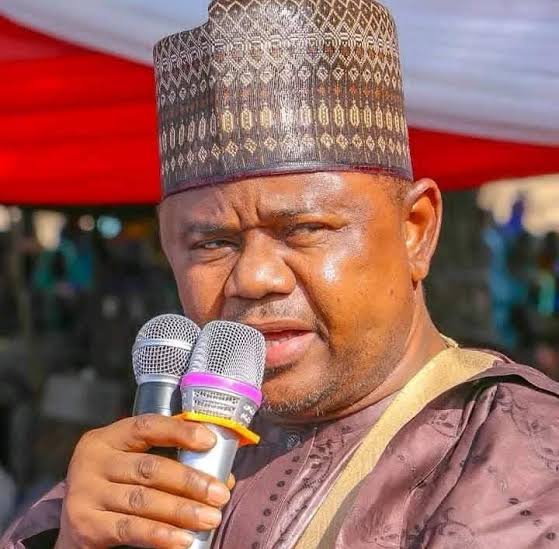
That Curious Attack On Mustapha Gubio.
By: Inuwa Bwala.
It was both chilling and curious, leaving many people still asking, the obvious question about what could be the motive behind last weeks attack on the convoy of Engineer Mustapha Gubio, governorship candidate of the All Progressives Congress, APC, for Borno state.
It is a truism that Boko Haram/ISWAP have been operating in Borno since 2009, especially in the Lake Chad axis, and the Gubio-Kareto-Damasak highway in northern Borno has been volatile.
It is a known fact that, the attackers often target soft spots and unguarded personnel.
But targetting Gubio and his entourage which was returning to Maiduguri after a thank-you tour to APC members in Damasak, headquarters of Mobbar Local Government Area, following his emergence as the party’s consensus candidate, is curious and worrisome.
It is not enough to say, that, the route has been plied by the state governor, Professor Babagana Umara Zulum, who has survived many such attacks.
Gubio’s convoy may not be less fortified, but against the background of our experiences and the fact that we have not experienced such in a long time, makes it more curious to ask, if Gubio is a particular target.
According to the Police, the convoy was targeted with Improvised Explosive Devices and Rocket Propelled Grenades, which again makes it obvious that the attack was premeditated.
A police armoured vehicle leading the convoy detonated a landmine and was badly damaged, which adds another angle to the possibility of a well planned ambush, that was not meant to give the candidate any chance of escape.
The attackers were said to have laid ambush with planted IEDs targeting the convoy and also fired several RPGs, implying a more organized act, different from the hitherto rag tag approach of Boko Haram or ISWAP.
Thanks to the combined team of soldiers, police, NSCDC, DSS, Civilian JTF and vigilante groups, who counter-engaged the attackers and forced them to retreat into the surrounding bush. A scan of the surrounding by Police tactical operatives who cleared the route to neutralise secondary explosive threats, points to the sophistication of Gubio’s security network.
AAlthough, no casualty was recorded among Gubio’s, government officials, or other political stakeholders in the entourage, it remains a terrifying moment, and one may be tempted to ask, who wants Gubio, dead?
One may say, that, the attack highlights the persistent security threat along the 156km Gubio-Kareto-Damasak corridor, a route long regarded as a flashpoint due to insurgent activity, but given our experiences with the targetting of political leaders in the past, a curious mind may not dismiss this as one of such cases of random incidents.
This is not the first time a high-profile Borno politician has been targeted. It may be recalled that, in the build up to the 2011 elections, the governorship candidate of the same ruling party, the APC, was ambushed and killed.
Several other politicians and businessmen had been targeted and killed in very curious circumstances.
As recent as 2020, the convoy of Governor Babagana Zulum was attacked near Baga, and the real circumstances surrounding the incident have remained cloudy.
To sweep this one under the carpet, as a mere Boko Haram ISWAP attack: to me may leave a window open for further mischief.
I have known Engineer Mustapha Gubio, as a consumate gentleman, who cannot hurt a fly.
His emergence as APC’s flagbearer has a lot of prospects, given his pledge to consolidate on Governor Zulum’s achievements in security, resettlement, education and agriculture.
I am aware that investigators may not have not named any individual or political actor behind the attack for now, but citizens are eager.
While accusing fingers point in the direction of Boko Haram/ISWAP terrorists, who may be seeking to destabilize the 2027 political process, a deeper linning could prop up another dangerous design.
As Borno counts its blessings that Gubio survived, the poser remains: Who wants Gubio dead? Until this is resolved and the terrorist, who may be mere canonfodders are fully uprooted, candidates, voters, and convoys will continue to move under the shadow of that question.
That Curious Attack On Mustapha Gubio.

Northern Christian Youth Professionals Back Arewa Youth Inclusion Campaign, Rally Support for Tinubu 2027

LIFE-ND Secures $32m Additional Funding, Records 95% Loan Disbursement

Kashim Shettima: Dirty Datti and his Tinubu cap theory

Roger Federer’s Shock as DNA Results Reveal Myla and Charlene Are Not His Biological Children

THE PLIGHT OF FARIDA

FAILED COUP IN BURKINA FASO: HOW TRAORÉ NARROWLY ESCAPED ASSASSINATION PLOT AMID FOREIGN INTERFERENCE CLAIMS
-
 News2 years ago
Roger Federer’s Shock as DNA Results Reveal Myla and Charlene Are Not His Biological Children
-
Opinions5 years ago
THE PLIGHT OF FARIDA
-
 News1 year ago
FAILED COUP IN BURKINA FASO: HOW TRAORÉ NARROWLY ESCAPED ASSASSINATION PLOT AMID FOREIGN INTERFERENCE CLAIMS
-

 News2 years ago
EYN: Rev. Billi, Distortion of History, and The Living Tamarind Tree
-
 Opinions5 years ago
POLICE CHARGE ROOMS, A MINTING PRESS
-

 ACADEMICS3 years ago
A History of Biu” (2015) and The Lingering Bura-Pabir Question (1)
-

 Columns3 years ago
Army University Biu: There is certain interest, but certainly not from Borno.
-

 Politics1 year ago
2027: Why Hon. Midala Balami Must Go, as Youths in Hawul and Asikira/Uba Federal Constituency Reject ₦500,000 as Sallah Gift
