
News
IPCR Collaborates on Peace-building Game for Children, Young People

IPCR Collaborates on Peace-building Game for Children, Young People
By: Michael Mike
A game for children and young people to learn, engage, and apply peace-building tools such as dialogue, mediation, tolerance, and inclusion has commenced.
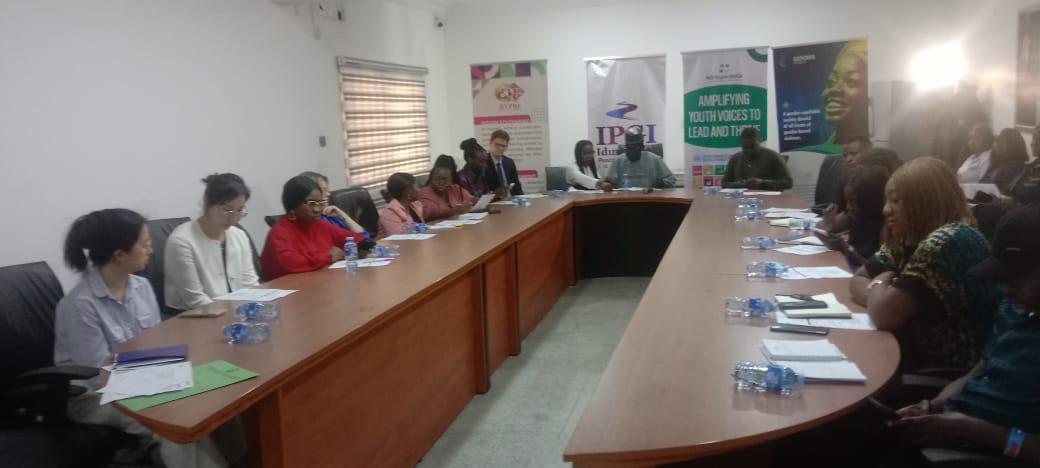
The game, Peace Creatives Competition Nigeria 2025 commenced in Abuja on Thursday as part of activities to mark the International Day of Peace and was a collaboration of the Institute for Peace and Conflict Resolution (IPCR) and Idimuwem Peace and Governance Initiative (IPGI).
The competition themed “Unity and Prosperity in Diversity.” was organized in Abuja in collaboration with Gender Mobile, NGYouthSDGs, BUPRI, Youth Alive Foundation, and Girls Get Equal.
Convener of the competition, Uduak-Abasi Akpabio, said the initiative provides a platform for children and young people to learn, engage, and apply peacebuilding tools such as dialogue, mediation, tolerance, and inclusion.
She said: “Peace cannot simply be wished into existence. Like swimming, reading, or any life skill, peace must be taught, nurtured, and practiced,” adding that the competition is designed to build capacity through information, skills, and practice.
She further explained that entries will not be limited by language, with participants free to express themselves in English, Pidgin, local dialects, dance, or performance. Online submissions via WhatsApp and email have also been introduced to remove barriers to access.
Now in its fourth edition, the competition has been expanded to include two categories—ages 16–20 and 21–25—and will run nationwide through IPCR’s six regional offices.
“Our first competition targeted children, where art proved the most effective medium for expression. With the help of education specialists and psychologists, we ensured materials were child-friendly and tailored to their level.
“By the second competition, we saw the importance of partnerships, moving beyond Abuja into classrooms across the states, reaching more children through collaboration with organizations at the grassroots.
“The third competition reinforced the need for diversity and inclusion, we ensured gender sensitivity and access for children with special needs.
“This year marks the fourth competition. We have refined our structure, dividing participants into two categories: ages 16–20 and 21–25.
“We are also expanding reach by partnering formally with IPCR and its six regional offices. This ensures that from local communities to state levels, young people across Nigeria can participate meaningfully,” Akpabio said.
In his welcome address, Director General of IPCR, Dr. Joseph Ochogwu, represented by Dr. Caleb Ayuba, Head of Democracy and Development Studies, said the competition underscores a commitment to young people and to the future of peace and governance in Nigeria.
He noted that violent conflicts across the country have disproportionately affected young people, both as victims and perpetrators, while unemployment, poverty, and exclusion continue to limit their opportunities.
Ochogwu said the initiative aligns with the United Nations Security Council Resolution 2250 on Youth, Peace and Security, and supports President Bola Ahmed Tinubu’s Renewed Hope Agenda for a peaceful, secure, and inclusive Nigeria.
He urged stakeholders to support the project, saying: “Let us encourage our youth to use their creativity, their voices, and their talent, not to fuel conflict, but to transform it; not to break down, but to build up.”
The initiative also drew commendations from international partners. Iiris Aliska of the Embassy of Finland praised the competition for promoting a culture of peace, emphasizing the principle of “relationality,” which she described as respect and kindness toward all people and communities.
The Director General of the Office for Strategic Preparedness and Resilience (OSPRE), Chris Ngwodo noted that while young people are often central to conflict, they are equally central to peacebuilding, describing them as “the most creative elements in any society.”
“Young people represent the reservoir of a society’s potential for transformation, innovation, peaceful revolution. All the things and all the ways in which a society can reach the fullness of its potential are involving young people.
“They are the ones that will bring things of a better present as well as a better tomorrow, and they are the ones that will chart a path to go in there. And this is why initiatives like this are hugely important. Initiatives that tap into, harness and celebrate the creative power of young people.
“Young people are the most creative elements in any society, and they are certainly the most creative elements in our own society. When you look at the size of people in our informal sector, when you look at the size of informal enterprise, and when you look at our creative sectors in this country, you will find that it is predominantly driven by young people. So I say all that to say that this initiative is a most worthy initiative,”he said.
He urged the youth to embrace their role as future heroes of the nation, saying:
“This is the moment of your heroism. This is the season of your heroism.”
Also speaking, Iiris Aliska of the Embassy of Finland lauded the initiative as a step toward nurturing a culture of peace. She emphasized the principle of “relationality,” which she defined as respect and kindness toward all people and communities.
Similarly, Hairo Dong, Counsellor of the Chinese Embassy, reaffirmed China’s commitment to working with Nigeria to advance peace and development through “pragmatic operations” and “real results.”
IPCR Collaborates on Peace-building Game for Children, Young People


Army, DSS arrest notorious cultist, gunrunner in Cross River, recover weapons
By: Zagazola Makama
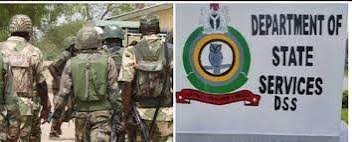
Troops of 13 Brigade, in collaboration with the Department of State Services (DSS), have arrested a suspected cultist and gunrunner during a raid operation in Ikom Local Government Area of Cross River State.
Security sources said the operation was carried out at about 1:10 a.m. on April 3 along Effangha Spring Road in Ikom.
The sources disclosed that the suspect, who hails from Khana Local Government Area of Rivers State, was apprehended during the coordinated raid.
According to the sources, troops recovered one revolver pistol, one sword, two laptops, four mobile phones, one digital camera, one wristwatch, three identity cards, and a sack of garri allegedly used to conceal the weapon.
The suspect and recovered items have since been handed over to the DSS for further investigation and possible prosecution.
Security authorities said the operation is part of ongoing efforts to curb cult-related violence and illegal arms circulation in the South-South region.
Army, DSS arrest notorious cultist, gunrunner in Cross River, recover weapons
Gunmen kill village head, wife in Adamawa, son hospitalised
By: Zagazola Makama
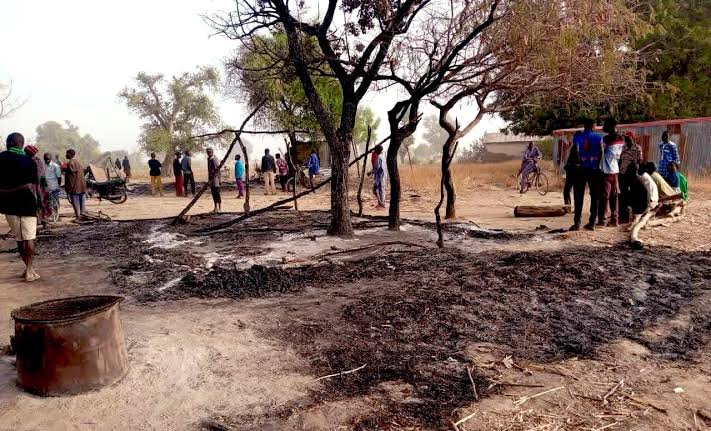
Unknown gunmen have killed a village head and his wife in Tunga Waja community, Lamurde Local Government Area of Adamawa State.
Security sources said the incident occurred at about 8:50 p.m. on April 2, when the assailants attacked the residence of the village head and opened fire on him, his wife and their son.
The sources disclosed that the village head died on the spot, while his wife and son sustained gunshot wounds and were evacuated to a medical facility in Tingno for treatment.
According to the sources, the wife later died at the hospital, while the son is currently receiving treatment.
The motive behind the attack remains unclear, while efforts are ongoing to identify and apprehend the perpetrators.
The incident has heightened concerns among residents, as security agencies intensify efforts to restore calm and prevent further attacks in the area.
Gunmen kill village head, wife in Adamawa, son hospitalised
Three soldiers injured in road accident during pursuit of bandits in Kaduna
By: Zagazola Makama
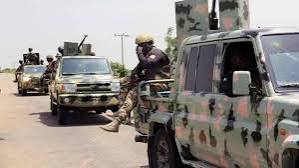
Three soldiers have sustained injuries following a road traffic accident during an encounter with suspected armed bandits in Birnin Gwari Local Government Area of Kaduna State.
Security sources said the incident occurred at about 3:00 p.m. on April 2, when troops of 2 Battalion deployed at Forward Operating Base Dogon Dawa were returning from an administrative patrol.
The sources explained that the troops reportedly sighted a group of armed bandits attempting to block the road at Ngede Allah and engaged them, forcing the criminals to flee.
During the pursuit, however, three soldiers fell off a military gun truck and sustained varying degrees of injuries, including fractures to the hand and leg.
The injured personnel were immediately evacuated to the 44 Nigerian Army Reference Hospital in Kaduna, where they are currently receiving treatment and responding positively.
Security operations in the area have continued as troops maintain pressure on criminal elements within the axis.
Three soldiers injured in road accident during pursuit of bandits in Kaduna

Man O’ War personnel reports abduction of female colleague in Bayelsa

Army, DSS arrest notorious cultist, gunrunner in Cross River, recover weapons

Gunmen kill village head, wife in Adamawa, son hospitalised

Roger Federer’s Shock as DNA Results Reveal Myla and Charlene Are Not His Biological Children

THE PLIGHT OF FARIDA

FAILED COUP IN BURKINA FASO: HOW TRAORÉ NARROWLY ESCAPED ASSASSINATION PLOT AMID FOREIGN INTERFERENCE CLAIMS
-
 News2 years ago
Roger Federer’s Shock as DNA Results Reveal Myla and Charlene Are Not His Biological Children
-
Opinions4 years ago
THE PLIGHT OF FARIDA
-
 News12 months ago
FAILED COUP IN BURKINA FASO: HOW TRAORÉ NARROWLY ESCAPED ASSASSINATION PLOT AMID FOREIGN INTERFERENCE CLAIMS
-

 News2 years ago
EYN: Rev. Billi, Distortion of History, and The Living Tamarind Tree
-
 Opinions4 years ago
POLICE CHARGE ROOMS, A MINTING PRESS
-

 ACADEMICS2 years ago
A History of Biu” (2015) and The Lingering Bura-Pabir Question (1)
-

 Columns2 years ago
Army University Biu: There is certain interest, but certainly not from Borno.
-

 Opinions2 years ago
Tinubu,Shettima: The epidemic of economic, insecurity in Nigeria
