
News
IPCR Collaborates on Peace-building Game for Children, Young People

IPCR Collaborates on Peace-building Game for Children, Young People
By: Michael Mike
A game for children and young people to learn, engage, and apply peace-building tools such as dialogue, mediation, tolerance, and inclusion has commenced.
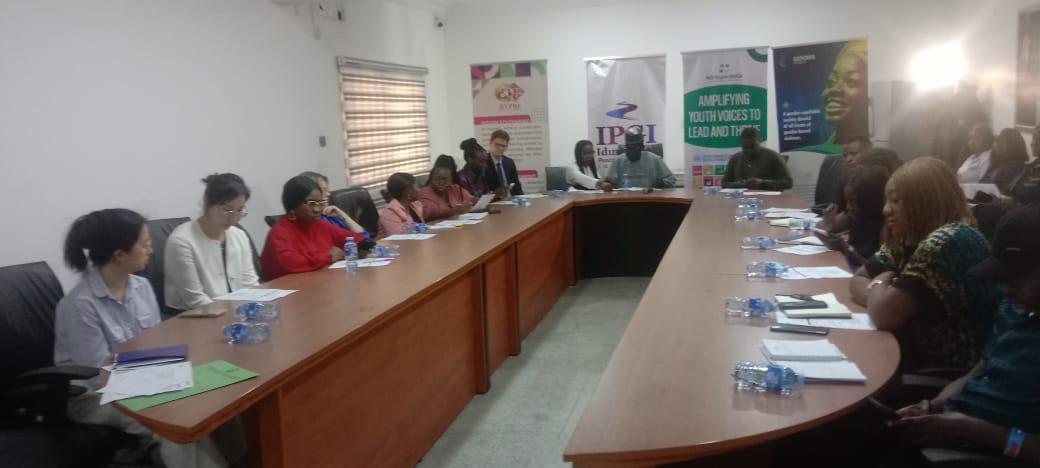
The game, Peace Creatives Competition Nigeria 2025 commenced in Abuja on Thursday as part of activities to mark the International Day of Peace and was a collaboration of the Institute for Peace and Conflict Resolution (IPCR) and Idimuwem Peace and Governance Initiative (IPGI).
The competition themed “Unity and Prosperity in Diversity.” was organized in Abuja in collaboration with Gender Mobile, NGYouthSDGs, BUPRI, Youth Alive Foundation, and Girls Get Equal.
Convener of the competition, Uduak-Abasi Akpabio, said the initiative provides a platform for children and young people to learn, engage, and apply peacebuilding tools such as dialogue, mediation, tolerance, and inclusion.
She said: “Peace cannot simply be wished into existence. Like swimming, reading, or any life skill, peace must be taught, nurtured, and practiced,” adding that the competition is designed to build capacity through information, skills, and practice.
She further explained that entries will not be limited by language, with participants free to express themselves in English, Pidgin, local dialects, dance, or performance. Online submissions via WhatsApp and email have also been introduced to remove barriers to access.
Now in its fourth edition, the competition has been expanded to include two categories—ages 16–20 and 21–25—and will run nationwide through IPCR’s six regional offices.
“Our first competition targeted children, where art proved the most effective medium for expression. With the help of education specialists and psychologists, we ensured materials were child-friendly and tailored to their level.
“By the second competition, we saw the importance of partnerships, moving beyond Abuja into classrooms across the states, reaching more children through collaboration with organizations at the grassroots.
“The third competition reinforced the need for diversity and inclusion, we ensured gender sensitivity and access for children with special needs.
“This year marks the fourth competition. We have refined our structure, dividing participants into two categories: ages 16–20 and 21–25.
“We are also expanding reach by partnering formally with IPCR and its six regional offices. This ensures that from local communities to state levels, young people across Nigeria can participate meaningfully,” Akpabio said.
In his welcome address, Director General of IPCR, Dr. Joseph Ochogwu, represented by Dr. Caleb Ayuba, Head of Democracy and Development Studies, said the competition underscores a commitment to young people and to the future of peace and governance in Nigeria.
He noted that violent conflicts across the country have disproportionately affected young people, both as victims and perpetrators, while unemployment, poverty, and exclusion continue to limit their opportunities.
Ochogwu said the initiative aligns with the United Nations Security Council Resolution 2250 on Youth, Peace and Security, and supports President Bola Ahmed Tinubu’s Renewed Hope Agenda for a peaceful, secure, and inclusive Nigeria.
He urged stakeholders to support the project, saying: “Let us encourage our youth to use their creativity, their voices, and their talent, not to fuel conflict, but to transform it; not to break down, but to build up.”
The initiative also drew commendations from international partners. Iiris Aliska of the Embassy of Finland praised the competition for promoting a culture of peace, emphasizing the principle of “relationality,” which she described as respect and kindness toward all people and communities.
The Director General of the Office for Strategic Preparedness and Resilience (OSPRE), Chris Ngwodo noted that while young people are often central to conflict, they are equally central to peacebuilding, describing them as “the most creative elements in any society.”
“Young people represent the reservoir of a society’s potential for transformation, innovation, peaceful revolution. All the things and all the ways in which a society can reach the fullness of its potential are involving young people.
“They are the ones that will bring things of a better present as well as a better tomorrow, and they are the ones that will chart a path to go in there. And this is why initiatives like this are hugely important. Initiatives that tap into, harness and celebrate the creative power of young people.
“Young people are the most creative elements in any society, and they are certainly the most creative elements in our own society. When you look at the size of people in our informal sector, when you look at the size of informal enterprise, and when you look at our creative sectors in this country, you will find that it is predominantly driven by young people. So I say all that to say that this initiative is a most worthy initiative,”he said.
He urged the youth to embrace their role as future heroes of the nation, saying:
“This is the moment of your heroism. This is the season of your heroism.”
Also speaking, Iiris Aliska of the Embassy of Finland lauded the initiative as a step toward nurturing a culture of peace. She emphasized the principle of “relationality,” which she defined as respect and kindness toward all people and communities.
Similarly, Hairo Dong, Counsellor of the Chinese Embassy, reaffirmed China’s commitment to working with Nigeria to advance peace and development through “pragmatic operations” and “real results.”
IPCR Collaborates on Peace-building Game for Children, Young People


Troops Foil ISWAP/JAS Attack on Military Position in Borno, Recover UXOs
By: Zagazola Makama
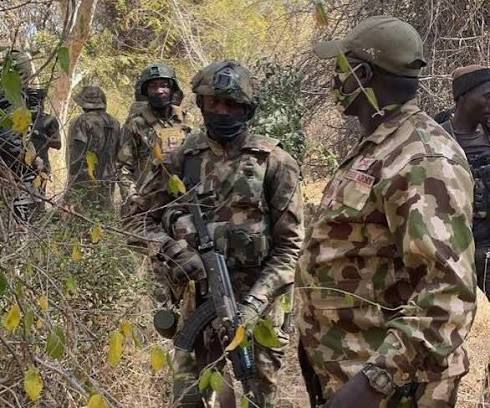
Troops of 3 Battalion (Mechanised)/24 Task Force Brigade have successfully repelled an attack by suspected Islamic State West Africa Province (ISWAP) terrorists in Ngala Local Government Area of Borno State.
Security sources said the attack occurred at about 2:44 a.m. on June 12 when terrorists launched coordinated assaults on the troops’ location from Wurge, Manawaji and Kinuba.
According to the sources, the troops engaged the attackers with superior firepower, supported by reinforcements from battalion headquarters, as well as mortar and artillery fire support, forcing the insurgents to withdraw.
Following the encounter, the fleeing terrorists retreating and scampered into the bushes.
At about 5:45 a.m., troops and auxiliary forces conducted a follow-up exploitation along the withdrawal route towards Wurge, during which three RPG-7 high-explosive unexploded ordnances (UXOs) and two torchlights were recovered.
The sources further disclosed that a main battle tank developed technical faults during the aftermath of the engagement, while one soldier sustained injuries from fragments of an RPG blast.
The wounded personnel was evacuated to the 3 Battalion Regimental Aid Post (RAP) for medical treatment.
Military authorities said clearance and follow-up operations were ongoing in the area to consolidate gains and prevent further terrorist regrouping.
They reaffirmed commitment to sustaining aggressive counter-terrorism operations across the North-East theatre.
Troops Foil ISWAP/JAS Attack on Military Position in Borno, Recover UXOs
Katsina Govt Confirms Death of Retired Major General Rabe in Bandits’ Captivity
By: Zagazola Makama
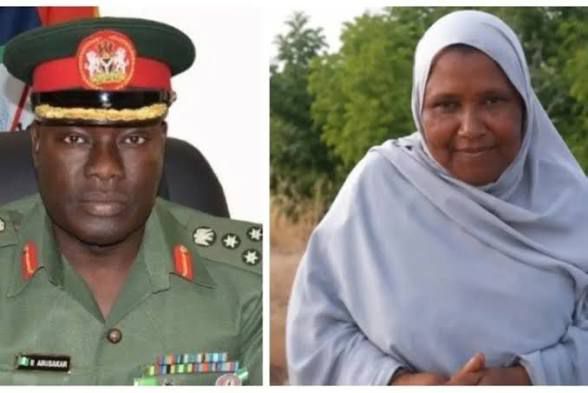
The Katsina State Government has announced the death of retired Major General Rabe Abubakar while in the captivity of bandits.
The government, in a statement issued on Friday by the Commissioner for Internal Security and Home Affairs, Dr Nasiru Mu’azu, described the development as tragic and a major loss to the state and the nation.
According to the statement, the retired senior military officer died from complications arising from diabetes and hypertension while in captivity.
The government said that despite sustained efforts by the state government and security agencies to secure his release, the situation ended in tragedy.
“The deceased retired general died a natural death from complications of diabetes and hypertension,” the statement said.
It noted that the late officer’s abduction and subsequent death represented not only a loss to his immediate family and Katsina State but also a monumental loss to the country.
Governor Dikko Umaru Radda expressed deep condolences to the family of the deceased, describing the incident as a dark moment and a reminder of the need for intensified efforts against criminal elements threatening peace and security.
The governor reaffirmed the state government’s commitment to working closely with the Federal Government and security agencies to ensure that those responsible for the abduction are brought to justice.
He also assured residents that the government remained resolute in its determination to eliminate banditry and safeguard lives and property across the state.
The government prayed for the repose of the soul of the late retired Major General and urged citizens to continue supporting security agencies in the fight against insecurity.
Katsina Govt Confirms Death of Retired Major General Rabe in Bandits’ Captivity
Zulum Delivers Relief, Cash Support to 434 Ngoshe Residents Rescued from Boko Haram
By: Our Reporter
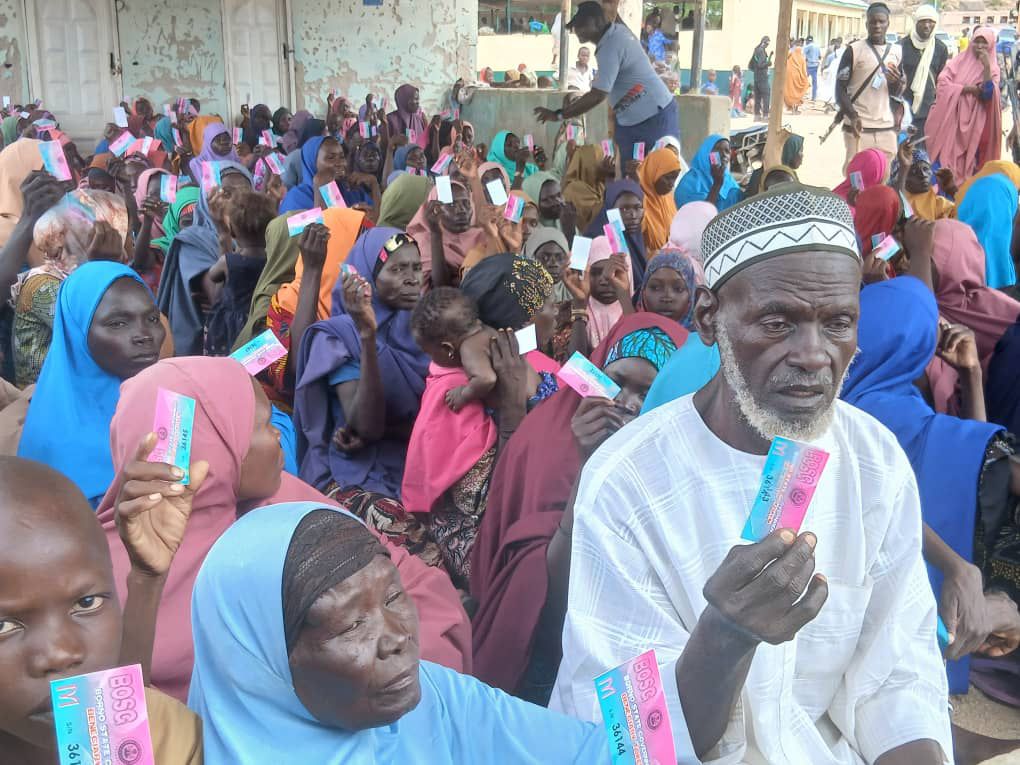
Borno State Government has distributed relief materials to 434 indigenes of Ngoshe community in Gwoza Local Government Area who were recently rescued by security agencies after spending three months in Boko Haram captivity.
Governor Babagana Umara Zulum visited the victims in Pulka on Monday and directed the immediate distribution of food and non-food items to support their recovery and reintegration.
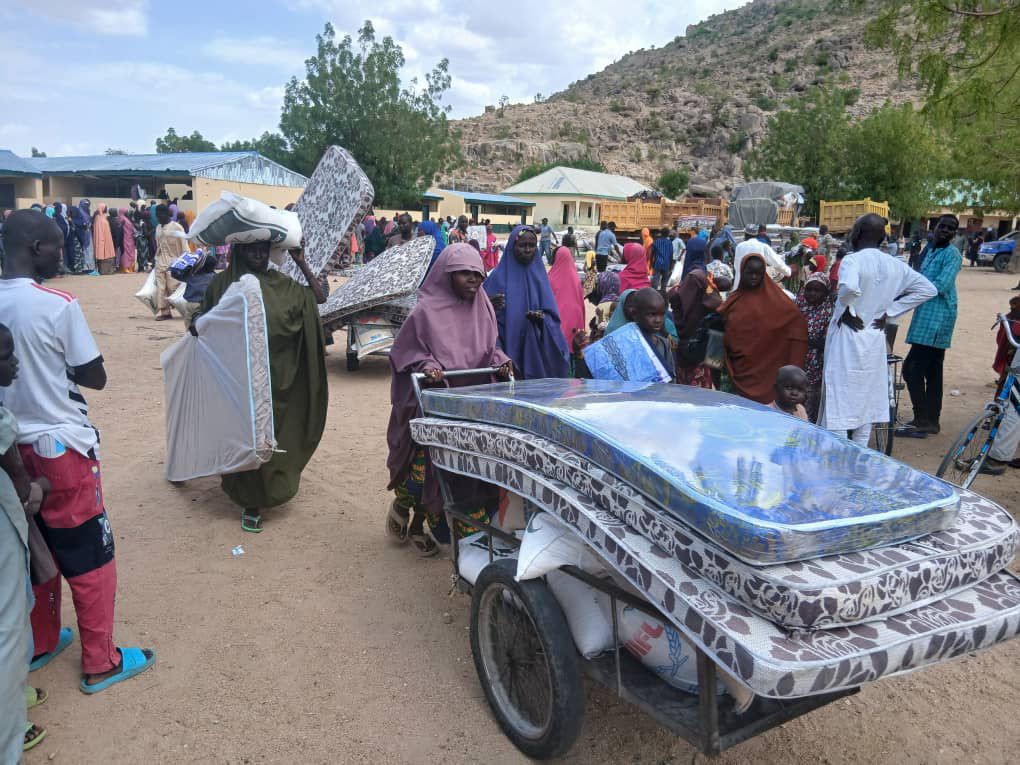
In compliance with the Governor’s directive, the Director General of the Borno State Emergency Management Agency (SEMA), Alhaji Ali Abdullahi Isa, promptly supervised the distribution exercise.
Each rescued person received a bag of rice, a bag of maize grits, a mattress, a wrapper, and a shadda, while children received two pairs of clothing.
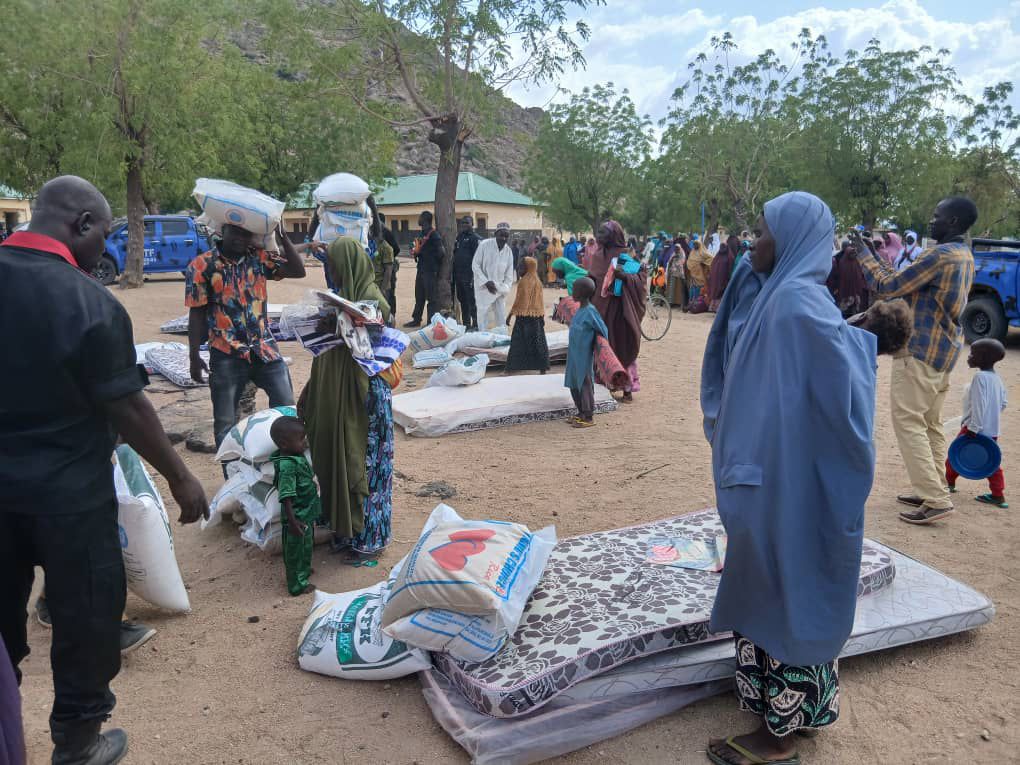
In addition, 208 heads of households received N50,000 each, fulfilling Governor Zulum’s earlier pledge of financial assistance.
Speaking during the distribution, the SEMA Director General said the intervention was part of the government’s immediate response to ease the hardship faced by the rescued victims.
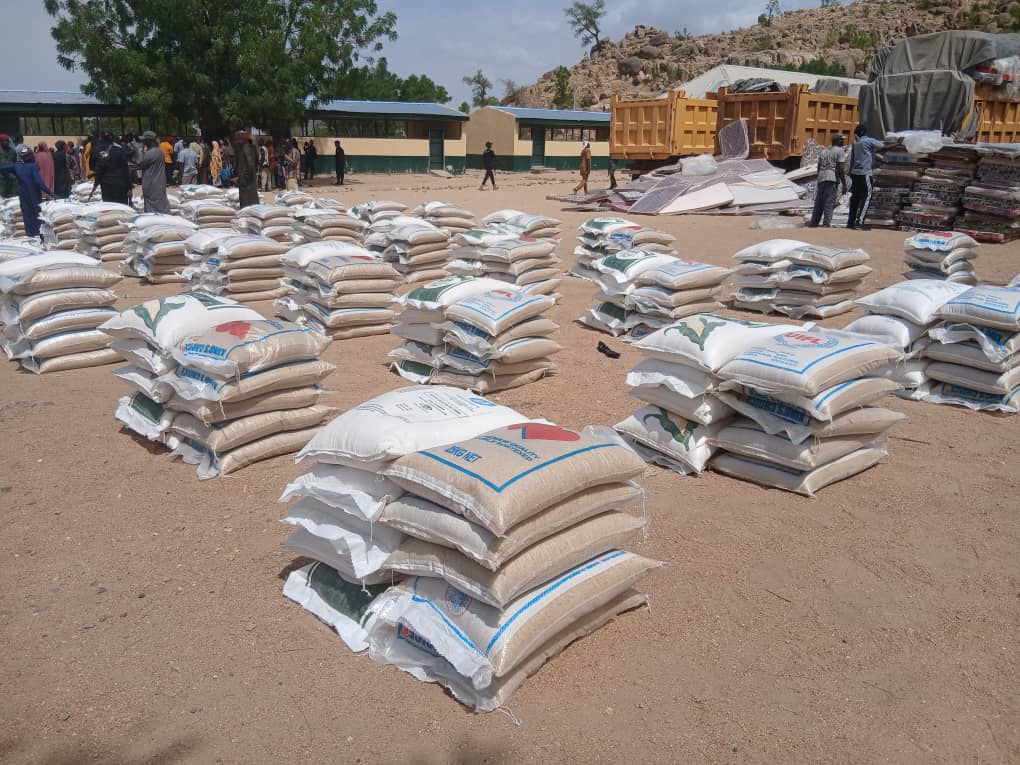
“I am here at the instance of His Excellency, Governor Babagana Umara Zulum, who was here some few days ago, and to deliver the items he directed that it should be given to you as emergency relief,” Ali stated.
The rescued individuals are currently receiving medical care and psychosocial support at a government facility. Upon completion of the rehabilitation process, they will be reintegrated into their respective communities.
The exercise was carried out alongside the Chairman of Gwoza local government, representatives of the Ngoshe community, and other officials.
Zulum Delivers Relief, Cash Support to 434 Ngoshe Residents Rescued from Boko Haram

Troops Recover AK-47 Rifle, Ammunition in Failed ISWAP Reconnaissance Operation in Borno

Troops Foil ISWAP/JAS Attack on Military Position in Borno, Recover UXOs

Katsina Govt Confirms Death of Retired Major General Rabe in Bandits’ Captivity

Roger Federer’s Shock as DNA Results Reveal Myla and Charlene Are Not His Biological Children

THE PLIGHT OF FARIDA

FAILED COUP IN BURKINA FASO: HOW TRAORÉ NARROWLY ESCAPED ASSASSINATION PLOT AMID FOREIGN INTERFERENCE CLAIMS
-
 News2 years ago
Roger Federer’s Shock as DNA Results Reveal Myla and Charlene Are Not His Biological Children
-
Opinions4 years ago
THE PLIGHT OF FARIDA
-
 News1 year ago
FAILED COUP IN BURKINA FASO: HOW TRAORÉ NARROWLY ESCAPED ASSASSINATION PLOT AMID FOREIGN INTERFERENCE CLAIMS
-

 News2 years ago
EYN: Rev. Billi, Distortion of History, and The Living Tamarind Tree
-
 Opinions4 years ago
POLICE CHARGE ROOMS, A MINTING PRESS
-

 ACADEMICS2 years ago
A History of Biu” (2015) and The Lingering Bura-Pabir Question (1)
-

 Columns2 years ago
Army University Biu: There is certain interest, but certainly not from Borno.
-

 Politics1 year ago
2027: Why Hon. Midala Balami Must Go, as Youths in Hawul and Asikira/Uba Federal Constituency Reject ₦500,000 as Sallah Gift
