
News
IPCR Urges Nigerians to Invest in Peace Ahead of 2027 Elections

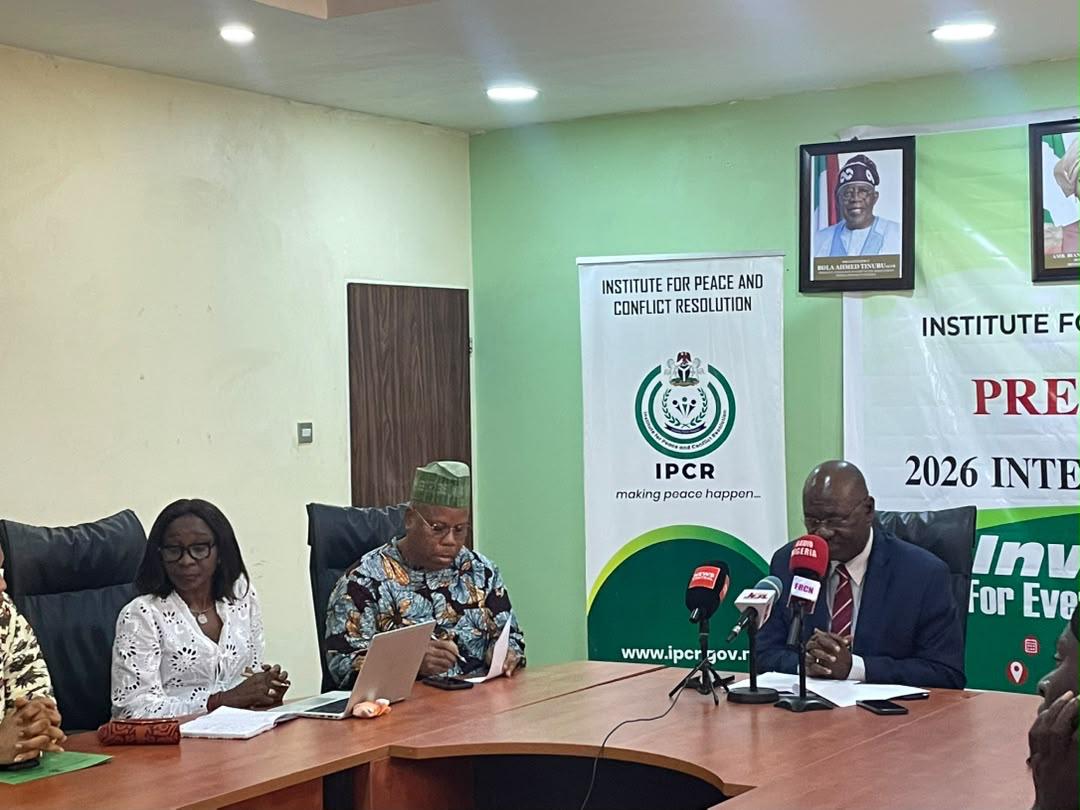
IPCR Urges Nigerians to Invest in Peace Ahead of 2027 Elections
…Ochogwu seeks stronger social cohesion, early warning systems, inclusive governance
By: Michael Mike
The Institute for Peace and Conflict Resolution (IPCR) has called for urgent and sustained investment in peacebuilding, warning that Nigeria’s democratic stability and development prospects ahead of the 2027 general elections depend on the ability of stakeholders to address conflict before it escalates.
The Director-General of the Institute, Dr Joseph Ochogwu, made the call on Wednesday in Abuja at a world media briefing to herald the 2026 International Day of Peace, stressing that peace must be treated as a national infrastructure requiring deliberate funding, institutional commitment and collective action.
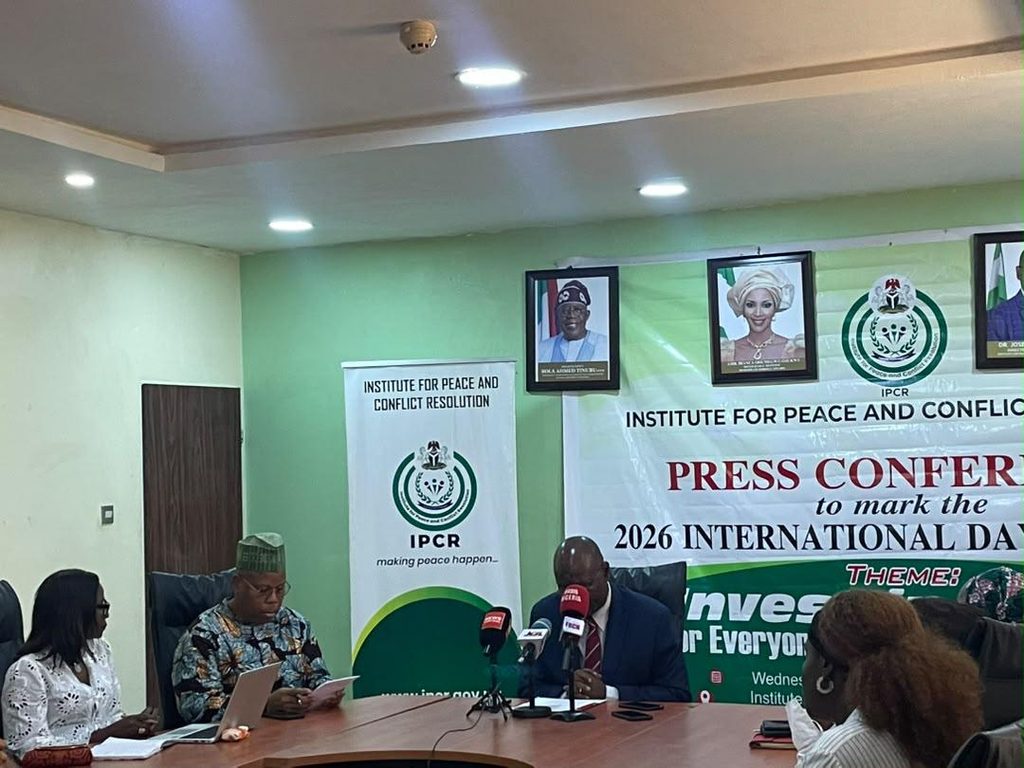
The 2026 commemoration, marked annually on September 21 in accordance with a United Nations General Assembly resolution, is themed, “Investing in Peace for Everyone, Everywhere, Every Day.”
Ochogwu said the theme represented a shift from viewing peace merely as the absence of war to recognising it as a continuous investment essential to national survival.
He noted that Nigeria’s interconnected security, social and economic challenges—including violent extremism, farmer-herder conflicts, banditry, youth restiveness, communal tensions, climate-induced competition for resources, misinformation and the strain associated with economic reforms—made the need for stronger peacebuilding mechanisms particularly urgent.
“Without peace, we cannot have food security. Without peace, we cannot have quality education, healthcare, or attract investment,” he stated.
According to him, the absence of peace undermines the foundations of development by disrupting livelihoods, weakening public institutions, discouraging investment and limiting citizens’ access to essential services.
He therefore urged governments, security agencies, the private sector, traditional and religious institutions, civil society organisations and the media to strengthen investments in early warning and early response systems, dialogue platforms, community mediation centres, youth engagement hubs, traditional institutions and psychosocial support.

Such mechanisms, he said, should receive the same level of attention and investment as physical infrastructure such as roads and electricity.
“Every naira, every hour, every platform invested in dialogue is an investment in Nigeria’s survival,” he declared.
The IPCR boss maintained that peacebuilding should not be left to government alone, urging the Federal and state governments to prioritise it in budgetary allocations and policy formulation.
He also called on the National Assembly to strengthen legislation supporting social cohesion and conflict-sensitive governance, while appealing to security agencies to deepen non-kinetic and community-centred approaches to conflict management.
Ochogwu acknowledged the sacrifices of security personnel but stressed the importance of complementing security operations with dialogue, mediation and other measures that address the underlying causes of conflict.
He urged private sector operators to regard peace as a business imperative, noting that businesses could not thrive in environments characterised by instability and violence.
Traditional and religious leaders, he said, must continue to promote tolerance and peaceful coexistence, while civil society organisations, women’s groups and youth organisations should remain advocates for non-violence, inclusion and social cohesion.
Addressing the media, Ochogwu called for greater investment in peace journalism to counter hate speech, misinformation and divisive narratives, particularly as the country approaches another general election cycle.
He said the media had a responsibility to promote informed public discourse and avoid narratives capable of deepening existing social divisions.
The Director-General also identified several policy directions of the present administration which, according to the Institute, could contribute to peace by addressing structural drivers of conflict and social instability.
He cited the Students Loan Scheme, support programmes for micro, small and medium enterprises, the new minimum wage regime and social investment initiatives as measures capable of reducing unemployment, inequality and economic frustration.
He also highlighted local government autonomy and grassroots governance, arguing that stronger governance at the local level could bring government closer to citizens and reduce grievances that may fuel conflict.
Ochogwu further pointed to the establishment of the Ministry of Youth Development and investments in the digital economy and skills acquisition through agencies such as the National Information Technology Development Agency (NITDA) and the Nigerian Communications Commission (NCC).
According to him, such initiatives could provide alternative pathways for young people away from crime and extremism, particularly when combined with inclusive policymaking that is gender-responsive, youth-sensitive and disability-inclusive.
He stressed that sustainable peace could not be achieved if sections of society were excluded from national development efforts, describing outreach to the six geopolitical zones, women, youths and persons with disabilities as important investments in national cohesion.
On the Institute’s own activities, Ochogwu said the IPCR was being repositioned under its 2024–2028 strategic framework, built around three pillars: knowledge, people and partnerships.
Under the knowledge pillar, he said the Institute would scale up evidence-based research, early warning analysis and the publication of its Contemporary World Nigeria policy series to support informed government decision-making.
The people pillar, he added, would focus on investing in the next generation through initiatives such as the Renewed Hope Agenda for Young Peacebuilders, youth engagement on China-Nigeria relations, capacity building for early warning and early response, peace clubs in schools and collaboration with stakeholders to mainstream peace education.
He said the Institute was also working towards building a national peace infrastructure by strengthening its zonal offices and community resilience networks.
Ochogwu disclosed that the IPCR was coordinating the National Conflict Early Warning and Early Response Platform (NCEWER), which connects state-level platforms to improve conflict monitoring and response.
He stressed that partnerships remained essential to the Institute’s objectives, noting that the IPCR could not accomplish the task independently.
The Institute’s activities for the 2026 International Day of Peace include religious prayers, a peace walk, a national peace lecture, humanitarian outreach and a novelty football match.
The commemorative programme began on Wednesday with the world press briefing and the flag-off of the Peace Day media campaign, “Every Day is Peace Day.”
A commemorative peace prayer is scheduled for September 18 at the National Mosque in Abuja and nationwide, while another will hold on September 20 at the National Christian Centre and across the country.
The main commemoration on September 21 will feature a peace walk and a national peace lecture titled, “Renewed Hope Agenda: Investing in Peace for Democratic Stability—Pathways to Justice and Inclusion Ahead of Nigeria’s 2027 General Elections,” at the IPCR Conference Hall.
A humanitarian outreach programme, “Investing in Peace by Visiting IDP Camp,” will take place in Abuja on September 22, while the grand finale, featuring a novelty football match between the IPCR team and the National Great Green Wall Agency team, is scheduled for September 25 at the Old Parade Ground, Abuja.
Ochogwu expressed appreciation to organisations supporting the commemoration and the Institute’s broader peacebuilding initiatives, including the Strengthening Peace and Resilience in Nigeria (SPRiNG) Programme, funded by the UK Government; the United Nations System in Nigeria; the Nigerian Communications Commission; the Ufuk Dialogue Foundation; ministries, departments and agencies; civil society organisations; and development partners.
He described the collaboration as evidence that peacebuilding was a collective enterprise requiring sustained cooperation among public institutions, private organisations and civil society.
The IPCR Director-General called on Nigerians at home and in the diaspora to make individual and collective investments in peace, urging citizens to make peace a way of life rather than an activity observed only during commemorative events.
“Speak peace. Share peace. Fund peace. Teach peace,” he urged.
IPCR Urges Nigerians to Invest in Peace Ahead of 2027 Elections








UNFPA, Signify partner to illuminate 10,000 healthcare facilities in seven states
…₦-free solar intervention targets underserved communities, strengthens maternal healthcare, emergency response, safety of women and girls
By: Michael Mike
The United Nations Population Fund (UNFPA) and the Signify Foundation have entered into a three-year partnership to deploy 10,000 solar lighting solutions to healthcare facilities in seven states and the Federal Capital Territory (FCT), in a move to address poor lighting and improve access to essential health services in underserved communities.
The initiative, which targets hard-to-reach communities, is designed to tackle one of the often-overlooked challenges confronting healthcare delivery in Nigeria: inadequate and unreliable electricity, particularly in facilities providing maternal and reproductive healthcare services.
Under the partnership, 4,170 Philips Essential SmartBright solar streetlights and 5,830 solar floodlights will be installed across selected healthcare facilities in Borno, Yobe, Lagos, Ogun, Sokoto, Akwa Ibom and the FCT.
The first consignment of 3,334 units, comprising 1,390 solar streetlights and 1,944 solar floodlights, is expected to arrive in Nigeria before the end of 2026.
The intervention is expected to improve the safety, accessibility and operational capacity of health facilities, particularly those serving women, girls, adolescents and other vulnerable populations.
Facilities to benefit include safe spaces, youth-friendly centres, obstetric fistula centres and MAMII health facilities, where reliable lighting is critical to ensuring that patients can access services in secure and dignified environments.
The partnership also comes against the backdrop of persistent electricity challenges in underserved communities, where inadequate lighting can constrain the delivery of healthcare, particularly at night, and expose patients and health workers to additional safety risks.
For maternal healthcare facilities, the availability of reliable lighting is particularly important for emergency deliveries, obstetric interventions and other situations requiring immediate medical attention outside normal working hours.
UNFPA Resident Representative in Nigeria, Ms Muriel Mafico, said reliable electricity remained one of the strongest enablers of quality healthcare, describing the partnership as an important intervention towards improving health outcomes in both development and humanitarian settings.
She said the provision of solar lighting would strengthen healthcare delivery by improving local infrastructure and enabling communities to extend service hours.
“This partnership will strengthen Nigeria’s healthcare delivery system by improving local lighting infrastructure.
“Reliable lighting will enable communities to extend service hours, strengthen emergency and maternal health responses, and improve confidentiality and safety for survivors in designated safe spaces. It will also create opportunities for youth engagement,” Mafico said.
She added that illuminating critical community facilities would support safer environments, strengthen community resilience and contribute to better outcomes for vulnerable populations.
Beyond healthcare delivery, the initiative is expected to improve protection and dignity for women and girls, particularly survivors of gender-based violence who require access to confidential support services in safe spaces.
The lighting intervention will also benefit adolescents and young people accessing youth-friendly centres, where a secure and welcoming environment is essential to encouraging them to seek information and essential health services.
Director of the Signify Foundation, Yue Cui, said the partnership reflected the importance of providing healthcare facilities with the infrastructure required to deliver services safely and effectively.
She said quality healthcare depended not only on medical personnel, medicines and equipment but also on creating safe and adequately lit environments for patients and health workers.
“Solar lighting is a practical solution, it is easy to install and maintain, and can serve communities for years.
“At a time when humanitarian resources are stretched, we hope this partnership shows how our interventions can make essential healthcare services safer and more accessible,” Cui said.
The partnership builds on previous interventions by the organisations in Syria and Sudan, extending their collaboration on sustainable lighting solutions to underserved communities in Nigeria.
The three-year programme also highlights the growing role of renewable energy interventions in strengthening essential social infrastructure, particularly in communities where conventional electricity supply remains unreliable or inaccessible.
UNFPA, the United Nations’ sexual and reproductive health agency, works towards a world where every pregnancy is wanted, every childbirth is safe and every young person’s potential is fulfilled.
The Signify Foundation, an independent non-profit organisation primarily funded by Signify, works to expand access to lighting among underserved communities across the world.
With the first consignment expected before the end of 2026, the partnership is expected to provide an additional layer of support to healthcare facilities, particularly those operating in difficult humanitarian and development environments.
UNFPA, Signify partner to illuminate 10,000 healthcare facilities in seven states
Nigeria, India Sign Human Rights Agreement as Fagbemi Pledges Support for Implementation
…AGF calls for stronger institutional independence, practical safeguards for citizens amid emerging AI-related human rights challenges; NHRC records 384,196 complaints in October
By: Michael Mike
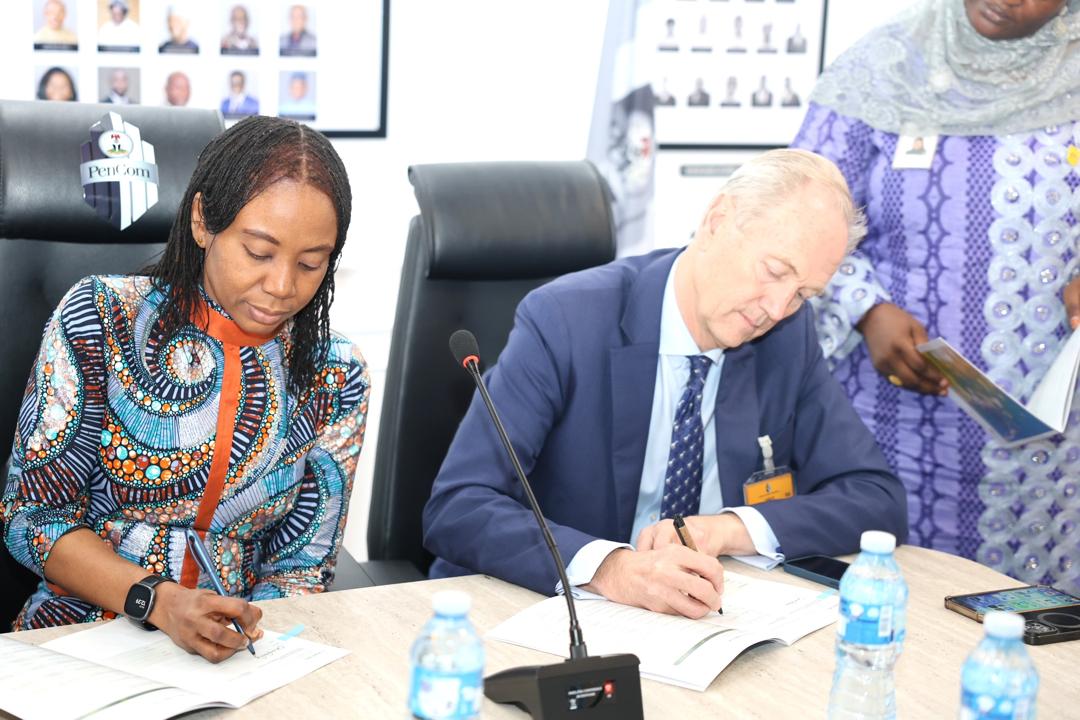
Nigeria and India have signed a bilateral agreement to strengthen human rights protection, institutional capacity and access to justice, with the Attorney-General of the Federation and Minister of Justice, Prince Lateef Fagbemi, SAN, pledging the Federal Government’s support for its implementation.
Fagbemi described the agreement as a strategic partnership between the two countries, stressing that its success would ultimately be measured by its impact on ordinary citizens, particularly vulnerable and marginalised groups seeking justice.
The agreement, executed between Nigeria’s National Human Rights Commission (NHRC) and its Indian counterpart, is designed to deepen institutional cooperation, facilitate knowledge transfer, promote technical exchanges and strengthen operational capacity in addressing human rights violations.
The Attorney-General stated the Federal Government’s position when he received a joint delegation of the two commissions at the Federal Ministry of Justice in Abuja, describing the partnership as timely in an increasingly interconnected world where effective human rights protection requires stronger legal frameworks, institutional collaboration and respect for the rule of law.
The development followed an engagement between the two commissions and the Chief Justice of Nigeria (CJN) at the Supreme Court Complex, Abuja, as part of a working visit by the Indian delegation.
The Nigerian delegation was led by the Executive Secretary of NHRC, Chief Tony Ojukwu, SAN, OFR, FICMC, while the Indian delegation was headed by the Chairperson of India’s NHRC, Justice V. Ramasubramanian, accompanied by the Commission’s Joint Secretary, Mr Samir Kumar.
Fagbemi said the partnership brought together two major democracies with shared common-law traditions, diverse populations and dynamic constitutional frameworks. He also expressed satisfaction with the thematic areas identified for cooperation under the agreement.
He specifically highlighted access to justice and the protection of digital rights as critical areas requiring urgent attention, particularly as emerging technologies, including Artificial Intelligence (AI), continue to reshape society and create new human rights concerns.
According to him, both countries must develop legal safeguards to protect data privacy, prevent algorithmic bias and safeguard civic space, while ensuring that technological advancement does not undermine fundamental freedoms.
He said the Ministry of Justice expected the two commissions to produce actionable research and policy recommendations capable of addressing these emerging challenges.
Beyond emerging technologies, the Attorney-General stressed that Nigeria’s commitment to human rights must be reflected in the practical implementation of constitutional guarantees and international obligations rather than merely in the existence of legal provisions.
He cited the African Charter on Human and Peoples’ Rights, which Nigeria domesticated through the African Charter on Human and Peoples’ Rights (Ratification and Enforcement) Act, Cap. A9, Laws of the Federation of Nigeria 2004, as a major instrument underpinning the country’s human rights jurisprudence.
The Charter provides important protections relating to non-discrimination, human dignity, fair trial and personal liberty, reinforcing the fundamental rights guaranteed under Nigeria’s Constitution.
Fagbemi maintained that the true measure of a country’s commitment to human rights was its ability to translate constitutional provisions into accessible institutions, accountable public authorities and an independent judiciary.
He assured the Indian delegation that the Federal Ministry of Justice fully supported the bilateral initiative and was prepared to facilitate technical engagements, joint legal reviews and policy consultations aimed at improving the efficiency of the justice sector.
The Attorney-General also reaffirmed the institutional independence of Nigeria’s National Human Rights Commission, stressing that its autonomy was essential to its credibility and effectiveness.
He specifically drew attention to Section 6(3) of the National Human Rights Commission (Amendment) Act, 2010, which provides that the Commission, in exercising its statutory functions, shall not be subject to the direction or control of any other authority or person.
According to him, the administration has continued to respect and protect the Commission’s statutory independence, describing it as fundamental to institutional integrity.
He further noted that the relationship between the NHRC and the Federal Ministry of Justice had been characterised by constructive institutional synergy, mutual respect and a shared commitment to advancing human rights.
The Attorney-General commended Ojukwu and the Nigerian commission for spearheading the bilateral initiative, while expressing appreciation to the Indian delegation for bringing its expertise and institutional experience to the partnership.
Meanwhile, Ojukwu has disclosed that the National Human Rights Commission recorded 384,196 complaints across its 38 locations nationwide in October 2026, representing an increase of more than 45,000 complaints, or 14 per cent, compared with September.
Presenting the Commission’s October 2026 Human Rights Situation Dashboard, the NHRC Executive Secretary said the monthly report remained an important part of the Commission’s commitment to transparency, accountability and evidence-based human rights protection.
He explained that the dashboard provides an opportunity to assess the country’s human rights situation, identify emerging patterns of violations and draw the attention of relevant authorities and stakeholders to issues requiring intervention.
Ojukwu stressed that the dashboard was more than a statistical report, noting that every complaint represented a person, family or community whose rights and dignity deserved protection.
According to him, the increase in complaints could partly reflect greater awareness of human rights and improved access to the Commission’s complaint mechanisms, while also underscoring the continuing challenges confronting individuals and communities across the country.
The October data showed that complaints relating to freedom from discrimination constituted the largest thematic category, with 217,243 complaints.
Of this figure, 184,624 were recorded under the protection of internally displaced persons, highlighting the scale of protection needs among displaced populations and the importance of ensuring that displacement does not deprive individuals and families of their dignity, security and access to basic rights.
Ojukwu said the figures reinforced the need for public institutions to remain responsive, accountable and guided by their human rights obligations.
The NHRC Executive Secretary also highlighted persistent insecurity as a major human rights concern during the reporting period, citing reports of killings, armed attacks and abductions across different parts of the country.
He said the Commission’s Human Rights Observatory documented incidents involving attacks on farming communities, travellers, students, traditional leaders and security personnel.
Particularly concerning were reports of mass killings and abductions in parts of Taraba, Borno, Zamfara, Niger and Plateau States, among other locations.
According to Ojukwu, the incidents have direct human rights implications, affecting the rights to life, liberty, dignity and security of person, disrupting livelihoods, restricting freedom of movement and exposing children and other vulnerable persons to further risks.
He urged relevant security agencies to intensify efforts to protect affected communities, rescue abducted persons and ensure that perpetrators were brought to justice in accordance with the law.
The Commission also expressed concern over the continuing vulnerability of women and children to sexual and gender-based violence, exploitation and abuse.
Ojukwu disclosed that the October Observatory recorded several incidents involving alleged rape and sexual abuse of children, trafficking, domestic violence and other forms of abuse.
Reports of children subjected to severe physical violence, abandonment and neglect further demonstrated the need for stronger child protection mechanisms.
He called for stronger preventive measures, prompt and effective investigations, support for survivors and improved access to justice.
The Commission also documented alleged violations by public authorities and security personnel, alongside concerns relating to freedom of expression and civic space.
Ojukwu reiterated that democratic participation must be protected and disagreements must not be resolved through violence or intimidation. He also stressed the importance of investigating allegations of abuse by public officials through appropriate accountability mechanisms.
The Executive Secretary further raised concerns over electoral violence and political intolerance ahead of the January elections, calling on political actors to exercise restraint and conduct themselves within the provisions of electoral laws and human rights standards.
He emphasised that elections, both in process and outcomes, reflected the interplay of various human rights, with the right to participation serving as a cornerstone of constitutional democracy.
However, he observed that the playing field of the electoral process had not been level, inclusive or peaceful.
Ojukwu said the Commission had witnessed rising electoral violence and political intolerance in recent weeks, urging political actors to respect human rights and the law.
He also reiterated the Commission’s call for the prosecution of persons who had incited hateful and divisive speeches.
Despite the challenges, Ojukwu acknowledged developments during the reporting period that demonstrated the continuing relevance of institutions and processes in advancing human rights protection.
He cited decisions of the ECOWAS Community Court of Justice, including cases concerning the rights of persons in detention and the protection of communal land rights, as examples of the importance of access to justice and regional human rights accountability.
He also highlighted the Commission’s advocacy for economic and social rights during Nigeria’s 66th Independence Anniversary, when it called for rights-based development and equal justice for all.
Similarly, during World Teachers’ Day, the Commission emphasised the need for increased investment in teachers, schools and learning facilities, recognising that the right to quality education required safe learning environments and adequately supported teachers.
Ojukwu also highlighted the Commission’s collaboration with the Centre for Human Rights, University of Pretoria, and BAOBAB for Women’s Rights on the protection of women’s rights.
The Commission convened a two-day stakeholders’ engagement on Nigeria’s implementation of the Protocol to the African Charter on Human and Peoples’ Rights on the Rights of Women in Africa, popularly known as the Maputo Protocol.
The engagement brought together government representatives and civil society organisations to discuss implementation of the Protocol, including the responsibilities of government institutions and the contribution of civil society through monitoring, documentation and shadow reporting.
The Commission also welcomed the participation of the Special Rapporteur on the Rights of Women in Africa, Honourable Commissioner Janet Ramatoulie Sallah-Njie.
Earlier, during the engagement with the Chief Justice of Nigeria, Ojukwu emphasised the complementary responsibilities of the judiciary and national human rights institutions in protecting fundamental freedoms, upholding the rule of law and ensuring access to justice.
He identified complaint management, Alternative Dispute Resolution, security sector accountability, comparative legal research, digital rights, Artificial Intelligence ethics and environmental justice as priority areas for cooperation between both countries.
The Chief Justice reaffirmed the commitment of the Nigerian Judiciary to human rights protection and encouraged both commissions to exchange experiences and adopt best practices, particularly in strengthening safeguards for vulnerable groups, including women, children and persons with disabilities.
The Indian delegation described the engagement as significant to relations between the two countries, noting that the MoU represented a first-of-its-kind institutional partnership for India’s National Human Rights Commission.
According to Ojukwu, the agreement provides a framework for cooperation in the exchange of expertise and best practices, capacity building, joint research and publications, as well as engagement on regional and international human rights issues.
He said the partnership would provide an opportunity for both institutions to learn from each other’s experiences, deepen institutional capacity, broaden their knowledge base and strengthen their respective approaches to the promotion and protection of human rights.
The NHRC Executive Secretary expressed the Commission’s commitment to translating the agreement into practical programmes and sustained cooperation through deliberate planning, regular engagement and the implementation of mutually agreed activities.
The agreement is expected to promote sustained institutional exchanges, strengthen complaint-handling mechanisms, improve professional capacity and encourage comparative research into legal and policy approaches to human rights protection.
Ojukwu also stressed that human rights protection could not be achieved by the Commission acting alone, requiring the commitment of government institutions at all levels, security and law enforcement agencies, the justice sector, civil society organisations, development partners, the media and citizens.
He said the NHRC remained committed to strengthening its monitoring and reporting mechanisms, improving the handling and resolution of complaints, and ensuring that documented concerns informed policy, institutional reforms and appropriate interventions.
He maintained that the Commission’s objective was not merely to record violations after they occurred, but to contribute to a system in which violations were prevented, victims obtained justice and public institutions were held accountable.
Fagbemi, however, cautioned that the ultimate benchmark of the agreement must go beyond official engagements and institutional exchanges to deliver tangible improvements in the lives of citizens, especially those most vulnerable to violations and denied access to justice.
He expressed confidence that the partnership would advance the shared commitment of both countries to human dignity, justice and the protection of fundamental rights.
Nigeria, India Sign Human Rights Agreement as Fagbemi Pledges Support for Implementation
19 Nigerian Pension Funds Express Interest in Proposed $750m Infrastructure Fund
…UK-backed FSD Africa partners pension industry to mobilise $600m in domestic capital for energy, transport and digital infrastructure
Michael Olugbode in Abuja
By: Michael Mike
Nigeria’s pension industry is seeking to mobilise approximately $600 million from domestic pension funds for a proposed $750 million infrastructure investment platform, which has already attracted interest from 19 Nigerian pension funds.
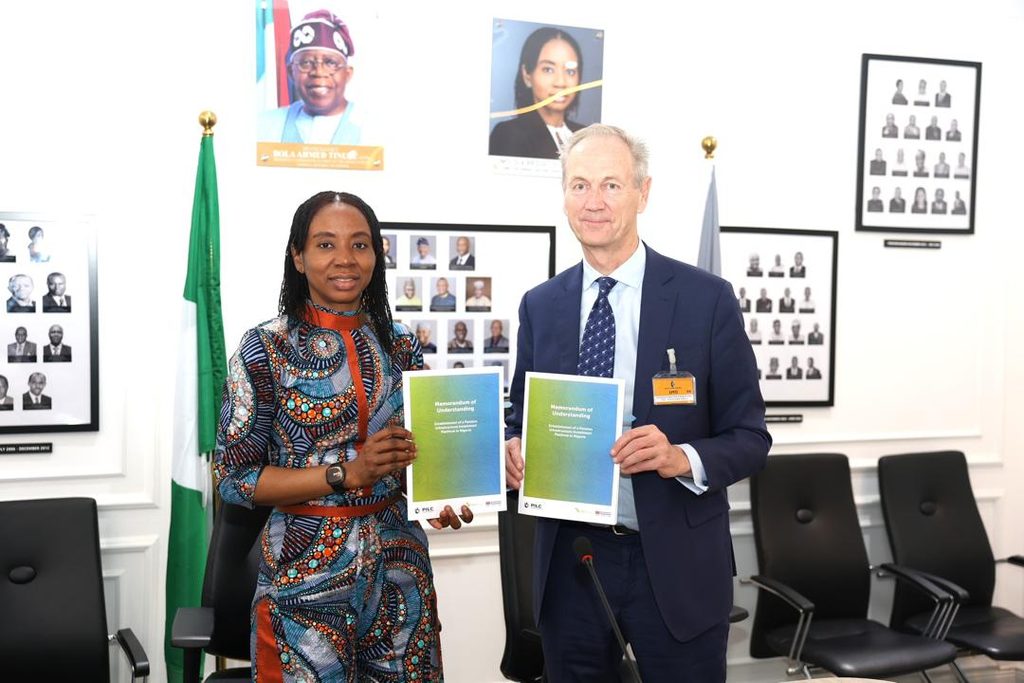
The initiative, known as the Pension Industry Infrastructure Platform (PIIP), is being developed by the Pension Industry Leadership Council (PILC) in partnership with UK-funded specialist development agency, FSD Africa, to finance infrastructure projects in Nigeria and selected markets across the region.
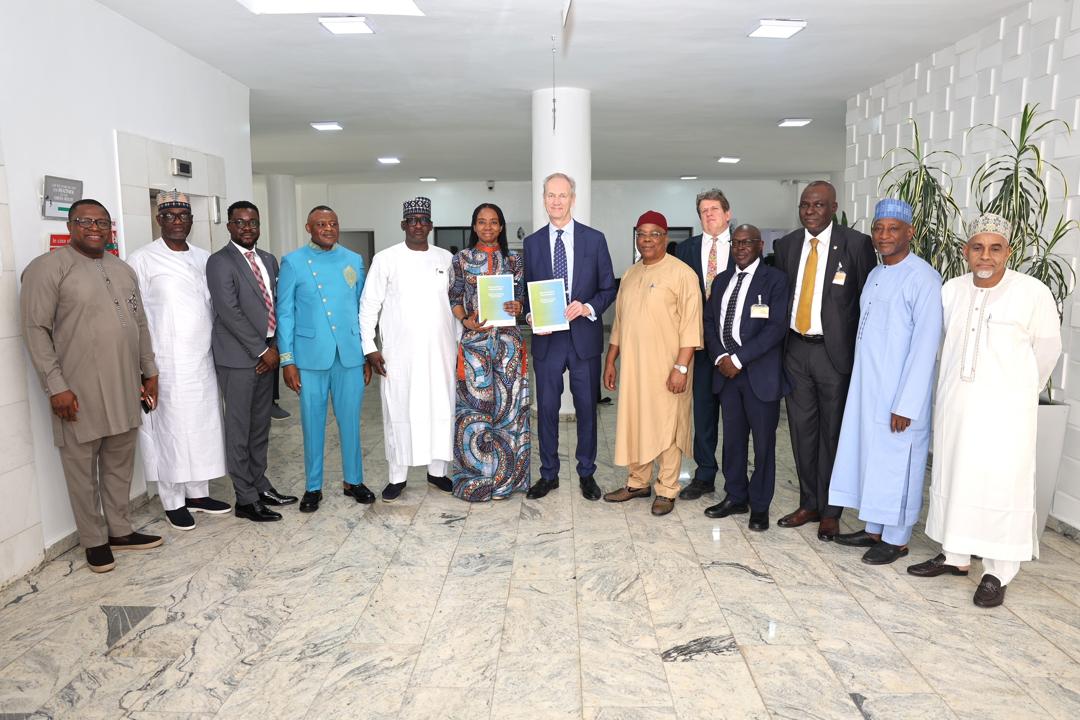
The partnership was formalised through the signing of an agreement to support the development of the proposed fund.
Under the agreement, FSD Africa will provide PILC with expert advice and technical support, including assistance in selecting a fund manager through a competitive process, engaging potential investors and Development Finance Institutions (DFIs), building capacity and supporting necessary regulatory reforms.
The initiative, developed by Nigerian Pension Fund Administrators (PFAs), with support from the National Pension Commission (PenCom) and FSD Africa, seeks to bring together pension funds and development finance to provide long-term financing for infrastructure projects.
UK Deputy High Commissioner in Lagos, Jonny Baxter, said the partnership reflected the shared ambition of Nigeria and the United Kingdom to deepen Nigeria’s capital markets, mobilise domestic investment and channel long-term capital into the real economy.
He said the UK was proud to partner with Nigeria’s pension industry and PenCom to advance the investment initiative.
“Both our countries are prioritising tackling the challenge of attracting more domestic capital, including from pension funds, into the real economy. It is great to see Nigeria making concrete progress on its efforts and be a part of those opportunities to turn this ambition into investment, jobs, and economic growth,” Baxter said.
Chair of PILC and Director-General of PenCom, Omolola Oloworaran, described the proposed platform as timely, saying the pension industry was committed to mobilising its long-term savings capital for infrastructure development while safeguarding contributors’ retirement savings.
“The pension industry holds the largest pool of long-term savings capital in the country, and we are committed to mobilising it to deepen infrastructure development, while safeguarding the retirement savings of contributors. This MoU is the first step we are taking as an industry, and it is just the beginning,” she said.
Chief Executive Officer of FSD Africa, Mark Napier, said the proposed investment structure held significant promise for Nigeria and Africa.
He noted that the continent had substantial institutional capital but continued to face major infrastructure funding deficits.
“We have observed for several years now the paradox of Africa having significant institutional capital while at the same time facing big infrastructure funding deficits. We are keen to work with PenCom and the pension industry in Nigeria to address this and unlock the capital they manage towards Nigeria’s priority infrastructure,” Napier said.
The proposed platform is targeting an initial capital mobilisation of $350 million at its first close, expected in 2027, before scaling up to $750 million.
At its final target size, PIIP aims to mobilise approximately $600 million from Nigerian pension funds and at least $150 million from development finance institutions.
An initial assessment of Nigeria’s infrastructure pipeline identified 39 projects with potential relevance to the platform, representing approximately $20 billion in investment needs.
The platform will invest in equity and quasi-equity capital, with at least 60 per cent of its portfolio allocated to projects in Nigeria and the remainder available for selected regional investments.
Its proposed structure will comprise a naira-denominated core investment fund and a separate co-investment vehicle, allowing participating pension funds to invest alongside the core fund in selected projects.
A parallel foreign-currency vehicle may also be established to accommodate international investors.
The structure is designed to provide institutional investors with access to professionally managed, long-term investment opportunities while helping to finance infrastructure projects that improve connectivity, support business growth and contribute to Nigeria’s wider economic development.
19 Nigerian Pension Funds Express Interest in Proposed $750m Infrastructure Fund

UNFPA, Signify partner to illuminate 10,000 healthcare facilities in seven states

Nigeria, India Sign Human Rights Agreement as Fagbemi Pledges Support for Implementation

19 Nigerian Pension Funds Express Interest in Proposed $750m Infrastructure Fund

Roger Federer’s Shock as DNA Results Reveal Myla and Charlene Are Not His Biological Children

THE PLIGHT OF FARIDA

FAILED COUP IN BURKINA FASO: HOW TRAORÉ NARROWLY ESCAPED ASSASSINATION PLOT AMID FOREIGN INTERFERENCE CLAIMS
-
 News3 years ago
Roger Federer’s Shock as DNA Results Reveal Myla and Charlene Are Not His Biological Children
-
Opinions5 years ago
THE PLIGHT OF FARIDA
-
 News2 years ago
FAILED COUP IN BURKINA FASO: HOW TRAORÉ NARROWLY ESCAPED ASSASSINATION PLOT AMID FOREIGN INTERFERENCE CLAIMS
-
 Opinions5 years ago
POLICE CHARGE ROOMS, A MINTING PRESS
-

 News3 years ago
EYN: Rev. Billi, Distortion of History, and The Living Tamarind Tree
-

 ACADEMICS3 years ago
A History of Biu” (2015) and The Lingering Bura-Pabir Question (1)
-

 Columns3 years ago
Army University Biu: There is certain interest, but certainly not from Borno.
-

 Politics1 year ago
2027: Why Hon. Midala Balami Must Go, as Youths in Hawul and Asikira/Uba Federal Constituency Reject ₦500,000 as Sallah Gift
