
News
Jonathan’s cousin regains freedom from kidnappers in Bayelsa

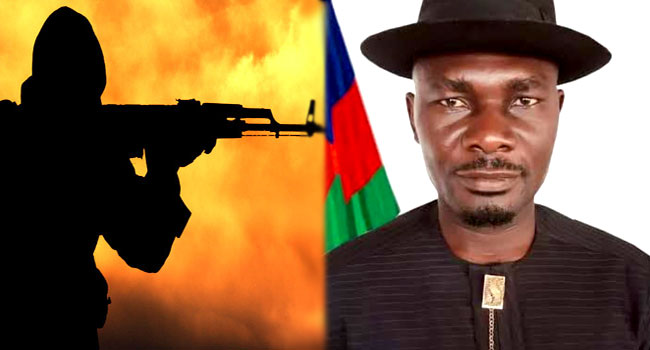
Jonathan’s cousin regains freedom from kidnappers in Bayelsa
Former president, Goodluck Jonathan cousin Mr Jephthah Robert Yekorogha, who was kidnapped on Monday, January 24, 2022, in Yenagoa, Bayelsa State, has regained his freedom after two weeks in captivity.
According to a family source in a terse message on Monday morning, wrote: “Blessed morning all. We give all the thanks to God for the safe return of our brother Jephthah Robert Yekorogha, from the kidnapper’s den. Details Later.”
The family had in a statement signed by Austin Ekeinde on behalf of the victim’s younger brother, Mr Azibola Roberts, on January 27, 2022, called on the members of the public for sustained support that could lead to the early release of Yekorogha.
The statement had said that Yekorogha was kidnapped on Monday night (January 24) from his car in front of his house in Yenagoa, by four men in black uniform who drove off to an unknown destination.
READ ALSO: FGM: NHRC Expresses Concern Over Protection Gaps In National And International Frameworks
The statement reads: “Mr Jephthah Robert Yekorogha, was kidnapped at about 8:40 pm on Monday, 24th January 2022, in front of his house gate at Biogbolo, in Yenagoa, Bayelsa state, by four ‘gunmen’ in black uniform, who, at gunpoint, seized him in his car and forced him into their vehicle and zoomed off.
“In the last few days, we have been inundated with inquiries by well-meaning Nigerians and the Media for confirmation of the kidnap of our sibling. Consequently, this statement has become necessary to clarify the situation.
“Our elder brother, Mr Jephthah Robert Yekorogha, was kidnapped at about 8:40 pm on Monday, 24th January 2022, in front of his house gate at Biogbolo, in Yenagoa, Bayelsa state, by four ‘gunmen’ in black uniform, who, at gunpoint, seized him in his car and forced him into their vehicle and zoomed off.
“This incident was reported to the law-enforcement agencies immediately it happened and is receiving maximum attention.
“We want to thank all well-meaning Nigerians who by way of calls, text messages and visits have stood by us since the incident occurred.
“We ask for the support of the public on any lead for the quick release of our brother.
“In particular, we express our appreciation to the Commissioner of Police, Bayelsa state and the State Director of the Department of State Services (DSS) for their determined assistance.
“We appeal to the abductors of our brother to immediately release him unconditionally, without harm; and turn a new leaf for the peace, security and prosperity of Bayelsa state.”



Vowles Arrives in Nigeria, Pledges to Strengthen UK-Nigeria Ties
By: Michael Mike
British High Commissioner Designate to Nigeria, Pete Vowles, has arrived in Abuja to assume leadership of the United Kingdom’s diplomatic mission, pledging to deepen the longstanding partnership between both countries.
Vowles, who succeeds Dr Richard Montgomery CMG, arrived in the Nigerian capital on Monday, according to a statement issued by the British High Commission.
Speaking on his arrival, the new envoy said his immediate priority would be to listen, learn and engage with Nigerians across the country.
“I am hugely excited to be in Nigeria. My first priority is to listen and learn – to travel, meet people and immerse myself in this extraordinary country, its culture and its energy,” he said.
He added that the relationship between the UK and Nigeria was anchored in strong people-to-people connections, expressing readiness to work with partners across the country to identify new areas of cooperation.
“The UK and Nigeria have a deep and enduring partnership, built above all on the connections between our people. I’m looking forward to discovering Nigeria for myself and working with partners across the country to build on that relationship and see what more we can achieve together,” Vowles said.
Vowles brings extensive diplomatic and development experience to his new assignment. Before his appointment, he served as His Majesty’s Ambassador to Zimbabwe and held senior leadership positions within the UK’s Foreign, Commonwealth & Development Office.
He previously served as Ambassador to Myanmar and occupied diplomatic and development positions in several African and Asian countries, including Bangladesh, India, the Democratic Republic of Congo and Kenya.
His appointment as the next British High Commissioner to Nigeria was announced on June 16, 2026.
The arrival comes as Nigeria and the UK continue to maintain broad diplomatic, economic, security and people-to-people ties, with both countries regularly engaging on issues of mutual interest.
Vowles Arrives in Nigeria, Pledges to Strengthen UK-Nigeria Ties
News
The Plateau State Government cannot continue to pretend that violence becomes a crisis only when there is a reprisal

The Plateau State Government cannot continue to pretend that violence becomes a crisis only when there is a reprisal
The most disturbing part of the worsening insecurity in Plateau is not only the killings themselves, but the selective outrage and apparent institutional silence that follows them. When Fulani civilians are killed in their hamlets, the response from government often appears muted, or completely absent.
But the moment there is a reprisal, the government suddenly finds its voice, its condemnation becomes loud, and the incident becomes the centre of attention. Thats when everybody wants America and Isreal to know.
That is a dangerous double standard.
A government cannot afford to treat the death of one community as routine while treating the death of another as a national emergency. Every innocent life lost in Plateau should carry the same weight, whether the victim is Fulani, Berom, Mwaghavul, Hausa or any other community.
The continued silence surrounding attacks on Fulani communities is particularly dangerous because it creates the perception that some victims do not matter. Once communities begin to believe that government will not protect them or seek justice for them, they naturally lose confidence in the state. And that is where the cycle of violence becomes almost impossible to stop.
Government cannot condemn the fire while ignoring who lit the match. It is unacceptable for authorities to condemn reprisal attacks without equally confronting the attacks that preceded them. You cannot keep condemning the smoke while refusing to investigate the fire. If a farmer is killed, arrest the killers. If a herder is killed, arrest the killers. If a village is attacked, investigate it. If livestock are destroyed deliberately, investigate it. If innocent civilians are massacred, bring those responsible to justice. The identity of the victim should never determine the urgency of the government’s response.
Silence is not neutrality
The state government’s apparent reluctance to speak forcefully when Fulani civilians are killed is not helping reconciliation. If anything, it risks convincing affected communities that they have been abandoned. That perception is combustible. A government that genuinely wants peace must be prepared to tell its own supporters uncomfortable truths. It must condemn wrongdoing even when the perpetrators come from communities considered politically sympathetic.
Leadership is not defending your people when they are right. Leadership is confronting them when they are wrong too. Anything less is political convenience masquerading as peacebuilding.
The Plateau Government should wake up before the situation deteriorates further. Every unresolved killing becomes another grievance. Every unpunished attack becomes another justification for revenge. Every selective statement from government deepens suspicion.
And eventually, the state risks becoming an observer in a conflict it has a constitutional duty to prevent. It is not the responsibility of the Military alone all the time. The government must stop waiting for reprisals before becoming interested in violence.
The Plateau State Government cannot continue to pretend that violence becomes a crisis only when there is a reprisal

Dioura falls as Mali’s security crisis spreads south while Kati tightens its grip
By: Zagazola Makama
The reported fall of the military position at Dioura in Ténenkou Circle, Mopti Region, is more than another battlefield setback for Mali. It is a warning that the country’s security crisis is increasingly spreading beyond the traditional conflict zones and putting pressure on the military’s ability to maintain a permanent presence outside major garrisons.
According to the analysis, Jama’at Nusrat al-Islam wal-Muslimin (JNIM) has claimed control of the Dioura position through its media platform, Az-Zallaqa. No independent confirmation of the claim, casualty figures or the extent of the group’s control was immediately available. But Dioura’s strategic importance goes beyond the size of its military installation.
Dioura: a small post with a big strategic value
Dioura is positioned in a critical part of central Mali, linking areas around the Inner Niger Delta, Ténenkou and wider Mopti, with routes extending towards Niono and the Mauritanian frontier. The position therefore functions as a forward security point rather than simply another military barracks. Its repeated targeting is significant.
The post was attacked in March 2019, when dozens of soldiers were killed and military equipment seized. It was attacked again in May 2025, in another major assault that reportedly left about 40 soldiers dead and saw the military position overrun for an extended period.
If the latest reported capture is confirmed, the pattern raises a fundamental question about the ability of the Malian Armed Forces (FAMa) to hold isolated positions in contested territory.
The problem is not necessarily the loss of one military post. The problem is what happens when several such posts begin falling at the same time.
The JNIM strategy: weaken the network, not necessarily capture Bamako. JNIM does not need to seize Bamako to demonstrate that the state is losing control of its territory. It can achieve strategic effects by progressively attacking the network of forward military positions, disrupting roads, targeting supply convoys and forcing the army to concentrate its forces around major urban centres.
That creates a dangerous choice for FAMa.
They can reinforce remote positions and expose troops and supply convoys to ambushes, or withdraw from vulnerable locations and concentrate their forces in larger towns. Either way, the insurgents gain. If troops remain, they become isolated targets. If they withdraw, the insurgents gain greater freedom of movement.
The result is what could be described as territorial attrition a gradual erosion of effective state presence without the need for a conventional military offensive against major cities.
Mali’s security crisis is no longer confined to the north The wider concern is the geographical spread of violence. For years, Mali’s insecurity was largely associated with the northern and central regions. That picture has changed.
The JNIM threat has increasingly demonstrated the ability to operate around major transport corridors, agricultural areas and economically important zones. The southern regions are particularly important because they contain major agricultural production areas, mining operations and transport routes connecting Mali with neighbouring countries. Any sustained disruption in areas around Kayes, Koulikoro, Sikasso, Bougouni or along key commercial corridors would have consequences far beyond military security. It would affect food supplies, fuel distribution, mining revenues, commercial transport and government revenue.
When insecurity reaches the economic arteries of a country, it stops being merely a counter-insurgency problem. It becomes a state survival problem.
The developments therefore raise renewed questions about Mali’s reliance on Russian security assistance. The transition from Wagner to Africa Corps was presented as part of a broader strategic partnership intended to strengthen Mali’s sovereignty and military capacity. But the latest battlefield developments raise questions about how effectively that partnership is translating into sustained territorial security. The reported withdrawal of Russian personnel from Kidal, cited in the original analysis, has further fuelled debate about the limits of the Russian model.
The central issue is not whether Russia has military capabilities. It does. The question is whether those capabilities are being deployed as part of a coherent national strategy capable of securing Mali’s enormous territory.
A foreign force can provide specialised support, intelligence, aviation and protection for strategic locations. It cannot permanently substitute for a professional national army capable of holding territory, securing roads and maintaining relationships with local communities.
The Kati problem
The most troubling argument raised by the analysis concerns the growing distinction between protecting the regime and protecting the country. If the government’s most reliable security arrangements are concentrated around Bamako and Kati while peripheral military positions remain increasingly vulnerable, the security architecture risks becoming centred on regime protection rather than national territorial defence. That would be a serious strategic distortion.
Kati is important because it is closely associated with Mali’s military leadership and has become a major centre of political and military power.
But securing Kati does not secure Dioura.
Protecting the leadership does not secure the routes between Mali’s agricultural and commercial centres. And protecting the capital does not prevent JNIM from expanding its influence in remote communities.
A state can maintain political control over a capital while gradually losing effective control over its periphery. That is one of the most dangerous phases of an insurgency.
The government continues to function. The military continues to issue statements. The national flag continues to fly over administrative buildings. But outside major population centres, armed groups increasingly determine who moves, who trades and which roads can safely be used.
This is why Dioura matters. It is not because the position itself is large. It is because every abandoned or overrun forward position expands the space in which armed groups can operate.
Mali is also confronting several overlapping security challenges. The state is fighting JNIM and Islamic State-linked groups while dealing with the continuing northern conflict involving Tuareg-led armed movements, local militias and communal tensions. This creates a fragmented security environment in which the military cannot concentrate exclusively on one enemy.
At the same time, the reliance on civilian militias and local armed groups carries its own risks, particularly where communal tensions and allegations of abuses are involved.
A security strategy built around multiple armed actors can produce short-term tactical gains while creating longer-term problems of accountability and command cohesion.
The growing restrictions on independent reporting add another layer to the crisis.
When governments restrict journalists and control the flow of information, they may temporarily reduce politically damaging narratives. But censorship does not restore lost territory. In fact, prolonged information restrictions can make strategic decision-making harder by preventing uncomfortable realities from reaching policymakers and the public.
A government fighting an insurgency needs accurate information more than it needs flattering information.
The reported fall of Dioura should therefore be viewed as part of a wider strategic trend rather than an isolated tactical incident. If the Malian military continues to lose forward positions while concentrating increasingly around major urban centres, the country risks developing a security structure in which the state controls the cities while armed groups dominate the spaces between them. That is precisely the environment in which insurgencies thrive.
The real test for Bamako is not whether it can defend Kati. It is whether it can keep Dioura, secure the roads to it, protect the communities around it and maintain a credible military presence across the territory. If it cannot, then the question facing Mali is no longer simply how to defeat JNIM. It is how to prevent the gradual disappearance of effective state authority beyond the major cities.
Dioura may be a small military post. But strategically, it is a warning light. And if the warning is ignored, the next battlefield may not be another remote barracks. It may be the economic corridors, supply routes and southern regions that Mali depends on to keep the state functioning.
Dioura falls as Mali’s security crisis spreads south while Kati tightens its grip

Vowles Arrives in Nigeria, Pledges to Strengthen UK-Nigeria Ties

The Plateau State Government cannot continue to pretend that violence becomes a crisis only when there is a reprisal

Dioura falls as Mali’s security crisis spreads south while Kati tightens its grip

Roger Federer’s Shock as DNA Results Reveal Myla and Charlene Are Not His Biological Children

THE PLIGHT OF FARIDA

FAILED COUP IN BURKINA FASO: HOW TRAORÉ NARROWLY ESCAPED ASSASSINATION PLOT AMID FOREIGN INTERFERENCE CLAIMS
-
 News3 years ago
Roger Federer’s Shock as DNA Results Reveal Myla and Charlene Are Not His Biological Children
-
Opinions5 years ago
THE PLIGHT OF FARIDA
-
 News1 year ago
FAILED COUP IN BURKINA FASO: HOW TRAORÉ NARROWLY ESCAPED ASSASSINATION PLOT AMID FOREIGN INTERFERENCE CLAIMS
-

 News2 years ago
EYN: Rev. Billi, Distortion of History, and The Living Tamarind Tree
-
 Opinions5 years ago
POLICE CHARGE ROOMS, A MINTING PRESS
-

 ACADEMICS3 years ago
A History of Biu” (2015) and The Lingering Bura-Pabir Question (1)
-

 Columns3 years ago
Army University Biu: There is certain interest, but certainly not from Borno.
-

 Politics1 year ago
2027: Why Hon. Midala Balami Must Go, as Youths in Hawul and Asikira/Uba Federal Constituency Reject ₦500,000 as Sallah Gift
