
Politics
Kashim Shettima: Hate him, like him, the vice president is a child of necessity holding the pillars of APC together for greater glory in 2027.


Kashim Shettima: Hate him, like him, the vice president is a child of necessity holding the pillars of APC together for greater glory in 2027.
By: Dr. James Bwala
Kashim Shettima, Nigeria’s Vice President, embodies a paradoxical figure within the All Progressives Congress (APC) as the 2027 elections approach. His tenure has been met with contrasting sentiments: while some vehemently oppose him, others staunchly support his leadership. The complexities surrounding his political standing arise from internal party divisions and regional dynamics that significantly influence APC’s cohesion. Notably, certain elements pushing for Shettima’s replacement underscore some of the challenges Shettima faces as a true pillar standing with President Bola Ahmed Tinubu.
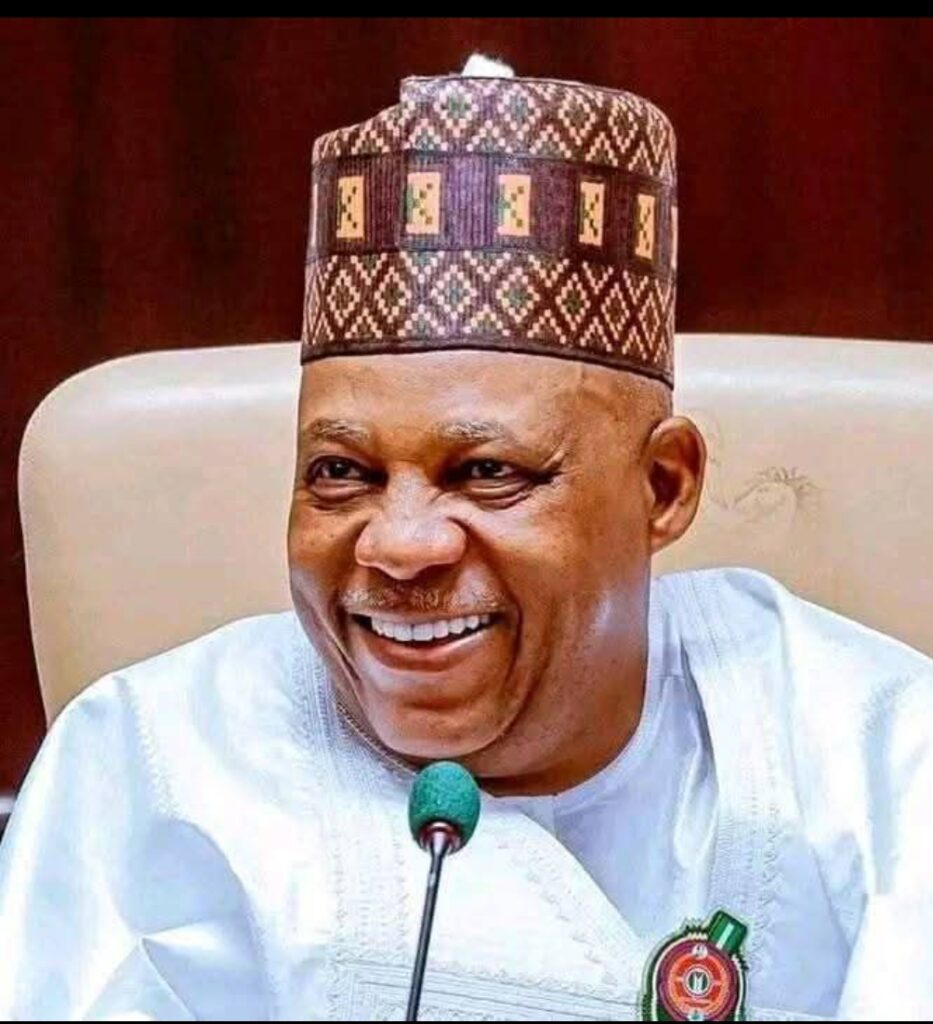
As advocates for Shettima, we shall continue to emphasize his indispensable role in maintaining party unity and stability. His governance during Borno State’s insurgency crisis and subsequent contributions to national peace and economic empowerment have garnered significant regional backing. This support is crucial as the APC grapples with factionalism that threatens its electoral prospects.
Ultimately, Shettima represents a “child of necessity” holding together fragile pillars within the APC. Despite controversies and opposition, he remains pivotal for consolidating northern support essential for Tinubu’s re-election bid in 2027. The party’s future cohesion may well depend on reconciling divergent interests around this contentious yet unifying figure.
The Vice President has emerged as a significant figure in Nigerian politics, often regarded as a prophetic voice advocating for unity and progress. His leadership style embodies resilience and foresight, qualities that position him as a steadfast figure likely to maintain influence until at least 2031. This perception stems from his consistent emphasis on national cohesion and socio-economic development, which resonates deeply across diverse communities.

Shettima’s strategic engagement with both grassroots movements and political elites underscores his potential to remain a pivotal actor in Nigeria’s political landscape. His advocacy transcends mere rhetoric; it reflects a commitment to transformative policies aimed at fostering sustainable growth. Such attributes reinforce the belief that his voice will continue to shape discourse well into the next decade.
Vice President Kashim Shettima exemplifies a prophetic leadership model grounded in vision and perseverance. His enduring relevance is not merely speculative but anchored in tangible contributions toward national progress. As Nigeria navigates complex challenges ahead, Shettima’s role as a voice of prophecy remains crucial for guiding collective aspirations through 2031.
The controversy surrounding the potential replacement of Vice President Kashim Shettima in the 2027 presidential race has been a focal point of political discourse within Nigeria’s ruling party, the APC. Notably, those advocating for Shettima’s substitution are often identified as opponents of President Tinubu, suggesting that attempts to displace the vice president are politically motivated rather than grounded in governance concerns. This dynamic underscores how internal party disputes frequently manifest as broader conflicts involving key political figures.
Despite mounting speculation and unrest within APC ranks—highlighted by violent reactions at a North-East stakeholders’ meeting—the party leadership has consistently reaffirmed its commitment to the Tinubu-Shettima ticket. Senior officials have denounced rumors of friction or plans to replace Shettima as baseless and detrimental to party unity. These statements emphasize that such rumors often arise from misunderstandings or deliberate attempts to destabilize the administration’s cohesion.
It is, therefore, evident that resistance against President Tinubu correlates with efforts to undermine Vice President Shettima’s position. The official discourse from APC leadership portrays these efforts as distractions fueled by political adversaries rather than genuine policy disagreements. Maintaining unity around the current ticket appears crucial for preserving stability within both the party and Nigeria’s broader political landscape.
READ ALSO:https://newsng.ng/police-charge-rooms-a-minting-press/
It is high time, therefore, for President Bola Ahmed Tinubu to recognize the intricate dynamics within his party and government, particularly the emerging coalition of oppositions that could challenge his leadership ahead of the 2027 elections. Despite the ruling All Progressives Congress (APC) endorsing Tinubu for a second term, underlying tensions and factionalism within the party merit serious attention. The president’s reforms have elicited mixed reactions, with criticisms regarding economic challenges and insecurity fueling dissent among some APC members.

Today, opposition parties such as the African Democratic Congress (ADC) have actively accused Tinubu’s administration of efforts to destabilize their unity while simultaneously consolidating themselves into a formidable coalition aimed at political transformation. This evolving political landscape necessitates that President Tinubu reaffirm his grip on power by addressing internal fractures decisively. Failure to do so may embolden these coalitions and undermine his prospects in 2027.
As coalition dynamics evolve within the African Democratic Congress (ADC), the role of Vice President Kashim Shettima remains central to the All Progressives Congress’s (APC) prospects for success in the 2027 elections. Despite internal contestations and factional disputes, Shettima’s political influence, particularly in Northern Nigeria, positions him as a pivotal figure whose endorsement could consolidate regional support crucial for APC’s electoral strategy. The Northeast bloc’s endorsement of Shettima alongside President Tinubu underscores his significance despite dissent from some party officials.
Official statements from the presidency have sought to quell rumors about Shettima’s potential exclusion from the 2027 ticket, emphasizing that final decisions will be made post-APC convention and dismissing narratives of discord between Tinubu and Shettima. This institutional backing reinforces Shettima’s status as a key player within APC. In sum, while ADC coalitions are still establishing their footing ahead of 2027, VP Kashim Shettima’s political capital remains a cornerstone for APC’s electoral viability.
* James Bwala, PhD, writes from Abuja.
Kashim Shettima: Hate him, like him, the vice president is a child of necessity holding the pillars of APC together for greater glory in 2027.




2027: Ali Gwandzang and the Renewed Hope for Hawul and Askira/Uba
By: Dr. James Bwala
As the 2027 general elections draw closer, political discussions are beginning to gather momentum across Nigeria. In Borno State, attention is increasingly focused on the Hawul and Askira/Uba Federal Constituency, where citizens are seeking credible, accessible, and purposeful representation at the National Assembly. Among the emerging political figures receiving strong public support is Alhaji Ali Gwandzang, the Social Democratic Party (SDP) candidate for the House of Representatives.
His recent visit to communities in Hawul Local Government Area demonstrated the depth of his connection with the people. As he arrived, crowds of enthusiastic supporters welcomed him with chants of “Armbur! Armbur!”—a local expression meaning “This is our own.” The chant was more than a slogan. It reflected a sense of identification, trust, and ownership between the people and a candidate they believe understands their aspirations.
During his interactions with residents, Ali Gwandzang explained his mission to change the narrative about the representation of Hawul and Askira/Uba at the Green Chambers. He spoke about the need to ensure that the constituency is represented by someone who will bring intelligence, courage, accessibility, and accountability to national politics. Rather than assuming that the people would automatically support him, he asked them whether he should continue his campaign or step aside for another candidate of their choice.
The response was immediate and emphatic. From village to village, the people answered with a thunderous declaration: “You will represent us!” Their response signalled a widespread desire for his candidacy to continue and reflected the confidence many residents have placed in his leadership. This popular endorsement deserves serious consideration, not merely as a political development but as an expression of the people’s search for effective representation.
Representation in the National Assembly is not simply about occupying a seat in Abuja. It is about bringing the hopes, problems, and needs of a whole group of people to the national level. A representative is expected to speak for the people, participate meaningfully in lawmaking, attract development projects, monitor government programs, and remain accountable to those who elected him. For a constituency such as Hawul and Askira/Uba, which has faced security challenges, underdevelopment, unemployment, and inadequate public infrastructure, the quality of representation is especially important.
This is why the choice of a candidate should not be based solely on political party affiliation, financial influence, or temporary campaign promises. Voters must examine the character, experience, accessibility, knowledge, and commitment of the person seeking their mandate. In this regard, Ali Gwandzang’s long-standing relationship with the people provides him a significant advantage. He is not a candidate who has suddenly appeared at election time. His connection with the communities, according to the response of the people, existed long before his aspiration for the House of Representatives.
That established relationship matters because effective representation begins with understanding. A representative who knows the people personally is more likely to appreciate their difficulties and respond to their needs. Such a representative is also easier to approach and more likely to maintain regular contact with constituents. The people of Hawul and Askira/Uba need a representative who will not disappear after election day but will continue to visit communities, consult traditional and religious leaders, engage youth and women, and listen to ordinary citizens.
Ali Gwandzang’s promise to bring the people closer to government is therefore particularly significant. Many citizens feel disconnected from the institutions that are supposed to serve them. Government policies and programs are often announced in distant offices, while the people who need them most remain uninformed or excluded. A representative can help bridge this gap by providing information, facilitating access to opportunities, monitoring public projects, and ensuring that the voices of local communities are heard in government circles.
Bringing the people closer to government also means creating a culture of open consultation. Constituents should not be treated as people who are needed only during elections. They should be regarded as partners in governance. Regular town-hall meetings, community consultations, public feedback mechanisms, and transparent reporting can help rebuild trust between elected representatives and the electorate. If Ali Gwandzang remains committed to this approach, he can help establish a new standard of representation in the constituency.
Another important issue is the need to improve the quality of debate and advocacy at the National Assembly. Borno State is home to many educated, talented, and intellectually capable citizens. However, intellectual capacity can only benefit the people when it is combined with discipline, courage, preparation, and a clear understanding of legislative responsibilities. The House of Representatives requires members who can study proposed laws, contribute to debates, scrutinize budgets, ask relevant questions, and advocate effectively for their constituents.
Ali Gwandzang’s stated desire to change the narrative about the representation of intellectually capable people from Borno State is therefore a worthy ambition. The people deserve a representative who can match national issues with informed analysis and who will not remain silent when the interests of the constituency are at stake. They need someone who can articulate their concerns in a language that policymakers understand and who can build constructive relationships with ministries, agencies, committees, and development partners.
However, intellectual representation should not be limited to academic knowledge. It must also include practical wisdom and sensitivity to local realities. Hawul and Askira/Uba are communities with diverse social, economic, cultural, and security concerns. A representative must understand the differences between rural and urban needs, the challenges faced by farmers and traders, the aspirations of young people, and the special needs of women, persons with disabilities, and vulnerable households.
Security remains a major concern across many parts of Borno State. Any meaningful political agenda for the constituency must include advocacy for improved security, support for displaced and returning families, rehabilitation of damaged communities, and economic recovery. The people need roads, schools, clinics, clean water, electricity, and opportunities for productive employment. These are not luxuries; they are essential foundations for a stable and prosperous society.
In the area of education, a responsible representative should advocate for the rehabilitation of schools, the provision of learning materials, teacher support, and opportunities for students to pursue higher education and vocational training. Young people should not be left without hope or direction. Skills acquisition, entrepreneurship programs, agricultural support, and access to small business financing can help reduce unemployment and prevent vulnerable youths from becoming victims of poverty or political manipulation.
Healthcare also deserves urgent attention. Many rural communities continue to face difficulties accessing qualified medical personnel, essential drugs, maternal care, and emergency services. A representative who is genuinely connected to the people must make health infrastructure and services part of his legislative priorities. This includes advocating for primary healthcare centers, supporting community health workers, and ensuring that government interventions reach the communities for which they are intended.
Agriculture is another area with enormous potential. Many residents depend directly or indirectly on farming, livestock, and local commerce. With appropriate support, the agricultural sector can generate employment, improve food security, and strengthen household incomes. Legislative representation should therefore include advocacy for affordable farm inputs, irrigation, storage facilities, access roads, extension services, and fair markets. Such initiatives would benefit not only farmers but the entire local economy.
The enthusiasm that greeted Ali Gwandzang’s arrival shows that the people are not indifferent to politics. They are prepared to participate when they believe a candidate shares their identity and aspirations. The chant “Armbur!” expressed a powerful political message: the people want someone they can call their own. This sense of ownership is essential for democratic legitimacy. A representative who enjoys the confidence of the people is more likely to receive their cooperation and more likely to remain accountable to them.
Nevertheless, public support must be converted into a clear and measurable program. Popularity alone cannot solve the problems of a constituency. Ali Gwandzang must continue to explain how he intends to achieve his goals, what legislative issues he will prioritize, and how he will report his performance to the people. He should present a realistic agenda that addresses security, education, healthcare, roads, agriculture, youth employment, women’s empowerment, and transparent governance.
He must also maintain the humility that has apparently endeared him to the people. The thunderous response from supporters is encouraging, but it should not lead to complacency. Elections are won not only through enthusiasm but also through organization, discipline, peaceful mobilization, and respect for democratic procedures. His campaign should remain issue-based and peaceful, avoiding personal attacks, ethnic division, misinformation, and the politics of intimidation.
The people of Hawul and Askira/Uba also have responsibilities. They must evaluate all candidates carefully and make their decisions based on competence, character, commitment, and a credible plan for development. They should resist inducements that offer temporary benefits in exchange for surrendering their long-term interests. A bag of food, a small payment, or a campaign gift cannot replace years of effective representation. The future of the constituency is too important to be exchanged for short-term gains.
If the people believe that Ali Gwandzang understands their needs, has remained connected to them, and possesses the capacity to represent them effectively, then their support for his candidacy is justified. His public consultation and willingness to ask the people whether he should continue demonstrate an important principle: political authority should come from the people. The response he received across the communities suggests that many residents have already made their preference clear.
The 2027 election presents an opportunity for the people of Hawul and Askira/Uba to demand a new kind of representation—one that is accessible, intelligent, responsive, and development-oriented. Alhaji Ali Gwandzang has positioned himself as a candidate who seeks to build that connection. His mission to bring the people closer to government, strengthen the quality of representation, and change the narrative about their presence at the Green Chambers deserves encouragement.
- James Bwala, PhD, writes from Abuja.
2027: Ali Gwandzang and the Renewed Hope for Hawul and Askira/Uba

2027: We’ll reset Nigeria, make life easy for citizens, says Makinde
Seyi Makinde, the Presidential candidate of Allied People’s Movement (APM) and Governor of Oyo has pledged to run an inclusive governance and fulfil his campaign promises aimed at making life easy for all citizens, if voted into office in 2027.
Makinde made the pledge on Saturday in Yola during the party’s town hall meeting for the North-East ahead of 2027 general elections.
He said that his administration would reset Nigeria to the right track and touch the lives of all citizens through various sectors aimed at improving their welfare and wellbeing.
According to him, the sharing of power is not going to be centered on one side of the country.
He added that the reason why his manifesto was delayed was to hear from Nigerians and capture their needs.
Makinde promised to reform the country through the reset agenda of his administration to address the challenges of insecurity and poverty among others.
“I promise you the North-East and the people of Nigeria that we will be sincere in finding solutions to the challenges we are facing in the country.
“We will ensure to tell you the exact things that are happening and listen to you as a solution can come from anywhere”, he said.
In his remarks, Gov. Bala Mohammed of Bauchi called on the party supporters and Adamawa voters to vote for the party and its candidates come 2027 general elections.
According to him, APM is a great party to lead Nigeria to the promised land adding that all their candidates were young, credible and ready to deliver.
In his address, Abdulrahaman Haske, APM Governorship candidate in Adamawa appreciated Makinde for choosing Adamawa in the North-East for the meeting.
He said APM is the party to beat in the region and promised to deliver Adamawa from Wards to Units.
Haske further urged the party supporters to continue supporting the party towards ensuring their victory.
2027: We’ll reset Nigeria, make life easy for citizens, says Makinde

PCC: Malam Bashir’s pace, determination, and commitment to repositioning the Commission
By: Dr. James Bwala
The Public Complaints Commission (PCC) is at a pivotal point in its history as it approaches its 51st anniversary celebration on Thursday, October 15, 2026. Established to provide citizens with an avenue for seeking redress against administrative injustice, abuse of office, unfair treatment, and poor service delivery, the Commission has remained a significant institution in Nigeria’s democratic development. However, like every public organization, the PCC has experienced periods of difficulty, internal tension, and institutional uncertainty.
According to the Federal Commissioner representing Borno State, Hon. Yusuf Adamu, the Commission is now witnessing a major transformation under the leadership of its Hon. Chief Commissioner, Malam Bashir Abubakar. Adamu’s assessment carries special significance due to his personal experience. Having served during an earlier term as Federal Commissioner and returned for a second term, he has observed the Commission under different leadership circumstances. His account presents a compelling argument that mature, experienced, and people-oriented leadership can make a decisive difference in the performance and stability of a public institution.
Reflecting on the final phase of his first tenure, Hon. Adamu recalled a disturbing period in which the relationship among the staff union, state commissioners, and the leadership of the Commission deteriorated considerably. The situation, he explained, was characterized by disagreements, demonstrations, threats to down tools, and a general atmosphere of mistrust. Rather than working together toward the fulfillment of the Commission’s mandate, important stakeholders had become embroiled in conflict.
Such a situation is damaging to any organization, but it is particularly harmful to an institution whose primary responsibility is to protect citizens from injustice and maladministration. Fairness, mutual respect, consultation, and accountability must guide an agency established to promote fairness. When staff and leadership are in constant confrontation, the consequences inevitably extend beyond the organization. Administrative processes become slower, morale declines, and members of the public who depend on the institution may be denied timely assistance.
It was against this background that the return of Hon. Yusuf Adamu to the Commission coincided with the emergence of Malam Bashir Abubakar as Hon. Chief Commissioner. Adamu said the difference has been clear. He described the new leadership as a blessing to the PCC and emphasized that the progress recorded so far reflects the value of placing a mature and seasoned administrator at the head of an important government institution.
Leadership in a public organization requires more than occupying an office. It demands the ability to listen, understand competing interests, manage disagreements, inspire confidence, and translate institutional goals into practical results. It also requires patience and emotional intelligence. A leader who understands the importance of consultation is more likely to build cooperation, while a leader who appreciates the needs of workers can create an environment in which employees are motivated to give their best.
According to Hon. Adamu, Malam Bashir Abubakar has demonstrated these qualities since assuming office. One of the most notable improvements, he said, is the provision of essential materials and resources to state commissioners. This development has enabled commissioners to perform their duties more effectively and has strengthened their capacity to serve the public. Without the tools necessary to carry out official responsibilities, even the most committed public servant will struggle to produce meaningful results.
The importance of this intervention cannot be overstated. State commissioners are central to the operations of the PCC across the country. They engage with complainants, investigate cases, interact with government institutions, and represent the Commission within their respective jurisdictions. Their effectiveness depends not only on personal dedication but also on institutional support. By ensuring that commissioners have access to the materials required for their work, the current leadership has shown that administrative efficiency is not merely a slogan but a practical responsibility.
Hon. Adamu further observed that staff members are now happier and more confident because of the changes introduced under Malam Bashir Abubakar. This renewed morale is one of the strongest indicators of institutional recovery. Employees who feel valued and supported are more likely to approach their duties with commitment and dignity. They are also more willing to take responsibility, contribute ideas, and defend the reputation of the organization.
Staff welfare is not a luxury in public administration. It is a critical component of productivity and organizational stability. Workers who are constantly anxious about their future, neglected in the workplace, or treated without respect may become discouraged and disengaged. By contrast, an organization that gives its staff hope and a sense of belonging creates the conditions for better service delivery.
Adamu’s comments suggest that Malam Bashir Abubakar has begun to restore that sense of hope within the PCC. He noted that the future of staff now appears more secure and that employees are better positioned to carry out their responsibilities with pride. Although the Chief Commissioner is still working to fulfill all the promises made to the staff and the Commission, Adamu maintained that the achievements recorded so far speak loudly about the kind of leadership currently in place.
This point deserves emphasis. No leader can solve every institutional problem overnight. Public agencies often face complex challenges involving funding, personnel, infrastructure, policy, and public expectations. What matters is the direction of leadership, the seriousness of its intentions, and the consistency of its actions. A leader who recognizes existing problems and takes practical steps toward solving them deserves encouragement and support.
The progress at the PCC should therefore be understood as an ongoing process rather than a completed project. The Commission still has important work to do in improving its structures, strengthening its investigative procedures, enhancing public awareness, and ensuring that complaints are handled promptly and fairly. However, the restoration of trust among staff, commissioners, and management provides a strong foundation for addressing these challenges.
Hon. Adamu is optimistic that the Commission will soon rank among the most respected government agencies in Nigeria. His confidence is based on what he describes as Malam Bashir’s pace, determination, and commitment to repositioning the institution. The goal, he explained, is for the PCC to stand shoulder to shoulder with other leading government agencies and for its employees to stop looking elsewhere when comparing institutional standards.
This ambition is both reasonable and necessary. The Public Complaints Commission performs a unique constitutional and democratic function. It serves as an avenue through which ordinary citizens can challenge administrative wrongdoing without necessarily resorting to lengthy and expensive litigation. It also helps government institutions identify weaknesses in their operations and encourages better standards of public service.
For the PCC to fulfill this role effectively, it must itself be strong, independent, professional, and properly equipped. Its staff must have confidence in the leadership, while citizens must trust that their complaints will be taken seriously. The Commission must also continue to build partnerships with ministries, departments, agencies, state governments, civil society organizations, and the media. These relationships can enhance public awareness and encourage government institutions to respond more responsibly to complaints.
The leadership style described by Hon. Adamu offers a useful lesson for public administration in Nigeria. Institutions do not become successful simply because they are created by law. They succeed when their leaders combine vision with competence, authority with humility, and ambition with a genuine concern for people. A mature administrator understands that an organization’s greatest asset is its people and that institutional progress must include both improved performance and improved working conditions.
Malam Bashir’s reported achievements also demonstrate the importance of continuity. Meaningful reform often requires time. An incoming leader may begin a process of change, but sustainable transformation depends on the opportunity to consolidate reforms and implement long-term plans. This explains Hon. Adamu’s confidence that, if Malam Bashir serves another term, the PCC could become an even stronger and more attractive institution.
His prediction that workers will no longer regard agencies such as the Central Bank of Nigeria, the Nigerian National Petroleum Corporation, or other prominent government institutions as better alternatives reflects a larger aspiration: the creation of a public service in which every agency offers dignity, career growth, professional fulfillment, and a sense of purpose. While such a transformation will require continued effort, it is a goal worth pursuing.
As the PCC approaches its 51st anniversary, the Commission should celebrate not only its history but also the promise of its future. The anniversary provides an opportunity to recognize past contributions, evaluate present realities, and renew commitment to the citizens it was created to serve. It is also an occasion to acknowledge the importance of effective leadership in determining whether an institution stagnates or advances.
The testimony of Hon. Yusuf Adamu is therefore more than a personal commendation of Malam Bashir Abubakar. It is an affirmation that the PCC is experiencing a period of renewal in the renewed hope agenda of President Bola Ahmed Tinubu and the vice president, Kashim Shettima, led administration. The improved relationship among management, commissioners, staff, and the union suggests that the Commission is gradually moving away from confrontation and toward cooperation. The provision of work materials, attention to staff welfare, and commitment to institutional development are all signs of a leadership determined to produce results.
Nevertheless, the gains already made must be protected and expanded. The leadership should continue to engage staff and commissioners openly, communicate clearly, and maintain fairness in decision-making. Promises should be followed by measurable action, while achievements should be supported by transparent systems that will outlast individual officeholders. In this way, the progress attributed to Malam Bashir Abubakar can become a lasting institutional culture rather than a temporary phase.
The Nigerian public deserves a Public Complaints Commission that is responsive, efficient, independent, and credible. Citizens who approach the Commission should feel confident that they will be heard and treated fairly. Public servants should also work in an environment that recognizes their value and equips them to perform effectively. These objectives are connected: a well-managed and motivated workforce is better able to protect the rights and interests of citizens.
The PCC has come a long way, but it is also moving toward a greater future. Under Malam Bashir’s leadership, and with the cooperation of state commissioners, staff, unions, and other stakeholders, the Commission can become one of Nigeria’s most respected public institutions. As Hon. Yusuf Adamu has noted, the changes already recorded provide strong evidence of what determined and experienced leadership can achieve.
- James Bwala, PhD, writes from Abuja.
- PCC: Malam Bashir’s pace, determination, and commitment to repositioning the Commission

Tension in Mangu as Fulani Herdsmen Allege Attack by Security Forces After Gunmen Wound Two, Rustle 70 Cattle

Army troops Arrests Arms Fabricator, Three Suspected Gunrunners, Recovers Weapons in Plateau

COAS Calls for Joint Operations, Multi-Domain Integration as Army Expands to 12 Divisions

Roger Federer’s Shock as DNA Results Reveal Myla and Charlene Are Not His Biological Children

THE PLIGHT OF FARIDA

FAILED COUP IN BURKINA FASO: HOW TRAORÉ NARROWLY ESCAPED ASSASSINATION PLOT AMID FOREIGN INTERFERENCE CLAIMS
-
 News3 years ago
Roger Federer’s Shock as DNA Results Reveal Myla and Charlene Are Not His Biological Children
-
Opinions5 years ago
THE PLIGHT OF FARIDA
-
 News1 year ago
FAILED COUP IN BURKINA FASO: HOW TRAORÉ NARROWLY ESCAPED ASSASSINATION PLOT AMID FOREIGN INTERFERENCE CLAIMS
-

 News3 years ago
EYN: Rev. Billi, Distortion of History, and The Living Tamarind Tree
-
 Opinions5 years ago
POLICE CHARGE ROOMS, A MINTING PRESS
-

 ACADEMICS3 years ago
A History of Biu” (2015) and The Lingering Bura-Pabir Question (1)
-

 Columns3 years ago
Army University Biu: There is certain interest, but certainly not from Borno.
-

 Politics1 year ago
2027: Why Hon. Midala Balami Must Go, as Youths in Hawul and Asikira/Uba Federal Constituency Reject ₦500,000 as Sallah Gift
