
Politics
Kashim Shettima: When Loyalty Pays


Kashim Shettima: When Loyalty Pays
By: Dr James Bwala
In Nigerian politics, loyalty is frequently tested, and the allegiance of political actors can sway as swiftly as public opinion. Yet, amidst this volatility, we stood, and our steadfastness not only shaped the trajectory of Tinubu and Shettima’s alliances but also solidified the very foundation of their successful leadership during the last three years of the administration. Vice President Kashim Shettima’s emergence again as President Bola Tinubu’s running mate for the 2027 elections is a vivid testament to his strategic stewardship, loyalty and partnership. If there are any lessons we learnt from VP Kashim Shettima, they are his calmness in the face of a storm.
READ ALSO: https://newsng.ng/special-report-when-governor-zulum-announces-government-plans-to-employ-50-youths-each-across-27-local-governments-in-borno/
VP Kashim Shettima epitomises the indispensable pillar of Tinubu’s ticket, embodying resilience, dedication, and a vision that transcends mere political expediency. His journey together with Tinubu is not just a political coincidence but a deliberate and principled alliance—a bond forged through trials, mutual respect, and shared aspirations for Nigeria’s future.
For the gravity of Kashim Shettima’s role in the Tinubu ticket, it is essential to understand the context within which their partnership flourished. Nigerian politics, much like any other democratic system, is riddled with factionalism, shifting loyalties, and the constant jockeying for power and influence. Against this backdrop, many politicians have allied themselves opportunistically, aligning only when it benefits their immediate ambitions.
And during those days even those of us who are learning to hold the robes, some of us, have given way. By contrast, my unwavering support for Shettima over the years and in those trying moments has never wavered, even when circumstances appeared unfavourable. This constancy is not simply a matter of personal affinity but a calculated commitment grounded in conviction and trust—qualities that are rare and invaluable in Nigerian political circles, as my brother and friend Hon. Yunus Mairami, who has been following my articles, penned in his few lines with prayers that swell my emotions.
READ ALSO:https://newsng.ng/special-report-when-governor-zulum-announces-government-plans-to-employ-50-youths-each-across-27-local-governments-in-borno/
For me, Kashim Shettima’s significance on this ticket extends beyond his political stature or the formal title he now holds as vice president. He symbolises the “life of the Tinubu ticket” because he brings more than just electoral advantage; he brings a narrative of resilience and authenticity. When the path appeared uncertain, when scepticism about the Muslim-Muslim ticket permeated political discourse, and when other politicians scrambled to reposition themselves in pursuit of favour, I remained resolutely by Shettima’s side. Not because I thought this day would come, but I knew it would come, and here we are.
This was not naive optimism but a deliberate stance anchored in deep belief—not only in his character but also in the strategic soundness of our coalition. Political battles are often likened to storms, and while many sought shelter amid the tempest, we chose to stand firm on a solid ground of trust and shared purpose. The biblical story of King David and his men in the Cave of Adullam serves as an apt metaphor for this loyalty. David’s companions who endured hardship alongside him in the cave were those who ultimately ascended with him to the palace.
The truth about leadership and loyalty is that those who remain steadfast during moments of obscurity and struggle deserve to share in the rewards of victory. Although they said this principle does not reflect the Nigerian system, I believe this principle guides my relationship with Shettima. He never forgets. Our alliance was not forged out of convenience or fleeting advantage but through shared battles and unyielding faith. Such loyalty is not blind allegiance; it is a recognition of genuine leadership and an affirmation of enduring values.
READ ALSO: https://newsng.ng/special-report-when-governor-zulum-announces-government-plans-to-employ-50-youths-each-across-27-local-governments-in-borno/
I met critics, a lot of them, on this journey, who asked me about the viability of the Muslim-Muslim ticket in the Nigerian political reality, given the country’s complex religious and ethnic diversity. They argue that such a pairing risks alienating significant constituencies and igniting tensions. I have stood on the ground that, if it did not happen in 2023, it will not happen in 2027 because Nigeria is more than a religious chessboard. Today, we celebrate again the selection of Shettima as Tinubu’s running mate. This is a strategic masterstroke that defies simplistic interpretations based solely on identity politics. It is a testament to the maturity and vision of both leaders, signifying a commitment to unity, national integration, and the transcendence of divisive narratives. Shettima’s track record in the last three years demonstrates his capacity for effective governance and resilience in the face of adversity. These qualities make him not just a symbol of loyalty but an embodiment of a competent and courageous leader.
The political landscape in Nigeria demands partnerships that are rooted in trust and mutual respect rather than transactional calculations. The political arena is deeply impacted by intrigue, shifting allegiances, and often self-serving manoeuvres. In such an environment, Shettima’s steadfastness provides a stable anchor for the Tinubu campaign. When many doubted his place on the ticket, and when internal forces applied pressure to reconsider the alliance, my support never faltered. This is the hallmark of a loyal soldier—one who does not waver in the face of adversity but remains committed to the cause and the leader. Such loyalty is not merely symbolic; it is a strategic asset that strengthens the ticket’s cohesion and credibility.
READ ALSO: https://newsng.ng/special-report-when-governor-zulum-announces-government-plans-to-employ-50-youths-each-across-27-local-governments-in-borno/
The role of loyalty in political success cannot be overstated. Historical and contemporary examples alike illustrate that the most enduring political triumphs are often those built on relationships of trust and shared sacrifice. Loyalty fosters unity, mitigates internal divisions, and galvanises collective effort towards common goals. In the case of Tinubu and Shettima, this loyalty is not unidirectional. Shettima himself has publicly acknowledged the steadfastness of his supporters and allies, recognising that political victories are the product of collaborative dedication. This mutual recognition fortifies the partnership, enhancing its resilience against external pressures and internal dissent.
The congratulatory messages I have received from many quarters underscore a broader recognition of Shettima’s important role on Tinubu’s ticket. His selection and the affirmations are not mere pleasantries but reflections of the political community’s acknowledgement of his contributions and potential. The prayers for me to be among the recipients of a victory award signify solidarity and confidence in the shared journey towards electoral success. It is a collective endorsement of the values of loyalty, perseverance, and principled leadership that Shettima embodies. Such communal validation reinforces the argument that Shettima is indeed the lifeblood of the Tinubu ticket. I salute the President for the courage and belief he has in Kashim Shettima.
READ ALSO: https://newsng.ng/special-report-when-governor-zulum-announces-government-plans-to-employ-50-youths-each-across-27-local-governments-in-borno/
The emergence of Vice President Kashim Shettima as President Tinubu’s running mate for the 2027 elections is a historic and strategically sound development. It is the culmination of a loyal partnership forged through mutual respect, shared struggles, and an unwavering belief in a common vision for Nigeria. Against the backdrop of political opportunism and uncertainty, Shettima stands out as a figure of integrity and resilience—qualities that are indispensable for sustaining a successful political alliance and for guiding Nigeria towards stability and progress.
Loyalty nourishes leadership and ensures that those who endure together triumph together. With Vice President Kashim Shettima, the Tinubu ticket is not merely positioned to win an election; it is poised to lead Nigeria with a united and purposeful heart. I congratulate him now and always, confident that our shared commitment will yield victory and a lasting legacy come 2027.
Kashim Shettima: When Loyalty Pays


Politics
Building Beyond His Tenure: Why Zulum’s Transformative Footprints Will Outlive His Government
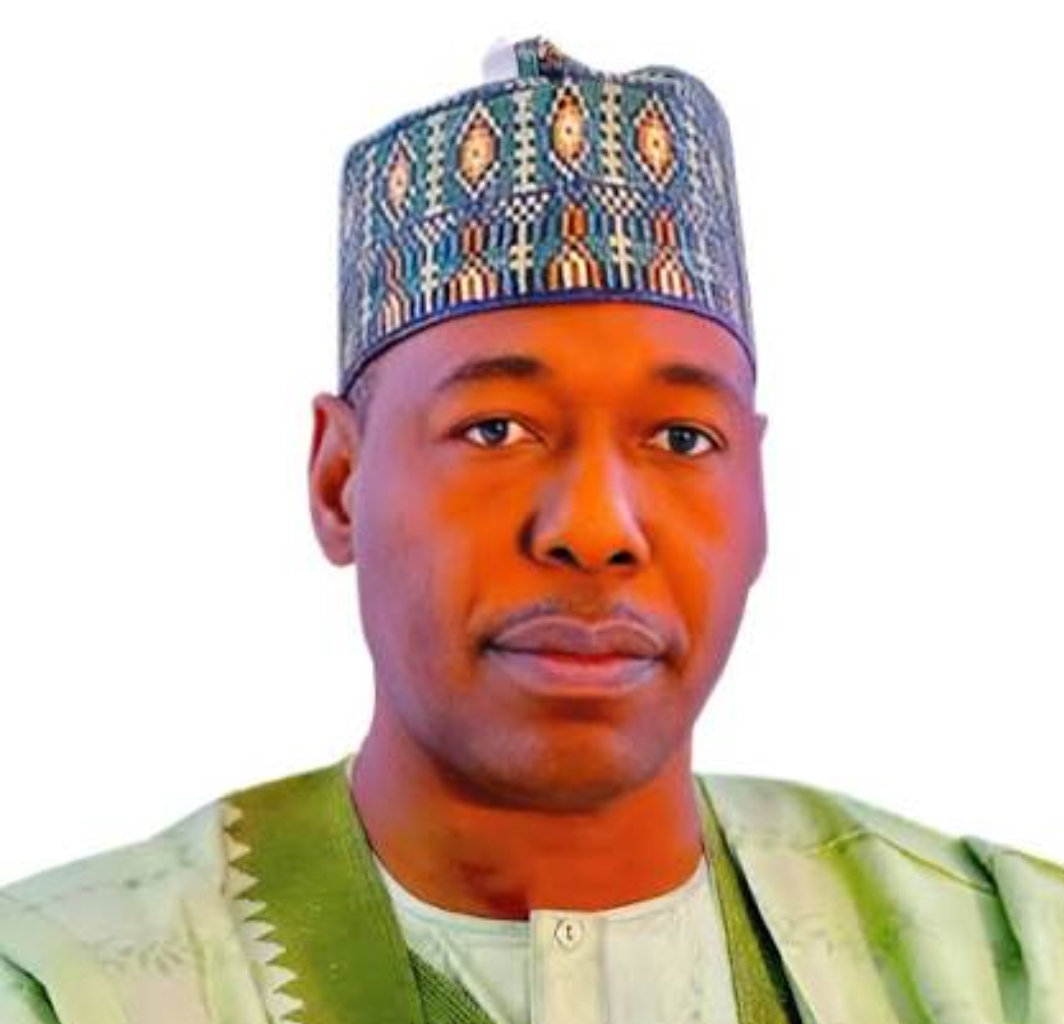
Building Beyond His Tenure: Why Zulum’s Transformative Footprints Will Outlive His Government
By: Dr. James Bwala
Public leadership is often criticized. In a democratic society, citizens have the right to question government policies, challenge official decisions, and demand accountability from those entrusted with public resources. Such scrutiny is not only legitimate but necessary. However, criticism becomes destructive when it is driven by personal hostility, political bitterness, misinformation, or the use of unprintable names against public officials. In the case of Professor Babagana Umara Zulum, Governor of Borno State, the intensity of some attacks cannot erase the visible transformation taking place across the state.
Regardless of the negative opinions expressed by certain individuals, one fact remains difficult to dispute: Governor Zulum’s administration has made significant investments in healthcare, education, roads, bridges, flyovers, reconstruction, human capital development, and the restoration of hope among citizens affected by years of insecurity. These accomplishments are not merely political claims or campaign slogans. They are physical and institutional developments that can be seen, assessed, used, and remembered. While political arguments may fade with time, projects that improve people’s lives often become enduring evidence of a leader’s contribution to society.
Borno State has faced extraordinary challenges. For more than a decade, the state has endured terrorism, displacement, destruction of public infrastructure, economic disruption, and the trauma of communities separated from their homes. In such an environment, governance requires more than routine administration. It demands courage, vision, compassion, and the ability to rebuild amid uncertainty. Governor Zulum inherited a state in which many citizens were not only seeking employment or better roads but also struggling to return safely to their communities, access healthcare, educate their children, and rebuild their livelihoods.
The scale of these challenges makes the progress recorded under his administration especially important. Leadership should be judged within context. It is reasonable to ask whether every problem has been solved, because no administration can solve all problems at once. However, it is unfair to ignore meaningful progress simply because difficulties remain. The existence of unfinished work does not invalidate completed work. Instead, it emphasizes the value of continuity, constructive criticism, and collective responsibility.
One of the most important areas in which Governor Zulum’s administration has made an impact is healthcare. In a state affected by conflict and displacement, healthcare is not a luxury; it is a basic necessity and a foundation for survival and recovery. Hospitals and primary healthcare centers require buildings, equipment, medicines, trained personnel, and reliable access for rural populations. The administration’s efforts to improve healthcare infrastructure and expand access demonstrate an understanding that rebuilding Borno must include rebuilding its health system.
Renovated and newly constructed health facilities provide citizens with a closer and safer means of receiving treatment. They also support maternal and child healthcare, emergency services, disease prevention, and general medical care. In communities where people previously travelled long distances to seek treatment, the presence of functional healthcare centers can make the difference between life and death. Such projects may not always attract the same public attention as political speeches, but their effect on families is profound.
Healthcare development also contributes to the return and resettlement of displaced persons. People are more likely to return to their communities when they know that essential services are available. A rebuilt community without hospitals, schools, roads, and clean water cannot easily become a stable home. Therefore, investment in healthcare forms part of a broader strategy for peacebuilding and recovery. It restores not only buildings but also confidence in the future.
Education is another area in which the governor’s contribution deserves recognition. No society can achieve sustainable development without educating its children and young people. In Borno, years of insurgency disrupted schooling, destroyed educational facilities, displaced teachers, and forced thousands of children out of the classroom. Addressing this crisis requires the construction and rehabilitation of schools, the recruitment and training of teachers, the provision of learning materials, and policies that encourage children to return to school.
Governor Zulum’s emphasis on education reflects the understanding that insecurity thrives where ignorance, poverty, and hopelessness are allowed to grow. Every classroom restored is an investment in peace. Every child brought back to school represents a reduction in the risk of a lost generation. Education equips young people with knowledge, skills, discipline, and the ability to contribute positively to society. It also gives families a reason to believe that their children can build lives beyond conflict and displacement.
The importance of educational development cannot be measured only by the number of buildings constructed. Its deeper value lies in the opportunities it creates. Schools shape future teachers, doctors, engineers, civil servants, entrepreneurs, and community leaders. Years from now, many people who benefit from today’s educational investments may occupy positions that influence Borno and Nigeria as a whole. When that happens, the facilities and policies that helped them will remain part of the state’s historical story.
Infrastructure is another visible area of transformation. Good roads connect communities, support commerce, reduce transportation costs, improve access to schools and hospitals, and strengthen security operations. In a state with vast rural areas and communities affected by conflict, road construction and rehabilitation are essential to economic recovery. Farmers need roads to transport produce to markets. Patients need roads to reach hospitals. Students and teachers need reliable routes to schools. Businesses need efficient transportation networks to grow.
The development of roads, bridges, and flyovers represents more than the construction of concrete and asphalt. It reflects the restoration of movement, connection, and confidence. A well-designed road can reconnect communities that were previously isolated. A bridge can open access to markets and social services. A flyover can improve traffic flow, reduce congestion, and modernize an urban environment. These projects may be criticized on the basis of design, cost, or priority, and such questions should be answered transparently. Nevertheless, their practical benefits should not be dismissed merely because some people oppose the governor politically.
Urban development also sends a powerful message about the identity of Borno State. For years, public discussion about Borno was dominated by insecurity and destruction. While the security situation remains a serious concern, the development of roads, flyovers, public buildings, and other infrastructure presents a different image: a state determined to rebuild and move forward. Development does not mean pretending that problems no longer exist. Rather, it means refusing to allow those problems to define the state permanently.
Another notable aspect of Governor Zulum’s administration is the focus on reconstruction and the return of displaced persons. Displacement is not solved simply by transporting people back to their communities. Returnees require housing, security, schools, healthcare, water, electricity, roads, and economic opportunities. They need to feel that their return is not temporary or unsafe. The rebuilding of communities therefore demands coordination, patience, and sustained investment.
By supporting reconstruction and resettlement, the administration has contributed to restoring dignity to people who were forced to leave their homes. A house is more than a structure; it is a place of belonging. A community is more than a collection of buildings; it is a network of relationships, memories, markets, schools, and places of worship. Rebuilding these communities helps heal the psychological and social wounds caused by conflict.
Of course, no responsible assessment should portray the administration as perfect. Borno still faces security challenges, unemployment, poverty, humanitarian needs, and demands for greater accountability. Public officials must remain open to criticism and must explain how public funds are spent. Projects should be completed according to quality standards, and citizens should be able to ask legitimate questions without intimidation. Constructive criticism strengthens governance, while blind praise can conceal weaknesses.
However, criticism must be distinguished from abuse. Calling a public official unprintable names does not constitute a meaningful evaluation of policy. Insults do not improve hospitals, repair roads, educate children, or create employment. They merely lower the quality of public discourse. Those who disagree with the governor should present evidence, propose alternatives, and identify areas requiring improvement. Political opposition has value when it helps government perform better; it becomes harmful when it seeks only to destroy reputations and deny visible achievements.
The ultimate test of leadership is not whether everyone offers praise. No leader can satisfy every individual or group. The more important question is whether policies produce meaningful results for ordinary people. Are communities receiving services? Are schools being restored? Are roads improving movement? Are hospitals becoming more accessible? Are displaced families returning with greater dignity and hope? Are young people gaining opportunities? These are the questions that history will ask.
History is not written only through social media arguments, political slogans, or temporary controversies. It is written through institutions, infrastructure, public records, human experiences, and the memories of citizens. A person who receives medical attention in a renovated facility may remember the administration differently from someone who only follows political debates online. A student who returns to a rebuilt school may understand the value of government investment in a deeply personal way. A farmer who transports produce more easily because of an improved road may care less about insults and more about practical results.
This is why Governor Zulum’s transformative works will remain relevant beyond the present political moment. Governments change, politicians come and go, and public arguments eventually lose their urgency. But schools continue to educate children, hospitals continue to serve patients, roads continue to connect communities, and flyovers continue to shape urban movement. These physical and social assets become part of the permanent development record of the state.
The people of Borno therefore have a responsibility to protect the gains made and demand even greater progress. Development should not be treated as the personal property of one political party or one individual. Public projects belong to the people. Citizens should use them responsibly, monitor their quality, and insist that future administrations build upon them rather than abandon them. In the same way, supporters of the governor should avoid responding to criticism with abuse. The strongest defense of good governance is evidence, not aggression.
* James Bwala, PhD, writes from Abuja
Building Beyond His Tenure: Why Zulum’s Transformative Footprints Will Outlive His Government
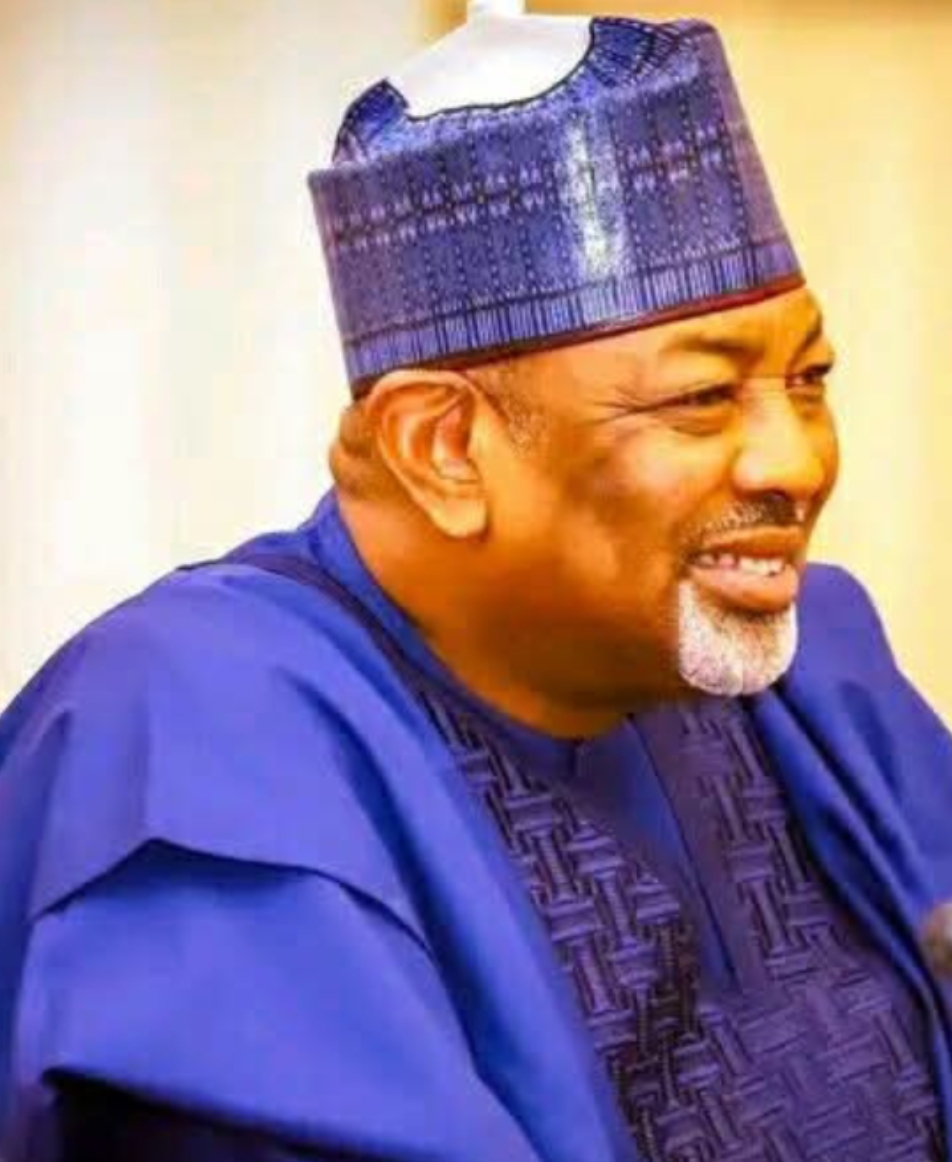
2027: Opposition Politics Must Not Distort Nigeria’s Food Security Crisis
By: Dr. James Bwala
The claim that Nigeria’s Federal Minister of Agriculture has released a report warning citizens against re-electing President Bola Tinubu in 2027 is misleading. It turns a serious food-security assessment into an opposition campaign message and attaches a political conclusion to a report that does not make such a conclusion. While Nigeria’s worsening food crisis demands urgent government action and accountability, it is wrong to manipulate statistics or attribute partisan statements to the Federal Ministry of Agriculture or international food-security institutions.
The facts must be separated from political interpretation. The October 2026 Cadre Harmonisé assessment reportedly projects that approximately 33.5 million Nigerians could face acute food insecurity between June and August 2027. This is an alarming figure. It represents a serious threat to the welfare, health, and stability of millions of Nigerians. However, nowhere in the reported assessment does it state that this outcome will occur if President Bola Tinubu wins the 2027 presidential election. That political condition was added by the authors of the viral message. It is not an established finding of the report.
This distinction is important because reports produced by professional food security institutions are designed to assess hunger, food availability, household vulnerability, and related risks. They are not election manifestos. The Cadre Harmonisé does not endorse one candidate, oppose another, or predict the result of a presidential election. Presenting it as a warning against re-electing President Tinubu is therefore an abuse of the report’s purpose and a distortion of its content.
READ ALSO: https://newsng.ng/2027-tinubu-shettima-uba-sani-and-the-apc-flag-off-campaign-in-kaduna/
The issue is not whether the Tinubu administration should be criticized. It should be held accountable for its management of the economy, food prices, agricultural productivity, fuel costs, insecurity, and social welfare. The issue is whether such criticism should be based on evidence. A democratic society requires strong scrutiny of government, but political accountability loses its value when it depends on fabricated quotations, invented conditions, or misleading comparisons.
One of the most important distortions in the circulating claim is the comparison between 26.8 million people projected to face acute food insecurity between October and December 2026 and 33.5 million projected between June and August 2027. At first glance, these figures may appear to demonstrate a sharp and direct deterioration under the Tinubu administration. However, the two numbers relate to different seasonal periods. Comparing them without explaining the seasonal context can mislead the public.
June to August is traditionally a difficult lean season in many parts of Nigeria. During this period, household food stocks from the previous harvest often decline, while the next major harvest may not yet have arrived. Food prices can rise, rural households may become more dependent on markets, and poor families can experience greater difficulty meeting their basic needs. By contrast, October to December generally overlaps with harvest and post-harvest periods in many areas, when food availability may improve. Therefore, an increase between these two periods does not automatically prove that the entire difference was caused by a new government policy or a presidential election outcome.
READ ALSO: https://newsng.ng/2027-tinubu-shettima-uba-sani-and-the-apc-flag-off-campaign-in-kaduna/
This does not mean that the projected 33.5 million figure should be dismissed. Seasonal patterns explain part of the difference, but they do not remove the need for urgent intervention. A projection of this scale indicates that millions of Nigerians may face inadequate access to food and may be unable to meet their minimum nutritional requirements. The government must treat the warning as an emergency planning signal. It should strengthen food production, improve market access, reduce post-harvest losses, protect vulnerable households, and address the insecurity that prevents farmers from cultivating their land.
It is also inaccurate to suggest that Nigeria’s food-insecurity crisis began with President Tinubu. Food insecurity has been a persistent national challenge for many years, caused by poverty, unemployment, conflict, climate shocks, weak infrastructure, inflation, poor storage systems, and limited access to agricultural finance and inputs. According to earlier assessments, the Food and Agriculture Organization projected that 30.6 million Nigerians could face acute food insecurity in 2025 and that 34.7 million could be at risk in 2026. These figures demonstrate that the problem predates the current administration.
Recognizing the history of the crisis, however, does not absolve the Tinubu government of responsibility. Every administration inherits national problems, but it is judged by how it responds to them. President Tinubu’s government must therefore explain what it is doing to reduce food inflation, support farmers, stabilize transport and energy costs, improve rural security, and protect consumers from the loss of purchasing power. Nigerians cannot eat explanations about inherited problems. They need effective policies that produce measurable improvements in their lives.
READ ALSO: https://newsng.ng/2027-tinubu-shettima-uba-sani-and-the-apc-flag-off-campaign-in-kaduna/
The removal of fuel subsidies, for example, has had broad consequences for food prices because transportation and agricultural production depend heavily on fuel. Farmers face higher costs for transporting inputs and produce. Traders spend more to move food from rural areas to urban markets. Consumers then pay more for basic staples. Although the government may argue that subsidy reform is necessary for long-term economic stability, it also has a responsibility to manage the immediate social consequences. Reform without adequate protection for poor households can deepen hunger and increase vulnerability.
Insecurity is another major factor. Farmers in several parts of the country have faced attacks, displacement, kidnapping, and restricted access to farmland. When agricultural communities cannot safely plant, harvest, or transport their produce, the effects extend beyond the affected villages. Production falls, supply chains weaken, and food prices rise. An effective food-security policy must therefore include protection for farming communities, early-warning systems, conflict prevention, and improved rural infrastructure. Food security cannot be separated from national security.
The government must also address agricultural productivity. Nigeria has significant agricultural potential, but many farmers still lack reliable access to quality seeds, fertilizer, irrigation, extension services, credit, storage, and modern equipment. Climate change adds further pressure through irregular rainfall, flooding, drought, and changing planting seasons. Government programs should be assessed according to their actual results rather than the size of their announcements. Nigerians need transparent information about how much support reaches farmers, which regions benefit, and whether production and household incomes are improving.
READ ALSO: https://newsng.ng/2027-tinubu-shettima-uba-sani-and-the-apc-flag-off-campaign-in-kaduna/
At the same time, political parties and opposition groups have a duty to communicate responsibly. Opposition is essential in a democracy. It is legitimate to question the government’s record, challenge official statistics, expose policy failures, and propose alternatives. However, opposition politics should not rely on misinformation. Turning a technical assessment into an electoral slogan may generate attention, but it damages public understanding and weakens confidence in institutions.
The consequences of this type of manipulation are serious. When citizens discover that a viral political claim has misrepresented an official report, they may become suspicious of all information, including accurate warnings about hunger. This creates a dangerous situation. Food-security assessments depend on public trust because governments, humanitarian agencies, and communities must use them to plan interventions. If such reports are repeatedly presented as partisan documents, their credibility can be damaged.
The public should therefore ask basic questions before accepting or sharing politically charged claims. What exactly does the original report say? Is the quotation verifiable? Are the compared periods the same? Does the report identify a cause, or does it merely present a projection? Has an institution actually made the political statement being attributed to it? These questions are especially important during election periods, when facts are often selected or rearranged to support campaign narratives.
READ ALSO: https://newsng.ng/2027-tinubu-shettima-uba-sani-and-the-apc-flag-off-campaign-in-kaduna/
The projected figure of 33.5 million Nigerians facing acute food insecurity between June and August 2027 should be treated as a warning, not as an election prophecy. It is a call for immediate planning and action. The Federal Government should work with state governments, farmers’ organizations, humanitarian agencies, researchers, and community leaders to prepare for the lean season. Intervention should include targeted social protection, food assistance for the most vulnerable, support for smallholder farmers, investment in irrigation and storage, and measures to improve market stability.
Civil society and the media also have an important role. Journalists should verify reports before publishing sensational political interpretations. Fact-checking organizations should identify manipulated statistics and provide the public with the relevant context. Political actors should be challenged when they present institutional findings inaccurately, regardless of their party affiliation. Fair standards must apply to both government supporters and opponents.
Ultimately, Nigerians deserve two things at the same time: honest criticism and accurate information. It is possible to acknowledge that food insecurity predates President Tinubu while also holding his administration responsible for its present response. It is possible to reject a misleading campaign claim without defending every government policy. It is possible to insist that the government must do more without inventing conclusions that do not appear in an official assessment.
READ ALSO: https://newsng.ng/2027-tinubu-shettima-uba-sani-and-the-apc-flag-off-campaign-in-kaduna/
The warning is serious. Millions of Nigerians may face acute food insecurity, and the projected increase requires urgent attention. Food inflation, insecurity, weak agricultural productivity, high fuel costs, and declining household purchasing power are real problems. The Tinubu administration must be judged by the effectiveness, transparency, and speed of its response. But that judgment must be based on evidence rather than fabricated quotations or political additions.
The Cadre Harmonisé is a food-security assessment, not an opposition campaign document. It does not endorse Atiku, oppose Tinubu, or predict the outcome of the 2027 election. Nigerians should criticize the president where the facts justify criticism and defend him where the facts justify defense. Above all, political debate must not be built on manufactured conclusions. Nigeria’s food crisis is too serious to be reduced to propaganda. The country needs truth, accountability, and practical action—not manipulated statistics presented as institutional warnings.
*James Bwala, PhD, writes from Abuja
2027: Opposition Politics Must Not Distort Nigeria’s Food Security Crisis

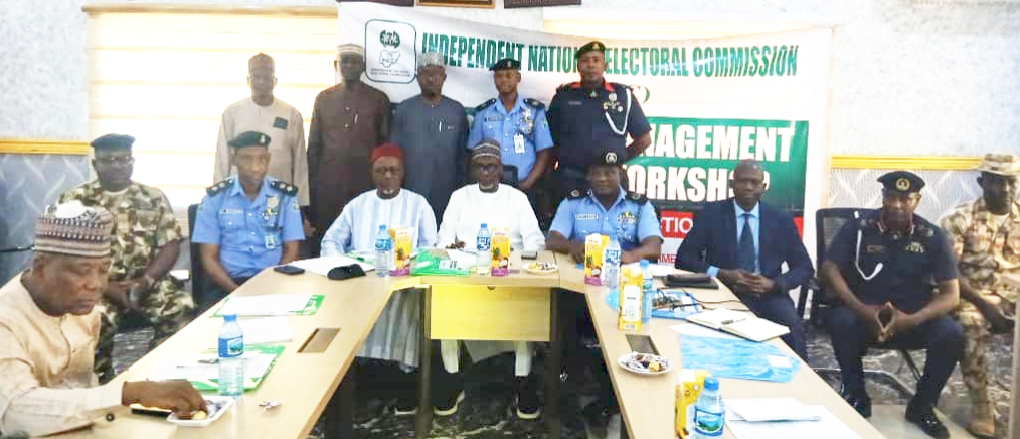
INEC engages Adamawa stakeholders on electoral risk management sensitisation
By Mohammed Ibrahim
The Independent National Electoral Commission (INEC) in Adamawa has engaged stakeholders on risk management sensitisation to improve preparedness towards ensuring a peaceful, credible and successful electoral process.
Speaking at the one day workshop in Yola, the state Residents Electoral Commissioner (REC), Muhammad Nura said, the workshop is important as the commission intensifies preparations for the 2027 General Election.
He said the engagement would provide an opportunity for participants to exchange experiences, clarify expectations, and strengthen the channels of communication and cooperation necessary for effective electoral planning.
“It also reinforces the need for all stakeholders to remain proactive, responsive, and committed to their various responsibilities.
“I encourage participants to approach the sessions with an open mind and a willingness to learn from one another”, he said.
According to him, the experiences and insights shared will enrich collective understanding and help ensure that the objectives of the workshop are achieved.
Mr Sa’ad Sadik, Head of Department, planning and monitoring INEC Adamawa
listed some of the objectives of the engagement to include; identify State-Specific Electoral Risks.
“Deepen participants’ understanding of the Electoral risk management framework, its application, and its importance in preparing for the 2027 General Election.
“Taking into account local circumstances and emerging threats that may affect the electoral process and promote stakeholder collaboration”, he said.
He also called on the stakeholders to strengthen information sharing in the effective management of electoral risks.
The Commissioner of Police (CP) Kabir Hassan represented ACP Ibrahim Kambra in charge of operations, appreciated the INEC for the engagement at the right time.
He assured of effective collaboration and deployment of sufficient security personnel to all identify risk areas for peaceful election.
Aminat Terry, Department of Planning and Monitoring INEC, Abuja said, the commission would commence data analysis at the security thread Local Government Areas towards ensuring peaceful electoral.
Some of the risks factors identified by challenges the Electoral Office (EOs) include insurgency, kidnapping, communal clashes, hard to reach areas, ballot snatching and huggery.
According to her, the commission will conduct data analysis in all the identified risks areas between Nov. 1st and 6th.
Terry said the commission had been upgraded to new technology to ease some of the challenges faced in the past.
The Commissioner of Police (CP) Kabir Hassan appreciates INEC for the engagement at the right time.
The CP who was represented by ACP Ibrahim Kambra in charge of operations,
assured of effective collaboration and deployment of sufficient security personnel to all identified risk areas for peaceful conduct of the elections.
INEC engages Adamawa stakeholders on electoral risk management sensitisation

Army Expansion Deals Major Blow to Terrorists as Troops Rescue 16 Kidnap Victims, Recover AK-47 Rifles, RPG Bombs, 33 Motorcycles in Niger

Niger Police Arrest Four Suspects Over Alleged Plot to Sacrifice Biological Children for Money Rituals

Zulum Appoints Ali Baware Pioneer DG of Rural Access Road Authority

Roger Federer’s Shock as DNA Results Reveal Myla and Charlene Are Not His Biological Children

THE PLIGHT OF FARIDA

FAILED COUP IN BURKINA FASO: HOW TRAORÉ NARROWLY ESCAPED ASSASSINATION PLOT AMID FOREIGN INTERFERENCE CLAIMS
-
 News3 years ago
Roger Federer’s Shock as DNA Results Reveal Myla and Charlene Are Not His Biological Children
-
Opinions5 years ago
THE PLIGHT OF FARIDA
-
 News2 years ago
FAILED COUP IN BURKINA FASO: HOW TRAORÉ NARROWLY ESCAPED ASSASSINATION PLOT AMID FOREIGN INTERFERENCE CLAIMS
-
 Opinions5 years ago
POLICE CHARGE ROOMS, A MINTING PRESS
-

 News3 years ago
EYN: Rev. Billi, Distortion of History, and The Living Tamarind Tree
-

 ACADEMICS3 years ago
A History of Biu” (2015) and The Lingering Bura-Pabir Question (1)
-

 Columns3 years ago
Army University Biu: There is certain interest, but certainly not from Borno.
-

 Politics1 year ago
2027: Why Hon. Midala Balami Must Go, as Youths in Hawul and Asikira/Uba Federal Constituency Reject ₦500,000 as Sallah Gift
