
Feature
Like a Cat with “Nine Lives”: A testament of resilience and patriotism

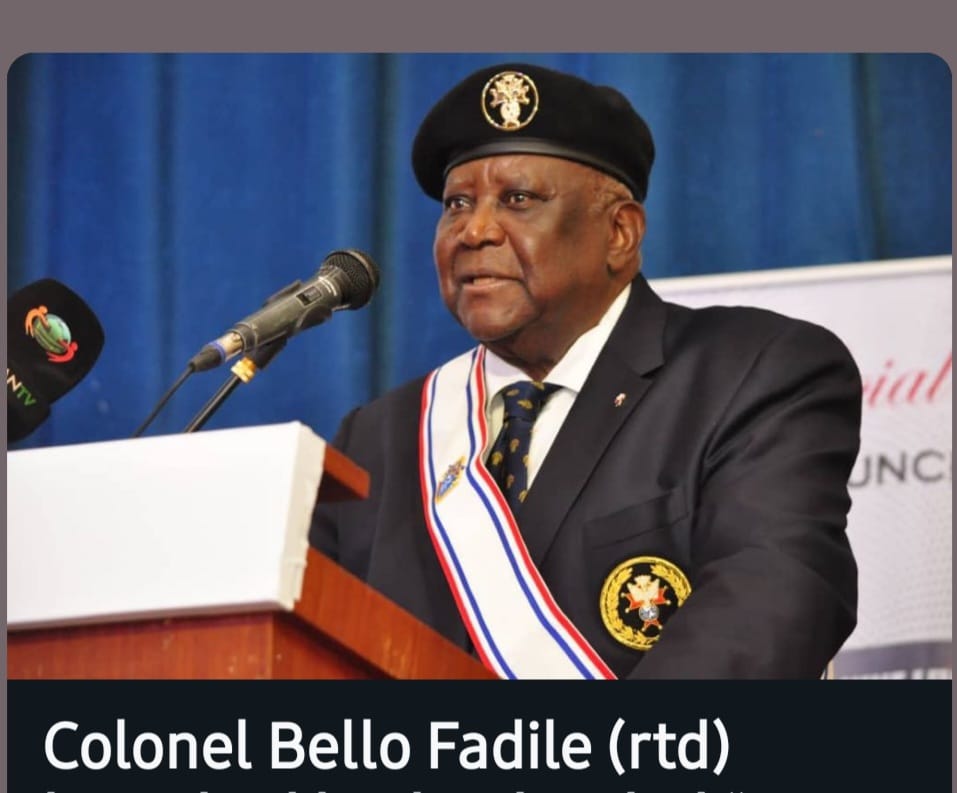
Like a Cat with “Nine Lives”: A testament of resilience and patriotism
By Senator Iroegbu
Col. Bello Fadile’s ‘Nine Lives: The Bello Fadile Memoirs’ is not just a book; it is a gripping account of survival, resilience, and faith. The memoir takes readers through the remarkable journey of a man who defied the odds, from surviving a death sentence under General Sani Abacha’s regime to carving a legacy as Nigeria’s first military-trained lawyer with a PhD in International Law. It is a story of bravery, patriotism, and the enduring quest for justice and democracy.
Having had the privilege of knowing Col. Bello Fadile through my work in the media and security sectors, I can attest to his brilliance, wit, and humility. His life exemplifies resilience and an unyielding faith in God, inspiring hope for a better Nigeria.
A Landmark Event: The Book Launch
The public presentation of Nine Lives on November 18, 2024, at the Shehu Yar’Adua Center, Abuja, was a momentous occasion chaired by General Abdulsalami Abubakar, Nigeria’s former military head of state. Dignitaries from diverse spheres, including former military President General Ibrahim Babangida (represented by his daughter Aisha Babangida), former Senate President David Mark, and John Cardinal Onaiyekan, graced the event.
The five-chapter memoir has been lauded as a vivid account of Col. Fadile’s life, chronicling his early struggles, groundbreaking achievements, near-death experiences, and ultimate triumph. It offers insights into Nigeria’s turbulent history and sheds light on the struggles for democracy and justice.
The book offers a glimpse into the extraordinary life of the author, a native of Kogi State, whose remarkable journey is a testament to perseverance and unwavering faith in God. As a trailblazer, Fadile achieved several milestones, including becoming Nigeria’s first military-trained lawyer with a PhD in International Law. His impressive career spanned serving as the Nigerian Army’s inaugural lawyer to founding the prestigious Council for African Security Affairs. Fadile’s story is a powerful narrative of bravery and resilience, marked by his imprisonment and death sentence during General Sani Abacha’s regime. Yet, with the return of democracy in 1999, he emerged free, underscoring his unshakeable spirit.¹ This inspiring account serves as a reminder that strong faith in God can help overcome even the most daunting challenges, a notion echoed in various Christian teachings.
Key Themes and Insights
The Military as Guardian of Nigeria’s Unity and Democracy: General Abdulsalami Abubakar, delivered a powerful keynote address, highlighting the military’s vital role in stabilizing Nigeria during turbulent times. He aptly described the military as a “guardian of national unity”.
Resilience and Service as National Virtues: General Abdulsalami Abubakar described the book as a testament to the transformative power of service and faith. He called on Nigerians, particularly the youth, to emulate Col. Fadile’s unwavering commitment to democracy and nation-building. “Fadile’s story is a reminder that resilience and patriotism are vital to overcoming the challenges of nationhood,” he remarked. Also, former President General Ibrahim Babangida, represented by his daughter Aisha Babangida, lauded Col. Fadile’s courage and intellectual contributions, remarkably demonstrated during his imprisonment under General Sani Abacha’s regime.
Rebuilding National Institutions: Prince Adewole Adebayo, the 2023 presidential candidate of the Social Democratic Party (SDP), emphasized the need to rebuild Nigeria’s critical institutions—military, civil service, judiciary, and industrial sector. He linked the decay in these institutions to Nigeria’s insecurity and advocated for investment in professionalism, discipline, and governance reforms. To inspire future leaders, Adebayo announced the donation of 1,000 copies of the memoir to military schools and institutions.
A Call for a People-Centered Military: In his review, Prof. Agbo Madaki called for a military that prioritizes human rights, peace, and the rule of law. He described Nine Lives as a must-read for students of history and governance, offering critical lessons on resilience, democracy, and institutional accountability.
Youth as Pillars of Nation-Building: Speakers across the event urged Nigerian youth to draw inspiration from Col. Fadile’s life and embrace patriotism, courage, and service. Prof. Maurice Iwu noted that the future of Nigeria depends on a generation willing to tackle challenges with purpose and determination.
Notable Quotes from the Event
“At a time when our nation faces internal and external threats, it is essential to remember that the military is not an isolated institution, but a guardian of national unity.” – Gen. Abdulsalami Abubakar
“Even in the face of tribulation, [Fadile] remained undaunted and consistent in the best tradition of resilience.” – Gen. Ibrahim Babangida (represented by Aisha Babangida)
“The book serves as an inspiration to those who may want to give up on their dreams because of trials. It shows how to remain strong and keep faith in God during adversity.” – Prof. Agbo Madaki
“We must encourage the rebuilding of four institutions, and four of them needed to be rebuilt immediately. We need to rebuild our military. We need to rebuild our civil service. We need to rebuild our justice system and we need to rebuild our industrial sector. In an era where modern challenges are timeless in the face, we need to build these institutions and to build them; you need to find your way to extract who will say, I dedicate my entire life to one of these four institutions, like Retired Colonel Fadile.”–Prince Adebayo
“To my fellow heroes of democracy, this is also an opportunity to relive your experiences and relieve yourselves of the burden of history should you be moved to give credence to the contents of my Memoirs or go as far as filling in any gaps that I might have wittingly or unwittingly omitted, due to effluxion of time, battle fog or blind spots. Also, on many fronts, this memoir will clarify issues for many and bring together many who had reasons to disagree. In some forums, differences of opinion may emanate from discussions around the Memoirs. Nevertheless, what is beyond dispute is that this memoir is sure to get us all talking; and from such dialogues, healing occurs, and we jointly relish the sunlight of mutual enlightenment”–Col Bello Fadile.
A Legacy of Hope and Patriotism
Col. Bello Fadile’s memoir is more than a recount of his trials and triumphs—it is a call to action for a better Nigeria. His life is a beacon of hope, reminding us that resilience, faith, and determination can overcome even the most insurmountable odds.
As Nigeria grapples with multifaceted challenges, Nine Lives offers a timely reminder of the transformative power of patriotism and institutional rebuilding. The event echoed a collective aspiration for a more secure, united, and progressive nation.
Col. Fadile’s gratitude to the audience, alongside his reflections on his years of service and sacrifice, underscored the essence of true leadership. His memoir serves as both a history lesson and a roadmap for the future—proof that even in the face of adversity, greatness is attainable.
Senator Iroegbu; a journalist, security analyst and geopolitics enthusiast is the Convener of Geopolitics Series and Editor-In-Chief of Global Sentinel and can be reached at senator.iroegbu@yahoo.co.uk
Like a Cat with “Nine Lives”: A testament of resilience and patriotism


Africa and France: From Colonial Shadows to a Partnership of Equals
By: Michael Mike
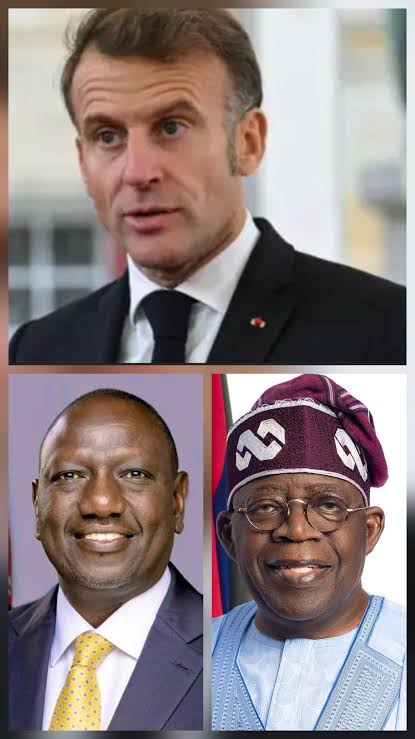
French Emmanuel Macron and Kenyan William Ruto, recently cohosted the Africa Forward Summit in Nairobi, with the intention of rebuilding relations between France and African countries. Present were many African leaders, Michael Olukayode in this report tries to place what the meeting means to France and Africa, now and in the future
For more than six decades after formal decolonisation, relations between France and Africa have remained among the most complex, controversial and strategically important international relationships in the world. What began as a colonial enterprise evolved into political alliances, military partnerships, economic dependence, cultural exchanges and, increasingly in recent years, bitter disputes over sovereignty and influence.
Today, however, that relationship appears to be entering another turning point.
At the Africa Forward Summit in Nairobi, Kenya, co-hosted by Emmanuel Macron and William Ruto, African and European leaders attempted to redefine the future of Africa-France relations around the language of equality, co-investment, sovereignty and shared prosperity.
The summit was historically symbolic. For the first time, the traditional Africa-France summit was held in a major Anglophone African country rather than a Francophone former French colony. That alone reflected a deliberate shift in France’s African policy.
But beneath the optimistic language of partnership lies a deeper historical question: can France truly build a new relationship with Africa without confronting the enduring legacies of “Françafrique”?
The Burden of History
France’s relationship with Africa cannot be understood without examining colonialism and the post-independence system that followed it.
Following the independence movements of the 1950s and 1960s, France retained enormous political, military and economic influence over many of its former colonies in West and Central Africa. Through military agreements, monetary arrangements such as the CFA franc, strategic resource control, and elite political networks, Paris maintained what became known as “Françafrique” — an informal system of influence that critics described as neo-colonial.
For decades, France intervened militarily in African states, supported friendly governments, influenced political transitions and protected economic interests. French companies dominated sectors ranging from oil and mining to telecommunications and infrastructure.
To many Africans, particularly younger generations, the relationship increasingly appeared unequal. France was often seen not as a partner but as a guardian of old structures that preserved dependency.
Anti-French sentiment grew sharply across parts of West Africa in recent years, particularly in Mali, Burkina Faso and Niger, where military juntas expelled French troops and questioned France’s long-standing role in regional security.
This changing political mood explains why the Nairobi summit represented more than diplomacy; it was an attempt at political reinvention.
Macron’s Attempt to Redefine France-Africa Relations
President Macron openly acknowledged during the summit that France’s traditional approach to Africa had become unsustainable.
“For too long,” he admitted, “too many people… saw Africa as their back yard. That is over.”
That statement was perhaps one of the most candid acknowledgements ever made by a French president regarding France’s historical posture toward Africa.
Macron’s speeches in Nairobi repeatedly emphasized that Africa no longer wants charity, paternalism or lectures from Europe.
“The African continent does not want us to come along with aid,” he declared. “People in Africa want us to come and invest.”
Throughout the summit, Macron framed the future relationship around four key concepts:
- equality;
- co-investment;
- sovereignty;
- and mutual strategic interest.
He argued that Europe’s own future prosperity and strategic autonomy are increasingly tied to Africa’s success.
“Supporting your success is a condition of our success,” he said.
This language marked a sharp departure from older diplomatic frameworks in which Africa was often treated primarily as a recipient of aid, humanitarian assistance or security intervention.
Instead, Macron repeatedly described Africa as:
- “the continent of the present,”
- a hub of innovation,
- and a critical partner in technology, energy, industrialisation and artificial intelligence.
The summit also produced concrete economic announcements, including €23 billion in investment pledges for Africa — €14 billion from French firms and €9 billion from African investors.
Why Africa Is No Longer Waiting for Europe
France’s changing tone is not occurring in a vacuum. Africa itself has changed dramatically.
The continent is now the youngest in the world, increasingly urbanised and technologically connected. African governments are diversifying partnerships with China, Turkey, India, Gulf states and Russia. No single external power dominates Africa today.
China’s rise, especially, transformed Africa’s diplomatic landscape. Chinese investment in infrastructure, mining, manufacturing and telecommunications altered the balance of influence that France and other European powers once enjoyed.
Macron himself acknowledged this shift in Nairobi, noting that China, Turkey and the United States had become stronger competitors in Africa because they were often perceived as more commercially aggressive and competitive.
At the same time, African leaders are becoming more assertive in demanding reforms in global governance, financing and trade systems.
This was strongly reflected in the intervention of Bola Tinubu at the summit.
Tinubu’s Intervention: Africa Wants Fairness, Not Charity
President Tinubu’s contribution in Nairobi reflected a broader African frustration with the global economic system.
He argued that Africa’s industrialisation and development are being constrained by unfair financial structures, punitive borrowing costs and weak investment mechanisms.
Tinubu warned that African countries are treated as permanently “high risk” economies, making access to affordable finance extremely difficult.
According to Reuters, Tinubu noted that Nigeria alone is projected to spend $11.6 billion on debt servicing in 2026 — almost half of government revenue.
His intervention aligned closely with the themes raised by Macron and Ruto:
- reform of the global financial architecture;
- support for industrialisation;
- and stronger African economic integration.
Tinubu stressed that Africa must move beyond exporting raw materials toward value-added manufacturing and regional industrialisation.
That position echoed Macron’s own argument that Africa should no longer merely export raw minerals and commodities while industrial processing happens elsewhere.
Tinubu also highlighted Nigeria’s maritime ambitions and offered the country’s Deep Blue maritime security project as a regional platform for Gulf of Guinea cooperation.
His broader message was significant: Africa is not asking for sympathy; it is demanding fair participation in the global economy.
That marks a major philosophical shift in Africa’s international diplomacy.
The Central Contradiction: Trust
Despite the optimistic rhetoric in Nairobi, the future of France-Africa relations still faces a fundamental challenge: trust.
Many Africans remain skeptical of France’s intentions.
Online discussions during the summit revealed continuing suspicion about whether France’s new strategy is genuinely different from older patterns of influence. Some commentators accused France of merely shifting its focus from hostile Francophone countries toward more receptive Anglophone states such as Kenya.
Others questioned whether investment-led engagement could simply become a new form of economic dependency rather than genuine partnership.
These concerns are not baseless.
True partnership requires more than speeches and investment announcements. It requires structural change.
Africa’s future relationship with France — and indeed with Europe generally — must therefore be built on several principles.
What the Future Relationship Should Look Like
- From Extraction to Industrialisation
Africa can no longer remain primarily an exporter of raw materials.
The continent possesses critical minerals essential for global energy transition, digital technology and manufacturing. Yet much of the value addition still occurs outside Africa.
Future France-Africa relations should focus on:
- local manufacturing;
- industrial parks;
- technology transfer;
- and African ownership within supply chains.
Macron acknowledged this reality directly when he said Africa should not merely be “where raw materials… are extracted but also where processing occurs.”
That is perhaps the most important economic issue of the next generation.
- Financial Justice and Investment Reform
African countries continue to face disproportionately high borrowing costs despite their enormous growth potential.
Tinubu’s call for financial reform highlighted the urgency of this issue.
If France truly wants a new partnership with Africa, it must support:
- fairer sovereign risk assessments;
- lower financing barriers;
- stronger development banks;
- and African-led financial institutions.
Macron’s support for strengthening the Nairobi-based ATIDI guarantee mechanism may represent one step in that direction.
- Respect for Sovereignty
Military interventions and political interference severely damaged France’s image in Africa.
Future relations must be grounded in non-interference, mutual respect and African leadership in security matters.
The Nairobi Declaration strongly emphasized that Africans must remain the principal actors in resolving African conflicts.
That principle is critical.
- Youth, Technology and Human Capital
Africa’s greatest resource is not oil, gold or lithium — it is its people.
The summit repeatedly focused on youth, innovation, digital technology, AI, sports and creative industries because both African and European leaders recognize that the continent’s demographic strength could become a global economic engine.
France’s future role should therefore prioritize:
- education partnerships;
- research collaboration;
- digital infrastructure;
- entrepreneurship financing;
- and mobility for African students and professionals.
- A Relationship Beyond Colonial Memory
History cannot be erased, but it does not have to permanently imprison the future.
France must continue confronting difficult aspects of colonial history honestly, while African governments must also engage pragmatically with new opportunities.
The future cannot be built entirely on resentment, nor can it be built on denial.
What Africa increasingly demands is dignity, reciprocity and respect.
A Defining Transition
The Africa Forward Summit may ultimately be remembered as the moment when France publicly accepted that the old order in Africa had ended.
Macron himself acknowledged this transformation:
“That is over.”
But declarations alone will not redefine the relationship.
The real test will lie in whether:
- investments become genuine partnerships;
- financing becomes fairer;
- African industries become stronger;
- and sovereignty becomes respected in practice rather than rhetoric.
Africa today is no longer a passive actor in global affairs. It is increasingly confident, assertive and strategic.
France can either adapt to this new Africa as an equal partner — or continue losing influence to countries that understand the changing realities more quickly.
The future of France-Africa relations will therefore not be determined in Paris alone.
It will increasingly be shaped in Nairobi, Abuja, Kigali, Lagos, Dakar, Johannesburg and across a continent that is no longer waiting to be spoken for.
Africa and France: From Colonial Shadows to a Partnership of Equals
DEMOCRACY AND THE COURAGE TO BELIEVE
By: Barr. Jonathan Abakpa
Democracy remains the hallmark of a people’s aspirations. At its very essence, democracy is about the will of the people, their hopes, their voices, their choices, and their collective vision for society. There may be differences in perspectives, competing ideologies, and divergent opinions on how democracy should function, but beneath these differences lies one enduring truth: democracy is about people.
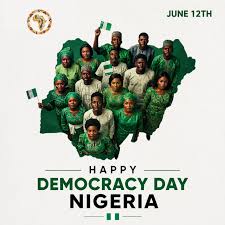
Today, democracy has become the most widely accepted system of government worldwide because it recognises the dignity and agency of citizens. In Nigeria, this democratic journey has endured for twenty-seven uninterrupted years. This milestone deserves recognition. It reflects resilience, progress, and Nigerians’ determination to continue choosing dialogue over dictatorship, ballots over bullets, and participation over exclusion.
Yet anniversaries are not merely occasions for celebration; they are moments for reflection. They compel us to ask difficult questions about whether democracy is delivering on its promises and whether citizens still believe in the democratic project.
In his Democracy Day address, President Bola Ahmed Tinubu spoke directly to Nigerian youth, urging them to believe in Nigeria and its future. It was a powerful call to optimism. Indeed, no nation can prosper if its young people lose faith in the possibility of change. Young people are not merely beneficiaries of democracy; they are its custodians, innovators, defenders, and future leaders. However, belief cannot be demanded; it must be earned.
Democracy is strongest when citizens trust the process, when they see their voices reflected in governance, and when they feel protected by the institutions created to serve them. Citizens believe in democracy not simply because elections are held, but because they can see evidence that the system works for them.
The President rightly observed that democracy without security is a failed democracy and reassured Nigerians that his administration is working to improve the nation’s security architecture. This recognition is important because security is not separate from democracy; it is one of its foundations. Freedom loses meaning when people live in fear.
Yet, even as these assurances were being made, the nation continues to confront painful realities. Reports of kidnappings, attacks on communities, and the abduction of innocent children remind us that many Nigerians still wake up uncertain of their safety. The image of children stolen from their homes and communities is not merely a security concern; it is a challenge to the very promise of democracy.
How can young people fully believe in the future when the road to school is uncertain?
How can citizens confidently participate in governance when fear dictates their movements?
How can democracy flourish when survival becomes a daily struggle?
There was another moment in the President’s Democracy Day address that deserves reflection. In recognising distinguished Nigerians with national honours, the President rightly celebrated individuals whose contributions have shaped the nation’s democratic journey. Such recognition is important. Nations must remember those who have served and sacrificed for the common good.
Yet democracy grows beyond elections, political offices, and moments of official recognition.
The girl who walks miles to school through uncertainty and insecurity because she refuses to let her future be stolen.
Democracy is also sustained by countless Nigerians whose names may never appear on an honours list, but whose courage keeps the nation alive every day.
They are the heroes of our democracy.
The young woman who refuses to surrender her dreams to discrimination, exclusion, or violence.
The student who studies by candlelight, convinced that education remains a bridge to a better tomorrow.
The young entrepreneur who wakes every morning uncertain of the next fuel price increase, transportation cost, electricity tariff, or economic shock, yet still chooses to create, innovate, and persevere.
The farmer who plants despite fear.
The teacher who inspires despite limitations.
The health worker who serves despite inadequate resources.
The men and women of our armed forces and security agencies who stand between chaos and order often pay the ultimate price in defence of Nigeria’s territorial integrity and sovereignty. Many die with little recognition beyond folded flags, grieving families, and silent prayers. They, too, are heroes of our democracy.
And then there is Leah Sharibu.
Her story transcends politics. In the face of terror, captivity, and unimaginable pressure, she remained steadfast in her convictions. Her courage speaks to the very essence of freedom; the right to believe, to worship, and to live according to one’s conscience without fear. Whether one shares her faith or not, her resilience embodies the ideals of a Nigeria where diversity is respected and freedom of belief is protected. She remains a symbol of what a truly free society should represent.
The President also stated that the responsibility of this generation is to sustain democracy and ensure prosperity. That responsibility is indeed ours. But democracy and prosperity cannot be improved by citizens alone. Government, institutions, civil society, and communities must all play their part.
For young Nigerians, sustaining democracy means participating, organizing, voting, advocating, innovating, and holding leaders accountable. For the government, sustaining democracy means ensuring that citizens can live, learn, work, and dream in safety.
For democracy is not merely the absence of military rule.
It is a mother who sleeps knowing her children will return safely from school.
It is a young girl who walks to class without fear.
It is a farmer who tills his land without the sound of gunfire in the distance.
It is a student whose ambition is greater than his anxiety.
It is a nation where hope travels farther than fear.
It is where the ballot carries more power than the bullet.
It is where disagreement does not become violence.
It is where diversity is not feared but celebrated.
It is where every citizen, regardless of faith, ethnicity, gender, or status, can live freely and with dignity.
It is where the dreams of young people are not interrupted by violence.
As Nigeria marks twenty-seven years of uninterrupted democracy, we must celebrate how far we have come. But we must also confront how far we still need to go. The true test of our democracy will not be measured only by the number of years it survives, but by the number of lives it secures, opportunities it creates, freedoms it protects, and dreams it preserves.
If young people are to believe in Nigeria, then Nigeria must become a country where believing is rewarded by evidence, not merely encouraged by words.
The task before this generation is not simply to sustain democracy. It is to deepen it, strengthen it, and make it meaningful for every citizen. And that journey begins with ensuring that every Nigerian can move freely, speak freely, worship freely, dream boldly, and live safely.
Only then can democracy truly fulfil its promise.
Barr. Jonathan Abakpa
Human Rights Lawyer
DEMOCRACY AND THE COURAGE TO BELIEVE
Feature
My Binoculars: June 12, The Fragile Security of Nigeria and This Unending Damnation Called Ransom for Commercial Banditry
My Binoculars: June 12, The Fragile Security of Nigeria and This Unending Damnation Called Ransom for Commercial Banditry
By: Bodunrin Kayode
Most residents in Nigeria are so used to the old ways of doing things that they think that mere agitation for the release of one set of captive will be the end of this lingering sing-song that has been let loose in the land by theses scare cat criminals called bandits. Release our students has become a mere social album released intermittently because even the political leaders are busy trying to solve this damnation from the head instead of from the root. The interagency corporation in terms of intelligence sharing has equally become so weak that the policy itself has deteriorated to a mere chorus either in a staccato or crescendo format to suit the ears of foreign watchers like the Americans who seem to care. We also know that the disparity between the vocal range of the department of State Service (DSS) and the military is so wide that it will take the grace of God for them to continue to sing in harmony as was preached by General Chris Musa before he was dropped as Chief of Defense staff. Until they all find their bearings harmoniously, these criminals extorting Nigerians in the savannah will continue to have their say with impunity. Abductions and kidnappings will surely linger for a long time until this government swallows its pride and requests for massive help from willing friends or mercinaries to take out these criminals in the bush once and for all.
Very few State actors within the general security network bother about taking these criminals out of their hide outs as long as their loved ones have been freed from their grips. These urchins can continue to stay in the savannah and now some parts of the rain forests in the South West of the country carrying out their criminality on vulnerable people to make them cry. Some of the residents they have humiliated include political, military and traditional rulers and they don’t care a hoot about our common humanity. Yet the Federal government in the last eleven years continue to treat their known sponsors like sacred cows who should not be touched.
For some of these reasons, I don’t believe that the release of captives this weekend will ever stop another set of residents from being captured in two weeks time. This is because these criminals will always get more vulnerable people to monitor especially in our largely unmanned forest terrain and pick them up like hawks clutching their preys in their claws. Poor residents, desperate to free their loved ones empower these criminals with “anything they want” under the sun besides humongous amounts of cash making them richer by the days.
It’s a very sad reality that any layman can see the lacuna in our communities for easy capture of our people because of the way our security architecture is designed. Off course the bottom line of all this hide and seek game is the demand for more money because the whole phenomenon has become an industry for the criminals who keep prospering while fighting for a “known cause” against the rest of us. From Boko Haram to Lakurawa, Biafran and even Islamic State of West African Province (iswap) fighters, they all have fixated known causes not hidden to keen observers in the country.
How to stop these criminals from prospering
Security managers have to stop doing things the same way they are used to doing them after the civil war and move to the next known level of sophistry. The key intelligence people must move from manual to the highest form of digital sophistication and collaborate with the big players in the world to get results. The military intelligence and the cyber tech squad must increase their romance.
By this I also mean that, trainers in the Nigerian Defense Academyy (NDA) for instance should go beyond the conventional ways they are used to doing things and incorporate asymmetric formations into their curriculum the way institutions like West Point and Sandhurst have done even before the commencement of the rebellion against organized governments by extremists in many parts of the world. The earlier the better for our security network which is heavily appropriated in trillions of naira yet grossly underfunded each fiscal year. This gives rise to the inability of defense managers most times to being unable to buy the basic and advanced Intel equipment for utilization to fight back. Even when the British and American troops on ground have been enabling our personnel with some of these rare equipment within the last decade, the effect in terms of optics is minimal compared to a situation where our men will own and operate theirs. For us residents who live and work in the “Hadin Kai” theatre, we know that the British have been doing their best with theses Intel supports but it has never been enough to cover even 10 percent of the vast forests which stretches up to the Tumbus islands of the lake Chad or way beyond the Mandara mountains down to the central African region. Most commanders in the Frontline have operated under a trial and error basis when it comes to descerning critical Intel. But thank God, the collaboration with the Americans have started yielding tangible fruits beyond some reasonable doubts.
Key intelligence agencies have to start acting in real time to save more lives if they are supported with these expensive equipment to respond to assist the ten agencies now dishing out intels. This is because responding in real time is key to stop these criminals from their lingering operations in the country. Consequently, it is only the right intelligence that can take out the estimated 30,000 criminals the Americans alerted the nation about and not necessarily brute force known to the military.
Our dedicated operatives also have to stop clamoring for half bread by ensuring that our political servants in government and service Chiefs go after and take out all 30,000 of the criminals as has been revealed by those who have the right equipment to see the bandits as they roam about our bushes with impunity. Mark my words if the security operatives do not move to the next level in terms of Intel sharing and management, many more will have to be abducted. Hundreds more will suffer in the process and die before the next June 12 democracy day. And please don’t ever ask me why. Nigeria has a lot of fixing to do in the security sector for residents to sleep with both eyes closed.
Bodunrin Kayode wrote in from Maiduguri.
My Binoculars: June 12, The Fragile Security of Nigeria and This Unending Damnation Called Ransom for Commercial Banditry

Police Foil IED Attack, Destroy Explosive Device in Zamfara

WHEN TERRORISTS MOCK THE STATE

Russia’s Role in the Widening Insecurity in Africa

Roger Federer’s Shock as DNA Results Reveal Myla and Charlene Are Not His Biological Children

THE PLIGHT OF FARIDA

FAILED COUP IN BURKINA FASO: HOW TRAORÉ NARROWLY ESCAPED ASSASSINATION PLOT AMID FOREIGN INTERFERENCE CLAIMS
-
 News2 years ago
Roger Federer’s Shock as DNA Results Reveal Myla and Charlene Are Not His Biological Children
-
Opinions4 years ago
THE PLIGHT OF FARIDA
-
 News1 year ago
FAILED COUP IN BURKINA FASO: HOW TRAORÉ NARROWLY ESCAPED ASSASSINATION PLOT AMID FOREIGN INTERFERENCE CLAIMS
-

 News2 years ago
EYN: Rev. Billi, Distortion of History, and The Living Tamarind Tree
-
 Opinions4 years ago
POLICE CHARGE ROOMS, A MINTING PRESS
-

 ACADEMICS2 years ago
A History of Biu” (2015) and The Lingering Bura-Pabir Question (1)
-

 Columns2 years ago
Army University Biu: There is certain interest, but certainly not from Borno.
-

 Politics1 year ago
2027: Why Hon. Midala Balami Must Go, as Youths in Hawul and Asikira/Uba Federal Constituency Reject ₦500,000 as Sallah Gift
