
News
Logumani: Zulum launches 500 houses for victims of insurgency

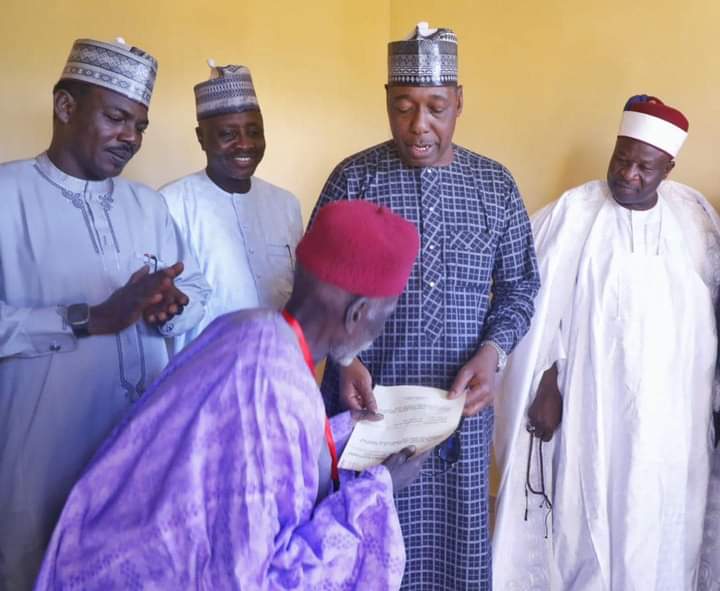
Logumani: Zulum launches 500 houses for victims of insurgency
… Shares livelihood support for returnees
By: Our Reporter
Borno State Governor, Babagana Umara Zulum, commissioned 500 resettlement houses for internally displaced persons on Sunday in Logumani community of Ngala local government area located in the central part of Borno State.
The newly constructed Logumani community made up of units of two-bedroom semi-detached low-cost houses, with basic amenities such as a primary school, health centre, police station and borehole for water provision.
The houses were distributed to over 500 families which the governor said was part of Borno State Government’s efforts to provide shelter for people displaced by Boko Haram conflict.
Logumani residents were displaced as a result of the activities of Boko Haram insurgents. They were previously taking refuge in Dikwa, Ngala and other communities.
The governor in his address gave assurance that his administration would not relent in providing basic services to people of the state.
“I want to commend our partners, Germany, the UK, the UNDP and others for donating to the stabilization facility that makes this possible. I want to assure you that the government of Borno State will not relent in providing necessities to its people”, Zulum said.
In a goodwill message, the Shehu of Dikwa, Ibrahim Ibn Umar El-kanemi, the Senator for Borno Central, Barrister Kaka Shehu Lawan, member House of Representatives for Bama, Ngala, and Kala-Balge constituency, Dr Zainab Gimba commended Governor Zulum for the leadership he has been providing.
Others who commended the Governor include the member House of Assembly representing Ngala Local Government, Hon. Bukar Abatcha, and the Caretaker Chairman of Ngala, Abdurrahman Abdulkarim.
.. Shares livelihood support for the returnees
Meanwhile, Governor Babagana Umara Zulum distributed livelihood support package to returnees that were displaced for nearly a decade by Boko Haram insurgency.
The governor presented allocation letters of houses to some of the beneficiaries with each male and female heads of households receiving N50,000 in cash.
Other items they received were one bull and one cow, a bag of rice and maize grain, a water pump, clothing materials, seedlings, and insecticide to boost irrigation farming. Meanwhile, female beneficiaries that are housewives each received N20,000 in cash and a wrapper.
Zulum expressed gratitude to President Bola Ahmed Tinubu for his commitment to addressing the security challenges faced in Borno State. He also commended the Nigerian military for their sacrifices in combating criminal activities.
The governor’s entourage to Logumani had the member House of Representatives for Marte, Monguno, and Nganzai constituency, Engr. Bukar Talba, members of Borno State House of Assembly, commissioners, and other senior government officials.
Logumani: Zulum launches 500 houses for victims of insurgency


Military
Mutiny: Presidential Guard Tightens Security Around Niger Presidency Amid Reports of Military Protest
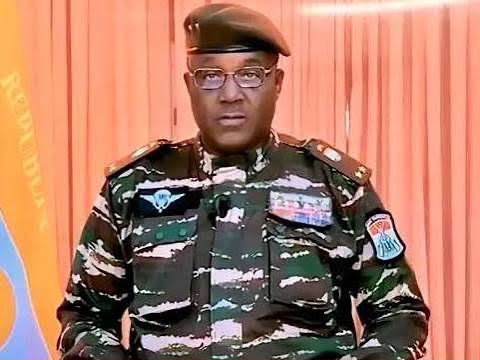
Mutiny: Presidential Guard Tightens Security Around Niger Presidency Amid Reports of Military Protest
By Zagazola Makama
Security was significantly reinforced around Niger’s Presidential Palace in Niamey following reports of unrest involving elements of the country’s armed forces, security sources told Zagazola Makama.
According to multiple security sources, the heightened deployment of the Presidential Guard, supported by armoured vehicles around the Presidential Palace on the night of July 3 and into July 4, followed what was described as a limited protest by personnel of an armoured unit within the Niger Armed Forces (FAN).
The sources said some soldiers reportedly declined deployment to frontline positions in northern Tillabéri Region, particularly around Inatès and Chinagodrar, citing inadequate heavy equipment and insufficient operational resources to confront the growing security threats in the area.
The protest was described by one source as a “small mutiny,” although there has been no official confirmation from the Nigerien authorities.
Security sources said the development triggered concern within the country’s leadership, prompting the reinforcement of security around the Presidential Palace and temporary restrictions on movement in the surrounding area as a precautionary measure.
The Tillabéri Region remains one of Niger’s most volatile security zones, with recurrent attacks by armed extremist groups, including factions linked to the so-called Islamic State in the Greater Sahara (ISGS).
As of the time of filing this report, the Nigerien government and military authorities had not issued any official statement regarding the reported protest or the increased security presence around the Presidency.
The situation remains under close observation.
Mutiny: Presidential Guard Tightens Security Around Niger Presidency Amid Reports of Military Protest
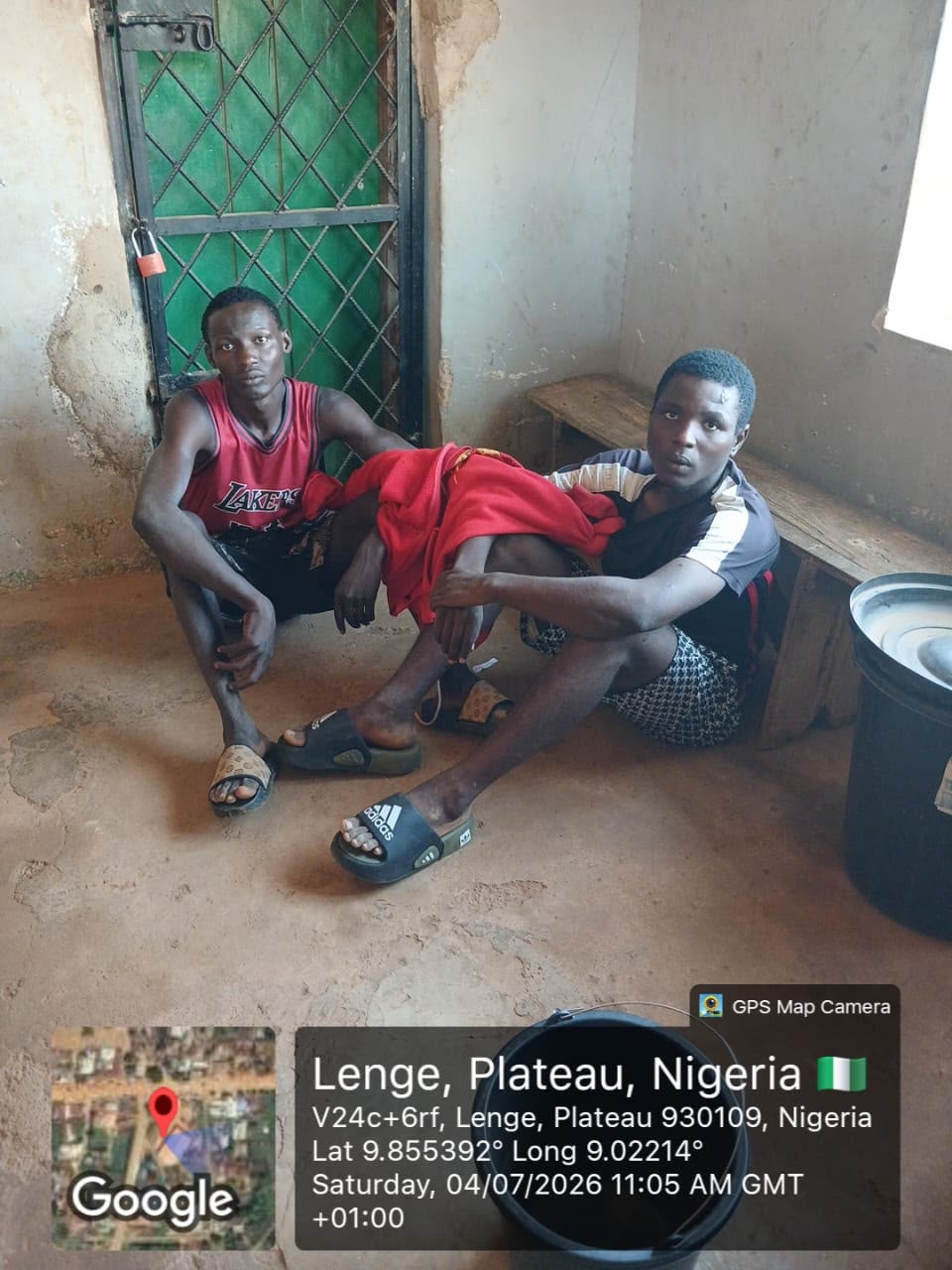
Two suspected criminals arrested during patrol in Plateau
By: Zagazola Makama
Troops of Sector 1 under Operation Enduring Peace have arrested two suspected criminals during a routine patrol in Jos East Local Government Area of Plateau.
Security sources disclosed that the suspects, identified as Azi Ezekiel, 21, and Ajiji Emmanuel, 19, were apprehended at about 10:30 a.m. on Saturday along the road leading to Forbur Village.
The sources said the suspects were intercepted by troops of Sector 1, Sub-Sector 12, while conducting a routine patrol in the area.
According to the sources, the two suspects have been handed over to the Keystone Police Station in Forbur for further investigation and possible prosecution.
The arrest forms part of ongoing security operations aimed at combating criminal activities and enhancing safety across Plateau State.
Two suspected criminals arrested during patrol in Plateau
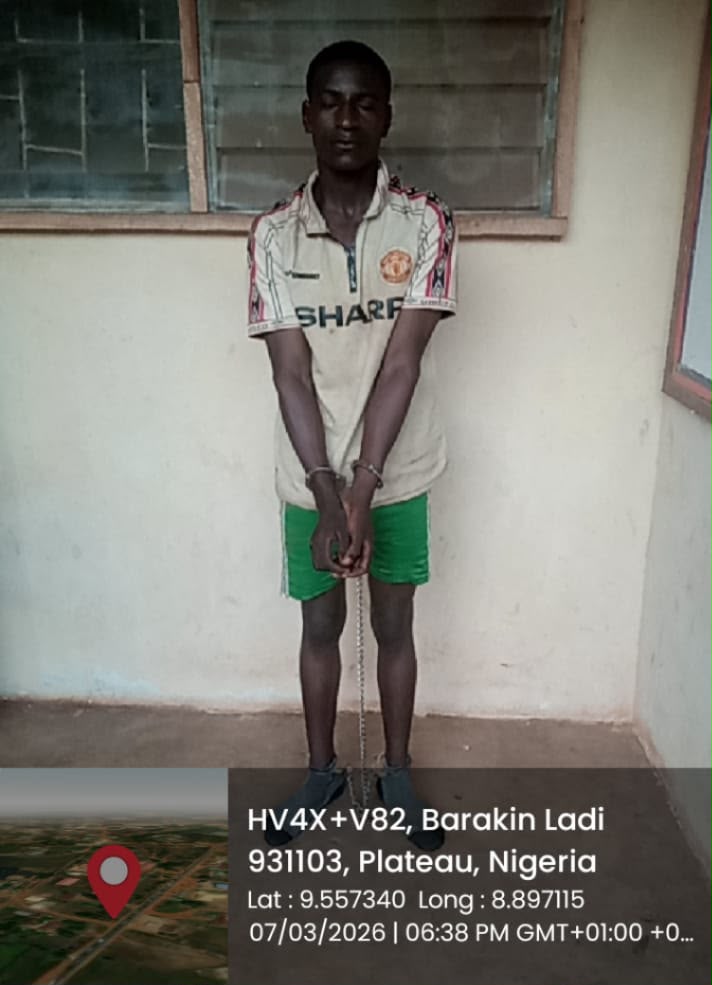
Troops arrest suspected kidnapper in Plateau community
By: Zagazola Makama
Troops of Sector 4 of Operation Enduring Peace have arrested a suspected kidnapper during a security operation in Barkin Ladi Local Government Area of Plateau.
Security sources said the suspect, identified as Mohamdu Surajo, 29, was arrested at about 6:45 p.m. on Friday at Sabon Layi Village following sustained security operations in the area.
The sources disclosed that the suspect is currently in military custody and is undergoing preliminary interrogation to aid ongoing investigations.
They added that the arrest is part of continued efforts by security forces to dismantle criminal networks and enhance security across Plateau State.
Troops arrest suspected kidnapper in Plateau community

President Tinubu Flags Off the Construction of Dikwa–Gamboru Ngala, Bama–Banki International Road Projects

Mutiny: Presidential Guard Tightens Security Around Niger Presidency Amid Reports of Military Protest

Troops Arrest Two Suspected Berom Militia Linked to NIPSS Attack as Security Sources Say Investigation Supports Earlier Leads

Roger Federer’s Shock as DNA Results Reveal Myla and Charlene Are Not His Biological Children

THE PLIGHT OF FARIDA

FAILED COUP IN BURKINA FASO: HOW TRAORÉ NARROWLY ESCAPED ASSASSINATION PLOT AMID FOREIGN INTERFERENCE CLAIMS
-
 News2 years ago
Roger Federer’s Shock as DNA Results Reveal Myla and Charlene Are Not His Biological Children
-
Opinions4 years ago
THE PLIGHT OF FARIDA
-
 News1 year ago
FAILED COUP IN BURKINA FASO: HOW TRAORÉ NARROWLY ESCAPED ASSASSINATION PLOT AMID FOREIGN INTERFERENCE CLAIMS
-

 News2 years ago
EYN: Rev. Billi, Distortion of History, and The Living Tamarind Tree
-
 Opinions5 years ago
POLICE CHARGE ROOMS, A MINTING PRESS
-

 ACADEMICS2 years ago
A History of Biu” (2015) and The Lingering Bura-Pabir Question (1)
-

 Columns2 years ago
Army University Biu: There is certain interest, but certainly not from Borno.
-

 Politics1 year ago
2027: Why Hon. Midala Balami Must Go, as Youths in Hawul and Asikira/Uba Federal Constituency Reject ₦500,000 as Sallah Gift
