
National News
Marwa: NDLEA Open to Controlled Exportation of Cannabis Oil

Marwa: NDLEA Open to Controlled Exportation of Cannabis Oil
By: Michael Mike
Chairman/Chief Executive Officer of the National Drug Law Enforcement Agency (NDLEA) has said the agency is not averse to the controlled and regulated export of cannabis oil to countries who desire it but remains opposed to its local consumption.
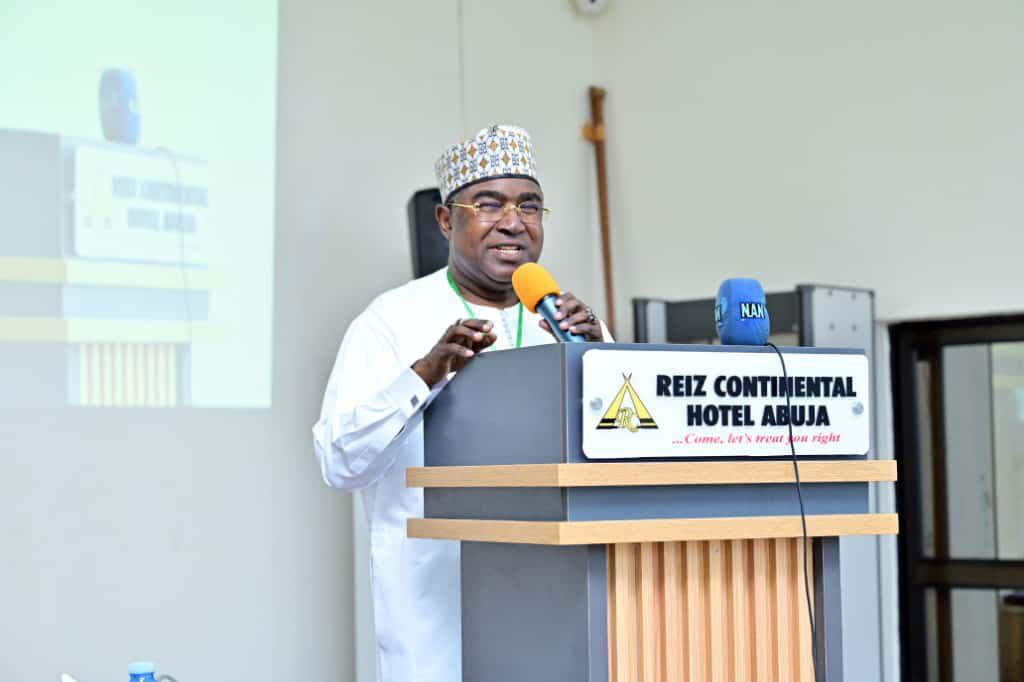
Speaking at a stakeholders workshop themed “Cannabis Oil Debate: The Path Forward for Nigeria”, organized by the Nigerian Academy of Science in Abuja on Wednesday, Marwa said the dialogue on cannabis oil is a welcome development.
He said: “At NDLEA, our position on cannabis oil is simple: we welcome dialogue. We believe Nigeria must make informed choices, not choices driven by half-truths, commercial interests, or global trends. Cannabis oil may have medicinal properties worth investigating, but it also carries health risks, potential for misuse, and implications for public safety. This is why it is crucial that scientists, medical experts, policymakers, and regulators are in the same room to bring facts to the table, scrutinise evidence, and weigh options carefully.
“Let me assure you that NDLEA is not opposed to science, nor are we indifferent to innovation. What we insist on is caution. Policy must protect lives, safeguard public health, and strengthen—not weaken—our fight against drug abuse. As such, the agency will not be averse to the idea of controlled export of cannabis oil to foreign companies and countries who desire it, as part of our drive as a country to enhance foreign earnings. After all, some countries have approved the use of cannabis oil for therapeutic purposes while others including Nigeria have not.
“Our concern however is about its consumption in Nigeria. In essence, we are not opposed to the idea of exporting the oil to those who desire it but such must be strictly controlled, licensed and monitored by NDLEA with such process located only within export free zones.”
Explaining further the position of the agency, the NDLEA boss said the conversation is necessary because “we are talking about Cannabis, which is not just another plant. It is a substance with complex medical, social, and economic dimensions. For decades, the debate has been one-sided. Advocates often highlight the supposed benefits of cannabis oil, while its risks and consequences are glossed over. This, no doubt informs the decision by us at the NDLEA to commission an ongoing study on cannabis oil by this respected apex body of scientists, the Nigerian Academy of Science.”
He added that: “In a country like Nigeria, which is already contending with a high burden of drug abuse, it is imperative that we approach this matter with sobriety, clarity, and balance. Till today, much of the public debate highlights the potential therapeutic uses of cannabis oil and the commercial value of its export. What about the risks? Evidence shows that cannabis, including its oil extracts, can have adverse effects on mental health, especially among young people. The prolonged or uncontrolled use of cannabis and its extracts is linked to anxiety, depression, psychosis, and cognitive impairment. In addition, dependence and addiction are real concerns as well. In reality, these side effects create additional social and economic costs for families, communities and society at large.
“Another fundamental issue that we must take cognisance of is that the lack of standardised production and regulation in many countries means products sold as “cannabis oil” often vary in potency, contain contaminants, or are misused outside of medical supervision. Already, Nigeria has one of the highest rates of misuse of cannabis worldwide. For a country already grappling with 14.4 percent substance abuse prevalence rate as against the global average of 5.6 percent and a staggering figure of 10.6 million cannabis users based on the last drug use survey report of 2018, the risks associated with cannabis cannot be dismissed. Rather, the reality should remind us that while cannabis oil may have medical potential, its dangers are real and must be addressed with strong safeguards before any policy shift is considered”
He said as part of efforts to mitigate the consequences of illicit drug cultivation and production is the decision by the agency, as the first in Africa, to introduce alternative development project in 2023.
According to him, “The Alternative Development Project demands ethical responsibility and commitment to develop transformative policies and humanitarian responses to mitigate drug-related problems and end the complexities and violence of the war on drugs in Nigeria and globally. In Nigeria, the Alternative Development Project will focus on reducing the vulnerabilities of ignorance, poverty, hunger, unemployment and underdevelopment that push people into illicit economies, particularly illicit drug cultivation. Aside from its link to transnational organised crime, illicit drug cultivation fuels national organised crime that causes agricultural states to abandon food crop cultivation for cannabis plantations in some communities across Nigeria. We intend to reduce these vulnerabilities both in urban centres and rural areas through the provision of functional mechanisms and facilities for sensitisation, skills acquisition, empowerment and positive engagements for sustainable livelihoods.”
In his welcome remark, President of the Nigerian Academy of Science, Prof Abubakar Sambo who was represented by the Vice President of NAS, Prof Friday Okonofua noted that several research studies have considered various uses of cannabis and its side effects. He said the workshop was aimed at reaching a consensus on the contentious issue of the use of cannabis oil.
“At the end of the day, we’ll have evidence-based consensus work, which will be properly documented that will lead us to decide what we should be doing regarding the use of cannabis in this country”, he stated.
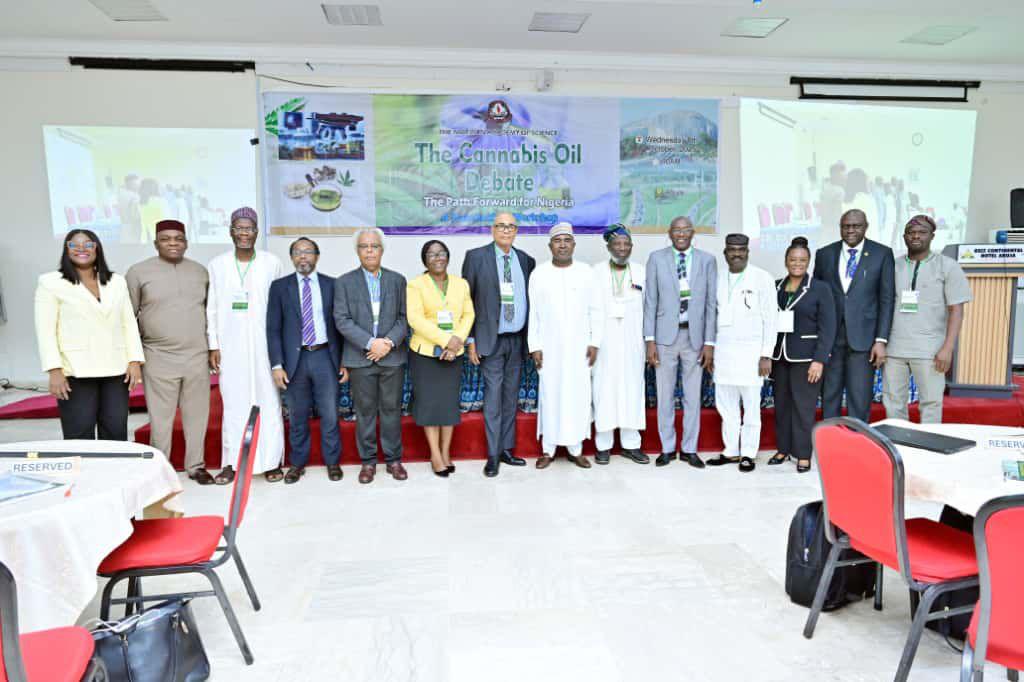
Chairman of NAS study committee on cannabis oil use, Prof Musbau Akanbi commended NDLEA for being proactive and working with the Academy to obtain science driven guide for Nigeria. “As we all know, cannabis oil is extracted from cannabis and the legalisation of the use of the oil would translate to large-scale cultivation of the weed itself. The Nigerian Academy of Science consequently constitutes the consensus study committee on cannabis oil debate, comprising experts in all fields that had to do with the study request. The committee collected a lot of literature on the subject matter from all over the world, reviewed what is happening in other lands, and decided to arrange this workshop where experts from various related fields will come together with stakeholders and present evidence that will be collated to assist NDLEA in carrying out its honest responsibility.”
Also speaking at the workshop, Dr. Samuel Adekola who represented Governor Lucky Aiyedatiwa of Ondo state noted that “this all-important workshop will offer our great country, Nigeria, the opportunity to move from debate to design, from potential to policies and I urge all participants to contribute constructively so that together we can rise to craft a model that not only benefit the consumers of health, also the sunshine state and Nigeria, but also position our nation as a leader on the African continent in this emerging field. Let us proceed with vision, with courage, and with unity of purpose”
In his keynote address, the Director, WHO Collaborating Centre for Research and Training in Mental Health, Neurosciences, and Substance Abuse, University of Ibadan, Prof. Oye Gureje, stated that cumulative evidence suggests that “cannabis has some limited medical use”, and “widespread recreational use is likely to lead to increased risk of psychosis”, while “public health may be moderately affected by increased use (e.g. road accidents)”
Marwa: NDLEA Open to Controlled Exportation of Cannabis Oil


National News
Breaking: NSCDC launches probe as 30 suspected illegal miners die in Commands custody in Niger
Breaking: NSCDC launches probe as 30 suspected illegal miners die in Commands custody in Niger
By Zagazola Makama
The Nigeria Security and Civil Defence Corps (NSCDC) has ordered an investigation into the deaths of several suspected illegal miners arrested during an enforcement operation in Niger State.
The suspects were apprehended on Sept. 15 and 16, 2026, during a joint operation targeting illegal mining activities around the M.I. Wushishi/Lukoto axis of the state.
The NSCDC Niger State Command initially reported that scores of detainees were found dead in the early hours of Sept. 17 following what was described as a suspected disease outbreak.
The remains have since been evacuated to the General Hospital, Minna, where medical examinations are expected to determine the actual cause of death.
The development has generated concern among relatives of some of the detainees, with family members alleging that more than 30 people died while in custody.
However, the NSCDC has cautioned against attributing the deaths to any particular disease before medical and laboratory examinations are concluded.
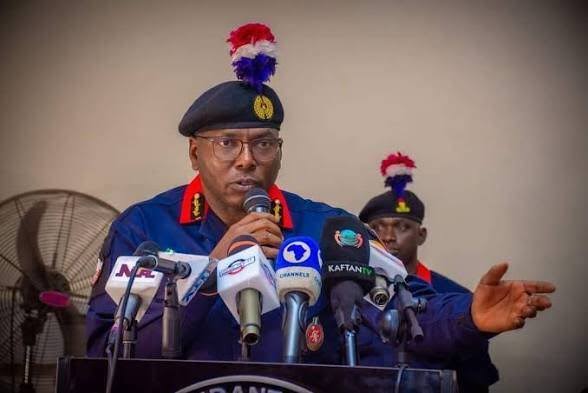
In a statement issued by the Corps’ National Public Relations Officer, Assistant Commandant of Corps Babawale Afolabi, the Commandant General, Prof. Ahmed Abubakar Audi, directed the immediate constitution of a high-powered investigative team.
The team, headed by the Deputy Commandant General responsible for Intelligence and Investigation, is expected to establish what happened before and after the suspects were taken into custody.
Investigators are to examine the physical condition of the detainees at the point of arrest, the duration of their detention, conditions inside the facility, medical care provided to them and other circumstances that could have contributed to the deaths.
The Corps said it was also working with health authorities and other security agencies to implement appropriate medical and public-health measures.
It further directed that the health and welfare of suspects still in custody be given immediate priority, while personnel who may have come into contact with the affected detainees are also protected.
The NSCDC said the incident would be addressed strictly on the basis of verified medical and investigative findings.
The Corps also reiterated that its campaign against illegal mining would continue, stressing that the enforcement of the law must be carried out alongside respect for the dignity and fundamental rights of persons in custody.
The Commandant General expressed condolences to the families of those who died and assured them that the circumstances surrounding the incident would be thoroughly investigated.
The Corps appealed to the public to remain calm while the medical and investigative processes are concluded, promising to release further information as verified facts become available.
The incident has meanwhile raised questions about the health status and detention conditions of the arrested miners, with the pending medical examination expected to provide critical answers on what caused the deaths.
Breaking: NSCDC launches probe as 30 suspected illegal miners die in Commands custody in Niger

VP SHETTIMA CLARIFIES REMARKS ON NORTHERN GOVERNORS’ SUPPORT FOR PRESIDENT TINUBU
By: Our Reporter
The Office of the Vice President wishes to clarify remarks by Vice President Kashim Shettima concerning the support President Bola Ahmed Tinubu received from northern governors in the build-up to his emergence as the presidential candidate of the All Progressives Congress (APC).
The Vice President’s reference to six northern governors who believed in and supported President Tinubu was specifically about political consultations and alignments preceding the APC presidential primary in June 2022.
It was not a comment on the position of northern APC governors following President Tinubu’s emergence as the party’s candidate, nor was it intended to question their support during the 2023 presidential election.
Following the presidential primary, APC governors in the North rallied around the party’s candidate and played important roles in the campaign and electoral efforts that culminated in President Tinubu’s victory in the 2023 general election. Indeed, it is worthy of note that it was after the declaration of President Tinubu as winner of the 2023 presidential primaries that all other governors across the country rallied round and followed suit. That declaration by the northern governors hence became the aligning moment across all political divides in the quest for power shift.
VP Shettima holds the northern governors and other leaders of the APC in high regard and recognises their individual and collective contributions to the success of the party and the emergence of President Tinubu.
The Vice President regrets any interpretation of his remarks that may have suggested otherwise and hopes this clarification places the comments in their proper context.
VP Shettima also appreciates the Nigerian media for its longstanding professionalism and constructive engagement with his office and urges continued accuracy and context in the reporting of public remarks as the country approaches another political season.
VP SHETTIMA CLARIFIES REMARKS ON NORTHERN GOVERNORS’ SUPPORT FOR PRESIDENT TINUBU
Foreign Minister Warns Diplomats: Route All Official Business Through My Ministry
By: Michael Mike
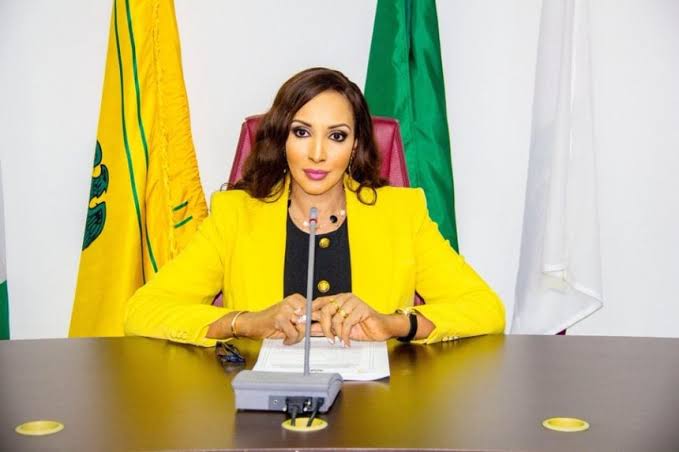
Minister of Foreign Affairs, Ambassador Bianca Odumegwu-Ojukwu, on Wednesday warned foreign missions to stop bypassing her ministry to deal directly with the Presidency and other arms of government, declaring that the Ministry of Foreign Affairs remains the only official channel to the Nigerian government.
Odumegwu-Ojukwu issued the warning on Thursday at her first formal briefing with the Diplomatic Corps since assuming office as substantive Foreign Minister.
“This Ministry is your diplomatic home. My doors remain open,” she told ambassadors, high commissioners and international organisations, but added that official requests must be routed through the ministry to ensure coordination and institutional memory.
“Bypassing established channels risks conflicting information, duplication and avoidable misunderstandings. We are not an obstacle. We are your bridge to the Nigerian Government,” she said.
The Minister said Nigeria will pursue strategic autonomy under President Bola Ahmed Tinubu — choosing its friends and positions strictly on national interest, mutual respect and reciprocity.
“Strategic autonomy does not mean isolation. It means preserving Nigeria’s sovereign right to determine relationships that best serve our people,” she declared.
She said Tinubu’s foreign policy is anchored on Four Ds — Demography, Development, Democracy and Diaspora — and described Nigeria’s posture as Nigeria-centered, Africa-conscious and globally engaged.
Odumegwu-Ojukwu announced a push to revive dormant Joint Commissions and Bi-National Commissions, insisting that diplomatic warmth must produce tangible results in trade, investment, security, education and technology.
She thanked foreign capitals for prompt Agrément for Nigeria’s ambassadorial nominees and pledged faster presentation of Letters of Credence for envoys in Abuja.
On consular frictions, she hit at prolonged visa delays for Nigerians.
“We respect every country’s sovereign right to determine its visa policy, but excessively long waiting periods create considerable difficulties for legitimate travellers, students, businesspersons and families,” she said, urging efficiency and transparency.
She reaffirmed Nigeria’s commitment under the Vienna Conventions to protect diplomatic personnel and premises and urged missions to report security concerns promptly.
Odumegwu-Ojukwu said Nigeria remains open for trade, investment and technology partnership but insisted on sovereign equality and reciprocity, warning that no country can tackle terrorism, climate change, cyber insecurity and irregular migration alone.
She said Nigeria will stay active in ECOWAS, AU, UN and Commonwealth and continue to demand a stronger African voice in global decisions.
Foreign Minister Warns Diplomats: Route All Official Business Through My Ministry

Civil Defence: The Silence, Accountability And Death of Miners in Niger

Independent journalist Safwan U. Ahmed alerts security agencies over alleged threat to his life in Mangu

JNIM claims killing of 150 Malian soldiers, capture of 93 others in Dioura attack

Roger Federer’s Shock as DNA Results Reveal Myla and Charlene Are Not His Biological Children

THE PLIGHT OF FARIDA

FAILED COUP IN BURKINA FASO: HOW TRAORÉ NARROWLY ESCAPED ASSASSINATION PLOT AMID FOREIGN INTERFERENCE CLAIMS
-
 News3 years ago
Roger Federer’s Shock as DNA Results Reveal Myla and Charlene Are Not His Biological Children
-
Opinions5 years ago
THE PLIGHT OF FARIDA
-
 News1 year ago
FAILED COUP IN BURKINA FASO: HOW TRAORÉ NARROWLY ESCAPED ASSASSINATION PLOT AMID FOREIGN INTERFERENCE CLAIMS
-

 News3 years ago
EYN: Rev. Billi, Distortion of History, and The Living Tamarind Tree
-
 Opinions5 years ago
POLICE CHARGE ROOMS, A MINTING PRESS
-

 ACADEMICS3 years ago
A History of Biu” (2015) and The Lingering Bura-Pabir Question (1)
-

 Columns3 years ago
Army University Biu: There is certain interest, but certainly not from Borno.
-

 Politics1 year ago
2027: Why Hon. Midala Balami Must Go, as Youths in Hawul and Asikira/Uba Federal Constituency Reject ₦500,000 as Sallah Gift
