
News
Misunderstanding insecurity: Hold Sobowale Responsible

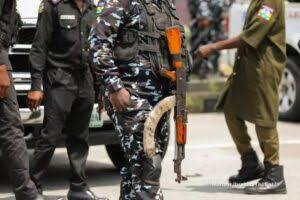
Misunderstanding insecurity: Hold Sobowale Responsible
By Dauda Iliya
Dr. Dele Sobowale has been every reader’s delight for decades now. His Sunday columns fill up our weekends.
Dr. Sobowale writes in his own style: persuasive, lucid and witty. He has carved his own niche with his style of reaching out and pulling along, his readers to whichever directions he desires, well-intentioned or otherwise.
Sometimes he can be reckless and controversial. For some, this is what draws them to his weekly offerings.
He freely dabbles into issues he doesn’t fully understand. This was the case in his last column. He ventured into an unknown terrain, and lost all control.
To everyone possessing passion for, and genuinely committed to, justice and fairness with regard to issues affecting our dear country, most especially the seemingly intractable insecurity incinerating majority of its sections, the column vividly portrayed Sobowale as having sight, but lacking vision.
He has sight to see the things that inspire him to write, but completely lacks the vision to see beyond what have often turned to be his faulty sights about those things, and fathom them well enough to guarantee credibility for his writings, for the sustenance of the tradition of justice and fairness on issues affecting humanity.
It is a pity. Dr. Sobowale started mixing up things from his first sentence. He said Borno—perhaps he meant Nigeria—was under the PDP between 2011 and 2015.
This glaringly portrayed him as laughably very hasty to castigate Governor Babagana Zulum incontrovertibly unjustly on the resurgence of insecurity.
We wish to proudly report to Sobowale that not only the majority of the Nigerian public, but even the entire globe, represented by the United Nations, have hailed the governor over the non-kinetic-approach projects and programmes to solve the massive humanitarian crisis concomitant to the Boko Haram/ISWAP terror.
Sobowale the columnist continued on his free-fall until he was lost in the debris. He tried to turn the whole Boko Haram crisis on its head. It is weird. He was looking for who to blame. In his obviously now failing judgment, he visited it on Gov. Zulum. It is time for some education.
It is inconceivable how Sobowale failed to get the details of the ongoing reintegration program. First of all, it is not a program of the state government. It was initiated by the Federal Government. The state government is only a partner because most of the rehabilitation centers are located in the state.
In fact, until recently, the program was run in Gombe State. As such, Gov. Zulum has never claimed to have singlehandedly run the program, let alone order the reintegration of surrendered fighters. We do not seriously know where he got his facts, but the official position which the governor has mentioned several times is the receipt of over 300, 000 surrendered members of the group. It is often mistaken. Of this number, a lot were captives or conscripts who fled and turned themselves over to authorities when they saw an opportunity.
Without any labor, Sobowale should have known that no governor in Nigeria can unilaterally receive terrorists, run a de-radicalization program and reintegrate them. That act is itself terrorism. In this case, these surrendered fighters surrender to the Nigerian military under the Operation Safe Corridor.
OSC was launched in 2016 by the federal government. It was also one of the recommendations of the 2013 Boko Haram dialogue committee set up by President Jonathan. It was a platform for repented terrorists or those who wanted to give up arms to turn themselves over.
They go through preliminary investigations in military facilities before they are finally handed over to the state government, on behalf of the FG. Again, they go through another round of profiling before their exact de-radicalization and rehabilitation programs are prescribed.
A lot of these people were only associated to the terrorist groups. As such, they require different rehabilitation programs and approaches. There is a case of forcefully recruited young men and women; who, even when armed and deployed to fight, did it more under duress than ideology. Others were recruited as cooks, errand boys and menial laborers. They also share neither ideology nor creed.
Some of them were seized from their communities and herded into forced marriages. From these forced marriages, a lot have given birth. These boys and girls are now aged between five and fourteen—growing up to join the ranks of their fathers, if not rescued. These unsuspecting children need to be rescued—for their good and the country. They are victims.
The profiling process separates between combatant and noncombatant. Most of the latter do not require de-radicalization, they are only traumatized.
They need psychological therapy and support. Somewhere in his piece, Sobowale alluded that the governor carried out the reintegration unilaterally; and even worse, without any knowledge or research on security. Unfortunately, he failed his own test. Apart from mixing up basic facts, he also failed to carry out any research or inquiry about the subject he wrote about.
For, if he had done that, he would have come across the Borno Model, the elaborate manual used for the de-radicalization, rehabilitation and reintegration program.
Let’s serve Sobowale a little of the education he has failed to acquire justly and fairly to sustain whatever he sees as as his reputation among his blinded readers: The Borno Model template, developed by experts from various sectors, government institutions, communities, CSOs and development partners, is a product of months of rigorous research and exhaustive case studies of several instances worldwide.
It is disturbing that Sobowale is still, despite decades of exposure, at a point where he thinks a government is simply a one man’s enterprise.
To assume that, as a professor of Engineering, Gov. Zulum is not qualified to take policy decisions on security is truly shallow. This being the logic, why should he be allowed to make one on health, as he is not a medical doctor?
Beyond being an alumnus of the country’s leading institute of policy and strategic studies—the National Institute of Policy and Strategic Studies, NIPSS—Gov. Zulum, as every other governor, has in his services seasoned civil servants, aides and consultants. He has the state executive council.
In fact, even in dictatorships, leaders always have a body of advisors who advise them. Let me also remind Mr. Sobowale that the federal government has also outlined the surrender of Boko Haram insurgents as gains recorded under President Tinubu’s Renewed Hope Agenda.
The National Security Adviser, Malam Nuhu Ribado at the recently held APC summit in Abuja said “In the North East, 13,543 terrorists were neutralised, 124,408 Boko Haram/ISWAP fighters surrendered, and 11,118 weapons were recovered”.
This is a most-authoritative testament to the excellent stewardships of Zulum and his other governors of the subregion on the concrete accomplishments, not abstract statistics, with regard to the management of the terror- orchestrated humanitarian crisis that has rubbled the North-East economy.
It is, therefore, devastating that Mr. Dele Sobowale would, on the basis of inaccurate premises, visit such heavy allegations—of being responsible for the resurgence of terrorist attacks—on the governor.
One has to visit and sufficiently traverse an entity before one can credibly understand it’s complexities. However, Sobowale simply thinks he can understand the complexities of Boko Haram from the pages of newspapers or search engine results.
People who truly understand it are raining encomiums on the governor and marveling at how he is midwifing massive infrastructural projects, rebuilding of damaged communities, resettling of displaced persons and refugees, with provision of basic amenities to his people, including those in remote settlements.
He must have seen the hero’s welcome Prof. Zulum received from his people upon return from a one-week tour of several remote villages. It was a bravery that ends every bravery.
Sobowale’s utter ignorance of the true nature of things extends beyond Boko Haram. He doesn’t have even an elementary understanding of the demography he was talking about. For him, it was ludicrous that the governor called for prayers and a one day fasting.
He said, given the level of hunger in the country, the call was an attempt to cause massive deaths in the state. In this case, it is a wonder that Dr. Sobowale hasn’t yet launched a campaign or protest against the 30-day Ramadan fasting and 40 days of lent every year.
Across faith, people heeded the governor’s call. Some of these demographic nuances are obviously beyond the understanding of Dr. Sobowale. And it is a pity that this undermines his judgment of basic things.
So, last Sunday’s Vanguard column should have analysed ‘holding Sobowale responsible’ for worsening the misunderstanding of his readers on the true state of insecurity in Borno, which tantamount to misleading them on the complexities of their dear country, instead of ‘holding Zulum responsible’ for the resurgence of insecurity in Borno, which is in complete contrast to his exemplary accomplishments in the management of the terror crisis, accomplishments hailed by the entire globe, represented by the United Nations.
Dauda Iliya is the Special Adviser to Borno State Governor on Media/Spokesperson


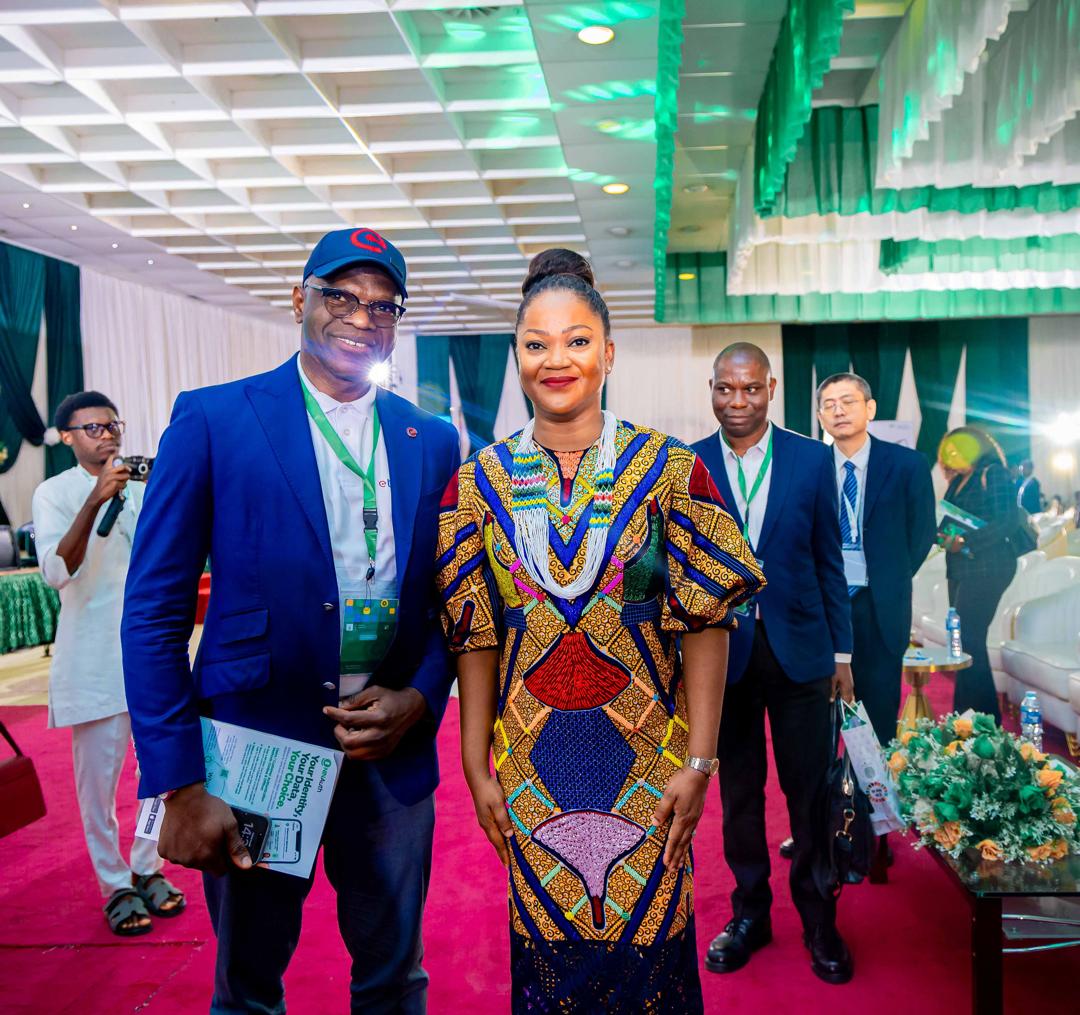
Digital Identity Becomes New Battleground for Nigeria’s Economic Transformation — eTranzact
By: Michael Mike
Nigeria’s push to build a truly digital economy is increasingly being anchored on a less visible but critical infrastructure: the ability to securely identify every participant in the digital space.
This emerged in Abuja as eTranzact International Plc reaffirmed its commitment to strengthening Nigeria’s digital identity ecosystem, warning in effect that the country’s ambitions for digital finance, secure public services and wider economic inclusion depend on trusted identity infrastructure.
The financial technology company made the commitment at the 2026 International Identity Day celebration held at the State House Banquet Hall, Abuja, where government officials, technology companies, identity solution providers and private-sector stakeholders examined the role of digital public infrastructure in Nigeria’s economic transformation.
The event, themed “Nigeria’s Digital Public Ecosystem Powering Africa’s Digital Economy,” underscored the growing importance of digital identity beyond the traditional question of identification.
At a time when banking, payments, government interventions, credit, telecommunications and other essential services are increasingly moving online, the ability to establish that an individual is who they claim to be has become fundamental to participation in the digital economy.
A stronger identity ecosystem could make it easier for citizens to access financial services, government programmes and other technology-enabled services, while providing institutions with more reliable tools for verification, compliance and protection against identity-related fraud.
It could also help bridge gaps in financial inclusion by enabling more Nigerians to establish verifiable identities needed to access bank accounts, digital payment platforms, credit and other formal financial services.
It was against this backdrop that eTranzact, which works with the National Identity Management Commission (NIMC), renewed its commitment to supporting the country’s digital public infrastructure.
The Managing Director/Chief Executive Officer of eTranzact, Niyi Toluwalope, represented by the company’s Executive Director, Government Relations and Strategic Initiatives, Abubakar Achimugu, said the company’s participation demonstrated its commitment to public-sector partnerships and technology solutions capable of advancing Nigeria’s digital transformation.
The company’s position places digital identity within the broader conversation about the infrastructure required to make Nigeria’s digital economy work at scale.
Without dependable identity verification, digital services can face challenges involving fraud, duplication, exclusion and difficulties establishing the eligibility of users and beneficiaries.
Conversely, an identity system that is secure, interoperable and accessible can provide a common foundation upon which financial institutions, government agencies and technology companies can build services.
The issue is therefore no longer simply about issuing identity credentials. It increasingly concerns how those credentials can securely connect citizens to the wider digital ecosystem.
Stakeholders at the Abuja event consequently stressed the importance of collaboration between government and private-sector technology providers in developing an ecosystem capable of supporting Nigeria’s rapidly changing digital economy.
For financial technology companies such as eTranzact, the development has direct implications for the future of digital payments and financial services, where secure customer identification is central to transactions and regulatory compliance.
For government, a stronger digital identity architecture can support more efficient delivery of public services and interventions.
For citizens, it could determine how easily they participate in an economy in which an increasing number of everyday transactions and services are being delivered digitally.
The challenge, however, is ensuring that the expansion of digital identity does not create new barriers for people who are already underserved.
Stakeholders will therefore have to balance security and verification requirements with accessibility, interoperability and inclusion if Nigeria’s digital public infrastructure is to serve the entire population.
The discussions in Abuja thus highlighted a broader reality: Nigeria’s digital transformation will not be driven by applications and payment platforms alone.
Behind the visible digital economy must be an identity infrastructure capable of establishing trust between citizens, businesses and government.
As Nigeria seeks to deepen its digital transformation and strengthen its position in Africa’s technology economy, eTranzact said sustained public-private collaboration would remain critical to building the secure and inclusive digital ecosystem required to support that ambition.
Digital Identity Becomes New Battleground for Nigeria’s Economic Transformation — eTranzact
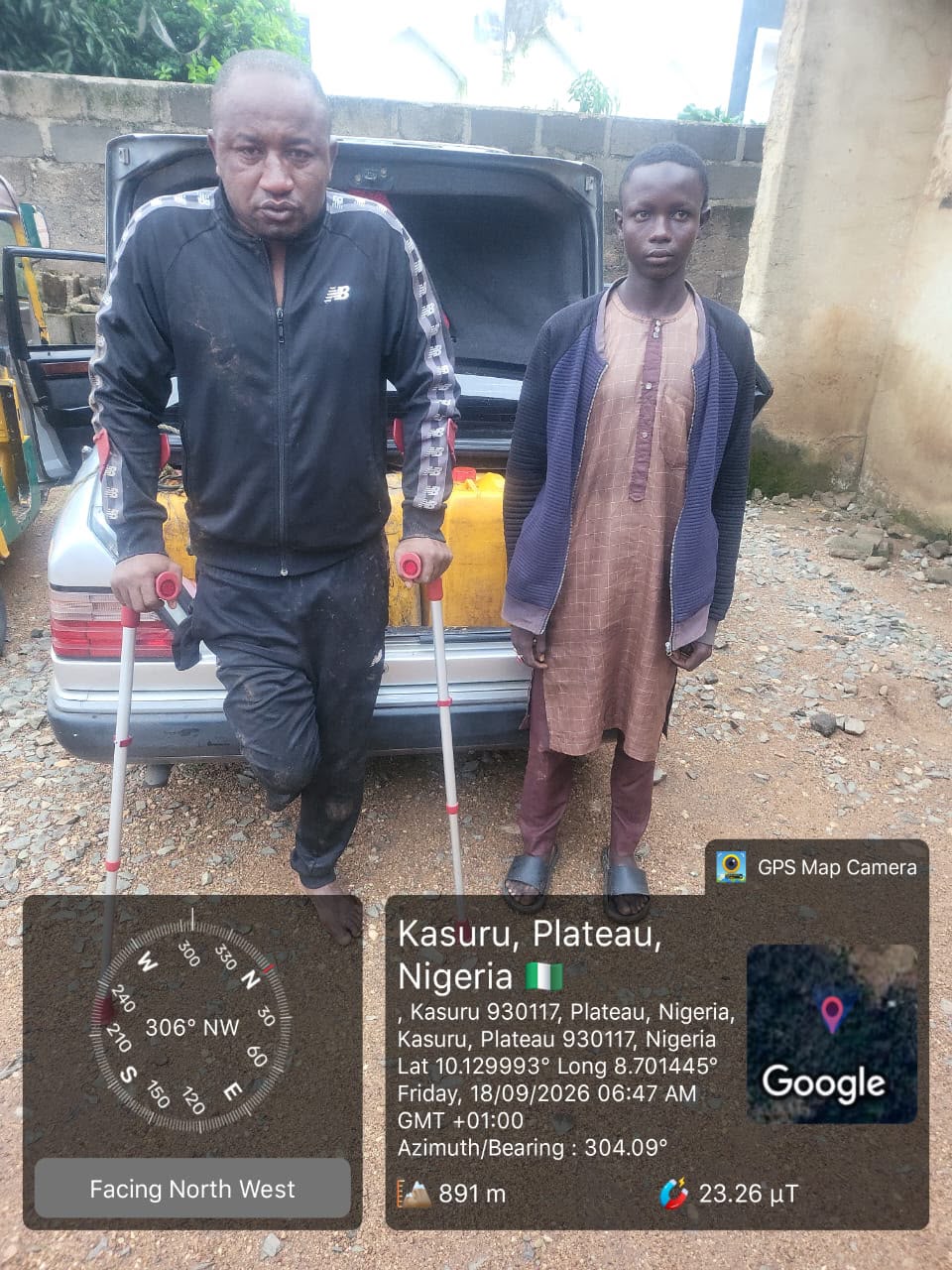
Troops arrest two suspects, recover suspected stolen goods in Plateau
By: Zagazola Makama
Troops of Sector 1, Operation Enduring Peace, have arrested two suspected criminals and recovered a vehicle loaded with suspected stolen items at Berger Junction, Mista-Ali, in Bassa Local Government Area of Plateau State.
The suspects were arrested at about 4:00 a.m. on September 18, 2026, following information about suspected criminals allegedly offloading stolen goods at the location.
The troops, acting on the report, swiftly mobilised to the area and arrested two suspects identified as Ibrahim Sulaiman, 33, and Ibrahim Husaini, 23.
The troops also recovered a Mercedes-Benz E220 vehicle allegedly loaded with suspected stolen items.
The recovered items included eight 25-litre containers of palm oil, four 4-litre containers of palm oil, two 50kg bags of rice, one 50kg bag of sugar, one carton of Maggi seasoning and an empty 25-litre jerrycan.
The suspects and recovered items were subsequently handed over to the Keystone Mista-Ali Outpost for further investigation and appropriate legal action.
Security sources said the arrest followed sustained intelligence gathering and patrol operations aimed at disrupting criminal activities and recovering stolen property in the area.
Troops arrest two suspects, recover suspected stolen goods in Plateau
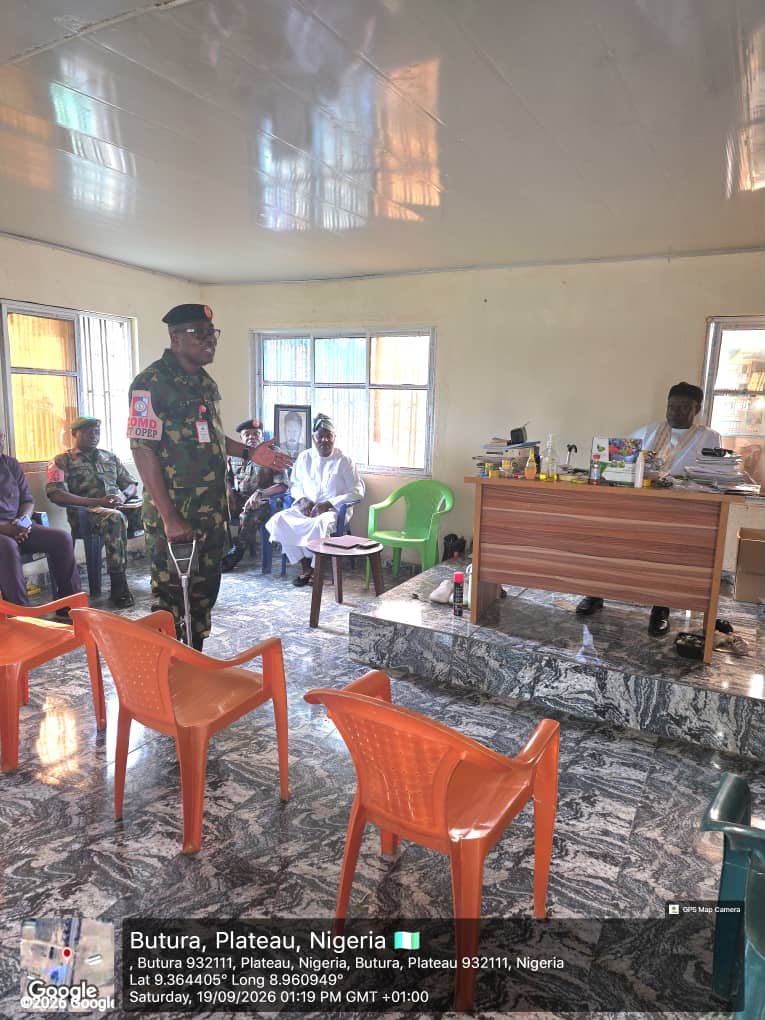
GOC 3 Division engages Bokkos stakeholders over farmer-herder conflicts
By: Zagazola Makama
The General Officer Commanding 3 Division and Commander, Operation Enduring Peace, Maj. Gen. W.M. Dangana, has engaged district heads and other stakeholders in Bokkos Local Government Area of Plateau State as part of efforts to address recurring farmer-herder conflicts in the area.
Maj. Gen. Dangana arrived at the headquarters of Sector 5, Operation Enduring Peace, in Bokkos at about 1:00 p.m. on September 19, 2026, where he was received by the Sector Commander.
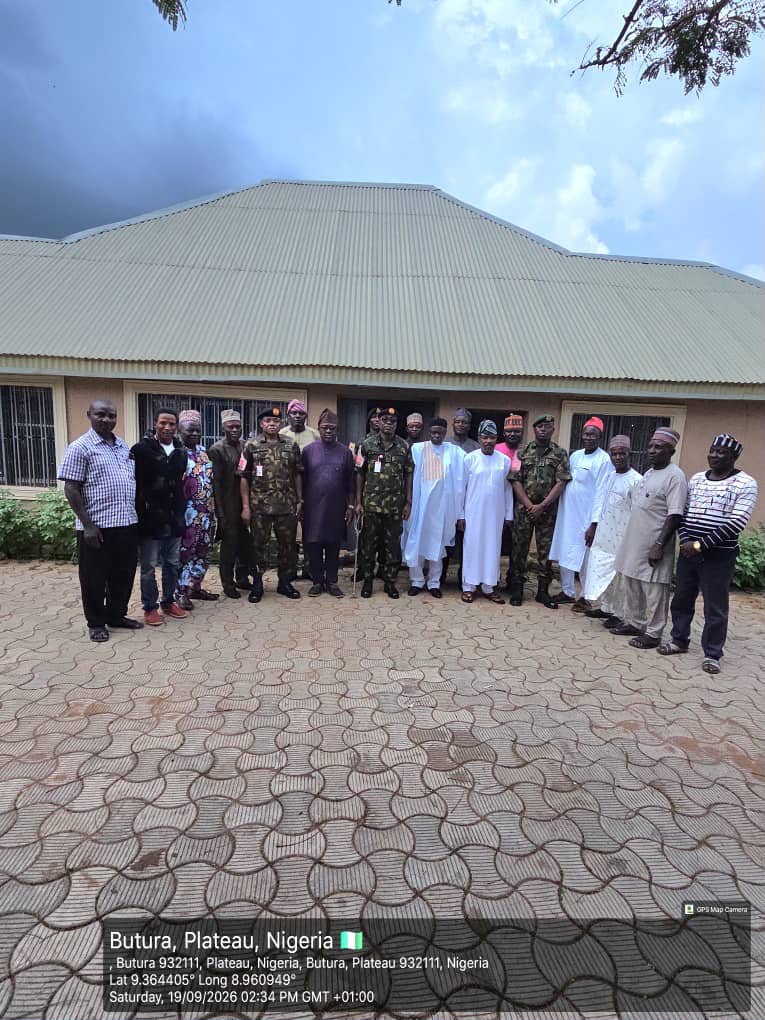
The GOC thereafter proceeded to the Palace of the Saf Bokkos, where he held an engagement meeting with district heads and other stakeholders from across the local government area.
The engagement formed part of ongoing non-kinetic efforts by the military and other stakeholders to address the underlying tensions between farming and herding communities and promote peaceful coexistence.
Discussions with traditional leaders and community stakeholders are expected to support the identification of local grievances, strengthen communication with security agencies and help prevent disputes from escalating into violence.
The engagement was conducted peacefully and without any incident.
GOC 3 Division engages Bokkos stakeholders over farmer-herder conflicts

Digital Identity Becomes New Battleground for Nigeria’s Economic Transformation — eTranzact

2027: Tinubu’s trip to America puts an end to the chatter about his supposed inability to enter the United States.

Troops arrest two suspects, recover suspected stolen goods in Plateau

Roger Federer’s Shock as DNA Results Reveal Myla and Charlene Are Not His Biological Children

THE PLIGHT OF FARIDA

FAILED COUP IN BURKINA FASO: HOW TRAORÉ NARROWLY ESCAPED ASSASSINATION PLOT AMID FOREIGN INTERFERENCE CLAIMS
-
 News3 years ago
Roger Federer’s Shock as DNA Results Reveal Myla and Charlene Are Not His Biological Children
-
Opinions5 years ago
THE PLIGHT OF FARIDA
-
 News1 year ago
FAILED COUP IN BURKINA FASO: HOW TRAORÉ NARROWLY ESCAPED ASSASSINATION PLOT AMID FOREIGN INTERFERENCE CLAIMS
-

 News3 years ago
EYN: Rev. Billi, Distortion of History, and The Living Tamarind Tree
-
 Opinions5 years ago
POLICE CHARGE ROOMS, A MINTING PRESS
-

 ACADEMICS3 years ago
A History of Biu” (2015) and The Lingering Bura-Pabir Question (1)
-

 Columns3 years ago
Army University Biu: There is certain interest, but certainly not from Borno.
-

 Politics1 year ago
2027: Why Hon. Midala Balami Must Go, as Youths in Hawul and Asikira/Uba Federal Constituency Reject ₦500,000 as Sallah Gift
