
News
NIMC DG Wins Outstanding Performance in Public Sector Award


NIMC DG Wins Outstanding Performance in Public Sector Award
By: Michael Mike
The National Identity Management Commission’s Director-General and Chief Executive Officer, Dr. Abisoye Coker-Odusote has been awarded the Outstanding Performance in Public Service Award at the African Iconic Women Recognition Awards 2025. This prestigious award recognizes her exceptional leadership and dedication to transforming Nigeria’s digital identity landscape.
The award organizers praised Engr. (Dr.) Coker-Odusote’s innovative and transformational leadership style, noting that her commitment to developing a robust and secure identity database has been instrumental in changing the scope of digital identity in Nigeria. Her visionary leadership has positioned NIMC as a frontline player in the identity sector in Africa.
Under Coker-Odusote’s astute leadership, NIMC has achieved remarkable milestones, including a significant increase in National Identification Number (NIN) enrollment, the provision of a reliable and secure world-class identity database, and the implementation of a 25/35% salary adjustment for staff. Other notable achievements include improved staff welfare, enhanced human capacity building, data harmonization, and effective collaboration with relevant government agencies in utilizing the NIN.
One of the key drivers of NIMC’s success has been Coker-Odusote’s 5-point agenda, which is aligned with President Bola Ahmed Tinubu’s Renewed Hope Mandate. This agenda has led to unprecedented growth in Nigeria’s digital identity sector, marking a new era in the country’s history.
The Commission, in a statement by its spokesman, Dr. Kayode Adegoke, urged the general public to leverage the benefits of NIN Authentication (NINAuth) for seamless verification services. NINAuth is a cutting-edge solution designed to enhance the timely and secure verification of NINs. By using NINAuth, individuals can protect their data from unauthorized use, decide when and how their data is shared, and enjoy seamless interactions with government agencies. The Commission stated its commitment to empowering individuals with control over their NIN data, ensuring a more secure and efficient identity management system.
The statement said: “By downloading and using NINAuth, Nigerians can experience the full benefits of a secure and efficient identity management system. We congratulate Engr. (Dr.) Abisoye Coker-Odusote on this well-deserved recognition and look forward to continued progress in Nigeria’s identity
NIMC DG Wins Outstanding Performance in Public Sector Award


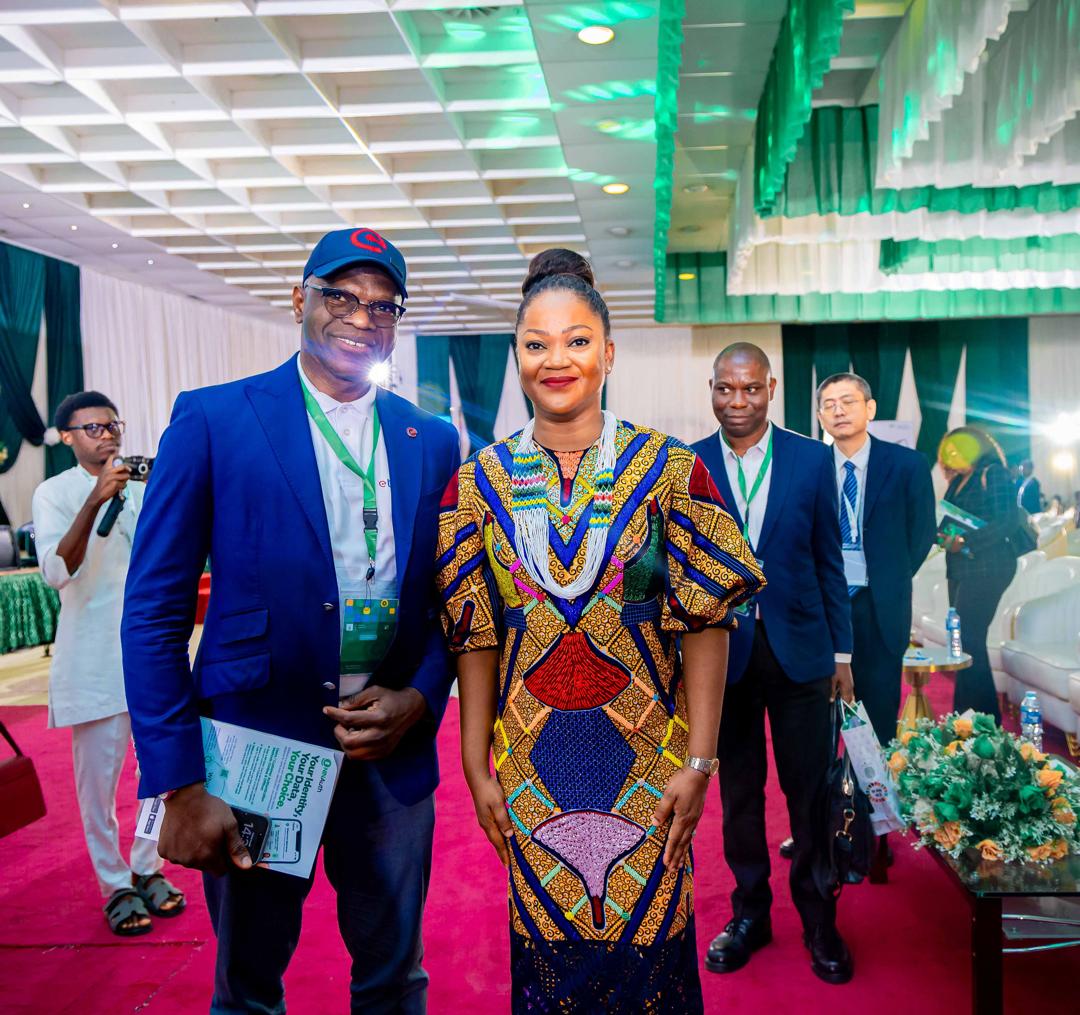
Digital Identity Becomes New Battleground for Nigeria’s Economic Transformation — eTranzact
By: Michael Mike
Nigeria’s push to build a truly digital economy is increasingly being anchored on a less visible but critical infrastructure: the ability to securely identify every participant in the digital space.
This emerged in Abuja as eTranzact International Plc reaffirmed its commitment to strengthening Nigeria’s digital identity ecosystem, warning in effect that the country’s ambitions for digital finance, secure public services and wider economic inclusion depend on trusted identity infrastructure.
The financial technology company made the commitment at the 2026 International Identity Day celebration held at the State House Banquet Hall, Abuja, where government officials, technology companies, identity solution providers and private-sector stakeholders examined the role of digital public infrastructure in Nigeria’s economic transformation.
The event, themed “Nigeria’s Digital Public Ecosystem Powering Africa’s Digital Economy,” underscored the growing importance of digital identity beyond the traditional question of identification.
At a time when banking, payments, government interventions, credit, telecommunications and other essential services are increasingly moving online, the ability to establish that an individual is who they claim to be has become fundamental to participation in the digital economy.
A stronger identity ecosystem could make it easier for citizens to access financial services, government programmes and other technology-enabled services, while providing institutions with more reliable tools for verification, compliance and protection against identity-related fraud.
It could also help bridge gaps in financial inclusion by enabling more Nigerians to establish verifiable identities needed to access bank accounts, digital payment platforms, credit and other formal financial services.
It was against this backdrop that eTranzact, which works with the National Identity Management Commission (NIMC), renewed its commitment to supporting the country’s digital public infrastructure.
The Managing Director/Chief Executive Officer of eTranzact, Niyi Toluwalope, represented by the company’s Executive Director, Government Relations and Strategic Initiatives, Abubakar Achimugu, said the company’s participation demonstrated its commitment to public-sector partnerships and technology solutions capable of advancing Nigeria’s digital transformation.
The company’s position places digital identity within the broader conversation about the infrastructure required to make Nigeria’s digital economy work at scale.
Without dependable identity verification, digital services can face challenges involving fraud, duplication, exclusion and difficulties establishing the eligibility of users and beneficiaries.
Conversely, an identity system that is secure, interoperable and accessible can provide a common foundation upon which financial institutions, government agencies and technology companies can build services.
The issue is therefore no longer simply about issuing identity credentials. It increasingly concerns how those credentials can securely connect citizens to the wider digital ecosystem.
Stakeholders at the Abuja event consequently stressed the importance of collaboration between government and private-sector technology providers in developing an ecosystem capable of supporting Nigeria’s rapidly changing digital economy.
For financial technology companies such as eTranzact, the development has direct implications for the future of digital payments and financial services, where secure customer identification is central to transactions and regulatory compliance.
For government, a stronger digital identity architecture can support more efficient delivery of public services and interventions.
For citizens, it could determine how easily they participate in an economy in which an increasing number of everyday transactions and services are being delivered digitally.
The challenge, however, is ensuring that the expansion of digital identity does not create new barriers for people who are already underserved.
Stakeholders will therefore have to balance security and verification requirements with accessibility, interoperability and inclusion if Nigeria’s digital public infrastructure is to serve the entire population.
The discussions in Abuja thus highlighted a broader reality: Nigeria’s digital transformation will not be driven by applications and payment platforms alone.
Behind the visible digital economy must be an identity infrastructure capable of establishing trust between citizens, businesses and government.
As Nigeria seeks to deepen its digital transformation and strengthen its position in Africa’s technology economy, eTranzact said sustained public-private collaboration would remain critical to building the secure and inclusive digital ecosystem required to support that ambition.
Digital Identity Becomes New Battleground for Nigeria’s Economic Transformation — eTranzact
Troops arrest two suspects, recover suspected stolen goods in Plateau
By: Zagazola Makama
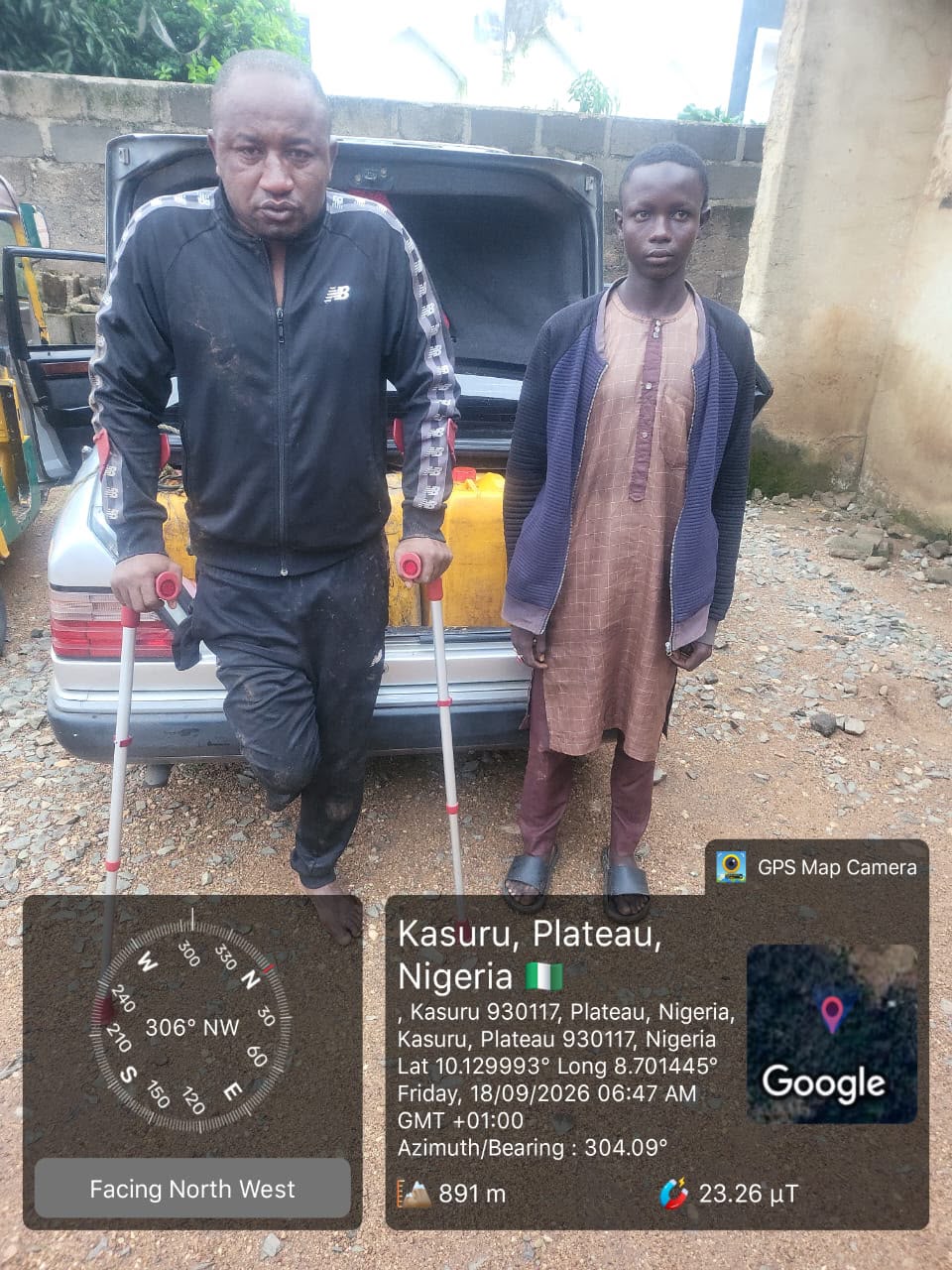
Troops of Sector 1, Operation Enduring Peace, have arrested two suspected criminals and recovered a vehicle loaded with suspected stolen items at Berger Junction, Mista-Ali, in Bassa Local Government Area of Plateau State.
The suspects were arrested at about 4:00 a.m. on September 18, 2026, following information about suspected criminals allegedly offloading stolen goods at the location.
The troops, acting on the report, swiftly mobilised to the area and arrested two suspects identified as Ibrahim Sulaiman, 33, and Ibrahim Husaini, 23.
The troops also recovered a Mercedes-Benz E220 vehicle allegedly loaded with suspected stolen items.
The recovered items included eight 25-litre containers of palm oil, four 4-litre containers of palm oil, two 50kg bags of rice, one 50kg bag of sugar, one carton of Maggi seasoning and an empty 25-litre jerrycan.
The suspects and recovered items were subsequently handed over to the Keystone Mista-Ali Outpost for further investigation and appropriate legal action.
Security sources said the arrest followed sustained intelligence gathering and patrol operations aimed at disrupting criminal activities and recovering stolen property in the area.
Troops arrest two suspects, recover suspected stolen goods in Plateau
GOC 3 Division engages Bokkos stakeholders over farmer-herder conflicts
By: Zagazola Makama
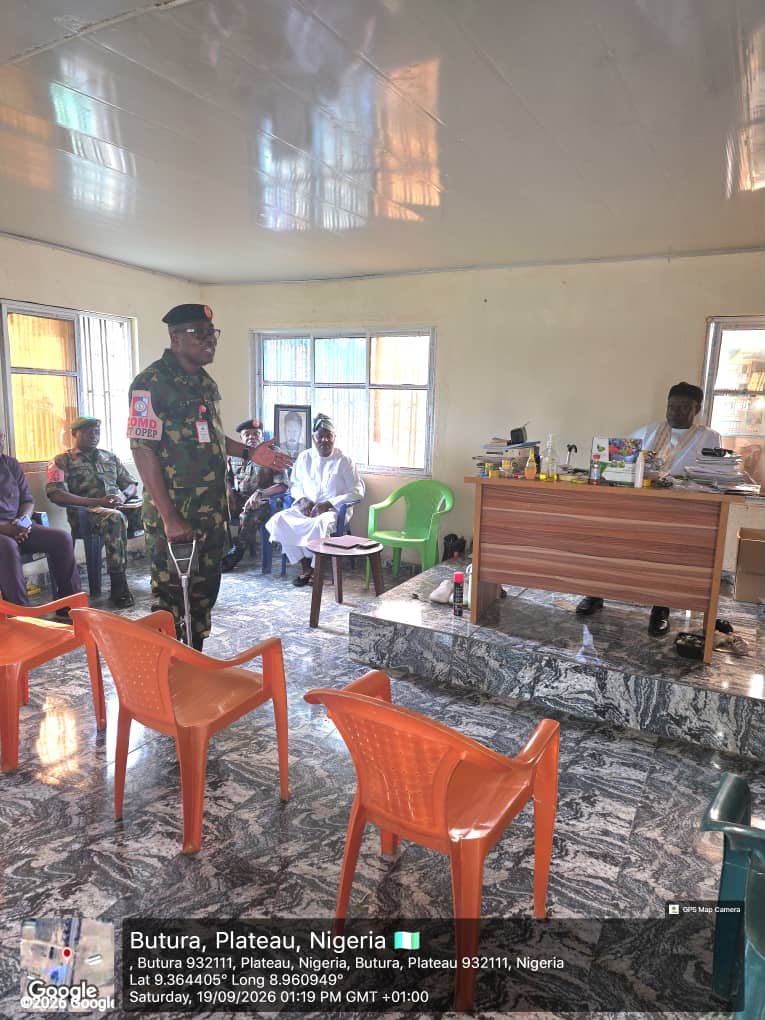
The General Officer Commanding 3 Division and Commander, Operation Enduring Peace, Maj. Gen. W.M. Dangana, has engaged district heads and other stakeholders in Bokkos Local Government Area of Plateau State as part of efforts to address recurring farmer-herder conflicts in the area.
Maj. Gen. Dangana arrived at the headquarters of Sector 5, Operation Enduring Peace, in Bokkos at about 1:00 p.m. on September 19, 2026, where he was received by the Sector Commander.
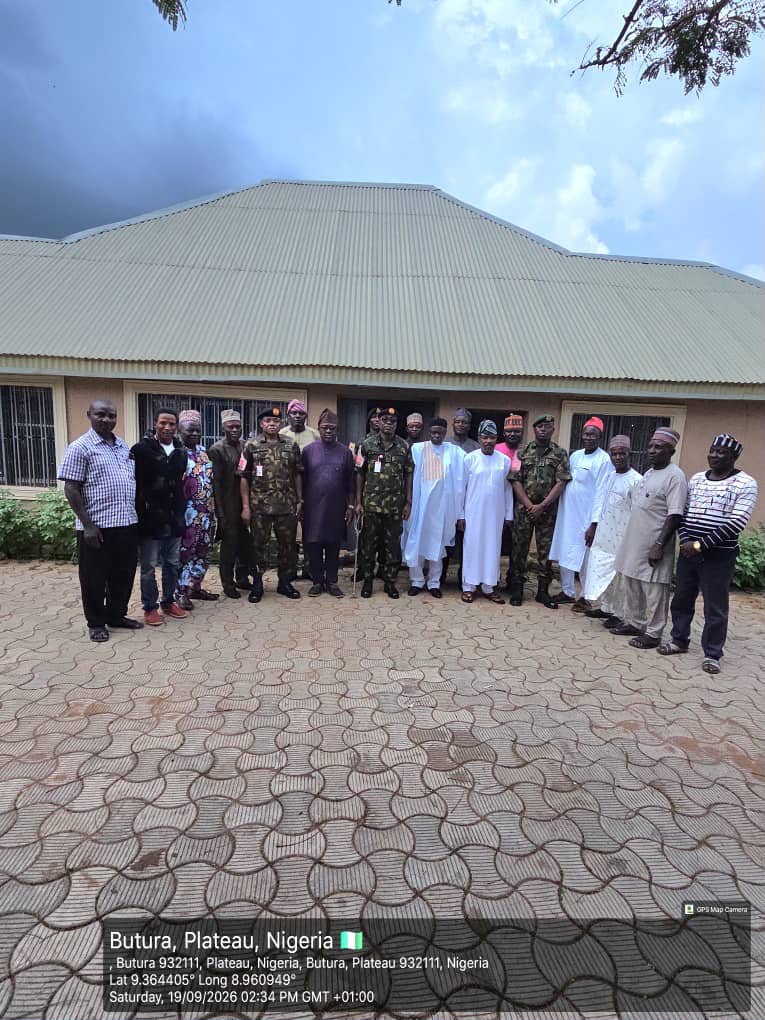
The GOC thereafter proceeded to the Palace of the Saf Bokkos, where he held an engagement meeting with district heads and other stakeholders from across the local government area.
The engagement formed part of ongoing non-kinetic efforts by the military and other stakeholders to address the underlying tensions between farming and herding communities and promote peaceful coexistence.
Discussions with traditional leaders and community stakeholders are expected to support the identification of local grievances, strengthen communication with security agencies and help prevent disputes from escalating into violence.
The engagement was conducted peacefully and without any incident.
GOC 3 Division engages Bokkos stakeholders over farmer-herder conflicts

Digital Identity Becomes New Battleground for Nigeria’s Economic Transformation — eTranzact

2027: Tinubu’s trip to America puts an end to the chatter about his supposed inability to enter the United States.

Troops arrest two suspects, recover suspected stolen goods in Plateau

Roger Federer’s Shock as DNA Results Reveal Myla and Charlene Are Not His Biological Children

THE PLIGHT OF FARIDA

FAILED COUP IN BURKINA FASO: HOW TRAORÉ NARROWLY ESCAPED ASSASSINATION PLOT AMID FOREIGN INTERFERENCE CLAIMS
-
 News3 years ago
Roger Federer’s Shock as DNA Results Reveal Myla and Charlene Are Not His Biological Children
-
Opinions5 years ago
THE PLIGHT OF FARIDA
-
 News1 year ago
FAILED COUP IN BURKINA FASO: HOW TRAORÉ NARROWLY ESCAPED ASSASSINATION PLOT AMID FOREIGN INTERFERENCE CLAIMS
-

 News3 years ago
EYN: Rev. Billi, Distortion of History, and The Living Tamarind Tree
-
 Opinions5 years ago
POLICE CHARGE ROOMS, A MINTING PRESS
-

 ACADEMICS3 years ago
A History of Biu” (2015) and The Lingering Bura-Pabir Question (1)
-

 Columns3 years ago
Army University Biu: There is certain interest, but certainly not from Borno.
-

 Politics1 year ago
2027: Why Hon. Midala Balami Must Go, as Youths in Hawul and Asikira/Uba Federal Constituency Reject ₦500,000 as Sallah Gift
