
News
My Binoculars: A tribute to the late Comrade Dauda Haruna, former chair of the correspondents chapel Borno state and Correspondent of the Voice of America (VOA) Hausa service

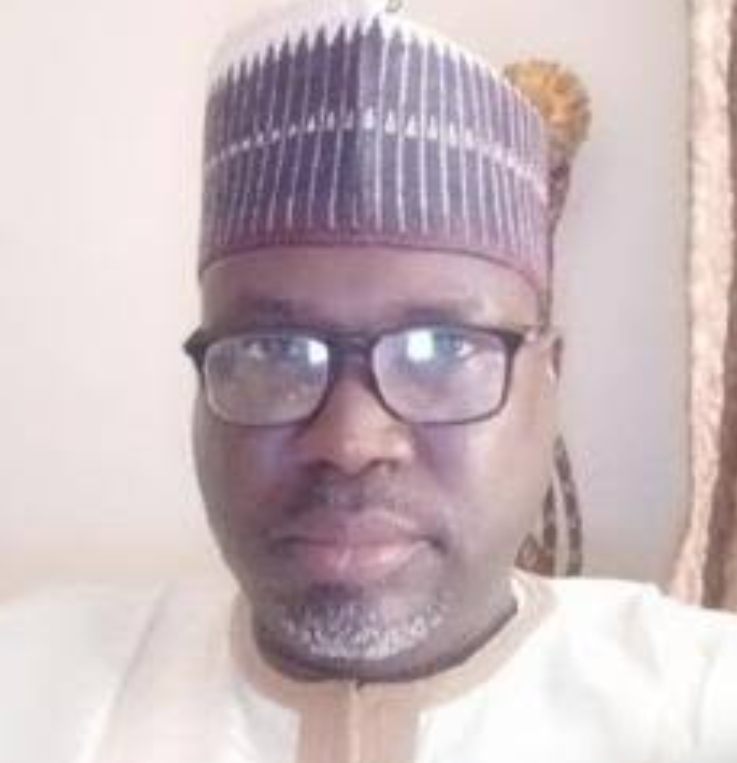
My Binoculars: A tribute to the late Comrade Dauda Haruna, former chair of the correspondents chapel Borno state and Correspondent of the Voice of America (VOA) Hausa service
By: Bodunrin Kayode
I have heard two sudden deaths from protracted illnesses in less than two weeks today. They were both close to me which is why I grabbed my binoculars at least for my former chair Dauda Haruna whom most of my colleagues do not know I had known for a very long time before coming to Maiduguri.
I first came across Comrade Dauda Haruna through the internal radio service of the Daily Times newspaper in 1996. We got talking when I was transferred from the jalingo office to Jos to relieve Chuks Akaeme our senior correspondent who was proceeding on his annual leave. I was the closest relief hand asked to cover Plateau for three months. I arrived Jos from the Taraba office in January ’96 and met an elderly female radio operator who worked with my colleague Oga Chuks. Under normal circumstances, the radio operator should read my reports through the radio to our head office agidingbi near Alausa Lagos. But any time madam Bridget was not around, I do rush to the radio room and call Alpha Golf (Agidingbi )myself to send breaking stories especially when the fax was down. Because there was no radio relief hand and it was during the military regime of Mohammed Mana with lots of reports from his spokes man Mike Omeri, I had to learn to work alone.
First time meeting on radio
Dauda was the the first to reach out to me because everyone heard every other person who was sending his report using codes or Charlie Oscar, Delta, Eco. Dauda Haruna was skilled in his tuff then and he delivered our reports well. That day he asked for his colleague madam Bridget and I said she had traveled to enjoy her holiday. This is Dauda Haruna the radio operator in Borno state. Nice meeting you here. My boss Mallam Jirigi speaks well of you. Thanks I retorted. He is a very good friend. We used to meet at annual editorial conferences in Lagos before it was shifted to kaduna where we met under the supervision of Oga Kangiwa and Dr Farouk Umar who manned the entire north. He sounded warm on the radio. I promised checking on him anytime I was in Maiduguri for any program as it was my professional exposure target to know all the states of the north whether or not my employees posted me there.
The opportunity came and it was when Ibrahim Jirigi had a dastardly car crash which broke his leg. So for me, as a good colleague, I had to create time to go see him that year. On arriving safely in Maiduguri for the first time, I met Haruna Dauda in the house of Mallam Jirigi. After commiserating with Jirigi whose leg was in plaster of paris, in came some top VIPs so I pulled out to chat with Dauda Haruna at close range at the other side of Jirigi’s massive house. He was the organizer of the entire house then making Jirigi’s visitors feel at home. There was no GSM then but we knew each other’s line from the daily times directory. He took me to my hotel afterwards and I left the following day.
From then on we had intermittent calls through the telephone and sometimes if Lagos became incommunicado I radio send my reports to him and he will keep vigil until the coast was clear and send same to Lagos. By the time the papers arrived Jos or Makurdi the following day, my stories were inside. We who were reporters then used to have reliable radio operators whom we called reliables. And Dauda Haruna was definitely one of them. Very dedicated to his job. We worked as a family and if you made certain mistakes in your reports, they will help you amend it like a family.
Transition to international radio
So you can imagine my joy when I later realized that he had gone to mass communication school, broadening his skills and had chosen the voice of America Hausa service which was a similar one to that of his boss Jirigi who was making waves in the BBC Hausa service. I started listening to him not knowing that I would one day be routed to Maiduguri to work with my friend and helper. He would tell me later that he owed a lot to Mallam Jirigi who was his main motivator to join the hausa radio service. A lot of dangerous politics affected the daily times and the paper had to shut down due to mismanagement.
I applied to “the Nation” newspaper for a job and even before completion of the interview process with human resources, the news editor Oga Niyi had directed that there was no option for me but Maiduguri. I was not too happy because of the headlines of insurgency I was reading before arriving. But on arrival, I have had a smooth stay courtesy of chairmen like Comrade Dauda Haruna. I have come to accept that the Maiduguri I visited when himself and Jirigi were managing daily times office was quite different from the Maiduguri of January 2014. I came in joined the chapel and we became colleagues till Sunday that he breathed his last. His humility was one of a kind from the way he spoke to me but I had to remind him that we are now colleagues in the same chapel and that we should continue that way. He accepted and life went on as friends.
Enjoying his tenure as chairman Dauda Haruna of the correspondents chapel
Comrade Dauda was actually a man of few words because he was always looking out for the good in others. He was not a deliberate “fault finder” and never a “control freak” which is why some colleagues thought he was weak especially when he literally refuses to kill a fly with a sledge hammer when the circumstances cropped up. In a controversial chapel like that of the correspondents, where unity is not absolute due to vested interests, he was quite transparent and made sure that he united the chapel each time there was a congress. For some reasons, he understood “straight jacket” people like us and will always hint me of why certain decisions were taken even when i felt otherwise. As for favors, I actually thank God that the entire chapel was favored by way of welfare during his time. The entire reason for the existence of the NUJ is for the upholding of professionalism and welfare of colleagues and he navigated through that with ease.
The last day of seeing him in his lifetime was recently when I took a friend and drove to his residence in 1000 housing estate. We bought a pack of moringa tea and presented as a gift to him. To spice the visit I called for hot water and a tea cup to wash the tea in his presence. The wife brought a big flask with which we poured water into his cup and ours. He asked if I wanted sweetener but I said no I was fine. I had learnt to drink all my teas blank sometimes without cream having contacted diabetes too in 2014. So we were watching each other’s back as time went on.
He had a nice tenure as chair of the chapel and in conjunction with his colleagues in the executive, they actually took some indelible decisions that most of us will never forget. That was why we protected his interest when certain forces dared to go against the norm. He called me that day to thank me for my little role in the stabilization of the chapel. He longed to return to do what he loved best and was almost sobbing in the phone. He then admonished me to take care of myself and hung off. As Comrade Dauda Haruna returns to mother earth, may God grant the Nigerian Union of Journalists (NUJ) and the family the special grace to accept this big void that his demise would create for them. Amen.
My Binoculars: A tribute to the late Comrade Dauda Haruna, former chair of the correspondents chapel Borno state and Correspondent of the Voice of America (VOA) Hausa service



OPEP troops foil suspected Fulani bandits reprisal attack on Jwerk Kargung village in Plateau
By: Zagazola Makama
Troops of Sector 8, Sub-Sector 81, Operation Hakorin Damisa (OPEP), have foiled an attempted reprisal attack on Jwerk Kargung Village in Mangu Local Government Area of Plateau State.
The incident occurred at about 8:35 p.m. on Sept. 20, 2026, following reports of sporadic gunshots around the community.
Troops deployed at Mangu Halle, alongside personnel of Operation Rainbow and Keystone Mangu Division, swiftly responded to the report and moved to the affected area.
According to military sources, the quick intervention of the troops forced the gunmen, suspected to be Fulani militias, who were allegedly attempting to attack the village, to withdraw into the bush.
The troops subsequently dominated the general area and commenced offensive operations to frustrate further criminal activities and prevent the attackers from regrouping.
Security forces are maintaining patrols around the community as efforts continue to safeguard residents and prevent further attacks.
OPEP troops foil suspected Fulani bandits reprisal attack on Jwerk Kargung village in Plateau

NIS Enrolls 8,552 Nigerians in Diaspora Passport Intervention
By: Michael Mike
The Nigeria Immigration Service has enrolled 8,552 Nigerians in the diaspora under targeted passport intervention exercises conducted in the United States, Canada, Qatar and the United Kingdom.
The Service said the exercises were undertaken in line with its commitment to improving passport service delivery to Nigerians abroad and under the directive of the Minister of Interior, Dr. Olubunmi Tunji-Ojo.
According to the Service, the intervention was designed to bring passport services closer to Nigerians in various cities and was conducted in collaboration with Nigerian diplomatic missions and representatives of Nigerian communities to ensure a coordinated and responsive service delivery process.
According to a statement on Monday by the spokesman of NIS, Akinsola Akinlabi, in the United States, the exercise was held between 7th and 15th September 2026 across Chicago, Michigan and Milwaukee where 535 applicants were enrolled. In Canada, the exercise which ran from 6th to 19th September 2026 across Manitoba, Toronto, Saskatoon, Alberta and New Brunswick enrolled 2,257 Nigerians.
The exercise in Qatar which held from 9th to 24th August 2026 enrolled 751 applicants.
The exercise in the United Kingdom covering London and Manchester which has enrolled 5,099 applicants is still ongoing.
Akinsola said passport production and dispatch are being carried out concurrently with the enrolment in the United Kingdom.
The Nigeria Immigration Service advised applicants who were unable to secure appointment slots during the exercises, as well as those who may prefer not to physically visit the centres or the High Commission, to utilise the Contactless Passport Application System for their applications.
The Service reiterated its commitment to responsive and accessible passport services for Nigerians in the diaspora and to ensuring timely, efficient and convenient service delivery.
NIS Enrolls 8,552 Nigerians in Diaspora Passport Intervention
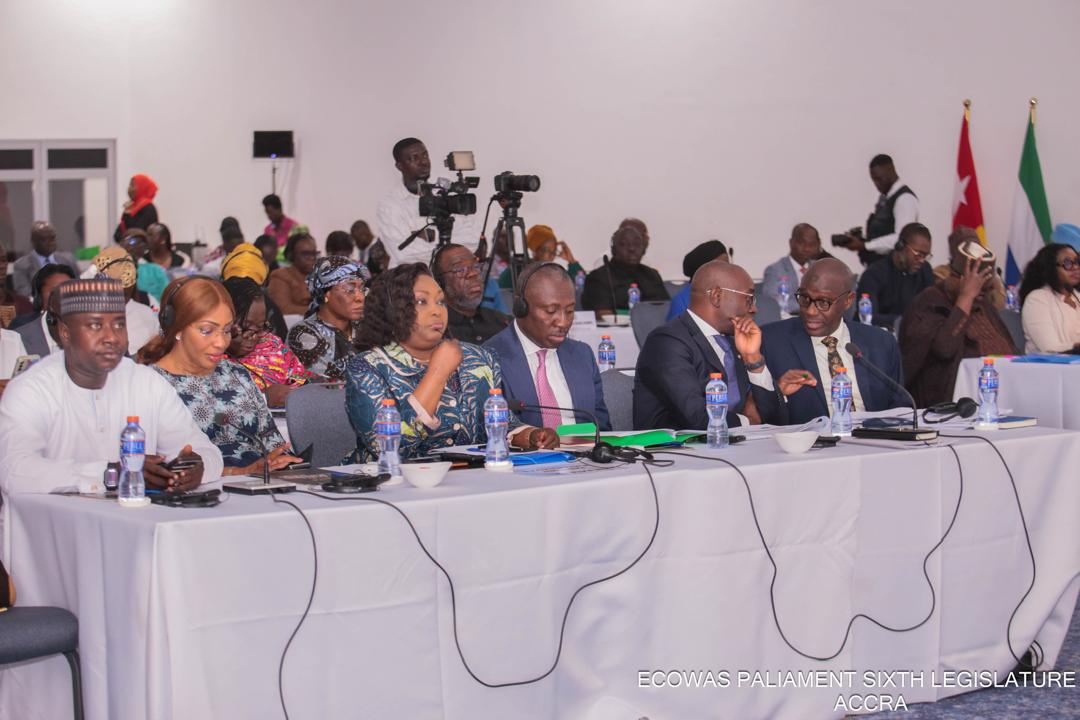
Experts Warn that Climate Crisis is Paramount to Explosion of Insecurity in West Africa
By: Michael Mike
Climate change is fueling population displacement and threatening regional stability across West Africa, experts warned Monday as the Second Extraordinary Session of the ECOWAS Parliament opened in Accra.
The warning was issued at the Second Extraordinary Session and Second Parliamentary Seminar with the theme: “Climate Change as a Driver of Environmental Degradation, Population Displacement and Rising Insecurity in the ECOWAS Region.” The session will run from 21st to 28th September 2026 in Accra, Republic of Ghana.
Experts told lawmakers that rising temperatures, extreme weather, drought, unpredictable rainfall, flooding, rising sea levels and land degradation are putting direct pressure on livelihoods, critical infrastructure and security.
Opening proceedings, Speaker of the ECOWAS Parliament, Hadja Memounatou Ibrahima, said the session was convened at a critical time for the region. She drew attention to Ghana’s Founder’s Day, marking the birth of Ghana’s first President Dr. Kwame Nkrumah, and called on participants to honour his vision of a free and united Africa. A minute of silence was observed in his honour.
Dr. Derek Sarfo-Yiadom, Senior Programme Officer, Climate Change and Ozone Directorate of Ghana’s Environmental Protection Authority, said climate hazards were no longer distant threats.
He noted that: “Climate hazards are with us,” listing extreme heat, drought, heavy and unpredictable rainfall and rising sea levels as growing concerns.
Sarfo-Yiadom said seasonal temperatures have risen by between one and three degrees Celsius since 1970, driving hotter heatwaves and unpredictable weather.
He lamented that changing rainfall patterns are increasing flood risks while drought and heat are crippling farming, while identifying farmers, low-income communities, coastal settlements and displaced populations as the most vulnerable.
He decried that homes, irrigation, electricity, transport networks, ports, markets and public services are at risk.
He however warned that the impact becomes a disaster when exposed communities lack capacity to cope, and that climate pressure is already contributing to displacement and conflict in agriculture-dependent communities.
He called for increased investment in adaptation, flood-proof zoning, expansion of climate-risk mapping, early-warning systems that reach vulnerable communities, and accountability for climate-related spending.
On his part, the Principal Officer, Climate Change and Climate Services at the ECOWAS Commission, Mr. Raoul Kouame, said ECOWAS must harmonise regional climate policies and support member states to implement their commitments under the Paris Agreement.
“The challenge is no longer just to define climate commitments,” Kouame said.
He identified institutional fragmentation, differences in national capacities and difficulties accessing climate finance as the main obstacles to action.
Kouame advocated stronger coordination between regional and national institutions and mechanisms to help countries align national frameworks with regional structures. He said cooperation must cover climate services, early warning systems, forest and ecosystem protection, carbon markets and access to finance.
The gap is huge. The ECOWAS Regional Strategy for Access to and Mobilization of Climate Finance, adopted in 2022, had estimated the region’s climate financing needs at $294 billion, based on conditional requirements contained in the NDCs 2.0. ECOWAS officials have warned that 32m West Africans risk displacement, with $294bn needed to tackle the crisis.
In 2024 the Commission began a new regional process, in line with ECOWAS Vision 2050 and the African Union’s Agenda 2063, to develop a harmonized framework for a regional carbon market platform.
Dr. Abdou Ali, climate, water and meteorology expert with the Permanent Inter-State Committee for Drought Control in the Sahel (CILSS), told lawmakers that West Africa has been here before.
He noted that CILSS itself was created in 1973 during the first great drought in the region, in the wake of the devastating droughts of 1968-1970, stating that its mandate remains food security and combating drought and desertification.
Ali said regional cooperation is essential because climate risks do not stop at national borders. He listed agriculture, coastal areas, biodiversity, disaster risk and human displacement as areas requiring coordinated adaptation, and said climate action must be integrated into agriculture, forestry, energy, transport, industrialisation and waste management policies.
He stressed that regional strategies need adequate financing, stronger institutions and effective implementation mechanisms.
The presentations converged on one point: adaptation measures must account for the needs and livelihoods of affected communities to avoid creating new vulnerabilities.
Parliamentarians are now in closed deliberations on the expert presentations.
Experts Warn that Climate Crisis is Paramount to Explosion of Insecurity in West Africa

OPEP troops foil suspected Fulani bandits reprisal attack on Jwerk Kargung village in Plateau

NIS Enrolls 8,552 Nigerians in Diaspora Passport Intervention

Experts Warn that Climate Crisis is Paramount to Explosion of Insecurity in West Africa

Roger Federer’s Shock as DNA Results Reveal Myla and Charlene Are Not His Biological Children

THE PLIGHT OF FARIDA

FAILED COUP IN BURKINA FASO: HOW TRAORÉ NARROWLY ESCAPED ASSASSINATION PLOT AMID FOREIGN INTERFERENCE CLAIMS
-
 News3 years ago
Roger Federer’s Shock as DNA Results Reveal Myla and Charlene Are Not His Biological Children
-
Opinions5 years ago
THE PLIGHT OF FARIDA
-
 News1 year ago
FAILED COUP IN BURKINA FASO: HOW TRAORÉ NARROWLY ESCAPED ASSASSINATION PLOT AMID FOREIGN INTERFERENCE CLAIMS
-

 News3 years ago
EYN: Rev. Billi, Distortion of History, and The Living Tamarind Tree
-
 Opinions5 years ago
POLICE CHARGE ROOMS, A MINTING PRESS
-

 ACADEMICS3 years ago
A History of Biu” (2015) and The Lingering Bura-Pabir Question (1)
-

 Columns3 years ago
Army University Biu: There is certain interest, but certainly not from Borno.
-

 Politics1 year ago
2027: Why Hon. Midala Balami Must Go, as Youths in Hawul and Asikira/Uba Federal Constituency Reject ₦500,000 as Sallah Gift
