
Features/Analysis
My Binoculars: Of the ten-day protests, the health sector, malnutrition, and the failure of the government to care for the ordinary and vulnerable in Nigeria


My Binoculars: Of the ten-day protests, the health sector, malnutrition, and the failure of the government to care for the ordinary and vulnerable in Nigeria
By: Bodunrin Kayode
A recent critical debate within a platform of journalists of like minds prompted me to peep into my binoculars after a long absence. I usually enjoy such healthy debates, especially when we are trying to set an intricate agenda for ourselves to get the government at all levels to work harder for the people to whom we have sworn allegiance. work for and make comfortable. My attention was drawn to the fact that the Borno state government had to rush to take care of a vulnerable family whose breadwinner had virtually lost financial control and was unable to feed his family, leading to acute malnutrition affecting his kids. It was a pitiable sight if those grim pictures of Kwashiorkor I saw were the exact impression of what happened to the family. It was a clear indicator that food itself is medicine, and hunger can threaten and destroy the very health sector in Borno State and Nigeria if caution is thrown to the wind. Food is spiritual to Africans, so do not use it as a political weapon. get people to submit to you. They will surely fight back in due time.
Such sights are really not new in Borno within the last decade of my reporting of insurgencies and the health of the people. This is because the Boko Haram scourge actually gave rise to many of these ugly sights, which I have seen myself while hobnobbing with the health emergency. sector at the World Health Organization (WHO) center by the eye clinic on Damboa Road, Maiduguri. But this sight I saw, which led to our debate, was likely driven by the recent economic policies of the federal government against the masses of the country. One of the policies
which I have nothing against except for bad implementation, is the removal of subsidies on petroleum products, especially premium motor spirit (PMS). I believe the removal was done in the interest of the masses to torpedo the ruthless power of the petrodollar cabal, which has been feeding fat on the Commonwealth of the people. As much as the intention of removing it was good, the government’s fatal mistake, however, was that it was too sudden. It could have been done in a planned in a staccato manner so that the common man and the poorest of the poor will not have to be so devastated as to lose their economic powers to feed their families. Many pensioners who could not buy drugs for terminal illnesses have gone to the great beyond in Northern Nigeria because of the sudden hike in drugs. A retired teacher and widow I knew directed her grown-up kids to take her home when the doctors told her of the failure of both kidneys and that she would have to undergo dialysis to stay alive. She has since been buried. because the traditional herbs she resorted to to fix her kidneys could not help her advanced case of failure. Such cases should have been funded by the federal government without batting an eyelid.
The second unnecessary slap on the ordinary resident and the poorest of the poor is the weakening of the naira by a shark-like fiscal policy called flotation induced by the International Monetary Fund (IMF) and the World Bank, who feel that development economists in Nigeria advising previous governments to resist it were so naive not to know that our naira is overvalued. One wonders how much these foreign “economy killers” know of Nigeria that they will need to guide our fiscal engineers on such a devilish policy that is virtually killing people, which is why there was a need for a ten-day protest to send a message to the federal government to reverse some of these corrupt-laden policies they have unleashed on our common purchasing power. Within the fiscal rhetoric of development economists in the All Progressive Congress (APC)-controlled government, the constant importation of petrol into an oil-rich country like Nigeria itself
cripples the naira. Swap deals of crude oil with powerful cartels, which have been estimated to be beyond three billion dollars, are a major clog in the wheels of economic progress. It is one of the reasons why the Dangote refinery is not receiving enough crude to pump. into the system and bring down the price of premium motor spirit (PMS). The argument of some of the big players in the industry is that Dangote is a newcomer, and he must wait for his turn to be lined up in the queue like every other person. I find such arguments myopic and insulting the common man whose relatives died in the cause of the last protest. Sadly, so many questions have been bugging the minds of helpless, right-thinking people in the country concerning the myriad mistakes of the federal government. Questions like, Why go further to float an already weak currency due to fiscal mistakes to achieve a target that aims to destroy the foundation of the country? Who are those angry with Nigeria for having one of the cheapest pump prices within the Organization of the Petroleum Exporting Countries (OPEC) block? Are we sure some people somewhere have not sat down to plot to torpedo the biggest economy in By pulling the rug under the economic intelligence agencies, who should give contemporary Intel on blue-chip companies like NNPC to the government? And why are the young people so angry with this government?
which campaigned to be better than that of its predecessor? What is the role of too much party politics and the alleged insulating of the leaders from the economic reality on the ground?
Contribution of the partisan politicians and their party mechanisms to the impoverishment of their people
Since 1999, the political party machinery has always been the spoiler and hater of the middle and lower classes of people everywhere. They make so much free money from the weak institutions in the system that only those who can sing “dangerous songs” while looking into the eyes of
The political powers that be may be allowed to save the situation. That is, if they are not punished for daring them like they did to Senator Ali Ndume, a teacher turned politician, for speaking the truth to power. Most watchers of the polity were bewildered by the decision of the APC recently, who never saw anything right in a fearless politician making a fair comment against perceived wrongs of his party in sorting salient issues in the polity, including hunger. It is my opinion that
He only wanted his president to free himself from the “Lagos paddy paddy” cage they locked him in and come out to see the litany of economic woes that even his own people suffer from. That is my perception of what happened, surely not the mundane way they perceived it. It was an anti-party outburst in his criticism of wrongs in the “Arise” interview. The presidency should not start and end on the desk of the chief of staff, Oga Femi, who is a Lagos man like President Tinubu. Nigeria is far bigger than Lagos and the paddy’s of Lagos put together.
Let’s ponder some unfortunate credibility issues affecting the APC, which is why former President Obasanjo posited recently that, left to him, some of the leaders walking inside the corridors of power should
be in jail by now. By the way, who is the head of the ruling party, and what are his antecedents now? They cannot claim to be saints far different from the Peoples Democratic Party (PDP) after the maladministration of the last eight years, in which corruption was celebrated in another big way. They have now decided to unleash a chairman. of their party, who had suffered from well-reported grievous credibility issues himself when he was a governor of Kano State known to polity watchers in the country. Now we hear that the hoodlums who infiltrated the ten-day protest in Kano have stolen the record of evidence of corruption against the former governor turned party chair. President Obasanjo indeed cannot be extricated completely from the wrongs of some of these leaders who have held sway in power, like former President Goodluck Jonathan, whom he single-handedly chose to be deputy to President Yaradua but who was too weak to stop the open stealing practiced under his watch. The litany of woes orchestrated by corruption continued and stank heavily under President Mumamadu Buhari, while Betta Edu announced it under President Tinubu and received a suspension. Obasanjo is well aware that neocolonialism is real and may not be the only solution to a system that has been completely destroyed by the self-aggrandizement of the commonwealth of the nation by a few hawks who have now formed a shark-like petro-cabal already strangling over 200 million Nigerians to death with sudden lack and increased poverty through Petro politics.
Open stealing of palliatives by some ruling party stalwarts in Borno
I have a neighbor of mine who is regarded as the “woman leader” of the APC in Maiduguri and who gets several bags of palliatives each time they are declared by President Bola Tinubu or Governor Babagana Zulum to ease hunger. I would withhold her name for now because, even though she’s half-illiterate, it’s her wrongdoing that one is bothered about. She often sells some of the grains and keeps some in her home for consumption. Mark, food sharing in Maiduguri started long ago as a result of insurgencies, surely not due to economic reasons. And that is
Why, when sharing This middle-aged woman gives only those in her area loyalty, regardless of which party you belong to. Especially those who can lick her dirty boots. A generation of people in this area on the outskirts of Maiduguri who have nothing to do but wait only for Palliatives from the party and non-governmental organizations rely on her support, which she gets from prominent party leaders like Kakina, who is the mother of all women in the party. Sadly, this Chibok-born woman got her connections from stalwarts she grew up with and still
interacts with making it look like it’s her personal efforts that are feeding the vulnerable. She even named one of her sons after one of the party buffs to cement her loyalty within the corridors of the Borno APC power space. These kinds of perverse people also wait for non-governmental organizations (NGOs) who come around sharing food.
tickets through their Bulama, who residents say is as dangerous as a fox, having sold most of the lands and houses in the area with the support of one of the influential sons of the powers that be in the land. That is how far some people in party politics can go in the enslavement of their fellow residents using food that should be shared freely to assist rather than to entrench the scourge of hunger.
Party stalwarts like Senator Kaka Shehu, who used to fight for the poor through these kinds of people, would be shocked at the number of people that have been stripped bare of their livelihood by the current economic policies, yet they can’t get palliatives of seeds to even farm. during the rains if they are not related to the party. We are talking of the same party that brought the full weight of the dangerous conditionalities of the IMF to Nigerians. Sometimes one wonders who told them that our naira is so overvalued that it must be floated to reach their target of at least 5000 naira to a dollar or more. The floating of the naira by the central bank may have had its good and bad sides against residents. But I believe the bad side is higher because even the hard drug sellers destroying the young people of their party on Baga Road now complain of a bad market due to the naira devaluation. Party Tugs now ration the rate at which they buy weeds in the open market.
Why was there increased violence in some areas of the Borno capital?
It was quite clear that Borno had its fair share of violence during the protests, and sadly, eighty percent of those who jumped into the streets were kids who may not know even the reasons for the protests in the country. It was unfortunate that some people had to die considering the fact that Borno is battling with insurgency, which is
yet to come to an end. I don’t live in Bulunkutu, but I can tell you that one of the reasons why the recent protest against the government in Bulunkutu was so intense was because some stalwarts allege that the same party has not been fair to most residents there. As a matter of fact, even up to Ngomari since the death of an APC woman leader in June 2023 who died after a crash inside a Keke napep. Of course, she died while seeking medical treatment at Umaru Shehu Hospital under under the watch of Dr. Emmanuel Philibus, the Gwoza-born, strong man who the governor vowed would be sanctioned but is still there with no public explanation for his misdemeanor.
Intel sources stated that 90 percent of the palliatives meant for people in the hinterlands of Bulunkutu never got to them, and the people have been very bitter with the APC ward and local leaders out there. Even some party leaders beyond the old railway areas inside Bulunkutu were livid with rage when the party suggested that the very first palliative sharing for them last year should be done at the Bakasi idp camp, very far from “yan nounou” or the deep hinterlands, where 200 naira for the “Akara” snack is no longer enough for breakfast like before. That was why, at the instigation of the young people, the governor It was easy to start from there. When other wards in the metropolis saw this, hell was let loose even after the governor had called them into the multipurpose hall in the government house to beg for peace to reign and then the 24-hour curfew. And this window dressing was done by renting a home for the Kwashiorkor kids and their parents in Shuari. But are they the only ones suffering from malnutrition? The answer is no. The truth is that the party leaders are the very ones who unleashed this frightening malnutrition on their own. It’s a garbage-in and-out situation. You cannot vote for an ex-convict like
The Americans are trying to do it simply because he has a party card and expect him to behave in the right way when he gets into office. You don’t expect known thieves, based on the Economic and Financial Crimes Commission’s (EFCC) record, to behave any differently from what they know how to do, which is to steal. Which is why I agreed with one of the debaters that the stalwarts and party leaders should take the blame for any wrong done to the people at the bottom. If they don’t, they should be seen as insensitive to the plight of their people. Now
The party wants to window dress just one family for the world to see instead of doing the right thing and refusing to scapegoat anyone who does the right thing. The way to help the vulnerable is to cut the party system out of these palliative tasks and allow religious
organizations like the Christian Association of Nigeria (CAN) and (JNI) and the civil society to do the job of sharing raw food stuffs when it is necessary. It is obvious Governor Babagana Zulum may not fully trust his own party machinery when it comes to sharing food stuff, which is why he does most of the sharing himself instead of allowing what should go to the common man to pass through the depraved minds of some party tugs who are regarded as leaders in the 27 council areas of the state.
Pre-empting the next protest with solutions, not tough talking speeches
As for the ten-day protest, I would say its aims were partially achieved in the sense that those who were not telling President Tinubu the untruths of the flotation of the naira and what it had done to the country were silenced. The president and his wife, Remi, would have I watched these protests live from their living room inside Aso Rock, and I can imagine Aunty Remi telling him to do something different from what the fiscal engineers like Wale Edun packaged by the West are saying. I don’t believe President Tinubu can be caged because he is an old businessman who understands all the intrigues behind the controversial oil industry. He is also coming from the home of a market woman and a wife who understood the price of gari before 2014, and now that it is about N1500 and more for a small paint cup in some states. Above all, he does not have a docile woman in his life as a housewife. Remi was and still is a senator of the Federal Republic of Nigeria. She only stepped aside to assist in the supervision of his life in the State House, considering the critical nature of his health. She is a Senator of the Federal Republic on leave who would dare get to the market for herself to buy stuff, but for the overprotection of some indolent security details who would remind her of her kitchen staff. But I believe she knows how much a cup of gari is in Saki, Abeokuta, Dutse, Okigwe, or even in the Okumagba area of Warri. She
should be telling his excellency the truth about the anger of Nigerians over the high cost of food or drugs to patch their health as a result of the devaluation of the naira. She should be advising him on how to avoid offending the young people so that they will not shut down the country for a second time. That will not be.
pleasant at all.
One is happy, however, that one of the aftermaths of the protests was the announcement by the government that very soon, all graduates of tertiary institutions would be given a stipend until they got a job. That is an exciting development that should have started long ago. In fact, it should have gone side by side with the National Youth Service Corps (NYSC), but it is not too late. We would also suggest that the health insurance scheme be adjusted to cover free of charge all seniors from the age of 70 and above. As a matter of fact, a special fund should be created to take care of the healthcare of seniors over the age of 65. There is no need for any contribution; just show up at the hospital with your national ID card, and you are registered. As long as one is a senior, treatment should be free and on the account of the government in all 36 states. That would extend the life expectancy.
of residents in the country.
Obvious solutions to hunger and homelessness in the land
As for food security, nobody should be allowed to go to bed hungry if they possess a national ID card. Billionaires in the country should be called upon to urgently contribute to building “soup kitchens” all over the country. We can start with 500 of them for a start in the
country, but we need at least a thousand kitchens scattered in the 36 states of the federation to kill hunger and malnutrition. That is an average of about 27 outlets per state, regardless of the council areas and the population. Rich states like Lagos can have more, depending on the council areas. The intention is to make sure that every child of vulnerable age can branch, stay in line, eat a good meal, and go home. Soup kitchens should be open till midnight daily and by 5 a.m. for breakfast, so they eat before going to school. As a matter of fact, the building of soup kitchens for the vulnerable to go eat daily till the end of the first tenure of the government would be a welcome development. At least that has always been the advocacy of Senator Ali. Ndume for a long time before now. Hunger doesn’t know shame, race, tribe, or creed. The founders of the United States knew this long ago, which is why they now have support for any form of vulnerability or disability. With the help of more than 61,000 food pantries and soup
kitchens, food banks provide some 46 million people with free food each year in the US. Tens of millions of volunteers regularly support the system by donating time and money. Our population is over 200 million now. If we don’t have food kitchens, pantries, or banks to supply people with food, then we will be damned in the near future. This is a path Nigeria must follow to avoid young people feeling cheated and deprived of their common wealth by a few criminal minds stealing billions annually yet flaunting the same ostentatiously to their faces. This was the same issue that affected Kenya before the last straw fell to the ground. From what happened in Kenya, our political class should know by now that these young people know exactly where their treasuries and hearts are stored. When the food
kitchens are cooking the meals, the idea of homelessness can easily be assessed, and special hostels can be built where young people will begin to squat until they can get a decent job and rent their own
houses.
My Binoculars: Of the ten-day protests, the health sector, malnutrition, and the failure of the government to care for the ordinary and vulnerable in Nigeria


Features/Analysis
Caught Between Terrorists and the State: How Insider Mediators Face the Greatest Risks in the Sahel and Lake Chad Basin

Caught Between Terrorists and the State: How Insider Mediators Face the Greatest Risks in the Sahel and Lake Chad Basin
By: Hon Aliyu Gebi
In every conflict, there are soldiers who fight, governments that formulate policy, and humanitarian agencies that provide relief. Yet hidden between these visible actors exists another category of individuals whose contribution is rarely acknowledged but whose absence could make many humanitarian breakthroughs impossible. They are the insider mediators.
Across the Sahel and the Lake Chad Basin, where insurgencies by Jama’at Nusrat al-Islam wal-Muslimin (JNIM), Boko Haram, and the Islamic State West Africa Province (ISWAP) continue to challenge state authority, these mediators quietly occupy one of the most dangerous positions in modern conflict.
Unlike diplomats protected by embassies or international organisations operating under diplomatic privileges, insider mediators are ordinary members of the communities engulfed by violence. They include respected Islamic scholars, traditional rulers, village elders, women leaders, businessmen and community influencers whose greatest qualification is not political office but trust.
It is that trust that allows them to speak to men carrying assault rifles in the forests while retaining enough credibility for governments and security agencies to listen. Yet it is the same trust that places them permanently between fire and ice.
Officially, most governments in the Sahel reject negotiations with designated terrorist organisations. Nigeria, Mali, Burkina Faso and Niger have all adopted counter-terrorism policies centred on military pressure, intelligence operations and criminal prosecution.
Publicly, there is little room for political dialogue with organisations responsible for mass killings, kidnappings and attacks on civilians. Yet conflict realities are rarely as absolute as official policy suggests. When humanitarian workers require safe passage into besieged communities. When hundreds of women and children are trapped in insurgent-controlled territory. When local ceasefires become necessary to allow farmers cultivate their land.
When abducted civilians require negotiation before release. Formal diplomacy often gives way to quiet engagement. That engagement is rarely conducted by ambassadors. Instead, governments frequently rely directly or indirectly on trusted intermediaries capable of reaching actors that official representatives cannot approach. These mediators become the invisible bridge connecting two parties who publicly deny any relationship.
Why outsiders often fail
It was argued that foreign diplomats and international organisations rarely possess the cultural legitimacy required to engage violent extremist groups operating in deeply localised environments. For groups such as JNIM or Boko Haram, international actors are frequently viewed through ideological lenses.
Western governments may be seen as enemies.
United Nations personnel may be viewed as extensions of foreign influence. International NGOs may become intelligence suspects or lucrative kidnapping targets. Local mediators enter the same environment with entirely different credentials. Many speak the same dialect. Some belong to the same ethnic group.
Others share religious traditions or ancestral relationships with insurgent commanders.
In central Mali, traditional Fulani values such as Pulaaku often provide a social framework through which dialogue becomes possible. In the Lake Chad Basin, respected Islamic scholars frequently possess a deeper understanding of the ideological and theological arguments influencing Boko Haram factions than external negotiators. More importantly, insider mediators understand local grievances. They know which disputes are ideological. Which is economic.
Which stem from historical land conflicts. Which fighters joined voluntarily. Which joined because of poverty, coercion or revenge. Such nuanced understanding is often beyond the reach of external actors.
Unlike foreign mediators who return to secure compounds after negotiations, insider mediators remain inside the conflict. Their homes remain exposed. Their families remain exposed.
Every of their secrete remain exposed. Every negotiation they undertake carries consequences that follow them back into their villages. One Negotiator who undertook series of engagement with some Nigerian non state actors to secure the release of captured victims, said they came under ambush more than five times in separate encounter. In one instance, a gun was pointed at his head.
If negotiations collapse. It is not an embassy that is attacked. It is often the negotiators, their own home. If insurgents suspect betrayal. Their wives and children or any of their relatives may become legitimate targets. If security agencies question their motives. They themselves risk detention or prolonged investigation. Few occupations carry such immediate personal consequences.
Perhaps the greatest burden insider mediators carry is that neither side fully trusts them. Security agencies frequently question why a civilian should maintain contact with terrorists.
Some mediators have reportedly faced accusations of collaboration simply because they delivered humanitarian messages or attempted to negotiate community access. From the insurgents’ perspective, however, the suspicion is equally intense. A mediator carrying government proposals may easily be branded an intelligence asset or a mile. If military operations occur shortly after meetings, insurgents may assume information was leaked. The consequences can be fatal.
This creates “double suspicion” a condition in which mediators are simultaneously viewed as potential traitors by both the state and the armed groups they seek to engage.
The legal grey zone
Another challenge identified by the report lies in counter-terrorism legislation. International sanctions and domestic anti-terrorism laws understandably prohibit providing material support to designated terrorist organisations.
However, conflict mediation often operates in ambiguous spaces. Suppose a mediator delivers medicine to secure the release of kidnapped civilians. Or transports communication equipment required to arrange humanitarian access. Or facilitates financial arrangements connected to hostage negotiations. Do such actions constitute humanitarian engagement? Or do they amount to material support under anti-terrorism laws? The report argues that many insider mediators now operate without clear legal protections despite performing functions that governments quietly acknowledge are sometimes necessary. The absence of legal clarity increases both operational and personal risk.
Lessons from JNIM
The report draws heavily from developments in Mali and Burkina Faso. In several communities, local mediators successfully negotiated temporary arrangements allowing farmers to cultivate their fields under agreed conditions.
Some agreements reduced attacks. Others facilitated humanitarian access. Yet these agreements often proved fragile. Military offensives sometimes resumed without warning.
Insurgent commanders interpreted such developments as betrayal. The mediator rather than the state often bore the consequences.
Even more challenging has been the inconsistency of government policy.
During one administration, dialogue may receive quiet encouragement. A subsequent administration may criminalise similar contacts.
Several mediators reportedly found themselves under investigation for activities previously tolerated.
Lessons from Boko Haram: Two Different Negotiation Landscapes
The report notes that mediation efforts in Nigeria’s Lake Chad Basin are further complicated by the internal fragmentation of Boko Haram. Although often viewed as a single insurgent movement, Boko Haram today comprises two principal factions with markedly different organisational structures and negotiation dynamics: Jama’atu Ahlis Sunna Lidda’awati wal-Jihad (JAS) and the Islamic State West Africa Province (ISWAP).
JAS presents perhaps the most perilous environment for insider mediators. Unlike more structured insurgent organisations, JAS has historically operated through highly decentralised command structures, where individual field commanders exercise considerable autonomy. This lack of central authority often makes negotiations unpredictable, with agreements depending largely on the disposition of local commanders rather than institutional policy. For mediators attempting to secure the release of abducted civilians or establish safe exit routes for fighters seeking to surrender, every mission carries extraordinary personal risk.
Many are required to travel into remote forest enclaves controlled by commanders whose interpretation of Islamic law, tribal customs and military discipline varies widely. Traditional norms that ordinarily protect emissaries or peace envoys are frequently ignored, leaving mediators vulnerable to detention, execution or prolonged captivity if they are suspected of deception or espionage. The report argues that engaging JAS is therefore less a process of structured negotiation than an exercise in navigating constantly shifting personal relationships, ideological rigidity and battlefield uncertainty.
Engaging ISWAP: Structure Without Flexibility
Negotiating with ISWAP presents a different, though equally demanding, set of challenges.
Unlike JAS, ISWAP maintains a comparatively organised governance system overseen by a Shura Council, with clearer chains of command and administrative procedures. This institutional framework can provide mediators with more predictable points of engagement and a greater likelihood that agreements reached with senior figures will be respected across the organisation.
The group’s strict ideological doctrine therefore leaves very limited room for compromise, and mediators often face intense pressure to produce humanitarian outcomes without violating either the insurgents’ religious expectations or the legal and ethical obligations imposed by the state. This delicate balancing act requires exceptional credibility, deep religious understanding and an ability to maintain the confidence of both sides while making no promises that cannot be fulfilled.
The Quiet Architects of Mass Defections
Despite operating under these extraordinary pressures, insider mediators played a pivotal role during one of the most significant developments in Nigeria’s counter-insurgency campaign. Following the death of Boko Haram leader Abubakar Shekau in 2021, tens of thousands of fighters, women and children began surrendering to Nigerian authorities.
While military pressure created the conditions for this unprecedented wave of defections, the report argues that it was trusted local intermediaries who transformed opportunity into reality. Many insurgents seeking to abandon the conflict distrusted formal government institutions and feared immediate execution or imprisonment. Insider mediators became the first point of contact.
They reassured frightened fighters that surrender pathways existed, explained rehabilitation programmes, communicated with military authorities and community leaders, and helped facilitate safe movement from insurgent-controlled territories to designated reception centres. Without these trusted intermediaries, the report suggests, many potential defectors might never have taken the first step toward disengagement. In this sense, insider mediators became the human bridge between years of violent insurgency and emerging opportunities for rehabilitation and reintegration.
Protecting the Bridge-Builders
The report concludes that if governments across West Africa hope to move beyond perpetual military confrontation toward sustainable peace, they must provide greater institutional support for insider mediators.
Foremost among its recommendations is the establishment of clear legal frameworks that recognise verified mediators operating for humanitarian purposes. Such protections, the author argue, would reduce the risk of arbitrary arrest or prosecution under counter-terrorism legislation while preserving accountability.
The study also calls on regional organisations and international peacebuilding partners to establish dedicated duty-of-care mechanisms, including emergency security assistance, psychosocial support and evacuation arrangements for mediators facing credible threats. Given the psychological burden associated with prolonged engagement in conflict environments, the report argues that mental health support should become an integral component of mediation programmes rather than an afterthought.
The report ultimately presents insider mediators as one of the least visible yet most indispensable pillars of conflict resolution in the Sahel and the Lake Chad Basin. They receive little public recognition, enjoy few institutional protections and often operate without formal legal safeguards. Yet they continue to facilitate hostage releases, humanitarian access, civilian evacuations, local ceasefires and pathways for surrender in places where official diplomacy cannot reach. Their work demonstrates that while military operations remain essential in degrading terrorist capabilities, lasting peace is seldom achieved through force alone. It also depends on trusted local relationships, cultural legitimacy and the courage of individuals willing to engage where others cannot.
As governments refine their counter-insurgency strategies across the region, the report argues that protecting these “bridge-builders” is not merely a humanitarian obligation but a strategic necessity. Without them, opportunities for dialogue, disengagement and civilian protection may diminish, leaving military victories without the social foundations needed to secure enduring peace.
Caught Between Terrorists and the State: How Insider Mediators Face the Greatest Risks in the Sahel and Lake Chad Basin
Features/Analysis
My Binoculars: What has Remi Tinubu got to do with Akara, Kulikuli, Boli, Dodo and Ekpa
My Binoculars: What has Remi Tinubu got to do with Akara, Kulikuli, Boli, Dodo and Ekpa
By: Bodunrin Kayode
There are three types of community enterprises that can never fail in Nigeria if residents know how to utilize them for life. Theses are food vending, washing of clothes and hair cutting businesses. These have stood the tests of time over the years because of its relevance in the daily lives of residents in the country. Services rendered around these local enterprises have generated a lot of resources in the non real sector making it a shining avenue for tax hunters to begin to look around to generate revenue. Nobody does food business like “Akara” production in Nigeria and regrets regardless of his or her source of fuel to produce the food stuffs in question.
It is with this background that I don’t see anything offensive in the suggestion of the first lady of Nigeria Senator Remi Tinubu urging young idle people to take Akara production which is a very common food stuff to the next level. Akara frying has always hidden in the non real sector of the economy but it can be taken to the next level for even export if food scientists can research further on how to expand its lifespan without too much preservatives.
For as long as there is life in the body of a young person, he or she can never become a liability to his family, if he takes to food business early in life. And when I talk of Nigerian food I am talking about varieties which includes heavy African cuisine like “foofoo” or light snacks such as “Akara” which can be found in any corner of West Africa and even Nigeria. Akara is made from African beans which makes it the cream of all snacks in the region because of its high protein contents.
In my opinion akara has always been a life saving snack delicacy which started from South West Nigeria and has now spread to all the crannies of the country. It is both a physical and a spiritual food in most parts of the country that modern genzee’s have turned it into several flavors inserting all manner of spices into the processed beans to bring about exciting results. Some people wrongly contextualize it as a cake but I don’t think it qualifies to be a cake other than the light snack it has been since the beginning of time. Akara is fried and not baked like cakes. It is also an African delicacy as such we don’t need to give it a foreign label. It will always remain our light snack. Mark you Akara business is a very honorable business like any other snack enjoyed by both the genzee’s and the rest of us. It has existed long before Remi Tinubu was born and will outlive her if Jesus doesn’t return before the end of contemporary times.
I have watched the online space sadly as a lot of confused genzees make uninformed derogatory comments about Akara business as if it is beneath them. They make it look as if Akara production cannot be taken to the next level by transforming it from a petty trading business to a small scale business. And when it becomes a small scale business, it can be used to feed hundreds of people in form of breakfast in a food bank. Madam Tinubu obviously knows what she is doing as a home management strategist. This is because Akara business will become a major support in her national community food bank program meant to feed the poorest of the poor. This is a program meant to combat child malnutrition and food insecurity in Nigeria. Akara also called kosai in some parts of the north of Nigeria targets vulnerable households, children under six years and pregnant women to at least have a semi balanced diet in the country every morning. With Akara of five hundred naira and corn “pap”, hundreds of families that go hungry in the morning utilizing the 011 system will now have breakfast of less than 1000 naira daily per child. So why look down on such a wonderful delicacy when it can bring money into the hands of many young girls who believe in using what they have to get what they want in the name of “runs” or organized office prostitution for the highest bidder.
But out of experience in living in this world, I know that there is nothing wrong with that kind of enterprise because a lot of people were raised in their homes by food vendors and they are proud to say it anywhere they go that it was due to the Akara, aadun or dundun snack their mum sold that made them to acquire Western education today. Hundreds are standing on their two legs today because they took Akara or even Boli and cooked beans to the next level. There is nothing demeaning in her suggestions that even the jobless can take to cooking. Afterwards Hilda Baci who has a world record in cooking did not make it big in just a day. She started at a very low level and proceeded to the level she found herself now. People now consult her to cook for them as a consultant.
Young people can always make it big from starting Akara business in a small way. And this to me is why the recent suggestion that the poorest of the poor should resolve to mini income generating ventures like Akara production is never an absurd suggestion. Only sick minds will find something wrong in this by my opinion.
My Binoculars: What has Remi Tinubu got to do with Akara, Kulikuli, Boli, Dodo and Ekpa
Features/Analysis
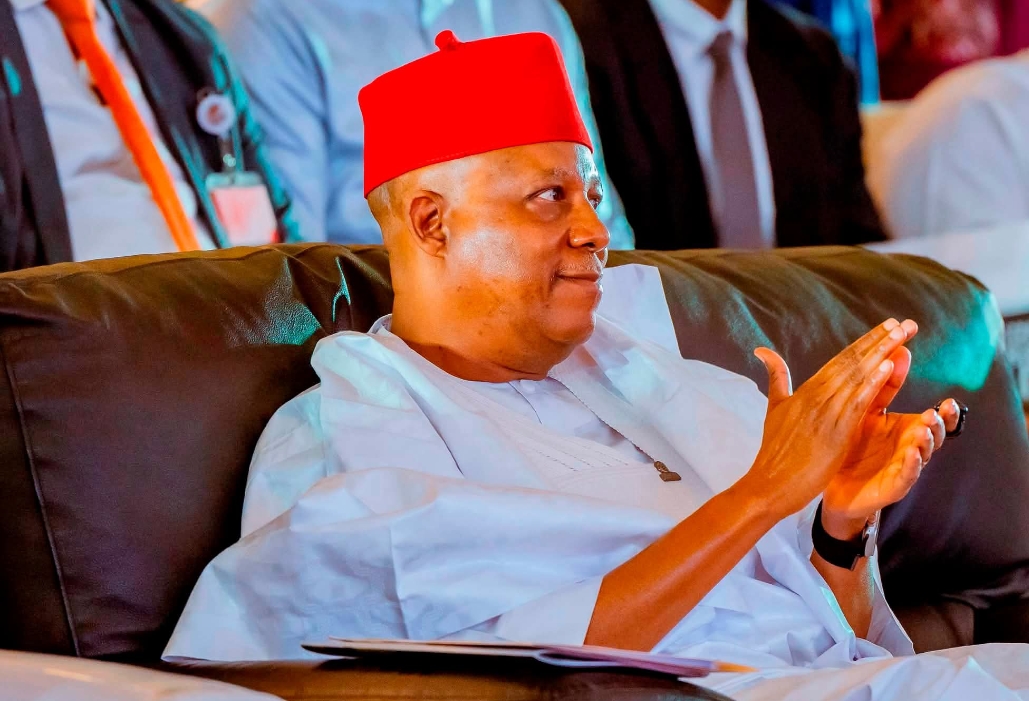
Kashim Shettima: The Imperative of Agricultural Revitalization and the Case for the Niger Delta’s Agrarian Future

Kashim Shettima: The Imperative of Agricultural Revitalization and the Case for the Niger Delta’s Agrarian Future
By: Dr. James Bwala
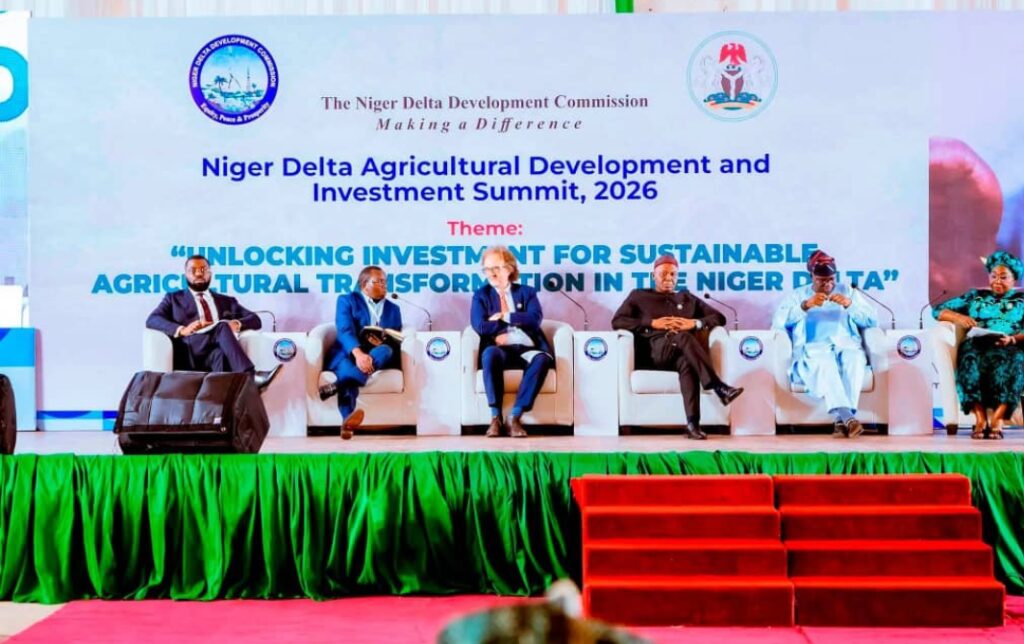
The Vice President of Nigeria, Kashim Shettima, has declared open the Niger Delta Agricultural Development and Investment Summit, co-convened by his office and the Niger Delta Development Commission (NDDC). This event marks a decisive step toward rekindling the agricultural heritage of the Niger Delta, anchored by the launch of the $500 million Niger Delta Agricultural Investment Fund.
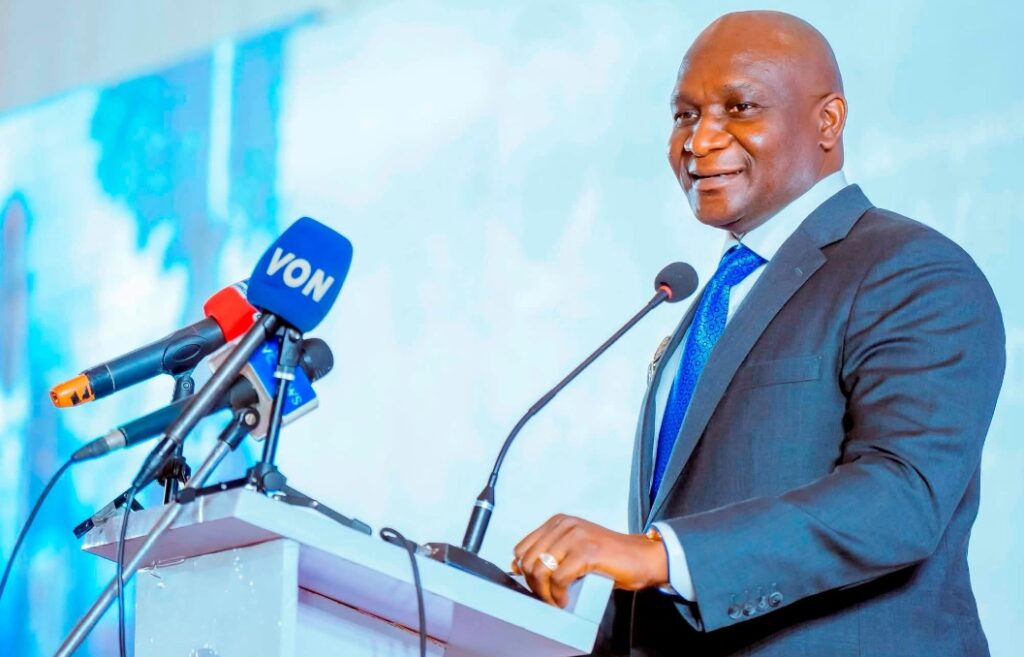
Kashim Shettima’s eloquent remarks as they reverberated through the crowd pointed out that while nations rely on a variety of resources, their endurance hinges on their capacity to feed themselves. His assertion that agriculture serves as both the foundation of civilization and the foremost guarantor of political stability forms a compelling argument for an urgent and strategic investment in this sector.
The call for agricultural revitalization in the Niger Delta, emphasizing its critical role in national stability, economic diversification, and sustainable development, speaks volumes of the impact of the Tinubu and Kashim Shettima administrations in this sector. The VP’s message can better be appreciated through the lens of history and economic identity. Prior to the discovery of oil, Nigeria’s economy was fundamentally agrarian. The fertile soils of regions like the Niger Delta were the backbone of local livelihoods and a vital source of revenue. Agriculture provided employment for the majority and supplied food both for domestic consumption and export. Yet, decades of oil dominance have shifted national focus and investment away from agriculture to the detriment of the sector and overall economic resilience.
This shift has had profound consequences. Dependency on oil exports has rendered Nigeria vulnerable to volatile global oil prices and external shocks, leading to economic instability. Adding to this is the neglect of agriculture. This has exacerbated rural poverty, especially in the Niger Delta regions, where environmental degradation and limited economic diversification have compounded socio-economic challenges. The vice president’s emphasis on reinvigorating agriculture is therefore not only a nod to history but also an urgent strategy to reclaim sustainability and inclusive prosperity.
One of the most persuasive points made by Vice President Shettima is the intrinsic link between agriculture and political stability. Agriculture provides food security, which is foundational to societal peace. When a nation struggles to feed its population, social unrest, economic disparity, and political volatility often follow. In contrast, countries that maintain a robust agricultural base tend to enjoy greater internal peace and cohesion because their citizens’ basic needs Countries with a strong agricultural base tend to experience greater internal peace and cohesion, as they meet their citizens’ basic needs..
In the context of the Niger Delta, a region that has experienced significant unrest and militancy largely due to economic marginalization and environmental degradation, leveraging agriculture can act as a transformative stabilizing force. By creating jobs, improving incomes, and enhancing food self-sufficiency, agricultural development can reduce desperation and conflict drivers. It offers a tangible pathway for empowerment and reconciliation, fostering a positive cycle of peace and progress.
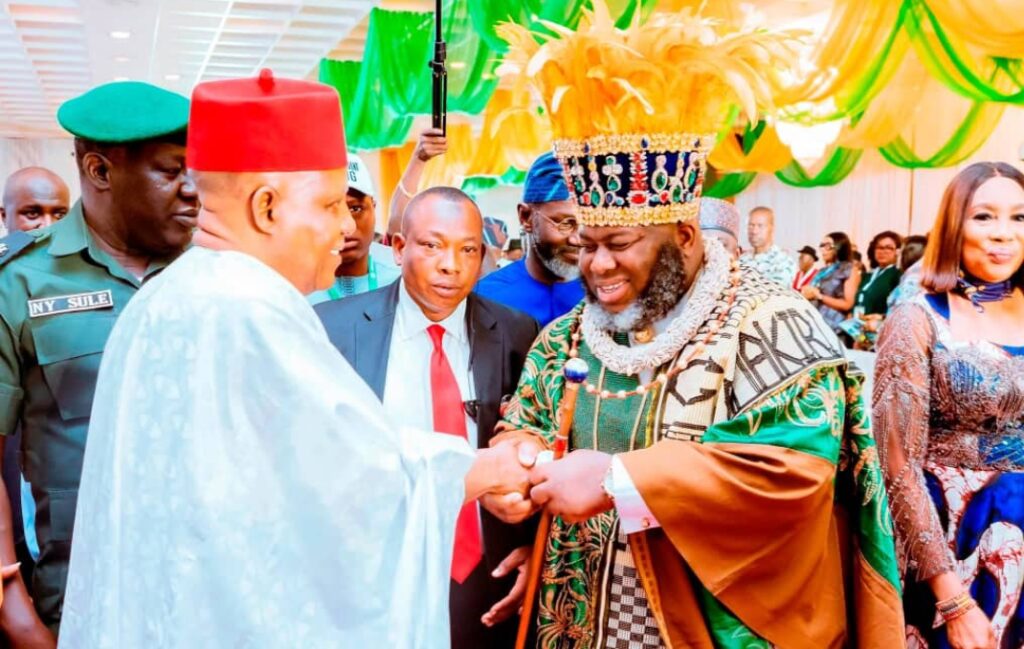
Shettima pointed out that Nigeria’s over-reliance on oil is widely recognized as a central challenge to long-term economic sustainability. The global energy transition and fluctuating oil markets make diversification imperative. Agriculture, with its extensive value chains spanning production, processing, marketing, and export, presents a promising avenue for economic diversification.
The $500 million Niger Delta Agricultural Investment Fund represents a bold commitment to capitalize on the region’s natural endowments. Strategic investment in modern farming techniques, infrastructure, agribusiness, and market access will unlock vast opportunities. It will stimulate rural economies, expand the industrial base, and create resilience against external shocks. Moreover, integrating agriculture with technology and innovation can position Nigeria as a competitive player in global agricultural markets.
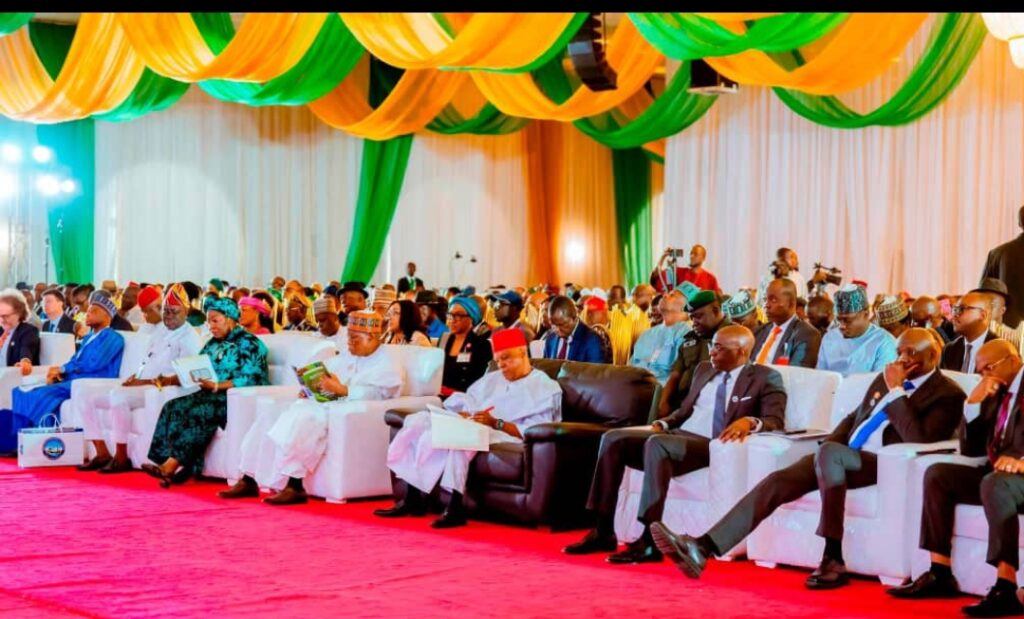
The Niger Delta has suffered ecological harm from decades of oil exploration, including pollution and land degradation. These environmental issues have compromised agricultural productivity and public health. Consequently, a renewed agricultural focus must also embrace environmental restoration and climate adaptation strategies.
Investing in sustainable farming methods, soil rehabilitation, and water management will restore the land’s fertility and mitigate adverse environmental impacts. Furthermore, agriculture can play a vital role in climate change mitigation through carbon sequestration and biodiversity conservation. Thus, the agricultural revitalization agenda aligns with Nigeria’s broader commitments to environmental stewardship and sustainable development goals.
For the vision articulated by Vice President Shettima to materialize, coordinated action and steadfast commitment from all stakeholders are indispensable. The government must provide enabling policies, facilitate access to finance, improve rural infrastructure, and support farmer education and research. Equally, private sector participation and community engagement will be critical in ensuring the fund translates into meaningful ground-level outcomes.
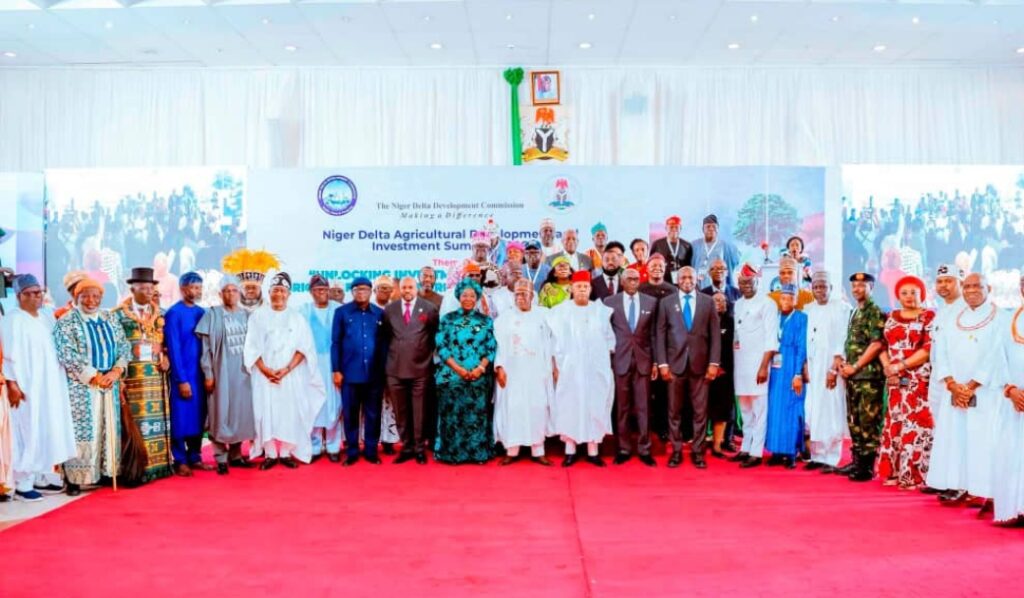
Public-private partnerships can accelerate technology transfer and market integration, while local communities’ involvement ensures culturally sensitive and inclusive development practices. Transparency and accountability in fund management will safeguard the initiative’s efficacy and public trust.
The Niger Delta Agricultural Development and Investment Summit, and the historic launch of the $500 million Agricultural Investment Fund, represent a moment in Nigeria’s quest for sustainable development. Vice President Kashim Shettima’s insightful declaration highlights the unassailable importance of agriculture as the bedrock of civilization, political stability, and economic resilience. For a nation whose foundations were rooted in agrarian prosperity before oil, the time to rekindle that legacy is now.
The Niger Delta, endowed with rich soils and a hardworking populace, can lead Nigeria’s agricultural renaissance. Through deliberate investment, environmental restoration, and strategic partnerships, the region can emerge stronger, more stable, and more prosperous. Embracing agriculture not as a fallback but as a frontline driver of national progress is not merely an option—it is an imperative for the enduring well-being of Nigeria and its people. The Niger Delta Agricultural Development and Investment Summit symbolizes hope and determination, signaling that Nigeria will no longer take its agricultural promise for granted but will harness it fully to feed its future.
James Bwala, PhD, writes from Abuja.
Kashim Shettima: The Imperative of Agricultural Revitalization and the Case for the Niger Delta’s Agrarian Future

Troops Repel ISWAP Attack on Mandaragirau FOB, Detonate IED During Clearance Operation in Borno

ISWAP Fighter Surrenders in Borno After Eight Months in Terrorist Camp

Al-Shabaab and the Emerging Debate Over a Taliban-Style Political Transition

Roger Federer’s Shock as DNA Results Reveal Myla and Charlene Are Not His Biological Children

THE PLIGHT OF FARIDA

FAILED COUP IN BURKINA FASO: HOW TRAORÉ NARROWLY ESCAPED ASSASSINATION PLOT AMID FOREIGN INTERFERENCE CLAIMS
-
 News2 years ago
Roger Federer’s Shock as DNA Results Reveal Myla and Charlene Are Not His Biological Children
-
Opinions4 years ago
THE PLIGHT OF FARIDA
-
 News1 year ago
FAILED COUP IN BURKINA FASO: HOW TRAORÉ NARROWLY ESCAPED ASSASSINATION PLOT AMID FOREIGN INTERFERENCE CLAIMS
-

 News2 years ago
EYN: Rev. Billi, Distortion of History, and The Living Tamarind Tree
-
 Opinions5 years ago
POLICE CHARGE ROOMS, A MINTING PRESS
-

 ACADEMICS2 years ago
A History of Biu” (2015) and The Lingering Bura-Pabir Question (1)
-

 Columns2 years ago
Army University Biu: There is certain interest, but certainly not from Borno.
-

 Politics1 year ago
2027: Why Hon. Midala Balami Must Go, as Youths in Hawul and Asikira/Uba Federal Constituency Reject ₦500,000 as Sallah Gift
