
News
NAPTIP, EU, IIDEA Mobilise Media Against SGBV, Launch Dedicated Corps


NAPTIP, EU, IIDEA Mobilise Media Against SGBV, Launch Dedicated Corps
…New initiative targets silence, impunity as journalists receive specialised training to expose sexual and gender-based violence
By: Michael Mike
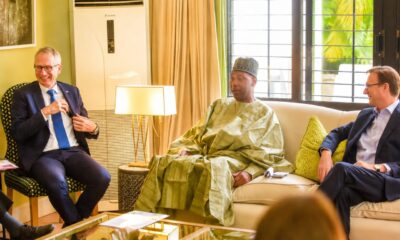
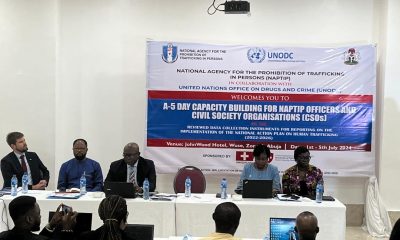
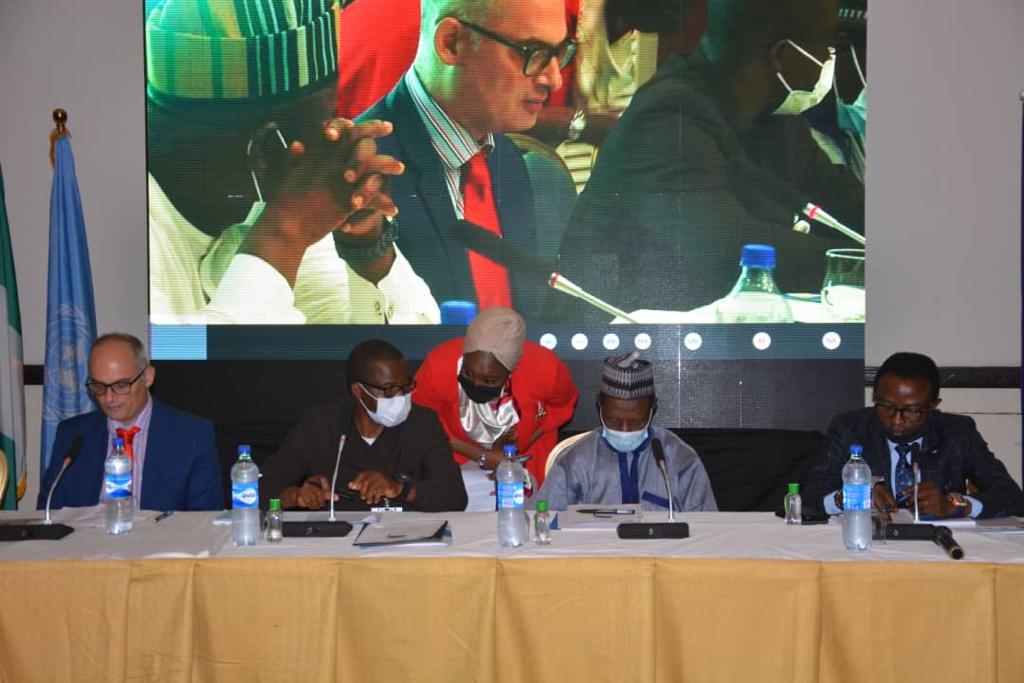
The National Agency for the Prohibition of Trafficking in Persons (NAPTIP), in partnership with the European Union in conjunction with
International Institute for Democracy and Electoral Assistance(International IDEA), has launched a dedicated media corps to strengthen the capacity of journalists to investigate, report and sustain public attention on sexual and gender-based violence (SGBV) in Nigeria.
The initiative, unveiled in Abuja under the EU-supported End Sexual and Gender-Based Violence Programme, is designed to move media coverage of SGBV beyond episodic reporting and towards sustained investigative journalism capable of exposing perpetrators, institutional failures and the social conditions that allow violence against women, girls and other vulnerable persons to persist.
The partnership reflects growing recognition among stakeholders that the fight against sexual and gender-based violence cannot be won through law enforcement and judicial action alone, but requires a powerful and informed media capable of breaking the culture of silence surrounding abuse.
The dedicated Media Corps is expected to provide journalists with specialised knowledge and tools to report SGBV cases more accurately, ethically and sensitively, while ensuring that victims and survivors are not subjected to further harm through irresponsible reporting.
At the launch, stakeholders stressed the strategic role of the media in shaping public attitudes, holding institutions accountable and ensuring that cases of sexual violence do not disappear from public consciousness after the initial news cycle.
The intervention also seeks to strengthen collaboration between journalists, government agencies, civil society organisations and other actors involved in the prevention and response to SGBV.
For NAPTIP, the partnership comes at a critical time as Nigeria continues to confront the complex and often interconnected challenges of trafficking, sexual exploitation, violence against women and girls, and other forms of abuse.
Beyond reporting individual cases, the new media corps is expected to deepen public understanding of the structural dimensions of SGBV and draw attention to gaps in prevention, protection, prosecution and survivor support.
The EU, through its support for the programme, has continued to position strategic communication and public awareness as important components of efforts to combat gender-based violence and strengthen institutional responses.
Participants at the Abuja engagement emphasised that journalists must be equipped not only with reporting skills but also with an understanding of the legal, psychological and social dimensions of SGBV.
This, they noted, would enable the media to report cases without sensationalism, protect the identities and dignity of survivors where necessary, challenge harmful stereotypes and ensure that coverage does not inadvertently reinforce the very culture that enables abuse.
The initiative is therefore being viewed as more than another capacity-building programme. It represents an attempt to create a specialised community of journalists who can make SGBV a sustained national accountability issue.
Stakeholders maintained that effective journalism can help expose patterns of abuse, amplify the voices of survivors, interrogate institutional responses and place pressure on relevant authorities to act.
They also called for stronger cooperation between the media and agencies responsible for tackling sexual violence, arguing that journalists should have access to credible information while respecting due process, privacy and the rights of survivors.
The launch comes against the backdrop of persistent concerns over under-reporting of sexual and gender-based violence, fear of stigmatisation, victim-blaming, weak access to justice and the reluctance of many survivors to speak publicly about their experiences.
These challenges, stakeholders observed, make responsible journalism particularly important in ensuring that victims are heard without being re-victimised.
With the establishment of the Media Corps, NAPTIP and the EU are seeking to build a more informed and specialised media response that can help transform public discourse around SGBV from one driven largely by isolated incidents into a sustained national conversation on prevention, accountability and justice.
The ultimate test of the initiative, however, will lie not merely in the number of journalists trained, but in whether the intervention produces deeper investigations, stronger accountability journalism and greater public pressure for institutions to protect victims and prosecute perpetrators.
For a country confronting persistent cases of sexual and gender-based violence, stakeholders said, silence remains one of the most powerful allies of perpetrators.
The new media corps is intended to make sure that silence no longer has the final word.
NAPTIP, EU, IIDEA Mobilise Media Against SGBV, Launch Dedicated Corps





News
Shekau’s Son Reportedly Emerges in Boko Haram Ranks, Raising Concerns Over Next Generation of Insurgency
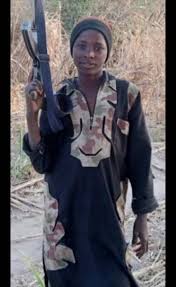
Shekau’s Son Reportedly Emerges in Boko Haram Ranks, Raising Concerns Over Next Generation of Insurgency
By Zagazola Makama
Ibn Mohammed bin Shakau, the biological son of the late Boko Haram leader, Abubakar Shekau, is said to have emerged within the ranks of Boko Haram insurgent group, raising fresh concerns over the possible continuation of the ideology and networks associated with his father.
Ibn Mohammed is reportedly taking steps into the militant organisation, following the path of his father, who was one of the most notorious figures in Nigeria’s insurgency in the North-East.
Abubakar Shekau became the leader of Boko Haram after the death of the group’s founder, Mohammed Yusuf, and presided over some of the most violent periods of the insurgency.
Under his leadership, Boko Haram carried out attacks against communities, security personnel, government institutions and other civilian targets across the North-East and neighbouring countries.
Shekau was also known for his uncompromising leadership style and his use of propaganda videos to threaten governments and announce attacks.
His death in 2021 following a confrontation with fighters of the Islamic State West Africa Province (ISWAP) significantly altered the dynamics of the insurgency in the Lake Chad region.
Shekau’s Son Reportedly Emerges in Boko Haram Ranks, Raising Concerns Over Next Generation of Insurgency
ISWAP LEADERS GRIPPED BY FEAR, SUSPICION OVER ACCURACY OF OPHK WANTED LIST
By Zagazola Makama
Senior commanders of the Islamic State West Africa Province (ISWAP) are reportedly gripped by fear and suspicion following the release of a wanted list containing the names and photographs of key terrorist figures by troops of Operation HADIN KAI (OPHK).
Intelligence obtained by Zagazola Makama indicated that the development has triggered serious apprehension within ISWAP’s leadership structure operating in the Lake Chad area, with commanders reportedly questioning how security forces obtained accurate details about some ISWAP senior members.
According to the intelligence, Ba Shuwa, identified as a senior ISWAP leader, reportedly expressed shock at the accuracy of the names and photographs contained in the wanted calendar and other information leaflets recently circulated by Nigerian troops.
The reaction is believed to have heightened concerns among senior ISWAP commanders over possible intelligence penetration of the group’s leadership and operational structures.
Sources said the accuracy of the information has reportedly generated suspicion among the terrorists, with some commanders becoming increasingly concerned that their identities, movements and activities may have been exposed to security forces.
The development could further deepen existing mistrust within the group, particularly amid reports of internal disagreements and leadership tensions among senior ISWAP commanders in the Lake Chad region.
The wanted materials, which reportedly contain photographs and identifying information on suspected terrorist commanders, form part of the military’s broader intelligence aimed at crippling the terrorist networks and denying them freedom of movement.
Security sources said the circulation of the materials also serves to demonstrate to terrorist commanders and their associates that security forces have substantial knowledge of the group’s leadership structure.
The reaction attributed to Ba Shuwa is particularly significant because it suggests that the materials may be having an impact beyond their immediate public-information purpose, by generating uncertainty among terrorist commanders over the extent of intelligence available to the military.
The sources said the development is being closely monitored by security agencies as they continue to assess its implications for ISWAP’s command, control and internal cohesion.
The latest intelligence comes amid sustained military pressure on terrorist formations across the Lake Chad axis, including air and ground operations targeting their leadership, logistics networks and areas of concentration.
ISWAP LEADERS GRIPPED BY FEAR, SUSPICION OVER ACCURACY OF OPHK WANTED LIST
ISWAP Leadership crises deepens as Four Shura Council Members reportedly executed
By Zagazola Makama
The leadership crisis within the Islamic State West Africa Province (ISWAP) is reportedly deepening, following fresh intelligence indicating the execution of four members of the group’s Shura Council.
According to intelligence obtained by Zagazola Makama, the four senior members, who were reportedly arrested by ISWAP elements last week, were allegedly executed by Ba Shuwa, a senior ISWAP figure, at the group’s Kwatan Dila enclave on Wednesday, Aug. 6.
The latest development is believed to further expose growing internal disagreements and factional tensions within the terrorist organisation operating in the Lake Chad region.
The four Shura Council members were reportedly detained amid an ongoing leadership crisis within ISWAP, although the specific allegations against them could not be independently established.
Intelligence sources said their subsequent execution has heightened concerns over internal purges and the consolidation of authority by rival commanders within the group.
The development also comes against the backdrop of intensified military operations targeting terrorist leadership structures.
Security sources said the incident could have significant implications for ISWAP’s command structure, particularly if other senior commanders and members of the Shura Council perceive the executions as evidence of a broader internal purge.
The Shura Council traditionally plays an important role in the decision-making structure of terrorist organisations, including matters relating to leadership, operations, administration and resource management.
The reported executions therefore represent more than an isolated disciplinary action and could further weaken cohesion within ISWAP’s senior command structure.
The latest intelligence is being closely monitored by security agencies as part of ongoing efforts to understand and exploit the group’s internal fractures.
The development is also expected to provide security forces with additional opportunities to exploit divisions within the terrorist organisation and encourage further defections, surrenders and intelligence disclosures.
Security sources, however, cautioned that the situation remains fluid and could trigger further retaliatory actions among competing factions.
The reported execution of the four Shura Council members comes amid sustained military pressure on ISWAP positions and logistics networks across the Lake Chad axis, where Nigerian forces and regional partners continue to conduct intelligence, surveillance and kinetic operations against terrorist formations.
ISWAP Leadership crises deepens as Four Shura Council Members reportedly executed

Ado Aleiro Loses Son, Eight Family Members, 30 Motorcycles in Katsina Encounter

Shekau’s Son Reportedly Emerges in Boko Haram Ranks, Raising Concerns Over Next Generation of Insurgency

AGAIN, OPHK AIR STRIKES NEUTRALISE SCORES OF ISWAP FIGHTERS, ELIMINATE KEY VIP ESCORT COMMANDER Qaid Abu Khalid Al Muhajir IN SAMBISA

Roger Federer’s Shock as DNA Results Reveal Myla and Charlene Are Not His Biological Children

THE PLIGHT OF FARIDA

FAILED COUP IN BURKINA FASO: HOW TRAORÉ NARROWLY ESCAPED ASSASSINATION PLOT AMID FOREIGN INTERFERENCE CLAIMS
-
 News2 years ago
Roger Federer’s Shock as DNA Results Reveal Myla and Charlene Are Not His Biological Children
-
Opinions4 years ago
THE PLIGHT OF FARIDA
-
 News1 year ago
FAILED COUP IN BURKINA FASO: HOW TRAORÉ NARROWLY ESCAPED ASSASSINATION PLOT AMID FOREIGN INTERFERENCE CLAIMS
-

 News2 years ago
EYN: Rev. Billi, Distortion of History, and The Living Tamarind Tree
-
 Opinions5 years ago
POLICE CHARGE ROOMS, A MINTING PRESS
-

 ACADEMICS2 years ago
A History of Biu” (2015) and The Lingering Bura-Pabir Question (1)
-

 Columns2 years ago
Army University Biu: There is certain interest, but certainly not from Borno.
-

 Politics1 year ago
2027: Why Hon. Midala Balami Must Go, as Youths in Hawul and Asikira/Uba Federal Constituency Reject ₦500,000 as Sallah Gift
