
News
National Councilors Forum Commends Supreme Court Judgment, Insists Nigeria Can Now Truly Enjoy Dividends of Democracy

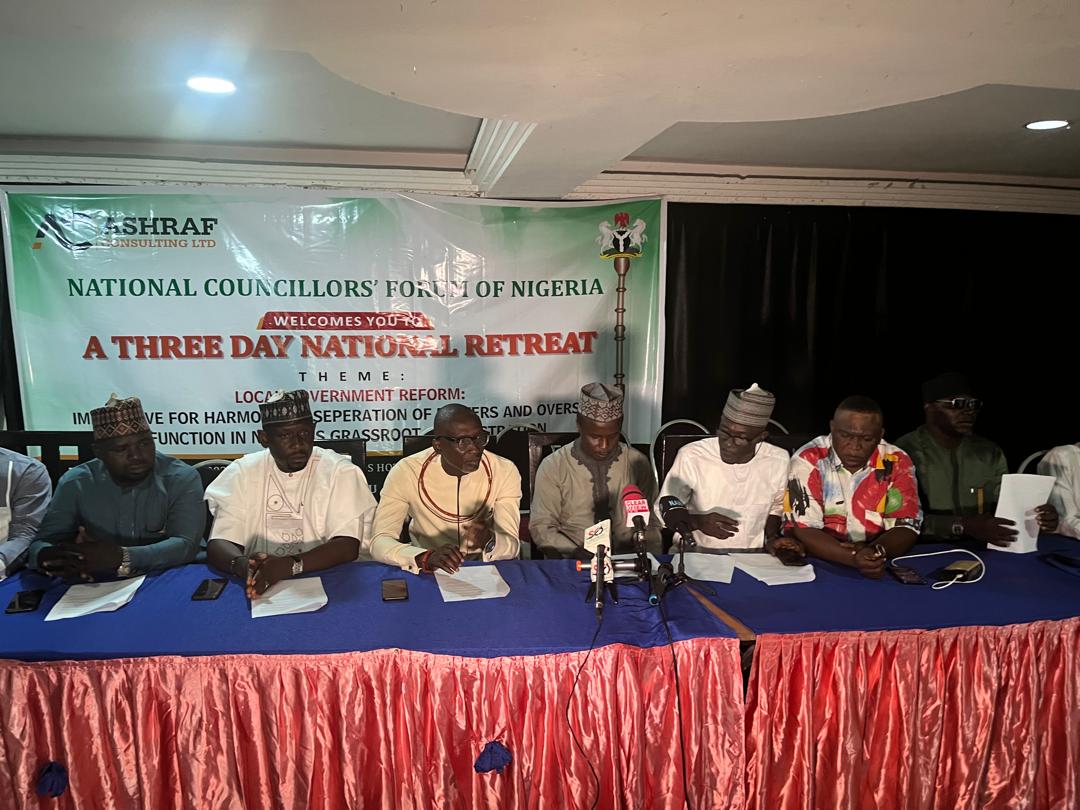
National Councilors Forum Commends Supreme Court Judgment, Insists Nigeria Can Now Truly Enjoy Dividends of Democracy
By: Michael Mike
The National Councilors Forum of Nigeria has described the Supreme Court’s judgment asserting the financial autonomy of local governments in the country as one of the greatest days in the history of the country that would go a long way to cement the nation’s federal and provide dividends of democracy to teeming Nigerians.
Addressing a press conference in Abuja, the Forum led by its President, Rt. Hon. Yusuf Shuaibu Baba said the judgment as shown that “It is clear that the constitution of Nigeria recognizes federal, states and local governments as three tiers of government and that the three recognized tiers of government draw funds for their operation and functioning from the federation account created by the constitution.”
He noted that the judgment has also shown clearly that: “It is also clear that in the provisions of the constitution, there must be a democratically elected local government system and that the constitution has not made provisions for any other systems of governance at the local government level other than democratically elected local government system.”
Baba noted that “in the face of the clear provisions of the constitution, some state government the governors refused to put in place a democratically elected local government system even where no state of emergency has been declared to warrant the suspension of democratic institutions in the state.”
He added that: “We also agree that the failure of some state governments to put democratically elected local government system in place is a deliberate subversion of the 1999 Constitution which they and the President have sworn to uphold.
“It is also agreeable that all efforts to make some state government comply with the dictates of the 1999 Constitution in terms of putting in place a democratically elected local government system, has not yielded any result and that to continue to disburse funds from the federation account to such state for non-existing democratically elected local governments is to undermine the sanctity of the 1999 constitution.
“Consequently, we, the leadership of the National Councilors Forum of Nigeria hereby present ourselves today, to rejoice with the Federal Government, the entire local governments of the federation and ultimately the Supreme Court, for this hilarious success of granting the local governments their constitutional rights and autonomy to that effect.”
Baba said elected leadership at the council level could not be held accountable for resources allocated to them, adding that the local government administration is duty bound to employ people, initiate and execute projects and bring development and dividends of democracy to the doorsteps of all Nigerians.
National Councilors Forum Commends Supreme Court Judgment, Insists Nigeria Can Now Truly Enjoy Dividends of Democracy


Troops Arrest Suspected Military Impostor in Katsina
By Zagazola Makama
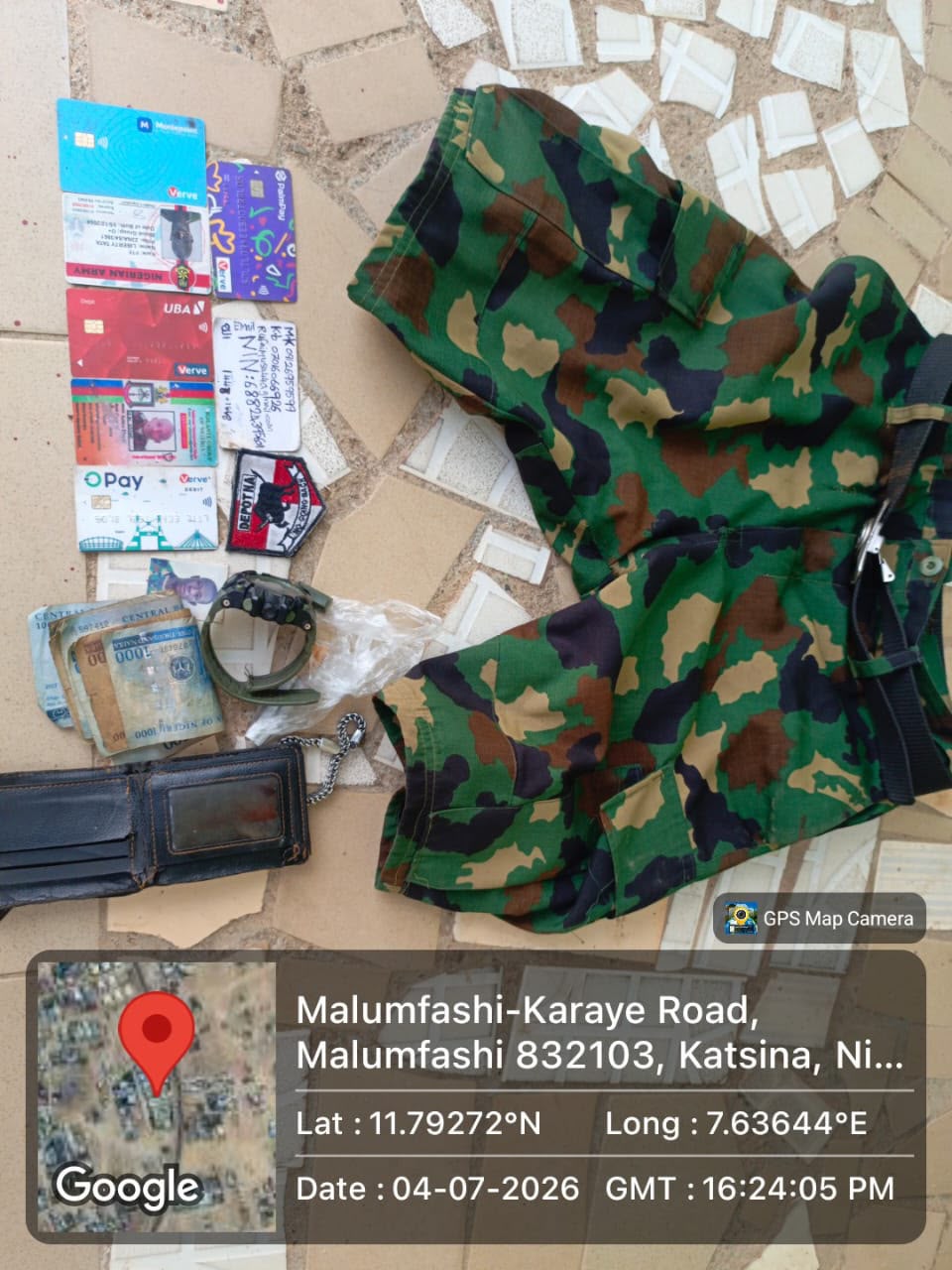
Troops of 17 Brigade have arrested a suspected military impostor during a fighting patrol in Malumfashi Local Government Area.
Security sources told Zagazola Makama that the suspect was apprehended at about 1:30 p.m. on July 4 by troops deployed at the Forward Operating Base (FOB) Malumfashi while conducting routine patrols within Malumfashi town.

According to the sources, the suspect was intercepted while wearing a woodland camouflage three-quarter short, raising suspicion among the troops.
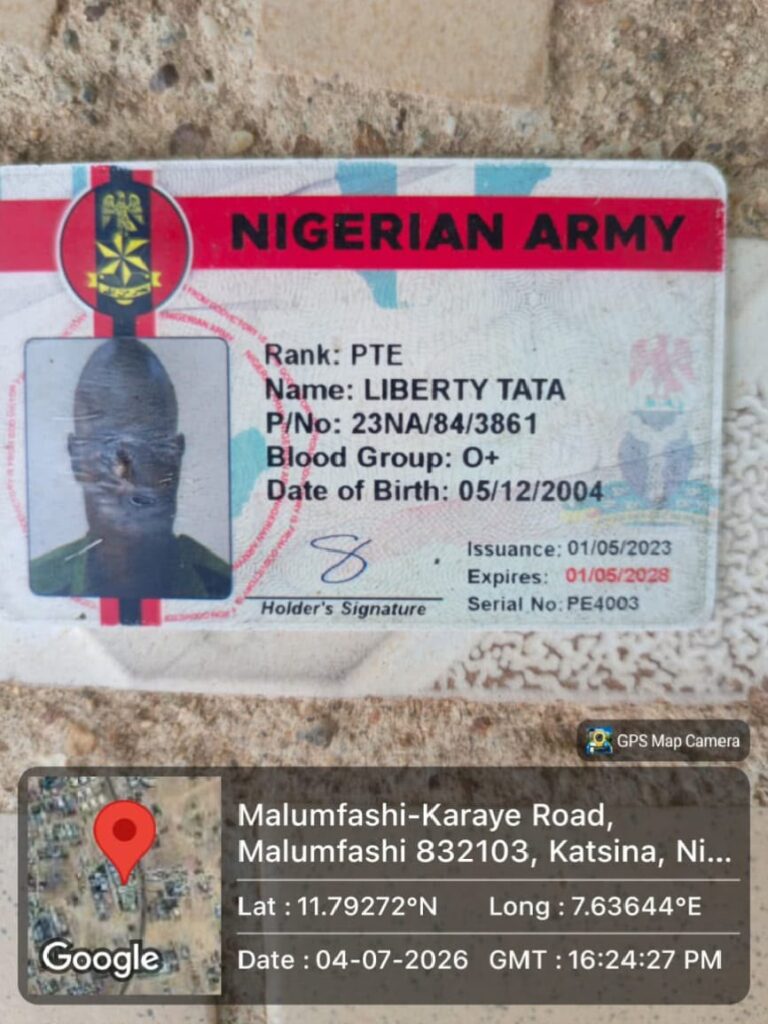
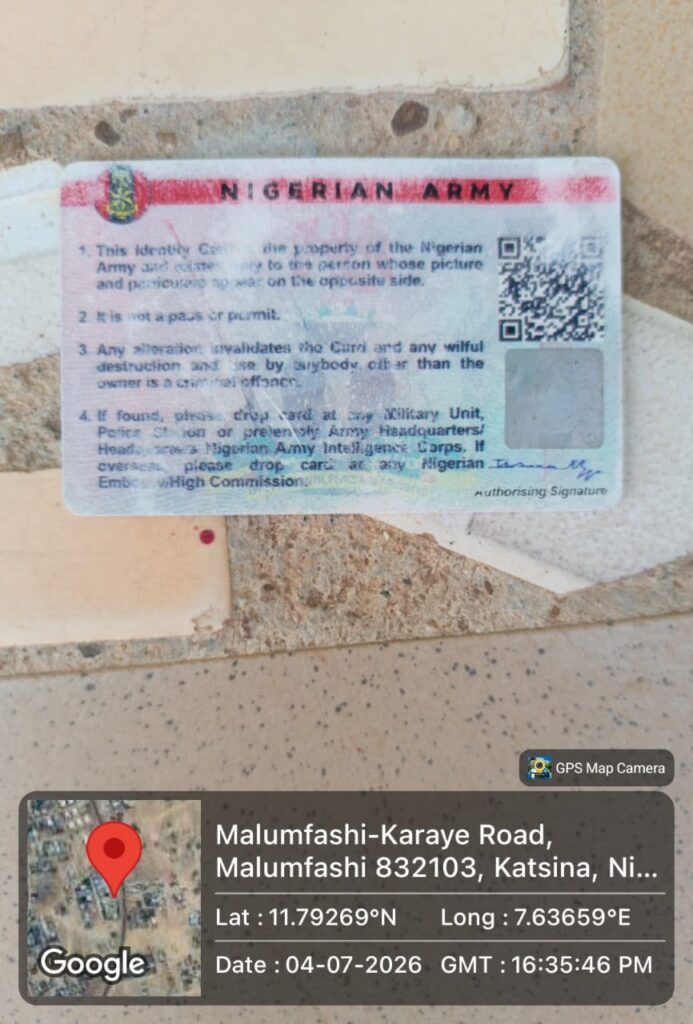
A search conducted on the suspect led to the recovery of a fake Nigerian Army identity card, four Automated Teller Machine (ATM) cards, one woodland camouflage three-quarter short, a wristwatch and the sum of ₦17,000.
The suspect and the recovered exhibits are currently in military custody pending further investigation.
Military sources said the arrest forms part of ongoing efforts to curb impersonation of security personnel and other criminal activities within the area.
Troops Arrest Suspected Military Impostor in Katsina
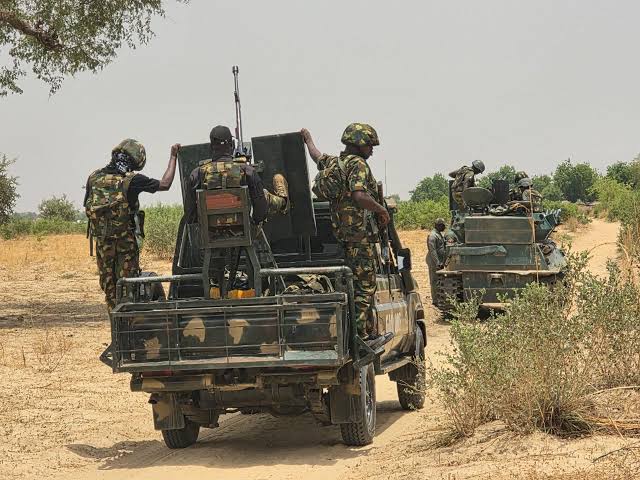
Troops Recover 50 Rustled Cattle, Repel Suspected Rustlers in Kaduna
By Zagazola Makama
Troops deployed at the Forward Operating Base (FOB) Kankomi have recovered 50 rustled cattle after repelling suspected cattle rustlers during an ambush operation in Chikun Local Government Area.
Security sources told Zagazola Makama that the troops responded to a distress call at about 9:55 a.m. on July 4 over the activities of suspected rustlers at Ungwan Gontu community.
According to the sources, the troops swiftly laid an ambush and made contact with the fleeing suspects, forcing them to abandon the stolen livestock and escape into the surrounding area.
During the operation, the troops recovered 50 rustled cattle, which were subsequently identified and handed over to their rightful owner.
Military sources said efforts are ongoing to track down the fleeing suspects as security operations continue to combat cattle rustling and other criminal activities across Kaduna State.
Troops Recover 50 Rustled Cattle, Repel Suspected Rustlers in Kaduna
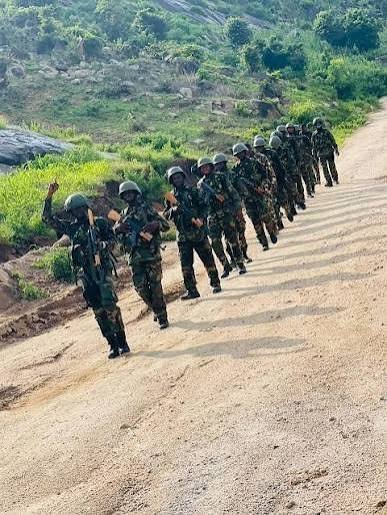
Troops Arrest Suspected Terrorist in Kogi, Suspect Confesses to Group Membership
By Zagazola Makama
Troops of 12 Brigade, in collaboration with Office of the National Security Adviser (ONSA) Hybrid Forces, have arrested a suspected terrorist during an operation in Lokoja Local Government Area.
Security sources told Zagazola Makama that the troops responded at about 1:00 p.m. on July 4 to reports of a confrontation between local residents and a suspected terrorist at a Ruga settlement behind Obajana community.
According to the sources, the troops swiftly intervened and arrested one suspect at the scene.
During preliminary interrogation, the suspect reportedly confessed to being a member of a terrorist group led by an individual identified as Haruna, which allegedly operates within the Okene general area.
The suspect is currently in military custody and is undergoing further investigation to establish the extent of his involvement and identify other members of the group.
Military sources said the arrest forms part of ongoing security operations aimed at dismantling terrorist and criminal networks across Kogi State.
Troops Arrest Suspected Terrorist in Kogi, Suspect Confesses to Group Membership

Troops Arrest Suspected Military Impostor in Katsina

Troops Recover 50 Rustled Cattle, Repel Suspected Rustlers in Kaduna

Troops Arrest Suspected Terrorist in Kogi, Suspect Confesses to Group Membership

Roger Federer’s Shock as DNA Results Reveal Myla and Charlene Are Not His Biological Children

THE PLIGHT OF FARIDA

FAILED COUP IN BURKINA FASO: HOW TRAORÉ NARROWLY ESCAPED ASSASSINATION PLOT AMID FOREIGN INTERFERENCE CLAIMS
-
 News2 years ago
Roger Federer’s Shock as DNA Results Reveal Myla and Charlene Are Not His Biological Children
-
Opinions4 years ago
THE PLIGHT OF FARIDA
-
 News1 year ago
FAILED COUP IN BURKINA FASO: HOW TRAORÉ NARROWLY ESCAPED ASSASSINATION PLOT AMID FOREIGN INTERFERENCE CLAIMS
-

 News2 years ago
EYN: Rev. Billi, Distortion of History, and The Living Tamarind Tree
-
 Opinions5 years ago
POLICE CHARGE ROOMS, A MINTING PRESS
-

 ACADEMICS2 years ago
A History of Biu” (2015) and The Lingering Bura-Pabir Question (1)
-

 Columns2 years ago
Army University Biu: There is certain interest, but certainly not from Borno.
-

 Politics1 year ago
2027: Why Hon. Midala Balami Must Go, as Youths in Hawul and Asikira/Uba Federal Constituency Reject ₦500,000 as Sallah Gift
