
News
NCA, Barnabas Aid UK Reach 1,000 Displaced Households in Borno with Relief Support

NCA, Barnabas Aid UK Reach 1,000 Displaced Households in Borno with Relief Support
By: Michael Mike
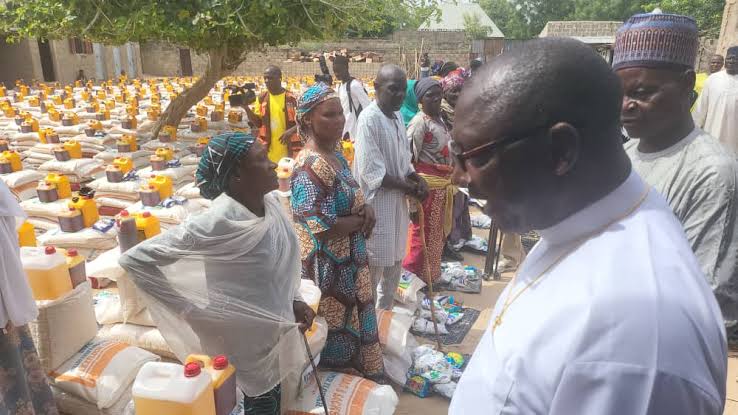
The Northern chapter of the Christian Association of Nigeria (CAN), covering 19 states and the Federal Capital Territory (FCT), Abuja, has provided humanitarian relief to 1,000 displaced households in Borno State, in a renewed effort to support victims of the Boko Haram insurgency.
The intervention, funded by Barnabas Aid UK, targeted vulnerable families currently taking refuge in Internally Displaced Persons (IDP) camps and host communities in Maiduguri. Beneficiaries received essential food items including 25kg bags of rice, garri, maize, and beans, alongside vegetable oil, palm oil, seasoning, and salt.
The distribution exercise, which formed part of a wider humanitarian outreach implemented across Benue, Plateau, Kaduna, and Ondo States, is aimed at cushioning the impact of prolonged displacement and insecurity affecting communities across northern Nigeria.
Flagging off the distribution at the Pentecostal Believers Covenant Church (PBCC), Gomari Airport, Maiduguri, the Chairman of Northern CAN, Reverend Joseph John Hayab, described the intervention as a lifeline for families grappling with the harsh realities of displacement.
He said the initiative reflects a sustained commitment that began in December last year, noting that Borno State remains one of the most affected by insurgency, with thousands of families still struggling to rebuild their lives.
“We are here not just to distribute food items, but to remind you that you are not forgotten,” Reverend Hayab said. “This gesture is a demonstration of faith translated into action—compassion that responds directly to human suffering.”
He expressed gratitude to Barnabas Aid UK for what he described as consistent humanitarian support, stressing that reaching 1,000 households in conflict-affected communities represents a significant intervention at a critical time.
According to him, the resilience of displaced persons remains a source of encouragement to the Christian community across Northern Nigeria.
Reverend Hayab also called for sustained peace and unity in Borno State and across the country, urging citizens to embrace tolerance and reject violence in all its forms.
“No faith promotes hatred or destruction. We must continue to see one another as brothers and sisters, regardless of religion or ethnicity,” he said, adding that collective healing and rebuilding depend on unity and mutual respect.
He further encouraged beneficiaries to extend compassion within their communities, stressing that solidarity among displaced persons and host communities is vital for long-term recovery.
Earlier, the Secretary-General of Northern CAN and Chairman of the Christian Association of Nigeria (CAN) North East Zone, Bishop Mohammed Naga, commended Barnabas Aid UK for its continued support to displaced families, describing the intervention as timely and impactful.
He assured that the relief materials would be distributed fairly and transparently to achieve their intended purpose, while praising beneficiaries for their calm and orderly conduct during the exercise.
In their separate remarks, representatives of the beneficiaries, including Mr. Andrawus Bzalava, Mr. John Dogo, and a widow and survivor of Boko Haram attacks, Mrs. Naomi Daniel, expressed appreciation to Barnabas Aid UK and Northern CAN for the support.
They described the intervention as a source of relief amid worsening economic hardship and insecurity, while praying for lasting peace in Borno State and across Nigeria.
NCA, Barnabas Aid UK Reach 1,000 Displaced Households in Borno with Relief Support


Troops Arrest Suspected Military Impostor in Katsina
By Zagazola Makama
Troops of 17 Brigade have arrested a suspected military impostor during a fighting patrol in Malumfashi Local Government Area.
Security sources told Zagazola Makama that the suspect was apprehended at about 1:30 p.m. on July 4 by troops deployed at the Forward Operating Base (FOB) Malumfashi while conducting routine patrols within Malumfashi town.
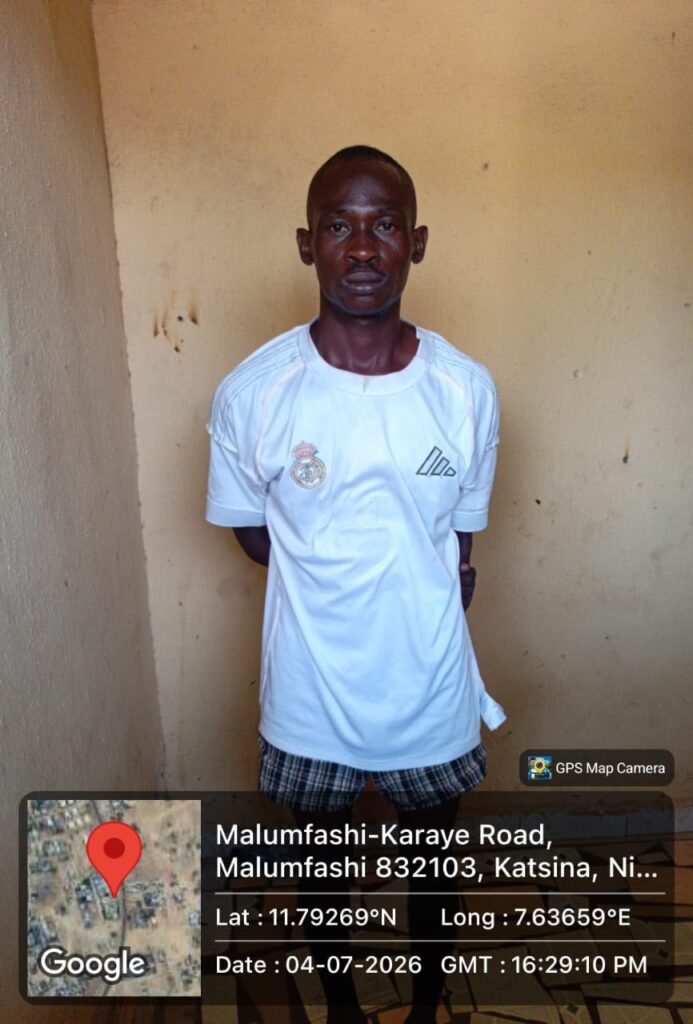
According to the sources, the suspect was intercepted while wearing a woodland camouflage three-quarter short, raising suspicion among the troops.
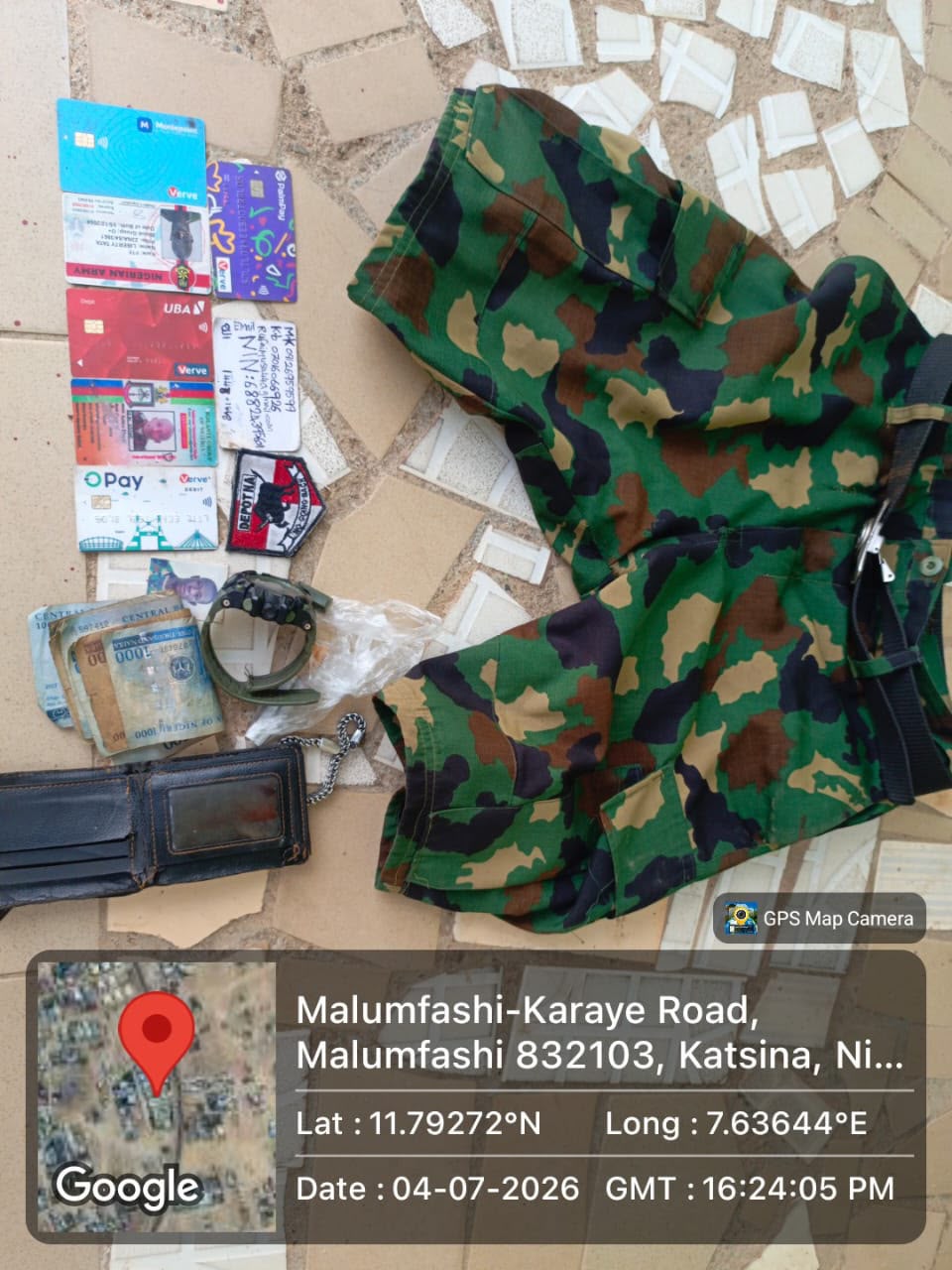
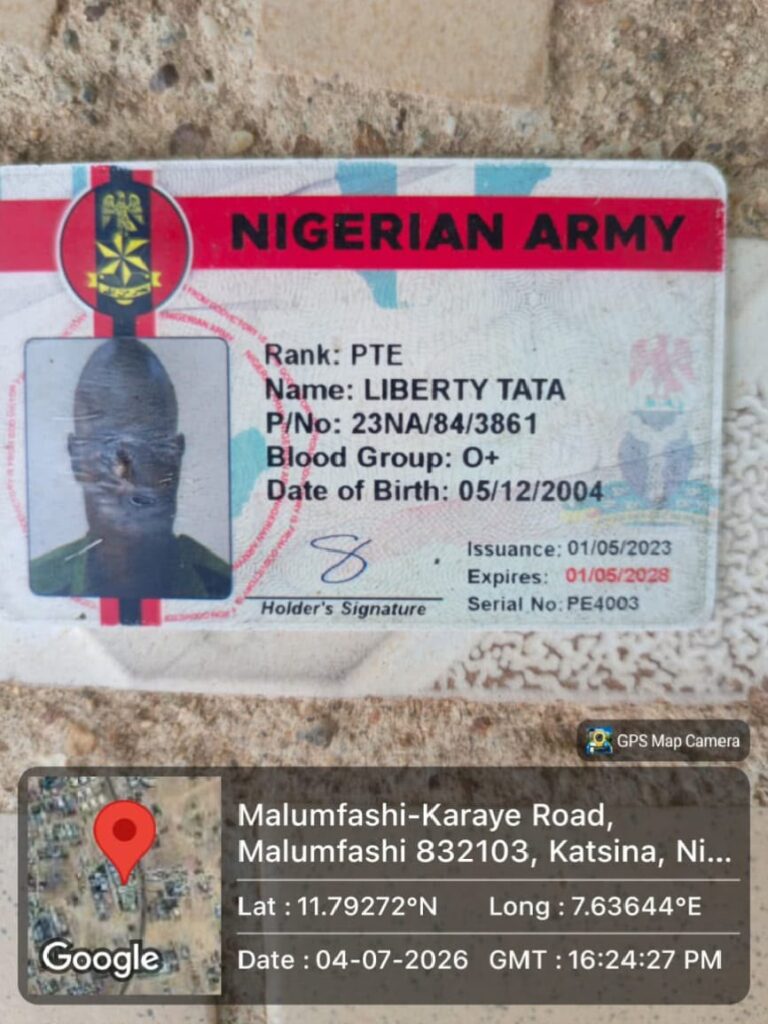
A search conducted on the suspect led to the recovery of a fake Nigerian Army identity card, four Automated Teller Machine (ATM) cards, one woodland camouflage three-quarter short, a wristwatch and the sum of ₦17,000.
The suspect and the recovered exhibits are currently in military custody pending further investigation.
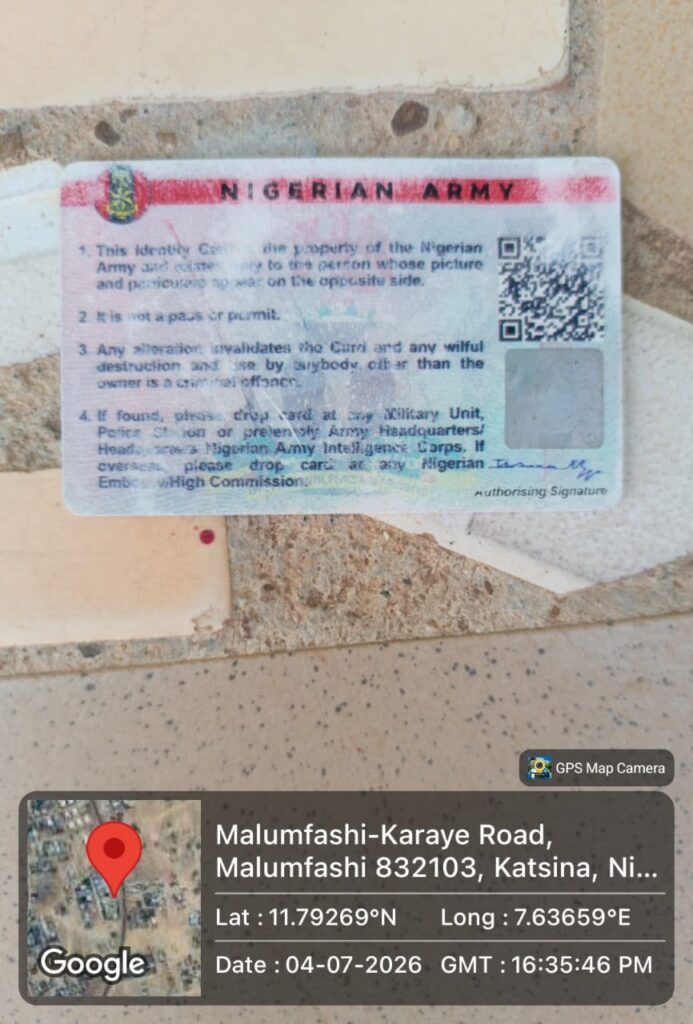
Military sources said the arrest forms part of ongoing efforts to curb impersonation of security personnel and other criminal activities within the area.
Troops Arrest Suspected Military Impostor in Katsina
Troops Recover 50 Rustled Cattle, Repel Suspected Rustlers in Kaduna
By Zagazola Makama
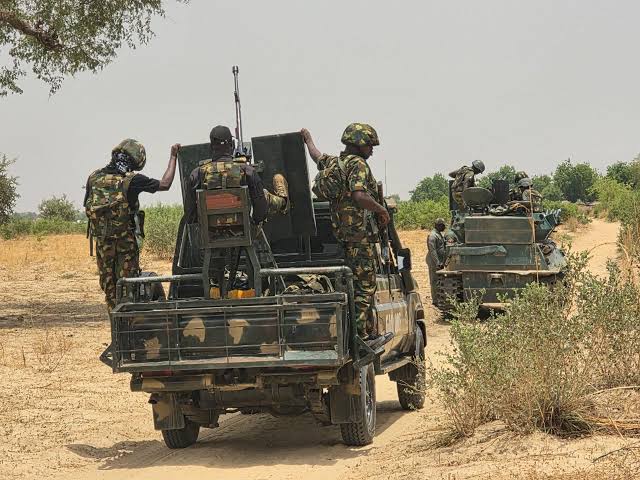
Troops deployed at the Forward Operating Base (FOB) Kankomi have recovered 50 rustled cattle after repelling suspected cattle rustlers during an ambush operation in Chikun Local Government Area.
Security sources told Zagazola Makama that the troops responded to a distress call at about 9:55 a.m. on July 4 over the activities of suspected rustlers at Ungwan Gontu community.
According to the sources, the troops swiftly laid an ambush and made contact with the fleeing suspects, forcing them to abandon the stolen livestock and escape into the surrounding area.
During the operation, the troops recovered 50 rustled cattle, which were subsequently identified and handed over to their rightful owner.
Military sources said efforts are ongoing to track down the fleeing suspects as security operations continue to combat cattle rustling and other criminal activities across Kaduna State.
Troops Recover 50 Rustled Cattle, Repel Suspected Rustlers in Kaduna
Troops Arrest Suspected Terrorist in Kogi, Suspect Confesses to Group Membership
By Zagazola Makama
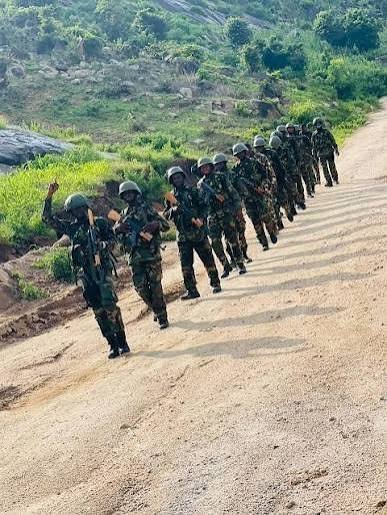
Troops of 12 Brigade, in collaboration with Office of the National Security Adviser (ONSA) Hybrid Forces, have arrested a suspected terrorist during an operation in Lokoja Local Government Area.
Security sources told Zagazola Makama that the troops responded at about 1:00 p.m. on July 4 to reports of a confrontation between local residents and a suspected terrorist at a Ruga settlement behind Obajana community.
According to the sources, the troops swiftly intervened and arrested one suspect at the scene.
During preliminary interrogation, the suspect reportedly confessed to being a member of a terrorist group led by an individual identified as Haruna, which allegedly operates within the Okene general area.
The suspect is currently in military custody and is undergoing further investigation to establish the extent of his involvement and identify other members of the group.
Military sources said the arrest forms part of ongoing security operations aimed at dismantling terrorist and criminal networks across Kogi State.
Troops Arrest Suspected Terrorist in Kogi, Suspect Confesses to Group Membership

Troops Arrest Suspected Military Impostor in Katsina

Troops Recover 50 Rustled Cattle, Repel Suspected Rustlers in Kaduna

Troops Arrest Suspected Terrorist in Kogi, Suspect Confesses to Group Membership

Roger Federer’s Shock as DNA Results Reveal Myla and Charlene Are Not His Biological Children

THE PLIGHT OF FARIDA

FAILED COUP IN BURKINA FASO: HOW TRAORÉ NARROWLY ESCAPED ASSASSINATION PLOT AMID FOREIGN INTERFERENCE CLAIMS
-
 News2 years ago
Roger Federer’s Shock as DNA Results Reveal Myla and Charlene Are Not His Biological Children
-
Opinions4 years ago
THE PLIGHT OF FARIDA
-
 News1 year ago
FAILED COUP IN BURKINA FASO: HOW TRAORÉ NARROWLY ESCAPED ASSASSINATION PLOT AMID FOREIGN INTERFERENCE CLAIMS
-

 News2 years ago
EYN: Rev. Billi, Distortion of History, and The Living Tamarind Tree
-
 Opinions5 years ago
POLICE CHARGE ROOMS, A MINTING PRESS
-

 ACADEMICS2 years ago
A History of Biu” (2015) and The Lingering Bura-Pabir Question (1)
-

 Columns2 years ago
Army University Biu: There is certain interest, but certainly not from Borno.
-

 Politics1 year ago
2027: Why Hon. Midala Balami Must Go, as Youths in Hawul and Asikira/Uba Federal Constituency Reject ₦500,000 as Sallah Gift
