
News
NDLEA Busts N6.2bn International Drug Pipeline, Seizes ‘Jihadi Drug’ Hidden in Ghana Soap, 3.9m Opioid Pills

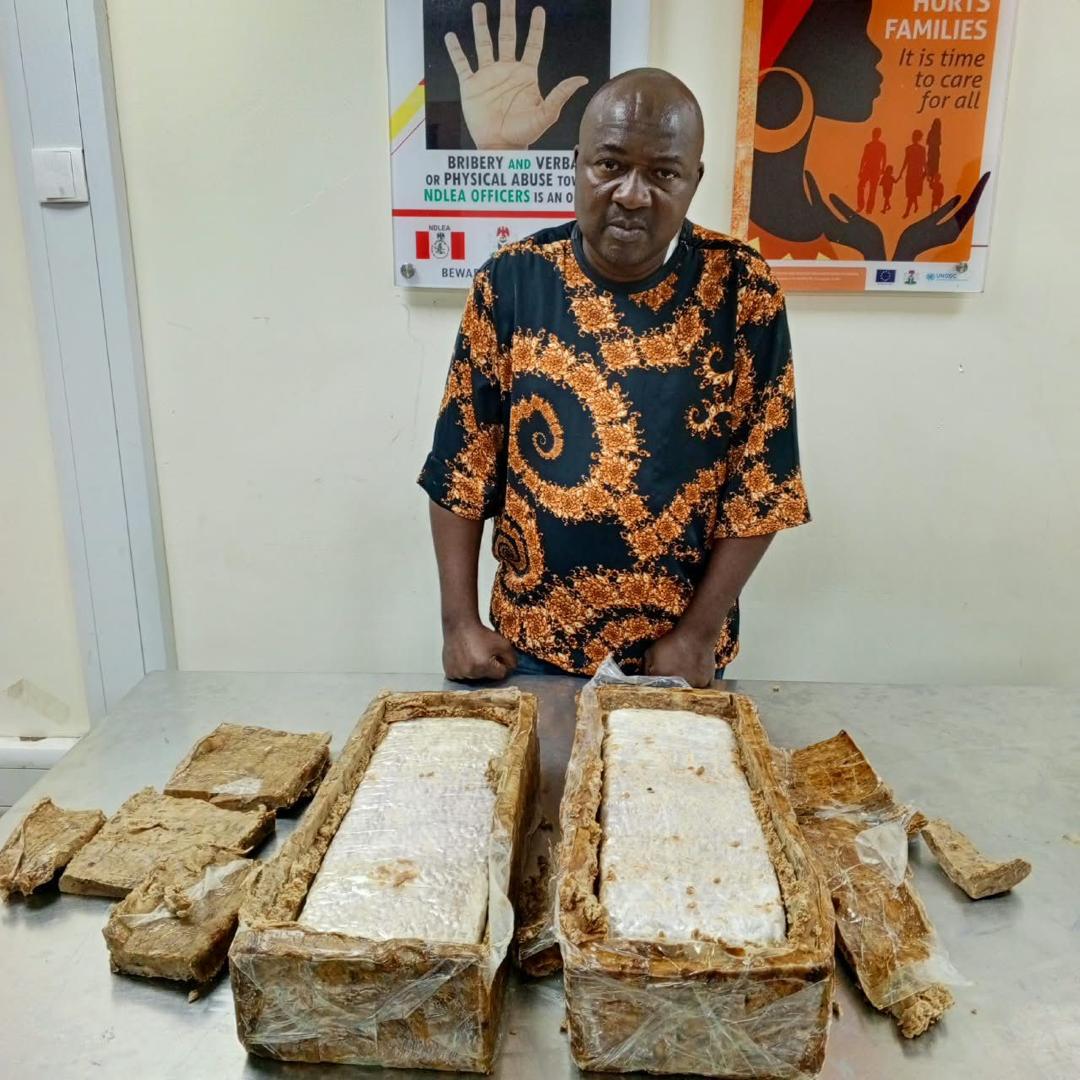
NDLEA Busts N6.2bn International Drug Pipeline, Seizes ‘Jihadi Drug’ Hidden in Ghana Soap, 3.9m Opioid Pills
By: Michael Mike
The National Drug Law Enforcement Agency (NDLEA) has uncovered a major international drug trafficking operation spanning Africa, Europe and Asia, intercepting illicit consignments worth more than N6.2 billion in Lagos while arresting a suspected cross-border kingpin and several other traffickers.
The seizures expose the increasingly sophisticated methods being deployed by drug syndicates to move narcotics into Nigeria, including the concealment of 47,200 tablets of captagon, notoriously known as the “Jihadi drug,” inside ordinary blocks of bathing soap imported from Ghana.

The captagon haul, valued at more than N1.5 billion, was intercepted at the Murtala Muhammed International Airport (MMIA), Lagos, after NDLEA operatives arrested 49-year-old Akinbile Kazeem Aikins, who arrived from Accra aboard an African World Airlines flight.
But the captagon seizure represented only part of a larger haul uncovered at the airport.
NDLEA operatives also recovered 3,900,030 tablets of Tramaking 225mg and Tapentadol 250mg, with a combined weight of 2,787.40 kilogrammes and an estimated street value exceeding N4.6 billion, from four abandoned consignments.
The spokesman of the anti-narcotics agency, Femi Babafemi in a statement on Sunday, said the shipments originated from multiple international routes, with three consignments containing 900,000 tablets of Tramaking arriving from Bangladesh through RwandAir, while another shipment containing more than three million Tapentadol tablets arrived from Amsterdam aboard Qatar Airways.
He noted that the scale and geographical spread of the seizures point to a sophisticated transnational trafficking chain exploiting Nigeria’s international aviation routes and commercial cargo channels to move dangerous pharmaceutical opioids and illicit stimulants into the country.
The development came as NDLEA operations across several states yielded further major seizures, including cocaine, heroin, Colorado and more than one tonne of cannabis, underscoring the expanding challenge confronting Nigeria’s drug-control authorities.
In Rivers State, operatives cracked open a fireproof iron safe recovered from a notorious drug den in Port Harcourt, discovering 316 grammes of cocaine, 10 grammes of heroin and 237 grammes of Colorado concealed inside.
In Ondo State, five suspects were arrested in separate operations with a combined 1,069 kilogrammes of skunk, while Delta State recorded the recovery of more than 176,000 assorted opioid pills.
The latest operations highlight not only the sheer volume of illicit drugs being moved through Nigeria but also the increasingly inventive concealment techniques and international routes being exploited by traffickers.
NDLEA Chairman and Chief Executive Officer, Brig. Gen. Buba Marwa (rtd.), commended the officers involved and ordered personnel across the country to sustain the pressure on traffickers.
He specifically directed operatives to remain vigilant against syndicates deploying unconventional concealment methods, including the use of everyday household items such as bathing soap to smuggle illicit consignments.
With millions of opioid tablets intercepted alongside captagon, cocaine, heroin and cannabis in one week, the NDLEA seizures provide a stark picture of the scale, sophistication and international reach of Nigeria’s illicit drug trade.
NDLEA Busts N6.2bn International Drug Pipeline, Seizes ‘Jihadi Drug’ Hidden in Ghana Soap, 3.9m Opioid Pills



Nigeria Turns Forest Protection Into $1bn Economic Agenda
…EU, Germany, FAO Back investment drive as country targets 2m hectares restoration, 1.5m green jobs
By: Michael Mike
Nigeria is betting about $1 billion on its forests, seeking to turn the country’s growing environmental challenges into an economic opportunity through a 10-year strategy targeting massive forest restoration, new green jobs, sustainable agriculture and increased climate investment.
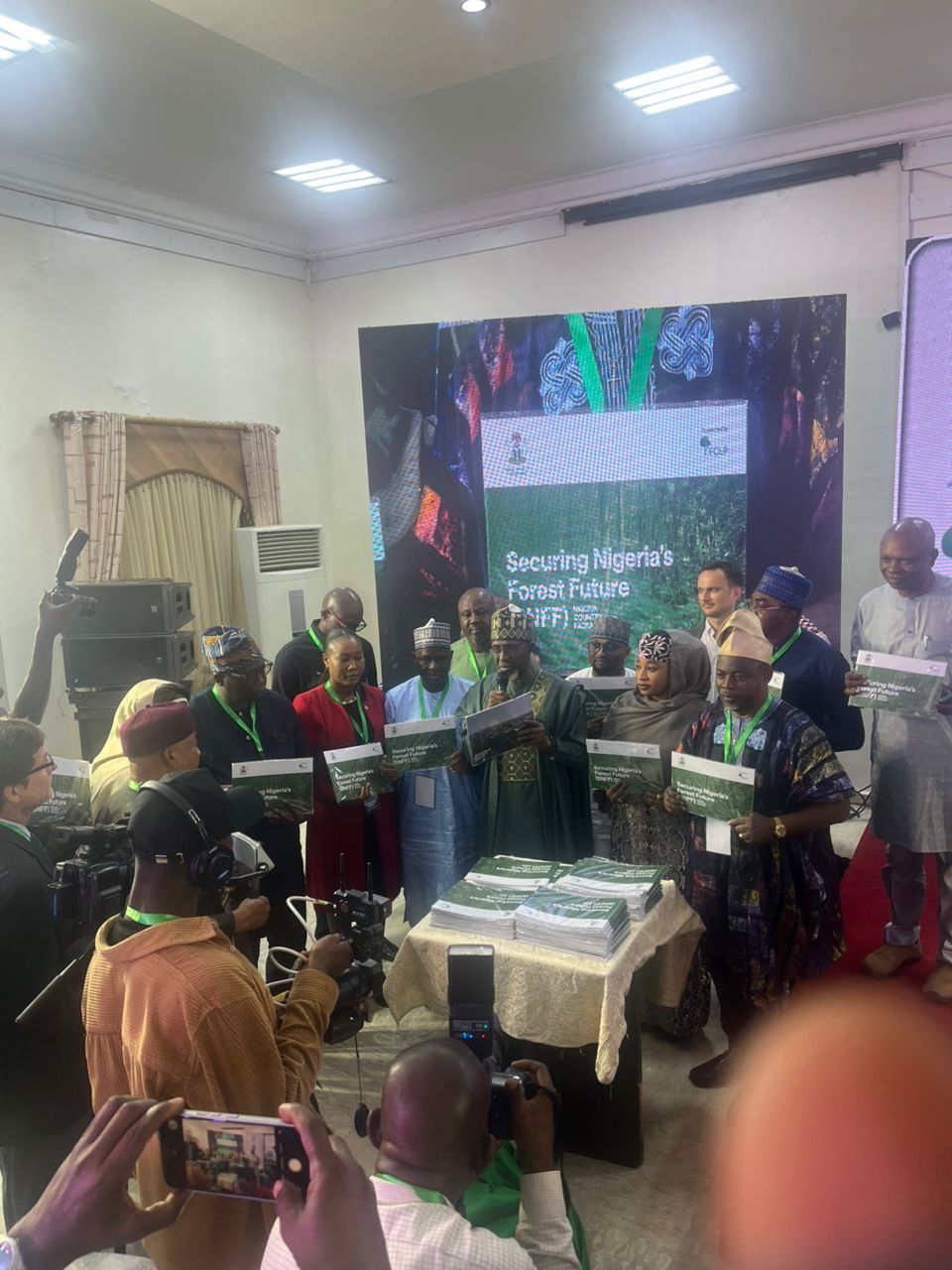
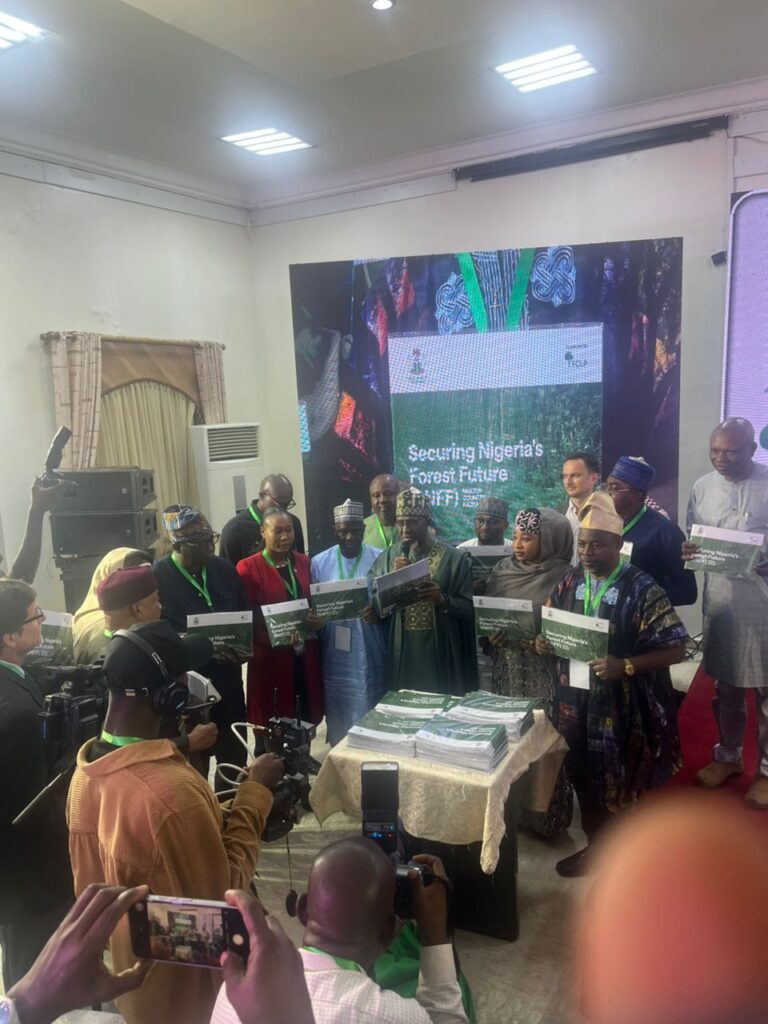
The plan, known as the Securing Nigeria’s Forest Future (SNFF) Country Package, was launched on Tuesday in Abuja by the Minister of Environment, Balarabe Lawal, with strong support from the European Union, Germany and the Food and Agriculture Organisation of the United Nations (FAO).
Under the framework, Nigeria aims to mobilise approximately $1 billion in blended finance, restore two million hectares of degraded forest, reduce deforestation by 20 per cent, create 1.5 million green jobs and strengthen climate resilience for more than five million Nigerians.
Lawal said the initiative marked a departure from isolated forest interventions, stressing that Nigeria now required a coordinated investment framework capable of bringing government, private capital, development partners and communities into a common programme.
He said the country’s forests were fundamental to livelihoods, agriculture, biodiversity, water security and climate resilience, but were increasingly threatened by agricultural expansion, unsustainable exploitation of natural resources and urbanisation.
The Minister said government funding alone could not deliver the scale of intervention required, making private investment, blended finance and carbon finance essential to the success of the strategy.
He urged the private sector and financial institutions to identify commercially viable opportunities in sustainable forest management and forest-based value chains, while insisting that investment must generate tangible benefits for communities.
Women and young people, he said, must also have meaningful opportunities in the emerging green economy.
The European Union said Nigeria’s forest agenda must be viewed alongside agriculture, trade and economic development, warning that the way commodities are produced and land is managed will increasingly determine the country’s economic opportunities.
Speaking at the launch, the EU Head of Partnerships, Massimo De Luca, said experiences from the Amazon, Congo Basin, Southeast Asia and the Sahel had demonstrated the consequences of weak forest governance and unsustainable land use.
He said they had also shown that strong institutions, community participation, sustainable agriculture, restoration and international cooperation could reverse environmental degradation.
De Luca highlighted EU support for the protection of Nigeria’s natural assets, including Gashaka Gumti National Park and Cross River National Park, as part of wider efforts to conserve biodiversity and preserve the economic and ecological value of forests.
He also cited the EU’s €700 million commitment to the Great Green Wall Initiative, aimed at combating desertification, restoring degraded landscapes and strengthening climate resilience across the Sahel.
For Nigeria, however, one of the most immediate economic implications lies in its agricultural exports.
De Luca said the European Union Deforestation Regulation (EUDR) presents both a challenge and an opportunity for Nigeria, particularly its cocoa industry.
He said better forest governance, land-use planning, farm-level traceability and reliable geospatial data would help ensure that Nigerian cocoa production is not associated with deforestation or forest degradation.
Such measures, he noted, could help farmers and businesses maintain access to the European market while encouraging more sustainable agricultural production.
Germany also called for stronger institutions and greater private-sector participation in Nigeria’s forest transition.
The German representative said the private sector could provide the capital, technology, innovation and market access needed to accelerate sustainable land management.
But investors, the representative stressed, would require predictable policies, secure land rights, reliable data, access to finance and appropriate incentives.
The German government also emphasised that environmental protection would only be sustainable if it generated economic opportunities for people living around forests.
Communities, women and young people, it said, must be able to see concrete benefits from forest conservation and restoration.
Germany pledged continued support for Nigerian-led solutions and efforts to attract additional public and private financing for sustainable development.
The FAO brought another dimension to the strategy, warning that Nigeria’s forests cannot be separated from the country’s food and agricultural systems.
In a goodwill message delivered on behalf of FAO Representative in Nigeria and to ECOWAS, Dr Hussein Gadain, the organisation said forests are directly connected to food, water, income and resilience for millions of Nigerians, particularly forest-dependent communities.
FAO welcomed the SNFF’s attempt to combine forest conservation with sustainable land management, climate action, biodiversity protection, investment and livelihoods.
It stressed that agricultural production and forest conservation must be pursued together, advocating sustainable commodity production, deforestation-free supply chains, agroforestry and restoration.
The organisation also called for local communities, women and young people to become active participants in the management and restoration of forest resources.
FAO said it was ready to support Nigeria in developing investment-ready programmes and accessing international environmental and climate financing, including resources available through the Global Environment Facility, Green Climate Fund and Adaptation Fund.
Despite the broad international support, Lawal acknowledged that the most difficult phase begins after the launch.
He said the SNFF would ultimately be judged by what it delivers on the ground rather than by the quality of the document itself.
The Minister identified clear institutional responsibilities, bankable investment pipelines, mobilised resources, technical capacity, reliable monitoring and accountability as critical to implementation.
He urged Ministries, Departments and Agencies to treat the initiative as a cross-cutting economic and climate priority rather than a forestry programme.
State governments and communities, he added, would be crucial because much of the implementation would occur at the subnational level.
Lawal also called on development partners to move from fragmented, project-based interventions towards coordinated and scalable investment programmes.
The Ministry of Environment, through its Department of Forestry, will strengthen forest monitoring systems to track deforestation, degradation and restoration and support national climate and sustainable development reporting.
With Nigeria now facing the task of turning its targets into projects and financing, the success of the strategy will depend on whether the promised investment can reach communities, whether degraded landscapes can actually be restored and whether sustainable production can become economically attractive.
The launch therefore marks more than the unveiling of another environmental framework. It places Nigeria’s forests at the centre of a broader economic question: whether the country can protect its natural resources while simultaneously creating jobs, securing food systems, attracting investment and keeping its agricultural exports competitive in a changing global market.
Nigeria Turns Forest Protection Into $1bn Economic Agenda
Political Failure Fuels Global Environmental Crime, EIA Warns
By: Michael Mike
Environmental crimes have become more sophisticated, profitable and destructive over the past 18 years because governments have failed to muster the political will, resources and coordination needed to tackle them, the Environmental Investigation Agency (EIA) has warned.
In a new report, Crimes that Affect the Environment – Still a Critical Threat to Our Future, released on Tuesday, the London-based organisation said environmental crime should no longer be treated as a collection of isolated regulatory violations but as a major form of transnational organised crime driving climate change, pollution and biodiversity loss.
The warning comes 18 years after EIA’s landmark 2008 report, Environmental Crime – A Threat to Our Future, which called for a coordinated international response to the growing threat.
According to the agency, many of the weaknesses identified in 2008 — including fragmented laws, weak deterrence, inadequate cross-border cooperation and insufficient political commitment — remain largely unresolved.
EIA Securing Criminal Justice Programme Lead, Justin Gosling, said the situation had become more serious because criminals had continued to innovate while enforcement systems remained inadequate.
“Many of the structural weaknesses identified in 2008 — fragmented legislation, weak deterrence, limited cross-border cooperation and insufficient political will — persist today,” Gosling said.
He warned that the consequences of continued inaction were becoming increasingly difficult, and in some cases impossible, to reverse.
The report identifies climate, pollution, waste, forest, fisheries and wildlife crimes as interconnected activities increasingly driven by organised criminal networks.
It said illegal trade in hydrofluorocarbon refrigerant gases alone costs European governments an estimated €77 million annually in lost VAT, while legitimate industry suffered more than €400 million in losses in 2020.
Waste crime, described as one of the fastest-growing forms of environmental crime, includes fraudulent recycling operations and the illegal shipment of plastic waste to countries where it is falsely declared recyclable before being processed in unlicensed facilities.
The agency also highlighted illegal logging, forest conversion and illicit mining as major drivers of deforestation and environmental destruction, warning that criminal mining operations are increasingly associated with mercury contamination, corruption and violence against forest-dependent communities.
Illegal fishing was similarly identified as a multibillion-dollar criminal enterprise, accounting for an estimated 15 to 30 per cent of global annual catches and generating up to $23.5 billion annually.
Beyond depriving coastal countries of revenue, EIA said illegal fishing fuels other crimes, including labour exploitation and human trafficking, while destructive bycatch threatens already endangered marine species.
Wildlife trafficking also remains a highly profitable enterprise. The report said trafficking data recorded approximately 4,000 species between 2015 and 2021, while more than 70 per cent of emerging zoonotic diseases are linked to wildlife.
EIA said corruption, weak prosecution of senior criminal actors and the ability to move illicit commodities through legitimate supply chains had helped make environmental crime a “high-reward, low-risk” business.
Gosling said the international community already possessed many of the legal instruments required to respond, including the United Nations Convention against Transnational Organised Crime (UNTOC).
“This is not a failure of available tools — the legal frameworks and cooperation mechanisms needed to act already exist,” he said.
“The failure has been one of political will, resourcing and coordination.”
EIA is therefore calling for the more effective use of UNTOC against environmental crime, stronger cross-border enforcement and renewed political commitment to treating environmental crime as a global security threat.
The agency said failure to act would allow criminal networks to continue exploiting environmental resources while transferring the economic, social and ecological costs to governments, communities and future generations.
Political Failure Fuels Global Environmental Crime, EIA Warns
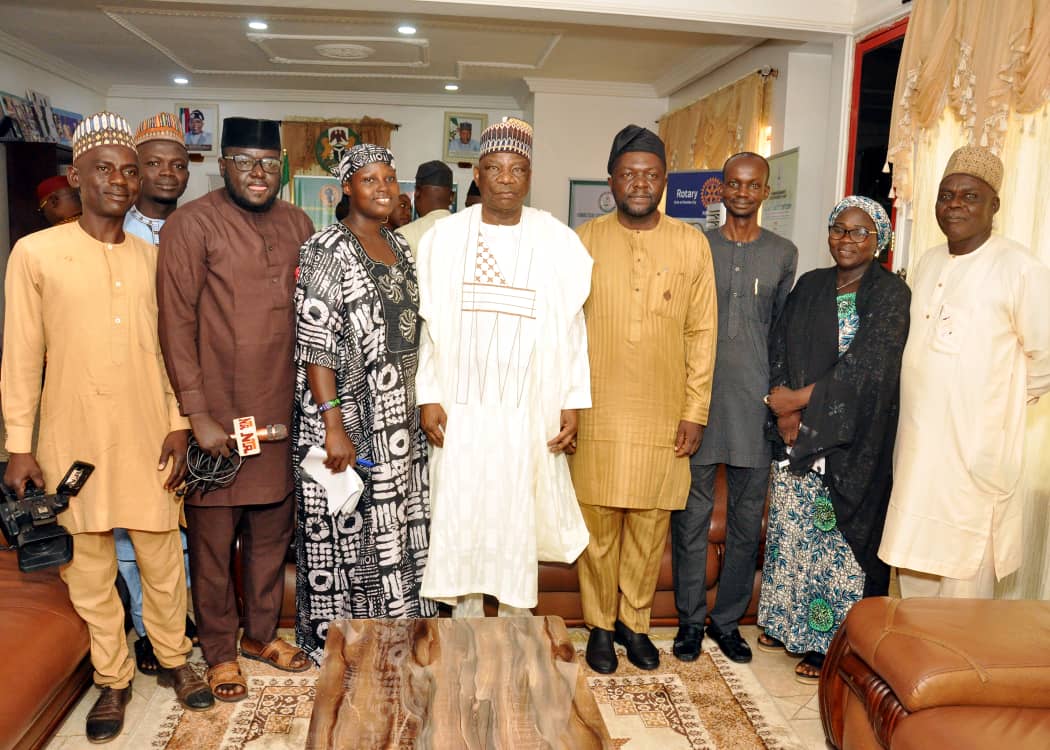
NHRC strengthens partnership with Gombe Govt on human rights protection
By Elizabeth Ogunjobi
The National Human Rights Commission (NHRC), Gombe State Office has called for stronger collaboration with the government to tackle human rights violations in the state.
The State Coordinator of NHRC, Dr Joseph Wanshe, made the call on Tuesday, during a courtesy visit to the Deputy Gov. Manassah Jatau.
Wanshe said that such collaboration had become imperative to ensure effective promotion and protection of human rights in the state, stating that rights protection could not succeed in isolation.
He said that while the commission carried out its day-to-day activities as an independent institution, its operations touched directly on the lives, security, and socio-economic wellbeing of the people.
The coordinator said that security and human rights were two sides of the same coin as sustainable peace could not exist without justice, just as human rights could not flourish without security.
He said that recognising the vital link, the commission respectfully sought to deepen its strategic collaboration with the state government.
“We humbly request that NHRC be granted observer or advisory inclusion in State Security Council meetings.
“This will allow us to share field-level human rights monitoring data, provide early warning insights, and support peacebuilding strategies that strengthen public trust between citizens and law enforcement.
“Also, as electoral cycles unfold, we look forward to working closely with the state government and relevant community stakeholders to support a peaceful, inclusive, and rights-respecting environment,” Wanshe said.
The coordinator commended the state government’s efforts at advancing the wellbeing of the people through investments in infrastructure, road network, public facilities and urban renewal.
Responding, Jatau described NHRC as a noble and humanistic organisation whose activities should be highlighted and recognised.
He pledged government’s support at strengthening the protection of citizens’ rights in the state.
According to him, with the increasing cases of human rights violation especially against children and women, it has become necessary to support any efforts at tackling such issues.
“The inhumane nature of people is what we are seeing today whereby children are maltreated, women are victimised and so many other prevalent ills.
“Everyone must help the commission to protect human rights and ensure better welfare for our people,” he said.
The deputy governor called on the media and other stakeholders to support the fight against human rights violations, stressing that the protection of citizens’ rights was everyone’s responsibility.
NHRC strengthens partnership with Gombe Govt on human rights protection

Nigeria Turns Forest Protection Into $1bn Economic Agenda

Political Failure Fuels Global Environmental Crime, EIA Warns

Troops neutralise Boko Haram terrorist, recover AK-47 rifle in Lamusuri

Roger Federer’s Shock as DNA Results Reveal Myla and Charlene Are Not His Biological Children

THE PLIGHT OF FARIDA

FAILED COUP IN BURKINA FASO: HOW TRAORÉ NARROWLY ESCAPED ASSASSINATION PLOT AMID FOREIGN INTERFERENCE CLAIMS
-
 News2 years ago
Roger Federer’s Shock as DNA Results Reveal Myla and Charlene Are Not His Biological Children
-
Opinions5 years ago
THE PLIGHT OF FARIDA
-
 News1 year ago
FAILED COUP IN BURKINA FASO: HOW TRAORÉ NARROWLY ESCAPED ASSASSINATION PLOT AMID FOREIGN INTERFERENCE CLAIMS
-

 News2 years ago
EYN: Rev. Billi, Distortion of History, and The Living Tamarind Tree
-
 Opinions5 years ago
POLICE CHARGE ROOMS, A MINTING PRESS
-

 ACADEMICS3 years ago
A History of Biu” (2015) and The Lingering Bura-Pabir Question (1)
-

 Columns3 years ago
Army University Biu: There is certain interest, but certainly not from Borno.
-

 Politics1 year ago
2027: Why Hon. Midala Balami Must Go, as Youths in Hawul and Asikira/Uba Federal Constituency Reject ₦500,000 as Sallah Gift
