
News
NDLEA intercepts 14.5 tons of Ghanaian Loud linked to wanted drug baron in Lagos. Arrests deaf and dumb, others for dealing in illicit substances

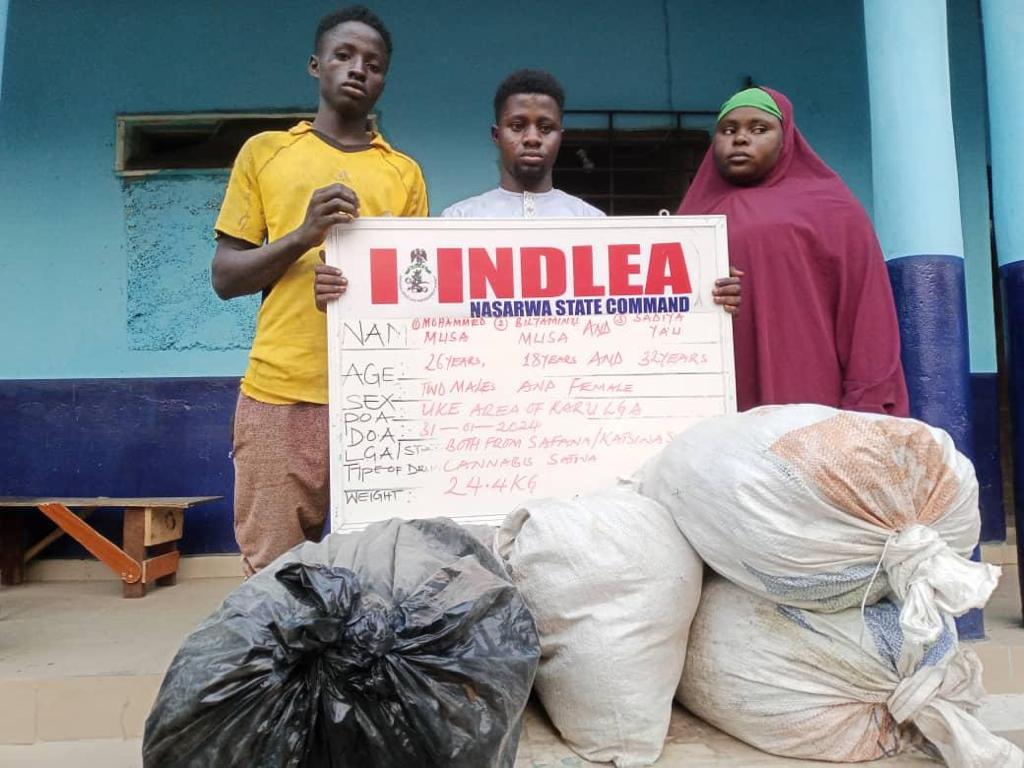
NDLEA intercepts 14.5 tons of Ghanaian Loud linked to wanted drug baron in Lagos
. Arrests deaf and dumb, others for dealing in illicit substances
By: Michael Mike
Operatives of the National Drug Law Enforcement Agency (NDLEA) have intercepted large consignments of Ghanaian Loud, a strong strain of cannabis sativa, smuggled into Lagos from Ghana loaded in two trucks and a J5 bus with a total weight of 14,524.8 kilogrammes.
A statement on Sunday by the spokesman of the anti-narcotics agency, Femi Babafemi said the three vehicles conveying jumbo bags of the psychoactive substance were trailed and intercepted at Ojuelegba area of Lagos State in the early hours of Sunday 28th January 2024.
Babafemi added that in the process of blocking the vehicles, two of the drivers jumped off on motion while the third driver, 66-year-old Nasiru Ojomu, who works with wanted Akala, Mushin based drug baron, Suleiman Jimoh (alias Olowo Idi Ogede, also known as Temo) was arrested.
The spokesman said in the last three years, NDLEA operatives have seized several shipments of same psychoactive substance worth billions of naira linked to Temo. The wanted Akala based drug lord who has since gone into hiding while the agency has continued manhunt for him.
Babafemi said the NDLEA operatives on routine patrol around a warehouse sealed at Church street, Idumota, Lagos Island by the agency over an ongoing investigation last Thursday arrested three suspects: Joseph Joshua; Muhammed Adamu and Balarabe Musa who burgled the store and loaded 546,700 pills of tramadol and other opioids into a waiting yellow bus marked BDG 447 XD and an unregistered Suzuki minibus.
He also disclosed that a male deaf and dumb suspect dealing in illicit substances has been arrested at Samaru area of Zaria, Kaduna state. He said at the time of his arrest, 150 grammes of cannabis were recovered from him while selling the psychoactive substance. Another suspect, Ibrahim Sani, 56, was also arrested in possession of 51 kilogrammes of same substance at Tirkaniya area of the state.
Operatives in Abuja last Wednesday arrested Emmanuel Paul with 43.5 kilogrammes cannabis concealed in used shoes loaded in a trailer coming from Ogbese, Ondo state to be delivered at Gwagwalada area of the Federal Capital Territory, FCT.
In Katsina state, NDLEA officers on patrol along Dutsinma – Katsina road last Friday apprehended a suspect, Murtala Isah, 35, with a total of 37,600 pills of tramadol and other opioids recovered from him.
In Kogi state, operatives last Wednesday destroyed 833.32 kilogrammes of cannabis sativa on a two acre of farmland at Iluke community, Kabba- Bunu local government area while the owner, Samuel Atonila, 49, was equally arrested. On the same day, operatives in Nasarawa arrested three suspects: Muhammed Musa, Bilyaminu Musa and Sadiya Ya’u with same psychoactive substance weighing 24.4 kilogrammes at Uke, Karu local government area of the state, while no less than 258 kilogrammes of same substance were recovered from a bush store around Ikare bypass, Owo, Ondo state.
Meanwhile while commending the arrests and seizures of the past week by officers and men of the Lagos, Kaduna, Ondo, Katsina, Nasarawa, Kogi and FCT Commands, the Chairman/Chief Executive Officer of NDLEA, Brig. Gen. Buba Marwa (Retd) charged them and their compatriots across all formations of the agency to continue to remain vigilant and double their efforts on both drug supply reduction and drug demand reduction simultaneously.
NDLEA intercepts 14.5 tons of Ghanaian Loud linked to wanted drug baron in Lagos
. Arrests deaf and dumb, others for dealing in illicit substances


News
OPWS troops arrest suspected gunrunner, recover locally fabricated pistol, ammunition in Nasarawa
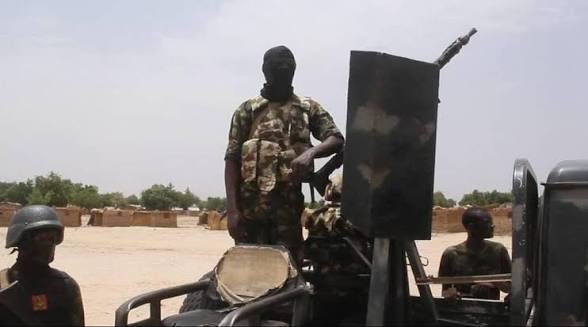
OPWS troops arrest suspected gunrunner, recover locally fabricated pistol, ammunition in Nasarawa
By Zagazola Makama
Troops of Operation WHIRL STROKE (OPWS) have arrested a suspected gunrunner and recovered a locally fabricated pistol and four rounds of 7.62mm Special ammunition in Nasarawa State.
The arrest was carried out at about 7:30 a.m. on Sept. 13, 2026, when troops of Sector 2, OPWS, deployed at Obi, apprehended the suspect at Agwatashi in Obi Local Government Area.
Security sources said the troops recovered one locally fabricated pistol and four rounds of 7.62mm Special ammunition from the suspect.
The suspect and the recovered items have since been handed over to the Police Division in Obi for further investigation and appropriate legal action.
The operation is part of ongoing efforts by security forces under OPWS to disrupt the illegal movement of firearms and ammunition and prevent such weapons from reaching criminal elements operating across Nasarawa and neighbouring communities.
OPWS troops arrest suspected gunrunner, recover locally fabricated pistol, ammunition in Nasarawa
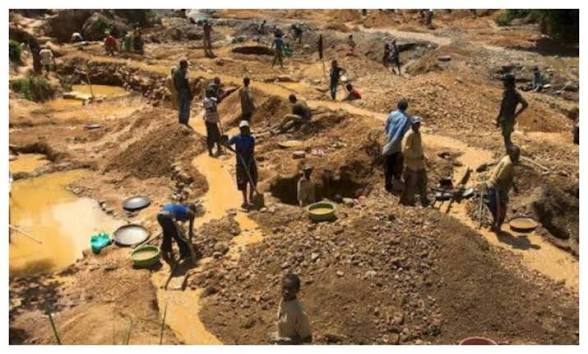
Troops arrest six suspected illegal miners, seize 5,000 bags of ilmenite sand in Bayelsa
By Zagazola Makama
Troops of the Joint Task Force South South, Operation Delta Safe (OPDS), have arrested six suspected illegal miners and intercepted a large wooden boat conveying about 5,000 bags of illegally mined ilmenite sand in Bayelsa State.
The suspects were apprehended at about 4:45 p.m. on Sept. 13, 2026, when troops of 343 Amphibious Reconnaissance Battalion deployed at Tamogbene in Ekeremor Local Government Area intercepted the locally made wooden boat.
Security sources said the troops, acting on operational information, stopped the vessel and discovered the mineral-laden bags being transported from the area.
Six persons suspected to be involved in the illegal mining and transportation of the mineral resources were arrested during the operation.
The suspects, alongside the recovered boat and the 5,000 bags of suspected illegally mined ilmenite sand, have been taken into military custody for further investigation and appropriate action.
The operation forms part of ongoing efforts by security forces in the Niger Delta to tackle illegal mining and other activities considered detrimental to the region’s natural resources and security environment.
The latest arrest underscores the continued military focus on disrupting illicit economic activities and the movement of illegally extracted mineral resources through waterways in the South-South region.
Troops arrest six suspected illegal miners, seize 5,000 bags of ilmenite sand in Bayelsa
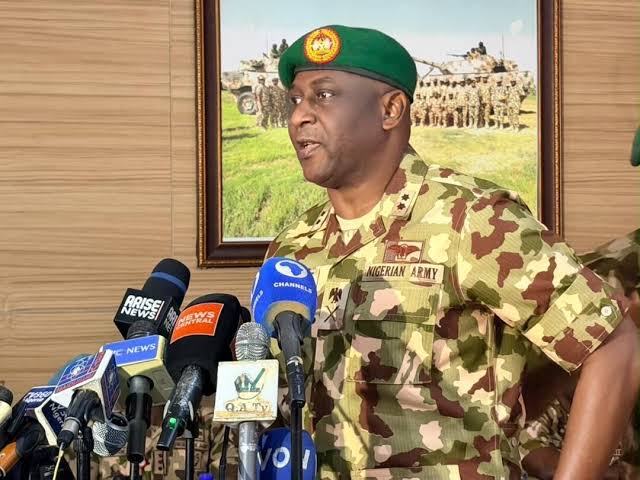
Ajose pledges continuity, sustained pressure against terrorists as new OPHK commander
By Zagazola Makama
The newly appointed Theatre Commander, North East Joint Task Force, Operation HADIN KAI (OPHK), Maj.-Gen. Ibikunle Ajose, has pledged to sustain the gains recorded in the North-East while deepening cooperation with the Borno State Government, humanitarian organisations, international partners, hybrid forces and the media.
Ajose made the commitment in Maiduguri during his introduction and stakeholders’ engagement following the formal transition of command from the outgoing Theatre Commander, Maj.-Gen. Abdulsalam Abubakar.
He said the change in leadership would not alter the fundamental mission of Operation HADIN KAI, which is to facilitate the restoration of normalcy in the North-East and create the conditions necessary for socio-economic activities to thrive.
According to him, the progress already recorded in the Theatre provided a foundation upon which the new command would build.
“I must admit that visible and appreciable progress has been made towards achieving this mandate, and I convey my sincere appreciation to the outgoing Theatre Commander for his leadership, steadfastness and professional example that has made those gains possible,” Ajose said.
He pledged to consolidate the achievements of his predecessor while ensuring that the military campaign remained focused on protecting communities, sustaining pressure on terrorist elements and creating the conditions for displaced persons to return home safely.
Ajose: I am not a stranger to the North-East
The new Theatre Commander said his previous appointments had given him considerable familiarity with the North-East, its people, terrain and the security challenges confronting the region.
Ajose previously served as Commander of 5 Brigade and as Chief of Staff of 4 Special Forces Command in Borno State.
“I am familiar with the terrain, the people and the complexity of the threats. I therefore assume this command with some knowledge of this Theatre,” he said.
He added that his experience from various command and staff appointments in the Nigerian Army would guide his approach to the responsibilities of leading Operation HADIN KAI.
Ajose said his immediate objective would be to build upon the operational gains recorded under Abubakar rather than disrupt the structures and partnerships that had contributed to the progress in the Theatre.
Commander pledges continuity with Borno Government
Ajose gave particular assurance of continuity in the strategic partnership between the Theatre Command and the Borno State Government.
Addressing Gov. Babagana Umara Zulum, he acknowledged the progress recorded in the state, including the reopening of markets, functioning of schools, repatriation of displaced citizens and stabilisation of communities affected by the insurgency.
He said those achievements were the result of deliberate cooperation between the state government and the military.
“I pledge continuity of partnership, as milestones were achieved today, which include re-opening markets, functioning schools, repatriation and stabilization,” Ajose said.
“All these did not happen in isolation. They happened because both government chose to lead, and because the Theatre chose to work with that leadership.”
He assured the governor that the military would maintain the tradition of practical cooperation and ensure that the partnership remained focused on tangible results for the people.
Humanitarian partnership central to restoration of normalcy
Ajose also recognised the role of humanitarian organisations operating across Borno, Adamawa and Yobe states, particularly those working in difficult and insecure environments.
He described cooperation with humanitarian partners as an operational necessity rather than a ceremonial relationship, stressing that the restoration of normalcy could not be achieved by military action alone.
“To our humanitarian partners, I recognize your courage and your presence in difficult locations. Collaboration and coordination with partners like you are not a courtesy but a necessity for the good people of this region,” he said.
The Theatre Commander said he would favour direct engagement and honest dialogue whenever disagreements emerged between the military and humanitarian actors.
“Where there has been friction, I will prefer honest dialogue to silence. Where cohesion as a group, I will protect it,” he said.
Ajose stressed that humanitarian action would remain an important component of his command’s approach to the conflict.
“Lasting peace in the North-East will not be secured by kinetic action alone. The humanitarian line of effort remains central to the return of normalcy, and I will treat it as such,” he said.
Sustained pressure on terrorists, dignified pathway for surrender
On the operational front, Ajose pledged to maintain pressure on terrorist elements who continue to choose violence while preserving an opportunity for those willing to abandon the insurgency.
“Lastly, I intend to build on the successes of my predecessor by sustaining pressure on those who still choose violence, while keeping open a dignified pathway for those who choose to surrender,” he said.
The approach, he explained, would combine military pressure against terrorist groups with a structured opportunity for fighters and their families who abandon violence to surrender and pursue a peaceful return to society.
He also pledged to prioritise the protection of vulnerable civilians and support returns of displaced populations to their ancestral communities.
According to him, such returns must be voluntary, safe and sustainable, with the security environment sufficiently stabilised to allow communities to rebuild their lives.
Foreign partners, hybrid forces assured of continuity
The new Theatre Commander extended the command’s appreciation to Nigeria’s international partners, particularly the United Kingdom and the British Defence Staff for Africa, as well as the hybrid forces supporting the counter-insurgency campaign.
He said their assistance had contributed to strengthening the operational capabilities of Operation HADIN KAI.
“To our foreign partners, the United Kingdom and the British Defence Staff for Africa, as well as the hybrid forces, I extend the appreciation of this Theatre Command for the successful support that has strengthened our operations,” he said.
Ajose assured the partners that the Theatre Command would maintain continuity in its engagements and seek to translate existing cooperation into greater operational effect.
“This command will remain a reliable partner and will work with you to ensure that our cooperation produces greater operational effect in the discharge of the Operation HADIN KAI mandate,” he said.
Ajose asks media for fairness, accuracy and responsibility
The new commander also placed considerable emphasis on the role of the media in the counter-insurgency campaign, urging journalists to exercise fairness, accuracy and responsibility in reporting security developments.
He said public confidence was itself an important component of the operational environment and that residents of the North-East deserved information that would help them understand developments without unnecessarily inflaming tensions.
“I ask for fairness, accuracy and responsibility. Public confidence is part of the battle space, and the good people of the North-East deserve information that informs, and not information that inflames,” Ajose said.
He sought the continued partnership of journalists and other stakeholders, offering accessibility and clarity of purpose in return.
“I ask from you what you gave the outgoing Theatre Commander: that is openness, operational and goodwill, and in return I offer accessibility, clarity of purpose, and a willingness to work with every partner whose objective is peace,” he said.
“There is no impossibility for him who will try”
Ajose concluded his remarks by drawing inspiration from a statement associated with Alexander the Great, which he described as a personal mantra.
“There is no impossibility for him who will try. Therefore, I shall continue to try,” he said.
He thanked stakeholders for their presence and support as he assumed command of the Theatre.
The transition effectively places Ajose at the helm of Operation HADIN KAI at a stage when the military campaign is increasingly being pursued through a combination of sustained combat operations, intelligence-led actions, humanitarian coordination, government support, strategic partnerships and efforts to facilitate the safe return of displaced communities.
Ajose pledges continuity, sustained pressure against terrorists as new OPHK commander

OPWS troops arrest suspected gunrunner, recover locally fabricated pistol, ammunition in Nasarawa

Troops arrest six suspected illegal miners, seize 5,000 bags of ilmenite sand in Bayelsa

NHRC, AccountabilityLab Seek Coordinated Response to Digital Rights Violations

Roger Federer’s Shock as DNA Results Reveal Myla and Charlene Are Not His Biological Children

THE PLIGHT OF FARIDA

FAILED COUP IN BURKINA FASO: HOW TRAORÉ NARROWLY ESCAPED ASSASSINATION PLOT AMID FOREIGN INTERFERENCE CLAIMS
-
 News3 years ago
Roger Federer’s Shock as DNA Results Reveal Myla and Charlene Are Not His Biological Children
-
Opinions5 years ago
THE PLIGHT OF FARIDA
-
 News1 year ago
FAILED COUP IN BURKINA FASO: HOW TRAORÉ NARROWLY ESCAPED ASSASSINATION PLOT AMID FOREIGN INTERFERENCE CLAIMS
-

 News2 years ago
EYN: Rev. Billi, Distortion of History, and The Living Tamarind Tree
-
 Opinions5 years ago
POLICE CHARGE ROOMS, A MINTING PRESS
-

 ACADEMICS3 years ago
A History of Biu” (2015) and The Lingering Bura-Pabir Question (1)
-

 Columns3 years ago
Army University Biu: There is certain interest, but certainly not from Borno.
-

 Politics1 year ago
2027: Why Hon. Midala Balami Must Go, as Youths in Hawul and Asikira/Uba Federal Constituency Reject ₦500,000 as Sallah Gift
