
News
NEC Approves Refinancing Of $3.3bn Project Gazelle To Optimise Cost, Unlock Additional Liquidity


NEC Approves Refinancing Of $3.3bn Project Gazelle To Optimise Cost, Unlock Additional Liquidity
**As VP Shettima demands responsive social protection policy to end poverty in Nigeria
By: Our Reporter
The National Economic Council (NEC) has approved the refinancing of the US$3.3 billion Project Gazelle Pre-Export Finance Facility through a new US$4.5 billion facility named “Project Gazelle 2”.
The approval allows NNPC Limited to refinance the outstanding balance of approximately $1.5 billion under the original 2023 facility, while unlocking an additional $3 billion in liquidity to strengthen the country’s external reserves, support ongoing fiscal and infrastructure priorities of the government.
This was the outcome of the 159th meeting of the National Economic Council (NEC) held virtually on Monday.
NEC’s approval followed a presentation by the Minster of Finance, Dr Taiwo Oyedele, which was presented by Chairman of the Council, Vice President Kashim Shettima, underscoring the importance of the project.
NEC observed the significance of unlocking additional liquidity to the federation, among other benefits, pledging its support for the actualisation of the initiative.
Speaking at a press briefing after the meeting, the finance minister explained that the refinancing has been structured on more favourable terms than the original facility, including a reduction in the volume of pledged crude oil from 90,000 barrels of oil per day (bpd) to approximately 78,750 bpd – a 12.5 percent reduction.
He noted that under the new arrangement, an additional 11,250 bpd for the federation will be released, while there will be reduction in the pledged crude volumes by NNPC limited.
Dr Oyedele added that while accessing additional liquidity on improved terms, the arrangement is freeing up resources for strategic national priorities while strengthening the country’s financing structures.
Earlier in his opening remarks, Vice President Shettima called for a responsive, scalable, and data-driven social protection policy to tackle multidimensional poverty in Nigeria.
According to him, government policies are often heard before they are seen, speak through the price of food, condition of hospitals, records in schools, strain on families, the confidence of those who invest their labour in the nation’s future, and, very importantly, the ambitions of state governments.
He implored members of Council to ensure that every decision they make assure the citizens “that their government is paying attention to the pulse of the nation and is resolved to respond with competence, compassion and purpose.”
NEC Approves Refinancing Of $3.3bn Project Gazelle To Optimise Cost, Unlock Additional Liquidity


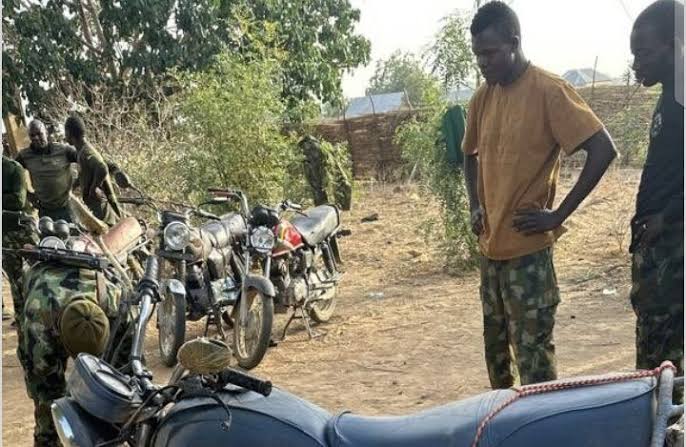
Farmer Injured in Machete Attack by Herder in Plateau
By Zagazola Makama
A farmer, Mr Charles Tuwan, has sustained machete injuries following an alleged attack by a herder during a dispute over grazing on farmland in Pankshin Local Government Area of Plateau State.
The incident occurred at about 6:53 p.m. on August 23, 2026, at Tekas Community, where troops of Sector 8, Operation ENDURING PEACE, operating under Operation HARD KNOCK, responded to a report of an assault.
Security sources said the dispute reportedly started after the farmer refused to allow the herder to graze cattle on his farmland.
On arrival at the scene, the troops found Tuwan with machete cuts sustained during the attack.
The alleged attacker, identified as Abdullahi Saleh, had reportedly fled the area with his cattle before the arrival of the troops.
The injured farmer was evacuated to Pankshin General Hospital for medical attention.
Troops are currently intensifying efforts to locate and arrest the suspect for investigation and possible prosecution.
The incident comes amid heightened tensions between farming and herding communities in parts of Plateau State, underscoring the need for early intervention in disputes over farmland and grazing to prevent isolated incidents from escalating into wider communal violence.
Farmer Injured in Machete Attack by Herder in Plateau
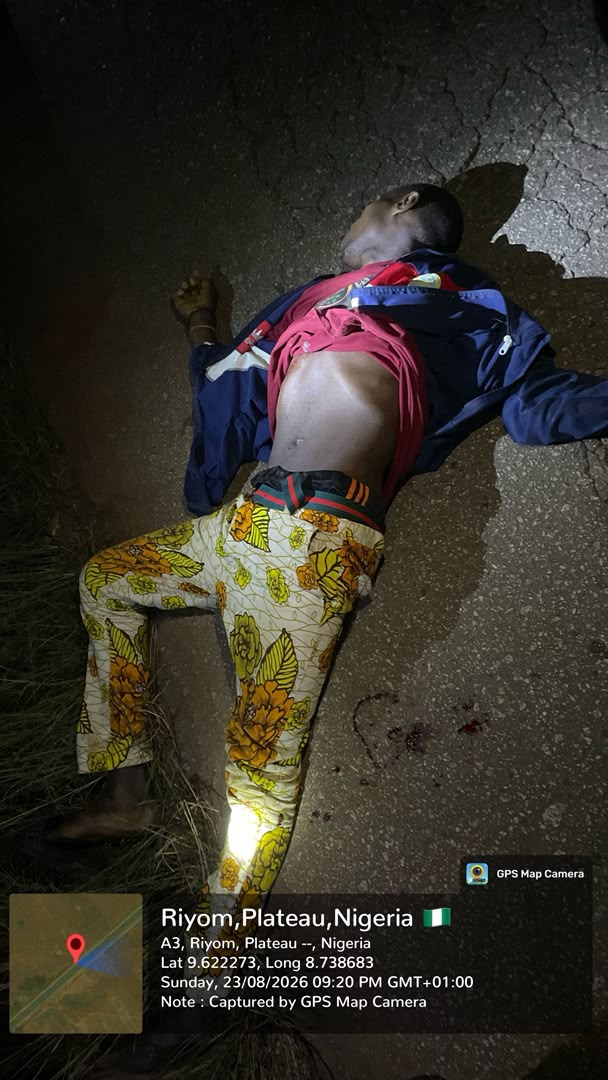
Unidentified Corpse with Gunshot Wound Found Along Road in Plateau
By Zagazola Makama
Troops of Operation ENDURING PEACE have recovered the corpse of an unidentified person bearing a gunshot wound along a roadside in Riyom Local Government Area of Plateau State.
The corpse was discovered at about 9:30 p.m. on August 23, 2026, along the Farin Lamba axis, close to the Primary Health Centre in Riyom.
Troops of Sector 6, Operation ENDURING PEACE, responded to the report and found the body with an apparent gunshot wound to the stomach.
However, security personnel observed that there were no visible traces of blood or spent ammunition casings around the scene.
The circumstances led investigators to suspect that the body may have been transported from another location and dumped at the scene.
The corpse was evacuated to the Primary Health Centre mortuary in Riyom, while the youth leader of Tahoss Community was contacted to assist in identifying the deceased.
Troops have continued to dominate the general area as investigation into the circumstances surrounding the death and possible identity of the victim continues.
Unidentified Corpse with Gunshot Wound Found Along Road in Plateau
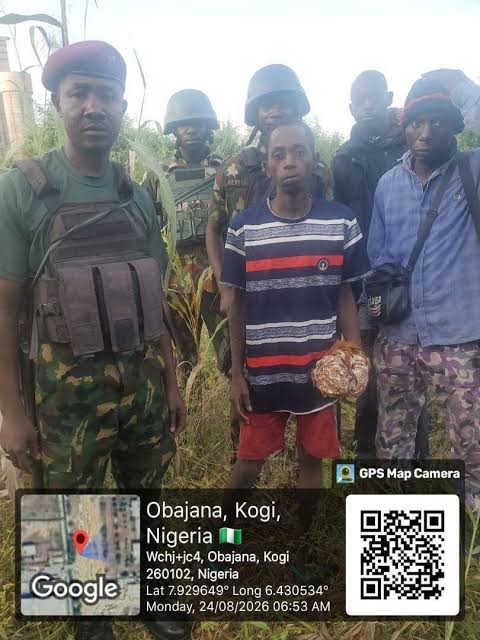
Troops Rescue Kidnap Victim, Recover AK-47 Rifle After Gun Battle in Kogi
By Zagazola Makama
Troops operating under the Joint Security operation in the 2 Division Area of Responsibility have rescued a 28-year-old kidnap victim and recovered an AK-47 rifle following a gun battle with suspected kidnappers in Kogi State.
The operation, according to security sources, took place at about 0300 hours on August 24, 2026, when troops from Patrol Base Obajana intercepted the victim, identified as Hussaini Shehu.
Preliminary questioning revealed that Shehu had allegedly been abducted from the Abaji general area of the Federal Capital Territory about five days earlier.
The rescued victim subsequently led the troops to the location where he had been held captive.
Security sources said the troops made contact with the suspected kidnappers and engaged them in a firefight, forcing the criminals to abandon an AK-47 rifle and flee into the surrounding area.
The weapon was recovered by the troops, while the victim was evacuated to the military medical centre for medical attention.
Security forces have continued operations in the area to track the fleeing kidnappers and prevent them from regrouping.
The latest operation underscores the importance of intelligence-led patrols and rapid exploitation of information obtained from rescued victims in disrupting kidnapping networks operating across the FCT-Kogi corridor.
Troops Rescue Kidnap Victim, Recover AK-47 Rifle After Gun Battle in Kogi

Farmer Injured in Machete Attack by Herder in Plateau

Unidentified Corpse with Gunshot Wound Found Along Road in Plateau

Troops Rescue Kidnap Victim, Recover AK-47 Rifle After Gun Battle in Kogi

Roger Federer’s Shock as DNA Results Reveal Myla and Charlene Are Not His Biological Children

THE PLIGHT OF FARIDA

FAILED COUP IN BURKINA FASO: HOW TRAORÉ NARROWLY ESCAPED ASSASSINATION PLOT AMID FOREIGN INTERFERENCE CLAIMS
-
 News2 years ago
Roger Federer’s Shock as DNA Results Reveal Myla and Charlene Are Not His Biological Children
-
Opinions5 years ago
THE PLIGHT OF FARIDA
-
 News1 year ago
FAILED COUP IN BURKINA FASO: HOW TRAORÉ NARROWLY ESCAPED ASSASSINATION PLOT AMID FOREIGN INTERFERENCE CLAIMS
-

 News2 years ago
EYN: Rev. Billi, Distortion of History, and The Living Tamarind Tree
-
 Opinions5 years ago
POLICE CHARGE ROOMS, A MINTING PRESS
-

 ACADEMICS2 years ago
A History of Biu” (2015) and The Lingering Bura-Pabir Question (1)
-

 Columns2 years ago
Army University Biu: There is certain interest, but certainly not from Borno.
-

 Politics1 year ago
2027: Why Hon. Midala Balami Must Go, as Youths in Hawul and Asikira/Uba Federal Constituency Reject ₦500,000 as Sallah Gift
