
News
NEMA hails North East Devt commission for taking over feeding of IDPs

NEMA hails North East Devt commission for taking over feeding of IDPs
The Director-General of National Emergency Management Agency (NEMA), Mr Mustapha Ahmed, has commended the North-East Development Commission (NEDC) for taking over the monthly feeding of Internally Displaced Persons (IDPs) in Borno and Adamawa.
Ahmed expressed gratitude to the Chief Executive Officer/Managing Director of NEDC, Alhaji Mohammed Alkali, when he and his management team paid him a visit on Tuesday in Abuja.
The NEMA boss stressed that in spite of the take over, the agency would continue to provide relevant assistance to the commission to impact on communities in the North-East region whenever sudden disasters hit.
“I wish to express my sincere appreciation and gratitude to Alkali over his pledge on Oct.16 to take over the feeding of IDPs in camps and host communities in the North East Region.
“The IDPs were Hitherto provided with daily ration of food and non-food items by NEMA in Maiduguri, Born and Yola in Adamawa respectively.
“This gracious takeover of NEMA routine intervention by the NEDC will decoupled the resources deployed and grant us the impetus to further deliver relief support to persons in need in the event of sudden onset disasters nationwide.
“NEMA would always be ready to work with the NEDC in areas of relief support, damage and loss assessment and capacity for members of staff in consideration of the strong operational and service delivery commonality between us and NEDC,” Ahmed said.
As at the end of September,, he said, NEMA was providing daily feeding to 149,448 persons comprising of 24,908 households in Maiduguri.
“At the same time in Yola, Adamawa, NEMA was feeding 19,626 comprising of 2,992 Households in the camps in Maiduguri and Yola.
“However, the shifts in the routine feeding of the IDPs to the NEDC was occasioned by dwindling resources at the disposal of the agency and in consideration of several other sudden onset disasters nationwide” Ahmed said.
Responding, Alkali said the decision to takeover the routine food distribution and feeding in the IDPs camps would help eliminate duplication of efforts.
“It will also allow for scares resources to be deployed in other areas to assist Nigerians in distress or hit by disaster.
“This taken over is a new development and a positive beginning that has unfolded a new vista of partnership and collaboration between NEMA and NEDC for the benefits of Nigerians.
“This will also strengthen our ability and understanding in addressing and enhancing humanitarian coordination in the North East Region of the country,” Alkali said.


Yobe: Rabies is a serious health concern, says Commissioner of Police
By: Yahaya Wakili
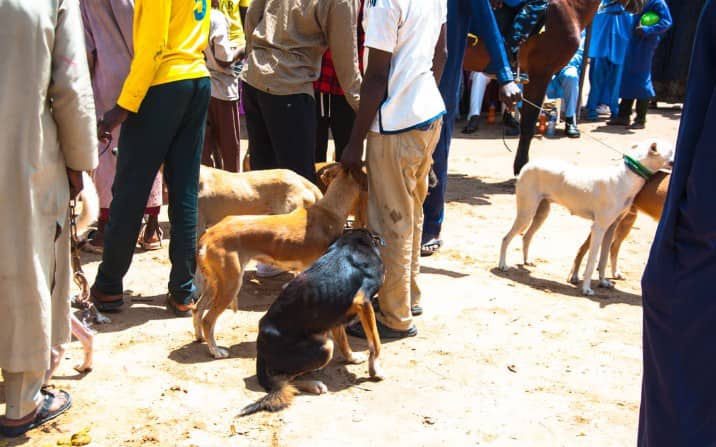
Yobe State Commissioner of Police, CP Usman Kanfani Jibrin, psc, mspsp, SM, ICM, has described rabies as a serious public health concern requiring collective responsibility.
CP Kanfani Jibrin stated this today in commemorating the 2026 World Rabies Day. He calls on members of the public, particularly dog owners, to ensure that their dogs are properly and regularly vaccinated against rabies.
Ably represented by the Assistant Commissioner of Police in charge of veterinary, ACP Yusuf Birma, he urged dog owners to ensure that their dogs are properly vaccinated and responsibly managed, in accordance with applicable laws and regulations.
The programs featured sensitization on rabies prevention, responsible animal ownership, dog-bite management, and post-exposure among human, animal, and environmental health stakeholders under the one health approach.
“Members of the public are to take responsible measures in preventing the spread of rabies, promptly report cases of dog bites, and seek appropriate medical and veterinary attention when necessary,” the command urged the public.
The command reiterates its commitment to supporting interagency collaboration and public health initiatives that contribute to the protection of lives and promotion of public safety and well-being of residents.
Speaking, the Executive Secretary of the Yobe State Primary Health Care Board, Dr. Babagana Kundi Machina, ably represented by Dr. Muhammad Muhammad Ishaku, sensitized participants on appropriate measures following dog bites, including immediate wound care and prompt medical attention.
Yobe: Rabies is a serious health concern, says Commissioner of Police
Obi-Kwankwaso Women Group Launches Nationwide Mobilisation for 2027
…Targets women leaders, youths, professionals, entrepreneurs
By: Michael Mike
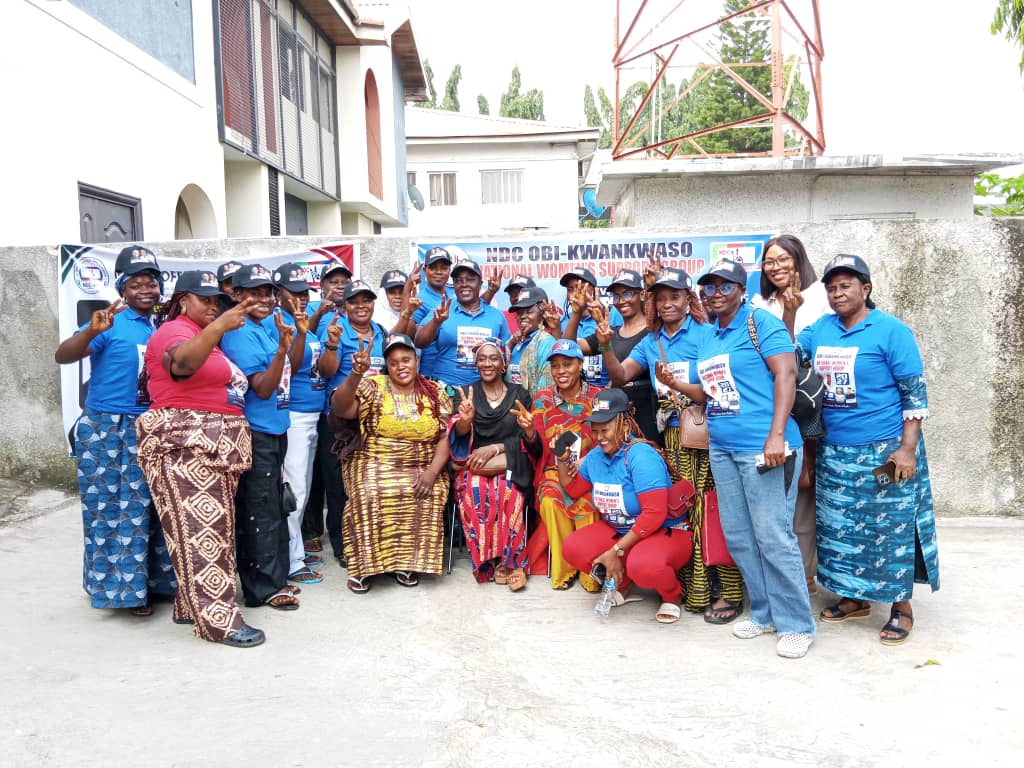
A women’s support group backing the presidential ticket of Peter Obi and Rabiu Kwankwaso has commenced a nationwide mobilisation campaign ahead of the 2027 general elections, with structures being established across the 36 states and the Federal Capital Territory.
The Obi-Kwankwaso National Women’s Support Group said its mobilisation drive formally commenced on October 1 following the inauguration of its national leadership, with a mandate to deepen grassroots engagement and expand support for the Nigeria Democratic Congress (NDC) presidential ticket.
The development comes as the Obi-Kwankwaso political movement intensifies preparations for the 2027 elections. Obi and Kwankwaso joined the NDC in May 2026, with Obi subsequently emerging as the party’s presidential candidate and Kwankwaso as his running mate.
The women’s group said its mobilisation would focus on women leaders, professionals, entrepreneurs, young women and community organisers, who it intends to engage through a network of grassroots structures across the country.
The Convener and National Coordinator, Hon. Barr. Anwuli Ogbechi, said the organisation had brought together women from different regions and backgrounds to increase women’s participation in political and community activities.
According to her, the group would deploy its state structures to organise town hall meetings, community forums and other grassroots engagements as it seeks to build a wider support base for the Obi-Kwankwaso ticket.
Ogbechi said the organisation’s activities would go beyond electoral mobilisation, adding that it would undertake leadership mentoring and political education for young women, professional engagement with entrepreneurs and women in the diaspora, as well as community-based initiatives.
She also listed medical and educational outreach programmes and inclusion initiatives for persons with disabilities and other underserved communities among the group’s planned activities.
The group’s national leadership includes Mairo Musa Abubakar, Vice Coordinator, North; Pastor Basiratu Musa Ibijoke, Deputy Coordinator, South; Lolo Victoria Mgbor Odogwu, General Secretary; Tina Ohwo, Organising Secretary; and Hajia Fadimatu Atiku Danrimi, Treasurer.
Others are Chika Ibe, Financial Secretary; Barr. Igbinlade Oluwagboyinmi Oluwatunmise, Legal Adviser; Chinyere O. Ejike and Blessing Okoli, Publicity Secretaries; Esther Ajayi-Adetayo, Welfare Officer; and Comrade Ifeoma Uchechukwu, FCT and National Director of Interfaith and Intertribal Affairs.
The latest mobilisation initiative comes amid wider efforts by the Obi-Kwankwaso movement to establish campaign structures ahead of the 2027 presidential contest. The movement recently constituted a 59-member presidential campaign council comprising state and zonal coordinators as well as officials responsible for mobilisation, women’s affairs, strategy, legal affairs and other areas.
The women’s group said its immediate priority would be to expand its grassroots network, coordinate activities across the states and bring more women into its political and community engagement programmes as preparations for the 2027 election gather momentum.
Obi-Kwankwaso Women Group Launches Nationwide Mobilisation for 2027

Gombe assures corps members of safety, improved welfare
By Elizabeth Ogunjobi
The Gombe State Government has reaffirmed its commitment to the safety, welfare and wellbeing of corps members serving in the state.
Gov. Inuwa Yahaya gave the assurance on Friday while declaring open the 2026 Batch C Stream I Orientation Camp.
The orientation course is being held at the temporary camp in Amada community, Akko Local Government Area of Gombe State.
Yahaya, represented by the Commissioner for Youths and Sports, Mr Abdul Yusuf, said corps members’ welfare remained a priority.
“I assure you of the commitment of the state government to your safety, welfare and general wellbeing throughout your service year in Gombe State,” he said.
The governor described Gombe as peaceful and welcoming, urging the corps members to “feel at home” throughout their service year.
“Gombe State is a peaceful and welcoming state, and I am confident that your stay here will be pleasant and rewarding,” Yahaya said.
He also acknowledged the need for additional government support to complement existing arrangements for corps members’ welfare during the orientation exercise.
He assured the corps members that the government would examine the matter and provide necessary support to improve their comfort.
The governor urged the corps members to embrace the culture and diversity of their host communities during their primary assignments.
He advised them to respect community values and contribute meaningfully to the development of their host communities throughout their service year.
On the permanent orientation camp, Yahaya urged the corps members to exercise patience as finishing works continued at the facility.
“Let me assure you that all necessary measures will be put in place to expedite the remaining works,” he said.
He said the government wanted the permanent camp completed and ready for use as soon as possible.
“It is our desire that future orientation courses will be conducted at the permanent orientation camp with the facilities and comfort corps members deserve,” Yahaya said.
Mrs Chinwe Nwachuku, NYSC Coordinator in Gombe State, commended the government’s efforts toward providing a more befitting orientation camp.
Nwachuku urged the government to expedite work on the facilities to enable corps members benefit from improved accommodation and other amenities.
She also commended the government for supporting the feeding arrangements for corps members during the orientation course.
The NYSC coordinator urged corps members to give their best to Gombe State and leave meaningful footprints through community development initiatives.
She also charged them to be law-abiding citizens and contribute positively to the development of their host communities.
Nwachuku urged the corps members to approach the service year with open minds, discipline, enthusiasm and willingness to learn.
She further encouraged them to contribute meaningfully while complying with the rules and regulations governing the National Youth Service Corps.
The News Agency of Nigeria (NAN) reports that 1,502 corps members were sworn in during the orientation exercise.
The figure comprised 803 males and 699 females deployed to Gombe State for the mandatory national service.
Gombe assures corps members of safety, improved welfare

Yobe: Rabies is a serious health concern, says Commissioner of Police

Obi-Kwankwaso Women Group Launches Nationwide Mobilisation for 2027

Gombe assures corps members of safety, improved welfare

Roger Federer’s Shock as DNA Results Reveal Myla and Charlene Are Not His Biological Children

THE PLIGHT OF FARIDA

FAILED COUP IN BURKINA FASO: HOW TRAORÉ NARROWLY ESCAPED ASSASSINATION PLOT AMID FOREIGN INTERFERENCE CLAIMS
-
 News3 years ago
Roger Federer’s Shock as DNA Results Reveal Myla and Charlene Are Not His Biological Children
-
Opinions5 years ago
THE PLIGHT OF FARIDA
-
 News1 year ago
FAILED COUP IN BURKINA FASO: HOW TRAORÉ NARROWLY ESCAPED ASSASSINATION PLOT AMID FOREIGN INTERFERENCE CLAIMS
-

 News3 years ago
EYN: Rev. Billi, Distortion of History, and The Living Tamarind Tree
-
 Opinions5 years ago
POLICE CHARGE ROOMS, A MINTING PRESS
-

 ACADEMICS3 years ago
A History of Biu” (2015) and The Lingering Bura-Pabir Question (1)
-

 Columns3 years ago
Army University Biu: There is certain interest, but certainly not from Borno.
-

 Politics1 year ago
2027: Why Hon. Midala Balami Must Go, as Youths in Hawul and Asikira/Uba Federal Constituency Reject ₦500,000 as Sallah Gift
