
National News
NHRC Asks Well Meaning Nigerians to Join Humanitarian Train

NHRC Asks Well Meaning Nigerians to Join Humanitarian Train
By: Michael Mike
As Nigeria joins the rest of the global community to commemorate the 2023 World Humanitarian Day (WHD), the Executive Secretary of National Human Rights Commission (NHRC) Chief Tony Ojukwu has called on well-meaning Nigerians to join the humanitarian train by lending a helping hands to persons who are confronted with different forms of humanitarian crisis ranging from medical to shelter, hunger and malnutrition to lack of basic services.
Ojukwu stated this on the eve of the commemoration of WHD in Abuja. He called on Nigerians to reflect on the global challenges that communities around the world face, admonishing that it is imperative for us to unite in our efforts to address the critical humanitarian issues confronting us as a nation.
He noted that the recent removal of fuel subsidy has created untold hardship to majority of Nigerian especially the low-income earners, making them deserving of humanitarian assistance as they are no longer able to provide for some basic needs of life.
He said there is an urgent need to address the adverse consequences of the subsidy removal on Nigerians, adding that it has resulted in job losses, depression, violent reactions and increased poverty.
The Executive Secretary said: “As we commemorate this day, we acknowledge the critical role that each member of society plays in creating a better world. Just as a village relies on the cooperation and support of its people to thrive, so too must our global community unite to address the pressing humanitarian challenges facing us.”
The Human Rights Boss emphasized that the well-being of every individual is intrinsically linked to the well-being of the entire human family. Injury to one is injury to all and as Mother Teresa said, “if you cannot feed one hundred people, then feed just one”
The Executive Secretary further said that the Commission’s shared commitment to human rights demands that Nigerians stand in solidarity with those who are vulnerable, marginalized, and in need. “Together, we can build a stronger and more compassionate world, where every person’s rights are upheld, regardless of their background or circumstances”.
He used the opportunity of this year’s commemoration to call on governments, civil society organizations, and individuals to work collaboratively in addressing issues such as poverty, conflict, displacement, and environmental degradation confronting the less privileged Nigerians.
He said fostering a culture of empathy, understanding, and active engagement to address humanitarian crisis can ensure that the principles of human rights remain at the forefront of our actions.
He added that providing humanitarian services can help create a world where justice reigns, respect for human dignity is upheld, the weak and vulnerable are strengthened, people are happy and conflicts will ultimately be reduced.
On this World Humanitarian Day, let us reaffirm our commitment to the values that bind us together as a nation, recognizing that it is our collective responsibility to create a just and inclusive society where every individual’s rights are respected and upheld.
He paid tributes to humanitarian heroes who lost their lives in providing selfless services to humanity all over the world. He said of special importance is the Office of United Nations High Commissioner for Refugees UNHCR, which has been collaborating with the Commission to address the humanitarian needs of Nigerians in several parts of the country. The United Nations has set aside every 19th of August every year as WHD.
NHRC Asks Well Meaning Nigerians to Join Humanitarian Train



FG moves to operationalise 112 national emergency number
By Zagazola Makama
The Federal Government has commenced steps to operationalise the 112 national emergency number as a single, toll-free channel through which Nigerians can access emergency services across the country.
The move followed a directive by Vice-President Kashim Shettima during a stakeholders’ meeting on the National Emergency Number 112 Project in Abuja on Tuesday, Sept. 8, 2026.
Shettima directed relevant government agencies to develop a comprehensive operational roadmap and standard operating procedures for the nationwide rollout of the emergency number.
The Federal Government has consequently constituted a committee comprising the Nigeria Police Force (NPF), Nigerian Communications Commission (NCC), National Emergency Management Agency (NEMA), Federal Road Safety Corps (FRSC) and other relevant agencies to finalise the framework for consideration and formal endorsement by the National Economic Council (NEC).
The NEC had recently approved 112 as Nigeria’s single universal toll-free emergency number, replacing the fragmented emergency response lines currently operated by different agencies.
The initiative is aimed at eliminating delays and bureaucratic bottlenecks while providing citizens with easier access to rapid assistance during emergencies, including fires, road crashes, medical emergencies and security incidents.
Speaking at the meeting, Shettima urged members of the committee to draw from global best practices in developing the operational framework and ensure that the project moves from policy approval to practical implementation.
He charged the stakeholders to finalise the roadmap and standard operating procedures for presentation to the NEC, stressing the importance of making tangible progress.
“Let’s make progress so that whatever time we have spent here is worth spending,” the Vice-President said, while assuring stakeholders that the Federal Government would provide the resources required to drive the process.
He said adequate funding would be made available once the project progressed to the implementation stage.
The Inspector-General of Police, Olatunji Rilwan Disu, expressed the full support of the Nigeria Police Force for the adoption of 112 as the country’s unified national emergency number.
Disu described the initiative as a significant step towards providing Nigerians with a simple and reliable means of accessing emergency assistance.
He said that during emergencies such as armed attacks, road crashes, fire outbreaks, medical crises or kidnapping incidents, citizens often face the additional challenge of determining which agency to contact.
According to him, the 112 system would provide a single access point through which an emergency call could be directed to the appropriate response agency.
Earlier, the Personal Assistant to the President on e-Governance in the Office of the Vice-President, Mrs Lydia Aina, said Nigeria’s emergency response system currently operates across multiple agencies, platforms and jurisdictions.
She explained that the fragmented structure often affects how emergencies are received, coordinated and responded to.
Aina said the objective was to move from the existing fragmented system to a coordinated and eventually fully integrated national emergency response framework.
She stressed that the success of the 112 initiative would depend not only on the emergency number itself but also on the people, agencies, operational standards and systems required to make it functional when citizens place emergency calls.
“Our job now is to turn it into an actual working programme with milestones,” she said.
According to her, six immediate priorities have been identified, beginning with governance and a clear delineation of responsibilities among participating agencies.
Other stakeholders at the meeting pledged their support for the initiative, including the Director-General of NEMA, Mrs Zubaida Umar; Corps Marshal of FRSC, Shehu Mohammed; and Director-General of the National Orientation Agency (NOA), Mallam Lanre Issa-Onilu, among others.
The Federal Government’s move is expected to strengthen coordination among emergency response agencies, reduce response delays and provide Nigerians with a more accessible mechanism for seeking urgent assistance.
If successfully implemented nationwide, the 112 system could provide a unified gateway linking citizens to police, fire, medical, road safety, disaster management and other emergency response services.
The initiative is therefore being positioned as a major step towards building a faster, more coordinated and citizen-centred emergency response system in Nigeria.
FG moves to operationalise 112 national emergency number
Nigeria, IEA Solidify Partnership, Sign Pact On Energy Policy, Security
**It’s a justification of President Tinubu’s policy choices, gains of his economic reforms – VP Shettima
By: Our Reporter
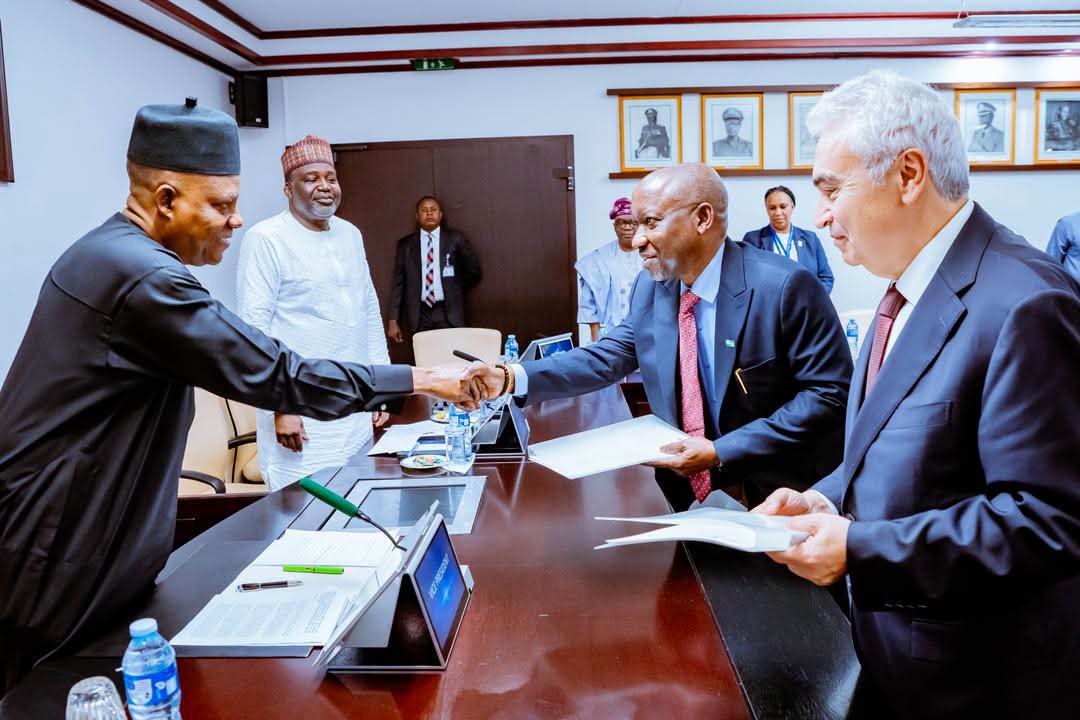
Nigeria and the International Energy Agency (IEA) have signed an agreement for a Joint Work Programme to strengthen strategic partnership in the development of data for energy policy and investment across the value chain for economic growth and energy security.
This is just as the Vice President, Senator Kashim Shettima, has said Nigeria’s formal admission into the IEA as an Association Country is a significant milestone for the country and another testament to the gains of the economic reforms of the administration of President Bola Ahmed Tinubu.
Senator Shettima stated this on Thursday during the signing of the agreement for the Joint Work Programme between Nigeria and IEA, signaling the formal commencement of the partnership.
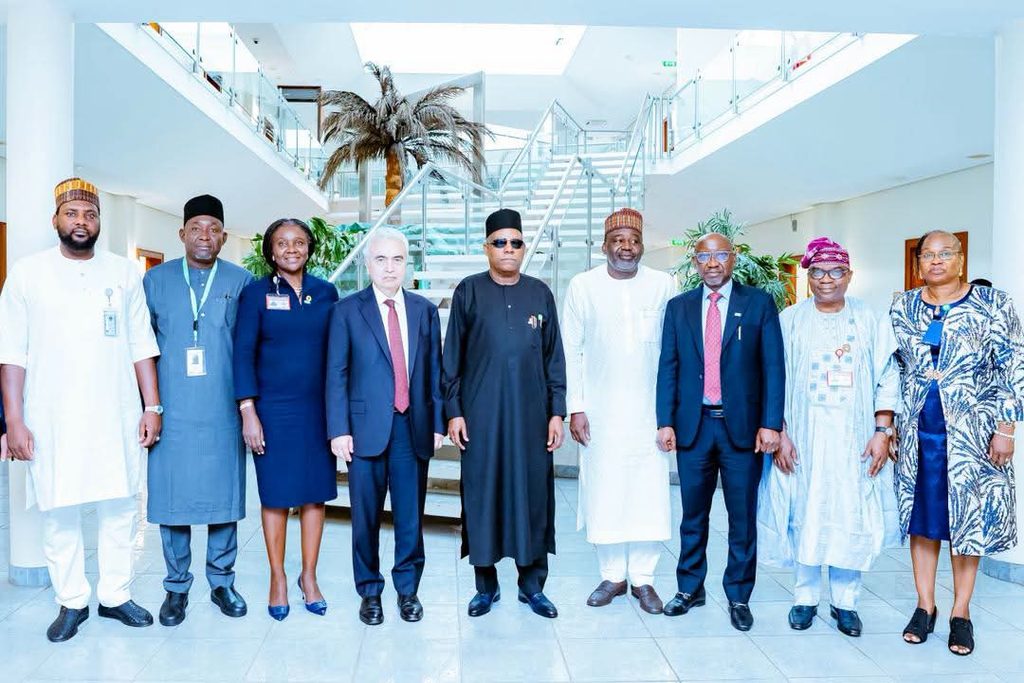
Speaking on behalf of President Tinubu, the Vice President noted that Nigeria’s formal entry into the fold of the Paris-based non-governmental organisation justifies his administration’s policy choices and efforts aimed at leveraging the country’s abundant energy resources scattered across the nation.
Commending the IEA for the important role it is playing in shaping global energy landscape, he said the effort of the agency in the global energy conversation and in supporting countries to navigate the challenges of energy security, affordability, sustainability and economic development, cannot be overstated.
His words: “Nigeria’s admission as an association country with the IEA is a significant milestone for our country and it reflects Nigeria’s strategic importance in the global energy landscape and the confidence that IEA has placed in our commitment to constructive international energy cooperation.”
VP Shettima added that given Nigeria’s potential, “the country will benefit from IEA’s institutional knowledge, the intellectual resources, the reach and expertise to support our nation’s ambitions in this sector.”
He acknowledged Nigeria’s abundant renewable energy resources and his commitment to repositioning the economy leveraging available resources which are already manifesting across different sectors of the economy.
The Vice President assured the IEA team of his administration’s commitment to continue to partner with other stakeholders within the setting to contribute to the global energy debate on a fair and just energy transition.
Earlier, leader of the IEA delegation, Dr. Fatih Birol explained that his organisation is an organisation of governments that covers all technological fields, including oil, gas, solar, nuclear power, artificial intelligence and electric cars based in Paris.
Working with top 500 energy experts of the world in terms of giving policy advice, sharing data and expertise, he said to be a member of the IEA family is not an easy task, as it requires a lot of considerations and tests.
According to Dr. Birol, after detailed discussions with the Minister of State for Petroleum and Gas, Mr. Ekperikpe Ekpo, the Board comprising the governments of the United States, Japan, Germany, Italy, and UK voted and accepted Nigeria unanimously as a member.
“The IEA will accompany the Nigerian energy sector for the next few years to come for a much better energy future. We will provide policy advice from clean cooking to gas markets, from gas markets to training Nigerian experts at the IEA on our own,” he assured.
Earlier, Minister of State Petroleum Resources (Gas), Mr Ekperikpe Ekpo, stressed that Nigeria’s admittance into the IEA was based on the performance of the Tinubu administration reflected in the reforms undertaken in the economy.
He said the signing of the Joint Work Programme, which portends the involvement of the technical team of the IEA with Nigeria in the development of data for energy policy and investment across the value chain and targeted for economic growth and energy security.
On his part, the Minister of State for Foreign Affairs, Ambassador Sola Enikanoaiye, described IEA’s partnership with Nigeria as strategically important, noting that the Nigerian Mission in Paris played a critical role in ensuring its success.
Pledging the commitment of the Minister of Foreign Affairs, Mrs. Bianca Odumegwu-Ojukwu, towards the process, “Our role is to ensure that whatever government does at home is projected effectively in advancing and promoting the interest of Nigeria.
“We take this as a critical component of our national interest and we will not fail in ensuring that we assist, as facilitators and coordinators, in ensuring that the maximum benefit of this endeavor is derived for the benefit of the Nigerian people.”
Also, the Director General of Energy Commission of Nigeria, Dr. Mustapha Abdullahi, said the Commission’s relationship with IEA led to the joint sponsorship of Nigeria’s last National Energy Master Plan, even though there was no structure to their relationship.
He expressed optimism that Nigeria’s formal joining of the IEA and the agreement will strengthen the Commission’s relationship with the organisation.
Nigeria, IEA Solidify Partnership, Sign Pact On Energy Policy, Security

60th Birthday: VP Shettima Opts For Low-Key Celebration
By: Our Reporter
As Vice President Kashim Shettima marks his 60th birthday on September 2, 2026, he has appealed to friends, associates and well-wishers to refrain from placing congratulatory advertisements in newspapers or airing celebratory messages on radio, television and digital platforms.
VP Shettima said his decision to keep the milestone low-key reflects his conviction that public attention should remain focused on the serious work of national development rather than on personal celebrations.
“To ensure absolute propriety, I respectfully appeal that there should be no public birthday celebrations, congratulatory gatherings or goodwill advertorials across print, broadcast and digital media platforms,” the Vice President said.
Rather than celebrate him through elaborate events or paid advertisements, VP Shettima urged well-wishers to channel their goodwill into prayers for Nigeria and for the administration of President Bola Ahmed Tinubu.
He specifically called for prayers for the success of the administration’s economic reforms, lasting solutions to the nation’s security challenges, greater national unity, and the peace and prosperity of all Nigerians.
For VP Shettima, the occasion should serve less as a celebration of a personal milestone and more as an opportunity for reflection, gratitude and renewed commitment to the service of the country.
60th Birthday: VP Shettima Opts For Low-Key Celebration

President Bola Ahmed Tinubu Is Nigeria’s Greatest-Ever Leader

Tinubu’s Greatest-Ever Leader Claim Rests on Reform, Institution-Building — PEBEC DG

Nigeria Reaffirms Support For WTO, Multilateralism At BRICS Summit

Roger Federer’s Shock as DNA Results Reveal Myla and Charlene Are Not His Biological Children

THE PLIGHT OF FARIDA

FAILED COUP IN BURKINA FASO: HOW TRAORÉ NARROWLY ESCAPED ASSASSINATION PLOT AMID FOREIGN INTERFERENCE CLAIMS
-
 News3 years ago
Roger Federer’s Shock as DNA Results Reveal Myla and Charlene Are Not His Biological Children
-
Opinions5 years ago
THE PLIGHT OF FARIDA
-
 News1 year ago
FAILED COUP IN BURKINA FASO: HOW TRAORÉ NARROWLY ESCAPED ASSASSINATION PLOT AMID FOREIGN INTERFERENCE CLAIMS
-

 News2 years ago
EYN: Rev. Billi, Distortion of History, and The Living Tamarind Tree
-
 Opinions5 years ago
POLICE CHARGE ROOMS, A MINTING PRESS
-

 ACADEMICS3 years ago
A History of Biu” (2015) and The Lingering Bura-Pabir Question (1)
-

 Columns3 years ago
Army University Biu: There is certain interest, but certainly not from Borno.
-

 Politics1 year ago
2027: Why Hon. Midala Balami Must Go, as Youths in Hawul and Asikira/Uba Federal Constituency Reject ₦500,000 as Sallah Gift
