
News
NHRC Says Over 350,000 Human Rights Violations Complaints Reported in Dec. 2024

NHRC Says Over 350,000 Human Rights Violations Complaints Reported in Dec. 2024
By: Michael Mike
Over 350,000 complaints of human rights violations were reported in December 2024 alone, the National Human Rights Commission (NHRC) has said.
This disclosure was made on Tuesday by the Executive Secretary of NHRC, Dr. Tony Ojukwu during the Commission’s December 2024 Human Rights Situation Dashboard and 2024 Year Overview.
Ojukwu said: “In December 2024 alone, the NHRC received a staggering 355,726 complaints of human rights violations. This marks an overwhelming increase from the 1,147 complaints reported in January of the same year.”
He insisted that: “This dramatic surge is a testament to the growing awareness among Nigerians of their rights, and the trust they have placed in the Commission as a crucial avenue for seeking justice and redress. It is a clear indication that Nigerians are increasingly aware of their human rights and are turning to the Commission as a beacon of hope in the face of adversity.”
He added that: “The violations documented in 2024 paint a sobering picture of the challenges we face. Among the most prevalent issues were the violation of the rights to freedom of expression, assembly and association; abandonment of children, attacks on law enforcement, discrimination, sexual and gender-based violence, the suppression of civic space, as well as the escalating violence of banditry and mass killings. These issues, though varied, underscore the complexity of the human rights landscape in Nigeria.
“While this dashboard highlights the extent of the violations, it also serves as an urgent call to action. These findings should not just be a point of reflection—they must be a facilitator for change. The protection of human rights cannot, and must not, rest solely on the shoulders of the National Human Rights Commission alone. We call on all stakeholders—our government, civil society organisations, international partners, and all Nigerians—to come together to reinforce our collective efforts to combat systemic injustices.
“We must strengthen mechanisms of accountability and justice. We must advance policies and interventions that safeguard the freedom of expression and combat discrimination in all its forms. It is essential that we invest in the welfare and training of law enforcement officers to ensure that they act in accordance with human rights standards. And we must commit to protecting the most vulnerable in our society, particularly the children who are often neglected and abused.”
“Dear partners, colleagues and gentlemen of the media, the year 2025 is a milestone for the NHRC as it marks it 30th anniversary of its establishment. From military dictatorships to democratic governments, the NHRC has come a history of resilience, innovation and commitment to the Nigerian people. We will be making this year one for not just the NHRC but for all Nigerians and recommit ourselves and the entire nations to realizing Nigeria’s obligations in international human rights,” Ojukwu promised.
He expressed appreciate to partners, particularly the United Nations Development Programme(UNDP) and the Office of the High Commissioner for Human Rights (OHCHR) for their continued and unwavering support.
He said: “To the Nigerian people, we thank you for your courage in bringing forward your complaints. Your voices fuel our commitment to safeguard your rights, and we assure you that the Commission remains resolute in its mission to safeguard your rights and uphold your dignity.”
He insisted that: “Today’s presentation is not the end, but the beginning of renewed efforts. The data we present demands innovative solutions, strengthened partnerships, and a collective resolve to address the human rights challenges in our country. Working together and pririotising human rights in government policies and programmes, we can make 2025 a major turning point in our quest to becoming a leading nation where no man or woman is oppressed or left behind. Together, let us continue to champion the values of dignity, justice, and equality for all Nigerians.”
NHRC Says Over 350,000 Human Rights Violations Complaints Reported in Dec. 2024


Military
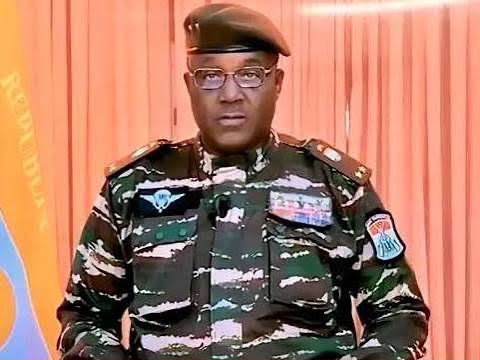
Mutiny: Presidential Guard Tightens Security Around Niger Presidency Amid Reports of Military Protest
Mutiny: Presidential Guard Tightens Security Around Niger Presidency Amid Reports of Military Protest
By Zagazola Makama
Security was significantly reinforced around Niger’s Presidential Palace in Niamey following reports of unrest involving elements of the country’s armed forces, security sources told Zagazola Makama.
According to multiple security sources, the heightened deployment of the Presidential Guard, supported by armoured vehicles around the Presidential Palace on the night of July 3 and into July 4, followed what was described as a limited protest by personnel of an armoured unit within the Niger Armed Forces (FAN).
The sources said some soldiers reportedly declined deployment to frontline positions in northern Tillabéri Region, particularly around Inatès and Chinagodrar, citing inadequate heavy equipment and insufficient operational resources to confront the growing security threats in the area.
The protest was described by one source as a “small mutiny,” although there has been no official confirmation from the Nigerien authorities.
Security sources said the development triggered concern within the country’s leadership, prompting the reinforcement of security around the Presidential Palace and temporary restrictions on movement in the surrounding area as a precautionary measure.
The Tillabéri Region remains one of Niger’s most volatile security zones, with recurrent attacks by armed extremist groups, including factions linked to the so-called Islamic State in the Greater Sahara (ISGS).
As of the time of filing this report, the Nigerien government and military authorities had not issued any official statement regarding the reported protest or the increased security presence around the Presidency.
The situation remains under close observation.
Mutiny: Presidential Guard Tightens Security Around Niger Presidency Amid Reports of Military Protest
Two suspected criminals arrested during patrol in Plateau
By: Zagazola Makama
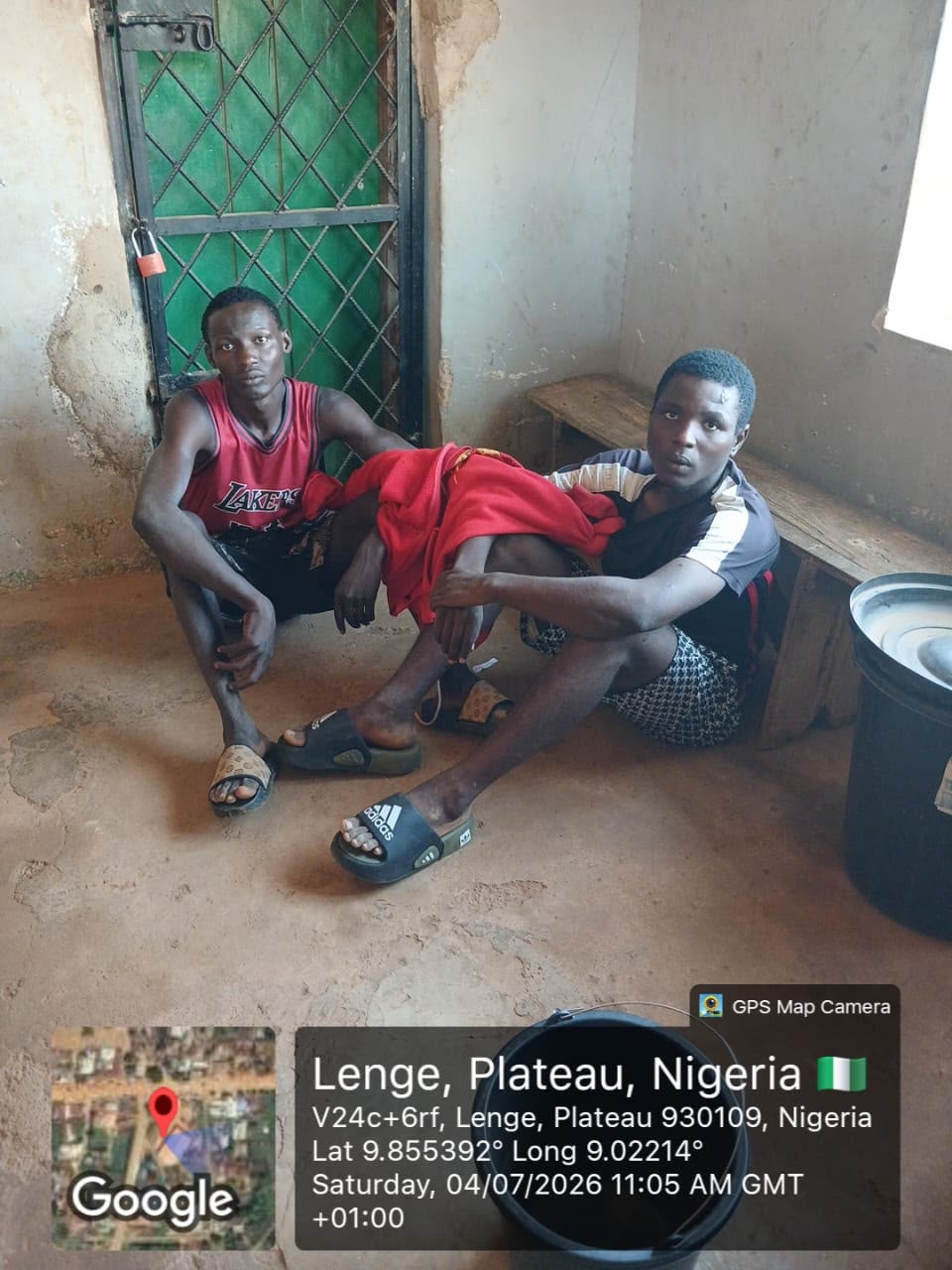
Troops of Sector 1 under Operation Enduring Peace have arrested two suspected criminals during a routine patrol in Jos East Local Government Area of Plateau.
Security sources disclosed that the suspects, identified as Azi Ezekiel, 21, and Ajiji Emmanuel, 19, were apprehended at about 10:30 a.m. on Saturday along the road leading to Forbur Village.
The sources said the suspects were intercepted by troops of Sector 1, Sub-Sector 12, while conducting a routine patrol in the area.
According to the sources, the two suspects have been handed over to the Keystone Police Station in Forbur for further investigation and possible prosecution.
The arrest forms part of ongoing security operations aimed at combating criminal activities and enhancing safety across Plateau State.
Two suspected criminals arrested during patrol in Plateau
Troops arrest suspected kidnapper in Plateau community
By: Zagazola Makama
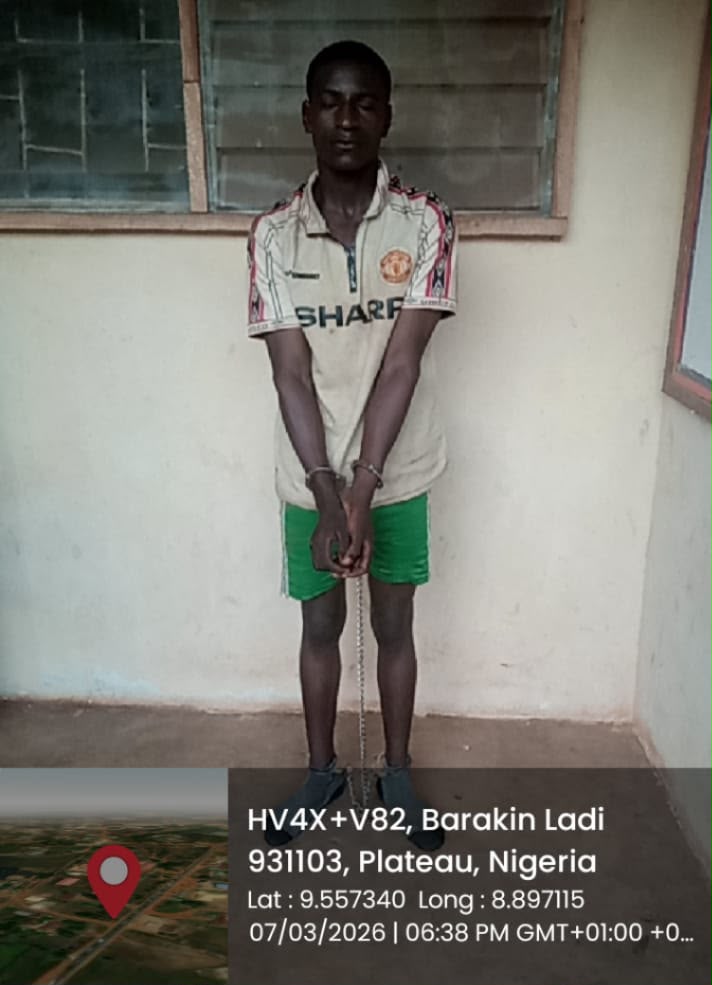
Troops of Sector 4 of Operation Enduring Peace have arrested a suspected kidnapper during a security operation in Barkin Ladi Local Government Area of Plateau.
Security sources said the suspect, identified as Mohamdu Surajo, 29, was arrested at about 6:45 p.m. on Friday at Sabon Layi Village following sustained security operations in the area.
The sources disclosed that the suspect is currently in military custody and is undergoing preliminary interrogation to aid ongoing investigations.
They added that the arrest is part of continued efforts by security forces to dismantle criminal networks and enhance security across Plateau State.
Troops arrest suspected kidnapper in Plateau community

President Tinubu Flags Off the Construction of Dikwa–Gamboru Ngala, Bama–Banki International Road Projects

Mutiny: Presidential Guard Tightens Security Around Niger Presidency Amid Reports of Military Protest

Troops Arrest Two Suspected Berom Militia Linked to NIPSS Attack as Security Sources Say Investigation Supports Earlier Leads

Roger Federer’s Shock as DNA Results Reveal Myla and Charlene Are Not His Biological Children

THE PLIGHT OF FARIDA

FAILED COUP IN BURKINA FASO: HOW TRAORÉ NARROWLY ESCAPED ASSASSINATION PLOT AMID FOREIGN INTERFERENCE CLAIMS
-
 News2 years ago
Roger Federer’s Shock as DNA Results Reveal Myla and Charlene Are Not His Biological Children
-
Opinions4 years ago
THE PLIGHT OF FARIDA
-
 News1 year ago
FAILED COUP IN BURKINA FASO: HOW TRAORÉ NARROWLY ESCAPED ASSASSINATION PLOT AMID FOREIGN INTERFERENCE CLAIMS
-

 News2 years ago
EYN: Rev. Billi, Distortion of History, and The Living Tamarind Tree
-
 Opinions5 years ago
POLICE CHARGE ROOMS, A MINTING PRESS
-

 ACADEMICS2 years ago
A History of Biu” (2015) and The Lingering Bura-Pabir Question (1)
-

 Columns2 years ago
Army University Biu: There is certain interest, but certainly not from Borno.
-

 Politics1 year ago
2027: Why Hon. Midala Balami Must Go, as Youths in Hawul and Asikira/Uba Federal Constituency Reject ₦500,000 as Sallah Gift
