
Uncategorized
Nigeria, China Sign Culture and Tourism Statute

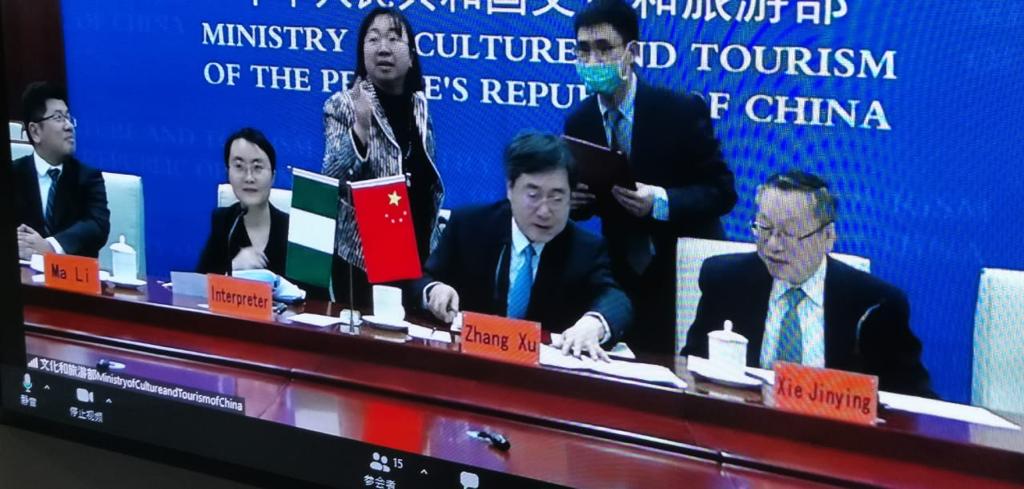
Nigeria, China Sign Culture and Tourism Statute
By: Michael Mike
Nigeria and the People’s Republic of China have signed a joint Culture and Tourism Statute and inaugurated a sub-committee that would further strengthen bilateral cooperation between both countries.
Representatives of both countries signed the act and inaugurated the committee during a virtual event hosted by the Chinese Embassy in Abuja on Wednesday.
During the event, China’s Vice Minister of Culture and Tourism, Mr Zhang Xu, while recalling that Nigeria and China “have enjoyed good bilateral relations in the past 50 years,” noted that culture and tourism have played critical roles in strengthening the ties.
He revealed that the aim of adopting the act and establishing the sub-committee was to promote inter-cultural collaboration and connectivity between the Chinese and Nigerian people in furtherance of China-Africa relations.
He said the establishment of an inter-governmental committee with Nigeria is the first-ever between China and Africa, noting that this action testify to how important and strategic China considered Nigeria.
He said: “As important contributors to the strategic partnership between our two countries, culture and tourism should play greater roles in increasing the people-to-people connectivity for the benefit of the two countries.
“That is the mission of the culture and tourism sub-committee that we are establishing today.
“Therefore, members of our ministries and sub-committees must make good use of the platform in alignment with the objectives of FOCAC, its eight ministerial meetings, Belt and Road Initiative, and FOCAC Action Plan 2022-2024.”
He added that: “We must work together to offset the COVID-19 pandemic’s impact and the planned programmes that the sub-committee covers such as culture, tourism, publishing heritage, library, and museum.
“Our goal must always be to promote our interculturality, and cultural collaboration, full relationship and connectivity between China and Nigeria people in the new areas of China-Africa relations.”
Zhang advised the sub-committee to ensure the promotion of activities and events that would further boost cultural ties between both countries.
He said: “I would like to propose the following; keep working on events like Happy Chinese New Year, Chinese and African culture in focus, and resume mutual visits of artists as soon as the pandemic situation allows.
“Also, we should continue to carry out capacity building programmes in culture and tourism and support cooperation between Chinese and Nigerian cultural businesses.”
Also Read: Centre Asks US to Approach ILO for Adjudication on…
On his part, the Ambassador of China to Nigeria, Cui Jianchun said that the establishment of the Act and sub-committee on Culture and tourism is a good start to a greater future with new dynamics.
The Ambassador said that in a generation where the youth are taking the lead with great innovations, reinvigorating the culture and tourism sector will help boost both economies with mutual benefits.
According to him: “The establishment of the sub-committee on Culture and tourism is really a milestone.
“I do believe we are doing good things now because culture and tourism mean a lot to young people. We have already embarked on a new journey of mutually beneficial cooperation and we all believe that a thousand miles begin with a single step.
“The potentials of our cooperation in the fields of culture and tourism will surely be further released and a better tomorrow must belong to us.”
Permanent Secretary, Ministry of Information and Culture, Dr Ifeoma Anyawutaku, who led Nigerian team to the signing, said the potentialities in the creative sector in Nigeria were untapped and that the new cooperation would help facilitate that.
She said Nigeria will also leverage this to diversify its economy by adequately harnessing the potentials in the culture and tourism sector.
Anyawutaku said: “While taking a cursory look at the Statutes of the sub-committee on Culture and Tourism, Nigeria, as well as China have reviewed our achievements and experiences in the cultural and tourism exchanges and cooperation.
“Under the framework of the Forum on China and Africa Cooperation (FOCAC). This evaluation and experiences will help reposition the culture and tourism sector. For the development of both countries and the reinforcement of our bilateral cooperation.”
The establishment of the sub-committee and drafting of the act was an outcome of the Memorandum of Understanding (MoU) signed between the foreign ministers of both countries with the aim of boosting bilateral ties.
Chinese Minister of Foreign Affairs, Wang Yi had signed the MoU on behalf of his country during his visit to Nigeria while his Nigerian counterpart, Geoffrey Onyeama signed on behalf of the Federal Government.
Nigeria, China Sign Culture and Tourism Statute


Uncategorized
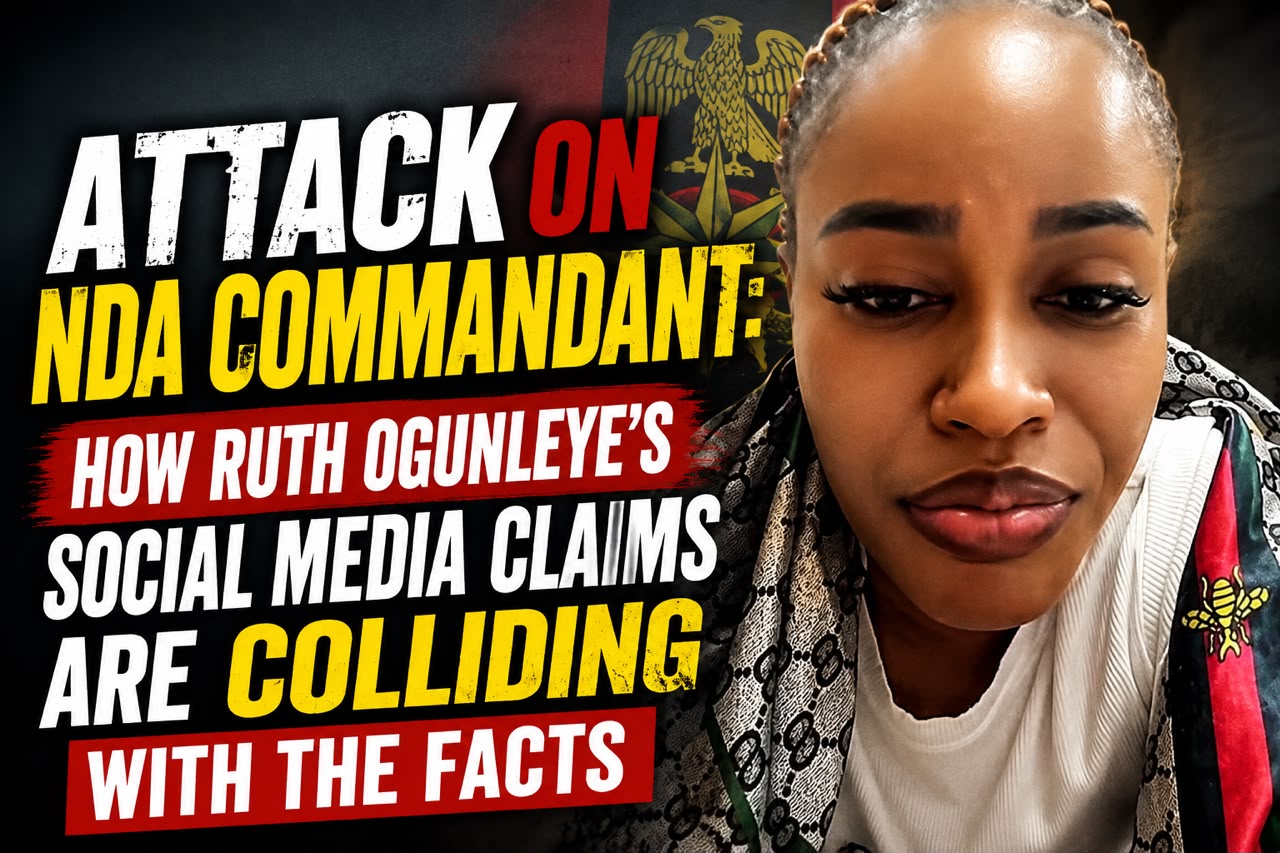
Attack on NDA Commandant: How Ruth Ogunleye’s Social Media Claims Are Colliding With the Facts

Attack on NDA Commandant: How Ruth Ogunleye’s Social Media Claims Are Colliding With the Facts
By Zagazola Makama
There is a point at which a grievance stops being a grievance and becomes a campaign of accusation, intimidation and reputational destruction. The controversy surrounding ex-Private Ruth Ogunleye has now reached that point.
The Nigerian Army and its senior leadership last week came under renewed attack on social media following a series of fabricated allegations by former Private Ruth Ogunleye, but a review of the available record shows that several of the claims being circulated remain FALSE, unsubstantiated, while some are directly contradicted by established facts.
The latest episode involving Major General Oluyemi Olatoye, Commandant of the Nigerian Defence Academy, illustrates the fundamental problem with Ogunleye’s current method.
In her viral video, Ogunleye spoke about someone she identified as “Abdul” allegedly being connected to the NDA Commandant and threatening to expose her intimate material, which she repeatedly referred to as her “noodles.” She then connected that threat to the NDA Commandant.
The allegation has since triggered a strong response from the NDA, which cautioned the public against relying on unverified social-media claims and disclosed that it had commenced appropriate legal processes over the matter.
The NDA subsequently stated publicly that the dispute involved a staff member, Mr Abubakar Isah, and that the issue was related to social-media infringement. The Academy said Ogunleye had brought the Commandant into the dispute through what it described as false allegations and attempted defamation.
According to the account supplied for this investigation, Ogunleye had already published the damaging video on her TikTok handle against the Commandant before contacting his office to establish who the person behind the alleged online threat was. It is only logical that if a person receives an online threat, the rational course is to preserve the evidence, identify the account holder, report the threat to the authority and allow an investigation to take place.
Instead, the allegation appears to have moved from: “Someone is threatening me” to: “This person may be connected to the Commandant” and then effectively to: “The Commandant is responsible.” That leap is precisely what requires scrutiny.
NDA investigations reportedly found that the person at the centre of the dispute was a civilian staff member of the NDA but was never known to Major General Olatoye. That distinction is crucial. Working around an institution does not automatically make someone an agent of its command structure. A civilian’s alleged conduct on social media cannot simply be attributed to the head of an institution without evidence establishing the connection.
The Most Damaging Part of the Claim
Ogunleye’s own words make the controversy even more complicated. In the video, she suggested that she and the Commandant had previously made an intimate video together and threatened that if her alleged intimate material appeared online, she would release his.
Yet, according to sources, when Ogunleye was subsequently contacted by someone, she denied actually having made such a sexual video with the Commandant. She claimed that she made those claims because she was scared and hoped that she could get his attention over the alleged threat by a staff member of the NDA.
If accurately documented, that contradiction is enormous. A claim made publicly as an apparent factual assertion cannot simply become a tactical statement whenever the consequences become uncomfortable. If she did not have such a video with the Commandant, then the public allegation was not merely an emotional complaint. It was a potentially devastating assertion about a serving senior military officer.
However, the NDA controversy cannot be properly understood without returning to the allegations that originally made Ogunleye nationally known.
In January 2024, while still a serving soldier, Ogunleye publicly accused Colonel I.B. Abdulkareem and other senior officers of sexual harassment, intimidation and other forms of mistreatment. Her allegations were extremely serious.
She alleged that Abdulkareem requested sex from her, that she refused, and that she subsequently suffered retaliation. She also made allegations involving attempted assault, injections, eviction, confinement and interference with her military career. Contemporary reports documented these claims.
The Army did not simply dismiss the allegations.
It investigated them. The Nigerian Army said the matter was referred to the Nigerian Army Corps of Military Police and that the investigation examined the available facts, testimonies and evidence. The Army subsequently announced that Colonel Abdulkareem had not committed the sexual-harassment offence alleged against him.
On September 24, 2024, Army spokesperson Major General Onyema Nwachukwu said the investigation had examined the available facts, testimonies and evidence and found that Colonel Abdulkareem did not commit the offences alleged against him. Ogunleye made many videos insulting the late COAS.
She later apologised to then-Chief of Army Staff Lieutenant General Taoreed Lagbaja (late) while seeking a review of the case, saying she believed someone may have interfered with the result. That history matters because it demonstrates that the current false controversy did not begin with Major General Olatoye. But the important development in 2026 is that the allegations have moved to an entirely different level.
Her deliberate campaign of calumny later expanded beyond the original accused officer. Former Army spokesperson Major General Onyema Nwachukwu (rtd) became one of Ogunleye’s targets because he was the one who publicly announced the Army’s position at that time. The spokesperson did not conduct the investigation. He communicated the institution’s findings. Yet she made him another target of her controversial campaign in 2026. The same pattern is now visible in the treatment of Army public-relations personnel generally.
Ogunleye has reportedly made FALSE and deeply personal allegation against the current Army spokesperson, Col. Apollonia Anele in a targeted campaign of reputational destruction.
The escalation becomes even more striking when the target moves from individual officers to the highest level of current Army leadership.
The Dangers of Media Trial on TikTok
There is a broader lesson here. Social media has created an environment where an accusation can reach millions before anyone has had the opportunity to examine the evidence. A person can make a claim in a three-minute video.
Thousands can repost it. Commentators can repeat it. Bloggers can turn it into headlines.
The original allegation then returns to the public as though it has been independently confirmed.
It has not. It has merely been repeated. That is dangerous for everybody, including genuine victims of abuse. When unverified accusations become common, genuine victims can eventually find themselves competing for public attention with fabricated claims. That damages the credibility of legitimate whistleblowing.
A Repeated Formula
The emerging pattern is worth examining.
An allegation is made. A senior officer becomes the target. The allegation is amplified online.
The officer or institution responds. The response is interpreted as further evidence of persecution.
The dispute then expands to another senior officer. Eventually, the institution itself becomes the target. This creates a situation in which every response can be presented as evidence of guilt. If the Army speaks, it is accused of covering up. If it remains silent, the silence is presented as confirmation. If it investigates, the investigation is dismissed if the result is unfavourable. If it takes legal action, that becomes “intimidation.” Society will then become a battlefield of manufactured narratives.
The Military Must Remain Accountable—but Officers Also Have Rights
This does not mean that military officers should be immune from investigation. Far from it. If an officer sexually harasses a subordinate, he should face justice. If an officer abuses authority, he should be held accountable. If the Army conducts a flawed investigation, that investigation should be challenged. But accountability must operate in both directions. A person who is accused also has a right to due process. A senior officer does not lose his right to reputation simply because he wears a uniform. And a military institution does not become guilty merely because an allegation against it goes viral on social media.
The danger of the allegation against the Commandant is not simply that it is potentially defamatory. It demonstrates how easily a chain of assumptions can become a public accusation. This is where social-media trials become dangerous. An allegation can be emotionally compelling especially when it is told by the opposite gender. It can be delivered through tears. It can be repeated thousands of times. It can generate millions of views. None of those things converts an allegation into evidence. An allegation becomes established fact only after it survives appropriate scrutiny.
But rather than immediately engaging in a public argument with Ogunleye, the Commandant reportedly directed that the matter be taken to court. And that is precisely what a responsible and professional institution should do when confronted with an allegation like this. If Ogunleye possesses evidence against the Commandant, she should produce it before the competent authorities. But if the evidence is absent, just like she later admitted, the NDA Commandant must seek redress through a competent court of law.
Zagazola is a Counter-Insurgency Expert and Security Analyst in the Lake Chad Region.
Attack on NDA Commandant: How Ruth Ogunleye’s Social Media Claims Are Colliding With the Facts

FG, Borno Intensify Efforts to Rescue 44 Abducted Mussa Schoolchildren
…Zulum tells anxious parents Tinubu has directed security agencies to secure children’s release
By: Michael Mike
The Federal Government and Borno State Government have stepped up efforts to secure the safe release of the 44 primary school pupils abducted from Mussa community in Askira/Uba Local Government Area of the state, Governor Babagana Zulum has said.
Zulum gave the assurance on Friday when he met with parents of the abducted children at the Government House, Maiduguri, amid growing concern over the fate of the pupils who were taken from Mussa Central Primary School on May 15, 2026.

The meeting was convened at the request of the parents, who have been pressing the authorities to intensify efforts to locate and rescue their children.
The governor said President Bola Tinubu had personally directed security agencies to ensure the safe recovery of the pupils, assuring the parents that the Federal Government, Nigerian Armed Forces and Borno State Government were working together towards their release.
“On behalf of the government and people of Borno State, I once again extend my sympathies over what happened at Mussa Central Primary School on the 15th of May 2026 that led to the abduction of about 44 primary school pupils,” Zulum said.
He also conveyed the President’s sympathy to the affected families.
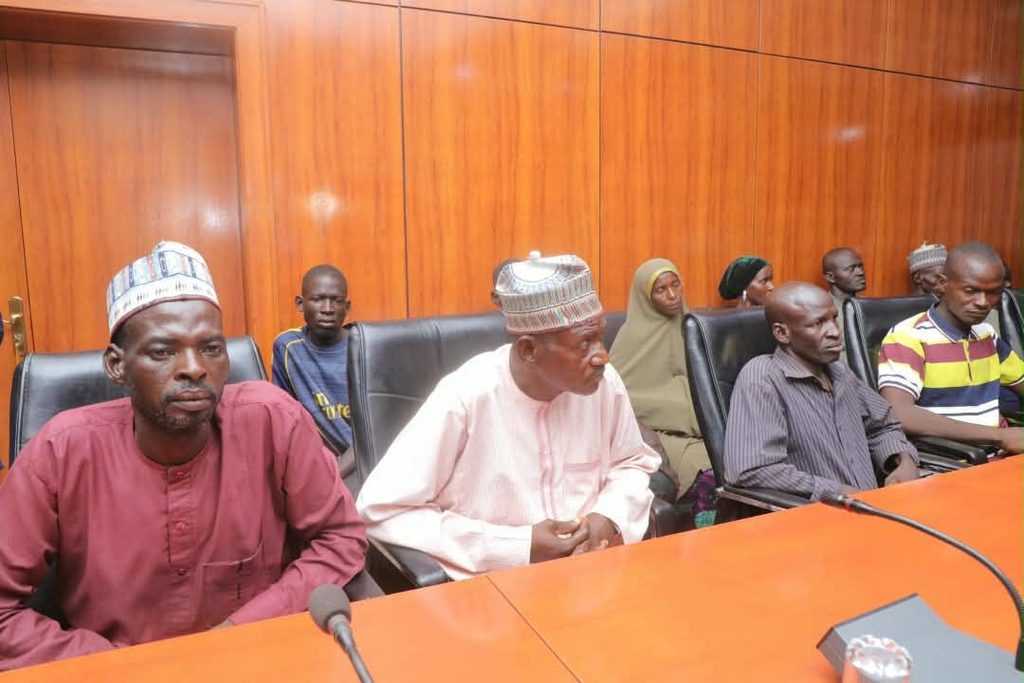
“On behalf of the President of the Federal Republic of Nigeria, Bola Ahmed Tinubu, I want to sympathise with you. I want to assure you that Mr President has since directed security agencies to ensure the rescue of our children, and I believe they are working to ensure their rescue,” he said.
Zulum assured the parents that the authorities would deploy every necessary effort to bring the children home safely.
The development has renewed attention on the security of schools in Borno, where communities continue to face threats from insurgency and other forms of insecurity.
The governor’s meeting with the parents is expected to strengthen coordination between the affected families and government authorities as security agencies continue efforts to secure the children’s release.

The meeting was attended by the Senator representing Southern Borno, Mohammed Ali Ndume; Acting Chief of Staff to the Governor, Dr Babagana Mustapha Mallumbe; Commissioner for Education, Engr Lawan Abba Wakilbe; Commissioner for Inter-Governmental Affairs and Special Duties, Dr Samaila Abdulaziz Satumari; and Permanent Secretary, Ministry of Environment, Dr Juliana Bitrus.
FG, Borno Intensify Efforts to Rescue 44 Abducted Mussa Schoolchildren

Troops Rescue Kidnapped Victim After Ambush in Edo
By Zagazola Makama
Troops of the Nigerian Army’s 195 Battalion, in conjunction with the Edo State Security Corps (ESSC), have rescued a kidnapped victim during a counter-kidnapping operation in Etsako West Local Government Area of Edo State.
Zagazola Makama reports that the operation was conducted at about 4:30 a.m. on Aug. 21, 2026, when the troops laid an ambush at Powerline, Uzairue, along the Afawosa-Iyora road.
Sources said the troops, while occupying the ambush position, observed the movement of suspected kidnappers in the area and immediately engaged them.
The engagement forced the kidnappers to abandon their captive and flee into the surrounding forest, leaving the victim behind.
The rescued victim was identified as Mr. Mohammed Oboarekpe, 35, a resident of South Ibie.
Preliminary debriefing revealed that Oboarekpe was abducted from his residence in South Ibie on Aug. 20, 2026, before being held by the kidnappers.
Following the successful operation, the victim was reunited with his family.
The troops expended six rounds of 7.62mm Special ammunition during the encounter.
The latest operation is part of ongoing efforts by security forces in Edo State to disrupt kidnapping networks and prevent criminal elements from establishing footholds along major routes and vulnerable communities.
Security sources said troops and other security agencies would sustain coordinated operations across the area to deny criminal groups freedom of action and ensure the safety of residents and commuters.
Troops Rescue Kidnapped Victim After Ambush in Edo

The Psychology of Nigerian Politicians and Voters Power, Survival, Emotion, and the Nigerian Democratic Mind

Attack on NDA Commandant: How Ruth Ogunleye’s Social Media Claims Are Colliding With the Facts

Niger Police Confirm Abduction of Friday Worshippers in Borgu

Roger Federer’s Shock as DNA Results Reveal Myla and Charlene Are Not His Biological Children

THE PLIGHT OF FARIDA

FAILED COUP IN BURKINA FASO: HOW TRAORÉ NARROWLY ESCAPED ASSASSINATION PLOT AMID FOREIGN INTERFERENCE CLAIMS
-
 News2 years ago
Roger Federer’s Shock as DNA Results Reveal Myla and Charlene Are Not His Biological Children
-
Opinions5 years ago
THE PLIGHT OF FARIDA
-
 News1 year ago
FAILED COUP IN BURKINA FASO: HOW TRAORÉ NARROWLY ESCAPED ASSASSINATION PLOT AMID FOREIGN INTERFERENCE CLAIMS
-

 News2 years ago
EYN: Rev. Billi, Distortion of History, and The Living Tamarind Tree
-
 Opinions5 years ago
POLICE CHARGE ROOMS, A MINTING PRESS
-

 ACADEMICS2 years ago
A History of Biu” (2015) and The Lingering Bura-Pabir Question (1)
-

 Columns2 years ago
Army University Biu: There is certain interest, but certainly not from Borno.
-

 Politics1 year ago
2027: Why Hon. Midala Balami Must Go, as Youths in Hawul and Asikira/Uba Federal Constituency Reject ₦500,000 as Sallah Gift
