
News
Nigeria, Currently Dealing with Multiple Layers of Disease- Ministry of Health

Nigeria, Currently Dealing with Multiple Layers of Disease- Ministry of Health
By: Michael Mike
The Ministry of Health has raised the alarm over the changing health challenges in the country, warning that the country is currently dealing with multiple layers of disease at the same time.
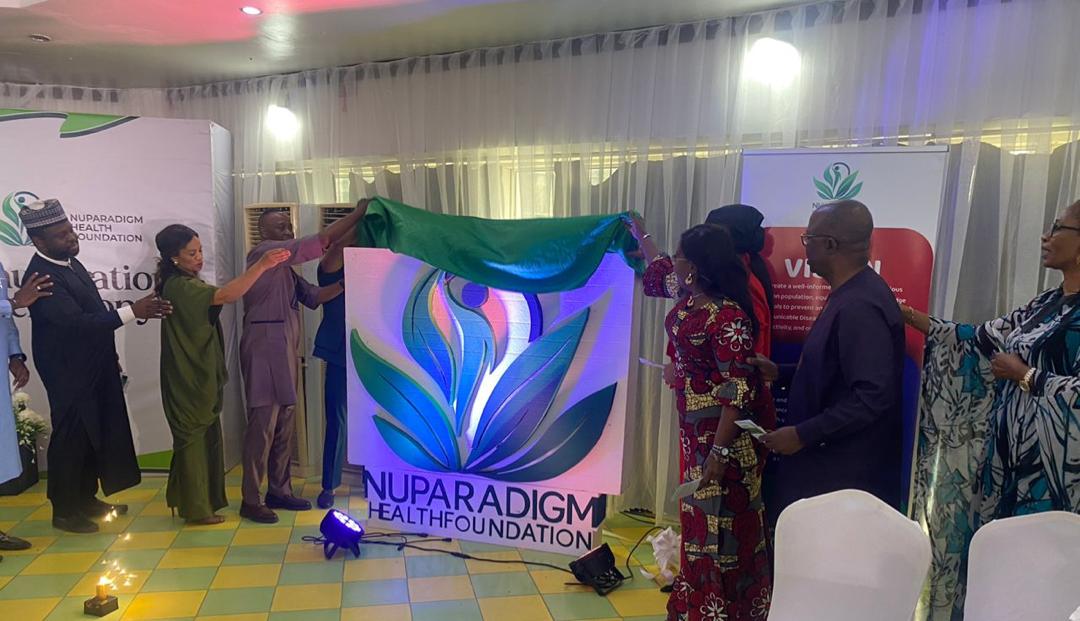
Speaking at the official inauguration of the Nuparadigm Health Foundation, which marks a new era of health awareness and n the country, a representative of Ministry of Health, Abraham Emmanuel emphasized the urgent need for prevention, education, and lifestyle interventions to protect public health.

Nuparadigm Health Foundation is a non-governmental organisation committed to raising awareness about non-communicable diseases and the risk factors associated with them. The foundation aims to provide credible health information, educate communities, and encourage healthier lifestyles to prevent the onset of avoidable illnesses.
Emmanuel explained that Nigeria’s health challenges are changing, with the country now dealing with multiple layers of disease at the same time.
He said; “Africa, and Nigeria in particular, is no longer facing only communicable diseases. We are now experiencing a double burden of communicable and non-communicable diseases, and some even describe it as a triple burden when pandemics are included.”
He decried that younger Nigerians are increasingly affected, stating that: “Non-communicable diseases are increasing in Nigeria, and the age limit is dropping. Conditions like hypertension, stroke and type 2 diabetes are now affecting people in their 30s.”
Emmanuel noted that lifestyle is the main risk factor. He said: “These are mainly lifestyle-related diseases, which means they can be managed and prevented through increased awareness and better choices.”
He also highlighted alarming national survey findings, warning that many Nigerians are unaware of the silent health threats around them. “The data from our national survey is alarming. Many Nigerians are developing non-communicable diseases without knowing the risk factors, such as unhealthy diets, physical inactivity, harmful use of alcohol, tobacco use and even second-hand smoke,” he said.
Emmanuel, while lamenting that these risk factors which are often overlooked in daily life, are driving a surge in preventable illnesses, creating a hidden crisis that could overwhelm families and the healthcare system if urgent action is not taken.
On her part, the founder of Nuparadigm Health Foundation, Dr. Omolara Olagunju said her experience as a doctor led her to conclude that hospitals mainly treat disease, while true healthcare lies in daily prevention.
She said: “After about 15 years of medical practice, I realised that we don’t really have healthcare in the true sense. Hospitals are not health care systems; they are more like disease parlours. Real healthcare happens outside the hospital, and you should not have to be sick before you start thinking about how to be healthy.”
She explained that many Nigerians harm their health unknowingly because they lack access to simple, trustworthy information.
Olagunju said: “A lot of people are doing things every day that are damaging to their health, and they don’t even know it. When I tell them, they say, ‘Doctor, I didn’t even know.’ That is why we believe that everyone has a right to essential health information — the kind of information you need to maintain the good health that you already have.”
She also acknowledged the harsh realities of daily life, saying many people sacrifice health in the struggle to survive.
“People tell me they are too busy to come for health checks, and I later realised that their reasons are legitimate. People are trying to make ends meet in Nigeria. But sometimes we are working harder, winning the battle financially, and losing the war because our health is steadily deteriorating in the process.” She noted .
She emphasized that the foundation is designed to take health awareness directly into everyday spaces instead of waiting for hospital visits.
“Instead of waiting for people to come to the hospital, we decided to go to them to their offices, their schools and their social media platforms and share this information as widely as possible, because it may be just one piece of information that makes all the difference.” She said.
She also warned that unhealthy lifestyles learned early are already showing consequences in children.
“We were not born liking sugary drinks; these tastes were learned. Today, I see obese children everywhere, and I ask myself what will happen to these children in 10, 15 or 20 years if we don’t do something drastic now.” She warned .
In his keynote address, Consultant Physician and Interventional Cardiologist, Dr. Iseko Iseko said Nigeria invests more in treating illness than in preventing it.
“Over the last two decades in healthcare, most of what we do is secondary prevention treating diseases after they have happened and trying to prevent complications. But primary prevention, which is stopping diseases from happening through education and healthy practices, is where we should be investing more of our energy.” He said
Iseko warned that Nigeria’s fragile healthcare system is under strain from both infectious and lifestyle-related diseases
In his words he said “In Nigeria and sub-Saharan Africa, we are still dealing with communicable diseases like malaria, tuberculosis and HIV, but at the same time we are now seeing increasing cases of heart attacks, strokes and diabetes. This double burden of disease is putting enormous pressure on our healthcare system.”
He described Nigeria’s low life expectancy as a reflection of widespread preventable illness and weak preventive care.
He said: “A lot of Nigerians are dying prematurely, and Nigeria is now among the countries with the lowest life expectancy in the world. This is not because we lack potential, but because we have failed to prioritize preventive health and protect our population from avoidable diseases”.
Iseko stressed that everyday habits are driving diseases that drain families financially and emotionally, noting that:
“Many of the diseases we see today are lifestyle-driven and preventable. Treating heart failure alone can cost over ₦1.85 million every month, and when you look at conditions like stroke and kidney failure, the cost to families is catastrophic. This is why prevention, early detection and lifestyle change are far better than waiting to treat advanced disease.”
He further warned about lifestyle-related risk factors, stating that: “Sitting too much, smoking, unhealthy diets and alcohol are silently destroying our blood vessels. These are preventable causes of heart disease and stroke.”
Iseko emphasized the financial and health benefits of prevention, stressing that: “The average cost of treating heart failure is not less than ₦1.85 million per month. Treatment is expensive, catastrophic, and it is far better to prevent these diseases than to manage them.”
The event brought together healthcare professionals, government officials, and key stakeholders, emphasizing the urgent need for prevention, education, and lifestyle interventions to protect public health.
Nigeria, Currently Dealing with Multiple Layers of Disease- Ministry of Health


Nigeria Launches National Strategy to Dismantle Organised Crime, Break Agency Silos
By: Michael Mike
Nigeria has launched a new National Strategy for Combating Organised Crime, signalling a major shift towards a coordinated, intelligence-led national response to criminal networks involved in cybercrime, drug trafficking, human trafficking, migrant smuggling and other transnational crimes.
The strategy, launched in Abuja with the participation of key government institutions, law enforcement agencies, international partners and civil society organisations, seeks to break down institutional silos and establish a unified framework for preventing, detecting, investigating, prosecuting and dismantling organised criminal groups operating within and across Nigeria’s borders.
The initiative was developed through extensive multi-agency consultations and technical collaboration with the United Nations Office on Drugs and Crime (UNODC).
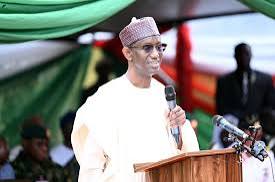
Delivering the keynote address on behalf of the National Security Adviser, Major General Adamu Laka, National Coordinator of the National Counter Terrorism Centre, said a coordinated front against organised crime was essential to Nigeria’s national security and stability.
Laka stressed that inter-agency coordination could no longer be treated as optional, urging stakeholders to make concerted efforts to ensure that criminal networks are effectively disrupted.
He said building an effective response would require stronger collaboration and sustained commitment across institutions responsible for national security and criminal justice.
The strategy places particular emphasis on intelligence sharing, coordinated investigations, specialised operational capacity and stronger regional and international cooperation, reflecting the increasingly sophisticated nature of organised criminal networks.
It also provides for the protection of victims and witnesses, recognising that the fight against organised crime must extend beyond the disruption of criminal networks to protecting the people and communities affected by them.
The strategy comes amid growing concerns over the ability of criminal groups to exploit technology, cross-border mobility, economic vulnerabilities and illicit financial networks to expand their activities.
According to the UNODC World Drug Report 2025, an estimated 316 million people used drugs globally in 2023, while organised criminal groups have continued to adapt to global crises and expand illicit markets, including into Africa.
The UNODC Global Report on Trafficking in Persons 2024 also reported a global increase in identified trafficking victims following the COVID-19 pandemic, with children accounting for nearly 40 per cent of identified victims.
The reports underscore the increasingly transnational character of organised crime and the need for countries to strengthen cooperation among law enforcement, criminal justice institutions and other stakeholders.
Speaking at the launch, UNODC Country Representative Cheikh Toure welcomed Nigeria’s commitment to a whole-of-government and whole-of-society approach to tackling organised crime.
Toure, alongside Tolliver Derrick, Director of the United States Department of State’s Bureau of International Narcotics and Law Enforcement Affairs (US INL), expressed support for the strategy and its emphasis on coordinated, victim-centred and rights-based responses.
The approach is consistent with international best practices promoted by UNODC, including its Organised Crime Strategy Toolkit, which encourages countries to develop integrated responses that bring together government institutions, civil society, communities and international partners.
Participants at the Abuja launch identified stronger inter-agency and regional collaboration, operational readiness, specialised capacity and adherence to the rule of law as key pillars of the new framework.
They emphasised that no single institution could effectively confront the increasingly complex ecosystem of organised crime on its own.
According to participants, effective implementation would therefore depend on timely intelligence sharing, joint investigations, intelligence-led operations and sustained partnerships among security and law enforcement agencies, communities, civil society organisations and international partners.
The project coordinator from the National Counter Terrorism Centre and national consultants subsequently presented the strategy’s core objectives, implementation roadmap, assessment of organised crime in Nigeria and the Gulf of Guinea, as well as its monitoring and evaluation framework.
The presentations marked what stakeholders described as the beginning of the implementation phase, with emphasis now shifting from policy commitments to measurable results.
The strategy is expected to provide a common framework for confronting multiple forms of organised crime, including cybercrime, illicit drug markets, trafficking in persons, migrant smuggling and environmental crimes.
For communities affected by these crimes, the strategy represents an attempt to connect national security priorities with the protection of livelihoods, human rights and community safety.
The initiative received financial support from the United States Department of State’s Bureau of International Narcotics and Law Enforcement Affairs.
Nigeria Launches National Strategy to Dismantle Organised Crime, Break Agency Silos
News
Borno Moves to Extend New Salary Structure to Local Government Workers, Plans Fresh Recruitment
Borno Moves to Extend New Salary Structure to Local Government Workers, Plans Fresh Recruitment
By: Michael Mike
Borno State Government has commenced moves to extend the enhanced salary structure to local government workers, while preparing a fresh recruitment plan to address manpower shortages caused by retirements and the loss of skilled personnel.
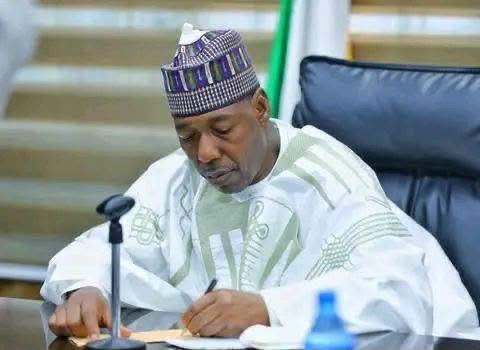
Governor Babagana Zulum approved the measures on Monday following a closed-door meeting with the leadership of the Nigerian Labour Congress (NLC), Trade Union Congress (TUC) and National Union of Local Government Employees (NULGE) at the Government House, Maiduguri.
As part of the plan, Zulum established a task force headed by the Commissioner for Local Government and Emirate Affairs, Sugun Mai Mele, to review and recommend options for implementing the new salary scale and gratuity scheme for local government staff across the state.
The task force is expected to consult widely with stakeholders, review existing regulations and assess the state-wide local government workforce before proposing a viable and sustainable framework for implementing the enhanced salary scheme.
It has been given two weeks to submit its report for the governor’s consideration.
The governor also directed the Directorate of Establishment to prepare a blueprint for new employment and recruitment into the state civil service.
The recruitment plan will be based on an internal review of the existing workforce, gap analysis and needs assessment, with particular attention to critical professions and areas where manpower has been depleted by retirements and capacity flight.
The measures form part of the state government’s broader response to the implementation of the national minimum wage and efforts to reform the public service workforce.
Zulum also approved the immediate implementation of promotion benefits for civil servants for the 2023/2024 and 2024/2025 sessions, as well as the payment of leave grants to all entitled civil servants for the 2025 session.
He further directed a review of salary arrears affecting secondary and tertiary education workers, with a view to possible implementation in September 2026.
The state government said the measures followed a service proposal from the Directorate of Establishment, Office of the Head of Service, which provided analysis and recommendations on implementing the national minimum wage policy across different levels of the state public service.
Borno Moves to Extend New Salary Structure to Local Government Workers, Plans Fresh Recruitment

3 Division Commander Engages Mangu Communities, Calls for Peace Between Mhagavul and Fulani
By Zagazola Makama
The General Officer Commanding (GOC) 3 Division Nigerian Army and Commander, Operation ENDURING PEACE, Maj. Gen. W.M. Dangana, has called on Mhagavul and Fulani communities in Mangu Local Government Area of Plateau State to embrace peace and work together to end recurring conflicts in the area.
Dangana made the call on Monday during a stakeholders’ engagement with leaders of the two communities held at the 3 Division headquarters conference room.
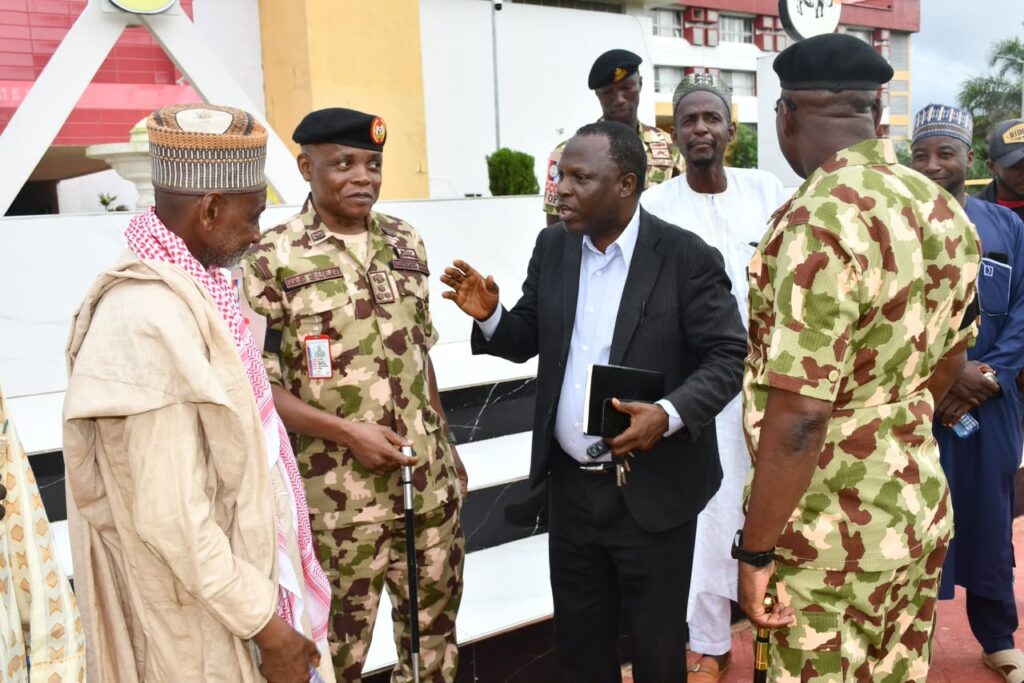
The meeting, which was attended by the Chiefs of Staff of Headquarters 3 Division and Operation ENDURING PEACE, was convened to address grievances affecting the communities and explore measures towards finding lasting solutions to lingering disputes.
The GOC urged the stakeholders to put aside animosity, avoid violence and pursue dialogue as a means of resolving their differences.

He stressed that sustained peace and community cohesion were essential to enabling security agencies and local communities to effectively confront emerging security threats in the area.
According to him, cooperation between the communities would strengthen confidence, improve information sharing and create an environment conducive to peaceful coexistence and development.
Dangana further encouraged the community leaders to engage their people and discourage acts capable of escalating tensions, while supporting security agencies in maintaining peace and stability.
The engagement formed part of ongoing efforts by the Nigerian Army and other stakeholders to strengthen peacebuilding initiatives and promote harmonious relations among communities in Mangu and other parts of Plateau State.
Zagazola Makama reports that Mangu has witnessed recurring communal tensions in recent years, making sustained dialogue and confidence-building between the affected communities critical to preventing further escalation.
3 Division Commander Engages Mangu Communities, Calls for Peace Between Mhagavul and Fulani

NDLEA Destroys N301bn Drugs, Vows to Cripple Cartels’ Financial Networks

Nigeria Launches National Strategy to Dismantle Organised Crime, Break Agency Silos

AWALCO Nominates NUJ FCT Chair Grace Ike for November Award

Roger Federer’s Shock as DNA Results Reveal Myla and Charlene Are Not His Biological Children

THE PLIGHT OF FARIDA

FAILED COUP IN BURKINA FASO: HOW TRAORÉ NARROWLY ESCAPED ASSASSINATION PLOT AMID FOREIGN INTERFERENCE CLAIMS
-
 News2 years ago
Roger Federer’s Shock as DNA Results Reveal Myla and Charlene Are Not His Biological Children
-
Opinions5 years ago
THE PLIGHT OF FARIDA
-
 News1 year ago
FAILED COUP IN BURKINA FASO: HOW TRAORÉ NARROWLY ESCAPED ASSASSINATION PLOT AMID FOREIGN INTERFERENCE CLAIMS
-

 News2 years ago
EYN: Rev. Billi, Distortion of History, and The Living Tamarind Tree
-
 Opinions5 years ago
POLICE CHARGE ROOMS, A MINTING PRESS
-

 ACADEMICS2 years ago
A History of Biu” (2015) and The Lingering Bura-Pabir Question (1)
-

 Columns2 years ago
Army University Biu: There is certain interest, but certainly not from Borno.
-

 Politics1 year ago
2027: Why Hon. Midala Balami Must Go, as Youths in Hawul and Asikira/Uba Federal Constituency Reject ₦500,000 as Sallah Gift
