
News
Nigeria Extends Hand to Sahel: Counterterrorism Expertise Shared Amid Regional Security Concerns

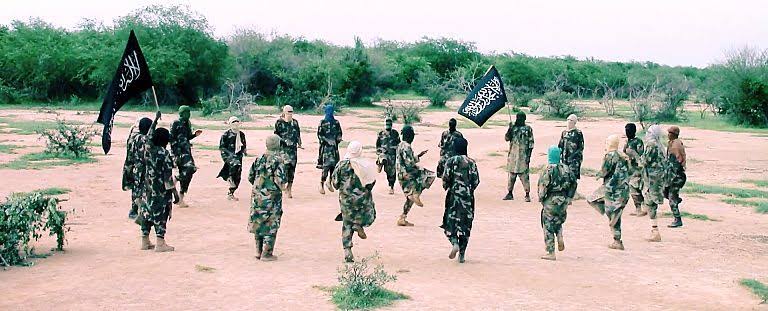
Nigeria Extends Hand to Sahel: Counterterrorism Expertise Shared Amid Regional Security Concerns
…Nigerian military ready to work with Sahelian states – CDS…
By: Zagazola Makama
Amidst escalating security challenges in West Africa, Nigeria is proactively sharing its counterterrorism expertise with its Sahelian neighbors, signaling a strong commitment to regional stability. A high-level delegation from the African Economic and Security (AES) bloc, representing Burkina Faso, Mali, and Niger, is currently in Nigeria to explore the country’s innovative non-kinetic approaches to counterterrorism.
The focal points of their visit are Operation Safe Corridor (OPSC) and the Borno Model, initiatives renowned for their success in the deradicalization, rehabilitation, and reintegration of former combatants. This collaborative effort draws attention to Nigeria’s leadership role in shaping effective counterterrorism strategies that blend military actions with community-driven solutions.
The delegation led by the Coordinator, Fusion Center for Dialogue and Peace Processes, Aliyu Gebi, is in the country to under study Nigeria on its non-kinetic approach to tackling the menace of terrorism and the success of operation Safe Corridor.
The Chief of Defence Staff (CDS), Gen. Christopher Musa, has reassured the AES delegation of the Armed Forces of Nigeria’s unwavering support, despite the recent withdrawal of Burkina Faso, Mali, and Niger from the Economic Community of West African States (ECOWAS). Gen. Musa emphasized that terrorism knows no borders, making regional cooperation essential. The enemies we are dealing with have no respect for life, no respect for humanity, no respect for boundaries. It is critical that we work together to fight and defeat them.
“This meeting came at a very good time, especially now that so many things are happening in Africa. It shows the unity of purpose. Your presence here from the Sahelian countries shows that we are still united, in spite the challenges. And for all Africans, we must unite. The enemies we are dealing with are enemies that don’t mean well for us, especially in the Sahelian region. They have no respect for life, no respect for humanity, no respect for boundaries.
“It is critical that we must work together to fight and defeat them, and I am happy that we have our brothers from Mali, Niger, Burkina Faso, and other countries here to come and see what we are doing with our disarmament programme with Operation Safe Corridor,” he said, while emphasizing that the kinetic and the non-kinetic operations must go hand in hand, adding that the kinetic accounts for only 30 per cent of the solution.
He said that the non-kinetic was basic, adding that there must be good governance within the countries, fairness, justice, and equity to be able to overcome the challenges.
“With that, our citizens will feel safe, wanted, and have a sense of belonging. It is only then that we can put heads together and work to ensure that we defeat all arms of criminality within our region. Last year, I had the privilege of visiting the Niger Republic, and I met with the Chief of Defence there. Now we want to extend same to Burkina Faso and Mali to show unity, and that we need each other for us to succeed.
“Our brothers from Niger, Burkina Faso, Mali, we are one family. Don’t allow anyone to tell you anything otherwise,” he added.
The CDS advised the Sahelian countries to block terrorists access to mining sites and trace their foreign sponsors to block their sources of funding.
Inside Nigeria’s Counterterrorism Blueprint: OPSC and the Borno Model
Nigeria’s pioneering counterterrorism strategies have garnered significant interest from its Sahelian counterparts seeking to replicate successful models in their own countries: Spearheaded by the Defence Headquarters, OPSC offers a comprehensive rehabilitation and reintegration program for former terrorists, providing psychological support, vocational training, and community reintegration to transform ex-combatants into productive members of society.
The Borno Model:
Championed by Governor Babagana Umara Zulum, this model integrates local governance and community engagement into counterterrorism efforts, focusing on grassroots interventions to ensure community acceptance for rehabilitated individuals and addressing the underlying socio-economic factors that fuel extremism. These programs have not only reduced violent extremism but have also created a pathway toward lasting peace in affected regions. The AES delegation’s visit marks a pivotal step toward strengthening regional security cooperation. Through direct engagement with Nigerian security and government officials, the delegation aims to gain insights into effectively integrating kinetic and non-kinetic approaches in the fight against terrorism.
Gen. Aime Sampore, Head of the Alliance of Sahel States delegation, acknowledged Nigeria’s achievements in counterterrorism and emphasized that they hold valuable lessons for the entire region.
“A serene and stable Sahel will transmit directly to a serene, stable, and prosperous Nigeria. Likewise, a stable Nigeria will impact the Sahel and Africa as a whole,” Gen. Sampore noted.
Discussions also covered strategies to block terrorists’ access to mining sites, a critical source of funding, and to identify and cut off foreign sponsors of terrorism. A key goal of the visit is to align counterterrorism strategies across the Sahel and West Africa. Nigeria’s experience in countering violent extremism (CVE) offers a valuable framework for nations grappling with similar security challenges.
High-level discussions are expected to cover:
Intelligence sharing to dismantle terrorist networks, joint training programs for security forces in counterterrorism operations, enganced border security measures to curb cross-border insurgent movements, community engagement strategies to prevent radicalization and recruitment. A senior Nigerian security official emphasized that this collaboration aims to ensure that “Safer, Stronger Together” becomes a tangible reality in the fight against terrorism.
AES delegation’s visit to Nigeria could catalyze broader regional initiatives, including joint research, security training programs, and coordinated policy responses to terrorism.
Zagazola Makama, a counter-insurgency expert, report that as discussions progress, the visit is anticipated to reinforce diplomatic and security ties between Nigeria and the Sahelian states, underscoring the importance of collective action in combating terrorism and violent extremism throughout the region.
It will also shed light on the importance of Nigeria’s comprehensive approach in shaping future counterterrorism efforts across Africa: Nigeria has developed a comprehensive strategy, effectively balancing military action with rehabilitation and community engagement. AES member states can adapt these lessons to enhance their own security frameworks,” Makama stated. By integrating both kinetic and non-kinetic strategies, the country is setting a precedent for achieving sustainable peace and stability. Through collaborative initiatives in intelligence-sharing, counterterrorism operations, and rehabilitation programs, the future of regional security appears promising, provided that nations continue to collaborate towards a shared objective. For Nigeria and its Sahelian partners, the message is clear: “Safer, Stronger Together.”
Zagazola Makama is a Counter Insurgency Expert and Security Analyst in the Lake Chad
Nigeria Extends Hand to Sahel: Counterterrorism Expertise Shared Amid Regional Security Concerns


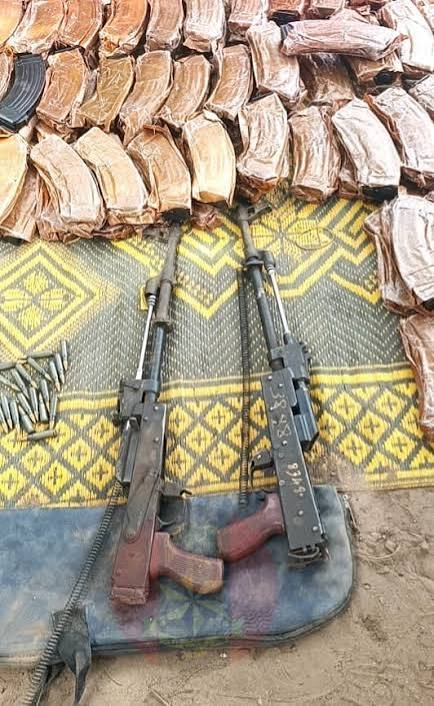
Troops Recover AK-47 Rifle in Raid on Suspected Gunrunners’ Hideout in Taraba
By: Zagazola Makama
Troops of Operation MESA have recovered an AK-47 rifle, a magazine and three rounds of 7.62mm special ammunition during a raid on a suspected gunrunners’ hideout in Gassol Local Government Area of Taraba State.
Security sources said the operation was carried out at about 12:15 a.m. on June 30 by troops of the 20 Model Battalion deployed in Gassol, in collaboration with a team from the Defence Intelligence Agency (DIA).
The sources said the joint team conducted the intelligence-led raid on a suspected gunrunners’ hideout at Kwatan Nanido Village following credible information on illegal arms activities in the area.
Although no suspect was arrested during the operation, the troops recovered one AK-47 rifle, one magazine and three rounds of 7.62mm special ammunition abandoned at the location.
The recovered items have been taken into military custody for further investigation and necessary action.
Security sources said efforts were ongoing to identify and apprehend members of the suspected gunrunning syndicate as operations continue to curb the proliferation of illegal arms and enhance security across the state.
Troops Recover AK-47 Rifle in Raid on Suspected Gunrunners’ Hideout in Taraba

Benue Deputy Gov. Visit family Slain MACBAN Leader, Urges Calm as Police Probe Killing
By: Zagazola Makama
The Benue State Government, in collaboration with the Nigeria Police Force, has paid a condolence visit to the family of the late Fulani community leader, Alhaji Risku Muhammad, in Ohimini Local Government Area, urging residents to remain calm as investigations into his killing continue.
The condolence visit took place on Tuesday and was led by the Deputy Governor of Benue State, who represented Gov. Hyacinth Alia.
The delegation included the Assistant Inspector-General of Police in charge of Zone 4, Makurdi, the Commissioner of Police, Benue State Command, representatives of the Sultan of Sokoto, the leadership of the Miyetti Allah Cattle Breeders Association of Nigeria (MACBAN), other security agencies and relatives of the deceased from different parts of the country.
During the visit, the delegation sympathised with the bereaved family and appealed to them and members of the Fulani community not to resort to self-help or reprisals.
They urged them to allow security agencies to carry out a thorough and impartial investigation into the circumstances surrounding the killing.
The delegation assured the family that the government and security agencies were committed to ensuring that those responsible for the homicide are identified and brought to justice.
Police authorities said the case was under active investigation by the State Criminal Investigation Department (CID), adding that efforts were ongoing to unravel the circumstances surrounding the incident.
The Benue State Government reiterated its commitment to maintaining peace and security across the state and called on all residents to continue supporting security agencies with credible information that could aid the investigation.
Benue Deputy Gov. Visit family Slain MACBAN Leader, Urges Calm as Police Probe Killing
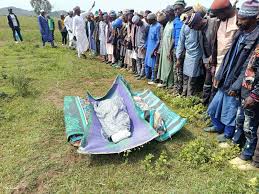
Three Herders Killed in Ambush in Plateau, MACBAN Calls for Investigation
By: Zagazola Makama
Three cattle herders were reportedly killed and one other injured in an ambush by unidentified gunmen while grazing livestock in Gero-Rafin Bauna area of Jos South Local Government Area of Plateau State.
The Chairman of the Miyetti Allah Cattle Breeders Association of Nigeria (MACBAN) in Plateau, Alhaji Ibrahim Yusuf Babayo, confirmed the incident and condemned the attack.
Babayo called on security agencies to carry out a thorough investigation into the killings and ensure that those responsible are arrested and prosecuted.
According to him, the bodies of the three victims were discovered in a forest after an extensive search by members of the community.
He alleged that the victims were brutally killed during the attack.
The MACBAN chairman further claimed that the latest incident came barely two weeks after four other herders were reportedly killed in the same general area, adding that their bodies had yet to be recovered.
Babayo urged the authorities to take urgent steps to improve security in vulnerable communities and prevent further attacks.
He also appealed to members of the affected communities to remain calm and allow security agencies to investigate the incident.
As of the time of filing this report, the Plateau State Police Command had not issued an official statement on the incident.
The circumstances surrounding the attack and the identity of the perpetrators remain unclear.
Three Herders Killed in Ambush in Plateau, MACBAN Calls for Investigation

Troops Recover AK-47 Rifle in Raid on Suspected Gunrunners’ Hideout in Taraba

Benue Deputy Gov. Visit family Slain MACBAN Leader, Urges Calm as Police Probe Killing

Three Herders Killed in Ambush in Plateau, MACBAN Calls for Investigation

Roger Federer’s Shock as DNA Results Reveal Myla and Charlene Are Not His Biological Children

THE PLIGHT OF FARIDA

FAILED COUP IN BURKINA FASO: HOW TRAORÉ NARROWLY ESCAPED ASSASSINATION PLOT AMID FOREIGN INTERFERENCE CLAIMS
-
 News2 years ago
Roger Federer’s Shock as DNA Results Reveal Myla and Charlene Are Not His Biological Children
-
Opinions4 years ago
THE PLIGHT OF FARIDA
-
 News1 year ago
FAILED COUP IN BURKINA FASO: HOW TRAORÉ NARROWLY ESCAPED ASSASSINATION PLOT AMID FOREIGN INTERFERENCE CLAIMS
-

 News2 years ago
EYN: Rev. Billi, Distortion of History, and The Living Tamarind Tree
-
 Opinions5 years ago
POLICE CHARGE ROOMS, A MINTING PRESS
-

 ACADEMICS2 years ago
A History of Biu” (2015) and The Lingering Bura-Pabir Question (1)
-

 Columns2 years ago
Army University Biu: There is certain interest, but certainly not from Borno.
-

 Politics1 year ago
2027: Why Hon. Midala Balami Must Go, as Youths in Hawul and Asikira/Uba Federal Constituency Reject ₦500,000 as Sallah Gift
