News
Nigeria, Germany Forge New Strategic Pact as Abuja Woos Investors, Berlin Pledges Stronger Economic, Security Ties

Nigeria, Germany Forge New Strategic Pact as Abuja Woos Investors, Berlin Pledges Stronger Economic, Security Ties
By: Michael Mike
Nigeria and Germany on Wednesday moved to deepen their longstanding strategic partnership, with both countries committing to expanded cooperation in trade, energy, technology, security and human capital development as Berlin pledged increased investment in Africa’s largest economy.
The renewed commitment was made in Abuja during a high-level bilateral meeting between Nigeria’s Minister of Foreign Affairs, Ambassador Bianca Odumegwu-Ojukwu, and her German counterpart, Federal Minister for Foreign Affairs, Johann Wadephul.
The meeting came as both countries seek to build on more than 65 years of diplomatic relations, with Nigeria positioning itself as a major destination for German investment while Germany reaffirmed its role as a key economic and development partner.

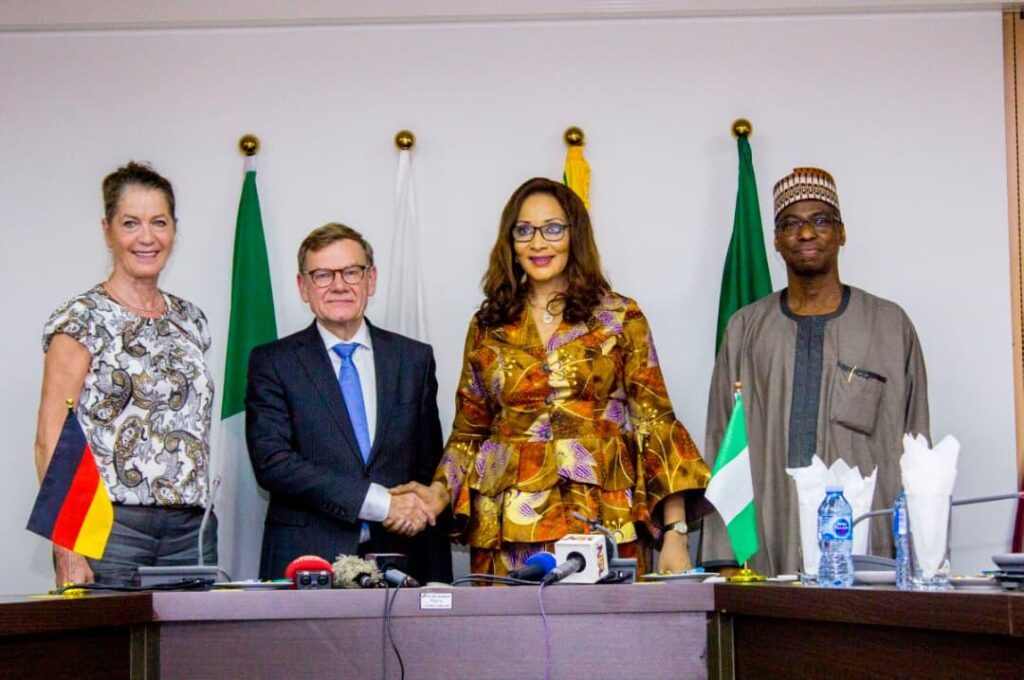
Welcoming the German delegation, Odumegwu-Ojukwu described Germany as one of Nigeria’s most important strategic partners in Europe, noting that bilateral relations had expanded beyond diplomacy to encompass trade, investment, renewable energy, education, science and technology, migration, culture and security cooperation.
She said the evolving global environment, marked by geopolitical tensions, terrorism, climate change, food insecurity and economic uncertainty, had made stronger international partnerships more important than ever.
According to her, Nigeria remained committed to strengthening ties with Germany in ways that would deliver measurable benefits to both countries and contribute to regional and global stability.

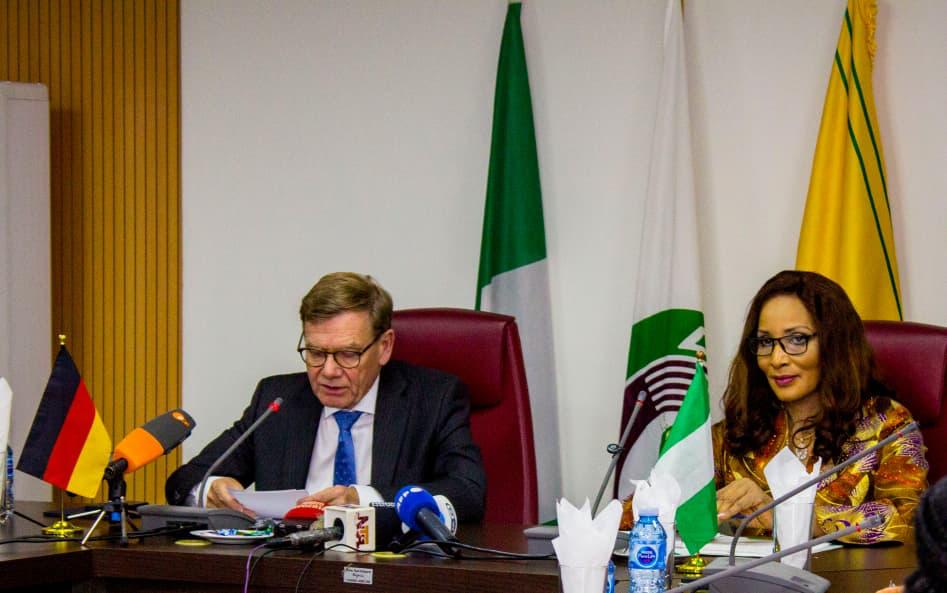
The minister identified renewable energy, digital innovation, artificial intelligence, critical minerals, manufacturing, agriculture, healthcare, infrastructure and the green economy as areas with significant potential for deeper collaboration.
She highlighted the Nigeria-Germany Bi-National Commission as a major pillar of bilateral engagement, saying the platform had continued to provide a roadmap for expanding cooperation across key sectors.
Odumegwu-Ojukwu noted that Nigeria had continued implementing economic reforms aimed at improving the investment environment, strengthening governance and creating opportunities for private sector participation.
She called for increased German investment in Nigeria’s priority sectors, particularly renewable energy, industrial development, transport infrastructure, agriculture and digital technology.
Responding, Wadephul described Nigeria-Germany relations as a strategic partnership built over decades, recalling that Germany established its embassy in Lagos just three days after Nigeria gained independence in 1960.
He said the relationship had continued to grow, with Germany now standing as Nigeria’s largest European trading partner on a bilateral basis.
The German foreign minister disclosed that trade between both countries increased by 10 per cent in the previous year, signalling growing economic cooperation.
He said the Nigeria-Germany Business Forum would continue to serve as a vehicle for expanding commercial ties and attracting more German companies into Nigeria.
“With my visit, many more German investors will be investing in Nigeria,” Wadephul assured, while expressing Germany’s interest in Nigeria’s energy sector and other areas capable of driving economic transformation.
He also commended the effectiveness of the Nigeria-Germany Bi-National Commission, describing it as a valuable mechanism for sustaining cooperation and delivering practical outcomes.
Beyond economic issues, both ministers stressed the importance of closer collaboration on regional security, particularly amid rising threats from terrorism, violent extremism and organised crime in parts of West Africa.
Odumegwu-Ojukwu praised Germany’s continued support for the Economic Community of West African States (ECOWAS), especially in promoting peace-building, democratic governance, conflict prevention and institutional strengthening.
Wadephul reiterated Germany’s commitment to supporting ECOWAS efforts to address insecurity in the region, particularly challenges linked to terrorism and instability in the Sahel.
He expressed readiness to work closely with his Nigerian counterpart to further strengthen the strategic partnership between both nations.
The renewed engagement signals a push by Abuja and Berlin to transform decades of diplomatic friendship into broader economic opportunities, increased investment flows and stronger cooperation on regional and global challenges.
Nigeria, Germany Forge New Strategic Pact as Abuja Woos Investors, Berlin Pledges Stronger Economic, Security Ties