
News
Nigeria, Germany Forge New Strategic Pact as Abuja Woos Investors, Berlin Pledges Stronger Economic, Security Ties


Nigeria, Germany Forge New Strategic Pact as Abuja Woos Investors, Berlin Pledges Stronger Economic, Security Ties
By: Michael Mike
Nigeria and Germany on Wednesday moved to deepen their longstanding strategic partnership, with both countries committing to expanded cooperation in trade, energy, technology, security and human capital development as Berlin pledged increased investment in Africa’s largest economy.
The renewed commitment was made in Abuja during a high-level bilateral meeting between Nigeria’s Minister of Foreign Affairs, Ambassador Bianca Odumegwu-Ojukwu, and her German counterpart, Federal Minister for Foreign Affairs, Johann Wadephul.
The meeting came as both countries seek to build on more than 65 years of diplomatic relations, with Nigeria positioning itself as a major destination for German investment while Germany reaffirmed its role as a key economic and development partner.
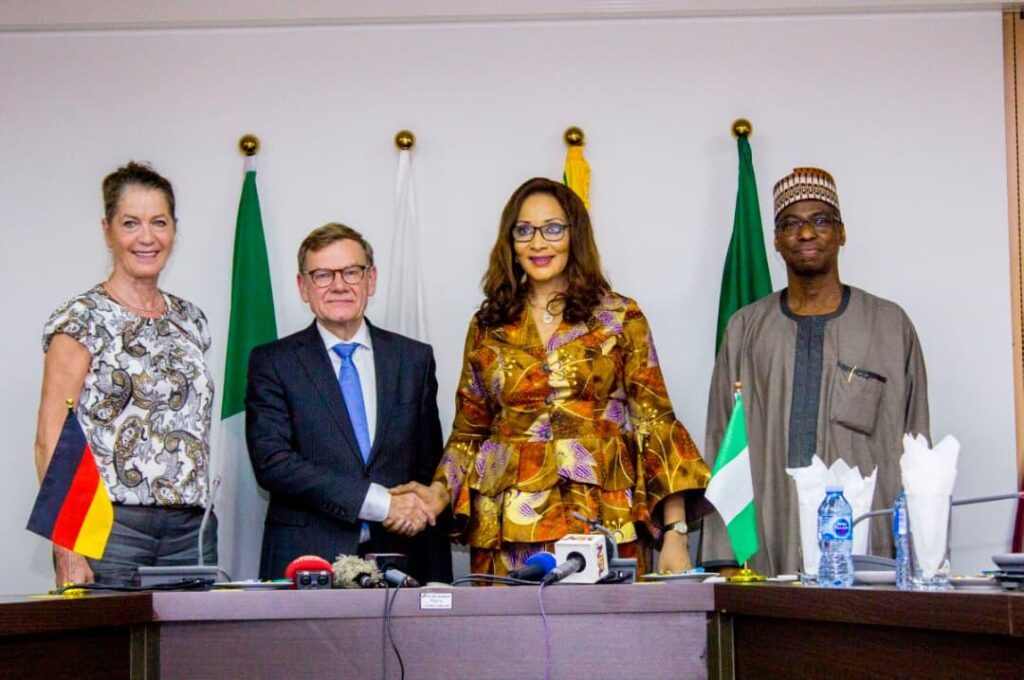
Welcoming the German delegation, Odumegwu-Ojukwu described Germany as one of Nigeria’s most important strategic partners in Europe, noting that bilateral relations had expanded beyond diplomacy to encompass trade, investment, renewable energy, education, science and technology, migration, culture and security cooperation.
She said the evolving global environment, marked by geopolitical tensions, terrorism, climate change, food insecurity and economic uncertainty, had made stronger international partnerships more important than ever.
According to her, Nigeria remained committed to strengthening ties with Germany in ways that would deliver measurable benefits to both countries and contribute to regional and global stability.
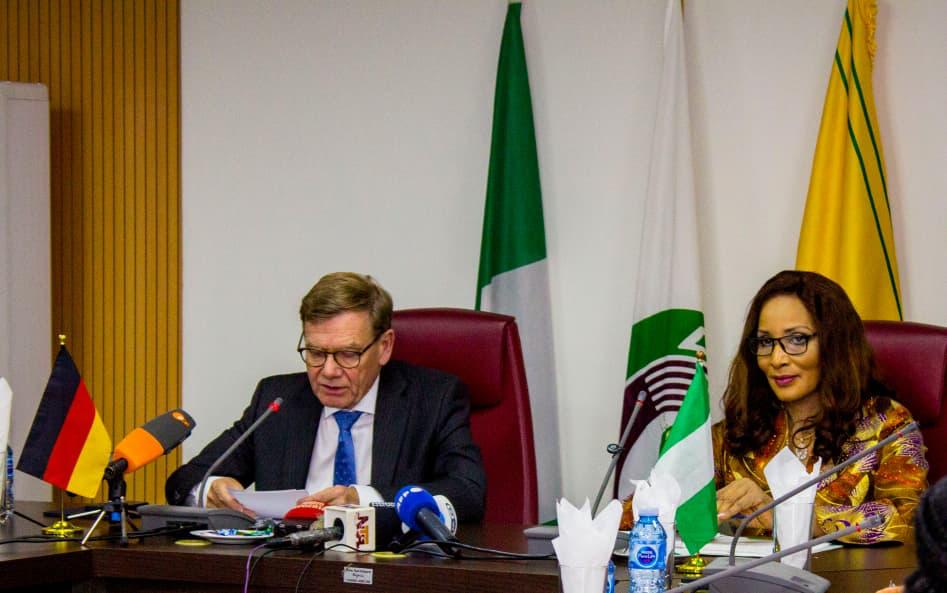
The minister identified renewable energy, digital innovation, artificial intelligence, critical minerals, manufacturing, agriculture, healthcare, infrastructure and the green economy as areas with significant potential for deeper collaboration.
She highlighted the Nigeria-Germany Bi-National Commission as a major pillar of bilateral engagement, saying the platform had continued to provide a roadmap for expanding cooperation across key sectors.
Odumegwu-Ojukwu noted that Nigeria had continued implementing economic reforms aimed at improving the investment environment, strengthening governance and creating opportunities for private sector participation.
She called for increased German investment in Nigeria’s priority sectors, particularly renewable energy, industrial development, transport infrastructure, agriculture and digital technology.
Responding, Wadephul described Nigeria-Germany relations as a strategic partnership built over decades, recalling that Germany established its embassy in Lagos just three days after Nigeria gained independence in 1960.
He said the relationship had continued to grow, with Germany now standing as Nigeria’s largest European trading partner on a bilateral basis.
The German foreign minister disclosed that trade between both countries increased by 10 per cent in the previous year, signalling growing economic cooperation.
He said the Nigeria-Germany Business Forum would continue to serve as a vehicle for expanding commercial ties and attracting more German companies into Nigeria.
“With my visit, many more German investors will be investing in Nigeria,” Wadephul assured, while expressing Germany’s interest in Nigeria’s energy sector and other areas capable of driving economic transformation.
He also commended the effectiveness of the Nigeria-Germany Bi-National Commission, describing it as a valuable mechanism for sustaining cooperation and delivering practical outcomes.
Beyond economic issues, both ministers stressed the importance of closer collaboration on regional security, particularly amid rising threats from terrorism, violent extremism and organised crime in parts of West Africa.
Odumegwu-Ojukwu praised Germany’s continued support for the Economic Community of West African States (ECOWAS), especially in promoting peace-building, democratic governance, conflict prevention and institutional strengthening.
Wadephul reiterated Germany’s commitment to supporting ECOWAS efforts to address insecurity in the region, particularly challenges linked to terrorism and instability in the Sahel.
He expressed readiness to work closely with his Nigerian counterpart to further strengthen the strategic partnership between both nations.
The renewed engagement signals a push by Abuja and Berlin to transform decades of diplomatic friendship into broader economic opportunities, increased investment flows and stronger cooperation on regional and global challenges.
Nigeria, Germany Forge New Strategic Pact as Abuja Woos Investors, Berlin Pledges Stronger Economic, Security Ties




FRSC Credits Correctional Service for Decline in Road Crashes, Traffic Offences in FCT
By: Michael Mike
The Federal Road Safety Corps (FRSC) has attributed the decline in road crashes and traffic violations in the Federal Capital Territory (FCT) to its growing collaboration with the Nigerian Correctional Service (NCoS), particularly through the non-custodial sentencing system.
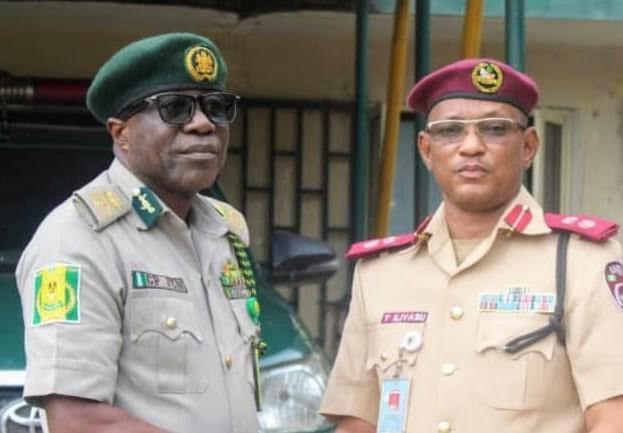
FCT Sector Commander of the FRSC, Corps Commander Tijjani Iliyasu, made the assertion on Thursday during a courtesy visit to the Controller of Corrections, FCT Command, Christopher Peter Jen, at the Command Headquarters in Abuja.
Iliyasu said the establishment of a Non-Custodial Desk Office at the FRSC FCT Sector Command and the deployment of Correctional Officers to the Corps’ mobile courts had significantly improved compliance with traffic regulations.

According to him, the prompt prosecution of traffic offenders through the mobile courts has served as a deterrent, leading to a marked reduction in traffic offences and road crashes across the FCT.
“With the establishment of the non-custodial desk office here at the FCT Sector Command and the presence of Correctional Officers in our mobile courts that punish traffic offenders almost immediately, we have witnessed a remarkable reduction in traffic offences and road crashes in the FCT,” he said.
The Sector Commander, however, noted that recklessness, indiscipline and disregard for traffic laws remain major contributors to road accidents. He urged motorists and road users to take safety seriously and avoid allowing ignorance or poor driving habits to endanger lives.

Responding, Controller of Corrections Christopher Peter Jen thanked the FRSC leadership for the visit and reaffirmed the commitment of the Nigerian Correctional Service to strengthening collaboration with the road safety agency.
Jen outlined the Service’s mandate of reformation, rehabilitation and reintegration of offenders, adding that the NCoS would continue to support the FRSC’s efforts to improve road safety and reduce crashes in the nation’s capital.
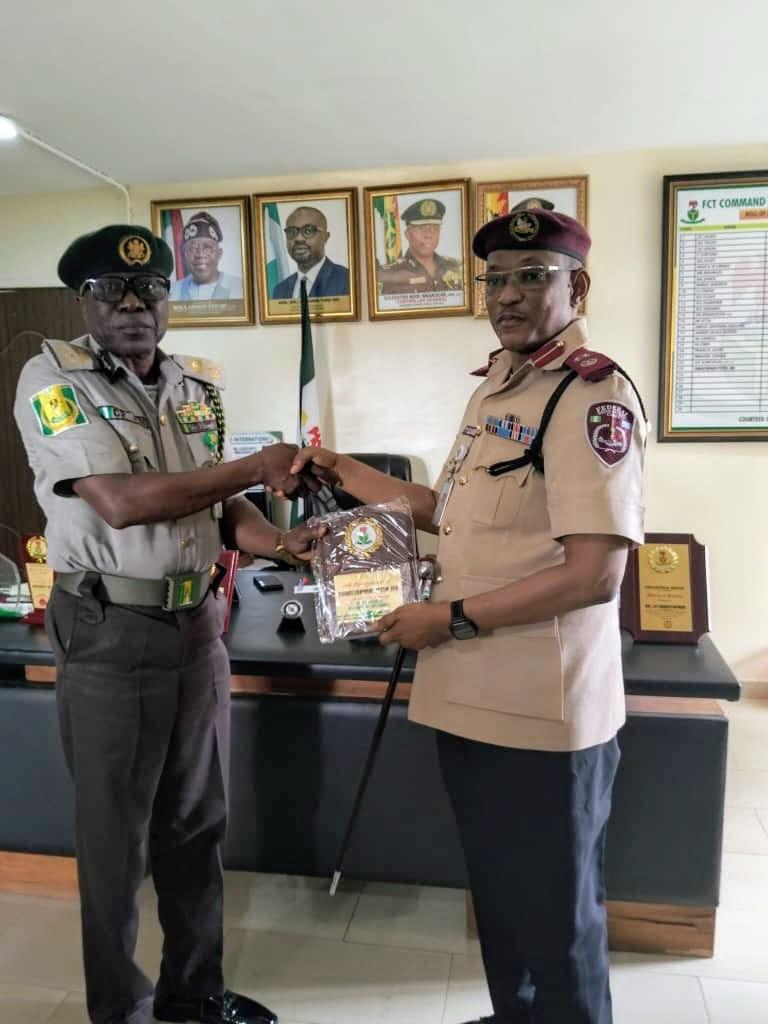
The meeting also explored additional areas of cooperation between the two agencies aimed at enhancing public safety and promoting greater compliance with traffic laws.
FRSC Credits Correctional Service for Decline in Road Crashes, Traffic Offences in FCT

Fubara Pushes for Sweeping Public Service Reforms, Digital Transformation
By: Michael Mike
Rivers State Governor, Sir Siminalayi Fubara, has called for sustained investment in public service reforms, capacity development and digital transformation, warning that Nigeria must reposition its public institutions to meet the demands of a rapidly changing world.
Speaking on Thursday at the opening of the 48th Meeting of the National Council on Establishments (NCE) in Port Harcourt, Fubara said the country’s public service must become more agile, technology-driven, accountable and performance-oriented to effectively deliver on government policies and national development goals.
The meeting brought together the Head of the Civil Service of the Federation, Mrs Didi Esther Walson-Jack, alongside Heads of Service from the 36 states and the Federal Capital Territory.
The governor stressed that advances in technology, changing workforce dynamics and rising public expectations require governments to rethink the structure and operations of the civil service.
According to him, public institutions should not merely respond to change but anticipate and lead it through policies that reward competence, innovation, integrity and outstanding performance.
Describing the public service as the “engine room of government,” Fubara said it remains the institution through which government policies are translated into programmes and essential services delivered to citizens.
He noted that no administration can achieve sustainable development without a competent, motivated and efficient workforce.
“The strength of any government is ultimately reflected in the quality of its public service,” he said, adding that a disciplined, innovative and performance-driven civil service is fundamental to economic growth, institutional stability and public confidence.
Fubara challenged members of the National Council on Establishments to ensure that their deliberations produce practical and implementable recommendations capable of strengthening institutional capacity, promoting transparency, deepening professionalism and improving productivity across the Nigerian public service.
Highlighting reforms undertaken by his administration, the governor said Rivers State has continued to prioritise the welfare and professional development of civil servants through improved remuneration and better working conditions.
He disclosed that the state pays a minimum wage above the nationally approved benchmark while maintaining prompt payment of salaries, pensions, gratuities and Christmas bonuses.
The governor also said regular staff promotions have been restored to reward competence and years of service, while work is nearing completion on the comprehensive renovation and modernisation of the State Secretariat Complex to provide civil servants with a technology-driven and conducive work environment.
According to him, these measures reflect his administration’s belief that a motivated and well-equipped workforce is critical to efficient governance and improved service delivery.
Fubara also commended the Head of the Civil Service of the Federation, Mrs Didi Esther Walson-Jack, for what he described as her bold leadership in driving reforms aimed at improving professionalism, innovation, performance management and institutional excellence within the Federal Civil Service.
He expressed optimism that the resolutions of the 48th National Council on Establishments meeting would shape the future of public administration in Nigeria by strengthening institutions, improving career management systems and enhancing governance nationwide.
Fubara Pushes for Sweeping Public Service Reforms, Digital Transformation

NSCDC Arrests Six Over Abuja Pipeline Vandalism, Fuel Theft
By: Michael Mike
The Nigeria Security and Civil Defence Corps (NSCDC) has arrested six suspected petroleum pipeline vandals allegedly caught siphoning Premium Motor Spirit (PMS) from vandalised Nigerian National Petroleum Company (NNPC) pipelines in the Federal Capital Territory (FCT), Abuja.
The suspects, all males aged between 20 and 32, were paraded on Thursday at the crime scene in Pagada I, Dobi Ward, Gwagwalada Area Council, where the illegal operation was uncovered.
Addressing journalists, the FCT Commandant of the NSCDC, Dr. Olusola Odumosu, said operatives of the Command’s Anti-Vandal Squad acted on credible intelligence and a tip-off about suspicious activities around the pipeline corridor.
According to him, the suspects were apprehended while allegedly scooping petrol from pipelines they had punctured using drilling equipment and loading the product into jerrycans and plastic bags.
Recovered exhibits included two motorcycles, two locally fabricated firearms, four 25-litre jerrycans containing suspected stolen PMS, two empty jerrycans, a shovel and hand drilling machines used to puncture the pipelines.
Odumosu disclosed that preliminary investigations revealed the suspects had carefully studied the terrain and identified points where underground pipelines contained fuel residue. He added that one of the suspects, an indigene of Pagada I, allegedly recruited two accomplices from the Lambata area to participate in the operation.
He further alleged that three members of a local vigilante group were involved in the crime by providing protection and support for the vandals during the illegal operation.
The commandant said investigations were ongoing to track down other members of the criminal network, while the Nigeria Petroleum Storage Company had been notified to repair and secure the damaged pipelines.
Describing pipeline vandalism as economic sabotage, Odumosu warned that the Corps would not tolerate the destruction of critical national infrastructure.
“We condemn in strong terms any form of vandalism in the FCT, whether it involves petroleum pipelines, manhole covers, crash barriers, bridge aluminium, streetlights, armoured cables, transformers or railway sleepers. These are deliberate acts intended to undermine and cripple the nation’s economy,” he said.
He noted that pipeline vandalism not only contributes to fuel scarcity and environmental degradation but also exposes nearby communities to the risk of devastating fire outbreaks and threatens agricultural activities in affected areas.
The NSCDC boss vowed that anyone found vandalising public assets for personal gain would face the full weight of the law.
Odumosu also appealed to residents and traditional institutions to support security agencies with timely and credible information, assuring that informants’ identities would be protected.
“When you see something, say something, and we will do something,” he said.
Speaking at the event, the Councillor representing Dobi Ward, Gado Shuaibu, commended the NSCDC for its swift response and urged residents to desist from acts of vandalism, warning that he would not intervene on behalf of anyone arrested for such offences.
Similarly, the Village Chief of Pagada I, Abubakar Ibrahim, pledged the community’s continued cooperation with security agencies to protect critical infrastructure and prevent future incidents.
The latest arrests come amid renewed efforts by security agencies to curb pipeline vandalism and the theft of petroleum products, crimes that have continued to undermine Nigeria’s oil sector, threaten public safety and inflict significant economic losses on the country.
NSCDC Arrests Six Over Abuja Pipeline Vandalism, Fuel Theft

ECOWAS boosts Guinea-Bissau healthcare with new maternity, paediatric complex

FRSC Credits Correctional Service for Decline in Road Crashes, Traffic Offences in FCT

Fubara Pushes for Sweeping Public Service Reforms, Digital Transformation

Roger Federer’s Shock as DNA Results Reveal Myla and Charlene Are Not His Biological Children

THE PLIGHT OF FARIDA

FAILED COUP IN BURKINA FASO: HOW TRAORÉ NARROWLY ESCAPED ASSASSINATION PLOT AMID FOREIGN INTERFERENCE CLAIMS
-
 News2 years ago
Roger Federer’s Shock as DNA Results Reveal Myla and Charlene Are Not His Biological Children
-
Opinions4 years ago
THE PLIGHT OF FARIDA
-
 News1 year ago
FAILED COUP IN BURKINA FASO: HOW TRAORÉ NARROWLY ESCAPED ASSASSINATION PLOT AMID FOREIGN INTERFERENCE CLAIMS
-

 News2 years ago
EYN: Rev. Billi, Distortion of History, and The Living Tamarind Tree
-
 Opinions5 years ago
POLICE CHARGE ROOMS, A MINTING PRESS
-

 ACADEMICS2 years ago
A History of Biu” (2015) and The Lingering Bura-Pabir Question (1)
-

 Columns2 years ago
Army University Biu: There is certain interest, but certainly not from Borno.
-

 Politics1 year ago
2027: Why Hon. Midala Balami Must Go, as Youths in Hawul and Asikira/Uba Federal Constituency Reject ₦500,000 as Sallah Gift
